
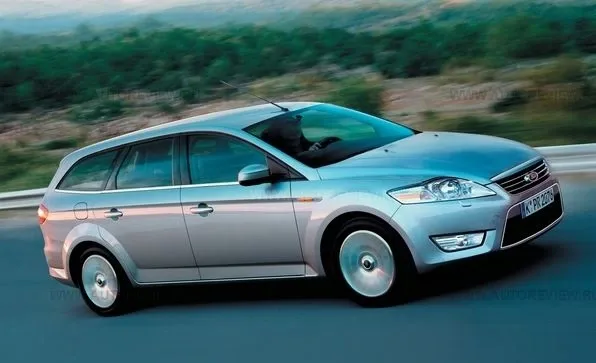
In the corridors, representatives of European Ford admitted: automatic transmissions are not their strongest suit. That's no secret. I recall the Mondeo wagon from our editorial office — a two-liter engine paired with a four-speed automatic. The chassis and interior were good, but the powertrain barely earned a C. Back then, Ford engineers clearly favored manuals — those worked flawlessly.
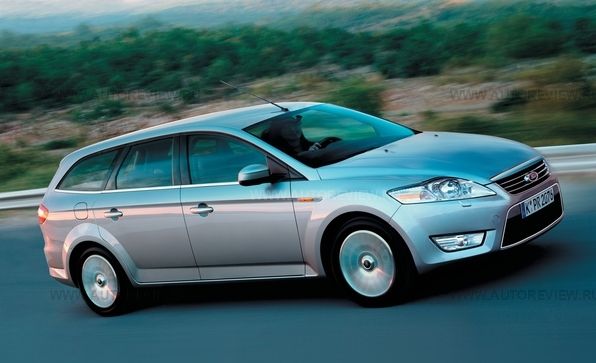
 And the new Mondeo has become even more attractive and is aiming for the business class, so leaving it without a decent automatic would be wrong. As a result, the entire powertrain is of Japanese origin: a six-speed automatic from Aisin, and the engine is the one familiar from Mazdas, including the Mazda 6 popular in Russia — with a displacement of 2.3 liters and an output of 161 hp.
How has this "implant" taken root? Deliveries to Russia are just starting, and I decided not to wait and headed to Munich — there are both sedans and hatchbacks, but out of habit I took the wagon: let the car be heavier, so both the transmission and engine will reveal themselves more fully.
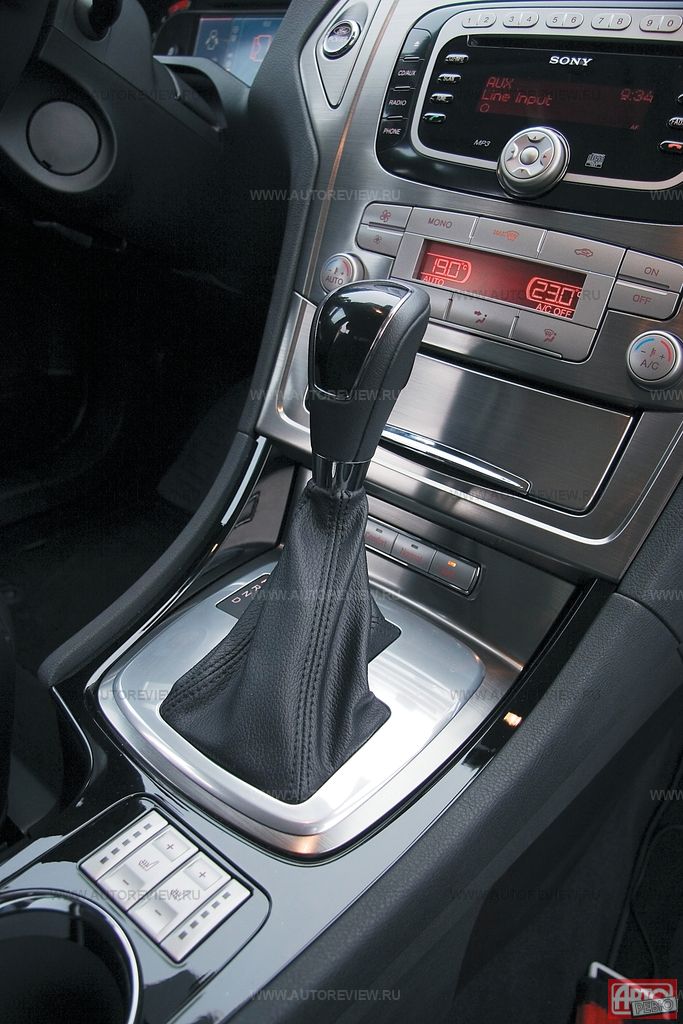
In the cabin, I examine the neat gearshift lever. I've seen something like this somewhere, seems like on a previous-generation BMW. Or is it the Bavarian scenery influencing me? Around here are BMW's domains, and Audi is nearby too.
First, I drove in Drive mode. It's unusual that even a light press on the gas pedal makes the transmission quickly and smoothly downshift. If that's not enough, it drops another gear. When you release the gas, it immediately shifts up, but a light press brings it back down. This happens smoothly, so it doesn't annoy, but rather creates a feeling of a lively mechanism.
There's also a sport mode — for that, the lever is moved to the right, away from you. That's purely Japanese: apparently, the transmission control was tuned for drivers with right-hand drive. No matter. Sport is sport, but the shifts are just as smooth. Except that the engine is now allowed to rev higher on a single gear, and shifts seem quicker.
The current gear is displayed on the screen if you nudge the lever forward or backward, activating "manual" mode. Too bad the number gets lost among other indicators on the large color display. And the tachometer is hidden under the steering wheel rim, though it's crucial in manual mode! "Manual" mode is almost honest: at 6500 rpm the engine hits the limiter, and downshifts happen automatically if revs drop below a thousand.
The logic of "manual" mode also resembles BMW: lever forward — downshift, backward — upshift. I find that more familiar than the opposite. I can't recall such adequate gearboxes, except maybe on those same BMWs.
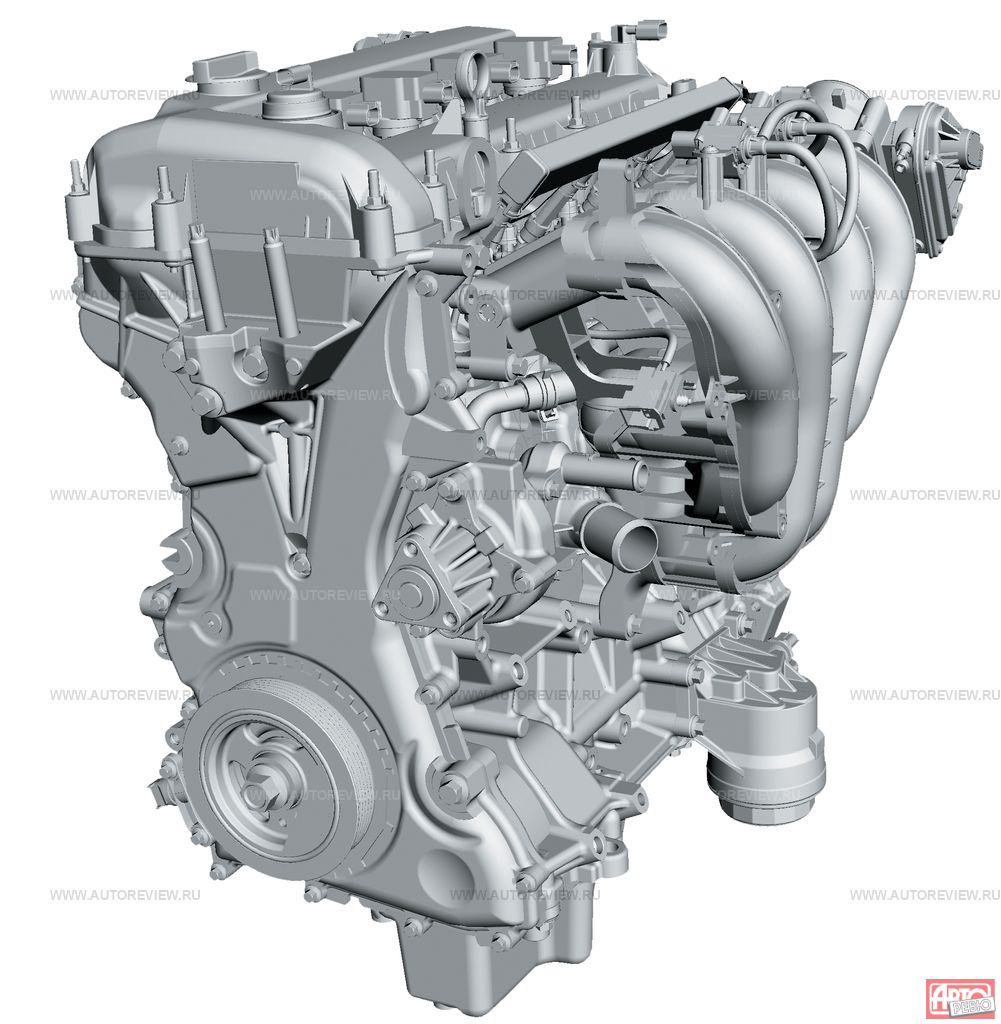 |
| Mazda 2.3 engine: aluminum head and block, chain-driven camshafts, four valves per cylinder |
Torque is even, without dips or surges — perhaps a bit boring, but convenient. It doesn't push you into the seat on acceleration, but on winding Bavarian roads you can easily keep pace with local Audis and BMWs. However, at high revs the engine is noisy, and that hum can hardly be called melodic. This sound could have been muffled — it's a comfort-class car after all!
Also, pressing the pedal to the floor for kick-down seems like an atavism. That's a legacy from times when automatics feared extra shifts and gaps between three or two gears were huge. Make the pedal lighter and without this step — perhaps the sense of dynamics would be more vivid.
Overall, the implantation was successful. For the current Mondeo, such a unit is the golden mean: the engine is not as sluggish as the old two-liter, and not as lively as the "turbo-five" from Volvo.
And the price is almost in the middle. The minimum cost of such a car is 785 thousand rubles. And the Mondeo in Titanium X trim with Alcantara seats, though it costs 908 thousand rubles, is still 50 thousand cheaper than the Toyota Avensis 2.4 with an automatic. Worthy rivals, we'll compare them sometime.