
“The new Mondeo has a wealth of service functions! Adaptive cruise control, navigation, built-in phone with voice dialing, and much more. To simplify interaction with all this, we took a cue from web designers and mobile phone manufacturers.” So says Stefan Becker, head of Ford's ergonomics team. The third-generation Mondeo indeed resembled a good mobile phone—many functions that even a child could figure out. The thing is, adults usually don't have the time…
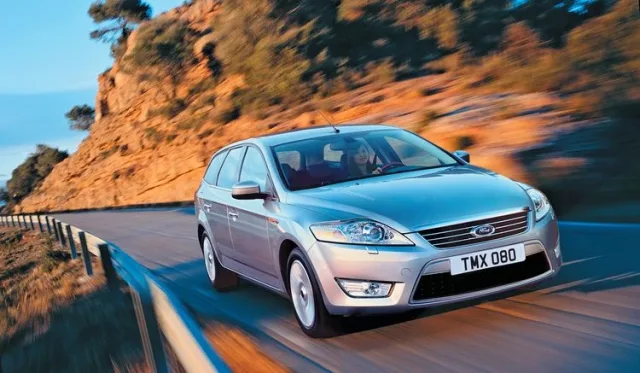
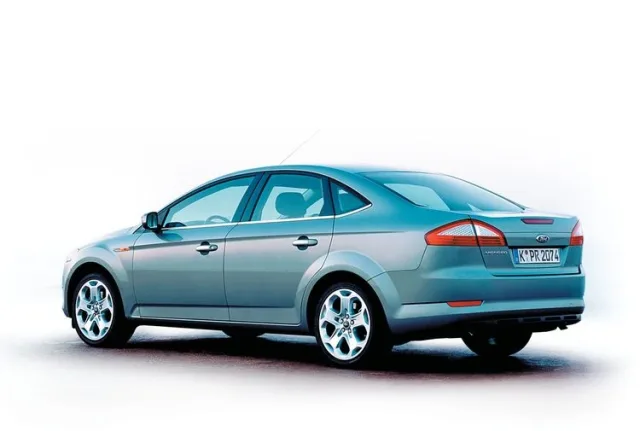
But it is handsome! Yet this beauty is technocratic, without a drop of sensual plasticity like the Italians or French. Wheel arches drawn with a compass, two longitudinal “stripes” on the humped hood of the “Volvo” type, laconic stampings on the sides, a rising window line behind the rear door, “fins” on the rear fenders… And together—a quite harmonious composition. The Mondeo is “kinetic” even “at a standstill”: from any angle, and with any of the three body styles, which, as before, are three—sedan, hatchback, and wagon. Chief designer Martin Smith and exterior designer Stefan Lamm have polished the idea of “kinetic design” to a shine.
 | |
| On the left—a Nokia mobile phone. On the right—a Ford Mondeo. Similar... | |
The first “public” example of the Kinetic design direction was the Ford SAV concept, shown in spring 2005 in Geneva—then Smith and Lamm, who had previously worked on the appearance of Opel cars, had just moved under the wing of the blue oval. Later, the SAV, without radical changes, turned into the production minivan Ford S-MAX, and it was with it (and also with the Galaxy minivan) that the new Mondeo shared the C1 Plus platform. “Plus” means it's a stretched “cart” from the C-MAX compact van.
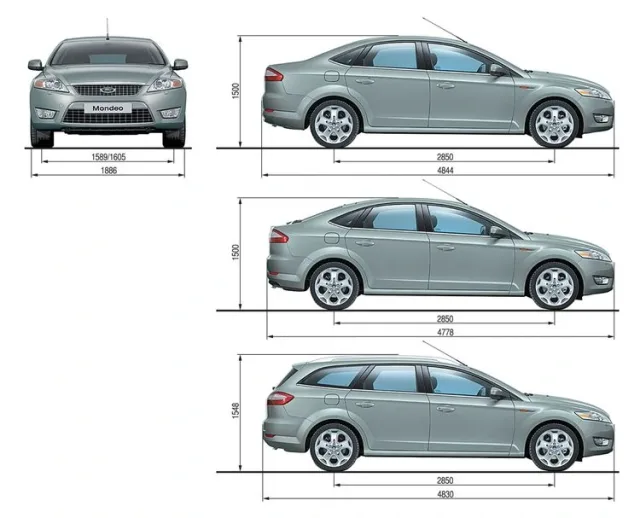
The new Mondeo has outgrown its predecessor in all directions: 114 mm longer, 74 mm wider, 40 mm taller, and, most importantly, the wheelbase has grown by 96 mm. But at the same time, the Mondeo has become heavier by a hundredweight. Judging by dimensions, the Mondeo is not just an overgrown D-class, but a full-fledged E-class sedan, or, as they often say here, business class. Don't believe it? Please: the Russian bestseller Toyota Camry is both more compact and somewhat lighter. But the dynamic design hides the dimensions—you simply don't notice the Mondeo's massiveness!
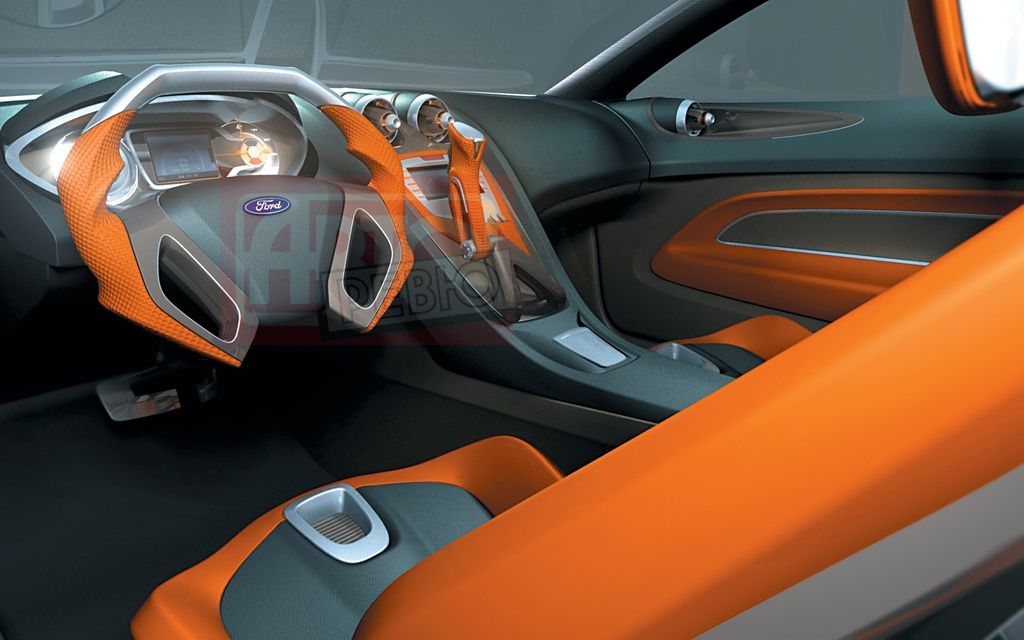 | |
| Many ideas of the new Mondeo, including the huge display in the “donut hole,” were tested by chief designer Martin Smith on the Ford iosis concept in 2005 | |
Space—plenty, and the trunk volume even for the sedan, even with a full-size spare, is 493 liters, and with a “space saver”—all 540 liters. But that's still 25 liters less than the Passat. With the front seat pushed all the way back (at my height of 176 cm, I couldn't even reach the pedals with my fingertips), I easily sat in the back and even crossed my legs.
— We selected the adjustment range with a two-meter-tall person in mind, even assuming they have damaged knee joints and legs that don't bend, — laughs ergonomist Stefan Becker. — But we didn't forget about petite ladies of 152 cm. Move closer!
Yes, the adjustment ranges (and on request, there can be eight adjustments, with electric drive and memory) of the comfortable seats with developed lateral support are the widest! This also applies to steering wheel adjustment both in height and reach.
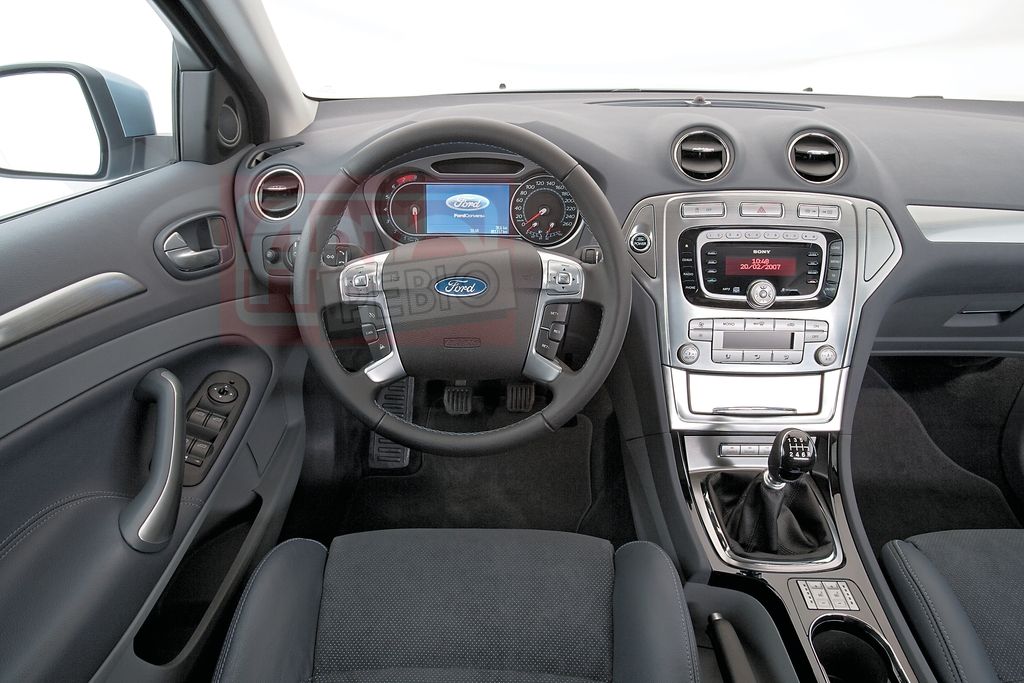 | 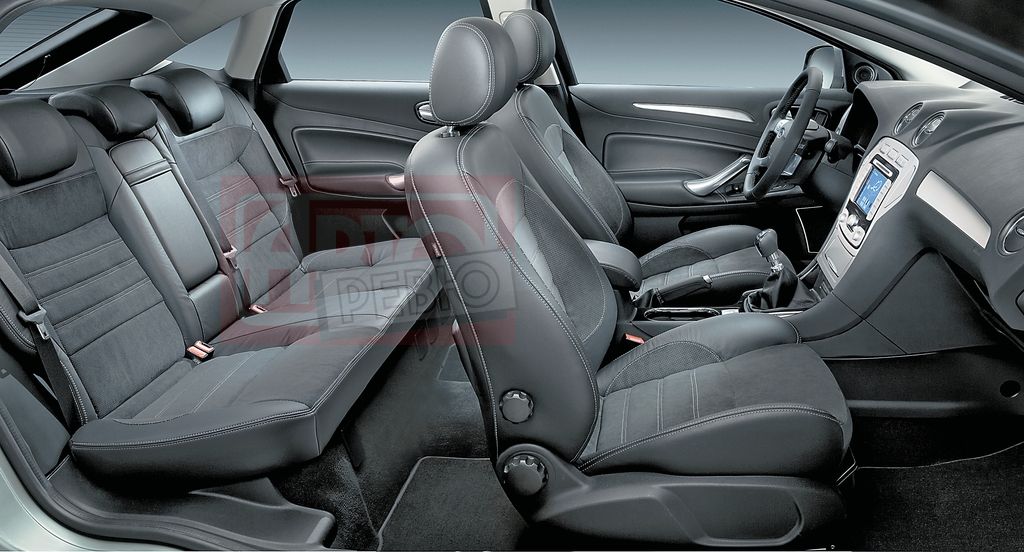 |
| The main difference between the Mondeo interior and the platform-sharing compact van C-MAX is the seven-inch display in the instrument cluster | Why not a business-class interior? After all, the wheelbase is like the Audi A6 |
But this is the so-called basic ergonomics. Now Ford specialists are improving the interaction in the “human–car” pair at a higher level—informational. For example, the seven-inch color display in the center of the instrument panel. Even in the Touareg SUV, it's half the size. This “TV” has cut the tachometer down to a semicircle, and the secondary instruments have become mere decoration.
— Today, people behind the wheel are much more interested in the navigation map than in engine speed and fuel reserve, — says Stefan, seeing my bewilderment. — Do you remember how about five years ago Michael Schumacher crashed into a truck on the autobahn? He was “playing around” with the stereo! And we're not racers, and we're unlikely to switch attention at Schumacher's speed. Therefore, the convenience of managing “secondary” functions was the top priority in developing the HMI.
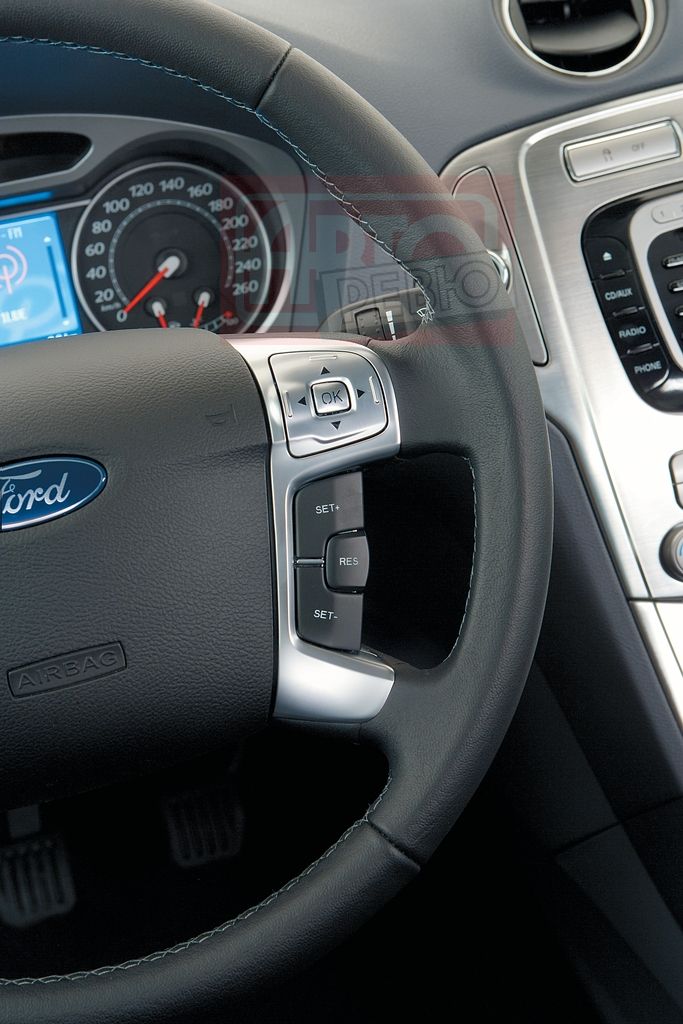
HMI (Human Machine Interface) is an interface with a human face, a kind of analogue of BMW's iDrive system. And a challenge to Opel and Volkswagen cars—they don't have such a thing yet. The HMI is controlled by a mini-joystick on the right spoke of the steering wheel.
— Most of us are familiar with such a joystick from Nokia and Sony-Ericsson phones, — says Stefan. — The new system should be intuitive, and since we use mobile phones every day, there will be no adaptation problems.
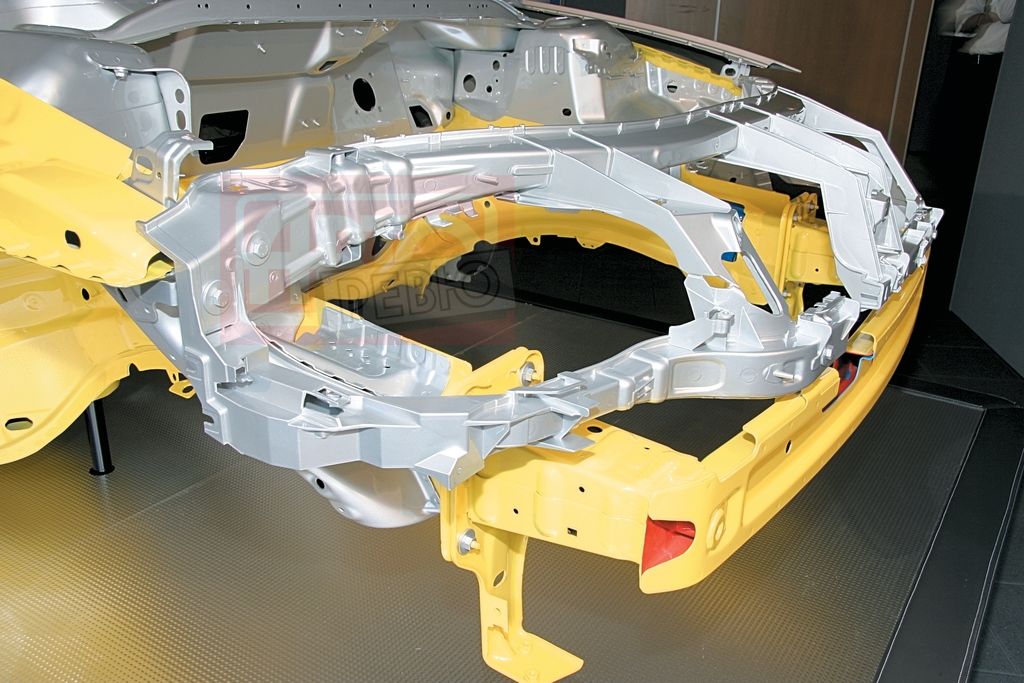 | 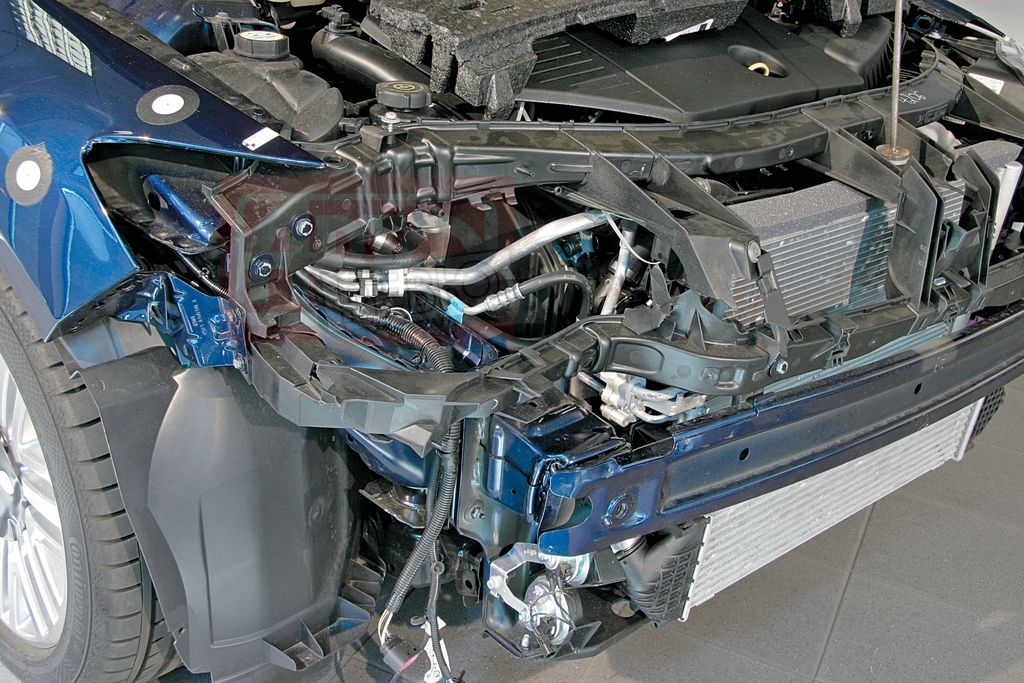 |
| In a 15 km/h impact, the bumper bracket crumples like an accordion under a load of 80 kN (almost eight tons), saving the side member. That only starts to bend at 100 kN of compressive load. The plastic panel to which the headlights and radiators are attached is also made “sacrificial” | |
He didn't deceive me: a minute was enough. On the top version Mondeo Titanium X, using the HMI you can control navigation and active adaptive cruise control (now these options are also available in Russia), “music,” the trip computer, built-in phone, and receive SMS from the car (for example, about tire pressure). The menu is displayed on two screens at once—the “instrument” one and the touchscreen on the center console. But control of the climate control system (“mono” in the base Edge version and dual-zone on all others) and the resistance of the optional electrically controlled Monroe shock absorbers is assigned to traditional buttons.
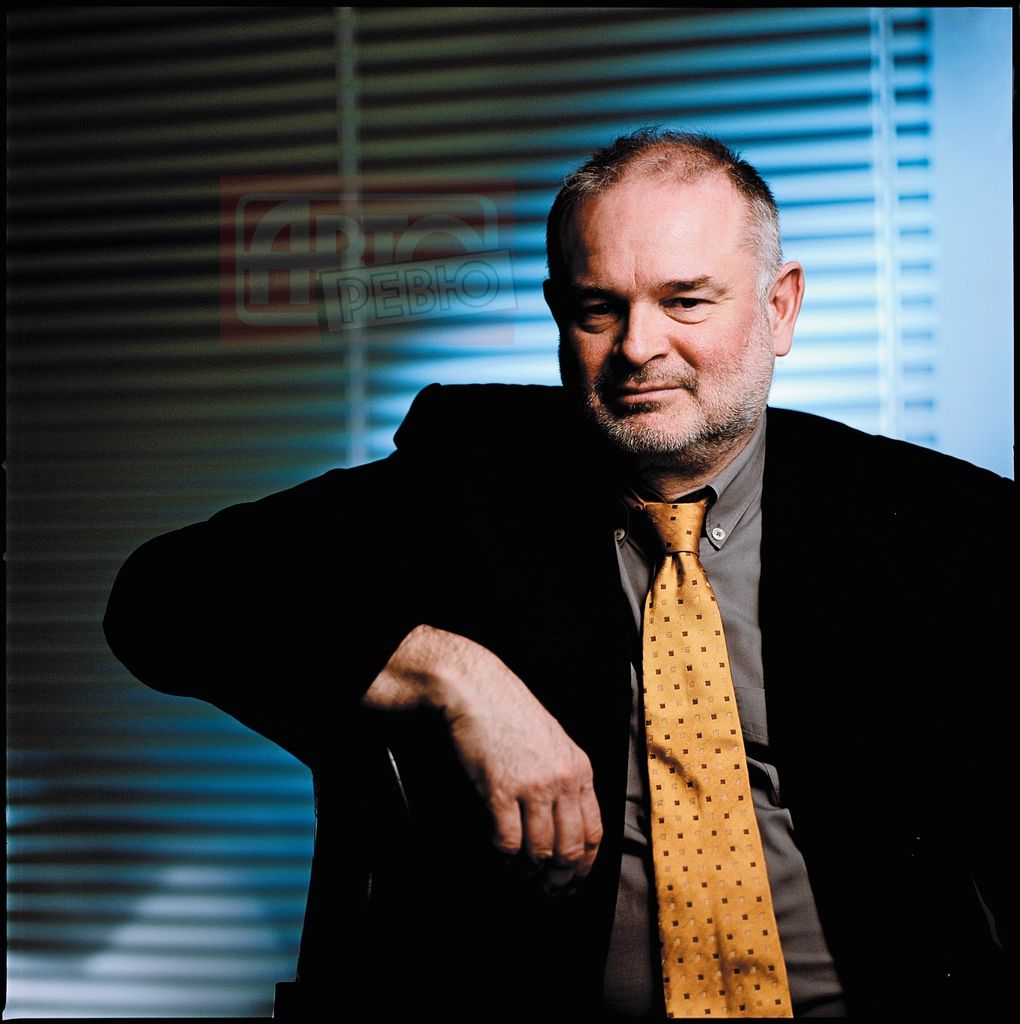 |
| Stefan Becker, head of the ergonomics team for the new Mondeo. The Human Machine Display owes its existence to him |
— For many, it will be simpler this way. But it's possible that in the future we'll “sew” these functions into the HMI as well, — Stefan summed up.
This “mobile phone” also has “changeable panels.” But they need to be changed not according to mood, but out of necessity—in a light collision at speeds up to 15 km/h. As before, the bumper beams with crushable brackets are designed to fully absorb the impact, preventing deformation of the body's structural elements.
And sacrificed in addition to the brackets is the plastic front panel—to save expensive radiators and priceless pedestrian legs. By the way, for the sake of pedestrians, the hood is also raised—10 cm above the engine; it even covers the potentially hazardous windshield wipers.
And how does the new Mondeo protect occupants? Already “in the base”—seven airbags, including a knee airbag for the driver, the proprietary Intelligent Protection System (as on the predecessor, see AR No. 18, 2000), high-strength steel reinforcements in the pillars and sills, “collapsible” pedals, and a steering column that moves forward strictly horizontally in a crash (as on the Focus II). It would be surprising if the Mondeo doesn't earn five stars in EuroNCAP tests. And to aid active safety—adaptive cruise control and swiveling “halogen” headlights (bi-xenon is also available on request, but it has a fixed side section for cornering light).
The engine range for the Mondeo is wide: four diesel and five petrol. Two versions of the 1.8 TDCI diesel (100 and 125 hp) paired with a five-speed manual—from the Focus (as on the platform-sharing Galaxy). The 2.0 TDCI diesel (140 hp) moved over unchanged from the previous Mondeo, along with a six-speed manual. There's also a detuned version of the same engine to 130 hp, and only such an engine is mated to the “universal” Japanese six-speed automatic from Aisin (it's also installed on the new Freelander and many Volvo models). In Russia, only the two-liter TDCI will be offered.
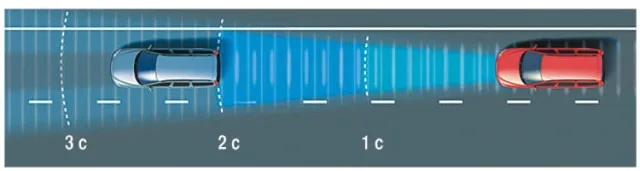
Adaptive cruise control can slow the Mondeo with deceleration of up to 2.4 m/s2 in the speed range from 30 to 180 km/h. This option will also be available in Russia
The line of petrol engines starts with a pair of 1.6-liter Duratec units familiar from the Focus. Thanks to a new intake manifold, a freer exhaust system from the two-liter engine, and revised Ti-VCT variable valve timing logic, they produce 10 horsepower more — 110 and 125 hp respectively. Peak power is now achieved at 6300 rpm instead of the previous 5500. As for the Aisin automatic, it is paired exclusively with the Japanese 2.3-liter engine (161 hp), borrowed from the Mazda 6. The flagship version is a turbocharged Volvo 2.5T unit with 220 horsepower, working in tandem with a six-speed manual gearbox.
Where did the V6, which was in the previous generation and is present in the main rival, the Passat, go? Engineer Olaf Kunde answered briefly: the turbo engine is not inferior in torque and power to the tuned "six" from the Mondeo ST 220. As for the sound, he added that silence was the priority: the average noise level was reduced by three decibels. At a speed of 160 km/h, the new model is no noisier than the previous one at 120 km/h.
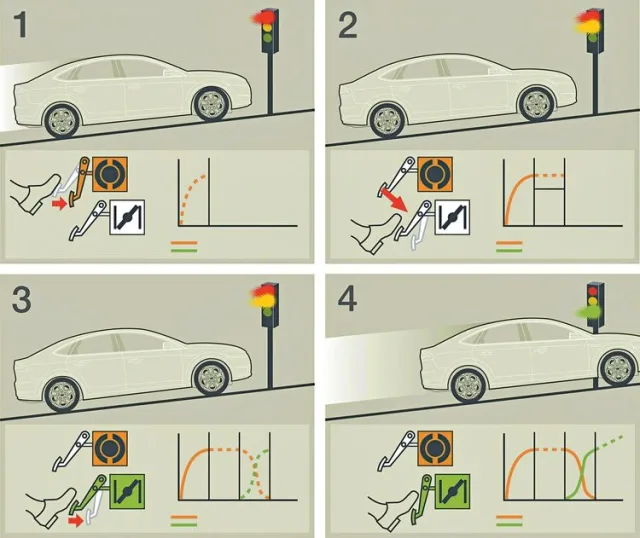
The Mondeo for the first time received a hill-start assist. When moving the foot from the brake to the gas, the system itself doses the fuel and gradually releases the brake pads, preventing the car from rolling back
It is possible that over time a 300-horsepower version of the 2.5T engine from the Volvo S60R will appear on the Mondeo. But will the future Mondeo ST300 be all-wheel drive? The suspension design allows this: at the front, as before, McPherson struts, at the rear — a multi-link scheme. However, Ford representatives avoid specifics: "There are no such plans yet." Let's see if their position changes in a year.
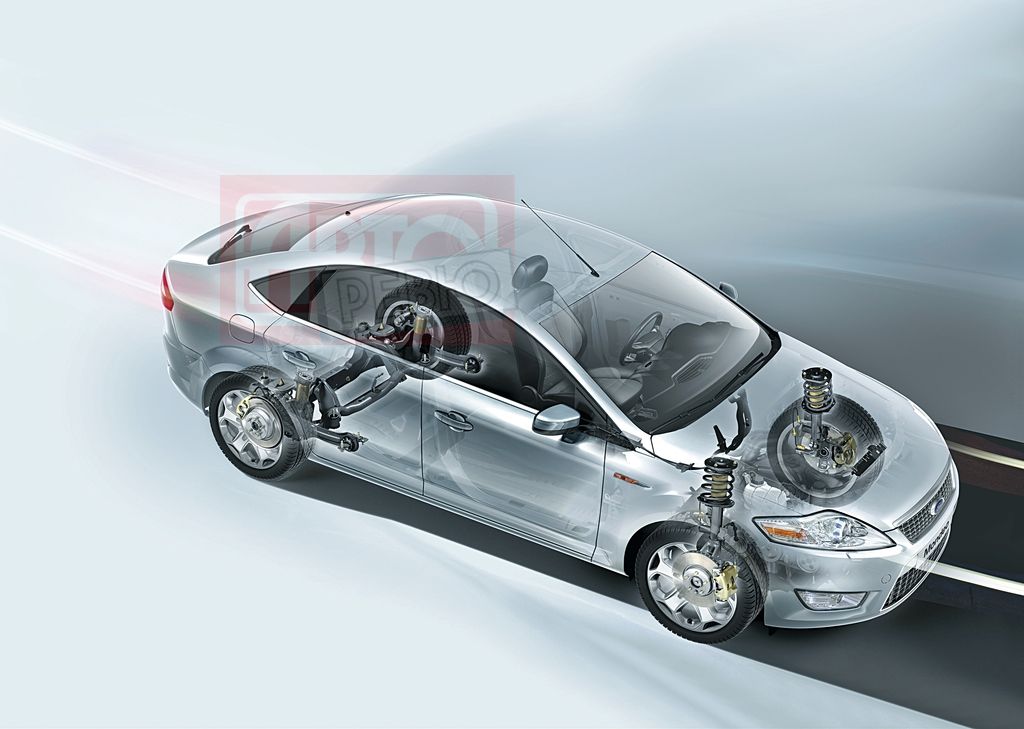 | |
| The chassis layout has not changed — McPherson at the front and multi-link at the rear, but the suspension elements themselves are new | Seven airbags are already standard. The knee airbag, in addition to protecting the legs, reduces the load on the seat belts |
Will the Mondeo be able to retain the title of the most driver-oriented family car in the class? We will find out the answer soon, but there are prerequisites for this. Ford people claim that the chassis, including the steering with variable ratio (from the electric power steering, as on the Galaxy/S-Max, they refused due to layout), was tuned without regard to ABS and the stability control system. Even though even the base Mondeo 1.6 has ESP, and optional electronic shock absorbers in a critical situation will change resistance every 0.2 seconds, reducing body roll.
I also got to visit the plant in Genk, Belgium, where bodies are welded and painted, and three models are assembled on one flexible line — Mondeo, S-Max, and Galaxy. A plant is a plant, there is enough manual labor. Productivity per worker is only 41 cars per year, while at the English Nissan plant this figure reaches a hundred. But there is one curious detail. The roof of the new Mondeo is not spot-welded to the side panels but soldered with a laser — butt-joint! The laser melts the copper solder wire, and the roof sheet hardly heats up. The seam thickness is only 0.75 mm. The joint is light, rigid, and neat — the "shame" does not need to be hidden under a molding. For the automotive industry, this is an innovation, although in the aerospace industry laser soldering has been used for more than three decades. As far as I know, besides Ford, only Renault uses this technology — for the roof of the new Twingo.
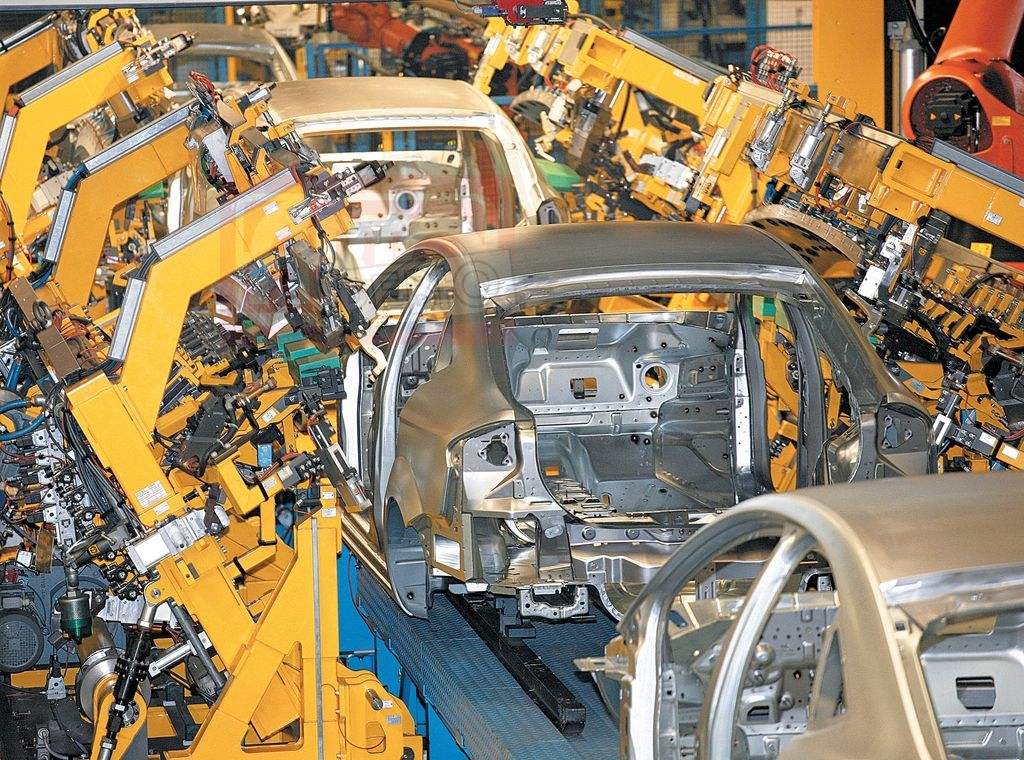 | 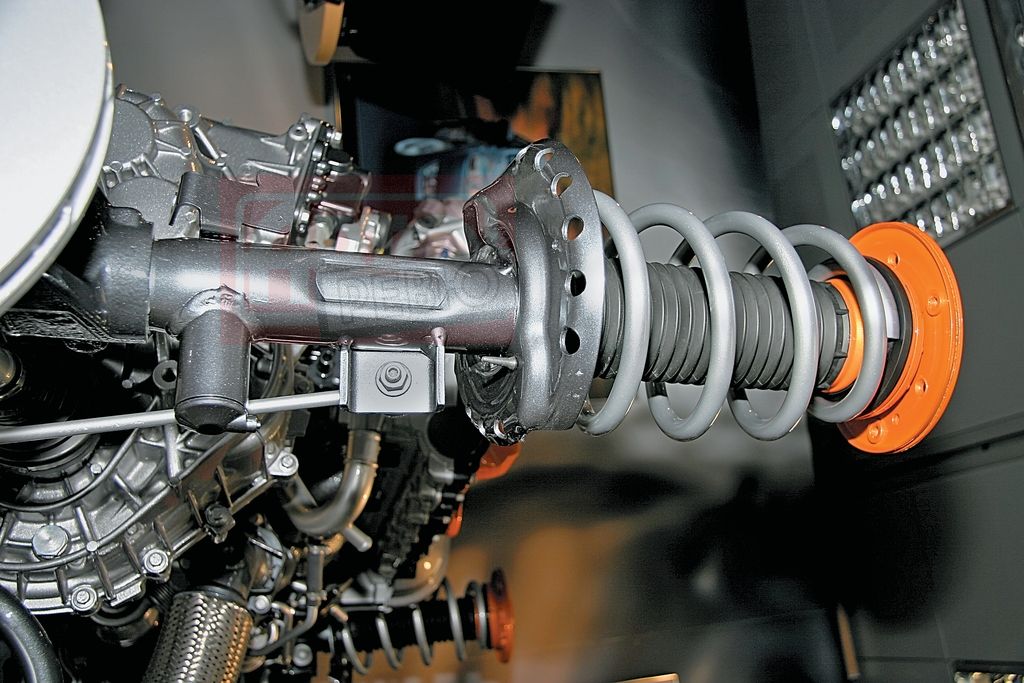 | 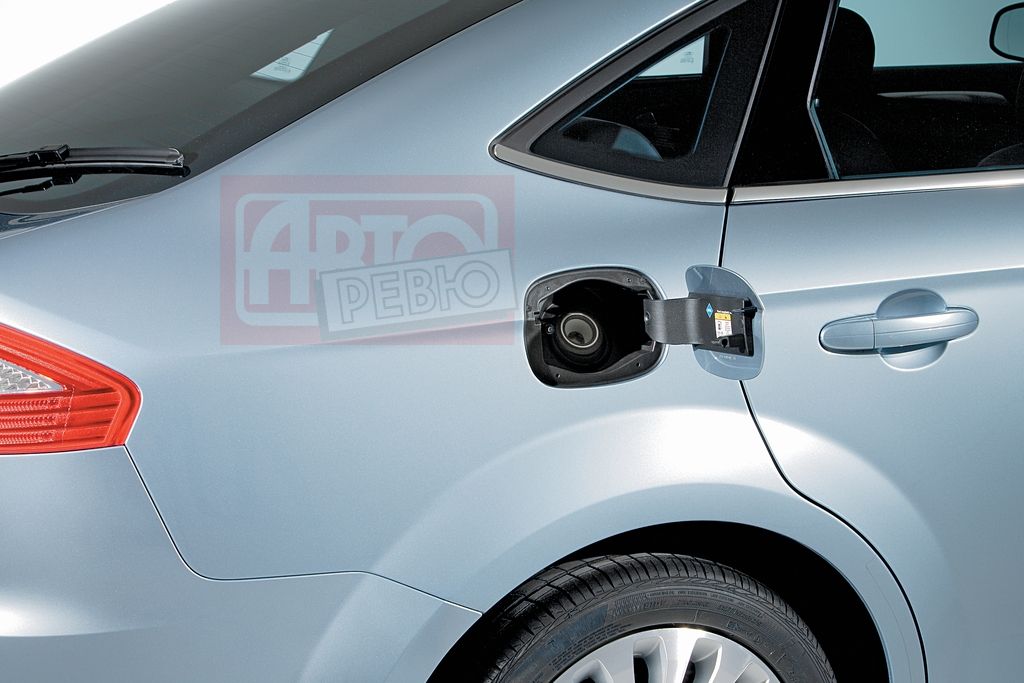 |
| Laser soldering of the Mondeo roof takes from 30 to 40 seconds depending on the body type | Optionally available are electronically controlled Monroe shock absorbers, as in the Volvo Four-C suspension. The arrow marks the valve control drive | The Mondeo is the first production Ford without a fuel filler cap. The Easyfuel system with petals prevents filling a diesel with gasoline and vice versa, recognizing the nozzles by the diameter of the spout |
Currently, 800 Mondeo and 300 minivans are produced daily in Genk. But flexible production allows easily changing this ratio depending on demand. In Europe, the D segment is noticeably shrinking: over five years its share fell from 16% to 12.4%. In Russia, the decline is even more rapid — from 17.7% to 4.5% in just three years. But these are relative figures. In absolute terms, the Russian D-class market has doubled: from 34 thousand cars in 2003 to 68 thousand in 2006. Therefore, Ford confidently speaks of growth in Mondeo sales in Russia. And this is not surprising — it is enough to look at the prices: from $23,850 for the base version to $34,000 for the Ford Mondeo 2.5 Turbo. The first cars will be received by customers in May, orders are already being accepted.
History in detail
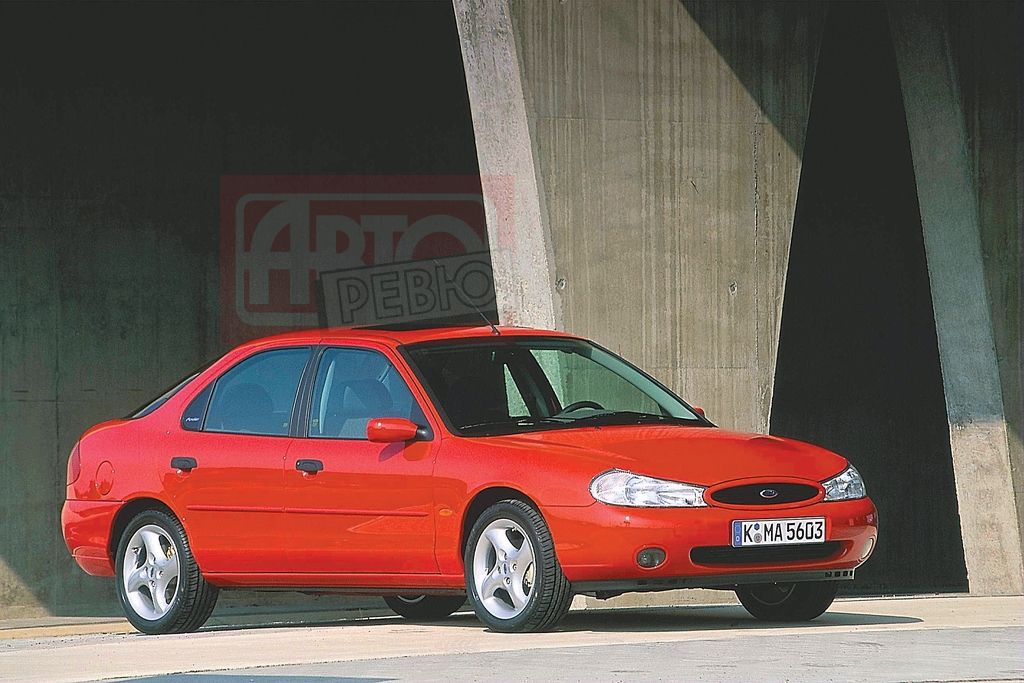
The Ford Mondeo, introduced in the spring of 1993, became a real revolution, replacing the outdated rear-wheel-drive Sierra. The car received front-wheel drive, modern engines, and a completely new approach to design. Engineers installed McPherson struts both at the front and rear, and the range of 16-valve Zetec engines covered displacements from 1.6 to 2.0 liters, producing from 90 to 136 horsepower. There was also a 1.8-liter turbodiesel on the list.
The exterior with smooth, streamlined lines matched the spirit of biodesign, which was in vogue at the time. Buyers were offered options that Sierra owners could not even dream of: anti-lock braking system, traction control, heated windshield, and shock absorbers with variable resistance. As today, one could choose one of three body types: sedan, hatchback, or wagon. Safety was also top-notch: a driver's airbag, seatbelt pretensioners, and for an extra charge — a passenger airbag and side airbags. Not surprisingly, in 1994 the Mondeo earned the title of European "Car of the Year."
 |
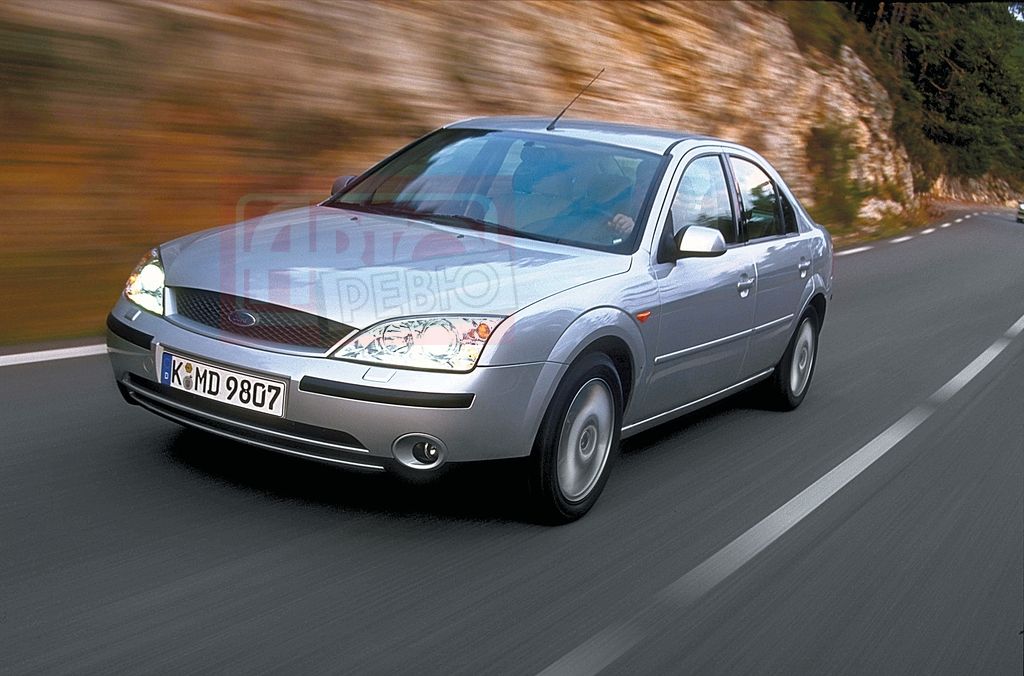 |
| First-generation Mondeo after restyling, 1997 | Second-generation Mondeo, 2000 |
In America, the Mondeo was sold under the names Ford Contour and Mercury Mystique. It was on these cars that the 2.5-liter V6 Duratec with 170 horsepower debuted in 1994 — it remained in the Mondeo lineup until recent years.
In 1997, along with the exterior update — the headlights became slanted, the taillights larger, and the bumpers more massive — the hot version ST 200 was released. Its V6 engine was boosted to 200 hp, which is reflected in the name.
The second generation Mondeo appeared in 2000. It became more spacious than its predecessor and went down in history as the first European Ford designed without paper drawings — everything was done in virtual space. True, all-wheel drive disappeared from the lineup.
The old Zetec engines with a cast-iron block were replaced by fully aluminum Duratec HE four-cylinders with a displacement of 1.8 and 2.0 liters (110 and 145 hp). Instead of the previous diesel, two versions of the new Duratorq DI turbodiesel appeared — 90 and 115 horsepower.
For the top version Mondeo ST 220, the V6 displacement was increased to three liters. In addition, the electronic stability control system ESP appeared in the options list.
The 2004 restyling brought new bumpers with large fog lights, a chrome radiator grille, and taillights with stripes. The diesel lineup was expanded with two TDCI turbo engines: a two-liter (90 hp) and a 2.2-liter (155 hp).
Over 14 years of production at the plant in Genk (Belgium), just over four million Ford Mondeo units were assembled.