
Ford Focus II. Focus-pocus
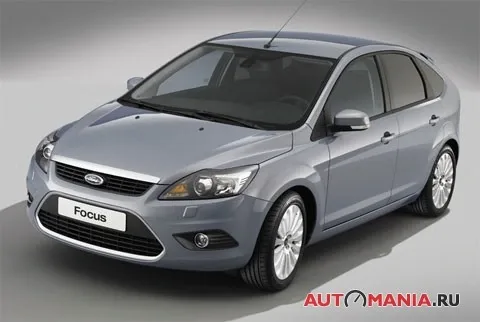
The second generation Ford Focus probably needs no introduction. This inexpensive compact hatchback has long established itself on our roads and has been confidently holding the lead in its class for several years in a row. It is unlikely that in the foreseeable future there will be a worthy rival capable of displacing it. But, as you know, nothing lasts forever — everything changes, and the Focus itself changes too. Moreover, the changes turned out to be so radical that many took the updated car for a completely new model.
It is worth noting that the marketers of Ford's European division managed to keep secret not only the list of planned improvements, but also the very fact of the upcoming restyling. For an American company, such an approach is atypical: previously, Ford people limited themselves to the so-called minor change — they changed the optics, added a couple of expressive lines, or updated the list of trim levels. For example, the previous Mondeo was updated twice, and each time the company announced this event in advance, presenting it as the main premiere of the season. Here — complete silence. And the result is impressive: the updated car has not a single body panel left from the previous version, and the changes affected not only the metal, but also the optics. The only part that was inherited is the roof. However, let's take it in order.
Having taken a leading position in the Russian market, the previous Focus actively pulled its "relatives" along, successfully coping with this task despite their constant updates and transitions to new platforms. But, as often happens, at some point the "shoemaker was left without boots": while its brethren had already acquired "kinetic" design, it still flaunted its usual appearance. Now its time has come.
Let us repeat: despite the serious changes to the body, this is precisely a restyling, not a change of generations. The car began to look older and fitter. The shape of the headlights, fenders, hood, and even mirrors changed. The bumpers acquired a more aggressive look, the lower unpainted "skirts" disappeared from them, and the moldings disappeared from the sides, which became more muscular. But that's individually. Overall, the front of the Focus began to resemble the flagship Mondeo, which set the fashion for a dynamic wedge-shaped style and an abundance of chrome. However, this is just playing to the gallery. The technical filling and dimensions — length, wheelbase, and record width — remained the same. The rear has hardly changed: the same shapes and vertical lights that go blind in bright sunlight. True, for an extra charge the buyer can now replace them with LED ones. But only if he chooses a wagon or hatchback. For the more prestigious sedan, oddly enough, in one hundred percent of cases, ordinary lamps are installed.
The interior of the updated Focus, in principle, also remained the same. However, Ford people, following tradition, offered customers several trim options. Firstly, a premium Titanium version appeared, which pushed the previous top-end Ghia into the background, which was distinguished not only by its rich "filling", but also by extreme conservatism. Titanium, on the other hand, is made in the techno style familiar from the Mondeo and the S-Max minivan. By the way, the Focus II in the Titanium version will appear only after the production of the flagship sedan is established in Vsevolozhsk. So those who want it will have to wait.
As for the trim itself, the main difference between such a car and its more modest brethren is the different design of the central tunnel. An armrest appeared between the front seats, extending by 8 cm. The control unit for the dual-zone climate control also looks different: instead of buttons, there are now small "knobs". As a very minor addition, Ford people offered a more presentable plastic of the front panel and a slightly redesigned instrument panel with red backlighting of the scales. Otherwise, the pre- and post-restyling versions are identical. This applies to engines, transmissions, and lists of additional equipment.
So, the Ford Focus II will be available in three body types and five basic trim levels. The most budget-friendly of them, as before, is Ambiente. Such a car is currently estimated at 346,000 rubles and is, although not too functional, a quite attractive three-door hatchback with the only available 80-horsepower 1.4-liter engine, manual transmission, and one airbag. At the same time, it has no ABS, air conditioning, or even floor mats. True, all the listed equipment and much more, including a different body type, can be installed for an additional fee.
But it is probably much easier to immediately take the Comfort trim, which is almost $1,000 more expensive. It is in great demand among domestic drivers. Such a car also has no ABS, and there is only one airbag, but it already has air conditioning, and most importantly, the buyer has the opportunity to choose a more powerful engine and equip the car taking into account a significantly expanded list of options.
The third trim with a minimum cost of 468,000 rubles is Ghia. Yes, Trend has been abolished and moved to the category of option packages for the Comfort version. Now it is called Sport. Ghia has everything a modern driver needs, with the exception of a few items that Ford people fundamentally offer only as additional equipment.
A separate option is prepared for those who do not like to "bother" with choosing the most necessary options and are ready to pay more. This is a special fixed version, which is called Special Edition (SE). Such cars cost almost half a million. But, firstly, they are assembled not in Russia, but in Spain. Secondly, owners will initially have all possible electronic systems and airbags, dual-zone climate control, cruise control, a radio with a CD player, and the maximum available electric package for the model, including, among other things, an auto-dimming rearview mirror. The only thing the buyer will have to choose is the power unit. However, here too, Ford people simplified the task: there are only three engines. Two engines have the same displacement — 1.6 liters, but develop 100 and 115 "horses", respectively. The first is equipped only with an "automatic", the second — only with a "manual". The same transmission is installed on the third 1.8-liter 125-horsepower engine available in this version. Well, after the launch in mid-2008, at the top of this pyramid will be, as we already mentioned, the Titanium version.
About the driving qualities of the updated Focus, in principle, you can not mention at all: everything remained the same. Surely, the preferences of the average buyer will not change either. In short, the most popular will remain the Focus with a 100-horsepower engine, which has quite typical habits of a modern hatchback: it has a brisk start, smooth acceleration, and good dynamics. The moderately stiff suspension also works decently. The car easily swallows small bumps, and handles large ones quite well — collectedly and clearly, without shaking those inside. At the same time, the Focus holds the road more than confidently and does not upset with serious rolls in corners. I would like to note the adequacy of the steering and brakes. The brake pedal, which is quite consistent with the applied effort, does not spoil the impression either, although during sharp braking it will be difficult to avoid nose dives at first.
Specifications:
| Dimensions: | Ford Focus II |
| Length (mm) | 4362 |
| Width (mm) | 1840 |
| Height (mm) | 1447 |
| Wheelbase (mm) | 2640 |
| Weight (kg) | 1317 |
| Trunk volume (l) | 362 |
| Engine displacement (cm3) | 1596 |
| Max. power (hp) | 100 at 5500 rpm |
| Max. torque (Nm) | 150 at 4000 rpm |
| Max. speed | 180 |
| Acceleration 0-100 km/h (s) | 11.9 |
| Average fuel consumption (l) | 6.7 |
| Price (rub.) | From 346,000 |
Magazine "Autoguide" March 28, 2008 No. 59
Source – AUTOMANIA.RU