
About the Fiat brand
Italy founded in 1899 Model range
General Information
FIAT (Fabrica Italiana Automobili Torino) is the largest automotive corporation in Italy. It produces passenger and sports cars, trucks, as well as industrial and agricultural machinery. The corporation includes enterprises engaged in the production of aerospace products. The company's head office is located in Turin.
Corporate History
The company was founded in 1899 by several investors, including Giovanni Agnelli. Initially, it assembled cars under license from Renault with De Dion engines. From the very beginning, Agnelli sought to implement his socialist ideas about cooperation between entrepreneurs and workers into production. In 1903, duties on imported steel were abolished in Italy, which spurred production growth: original passenger taxis, trucks, and buses appeared, and production of engines for aircraft and ships began.
Fiat cars for wealthy clients became popular not only in Italy but also around the world. At the same time, the brand achieved success in motorsport, surpassing brands such as Lancia, Storero, Miller, and Nazzaro. Fiat first loudly declared itself as an original manufacturer in Europe in 1911 by winning the Grand Prix races in France with the S61 model featuring a 10.5-liter engine.
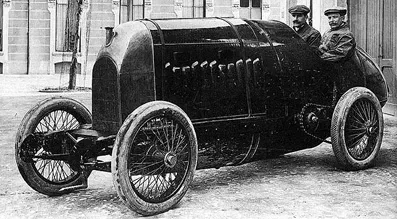
By 1912, Giovanni Agnelli realized the need to transition from artisanal assembly to industrial production and launched serial production of cars under the brand F.I.A.T. He was also one of the first to understand that every automaker should have its own style, developed by a designer. The pioneer of this idea was the Tipo Zero model of 1912. Its design was not original and resembled other cars, so Agnelli instructed craftsmen to create six different radiator grilles to give the car individuality. F.I.A.T. and Alfa Romeo were the first to order bodies for production cars from the Locati & Toretta workshop, and later from Zagato and Touring.
From the very beginning, Fiat established production abroad as well. For example, in 1909, a plant was opened in the American city of Poughkeepsie. This approach reflected Agnelli's views, who already planned to strengthen control over the production system. The result was the Lingotto project — the largest automotive complex in Europe at that time, which began operations in 1922.
World War I propelled Fiat to the leadership of the Italian automotive industry. However, in 1919–1920, the company and Agnelli personally experienced powerful strikes with factory seizures led by communists Antonio Gramsci and Palmiro Togliatti. Production was virtually destroyed. After Mussolini came to power, Agnelli returned to management. In 1927, the IFI holding was created to manage Fiat, where the Agnelli family still plays the main role.
In 1932, the Balilla model debuted, and its production soon reached 113,000 units. In 1936, the Topolino (Fiat 500) appeared — the smallest production car in the world. First, the shape and volume of the body were designed, and only then engineer Dante Giacosa determined the layout of the chassis components with rear-wheel drive.
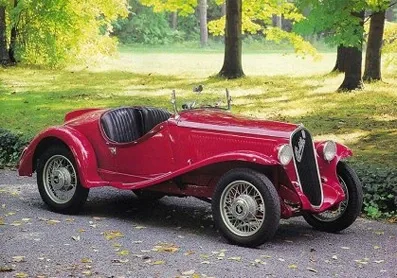
During World War II, Fiat factories were heavily damaged, and after the liberation of Italy, they were nationalized. The actual management of the company continued to be carried out by Vittorio Valletta. After the war, new models began to roll off the assembly line: the two-door sedan Fiat 500, station wagons Fiat 1100 B and 1500 D, and a year later — Fiat 500 C, 1100 E, and 1500 E.
In the 1950s, production of the Fiat 1400 began — a model with a unibody construction, which from 1953 became the first Italian car also available in a diesel version. In the same year, the Mirafiori plant produced the 1100/103 sedan and the 103 TV station wagon. Later, the small Seicento and Cinquecento were produced in millions, introduced the world to Italians, and became symbols of the economic miracle and industrial transformation of the country.
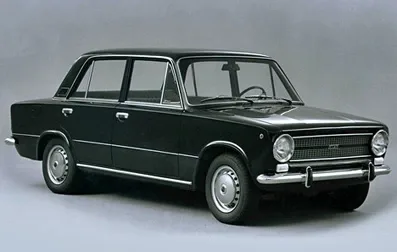
In the early 1960s, the company was privatized again. The grandsons of Giovanni Agnelli — Umberto and Giovanni Jr. — took the helm of the concern, bringing new approaches to production organization. In 1966, Fiat signed an agreement with the USSR to build the Volga Automobile Plant (VAZ) in the city of Stavropol-on-Volga, renamed by the authorities in honor of Togliatti. VAZ still produces a model based on the Fiat 124: the 2105 and 2106 are technically almost identical to this model.
In 1969, the Lancia company became part of FIAT. Alongside the emergence of various models — from the Dino to the 128, 130, 127, and 126 series — FIAT built factories in Southern Italy, Poland, and Brazil, using experience gained after acquiring brands such as Autobianchi and Lancia. The production of the Ritmo, launched in 1978 thanks to the revolutionary automated Robogate system, took the company to a new level.
In 1980, the compact Fiat Panda was presented in Geneva. Over 20 years of production, the company offered 60 variants of this model, with total sales reaching 4 million units. Today, the Panda is one of the cheapest cars in Western Europe. The Fiat Uno debuted in Geneva in March 1983. This model remained the most popular in Italy for over a decade. In Italy, the Uno was discontinued in May 1995.
The large front-wheel-drive Fiat Croma was introduced in December 1985. It was designed on a single "pan-European" Tipo 4 platform, also used by the Lancia Thema, SAAB 9000, and Alfa Romeo 164. The model was produced until 1996, after which demand fell, and FIAT decided not to continue in this class. In 1986, the Fiat group acquired Alfa Romeo and its divisions, strengthening its position in the global market. Soon, the Alfa 164 model was introduced, followed by a series of others, including the Alfa 156, launched in 1997 and named "Car of the Year."
The Tipo hatchback debuted in January 1988, the Tempra sedan in February 1990, the Tempra Station Wagon (also known as Fiat Tempra) and the Marengo van in May 1990. These models are built on the same platform but have different designs. The sports coupe Fiat Coupe based on the Fiat Bravo is one of the most affordable models of its type. The Coupe Turbo version was the most powerful and competed with the supercharged Mercedes-Benz CLK and Porsche Boxster. The model was first shown in November 1993. In the summer of 2000, a new Coupe Turbo Plus trim was presented at the Turin Motor Show.
The Fiat Ulysse minivan with a transverse engine and front-wheel drive was produced jointly with Peugeot/Citroën and Fiat/Lancia. The premiere of the family of 7–8-seat one-box station wagons as part of the joint U60 project took place in January 1994. The Fiat Barchetta was first shown in the spring of 1995 at the Geneva Motor Show, where it was recognized as the most beautiful convertible of the show. It is a front-wheel-drive sports convertible based on the Fiat Punto, a joint development of FIAT and the Pininfarina design house. In the summer of 2000, a "luxury" Barchetta Riviera trim was presented at the Turin Motor Show.
The Fiat Bravo/Brava was introduced by the FIAT concern in September 1995. This dual model won the "Car of the Year 1996" title. The Fiat Marea, a European D-class model, was introduced in July 1996. The Fiat Palio (Siena — Argentine modification) is a compact small-class car first shown in 1996. In 1998, the Fiat Palio station wagon began to be supplied to the European market.
In March-April 1998, the Fiat Seicento was presented in Turin — a car of the very small class. Like the Panda, it belongs to the European A-class. It was produced in Poland and sold on the European market. The Multipla model was first shown in the fall of 1998 — it is the first mid-size minivan in its class. In October 2000, the company released the Doblo passenger-cargo model at the Paris Motor Show. It was offered in both passenger and cargo versions (Doblo Cargo).
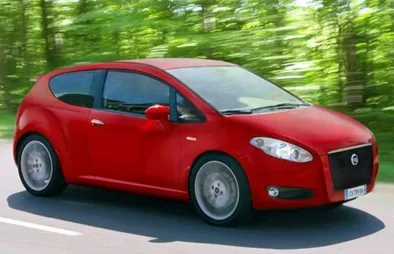
In Italy, the Stilo has been sold since October 6, 2002. The three-door hatchback, which replaced the Bravo, is intended for active driving enthusiasts, while the five-door is a "family" option. The Fiat Stilo was produced for six to seven years.
The concern gradually bought up bankrupt companies, and today under the "roof" of FIAT are gathered Ferrari, Lancia, and Alfa Romeo. It also owns several tractor factories.
Fiat in Ukraine
In 1996, the company "Italavto" was founded in Kharkiv, specializing in the sale of spare parts for cars of Italian groups: Alfa Romeo, Fiat, Lancia. In 1997, to provide a full range of services, the company opened a service station for the repair of Italian cars. In 1999, a branch was founded in Kyiv.