
 Comments
  Italy is a country that is impossible not to adore. Warm climate, stunning nature, culture with a thousand-year history, and people who greet you with Caucasian cordiality and spontaneity. And everywhere you go, you encounter FIATs — a brand that Russians fell in love with back in the early 70s. Italian cars have attracted me since childhood, as has the whole country. My grandfather, like many neighbors in the garage, drove classic Zhiguli — a direct descendant of FIAT.
First impressions
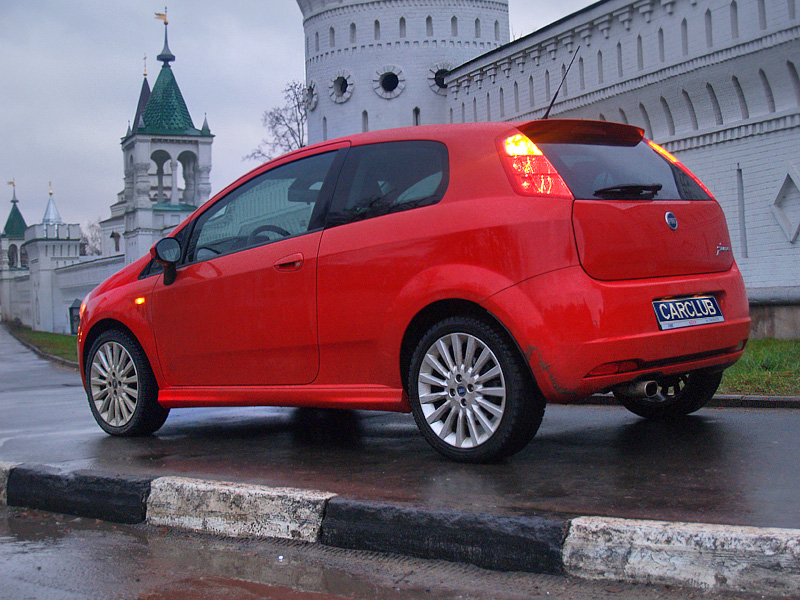
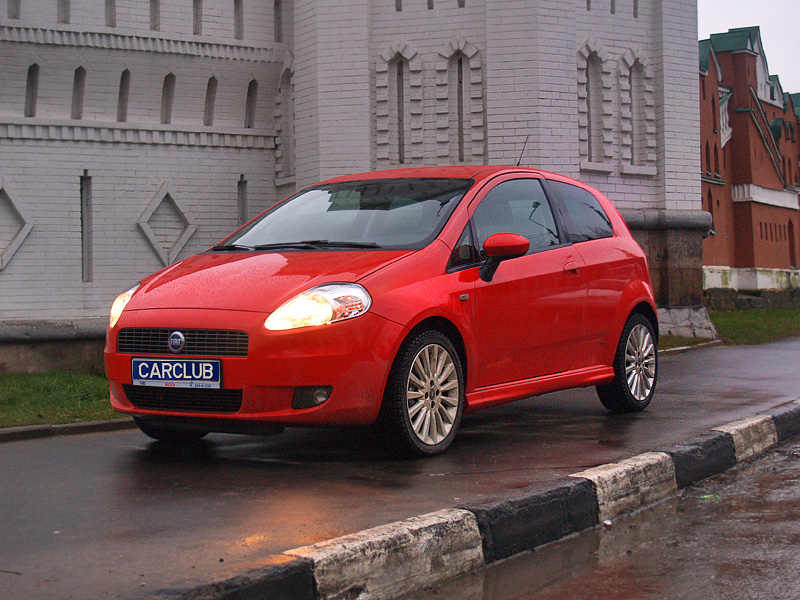
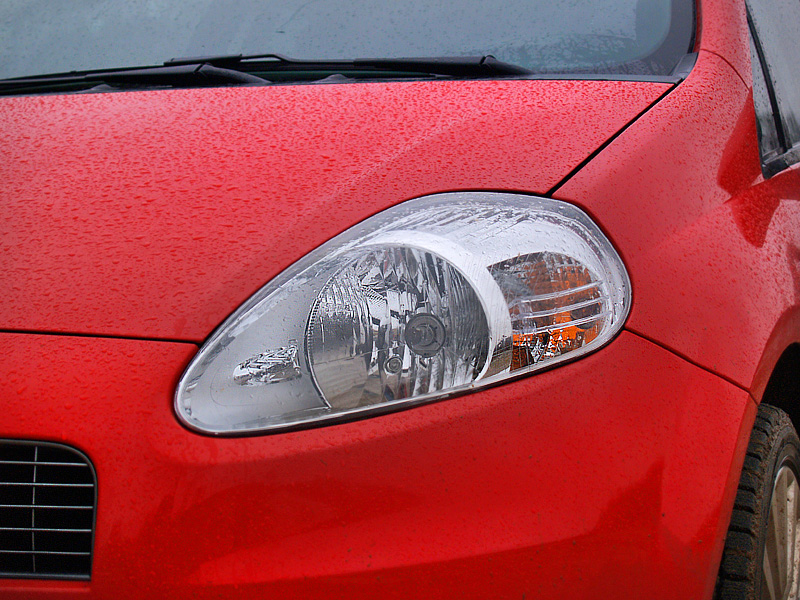
I also took a liking to the new Fiat Grande Punto. I liked it a year ago when I first saw its photos. Headlights converging toward the nose and rounded sides — it seems simple, yet it looks fresh and stylish. You can't confuse the new Punto with any other car, and its external resemblance to a Maserati will flatter any driver — unless, of course, you're behind the wheel of a Ferrari, where such a compliment isn't needed.
When I went to pick up the Grande Punto for a test, I was trembling with anticipation and deliberately didn't ask the dealers for any details. I wanted to figure everything out myself, feel the car, and finally understand what this hot Italian woman is all about. I wasn't even bothered by the fact that she's a relative of the boring German Opel Corsa — maybe such cooperation will benefit Fiat's reliability.
And how delighted I was when it turned out that I got the top version, the Grande Punto Sport — with a 95-horsepower 1.4-liter engine, stylish 17-inch wheels, and a bunch of pleasant options.
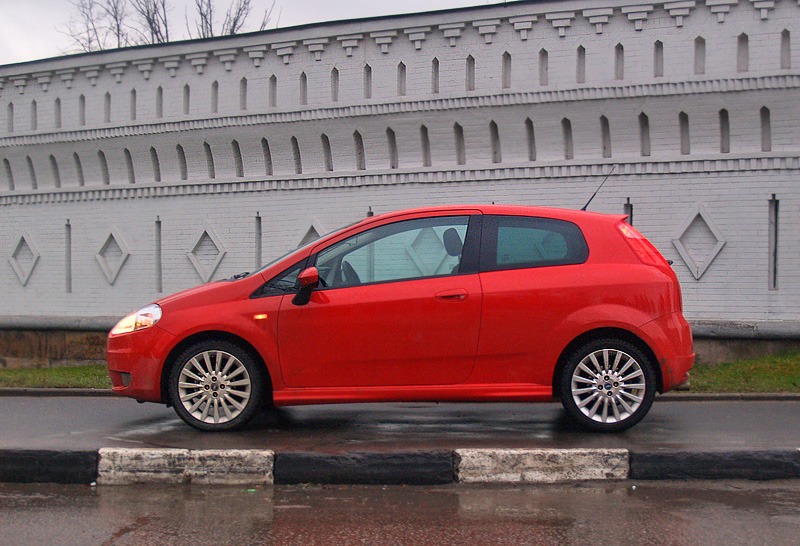
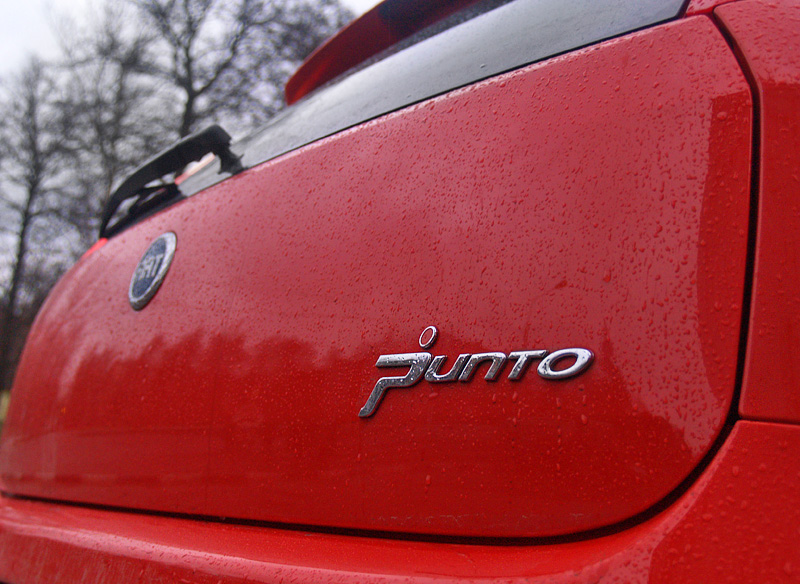
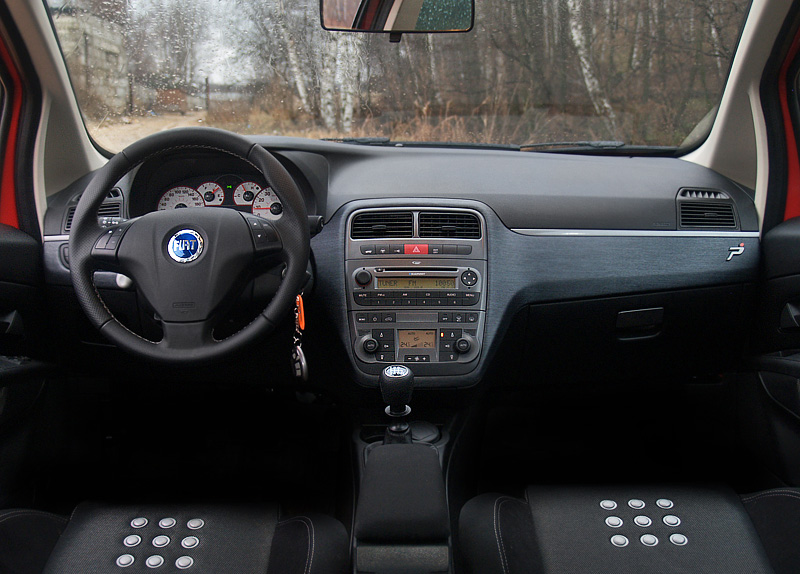
The Punto's interior impressed me even more than the exterior. Inside, solidity and sporty zest are surprisingly combined. I liked everything: the front panel with a massive visor, and the wide center console with a strong tilt. It accommodates both dual-zone climate control and many other large buttons. To keep this whole structure from interfering with the driver's legs, it's shifted slightly to the right of the car's longitudinal axis. The windshield is heavily raked, and its pillars form small triangular windows — they don't help visibility much, but they enliven the silhouette. Everything is so simple and attractive — almost every detail deserves praise. If I were a judge in a beauty contest, the Grande Punto would get a five for looks and a six for the interior (on a five-point scale, of course). I was especially pleased with the seats. The decorative rivets, fortunately, are completely unnoticeable to the back, and the seat profile is almost ideal, and the headrest is in the right place — with proper seating, it barely touches the head, like in real sports seats. The range of adjustment for the front seats is huge — convenient if you often have to work with a laptop in the car. In the back, of course, it's a bit cramped, but after all, Fiat, as they say in advertising, is a car for "positive egoists," so the rear seats don't affect the overall rating, nor does the trunk: its 275 liters is a perfectly normal figure for this class.
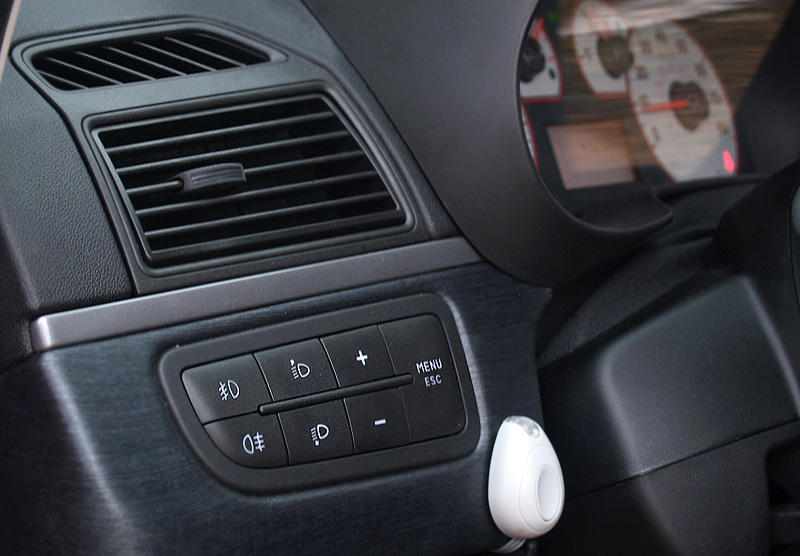
The instrument panel was a bit disappointing — during the day it seems dim: with the headlights off in cloudy weather, it looks black-and-white (white scales, black numbers) and too dark, and with the backlight on, the red numbers are hard to distinguish against the white background. But at night, there are no complaints — the large numbers are perfectly readable. The buttons on the center console could have been made not only large but also convex, though that would have hurt the design. Besides, finding them by touch is a matter of a week's habit.
And one last nitpick — the sound of the stock audio system with 6 speakers is too flat. But that's not a complaint, rather a reason for tuning...
On the road
And now, as they say, gentlemen, start your engines! I've always believed that the engine of an Italian car should be small-displacement and necessarily high-revving — otherwise, it's not a Fiat. Formally, the characteristics look ordinary. Peak power comes at 6000 rpm, and the rev limiter kicks in at 6500. But for a true Italian, this should be not the limit, but the usual operating mode.
But what's this — revving the engine to 2000 rpm and releasing the clutch, I almost stalled it. And it revved up not at all as briskly as I'd like. It feels like I'm driving a Doblo van, not a hot city hatchback in the Sport version.
Maybe the dealership filled the Grande Punto with bad gasoline? Fortunately, there was a little fuel in the tank, and after suffering for half an hour, I burned it, then filled up with proper 95-octane at a trusted gas station. But nothing changed. Up to 2000 rpm, there's no torque at all in any gear, from 2000 to 3000 it's also weak, and only after 3500 and up to 5000 rpm does the engine show some activity, then it deflates again and revs reluctantly to the limiter. The engine seems to tell the driver: "I've had a hearty lunch of excellent lasagna and washed it down with red wine, now I dream of meeting Monica Bellucci and don't want to go anywhere, even if you push me."
To the music
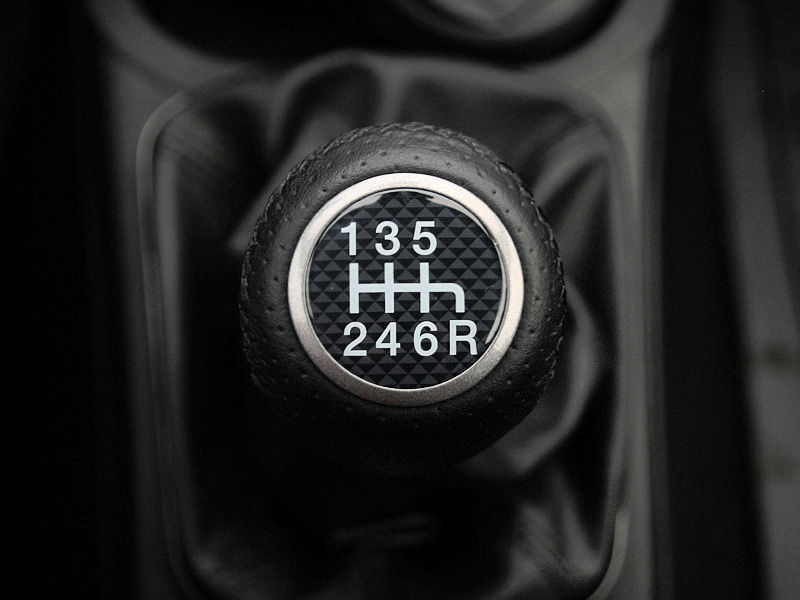
Only a Deep Purple concert managed to liven up the Fiat: under it, the Punto at least subjectively seems dynamic, and rock at full volume drowns out the engine roar in the range from 4000 to 6000 rpm, and the car gains more or less acceptable dynamics. True, it remains a mystery to me why a hot city car needs a 6-speed gearbox when only the first three gears actually work. The sixth can be kept just in case, if the Punto suddenly ends up on a highway. The other gears can be safely thrown away. Maybe without them, the car would be lighter and go at least a bit faster. The 4th and 5th gears actually came in handy only once, when I tried to reach maximum speed on the highway — for that, I had to sequentially rev out each gear to the limit. By the way, the Punto did reach the claimed 177 km/h, at least according to the speedometer, but driving at such speed turned out to be very uncomfortable. The little one absolutely can't stand ruts, which abound on most of our highways. Keeping the Punto on course is like going down a mountain on a snowboard: you never go straight, only in zigzags. The culprit is the flashy 17-inch wheels — a size worthy of a real sports car — 205/45 R17. They're also surely to blame for the Punto's sluggish starts — the 1.4-liter engine with a maximum torque of 127 Nm at 4500 rpm finds it hard to spin such huge tires. A launch with wheelspin is almost completely ruled out — it's only possible on wet asphalt and only at the cost of a burnt clutch. On smooth roads, the situation improves — the Fiat responds precisely to steering inputs, but it becomes noticeable that the light and tall Punto is susceptible to crosswinds.
The Fiat turned out to be surprisingly quiet: even on winter non-studded Yokohama tires, you can easily talk in the cabin up to 120 km/h. And if we had a more modest version with narrow 15-inch tires, the Punto would surely be an absolute quiet one, which is a real achievement for a B-segment car.
The city is the true element of this red "little devil," and it's here that it feels like a fish in water, if, of course, you turn a blind eye to the lack of torque. The electric power steering has two settings: normal and lightened, called City. In the second case, the steering wheel can be turned literally with one finger, which will surely be appreciated by the fairer sex. At the same time, there's always a noticeable reactive force on the wheel, and it tends to return to the neutral position. Personally, I liked the standard mode: you have to turn the wheel with a bit more effort, but the car feels better and doesn't react to random micro-movements of the wheel. Given the low-profile tires, the car responds instantly to the slightest turn of the wheel, and combined with moderate body roll, this makes the Fiat resemble a small Alfa Romeo. Even with the stability control system turned off, the Punto can confidently attack the sharpest corners — transparent steering and a composed suspension won't let you down. True, it's worth remembering that there's practically no torque reserve on the drive wheels, so it's better to drop a couple of gears in advance.
By the way, Fiat is currently hard at work on the creation of the Alfa Romeo Junior, which will be built specifically on the Punto platform. One can only hope that a suitable engine will be chosen for the new model — the current engine could easily tarnish the entire sporting heritage of Alfa Romeo. Meanwhile, my acquaintance with the Grande Punto left me with mixed feelings, which only came into balance after returning the car to the dealership and studying the price list.
How much does it cost?
The base version of the Punto with a 65-horsepower 1.2-liter engine is priced from 420,000 rubles ($15,800). Standard equipment includes ABS, front airbags, Isofix anchors, heated seats, power mirrors and front windows, an onboard computer, and central locking. The five-door modification will cost 20,000 rubles more. For 15,000 rubles, you can add air conditioning as an option.
The Grande Punto version with a 1.4-liter engine (77 hp) will set you back 455,000 rubles, and the five-door is another 10,000 more. In addition to air conditioning, for 40,000 rubles you can get the MTA Dualogic robotic gearbox, which automatically crosses the psychological threshold of half a million rubles ($19,000).
The tested Fiat Grande Punto costs, hold on tight, — 625,000 rubles ($23,500). And this is the price of a very attractive, but still compact car, which in terms of dynamics is not far from the domestic "ten"? It seems that, unlike Italy, loving Italian cars and especially supporting them with your rubles or dollars is quite costly here — for this money you could get a golf-class hatchback with a two-liter engine and honest 150 hp.
Shock, Grande-shock.
Text: Leonid Pavlov. Photo by the author.