FIAT Doblo Panorama
Cargo transportation with comfort — it's real
Engine - 1.48V
Max power - 77 hp/6000 rpm
Max torque - 115 Nm/3000 rpm
Max speed (km/h) - 148
Gearbox - 5-speed manual
Front-wheel drive,
Front suspension MacPherson, rear dependent, beam, springs
Payload capacity - 600 kg
Length - 4253 mm
Width - 1722 mm
Height - 1818 mm
Trunk volume
L min/max 750/3000
Curb weight - 1230 kg
Fuel consumption (l/100 km):
city - 9.2
highway - 6.3
combined - 7.4
Fuel tank volume (l) 60
Price $16,032 (128,251 UAH)
Base price $14,851 (118,801 UAH)
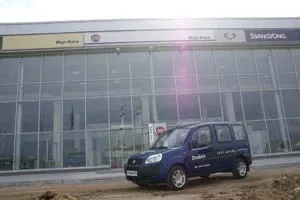
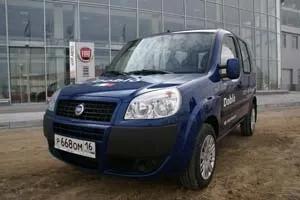
Over the company's long history, the lettering of FIAT has changed many times, following the trends of the times. However, each version retained recognizability and a connection to tradition. It is important that this is done by professionals who carefully treat the stylistic heritage of the brand. Many stories are associated with the FIAT logo. One of them tells of the appearance of five slanted stripes. Allegedly, once the director of the enterprise (according to another version — the chief engineer) Mario Maioli witnessed a power outage. In the evening, he was driving past the factory, and suddenly the lights went out. Against the twilight sky, huge letters FIAT from the roof of the building froze. This picture impressed Maioli so much that he grabbed a pencil. He sketched this industrial landscape: the darkening sky, the letters, and the gaps between them. This is how the logo appeared, which first adorned cars in 1982.
1899 The first logo of the company, which began producing cars in 1900. The emblem features only the decoding of the FIAT abbreviation, almost without decoration, except for the shape of the backing.
1901 The sign that was placed on cars from 1901 to 1904. The font chosen then subsequently became the corporate one, only its proportions changed. The graphics are a set of decorative elements not related to the company's activities. At the top, space is left for the serial number: the emblem served as a plate, which was possible with small production volumes.
1904 The sign became oval. The graphics simplified and became more modern. This logo is considered the base for all subsequent ones.
1921 The emblem became round. A laurel wreath — a symbol of winners — was added to the design, noting successes in motorsport.
1925 Dark red color was used for the first time. Over the next ten years, the shape and graphics will remain unchanged, only the color scheme will change according to fashion.
1931 A sharp change in appearance. All decorative elements were removed, the shape now repeats the contours of the radiator grille. The corporate color is dark red.
1932 The logo shape changes following the radiator grille, now it narrows downward. The previous font is distorted for compatibility with the new shape.
1968 Complete update. New font, new corporate color. The letters of the name are separated by stripes. Later, the emblem simplified to five slanted stripes, which were used on cars from 1982.
1999 The rebranding also affected the logo. The classic round emblem of the 30s was taken as a basis. The original corporate font was returned, two rings of a stylized laurel wreath frame the sign.
2006 The last change to date.
The logo looks modern: gradients, an internal vertical raster grid, and characteristic edge execution define a style that follows the latest trends in graphic design.
The sign is based on motifs from the emblems of 1931–1968.
A new chrome edging instead of the traditional laurel wreath creates a volume effect, and the shape of the inner part with the color scheme refers to the FIAT 524 model of 1931, the first to receive a rectangular sign instead of a round one.
Thus, the new logo, reinterpreting the old emblem in a modern graphic key, embodies the spirit of FIAT — a dynamic company that remembers and is proud of its past heritage.
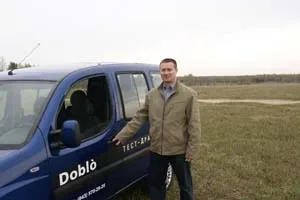
Vyacheslav Medvedev, «Avtoclub-Kazan»
In the market of small cargo-passenger vehicles, many models of different brands and with different engines are presented. Therefore, while testing the FIAT Doblo Panorama, I involuntarily mentally compared it with classmates, albeit in absentia. In any case, when it comes to the price-quality ratio for professional use, this car is one of the most attractive. The test vehicle is equipped with a 1.4-liter engine with 77 hp, paired with a five-speed manual, and is presented in the middle trim Classic. It differs from the minimal Base by electric mirror adjustment with heating, air conditioning, and a second — passenger — airbag. Accordingly, the price of this version is higher by 35,000 rubles. In the more equipped Comfort trim, added: ABS, left sliding door, fog lights integrated into the bumper, driver's seat armrest, height-adjustable driver's seat with lumbar support, heated driver's seat, radiator grille and rear license plate frame in body color. This version is more expensive than the Classic variant by another 35,000 rubles.
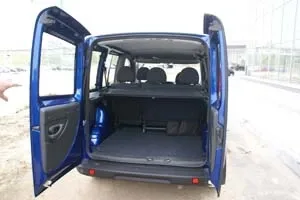
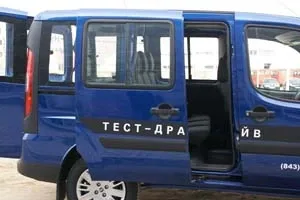
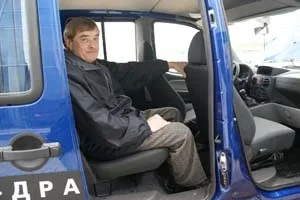
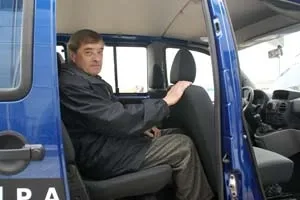
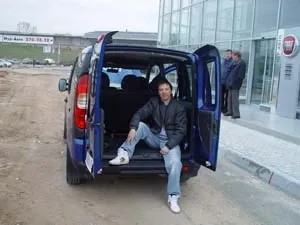
Inspection of the cargo compartment and options for transforming the interior left pleasant impressions. The rear swing doors open a wide opening for loading and unloading. At the same time, a convenient wide step under the rear doors will be a good aid in this process. If you need to increase the volume of the cargo compartment, the rear row of seats can be folded in a few seconds. To do this, I had to remove the middle headrest and fold the rear seats forward, obtaining a flat cargo area. If necessary, they can also be folded in a 40/60 ratio. Having folded the rear seat, you can easily enter the cargo compartment through the right side sliding door and help, for example, loading bulky or heavy cargo. In the two inexpensive trims, only the right sliding door is provided, and instead of the left one, there is a solid side panel with similar side glazing. It must be said that with such payload capacity and volume, which implies transporting small boxes or packages, an additional door to the cargo-passenger part is unlikely to be often in demand. If the need still arises to exit from the left side, the front driver's seat can be moved forward and the backrest tilted toward the steering wheel. The existing right sliding door closes without extra effort and silently, has a latch in the open position. The windows in the rear row are sliding. The rear row of passenger seats is slightly higher than the front ones and provides comfortable seating and good visibility.
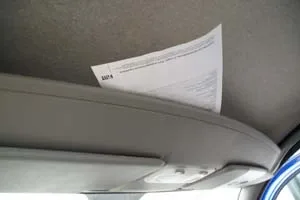
The front seats provide decent comfort, offering a «minivan» high seating position. Excellent visibility forward and to the sides fully corresponds to the word Panorama in the name of this little car. There remains an impressive amount of space above, sufficient even for the tallest drivers. Visibility through the large exterior rearview mirrors is good, but the interior mirror is a bit small, and if you are used to «scanning» the rear sector through three mirrors, you will have to «extend» it with an additional — wider one. Most likely, it was installed with the expectation of viewing the rear seats and cargo in the compartment. To be fair, it should be said that getting used to viewing through two large exterior mirrors will not be difficult. At the top above the windshield, there is a wide and spacious shelf where you can put some papers and accompanying documents.
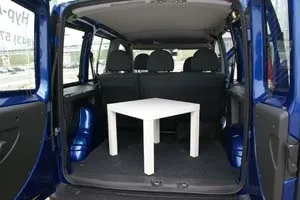
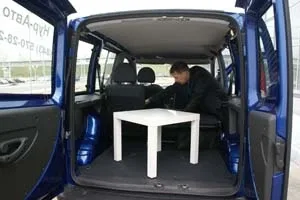
The engine offers moderate dynamics and good noise comfort. It honestly pulls on its 77 horses, providing smooth starting and shifting. The lever of the 5-speed gearbox is located on the central console, which is a successful ergonomic solution.
Gears have to be shifted quite often — they are short, which helps the car accelerate confidently even with a full load. From this, we can conclude that a loaded car will go almost as briskly as an empty one. Apparently, for this same reason, the gas, brake, and clutch pedals were made very light. At first, this is a bit confusing, but over time you get used to it. To adapt faster, you can drive for a while in soft-soled shoes. Thanks to the successful combination of engine power, vehicle weight, and clutch settings, starting off is smooth, even if you overdo it a bit with the gas.
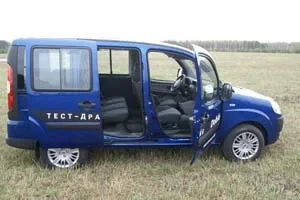
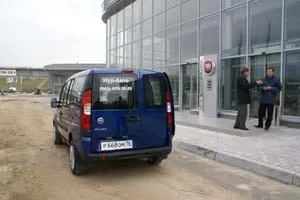
The suspension here is moderately stiff and resilient, so comfort remains quite decent on any uneven surfaces. You drive over most cracks and small potholes feeling only a slight vibration, and only large pits respond with elastic jolts that reach the body a bit—mainly through the rear axle. At the same time, these chassis settings do not let the car lean heavily in corners. On the test site, simulating various turns showed that body roll is more than moderate for a car with passengers—after all, with cargo, hardly anyone will drive recklessly. FIAT can boast a solid ground clearance, and it easily overcomes any dirt road bumps. This is important for Russian realities.
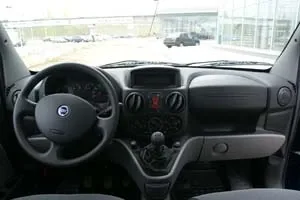
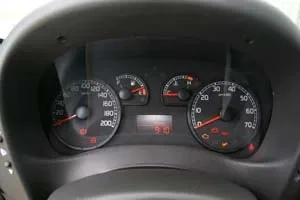
Overall, the car wins you over with its calm nature and equipment based on the principle of “nothing extra.” It has all the most necessary functions for daily cargo transportation. Even in the base version, there are power steering, an immobilizer, rear hinged windows in the cargo compartment, central locking, power windows, heat-absorbing glass, a height-adjustable steering column, and an onboard computer. The car also has audio preparation—six speakers and an external antenna. With the current abundance of stereos and DVD/CD receivers, the absence of factory equipment in the trim levels is rather a plus, because to cut costs, they usually install some simple device. Here, you have the opportunity to choose a device to your liking. If you use the Fiat as a family cargo-passenger vehicle, the slightly Spartan finish of the rear half of the cabin will be felt, but this is more than compensated by the possibilities of transporting dacha-tourist belongings—the cabin transformation allows a lot. Plus, the car can also be used for professional cargo transportation.
Alfred Mardanov, “Autoclub-Kazan”
Already after the test, I suddenly realized that quite recently we had the Fiat Bravo on test (issue 7 for 2008). And, interestingly, despite the fact that the cars are completely different in their essence, purpose, and character, they have a lot in common. For example, a very light pedal assembly. Looking ahead, I’ll say that after this test, I couldn’t get used to the stiff pedals of my car for a long time, which previously seemed ideal to me. So the softness of the pedals seems to be a signature feature of modern Fiats. The fact that the Doblo steers well did not surprise me—I’ve been familiar with this brand feature for a long time. But the fact that such a “bus” reacts so sharply to the steering wheel pleasantly surprised me! On the highway, you can clearly feel how the car holds the road. Neither the quality of the surface nor the side wind (and it was blowing quite strongly that day) bother it—it holds its course perfectly, not deviating a single centimeter.
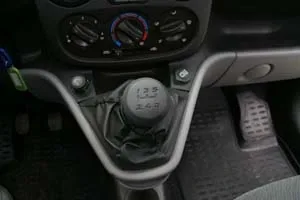
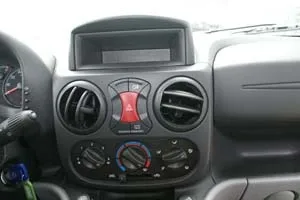
Perhaps it’s strange to talk about a nearly commercial vehicle in the context of handling and cornering ability—it’s unlikely there’s a driver for whom this would be a decisive factor. But the fact that the car at 80–90 km/h can avoid an unexpected obstacle and stay on the road—I think it won’t be superfluous. And if we talk about the driver, we can’t help but note the excellent visibility provided by the upright seating position and large windows. True, when returning to the city, the side mirrors let us down: on the highway they were informative, but in the city that wasn’t enough. I won’t even mention the interior mirror—it’s only good for observing what’s happening in the cabin. Looking back through it is hindered by the headrests, the rear door, and the wiper. There are also complaints about the instrument panel—the speedometer is too small. If on the Punto it looks normal (there they seem almost the same), then on the Doblo it’s located farther from the eyes, and you’d want a larger dial. However, the gearshift lever is conveniently located—right under your hand, and given that the gears are short and you have to shift often, this is important. The 1.4-liter engine over the entire trip, according to the computer data, never showed an average consumption above 10 liters (9.8 liters), although I collected all the traffic jams on Leninskaya Dam and in the center.
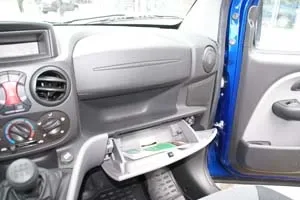
As for drawbacks, I would choose the version with two sliding doors—it’s more convenient for passengers to get in, and probably easier to load. The additional features in the next trim level, I think, are worth their 35,000 rubles. I especially want to note the driver’s seat with height adjustment, lumbar support, and heating. Armrests are also missing—the right hand constantly hangs in the air, and after a long drive it gets tired. And I already mentioned the left sliding door: it’s inconvenient to squeeze through the narrow passage between the pushed-back seat and the side panel. I’ll also note the very efficient air conditioner—it cools such a huge cabin quickly. That spring day wasn’t too hot, but I expected that a more powerful and noisier fan mode would be needed.
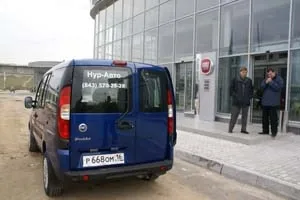
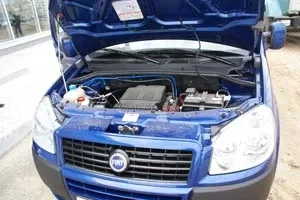
But no, already on the first speed it became cool, and I even had to reduce the cold air supply. This time we took our driver, the respected Viktor Viktorovich, who has been eyeing such a car for a long time. He’s choosing between the Renault Kangoo and Citroen Berlingo / Peugeot Partner. He needs exactly the cargo-passenger version—for both work and dacha, but he’d like a more powerful engine, around 90 hp. We deliberately left the highway and drove on a dirt road, and here Viktor Viktorovich truly fell in love with this car—thanks to its behavior on uneven surfaces. So far, this car wins, for example, over the Renault Kangoo in terms of trunk size. And in terms of cargo, it’s an ideal car in its class. The low threshold of the spacious trunk, which easily folds into a flat floor. A very practical city car that will also handle intercity trips without problems.