
According to surveys, the vast majority of Russians — about 77% — are used to celebrating New Year at home, another 15% go to visit friends, restaurants, or clubs. And only two percent of our compatriots dare to leave the city, heading to a dacha or a sanatorium. As for me and a friend, we didn't want to welcome 2007 the same way as the previous 27 years, so on January 1st we decided to dash to the Black Sea. As our vehicle, we chose the Fiat Doblo Panorama cargo-passenger van, which was soon to be assembled at a plant in Naberezhnye Chelny.
I'll say right away: this Fiat didn't turn out to be a very fast airplane, despite Italy being the homeland of Ferrari, Maserati, and Lamborghini. However, in all other respects, our trip was a success, and we celebrated New Year quite decently.
A flying carpet with comfort
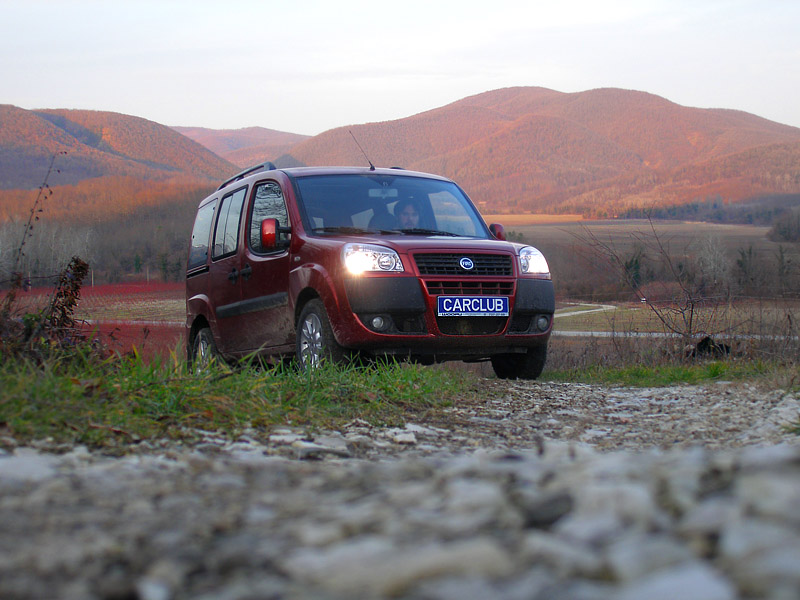
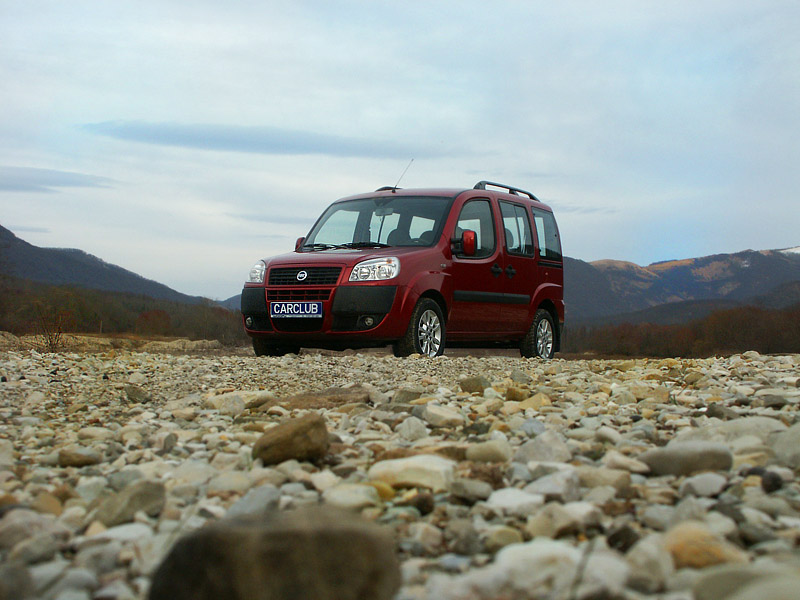
The Doblo has been produced since 2000, but the facelift a couple of years ago did the car good — the striking large headlights with clear glass made the van quite modern and attractive. The body is absolutely pragmatic: straight angular lines are only slightly softened at the front, while the rear looks as if chopped with an axe. If not for the large vertical lights and the classic round Fiat emblem from the early last century, the Doblo could easily be mistaken for any other van.
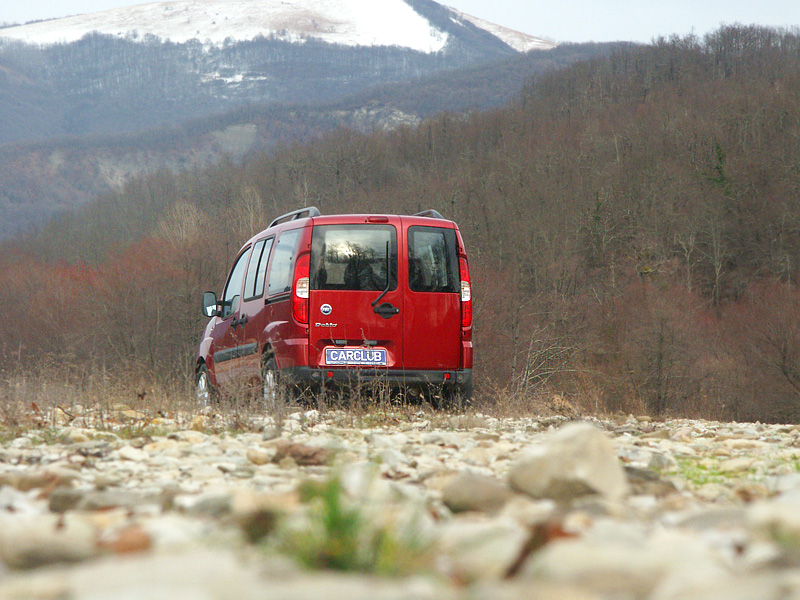
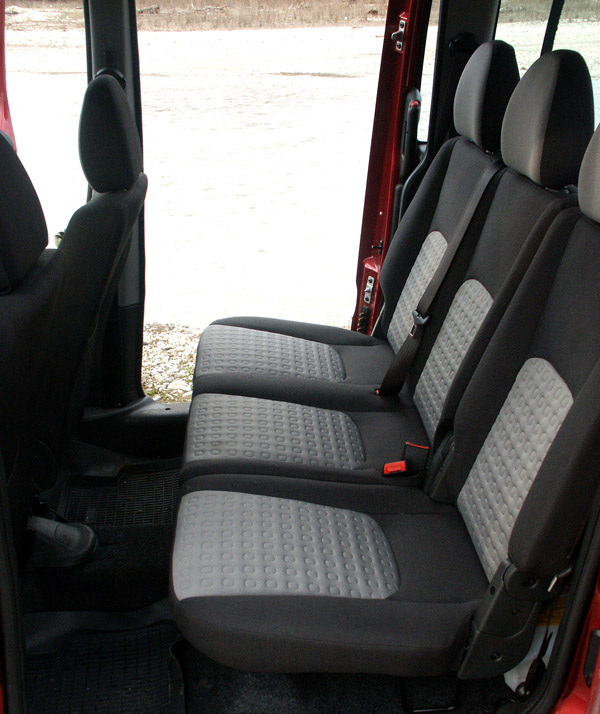
 But the large sliding doors make getting into the spacious rear bench very convenient, and the rear doors open 180 degrees. The trunk has a minimal loading height and an almost ideal shape. However, I'd like to protect the painted wheel arches with scratch-resistant plastic — then it would be perfect. But that's easy to do yourself. In the five-seat version, the trunk holds 750 liters, and with the seats folded, the volume grows to three cubic meters. Regular station wagons and minivans can't achieve this figure, as it rarely exceeds two cubic meters.
The commercial or tourist essence of the car is revealed by the roomy door pockets, a convenient shelf above the glove box, and a huge compartment above the windshield. But the glove box itself turned out to be surprisingly small and plain, without even a light. Around the driver and passenger, there are four cup holders, but one of them is blocked by the ashtray — a smoker could easily flick ash right into a drink. But these are just nitpicks.
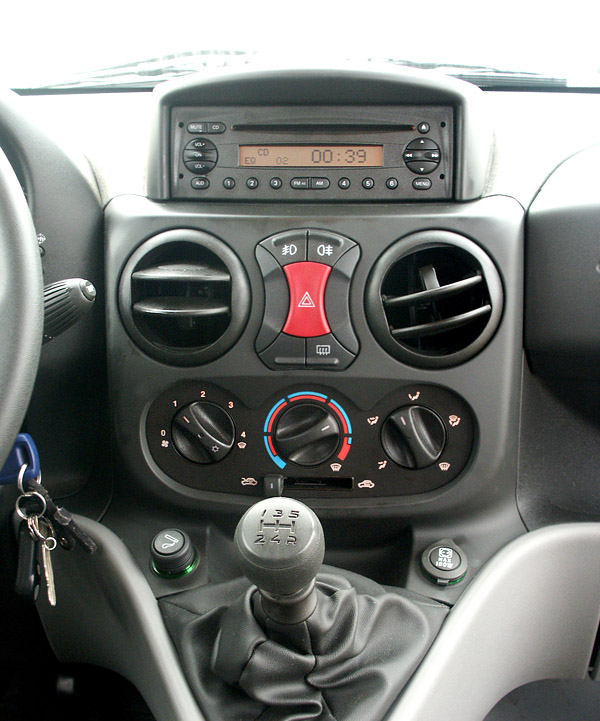
 The sweeping rounded lines of the dashboard initially seem bulky, but you get used to them quickly. Even on a bumpy road, it's easy to hit the right button — they are large, and there are few of them on the center console. The hard plastic in the van's cabin is taken for granted and doesn't offend aesthetic senses, especially since it's diluted with light inserts at the bottom. The ascetic picture is completed by a simple three-spoke steering wheel with an oval "pebble" horn button on top — like much in Italy, simple and tasteful.
On the tachometer, as if on a sports car, there's no red zone. Rather, the entire scale is red and marked up to 7000 rpm, although the limiter kicks in at about 6000 rpm. But the instrument markings are too small, and combined with the red backlight, your eyes get tired on a long trip. However, the high driving position noticeably reduces glare from oncoming traffic, and the seats turned out to be very comfortable — after such a long journey, we felt no fatigue. For full comfort, we only lacked a higher backrest, but again, that's nitpicking.
Taking off
 We didn't expect any special agility from the Doblo — the factory specs state a top speed of 148 km/h, and the acceleration time to 100 km/h isn't given at all. Apparently, Schumacher is busy fine-tuning other Italian cars.
We got the car before New Year, managed to get used to it, and did a small break-in of 500 kilometers, since the Doblo came to us brand new. In city driving, the Fiat was content with 8-9 liters per 100 km, which promised a modest trip budget. However, the tall and wide body, where you can sleep almost at full height in the back seat and enter with only a slight bow, made its own adjustments. Significant aerodynamic drag greatly affects fuel consumption. At speeds of 100-110 km/h, you can achieve quite optimistic 8 liters per 100 km. If you drive even slower, you can actually reach the claimed 6.4 liters. But crawling 1500 km at such a speed is not for the faint-hearted, so we sped up. The result: at speeds of 130-140 km/h, close to maximum, the onboard computer shows over 15 liters. This is comparable to the appetite of a sedan with a three-liter engine racing at nearly 200 km/h.
Such gluttony is explained not only by the tall body but also by the unusually close gear ratios. At 140 km/h in fifth gear, the engine revs above 4500 rpm, which doesn't fit with economical driving.
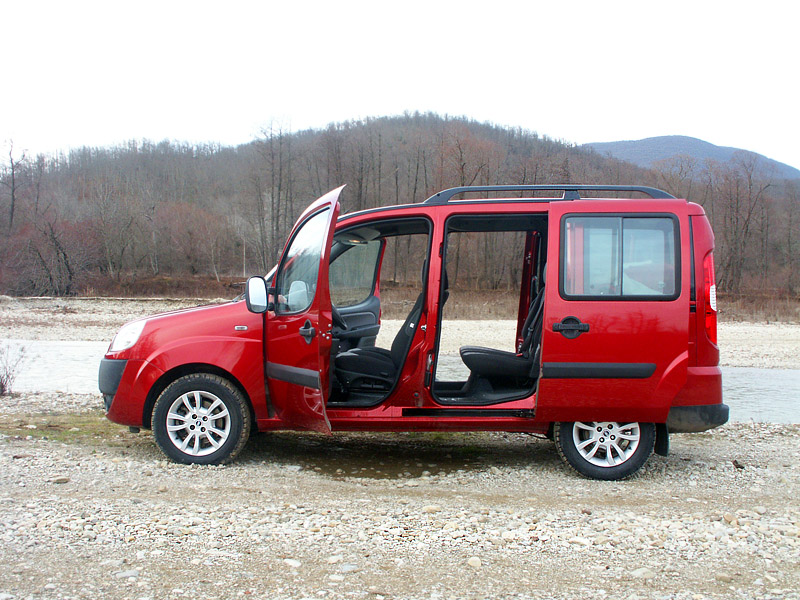 But on the sharp-angled serpentine, the Doblo showed its best side. Despite its height, the van confidently enters corners, and the front wheels practically don't slide outward. With a full load, handling would likely worsen due to a rearward balance shift, but it's hard to imagine a van tackling corners with a full cargo.
Regardless of load, the driver is spared unnecessary steering wheel movements — the wheel makes only 2.5 turns from lock to lock. In those turns where you'd have to shuffle the wheel in another car, here a light turn suffices. Usually, the downside of a "short" steering wheel is nervousness on the highway, but the Doblo is completely free of this ailment. The van ignores ruts, and even side winds don't cause swaying. On Russian "autobahns," you can drive almost a kilometer with the steering wheel completely released — the car won't deviate a centimeter from a straight line. At the same time, the response to steering inputs is very quick — at night, we repeatedly dodged road defects at speeds over 100 km/h without any trouble.
The only thing the Doblo lacks for true driving happiness is a powerful, torquey engine, preferably diesel, with a stretched gearbox. The 1.4-liter engine with 77 hp that we got is clearly weak for a large van. Even with two passengers, you can get decent dynamics only by revving the engine to 4000-5000 rpm and shifting gears quickly. You have to do this often, and it takes a lot of time.
After 110 km/h, the Doblo seems to hit a wall of air, and the driver can't influence further acceleration — the van only accelerates at full throttle and only on flat roads. Even slight inclines are contraindicated for the engine — you have to shift to fourth and listen to the scream at six thousand rpm.
But the Doblo pleasantly surprised with excellent sound insulation. We drove on winter studded Michelin X-Ice North tires, and up to 130 km/h, you can talk calmly in the cabin without raising your voice. Even at maximum speed, you don't have to strain your vocal cords. For a commercial vehicle, that's an excellent result. And the sound of the engine, often working at high revs, doesn't irritate but rather reminds of Fiat's kinship with Ferrari.
Summary
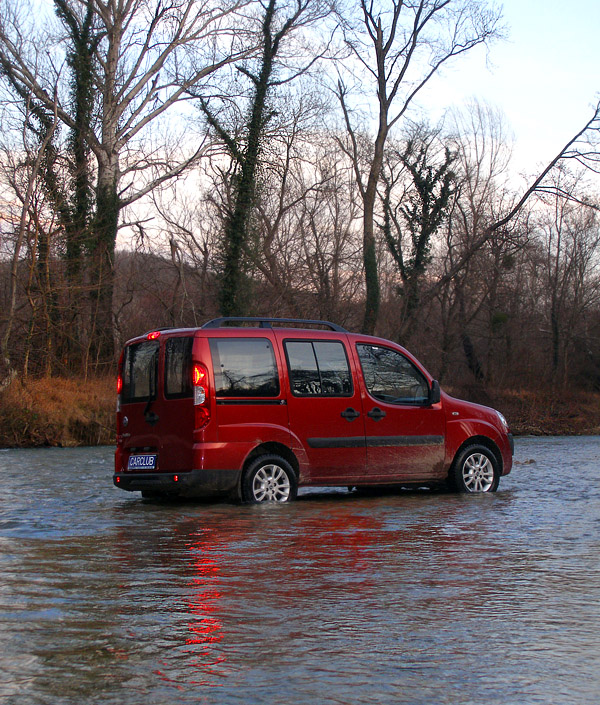 Over the entire test, with a mileage of over 4000 km on bare asphalt, the tires didn't lose a single stud despite harsh operating conditions. The average fuel consumption during the test was 10 liters per 100 km. Of course, for a compact passenger car, that's a lot. On a regular hatchback with a 1.4-1.6 liter engine, a similar trip would cost 7-8 liters, and without any restrictions in dynamics. However, the Doblo is not quite a regular car, with its own advantages and disadvantages.
If you look at the Fiat Doblo as commercial transport, it can give most competitors a run for their money: inside, it has the most spacious cabin in its class, the cargo volume reaches 3.8 cubic meters, and the appearance and road behavior are pleasing. The payload of 730 kilograms also looks impressive. At the same time, the Doblo is cheaper than direct rivals like the Peugeot Partner or Volkswagen Caddy, and the more budget-friendly Renault Kangoo loses to it in both cargo volume and equipment level.
But if you consider this car as a family vehicle, it's worth weighing whether you need such a "bus" with a huge cabin but without agility. I haven't yet figured out what to regularly fill three cubic meters of space with and why to carry 600 kilograms of cargo. For the same money, I'd rather look at a regular hatchback or station wagon — they are quicker thanks to more powerful engines, even if with a smaller trunk.
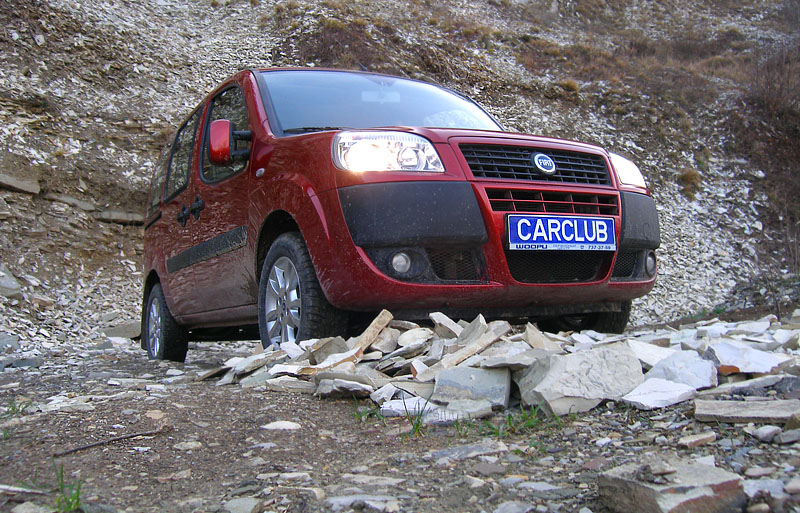
So, the five-seat cargo-passenger Doblo Panorama makes sense to buy either for entrepreneurs who need a car for both cargo and people, or for those who lead an active lifestyle and carry bicycles or disassembled kayaks that don't fit in a passenger car. Moreover, the impressive ground clearance allows fording small mountain rivers and moving calmly over rocky roads.
How much does it cost?
We tested the Doblo Panorama in the most expensive trim level. It includes ABS, front airbags, air conditioning, two sliding doors, a CD stereo, an onboard computer, power windows, central locking with remote control, roof rails, and a heated driver's seat (the passenger seat, unfortunately, lacks heating). This version is priced at 485,000 rubles ($18,300). The cheapest commercial van version with the same engine and solid side panels will cost 365,000 rubles ($13,800), while the base Doblo Panorama costs 430,000 ($16,200).

Leonid Pavlov