
It's a pity that AvtoVAZ never settled on Fiat as a strategic partner! Just seven days before the agreement with Renault-Nissan was signed, many at the plant were convinced that an Italian revival was about to begin. But it turned out differently: our own Kalinas seemed too few, now there will also be Franco-Japanese ones. Therefore, the sleek, cheerful lines of the Bravo evoke a poignant longing — like a sunset by the sea before a flight to Moscow — a longing for what can never be brought back.
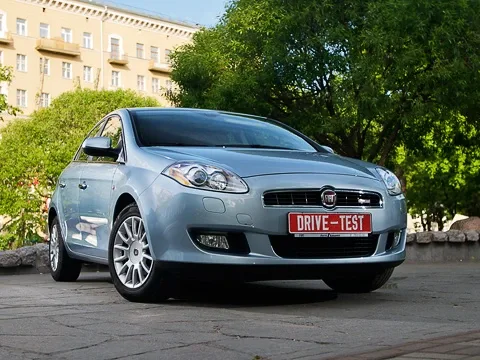
"Azure Minuet" is the name of this body color, and you have to pay extra for it. Everything else is already included in the base trim.
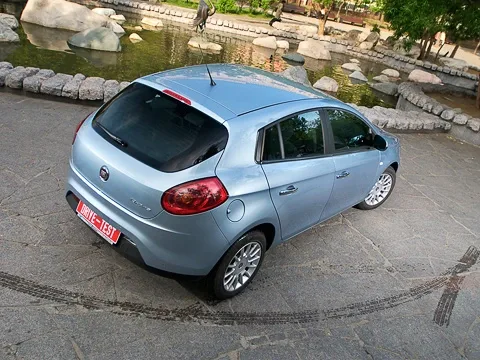
Rear visibility is not great. Parking sensors and large mirrors save the day.
I won't argue: both the French and the Japanese have things to learn from, their design schools are strong. But only Italian cars are perceived on a hormonal level. Fiat people preserve the emotional component even in the pursuit of the cheapest car — a budget car has no right to be soulless.
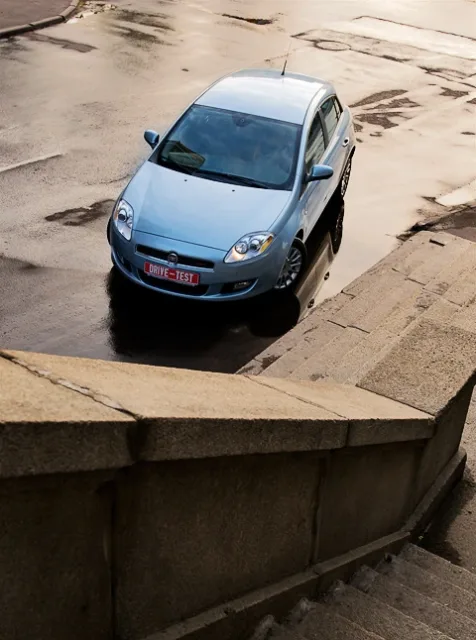
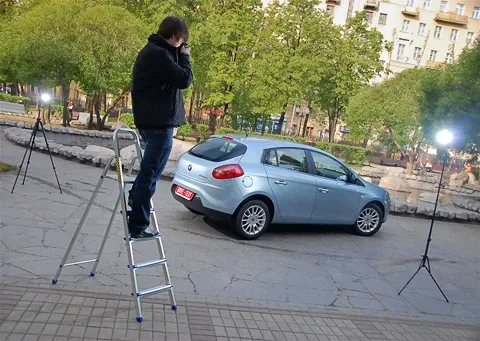
Soft Italian lines are pleasing to the eye, but incredibly difficult to photograph.
The Bravo at 28 thousand dollars cannot be accused of coldness — traffic around it livens up: someone gives a thumbs up, someone asks how it performs. And I just smile stupidly: I seem to be satisfied with everything, but the exclamation "bravo, Fiat!" gets stuck in my throat. Let me tell you what the Bravo does best — acceleration from mid-range speeds. And the car flies off like a big blue fly under the monotonous hum of an untuned exhaust.
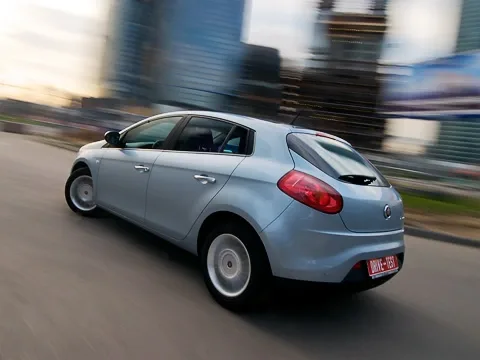
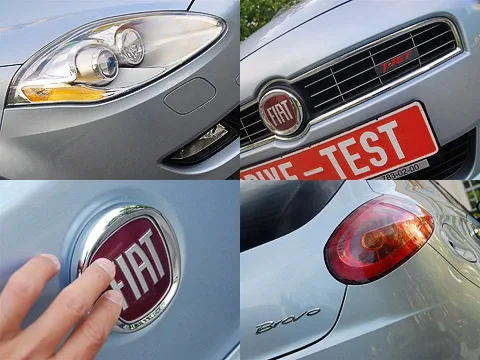
In a turn, the fog lights turn on with the steering wheel, expanding the illuminated area.
The tiny emblem on the faux radiator grille is the only thing that hints at the potential of the 150-horsepower Fiat. Almost no one notices it, no one understands it — but the Bravo's agility surprises everyone.
The trunk lock opens by pressing the new Fiat emblem.
The tiny emblem on the faux radiator grille is the only thing that hints at the potential of the 150-horsepower Fiat. Almost no one notices it, no one understands it — but the Bravo's agility surprises everyone.
The trunk lock opens by pressing the new Fiat emblem.
I, a die-hard Mazda fan with a two-liter engine, could not have imagined that 150 "horses" could be so much fun. The secret is in the torque: turbocharging squeezes a full 204 N•m out of 1368 "cubes." The Fiat T-Jet starts pulling already at 2000 rpm, and to stay on the wave, you don't need to rev it to the limiter or frantically yank the long-throw gear lever. It's enough to look ahead, account for the delays in the engine's responses, and keep a calm face when the gap in traffic closes before the turbo kicks in. And you shouldn't constantly smile in the range from three to four thousand rpm — facial wrinkles, you know…
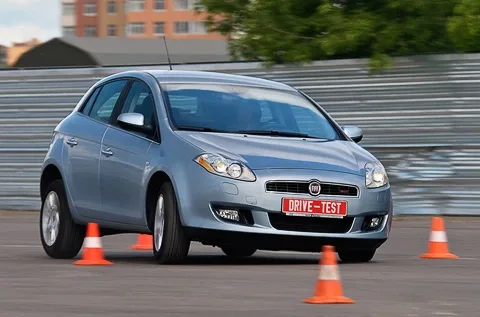
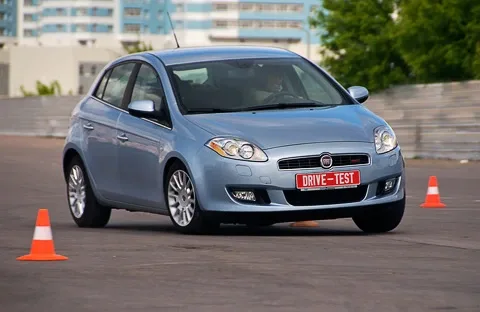
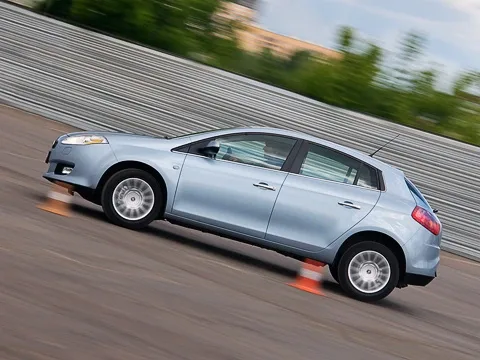
The ride smoothness of the Bravo turned out better than its handling, but don't let that upset you. It's intentional, and the spark in its behavior is still felt. The steering wheel is light, like the old Stilo's, but with feedback! You have to turn the wheel through significant angles, but the low sensitivity is partly compensated by the suspension's omnivorousness — you don't need to dodge every crack in the asphalt. And it's harder to break the front end loose. But before understeer, the Bravo is helpless: the non-switchable stability system only reacts to oversteer. But overall, the surfing was a success. Although there's nothing new here: the Bravo is a Stilo that went back to school. The platform remains the same.
And in the interior, there's the familiar inconsistency. You want to press your cheek against the plastic of the dashboard, but it's unpleasant even to look at the glossy center console. The placement of controls, the effort on buttons and knobs — everything is well thought out. But the instruments glare, and the backrest of the "designer" seat is like the core of the Tsar Cannon. Like a chiropractor, Fiat presses into my spine, forcing me to set the backrest upright and straighten my shoulders. Useful, of course, but I sometimes like to recline — and then my shoulders hang in the air.
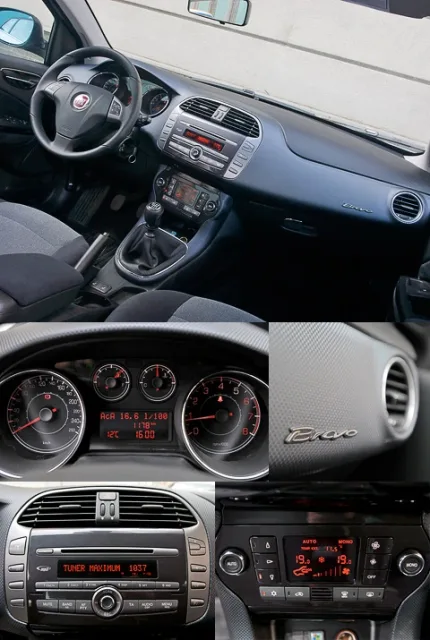
- Touching the dashboard lifts the mood — the texture is brilliantly crafted! But the combination of materials fell short.
- It seems the instrument binnacles are installed upside down: they only add glare.
- The audio system pleases neither with decent sound nor convenience, and the glossy surface scratches easily.
- The effectiveness of the climate control was sacrificed by the Italians for its inconspicuousness.
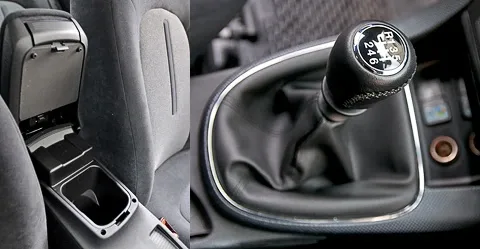
Looking for documents forgotten at the dealer, I spent 15 minutes studying the countless compartments for small items and the bottomless glove box.
The gearshift mechanism works well, but the long throws of the lever get in the way.
The gearshift mechanism works well, but the long throws of the lever get in the way.
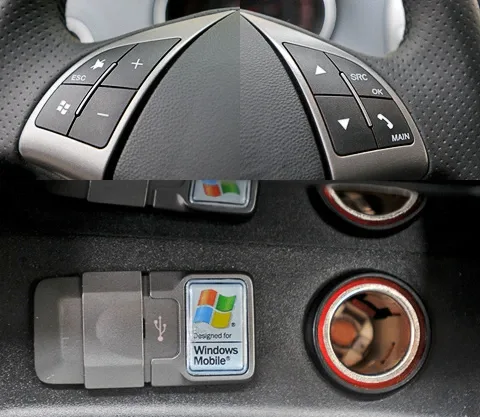
The buttons on the steering wheel control the audio system, phone, and navigation through the trip computer menu. And the button with the Microsoft emblem activates voice control for all of it. The USB port is the most absurd detail of the interior. But useful.
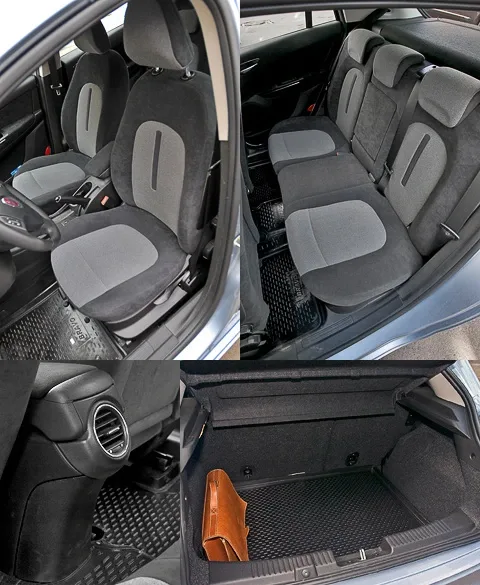
The front seats persistently dictate proper posture.
Rear passengers are a bit cramped, especially the one who ends up behind a tall driver. The knee cutouts in the front seatbacks don't always save the day.
Things live more freely in the 400-liter trunk.
The lone rear vent clearly hints at the recommended number of passengers. And winter mats with high sides block the flow of warm air to the feet from the vents under the front seats.
Rear passengers are a bit cramped, especially the one who ends up behind a tall driver. The knee cutouts in the front seatbacks don't always save the day.
Things live more freely in the 400-liter trunk.
The lone rear vent clearly hints at the recommended number of passengers. And winter mats with high sides block the flow of warm air to the feet from the vents under the front seats.
And yet, the progress is enormous. Remember someone saying that you can judge a car's class by the uniformity of its interior lighting? Fiat is impeccable in this regard: instruments, displays, buttons — everything glows with the same orange light in the dark. There are even a couple of LEDs of the same reddish dot lighting hidden on the ceiling. Once upon a time, the Stilo rattled with plastic and tried to bite your finger with the ashtray, but here even the ceiling handles are damped — that's what you call attention to detail.
The main thing about the Bravo is the match between form and content. The Stilo didn't have it at all. And the Bravo's contours are sporty, like eight and a half seconds to sixty, soft in accordance with its reactions, and unserious, like our relationship. Maybe I would like to reduce the body roll or make the Fiat more responsive, but it wouldn't become more harmonious. In addition, that would harm comfort, and comfort justifies the increased price just as much as the equipment list and the temperament of the turbo engine. So, hang loose, Russia! — don't stress and ride the new wave. And don't be sad that the Lada will never be a Fiat again.
Specifications
| Characteristics | Fiat Bravo |
|---|---|
| Body | |
| Number of doors/seats | 5/5 |
| Length, mm | 4336 |
| Width, mm | 1792 |
| Height, mm | 1498 |
| Wheelbase, mm | 2600 |
| Track front/rear, mm | 1538/1532 |
| Curb weight, kg | 1275 |
| Gross weight, kg | n/a |
| Trunk volume, l | 400–1175 |
| Engine | |
| Type | petrol, with distributed injection and turbocharging |
| Location | front, transverse |
| Number and arrangement of cylinders | 4, in-line |
| Number of valves | 16 |
| Displacement, cm3 | 1368 |
| Max power, hp/rpm | 150/5000 |
| Max torque, Nm/rpm | 206/2250 |
| Transmission | |
| Gearbox | manual, six-speed |
| Drive | front |
| Chassis | |
| Front suspension | independent, spring, McPherson |
| Rear suspension | semi-independent, spring |
| Front brakes | disc, ventilated |
| Rear brakes | disc |
| Performance characteristics | |
| Maximum speed, km/h | 212 |
| Acceleration time from 0 to 100 km/h, s | 8.5 |
| Fuel consumption, l/100 km | |
| urban cycle | 9.3 |
| extra-urban cycle | 5.8 |
| combined cycle | 7.1 |
| Emission standard | Euro-4 |
| Fuel tank capacity, l | 58 |
| Fuel | AI-95 |
Equipment of the tested car Basic equipment
Price of tested car — 678 thousand rubles ($28,580)
- Front airbags
- Side airbags and inflatable curtains
- Fog lights
- Knee airbags
- ABS
- Electronic stability control
- Hill start assist
- Audio system with six speakers
- CD player with MP3 support
- Multifunction steering wheel
- Immobilizer
- Power-adjustable and heated rear-view mirrors
- Front and rear electric windows
- On-board computer
- Steering column with tilt and reach adjustment
- Electric power steering
- Dual-zone climate control
- Heated front seats
- Full-size spare wheel
- Alloy wheels R16
- Leather-wrapped steering wheel and gear shift knob
- Metallic paint
Price of tested car — 678 thousand rubles ($28,580)
Technology 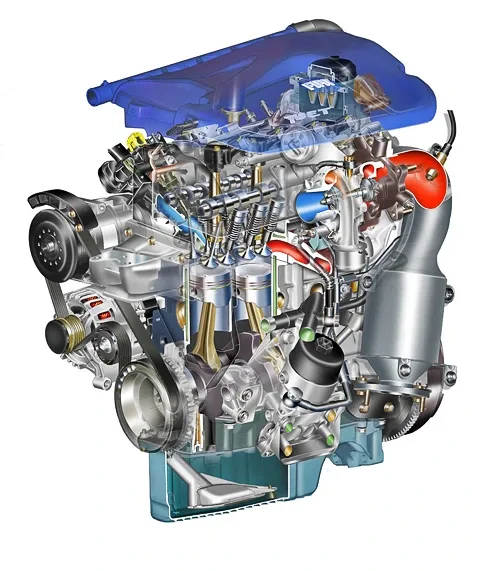
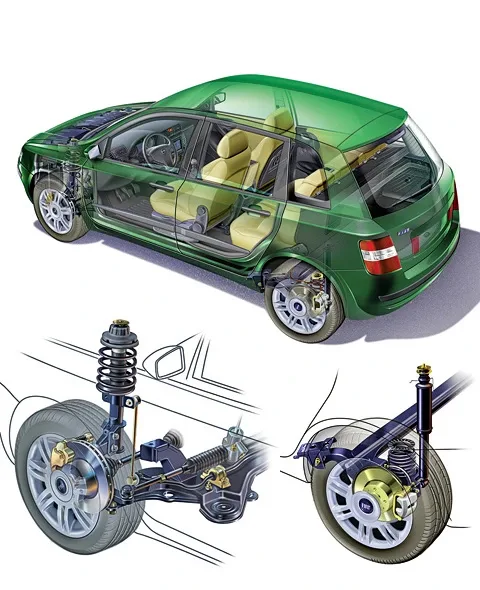
History 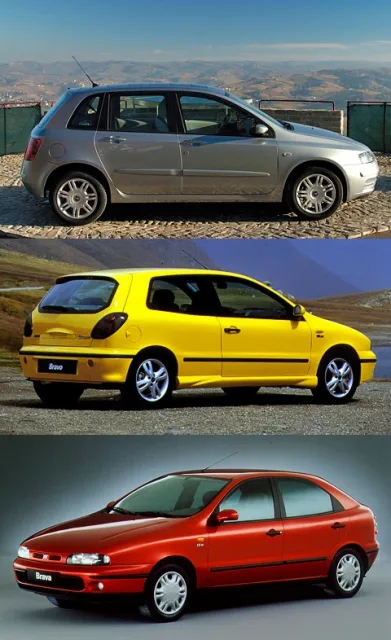
Behind the scenes 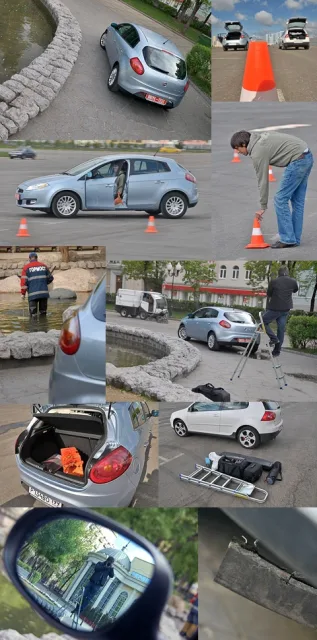
With cars like the Bravo, it's a pleasure to deal: even when it's parked in a pedestrian zone, passers-by don't look at it with irritation. But the long front overhang was critically assessed by city traffic.