
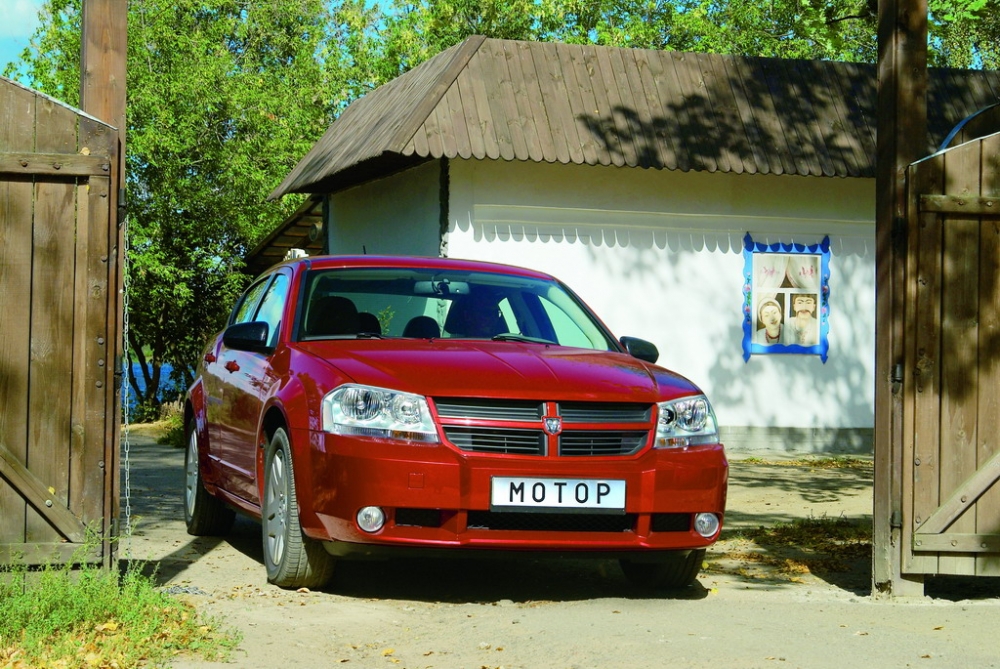
 We have already dealt with the Sebring, and it did not impress us. A classic representative of the American school: a phlegmatic engine, a leisurely 4-speed automatic transmission, and vague steering responses. It all makes sense — Chrysler's main market is the USA. But the Avenger was originally designed for Europe. Meanwhile, in the D-class, where this sedan competes, the competition is fierce. Old Europe is represented by the Volkswagen Passat and Ford Mondeo, the Japanese field the Honda Accord and Mazda6, and the Korean Hyundai NF should not be discounted either. So how does Dodge plan to surprise? We have already dealt with the Sebring, and it did not impress us. A classic representative of the American school: a phlegmatic engine, a leisurely 4-speed automatic transmission, and vague steering responses. It all makes sense — Chrysler's main market is the USA. But the Avenger was originally designed for Europe. Meanwhile, in the D-class, where this sedan competes, the competition is fierce. Old Europe is represented by the Volkswagen Passat and Ford Mondeo, the Japanese field the Honda Accord and Mazda6, and the Korean Hyundai NF should not be discounted either. So how does Dodge plan to surprise? |
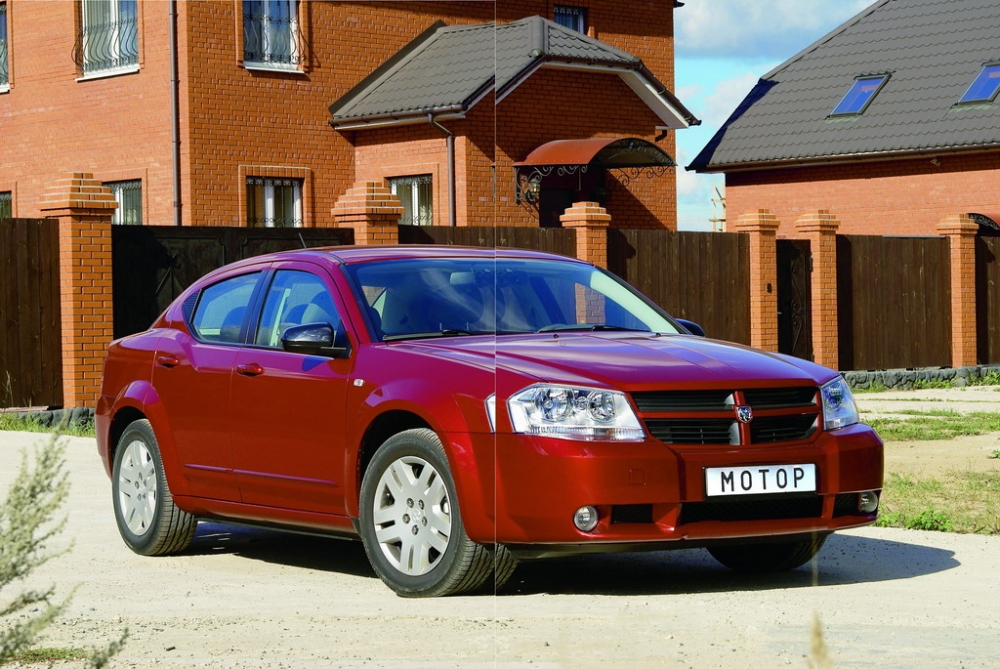
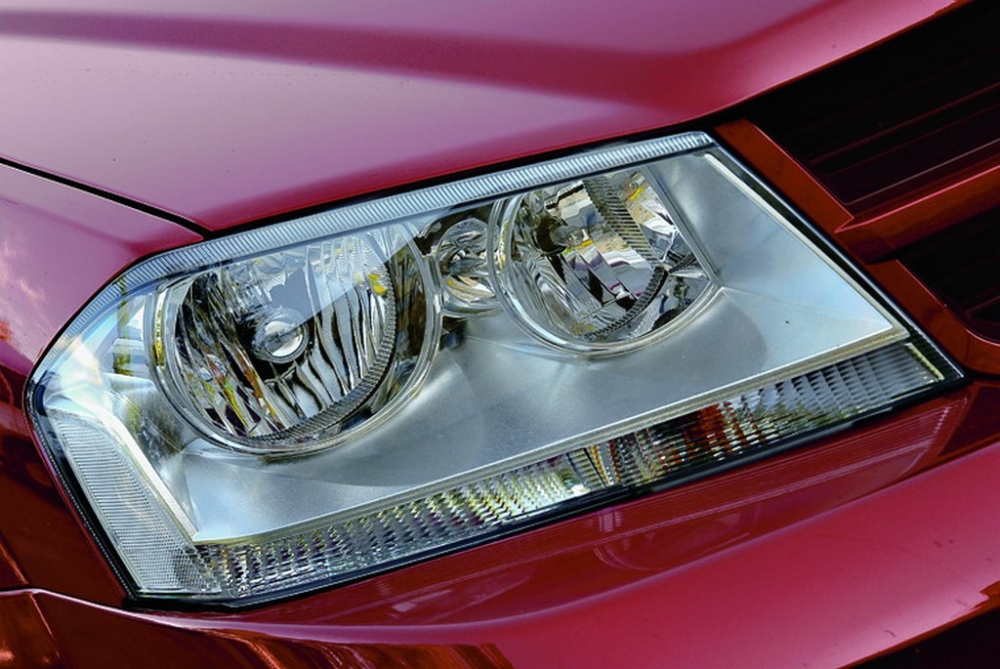
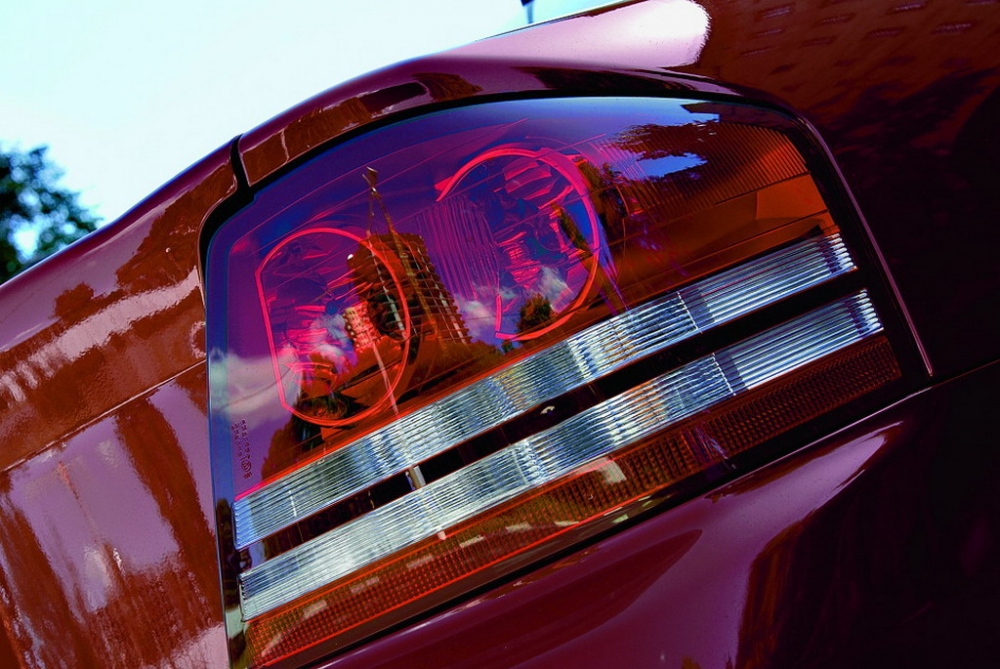
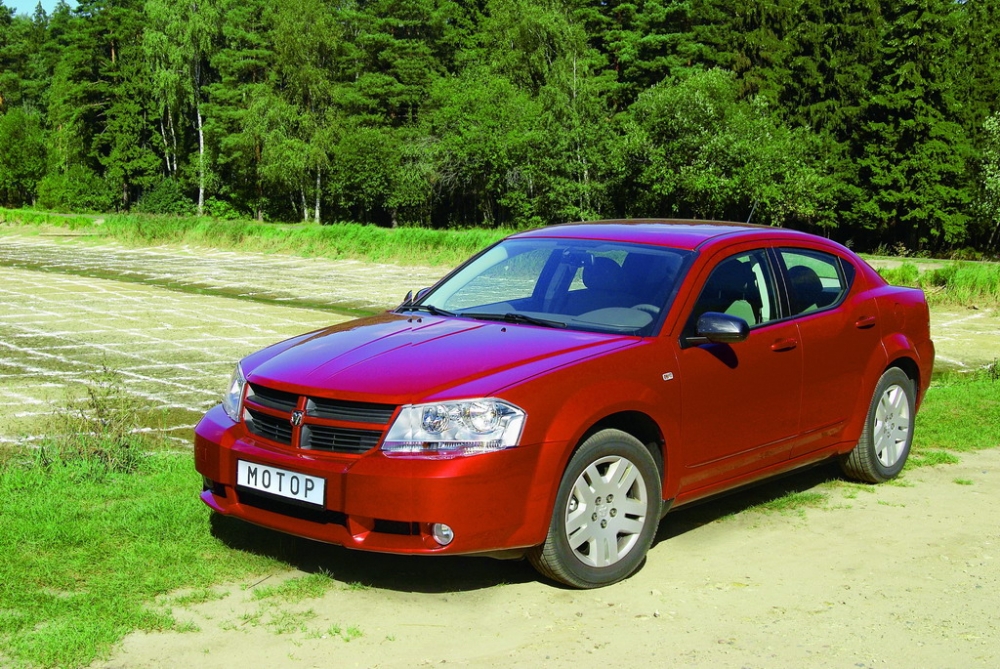 The Avenger's exterior is one hundred percent American. The recognizable chiseled style, familiar from the Caliber and Nitro models. The details are, of course, its own, but there is no doubt — before us is a Dodge from the beginning of the 21st century. At the same time, certain elements, say, the emphasized "hips," hark back to the past — to the Charger and Challenger. But the wheel arches are flared, like those of current relatives. There are also square bumper "jaws," and shapeless large headlights, and, of course, the signature huge radiator grille with a cross and a ram in the middle. The Avenger's exterior is one hundred percent American. The recognizable chiseled style, familiar from the Caliber and Nitro models. The details are, of course, its own, but there is no doubt — before us is a Dodge from the beginning of the 21st century. At the same time, certain elements, say, the emphasized "hips," hark back to the past — to the Charger and Challenger. But the wheel arches are flared, like those of current relatives. There are also square bumper "jaws," and shapeless large headlights, and, of course, the signature huge radiator grille with a cross and a ram in the middle. |
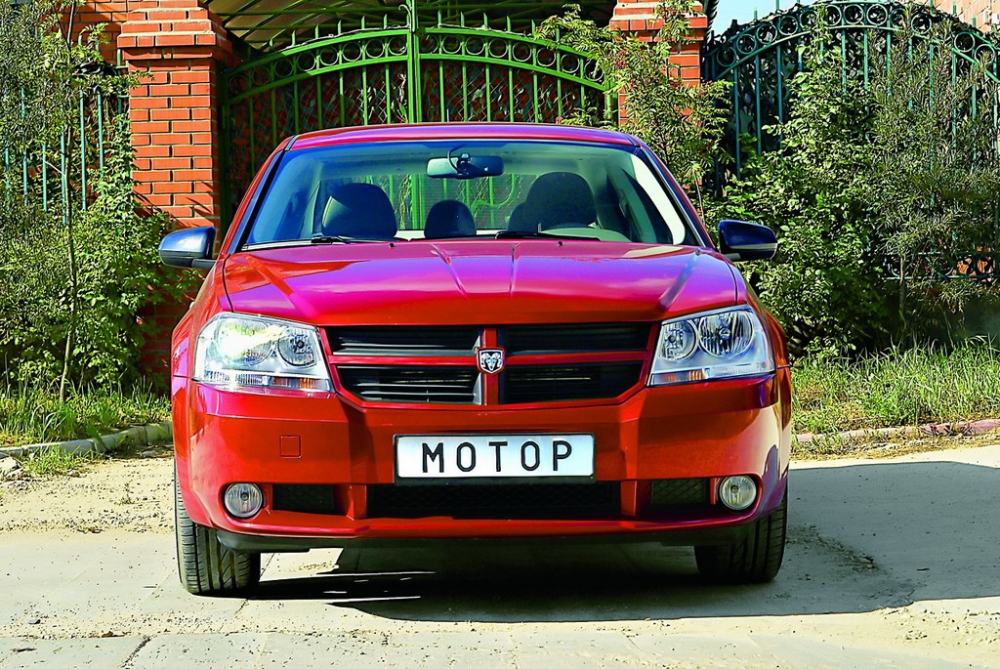 On the Caliber, such a solution looked fresh and attracted many. For the Nitro, it also fits: an SUV benefits from ruggedness and assertiveness. But for the Avenger, a mid-size sedan, it is, in my opinion, too much. Why such huge overhangs in cramped Europe? Didn't a compact 4-cylinder engine fit under the hood? You could fit two of them in there! Has the trunk become noticeably more spacious? Agreed, it is large, but several competitors have comparable volume with smaller external dimensions. The 215/60 R17 wheels, which would be suitable for a crossover, simply get lost in these arches — you would need 19-20 inches here. Europeans are unlikely to fall in love with such a look. Corporate style is a necessary thing; it should be evident across the entire lineup. But trying to fit it onto the Avenger in its current form seems forced. Although you cannot deny this sedan originality — there are no analogues in its class. On the Caliber, such a solution looked fresh and attracted many. For the Nitro, it also fits: an SUV benefits from ruggedness and assertiveness. But for the Avenger, a mid-size sedan, it is, in my opinion, too much. Why such huge overhangs in cramped Europe? Didn't a compact 4-cylinder engine fit under the hood? You could fit two of them in there! Has the trunk become noticeably more spacious? Agreed, it is large, but several competitors have comparable volume with smaller external dimensions. The 215/60 R17 wheels, which would be suitable for a crossover, simply get lost in these arches — you would need 19-20 inches here. Europeans are unlikely to fall in love with such a look. Corporate style is a necessary thing; it should be evident across the entire lineup. But trying to fit it onto the Avenger in its current form seems forced. Although you cannot deny this sedan originality — there are no analogues in its class. |
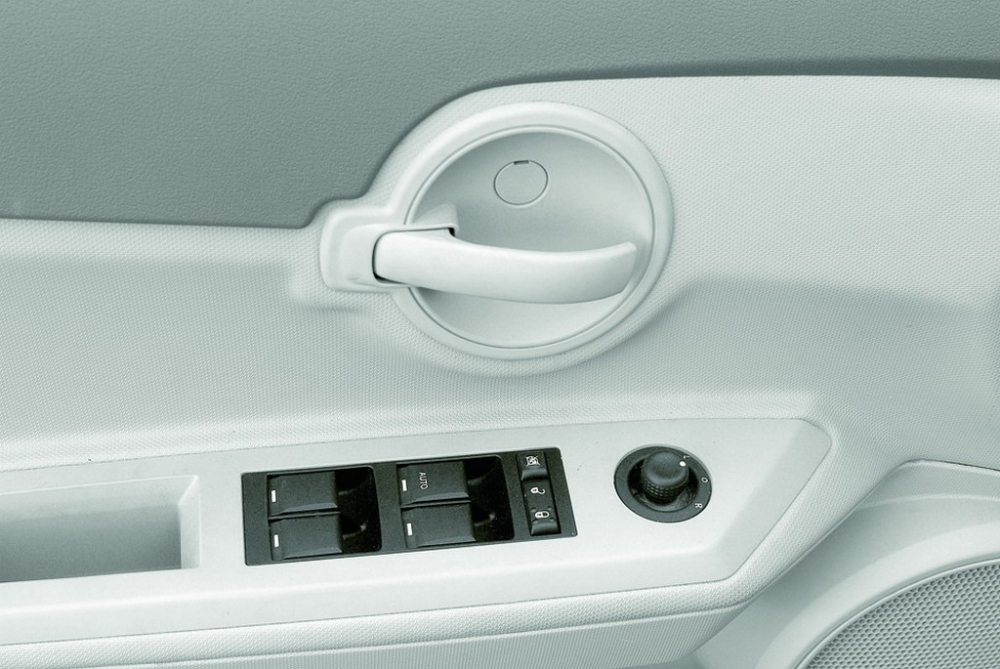
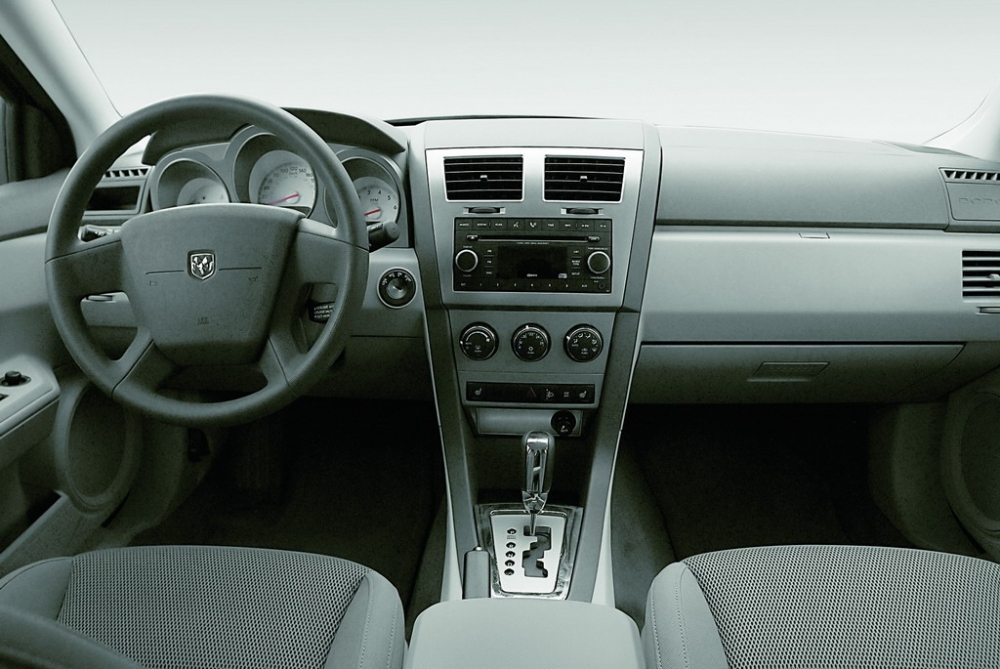 The Avenger's interior is also in the signature style. The same angularity, gray trim tones, and the familiar three instrument pods. The front seats resemble those installed in the Sebring — the backrest seems to push you forward, and lateral support is almost absent. True, here they are not leather (leather is not offered even as an option). In the test car, the seats were upholstered in optional washable YES Essentials fabric. Overall, ergonomics do not disappoint, but there are complaints. The steering wheel is rough rubberized plastic, the diameter is excessive, and it feels unpleasant to the touch. Rear and side visibility are lacking: the culprit is the high beltline, which sharply rises upward starting from the rear doors. The steering column stalks require noticeable effort. And with the ventilation deflectors, it is impossible to tell at a glance where the airflow is directed. The Avenger's interior is also in the signature style. The same angularity, gray trim tones, and the familiar three instrument pods. The front seats resemble those installed in the Sebring — the backrest seems to push you forward, and lateral support is almost absent. True, here they are not leather (leather is not offered even as an option). In the test car, the seats were upholstered in optional washable YES Essentials fabric. Overall, ergonomics do not disappoint, but there are complaints. The steering wheel is rough rubberized plastic, the diameter is excessive, and it feels unpleasant to the touch. Rear and side visibility are lacking: the culprit is the high beltline, which sharply rises upward starting from the rear doors. The steering column stalks require noticeable effort. And with the ventilation deflectors, it is impossible to tell at a glance where the airflow is directed. |
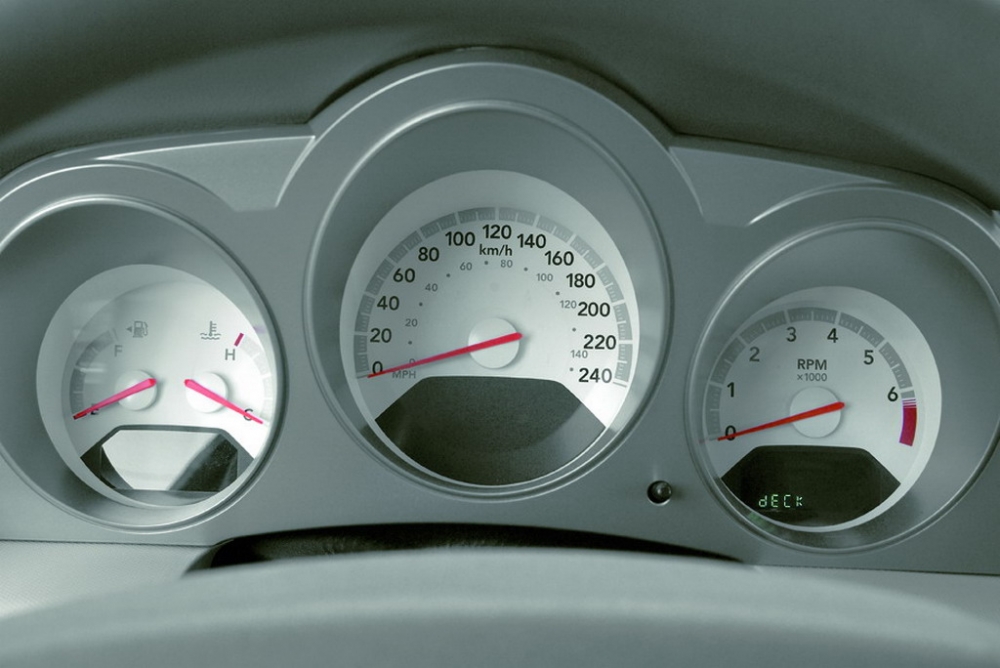 The main problem, however, is the quality of the trim materials. It is an order of magnitude lower than that of the Japanese, not to mention the Europeans. For a car costing $33,000, this is simply nonsense. Neither the decent audio system, nor the cooled box above the glove compartment, nor the attractive "xenon-style" lighting can offset this drawback. But there is plenty of space — five adults sit without difficulty. The climate control handles its tasks, the three familiar "rings" of controls are convenient, but there are no vents for rear passengers. The main problem, however, is the quality of the trim materials. It is an order of magnitude lower than that of the Japanese, not to mention the Europeans. For a car costing $33,000, this is simply nonsense. Neither the decent audio system, nor the cooled box above the glove compartment, nor the attractive "xenon-style" lighting can offset this drawback. But there is plenty of space — five adults sit without difficulty. The climate control handles its tasks, the three familiar "rings" of controls are convenient, but there are no vents for rear passengers. |
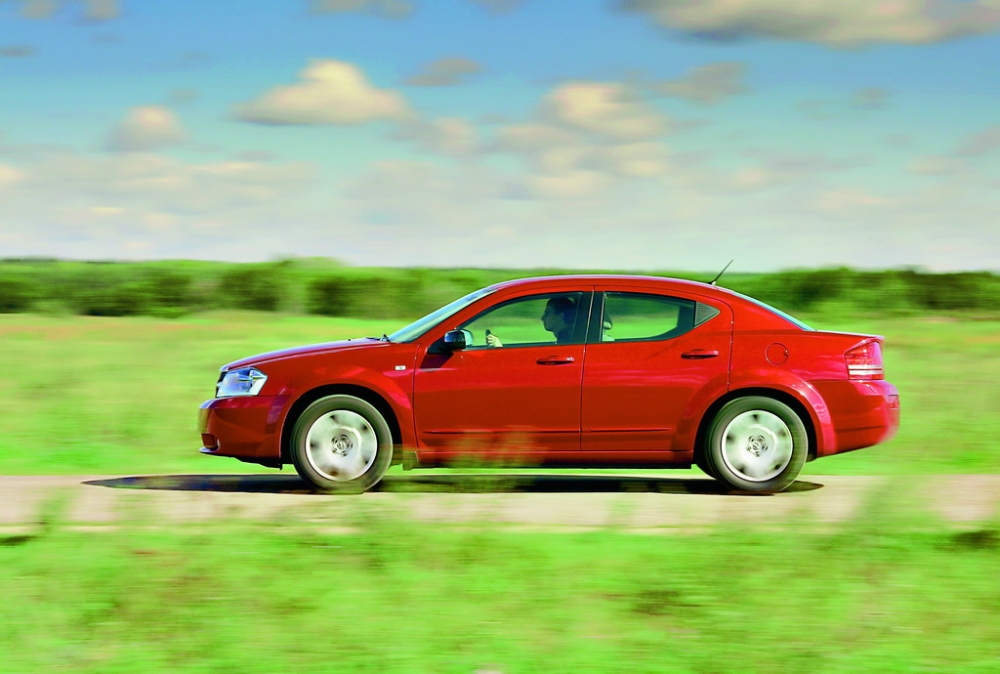 Now about how the Avenger drives. I will say directly: the car would have performed admirably if not for the archaic and sluggish 4-speed automatic transmission. Moreover (attention!), the direct gear here is third, and it is on this gear that the sedan eventually reaches its maximum of 200 km/h. On second gear, you can accelerate to almost 160... The manual mode does not save the situation — it is pointless. There is essentially nothing to shift, as there are only three gears. Furthermore, when hitting the rev limiter, the "automatic" shifts up on its own. And that is a pity. After all, the 2.4-liter World Engine with variable valve timing is a quite successful unit. A 1.5-ton car would have been satisfied with 170 hp and 220 Nm. But the gearbox negates everything. It is a shame. It is doubly a shame because the Avenger's suspension is tuned competently: it tries to combine American energy intensity and comfort with European handling. And, it must be admitted, not without success. Now about how the Avenger drives. I will say directly: the car would have performed admirably if not for the archaic and sluggish 4-speed automatic transmission. Moreover (attention!), the direct gear here is third, and it is on this gear that the sedan eventually reaches its maximum of 200 km/h. On second gear, you can accelerate to almost 160... The manual mode does not save the situation — it is pointless. There is essentially nothing to shift, as there are only three gears. Furthermore, when hitting the rev limiter, the "automatic" shifts up on its own. And that is a pity. After all, the 2.4-liter World Engine with variable valve timing is a quite successful unit. A 1.5-ton car would have been satisfied with 170 hp and 220 Nm. But the gearbox negates everything. It is a shame. It is doubly a shame because the Avenger's suspension is tuned competently: it tries to combine American energy intensity and comfort with European handling. And, it must be admitted, not without success. |
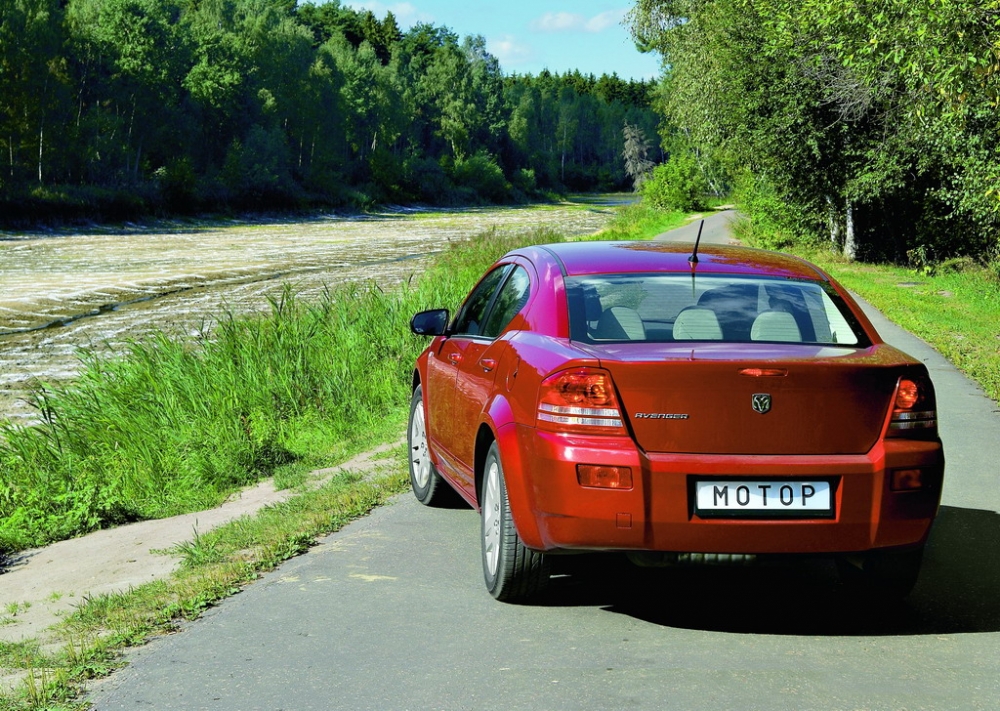 The car handles irregularities of any caliber confidently, without burdening passengers with unnecessary information about the road condition. And the Dodge handles well. Compared to "Americans" of previous generations, this is a huge step forward. Body roll in corners is moderate, pitching is practically absent, and on a straight after acceleration, the car holds its line perfectly. True, at high speeds when hitting ruts or bumps, it sometimes requires steering correction. Side wind is especially annoying: the sedan has too much sail area. The Avenger responds to steering inputs with a slight delay (likely due to the high-profile tires). There is enough feedback from the wheel, but you want more. Nevertheless, behind the wheel, you feel like a driver, not a helmsman of a yacht. In corners, the sedan confidently grips the asphalt. Even when I deliberately provoked it, the ESP system remained inactive in most cases. The Dodge drives reliably! The car handles irregularities of any caliber confidently, without burdening passengers with unnecessary information about the road condition. And the Dodge handles well. Compared to "Americans" of previous generations, this is a huge step forward. Body roll in corners is moderate, pitching is practically absent, and on a straight after acceleration, the car holds its line perfectly. True, at high speeds when hitting ruts or bumps, it sometimes requires steering correction. Side wind is especially annoying: the sedan has too much sail area. The Avenger responds to steering inputs with a slight delay (likely due to the high-profile tires). There is enough feedback from the wheel, but you want more. Nevertheless, behind the wheel, you feel like a driver, not a helmsman of a yacht. In corners, the sedan confidently grips the asphalt. Even when I deliberately provoked it, the ESP system remained inactive in most cases. The Dodge drives reliably! |
 Reliably, but without aristocratic behavior. And that is not surprising: you cannot, after spending your whole life making felt boots, sew excellent running sneakers on the first try. At the same time, Dodge's actions command respect — as does the courage with which the company is entering Europe. But assertiveness alone will not suffice here. The European buyer is picky. You cannot entice them with just a pretty "wrapper." They want driving dynamics, a rich choice of trim levels, and a quality interior. In some ways, Dodge has moved forward. But for a price well over $30,000, this is not enough. Certainly no longer felt boots. But not yet sneakers. Rather — half-boots... Reliably, but without aristocratic behavior. And that is not surprising: you cannot, after spending your whole life making felt boots, sew excellent running sneakers on the first try. At the same time, Dodge's actions command respect — as does the courage with which the company is entering Europe. But assertiveness alone will not suffice here. The European buyer is picky. You cannot entice them with just a pretty "wrapper." They want driving dynamics, a rich choice of trim levels, and a quality interior. In some ways, Dodge has moved forward. But for a price well over $30,000, this is not enough. Certainly no longer felt boots. But not yet sneakers. Rather — half-boots... |
 PRICES AND TRIM LEVELS PRICES AND TRIM LEVELSIn Russia, the Dodge Avenger is available with two 4-cylinder engines: 2.0 L (from 752,500 rubles) or 2.4 L (from 815,500 rubles). The smaller engine is paired with a 5-speed manual transmission, while the larger one comes only with a 4-speed automatic. The base trim includes audio preparation, power-adjustable and heated mirrors, steel 17-inch wheels, air conditioning, 6 airbags, and cruise control. The P1 version adds floor mats, YES Essentials fabric seat upholstery, heated front seats, a CD/DVD receiver, and fog lights. In the "top" P2 trim, a 6-disc CD/DVD changer appears. Optional extras include "metallic" paint, a power sunroof, and the Premium Convenience Group package (auto-dimming rearview mirror, automatic climate control, automatic headlight activation). |
 |
 |
 |
 |
Shoes
The new Dodge Avenger is essentially a twin of the long-selling Chrysler Sebring – the platform is shared. However, the manufacturers position it as a car with American looks but European handling. Will the new Dodge sedan be able to take revenge (avenger – avenger) for the Old World's dislike of overseas cars?
Test drive photos
Comments
No comments yet. Say the first word.