

Dodge Avenger. Price: from $30,115. On sale: since 2007.
Chrysler Sebring. Price: from $36,240. On sale: since 2006.
These two sedans are built on the same platform, equipped with the same engines and very similar running gear. Moreover, they come off the same assembly line. But despite all the similarities, the cars turned out different, and it's not just about the appearance.
Chrysler Sebring
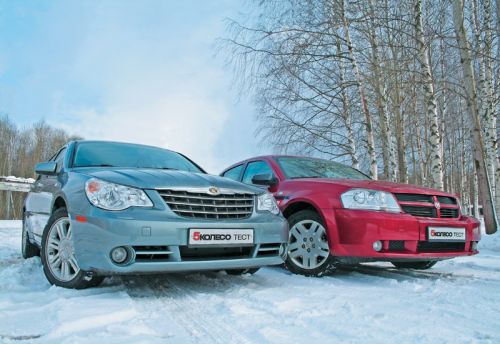
2006 Chrysler Sebring vs 2007 Dodge Avenger
© Photo: Igor Kuznetsov, 5 Koleso
Driving
In terms of handling, it is almost no different from the Avenger, except that the suspension seems a bit softer, and therefore more comfortable.
Interior
Visually, it seems smaller, although in reality the dimensions of the cars are almost identical.
Comfort
A typical American: the equipment is rich, there is everything and even more. Take, for example, the cup holder that can cool or heat a drink.
Safety
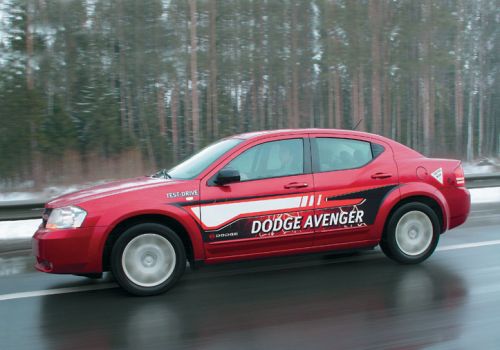
2007 Dodge Avenger
© Photo: Igor Kuznetsov, 5 Koleso
Price
Quite justified.
Dodge Avenger
Despite sharing the platform with the Sebring, the Avenger cannot be called its complete copy. However, it doesn't look like a direct competitor either. The interior trim uses simpler materials, and the list of options is more modest. But the price is noticeably lower than that of the Sebring.
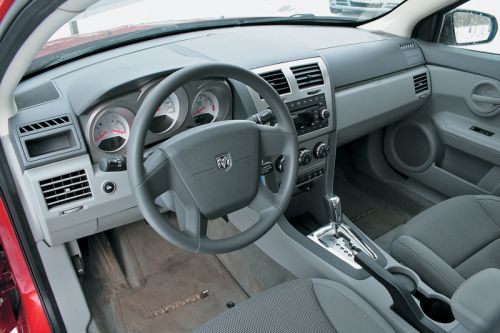
2007 Dodge Avenger
© Photo: Igor Kuznetsov, 5 Koleso
Unexpectedly good on the highway, and in the city it doesn't create problems either, although the suspension seemed too stiff to us.
Interior
Inside is spacious and quite comfortable, but, as before, the abundance of hard plastic is confusing.
Comfort
It is well suited for long trips, but the seats, contrary to stereotypes, are not at all like a home sofa.
Safety
Well equipped: there are both active and passive systems.
Price
Quite reasonable.
2007 Dodge Avenger
© Photo: Igor Kuznetsov, 5 Koleso
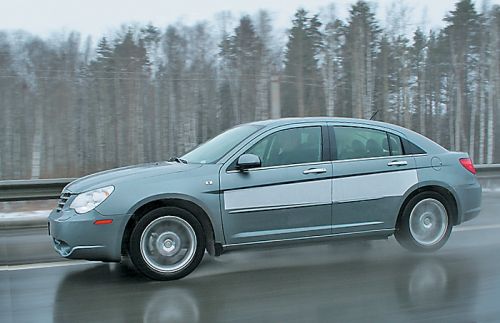
2006 Chrysler Sebring
© Photo: Igor Kuznetsov, 5 Koleso
And it's a pity, because otherwise, it's hard to find fault with the interior of this car. There's a lot of space, ergonomics are tolerable. Only the algorithm of the steering column switches is unusual. Everything is still placed on them, up to turning on the interior lights. The interior looks good. There's plenty of places to put small items — there are even two glove boxes. And with space, everything is in order: four adults will fit without problems. It's just that the seats could be softer.
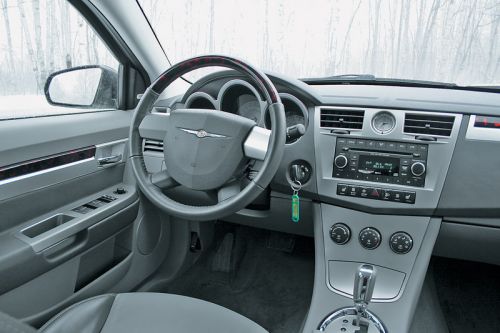
2006 Chrysler Sebring
© Photo: Igor Kuznetsov, 5 Koleso
In character, the Avenger seemed more spirited. But, most likely, this impression is due to worse sound insulation. After all, the better the engine is heard, the more dynamic the car seems. And in terms of characteristics, they are almost no different. Except that the Sebring has a slightly higher top speed. Due to what? Apparently, due to a more aerodynamic body shape, because the engines and gearboxes of the cars are the same. In both cases, it's a 175-horsepower 2.4-liter engine and a 4-speed automatic. The combination is well chosen: neither the engine nor the gearbox gave us any complaints during the test on either car. And they handled well — no worse than European classmates.
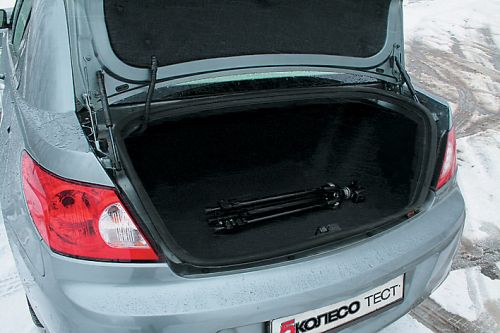
2006 Chrysler Sebring
© Photo: Igor Kuznetsov, 5 Koleso
Our verdict
Both cars have been sold here for more than a year, but they haven't caused a stir among buyers. The Chrysler Sebring sold about three hundred units last year, and the Dodge Avenger — even less than a hundred. Although, in our opinion, these cars deserve much more attention. At least in terms of driving qualities, they are not much inferior to the Europeans and Japanese that are more popular with us.
Data bank
Dimensions, weight
At first glance, it may seem that we have two completely different cars, but if you look at the technical specifications, it becomes obvious: the Dodge Avenger and Chrysler Sebring are twin brothers built on the same platform. They have identical bodies, the same engines and gearboxes, and the differences lie only in details and settings.
Both sedans are equipped with a gasoline 4-cylinder engine with a displacement of 2.4 liters, which produces 175 horsepower. Acceleration to 100 km/h takes the same 11.3 seconds for both, and the top speed differs slightly: the Avenger reaches 198 km/h, while the Sebring can achieve 200 km/h. Fuel consumption is also identical — in the urban cycle it's 12.3 liters per 100 km, outside the city — 6.9 liters, and in combined mode — 8.9 liters.
Interestingly, with the same curb weight of 1585 kg and gross weight of 2040 kg, the Avenger's trunk is slightly more spacious — 394 liters versus 390 for the Sebring. The dimensions of the cars completely match: length 4850 mm, width 1843 mm, height 1497 mm, wheelbase 2765 mm. Both cars are designed for five passengers and have a unibody all-metal body.
The technical content is also almost identical. Under the hood is a naturally aspirated engine with a displacement of 2360 cubic centimeters, mated to a 4-speed automatic transmission. The drive is front-wheel. The suspension is independent at the front and rear, with ventilated disc brakes at the front, while drum mechanisms are at the rear. The steering is rack-and-pinion with power assist.
The only noticeable difference in the mechanics is the tire size. The Avenger is shod with 215/60R16 tires, while the Sebring makes do with more modest 195/65R15. The torque of the engines is almost the same: 225 Nm for the Avenger versus 224 Nm for the Sebring, although it is achieved at somewhat different RPMs.
Thus, the choice between these cars is more a matter of personal preference in design and image rather than technical specifications. In essence, it is the same car in different guises, and a potential buyer should pay attention primarily to the appearance and price, not the technical content.