
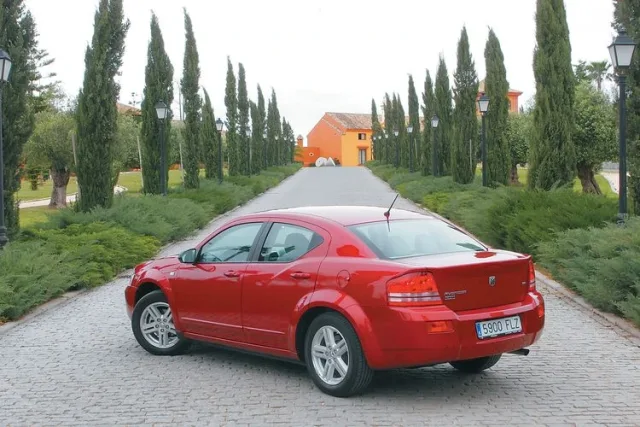
The faux radiator grille, crossed crosswise, angular bumper resembling a ram, and rear wing with a daring retro-style line rise... This is the Dodge Avenger — a fresh American midsize sedan that will appear in European showrooms this summer, and it's this car I got to drive along the roads of Spanish Seville.
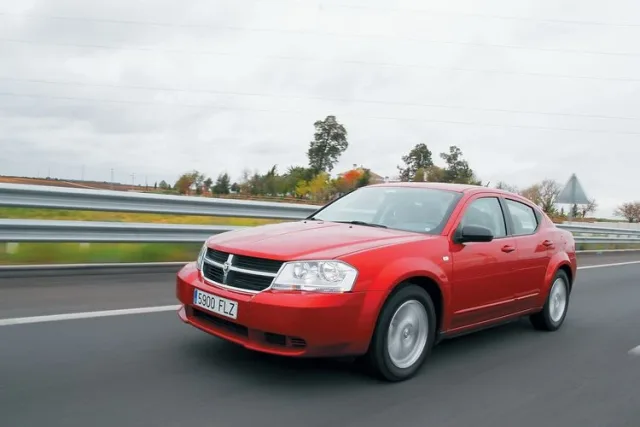
An American should look exactly like this — imposing, rough, tangible. As befits a Dodge. All current models of the brand — Caliber, Nitro, Avenger — are made in the same recognizable, deliberately brutal style.
But what hides behind this imposing "wolfish" appearance? In essence, the Avenger is a rebadged Chrysler Sebring of the new generation (see AR No. 6, 2007). A classic example of American badge engineering: both models stand on the same platform, come off the assembly line of the same plant in Sterling Heights (Michigan), they have identical suspensions, engines, and transmissions... The only difference is the interior design. And the Avenger also surprises second-row passengers: due to the high "humped" beltline, visibility through the windows is severely limited — you sit as if in a tank!
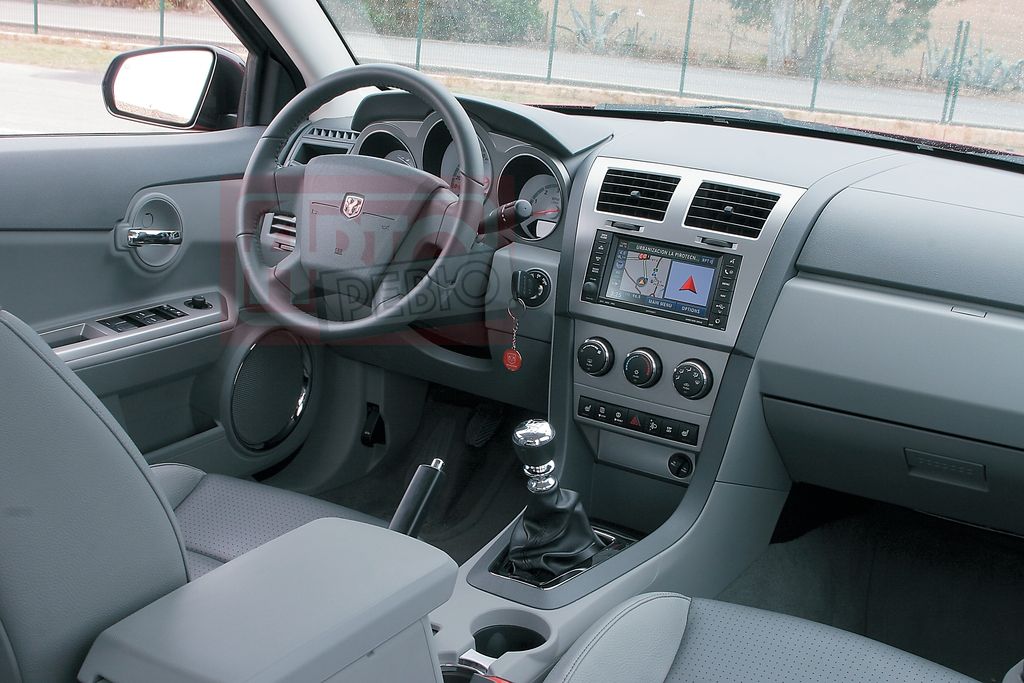 | 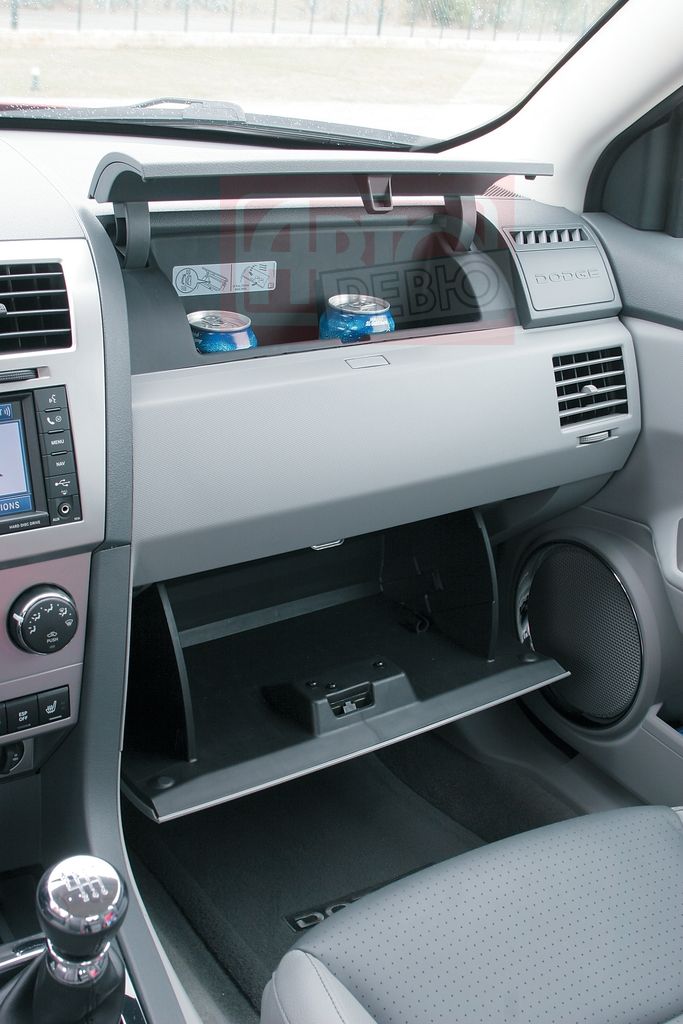 | 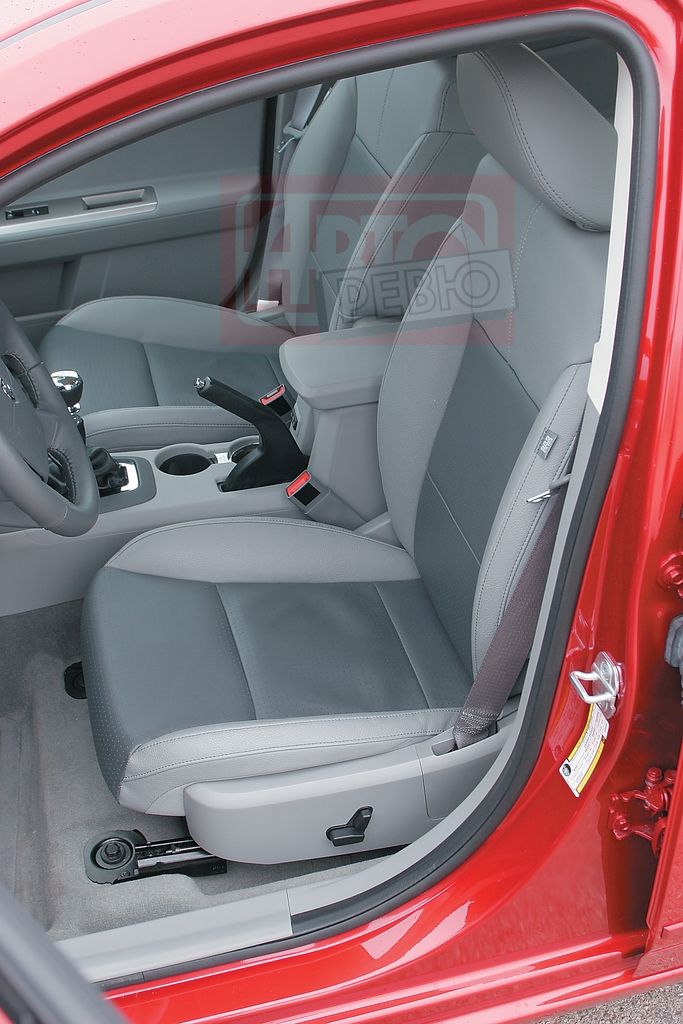 |
| The interior is modestly styled, but it's adorned with an interactive navigation screen. True, such an option is unavailable for Russia: the maximum you can order is a six-disc CD/DVD changer | Above the main glove box there is an additional cooler box that fits four half-liter cans | Seats with flat backrests are clearly not designed for active driving in corners |
Inside, everything is unpretentious in an American way: hard, mostly smooth gray plastic, climate control knobs, buttons on the center console, a familiar instrument panel, a large four-spoke steering wheel (on rich versions — with music control buttons), as well as seats without proper lateral support — all this is already familiar from other Dodges and Chryslers.
On the move, the Avenger also behaves like the Sebring. The brakes are good, handling is reliable but frankly boring. The only thing that pleased more was ride smoothness. Maybe the chassis was retuned? Not at all: the suspensions of both cars are identical, although for Europe they were made slightly stiffer and stricter than in American versions. Most likely, my Avenger seemed softer only thanks to higher-profile tires 215/60 R17 — the Sebring, meanwhile, stood on 215/55 R18 tires.
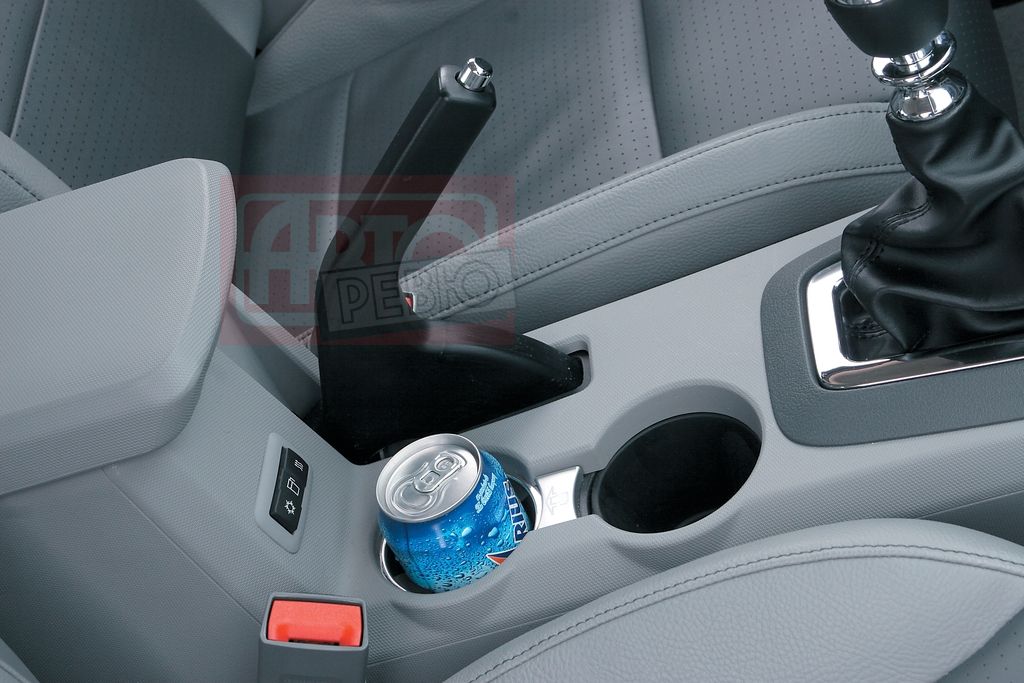 | 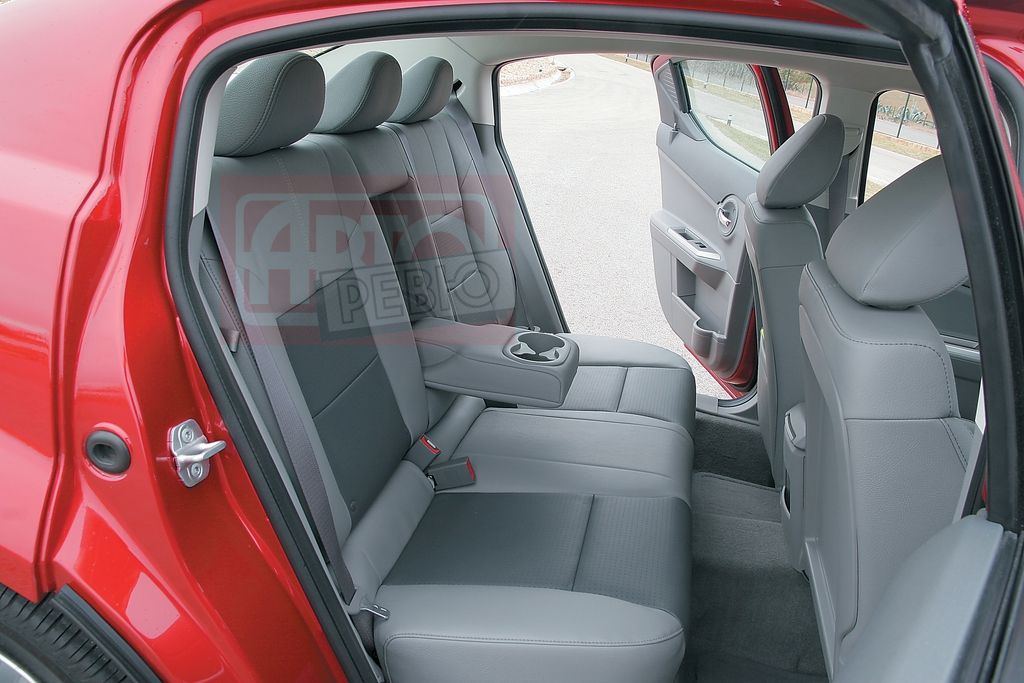 | 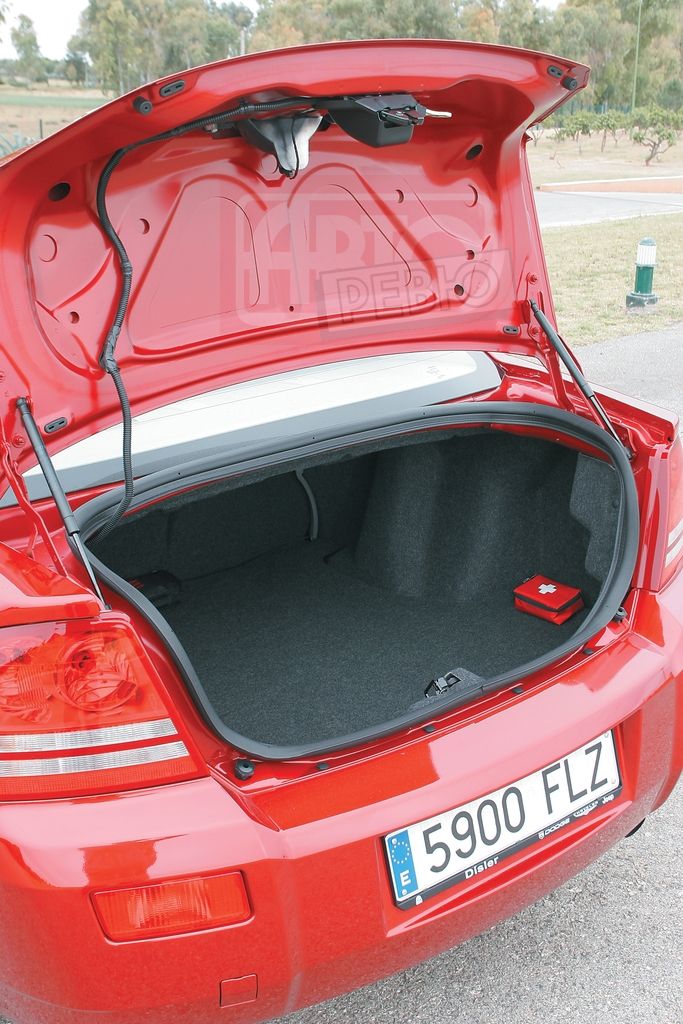 |
| The cup holder in "warm" mode heats up to 60°C, and in "cold" mode cools down to 2°C | Seat upholstery can be ordered in YES Essentials fabric, which is easy to clean, does not absorb odors, and does not fade | On a car priced under $30,000, a bare trunk lid. Not respectable... |
What about engines? In Seville, I tried the diesel Avenger and the petrol top version with a V-shaped "six." The familiar 140-horsepower 2.0 TDI turbodiesel from Volkswagen gives the Avenger excellent traction! At the same time, comfort is at a high level: no vibrations, no diesel rumble. True, DaimlerChrysler does not supply diesel Dodges and Chryslers to Russia, citing poor fuel. And this despite the fact that the Volkswagen folks themselves calmly sell diesel models in our country, considering Russian diesel fuel suitable.
Russia will also not see the most powerful 188-horsepower Avenger with a 2.7-liter V6. It's a pity: the Sebring with its calmer appearance can be ordered with a six-cylinder engine, while the brutal Avenger is limited to two four-cylinder units — a two-liter with a five-speed manual or a 2.4 version with a four-speed automatic. Prices range from 21,500 to 24,800 euros. It turns out the Dodge Avenger is even cheaper than the base Sebring 2.4, which costs 25,900 euros. That's marketing for you...
| Specifications | ||
| Parameters | Vehicle | |
| Dodge Avenger | ||
| Modification | 2.0 | 2.4 |
| Body type | sedan | sedan |
| Number of seats | 5 | 5 |
| Overall dimensions, mm | ||
| length | 4850 | 4850 |
| width | 1843 | 1843 |
| height | 1497 | 1497 |
| Wheelbase, mm | 2765 | 2765 |
| Track front/rear, mm | 1570/1570 | 1570/1570 |
| Trunk volume, l | 438 | 438 |
| Curb weight, kg | 1480—1555 | 1510—1560 |
| Gross weight, kg | 2040 | 2040 |
| Engine | petrol, with distributed fuel injection | petrol, with distributed fuel injection |
| Location | front, transverse | front, transverse |
| Number and arrangement of cylinders | 4, in-line | 4, in-line |
| Displacement, cm³ | 1998 | 2360 |
| Cylinder bore/piston stroke, mm | 86.0/86.0 | 88.0/97.0 |
| Compression ratio | 10.5:1 | 10.5:1 |
| Number of valves | 16 | 16 |
| Max. power, hp/kW/rpm | 156/115/6300 | 170/125/6000 |
| Max. torque, Nm/rpm | 190/5100 | 220/4500 |
| Gearbox | manual, 5-speed | automatic, 4-speed |
| Drive | front-wheel drive | front-wheel drive |
| Front suspension | independent, coil spring, McPherson | independent, coil spring, McPherson |
| Rear suspension | independent, coil spring, multi-link | independent, coil spring, multi-link |
| Front brakes | disc, ventilated | disc, ventilated |
| Rear brakes | disc | disc |
| Tires | 215/60 R17 | 215/60 R17 |
| Maximum speed, km/h | 200 | 200 |
| Acceleration time 0—100 km/h, s | 12.1 | 11.0 |
| Fuel consumption, l/100 km | ||
| urban cycle | 10.7 | 12.3 |
| extra-urban cycle | 6.1 | 6.9 |
| combined cycle | 7.8 | 8.9 |
| Fuel tank capacity, l | 64 | 64 |
| Fuel | AI-95 | AI-95 |
A bit of history
In North America, the Dodge Avenger belongs to the middle class — more precisely, to its "lower" part, where the main competitors are the Honda Accord and the American Ford Fusion. This is the most sought-after size of passenger cars in the USA.
In the Dodge model lineup, the front-wheel-drive midsize car debuted in 1982 — it was the Dodge 600 sedan, which technically was a stretched version of the compact Dodge Aries of 1980. These cars were based on the famous front-wheel-drive K-platform — the brainchild of Lee Iacocca, who failed to realize his idea at Ford, but at Chrysler it got life. Common floor panels, McPherson struts in front, a solid rear axle — and a whole range of platform mates, from sedans to minivans. Sounds familiar, doesn't it? In the early 80s, this approach by Iacocca was a real breakthrough and allowed the struggling Chrysler corporation to save on the development and production of new models.
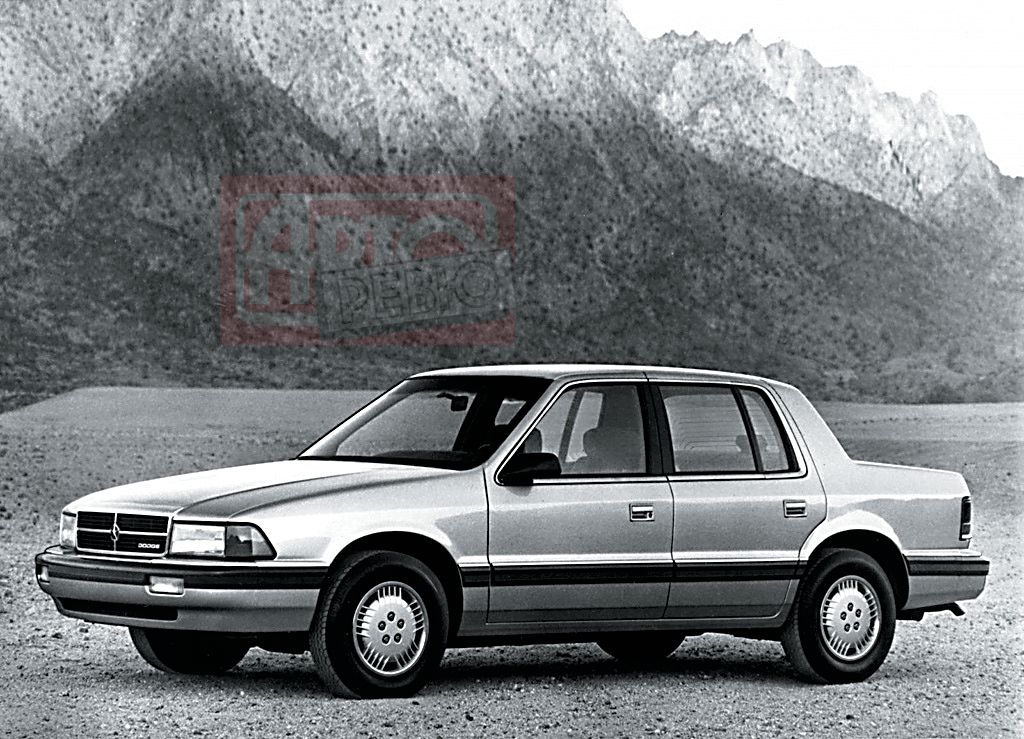 | 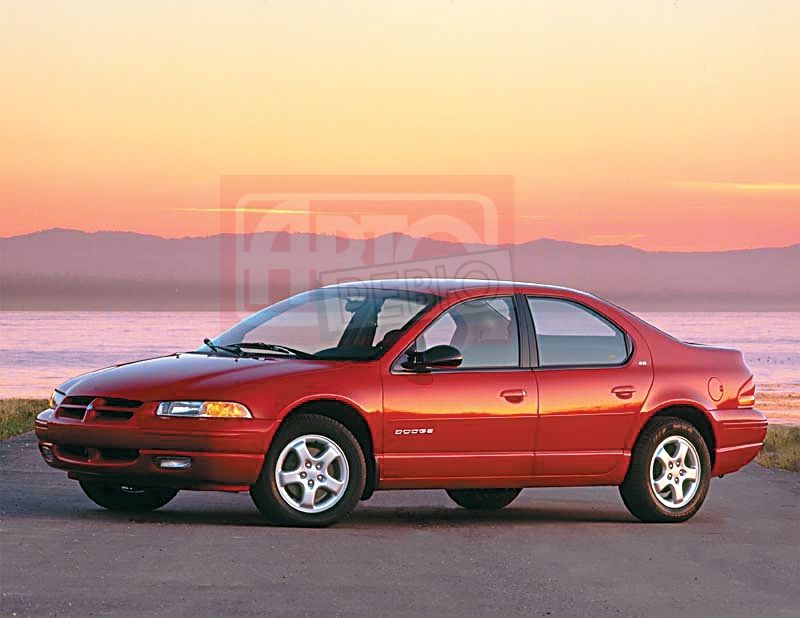 | |
| Dodge 600 (1982—1988), platform mates — Chrysler New Yorker, Plymouth Caravelle | Dodge Spirit (1988—1995), platform mates — Chrysler LeBaron, Chrysler Saratoga and Plymouth Acclaim | Dodge Stratus first generation (1995—2000), platform mates — Chrysler Cirrus and Plymouth Breeze |
The Dodge 600 model in the brand's lineup was positioned between the budget Aries and the more solid Dodge Diplomat sedan. Under the hood, exclusively four-cylinder engines with a displacement from 2.2 to 2.5 liters were offered, with one of them equipped with turbocharging. In addition to the sedan, buyers had access to coupe and convertible versions.
In 1988, the "six hundred" was replaced by the Dodge Spirit, which was produced only as a sedan. The engine lineup included a three-liter V-shaped engine from Mitsubishi. In 1991, the Spirit R/T modification was positioned as "the fastest American-made sedan" — a turbocharged 2.2-liter four-cylinder with a 16-valve cylinder head created by British specialists Lotus produced 227 hp and almost 300 Nm of torque. The European counterpart under the name Chrysler Saratoga was sold from 1989, but four years later this idea was abandoned.
In 1995, the Spirit gave way to the Dodge Stratus sedan with a cab-forward layout (forward-shifted cabin), which was based on the new JA platform (on which the Chrysler Cirrus and Plymouth Breeze were also built). At the same time, the Dodge Avenger debuted — a two-door coupe of similar dimensions. However, the Avenger, like its twin the Chrysler Sebring, had nothing in common with the Stratus: it was based on an extended platform of the second-generation Mitsubishi Eclipse coupe.
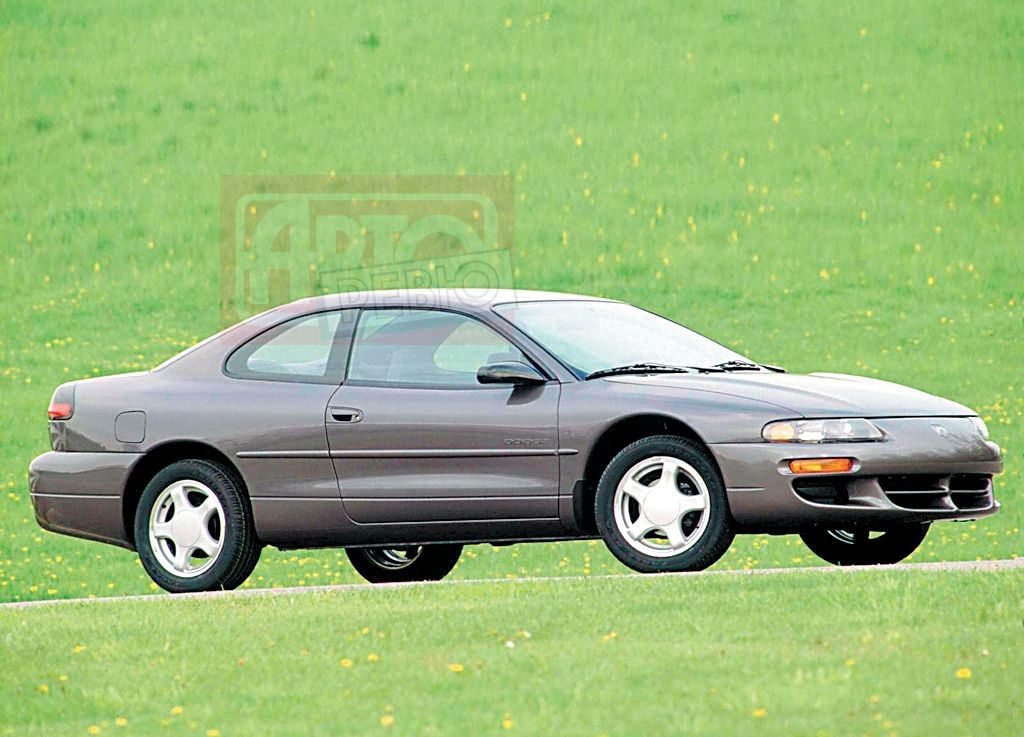 | 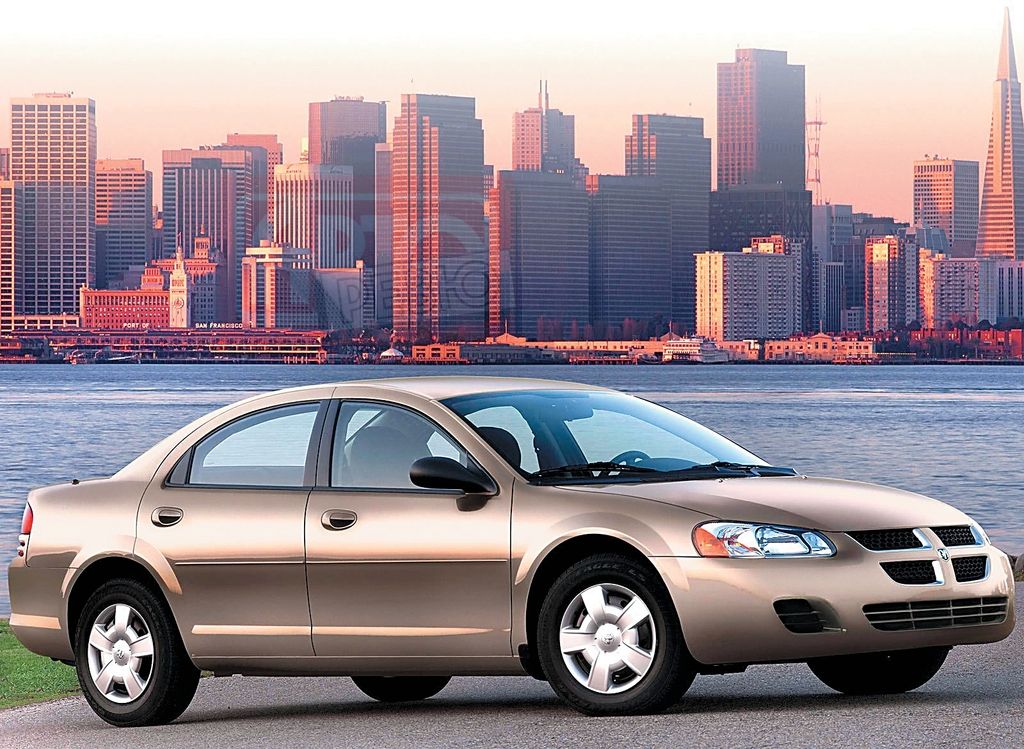 |
| Dodge Avenger coupe (1995—2000), platform mates — Chrysler Sebring, Mitsubishi Galant, Mitsubishi Eclipse and Eagle Talon | Dodge Stratus second generation (2001—2006), platform mate — Chrysler Sebring (sedan) |
In 2000, the "split personality" ceased: the Avenger name disappeared, and coupes and sedans were united under the Dodge Stratus and Chrysler Sebring brands. At the same time, the technical base remained the same — sedans used an updated Chrysler chassis, and coupes used Mitsubishi units. Then the Chrysler Sebring was returned to the European market, but again without noticeable success. Now these cars are assembled in Nizhny Novgorod.
Last year, after six years, the Avenger name was revived — now it is a four-door sedan. Along with the compact hatchback Caliber and the Nitro SUV, the mid-size Avenger became Dodge's new tool for conquering Europe. So far, the results are modest: in the US, based on the results of 2006, over 1.3 million Dodge cars were sold (about 6% of the market), while in Europe — only 30,527 units, of which 1,068 cars were sold in Russia.
By 2009, the Chrysler Group division, which unites the Chrysler, Dodge and Jeep brands, intends to occupy 1.4% of the European market — more than double the 2005 figure. Almost a third of this share should be provided by the Dodge brand.