
Advertising
About the Daewoo brand
South Korea founded in 1967 Model range
General Information
Daewoo Motor Co., Ltd., a South Korean company specializing in automobile manufacturing. Headquarters is located in Seoul.Corporate History
Daewoo Corporation was founded in 1967, the name translates as "Great Universe". In 1972, the Korean authorities granted the right to engage in automobile production to four companies — Kia, Hyundai Motor, Asia Motors, and Shinjin. Then Kia and Asia Motors merged. And Shinjin turned into a joint venture between Daewoo and General Motors, and later into Daewoo Motor. Until 1993, the company collaborated with General Motors. In 1995, Daewoo entered the German market with the small-class Nexia and mid-class Espero models.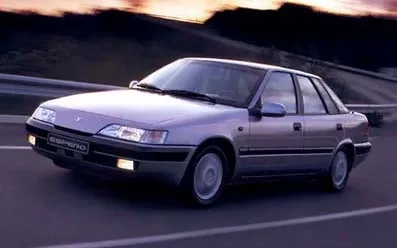 Daewoo Nexia is the last generation of the Opel Kadett E, which began production under license in 1986 in Korea. For export to the US and Canada, the car was sold under the name Pontiac Le Mans, on the local market — Daewoo Racer.
The front-wheel drive Tico hatchback of the "mini" class based on the Suzuki Alto has been produced in South Korea since 1988.
By early 1996, Daewoo had built three technical centers: in Worthing (UK), near Munich (Germany), and in Pulyan (Korea). The chief technical director of projects is Ulrich Betz (former BMW manager).
Since 1993, the Prince sedan and its comfortable version Brougham have been produced based on the discontinued Opel Senator.
The Espero sedan was designed by Bertone based on Opel-Ascona components. First introduced in 1993.
At the end of 1997, the company presented three models at international auto shows — Lanos, Nubira, and Leganza.
Lanos was developed and launched into production in 30 months, costing $420 million. This is Daewoo's first own design.
Daewoo Nubira is an in-house development (division in England), design by I.D.E.A. Work on the model began in 1993 and lasted 32 months. The design was developed in Worthing, the first prototype was presented at the end of 1994. This is a golf-class car with a transverse engine and front-wheel drive, replacing the Espero.
Leganza is the company's attempt to produce business-class models. The design is based on the Opel Senator body, refined by Italdesign specialists.
Daewoo Nexia is the last generation of the Opel Kadett E, which began production under license in 1986 in Korea. For export to the US and Canada, the car was sold under the name Pontiac Le Mans, on the local market — Daewoo Racer.
The front-wheel drive Tico hatchback of the "mini" class based on the Suzuki Alto has been produced in South Korea since 1988.
By early 1996, Daewoo had built three technical centers: in Worthing (UK), near Munich (Germany), and in Pulyan (Korea). The chief technical director of projects is Ulrich Betz (former BMW manager).
Since 1993, the Prince sedan and its comfortable version Brougham have been produced based on the discontinued Opel Senator.
The Espero sedan was designed by Bertone based on Opel-Ascona components. First introduced in 1993.
At the end of 1997, the company presented three models at international auto shows — Lanos, Nubira, and Leganza.
Lanos was developed and launched into production in 30 months, costing $420 million. This is Daewoo's first own design.
Daewoo Nubira is an in-house development (division in England), design by I.D.E.A. Work on the model began in 1993 and lasted 32 months. The design was developed in Worthing, the first prototype was presented at the end of 1994. This is a golf-class car with a transverse engine and front-wheel drive, replacing the Espero.
Leganza is the company's attempt to produce business-class models. The design is based on the Opel Senator body, refined by Italdesign specialists.
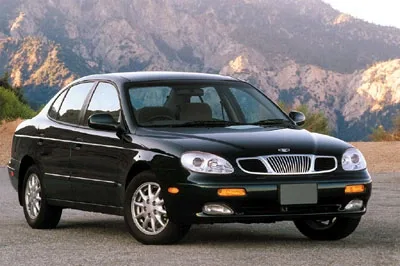 Daewoo Matiz is a mini-car with a transverse engine and front-wheel drive. First introduced in 1998 in Geneva. An updated version was presented at the Paris Motor Show in October 2000.
After the Asian financial crisis of 1998, the company faced difficulties. The South Korean government refused nationalization. The world's largest corporations competed for the right to acquire it.
Since September 2002, Daewoo officially came under the jurisdiction of General Motors, changing its name to GM Daewoo Auto & Technology Co.
Daewoo Matiz is a mini-car with a transverse engine and front-wheel drive. First introduced in 1998 in Geneva. An updated version was presented at the Paris Motor Show in October 2000.
After the Asian financial crisis of 1998, the company faced difficulties. The South Korean government refused nationalization. The world's largest corporations competed for the right to acquire it.
Since September 2002, Daewoo officially came under the jurisdiction of General Motors, changing its name to GM Daewoo Auto & Technology Co.
GM Uzbekistan Company
In 1992, on a parity basis, the state company "Uzavtosanoat" and Daewoo created "Uzdaewooauto" for assembly production of passenger cars. In 2005, "Uzdaewooauto" bought out the share of the Korean company, which went bankrupt in 2002, and General Motors acquired a controlling stake in Daewoo Motor, creating GM Daewoo Automotive and Technology (GM DAT) on its basis. "UzDaewooauto" received the brands Nexia, Matiz, Damas, under which it produced sedans, small cars, and minivans. In May 2007, the government of Uzbekistan signed a strategic cooperation agreement with GM DAT, providing for the modernization of Nexia and Matiz, localization of production, and the possibility of producing new models. In March 2008, the joint venture GM Uzbekistan was created.Daewoo in Ukraine
UZ-Daewoo
The Uzbek enterprise "Ukr-UzAvto" was registered in Ukraine on April 25, 2001. The company is the exclusive importer of Daewoo Nexia and Matiz cars on the Ukrainian market, handling the import and sale of Uzbek-made cars. 14 UZ-Daewoo dealerships have been opened throughout Ukraine. Dealer relations are actively developing.