
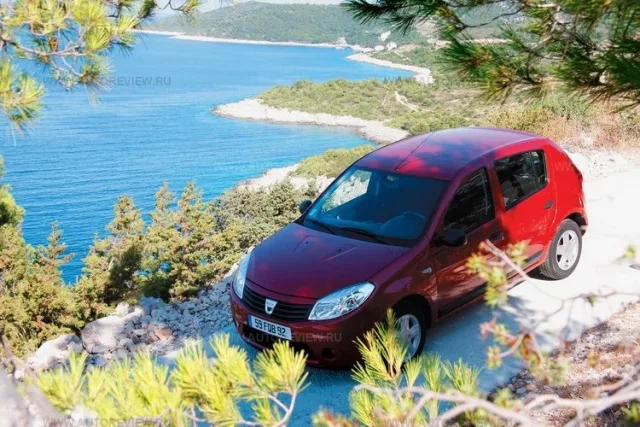
"Summer is coming, so it's time to go to the dacha. Shovel in hand..."
Then the leader of the band "Leningrad" in his signature manner, briefly and using unprintable expressions, describes the typical pastime of suburban plot owners. In my hands, though, it's not a garden tool but a camera. It's summer outside, and next to me is a Dacia. And when the new Sandero hatchback, which I'm getting acquainted with on Croatian roads, reaches Russia under the Renault brand, it will likely also carry dacha-goers, although the related Logan is both more spacious and more affordable...
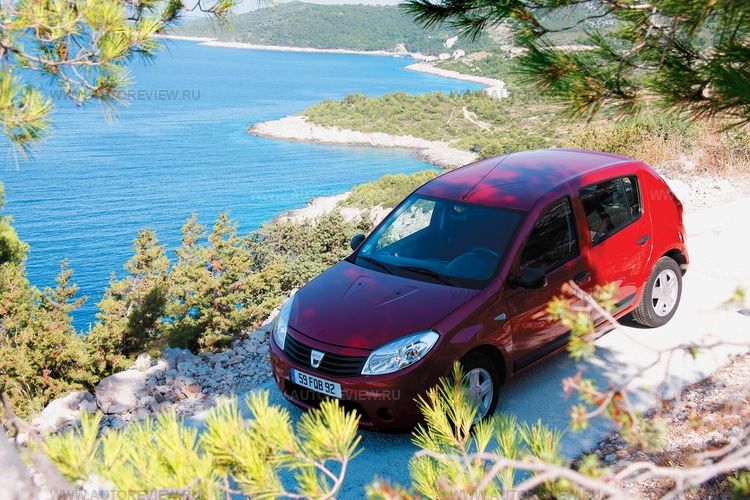
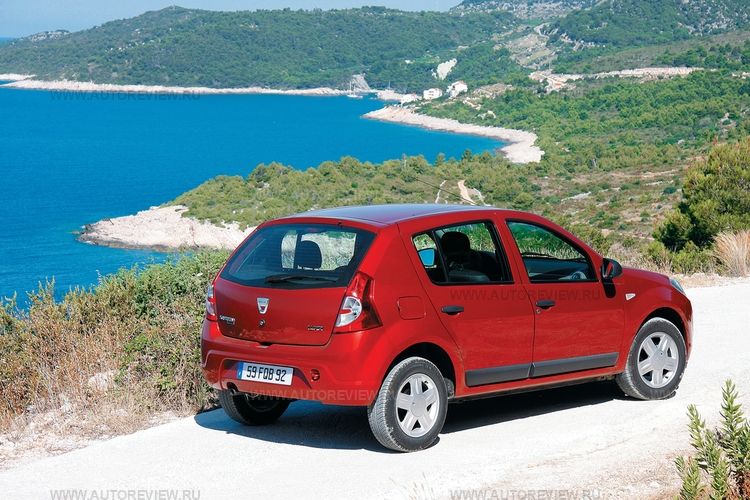
Previously, in the battle for the title of the most unsightly car in the Renault lineup, the Symbol and Logan competed. But the Sandero, fortunately, will not enter this race. The hatchback looks more attractive! Neat stampings appeared on the hood, bumpers and sills became more expressive than those of the sedan, and the lighting is more interesting. The body panels got rid of the clumsy angularity inherent in the Logan, and the proportions of the five-door are noticeably more harmonious, especially in combination with 15-inch wheels.
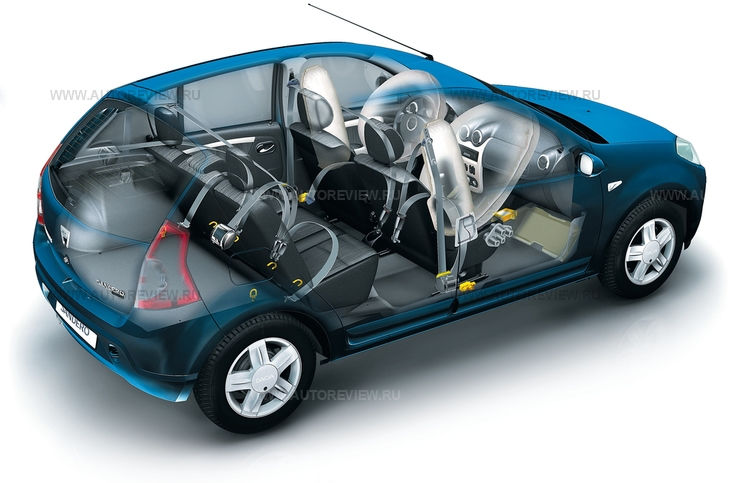
The Sandero can be equipped with four airbags. All belts are three-point, front ones with pretensioners and force limiters
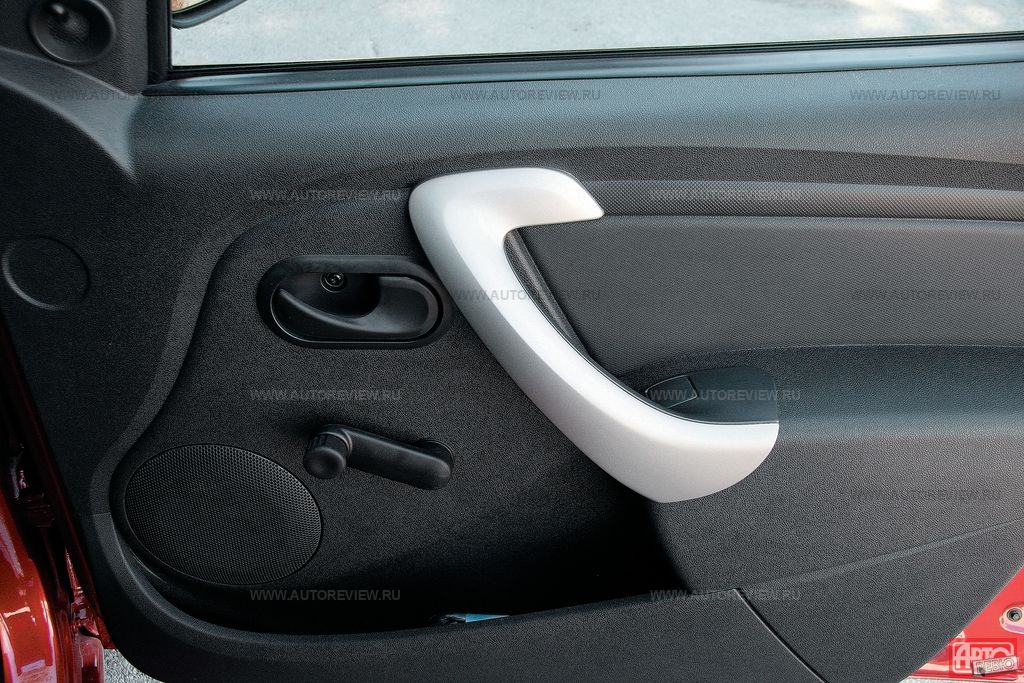
The Sandero's interior is an updated Logan. In Russia, sedans with such an interior will only start production next year, but in Romania they are already assembled under the Dacia brand. The instrument panel visor is made of soft plastic, the "aluminum-look" insert on the center console has moved higher, and next to it are silver rings of the air vents. The new steering wheel stylistically echoes the "adult" Renault models and is height-adjustable in top versions. And most importantly, full-fledged handles have finally been installed in the doors! Massive, made of silver plastic, they fit comfortably in the palm and don't "play" when pressed. True, in the back there are still only modest recesses instead of handles...
 |
|
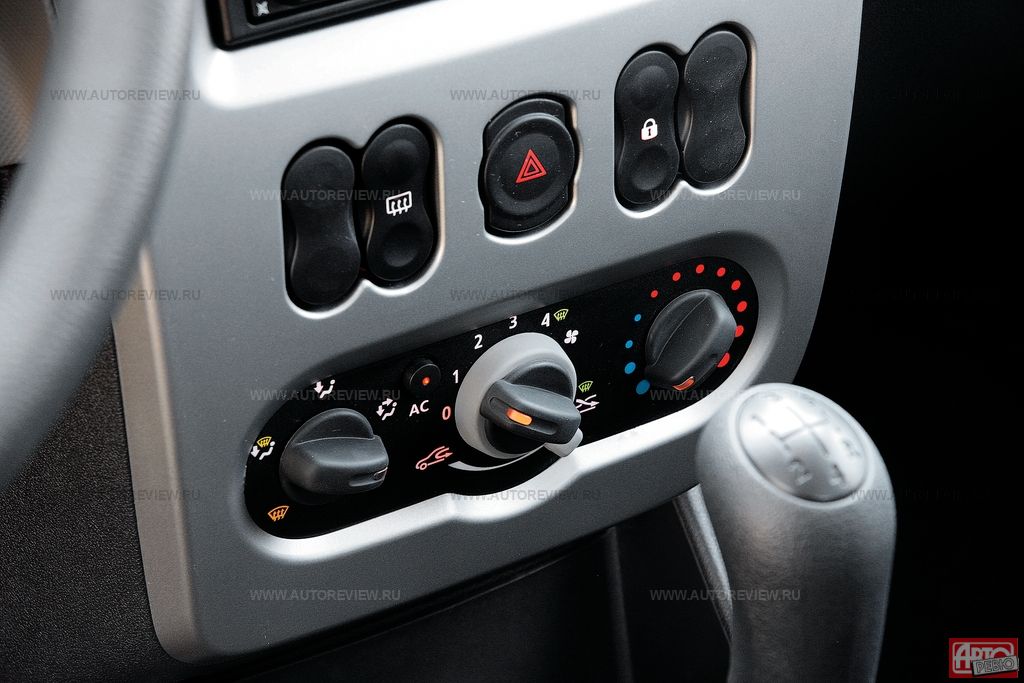
| The ventilation control knobs are arranged in a row, but you have to reach for them almost "Logan-style" | Gears in the five-speed gearbox engage easily, but the lever travel is long |
 |
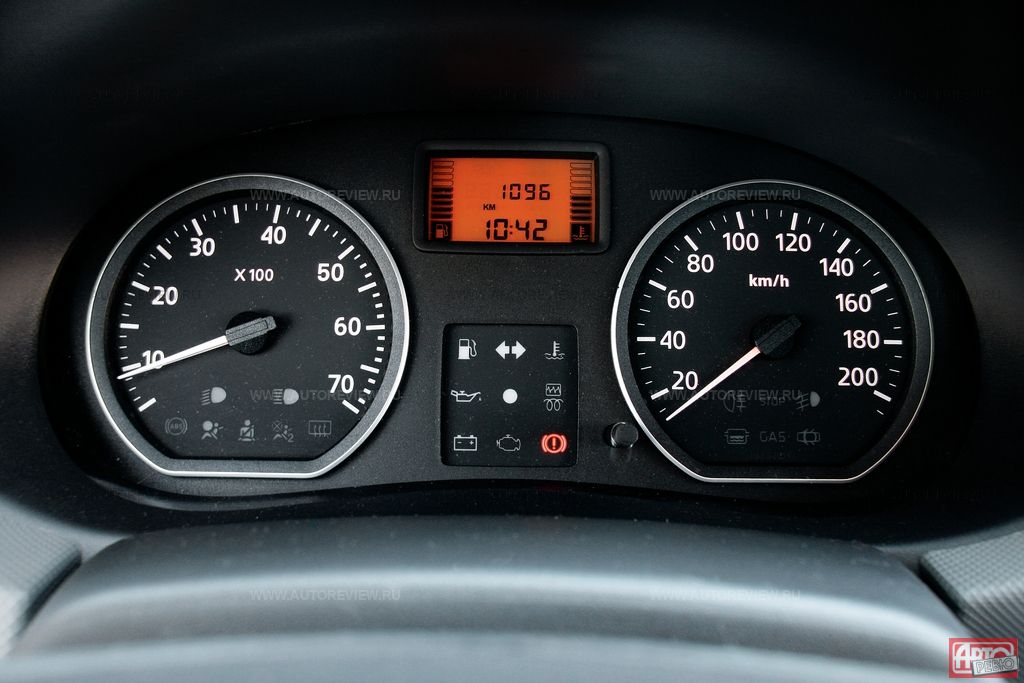 |
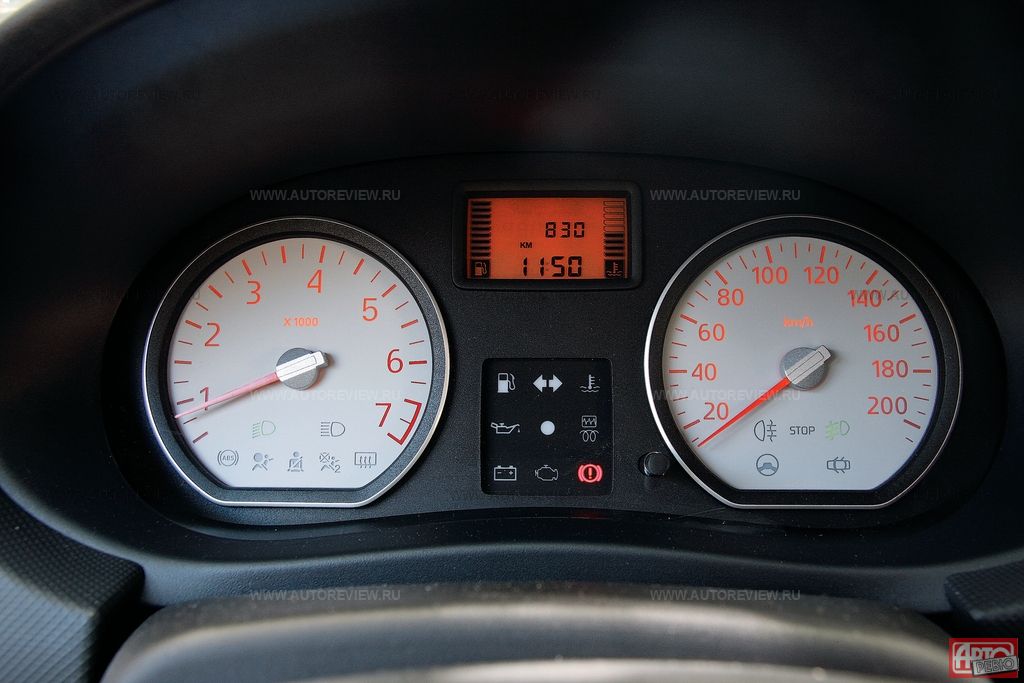
| Instruments on expensive versions have white scales and large numbers, and the display shows readings from the onboard computer | |
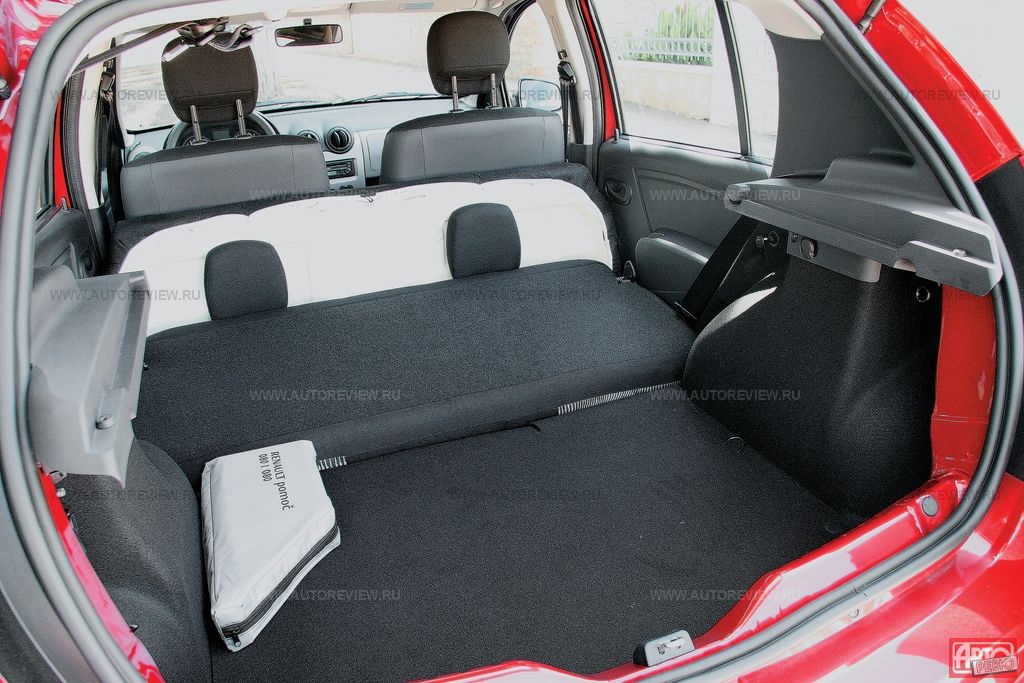
The hand pocket on the inside of the tailgate door has become a bit more spacious, but it still can't be called comfortable — when overcoming the resistance of the somewhat tight struts, your knuckles unpleasantly press against the hard edge. The trunk itself is smaller than the Logan's — 320 liters versus 520 liters for the sedan. And there are no niches in the trunk where you could stash small items. However, the rear seat folds down — entirely or in parts, depending on the trim. And then the dacha-goer gets as much as 1200 liters of "cargo" volume — like some station wagons a class higher!
However, for budget dacha transportation, Renault has the seven-seat Logan MCV station wagon. In addition, in a year or two, a crossover will appear on the same Logan B0 platform — also spacious, but with increased ground clearance and all-wheel drive. And the Sandero hatchback is positioned by the French as a car for young people and city dwellers. That's why they gave it its own name — to distance the five-door from the utilitarian Logans.
 |
|
| The front doors finally have large and comfortable handles, but in the back there are still stampings in the armrests | |
 |
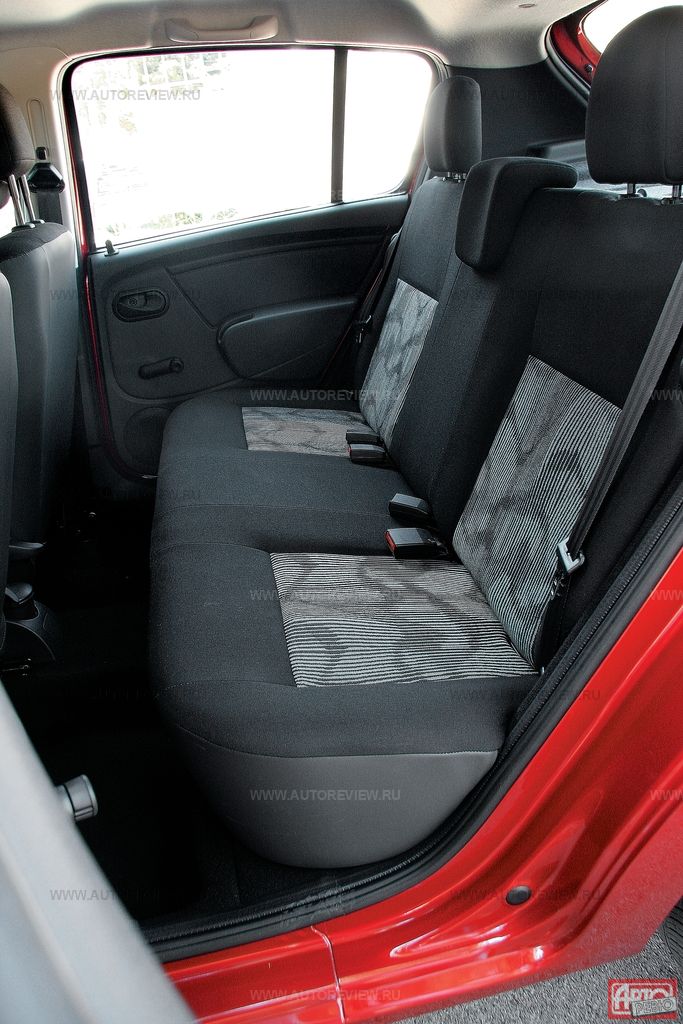 |
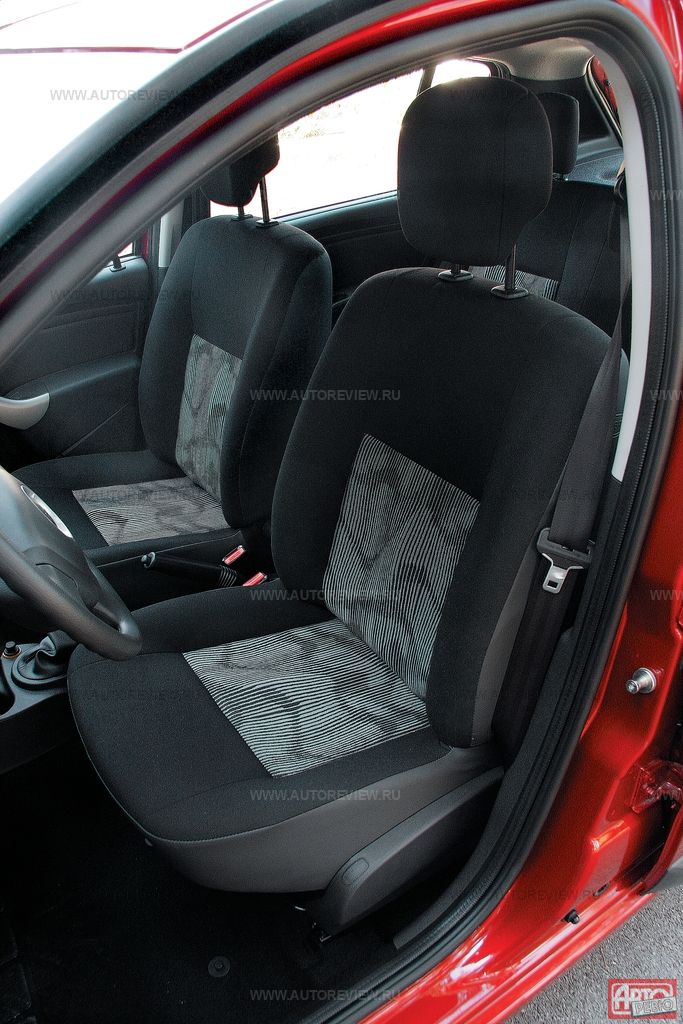
| The seats are moderately firm and flat. In expensive trims, the driver can adjust lumbar support | In the back of the hatchback there is less space than in the sedan — the Sandero has a 42 mm shorter wheelbase |
But why then is a more peppy engine not offered for the "youth" hatchback — only the usual 8-valve 1.4 L and 1.6 L engines from the Logan? The official answer is that there is unlikely to be noticeable demand for a powerful Sandero. But the real reason is surely something else. The French really don't want Dacia to compete with the Renault Clio. That's why there's no "automatic" either — except perhaps in the distant future.
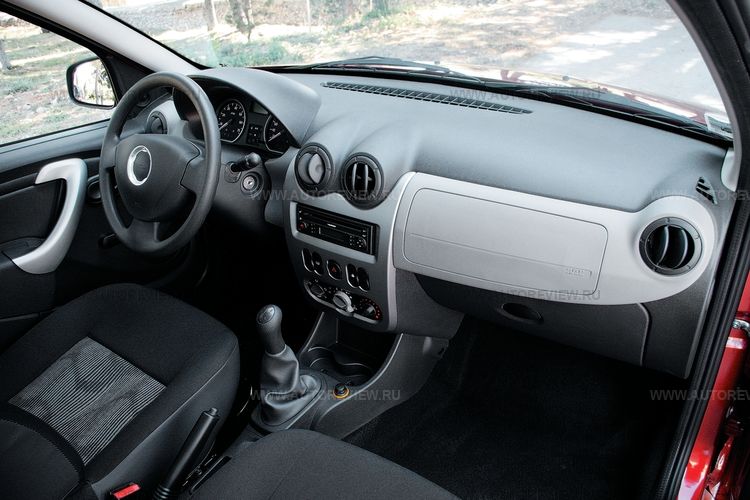
The interior can also be ordered with light inserts on the panel. On expensive versions, the steering column is height-adjustable, and the air ducts are decorated with silver rings
In terms of mass, the Sandero and Logan do not differ — and in acceleration dynamics too. The car is saved from the epithet "sluggish" only by the "shortened" gear ratios in the transmission. The base 75-horsepower engine spins up evenly from about two thousand to the limiter at 6000 rpm, allowing you to accelerate the Sandero to 85 km/h on the speedometer in second gear, and to 125 km/h in third. With the 1.6 engine, the acceleration character does not change — the additional two hundred "cubes" of displacement and 15 hp of power only make the engine a bit livelier at the "top", which is especially felt at high speed.
 |
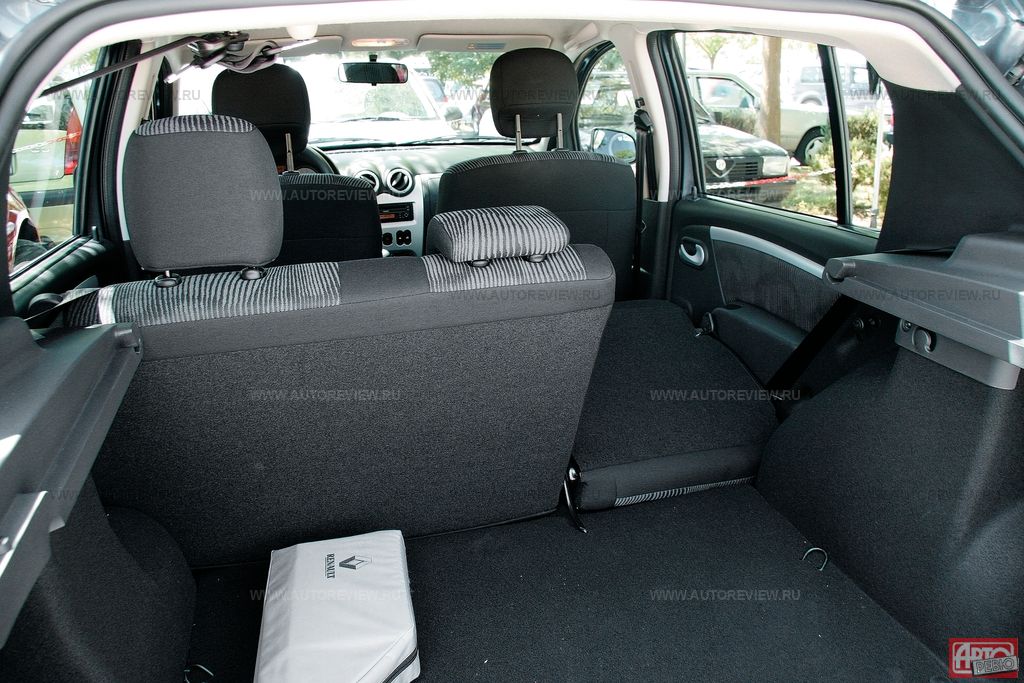 |
| The rear seat backrest is one-piece in the "base", and split with richer equipment. You can fold only it or fold forward the cushion too, but then you need to remove the headrests. In any transformation option, a flat surface is not achieved. The spare wheel, unlike the Logan, is placed under the car's floor | |
The main difference between the 1.4 and 1.6 versions is acoustic. The base Sandero has worse sound insulation, and the engine howls terribly at high revs. The more expensive hatchback with the 1600-cc engine is quieter: at least even at 140 km/h you can calmly talk with a passenger.
Unfortunately, I didn't get to drive the cheapest Sandero with 14-inch high-profile tires and no power steering. And maybe that's for the best — on the narrow, winding mountain roads of Croatia, "winding" the steering wheel, which takes more than four and a half turns from lock to lock, is dubious pleasure.
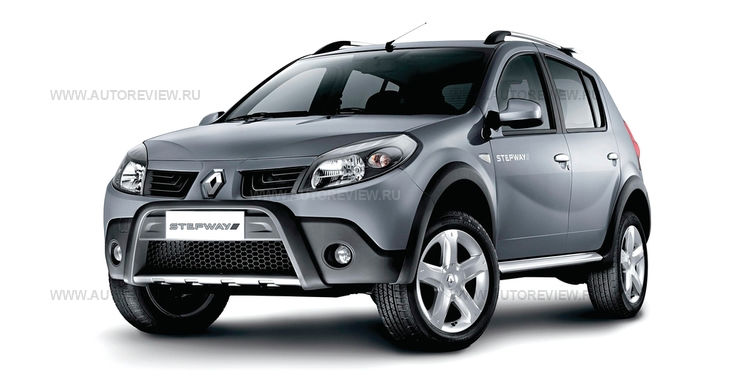
At the end of summer, the Logan/Sandero family was joined by the front-wheel-drive "raised hatchback" Renault Sandero Stepway. Ground clearance is increased, plastic overlays on bumpers, wheel arches and sills are added, and roof rails appeared on the roof. Production of the cars will begin in October at a plant in Brazil — cars for the domestic market will receive the Hi-Flex 1.6 engine (112 hp) running on bioethanol, and a version with a turbodiesel is prepared for Argentina. A little later, the Sandero Stepway will appear in Europe and will cost about 450 euros more than the regular hatchback
But even with power steering, the Sandero is by no means suitable for conquering mountain peaks — the hatchback's suspension is soft, and the steering wheel with power assist (just over three turns) is "light". In corners, the Sandero noticeably rolls, and during lane changes it sways from side to side. The "zero" of the steering wheel is "blurred", and informative reactive force appears only in sharp turns.
 |
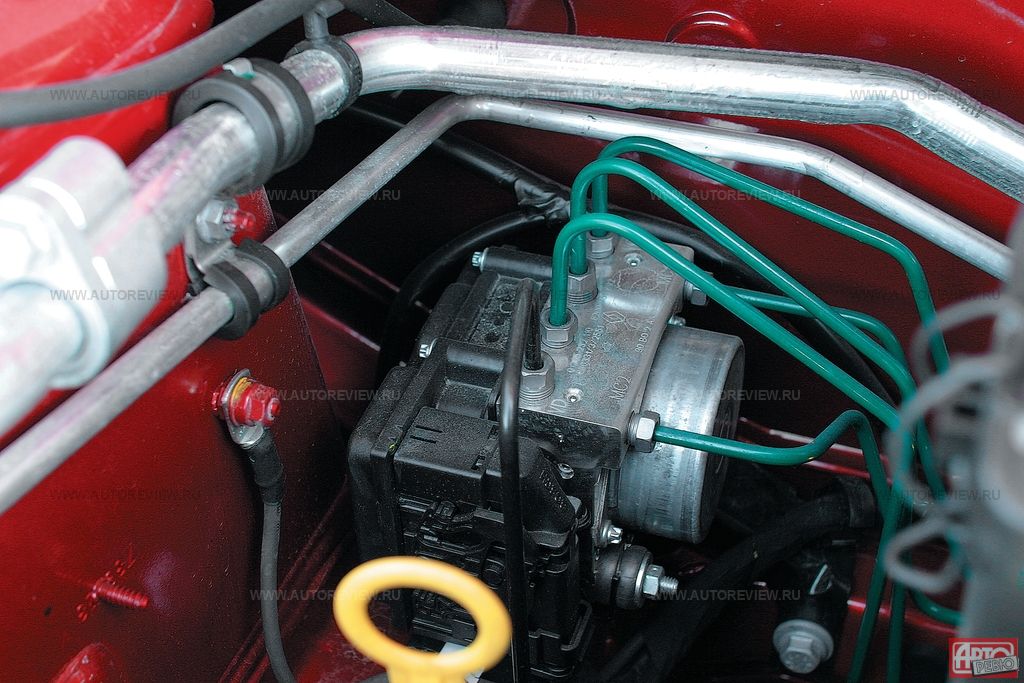 |
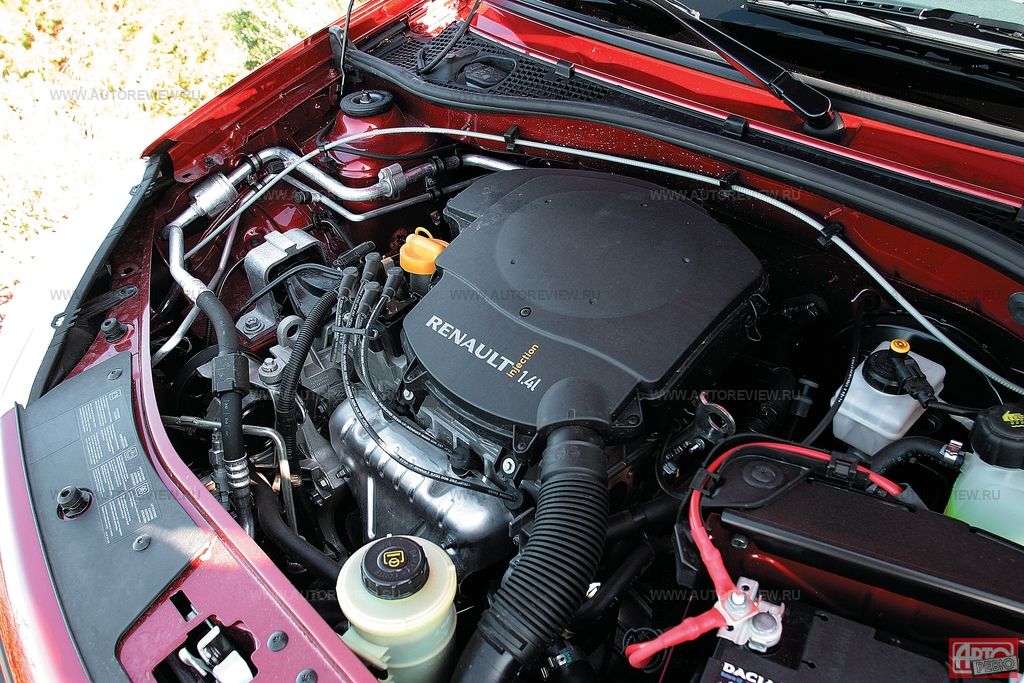
| Engines — like those of the Russian Logans — are petrol, eight-valve. Next year, Sandero will also get Logan diesel engines | The Sandero comes standard with the latest generation Bosch ABS — with electronic brake-force distribution and Brake Assist function |
However, even on uneven roads, the Sandero confidently holds its course, and you hardly have to correct the steering. In corners at the limit, it doesn't catch you off guard either: first, the tires squeal, and the car starts to understeer, and when you release the throttle, it smoothly slides into oversteer. But the ride comfort here is worse than the Logan's — you can feel both the joints and the small waves of asphalt. It seems the hatchback is inferior to the sedan both in steering precision and comfort!
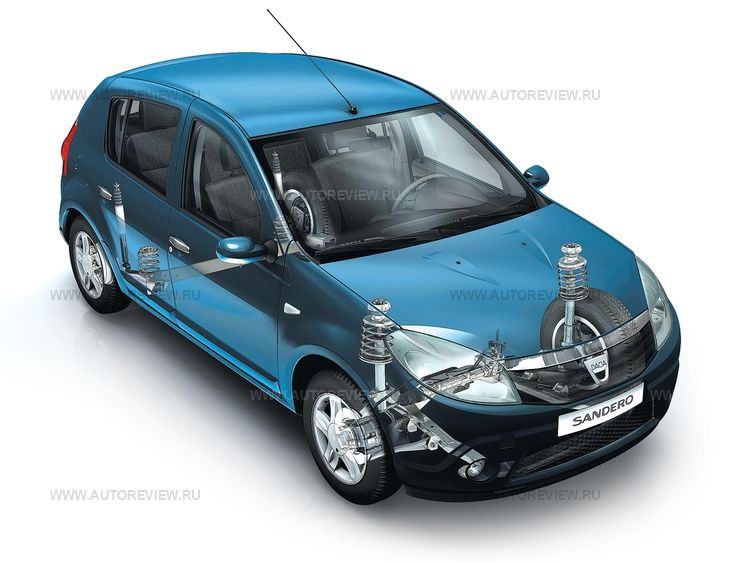
In terms of design, the Sandero and Logan chassis are identical — only the suspension settings differ. The degree of unification of both models is 70%
Renault representatives promise that for Russia, the Sandero, like the Logan, will have its own suspension settings. When will this happen? You'll have to wait: assembly of the Sandero at Avtoframos will start no earlier than mid-next year, when the plant expands its production capacity. The French are considering temporarily supplying cars from Romania to Russia (naturally, under the Renault brand), but then, according to them, they will be noticeably more expensive than the "Russian" Logans. But after the launch of assembly at Avtoframos, prices for the Sandero can be made only slightly higher than the Logan's — as in Romania itself, where the hatchback costs from 6,900 euros, only 500 euros more than the Dacia Logan. And this despite the fact that ABS on the Sandero is already included in the base equipment.
So let's wait until the Dacia Sandero turns into a Moscow-assembled Renault, and then we'll compare both prices and capabilities with competitors like the VAZ Priora and the Chinese hatchback BYD F3R.
What a summer it will be...
| Specifications | ||
| Parameters | Vehicle | |
| Dacia Sandero | ||
| Modification | 1.4 MPI | 1.6 MPI |
| Body type | 5-door hatchback | |
| Number of seats | 5 | 5 |
| Dimensions, mm | ||
| length | 4020 | 4020 |
| width | 1746 | 1746 |
| height | 1534 | 1534 |
| wheelbase | 2588 | 2588 |
| track front/rear | 1480/1469 | 1480/1469 |
| Trunk volume, l | 320—1200 | 320—1200 |
| Curb weight, kg | 975 | 980 |
| Gross weight, kg | 1470 | 1470 |
| Engine | petrol, with distributed injection | |
| Location | front, transverse | |
| Number and arrangement of cylinders | 4, in-line | 4, in-line |
| Displacement, cm³ | 1390 | 1598 |
| Cylinder bore/piston stroke, mm | 79.5/70.0 | 79.5/80.5 |
| Number of valves | 8 | 8 |
| Max. power, hp/kW/rpm | 75/55/5500 | 90/64/5500 |
| Max. torque, Nm/rpm | 112/3000 | 128/3000 |
| Gearbox | manual, 5-speed | |
| Drive | front | |
| Front suspension | independent, coil spring, McPherson | |
| Rear suspension | semi-independent, coil spring | |
| Front brakes/diameter, mm | disc/259 | |
| Rear brakes/diameter, mm | drum/204 | |
| Tires | 165/80 R14 or 185/65 R15 | |
| Maximum speed, km/h | 161 | 174 |
| Acceleration time 0–100 km/h, s | 13.0 | 11.5 |
| Fuel consumption, l/100 km | ||
| urban cycle | 9.6 | 10.0 |
| extra-urban cycle | 5.4 | 5.6 |
| combined cycle | 7.0 | 7.2 |
| CO₂ emissions, g/km | 165 | 170 |
| Fuel tank capacity, l | 50 | |
| Fuel | petrol AI-95 | |
Worldwide
Production of the Sandero hatchback started last autumn in Brazil — at the plant in Curitiba, about 110 thousand hatchbacks and Logan sedans are produced annually for the South American market under the Renault brand. In June, European production was added at the plant in Pitesti (Romania) — there the cars are produced under the Dacia brand. By the end of the year, the Sandero will also be assembled at the Renault plant in Medellin, Colombia, which was launched in 2006. And next year, South Africa, Moroccan Casablanca, and Moscow's Avtoframos will be added to the list. However, there are no plans yet to produce the Sandero at plants in India and Iran, where Logan sedans are already made.
By the way, the most cars of the Logan/Sandero family (including station wagons, vans, and pickups) are produced in Romania — by the end of the year, the plant should produce 350 thousand vehicles, and the plan for 2009 is 400 thousand. But at two Iranian plants (Iran Khodro and SAIPA), already this year, 300 thousand Logan sedans alone will be produced. Moscow's Avtoframos will ship 80 thousand Logans this year, but after expanding production and mastering the Sandero next year, this number should double.