
About the Citroen brand
France founded in 1919 Model range
General Information
Citroën is a French manufacturer of passenger cars, part of the Peugeot group. The company's headquarters are located in Neuilly-sur-Seine.
Corporate History
The company was founded by André Citroën in 1919 as "Société Anonyme André Citroën". The goal was mass production of affordable cars. The first Citroën model became the first mass-produced car in Europe. Model "A" was equipped with a 4-cylinder engine producing 18 hp, characterized by low weight, ease of handling, and soft suspension, which became a hallmark of the brand. The engine and clutch were integrated into a single unit. This cemented Citroën's reputation as a simple and convenient car.
The first model 10CV was followed by the 5CV — a 4-cylinder small car without front brakes, suitable for poor rural roads. In production, the company applied Henry Ford's methods. The first Citroën taxis appeared in 1921, and later 90% of Parisian taxis were of this brand.
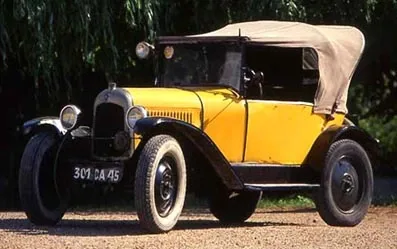
In 1923, a small number of sports cars "300 B2 Caddy" were produced — a three-seat model that was successful both among contemporary drivers and current collectors. In the spring of 1922, production of the two-seat "Roadster C" began, which due to its bright yellow color was nicknamed "little lemon". A convertible version was also produced.
By June 1924, Citroën was producing over 250 cars per day. The "Javel" plant expanded to occupy the entire territory of the 15th arrondissement of Paris. Company branches operated in Belgium, England, Italy, Holland, Denmark, and Switzerland. Citroën was the first in Europe and one of the first in the world to use steel bodies instead of wooden ones. Thus appeared models B12 and B14, which, thanks to the dashboard and adjustable seats, became the most comfortable production cars of their time. Over two years, 132,483 cars were manufactured.
In 1931, the model CGL ("Citroën Grand Luxe") was introduced, based on the C6F with a 53 hp engine and a richly appointed interior. During the famous auto rally across Asia, which ended in the Himalayas, models AC 4 and AC 6 performed excellently. At the 1933 Paris Motor Show, Citroën presented a full range of products: models 8, 10, 15, as well as lightweight versions of 10 and 15.
In April 1934, with the decisive participation of Guy Javel, a fundamentally new model "Traction Avant" was created. The financial costs for its promotion, disproportionately large for the period of the Great Depression, led to André Citroën losing control of the company. The company came under the control of the Michelin group. Thus began the era of front-wheel drive cars.
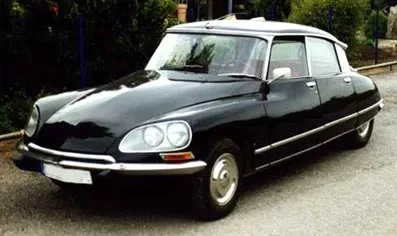
In 1955, at the Paris Motor Show, the DS car was presented. It was spacious, inexpensive, and safe, enjoying success among broad segments of the population and even with General de Gaulle. This car was also driven by the characters Fantômas and Inspector Juve.
In 1966, Citroën, together with the German company NSU, developed a car with a Wankel engine, but the created company "Comotor" did not last long. In 1965, the company "Panhard-Levassor" became part of Citroën. In 1974, Citroën joined the Peugeot group as an independent division, retaining its brand. The company's engineers made a significant contribution to the development of the automobile. In 1989, the third-generation Hydractive suspension was first introduced, automatically adapting to road surface and driving style.
The first showing of the Citroën Xantia took place in November 1992, and in 1993 the model went into production, replacing the Citroën BX. The design of the Xantia from 1993 defined the further development of the brand's style. The minivan Evasion (a joint development of Peugeot/Citroën — Fiat/Lancia) was first shown in March 1994 in Geneva. The compact Citroën Saxo debuted in December 1995. The light van for active leisure, Citroën Berlingo, was first introduced in 1996. The Xsara family appeared in 1997; the 2000 facelift significantly changed its appearance, and at that time the Xsara became the most popular model in the family. The bestseller Citroën Xsara Picasso entered the market in 2000.
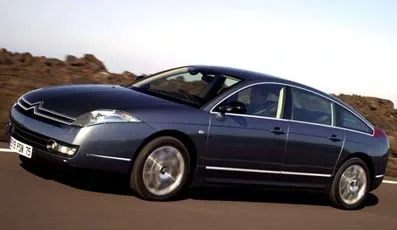
The "C" lineup began with the mid-size sedan C5 and over several years expanded to the scale of the model range of leading German manufacturers. It included the minivan C8, compact hatchbacks C4 and C2, the C3 model, the tiny C1, and the luxury sedan C6.
Citroën in Ukraine
Since April 5, 2005, the official importer of Citroën cars in Ukraine is the company "FransAvto". In the same year, its founder became the corporation "AIS". In 2005, one of the largest Citroën auto centers in Eastern Europe was opened. Since 2008, 23 Citroën dealers have been operating in Ukraine.