
 Comments (3)
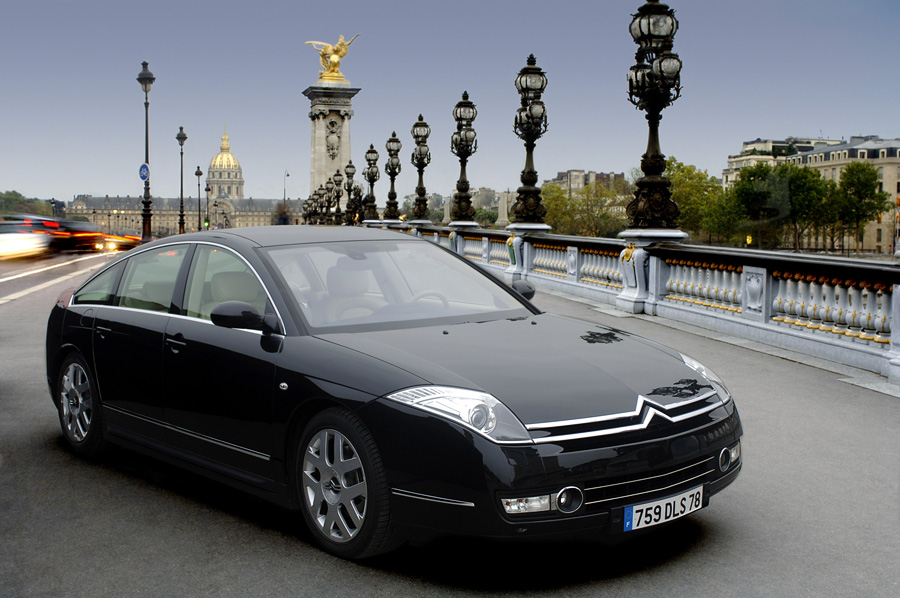
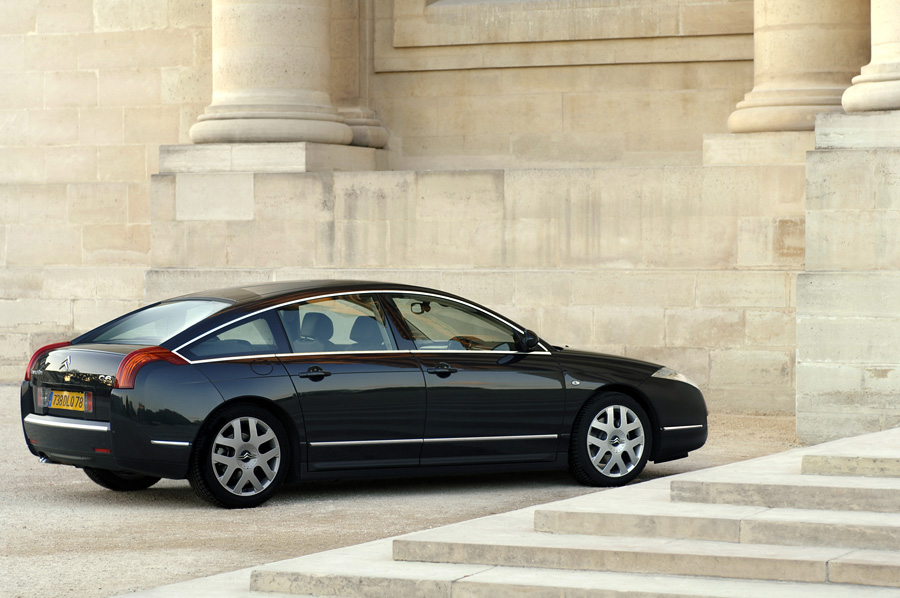
 Citroen C6 — a car that was truly awaited. Ever since 1992, when the last CX hatchback left the assembly line, brand enthusiasts dreamed of the return of a large French sedan. The XM that replaced it clearly didn't measure up to the executive segment in size. And starting in 2000, at every auto show Citroen showcased new concepts, hinting at the imminent arrival of a production model capable of continuing the glory of the cult "Goddess" — the Citroen DS.
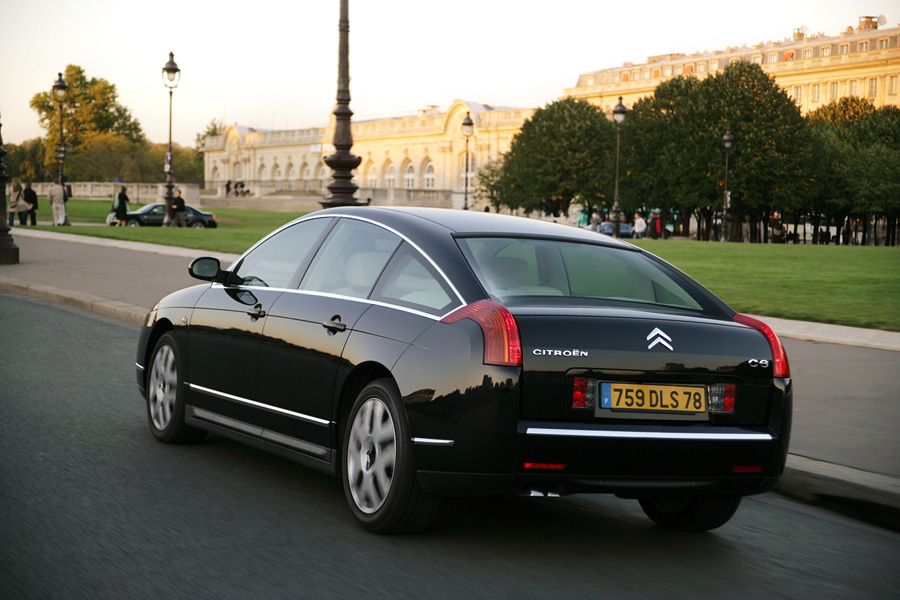
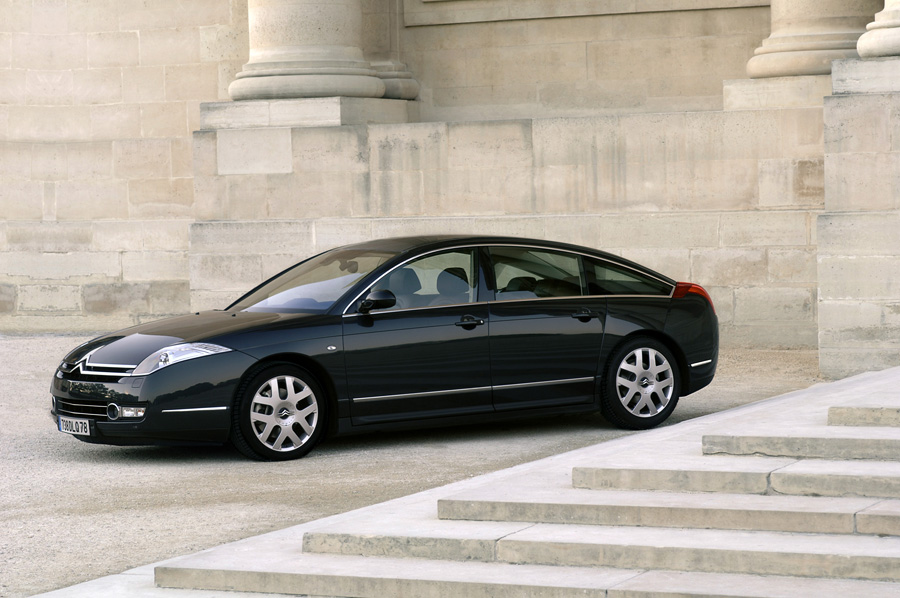
When creating the C6, designers set themselves the task of making a modern car in a classic style that would inevitably evoke associations with the legendary DS. And they succeeded brilliantly. The streamlined hood, the teardrop-shaped body, and the concave rear window are a direct legacy of the CX model. And the frameless doors, another signature French feature, add elegance and airiness to the appearance.
 However, practicality wasn't forgotten here either. The trunk is completely isolated from the cabin, and under its floor lies a full-size spare wheel — a rarity for the business class. But the side mirrors, sacrificed for design, turned out to be too small and also spherical. You need to get used to their image: all cars in them seem smaller than they really are, and the image is slightly distorted.
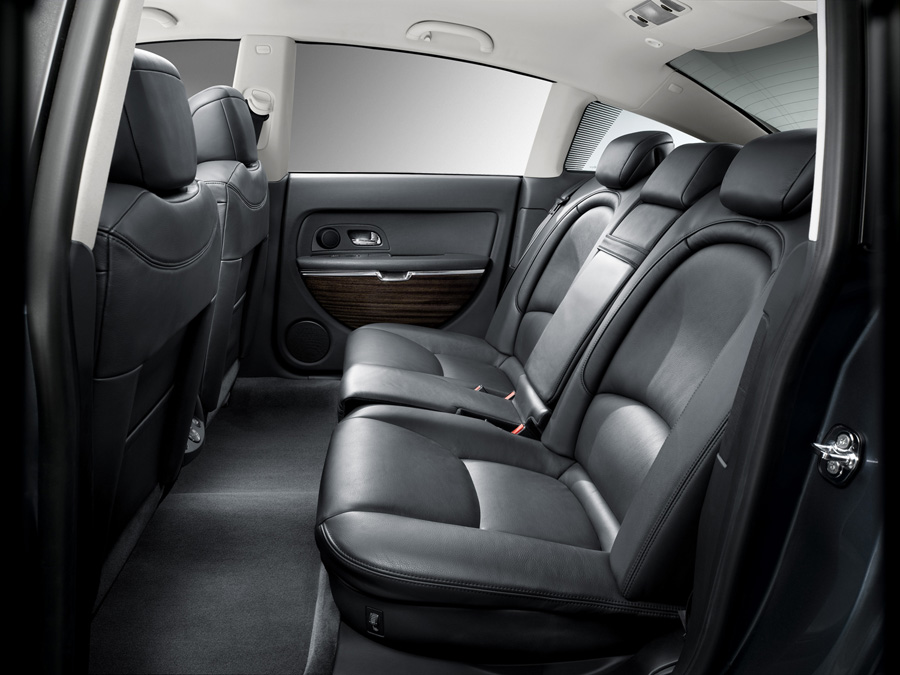
My acquaintance with the Citroen C6 began from the rear seat — only dealership employees are allowed to move cars around the premises. I settled in the back and didn't regret it at all. The sofa here is molded for two occupants: a third will fit, of course, but they'll have to sit on the central hump and feel like a fifth wheel, although there's enough legroom. The side seats are noticeably lower and have electric drives that allow you to choose a strict upright posture, convenient for business conversations, or recline almost like in a home armchair. There's so much legroom that you can easily cross your legs, and the absence of a central tunnel enhances the feeling of spaciousness even more. There's even a separate button that moves the front passenger seat forward, freeing up even more space — almost like a limousine. All that's missing is a glass partition separating rear passengers from the driver.
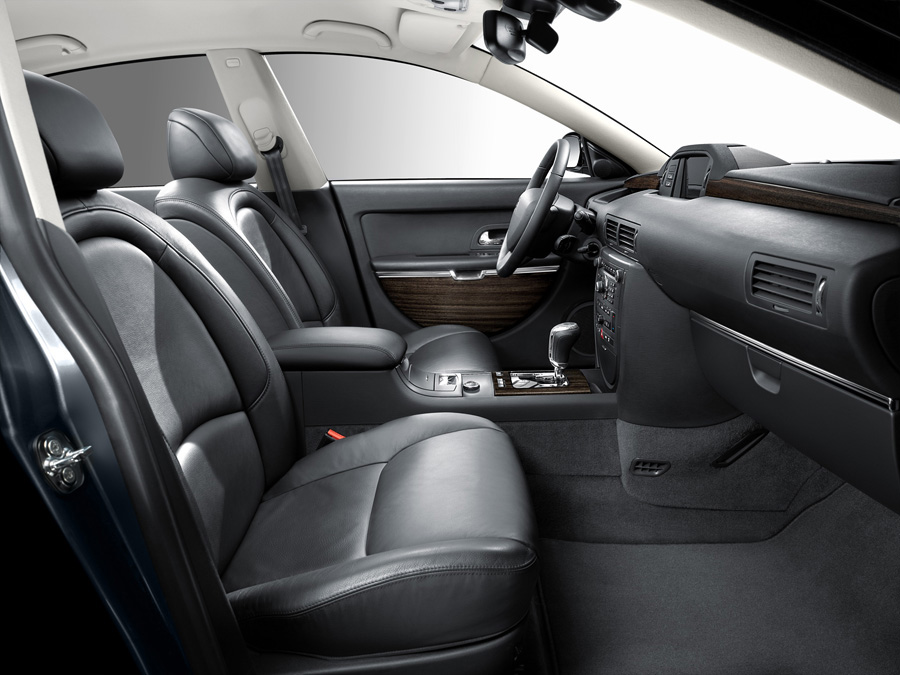
Up front, it's never cramped, but that feeling of a huge car you get in the back doesn't arise here. Sitting behind the wheel of the C6, you occasionally catch yourself thinking that it would be great if Citroen had invented autopilot — then you could set the desired address in the navigation and drive while lounging in the back seat.
 The driver's seat adjustments are placed on the door panel, like in a Mercedes. This is much more convenient than the usual buttons located on the cushion. True, it remains a mystery why the front seat heating wheel was placed on the side of the cushion: I kept hitting it when getting into the car. Then you drive and wonder why the air conditioning, turned to full, doesn't save you from the heat, and you feel like you're on a frying pan.
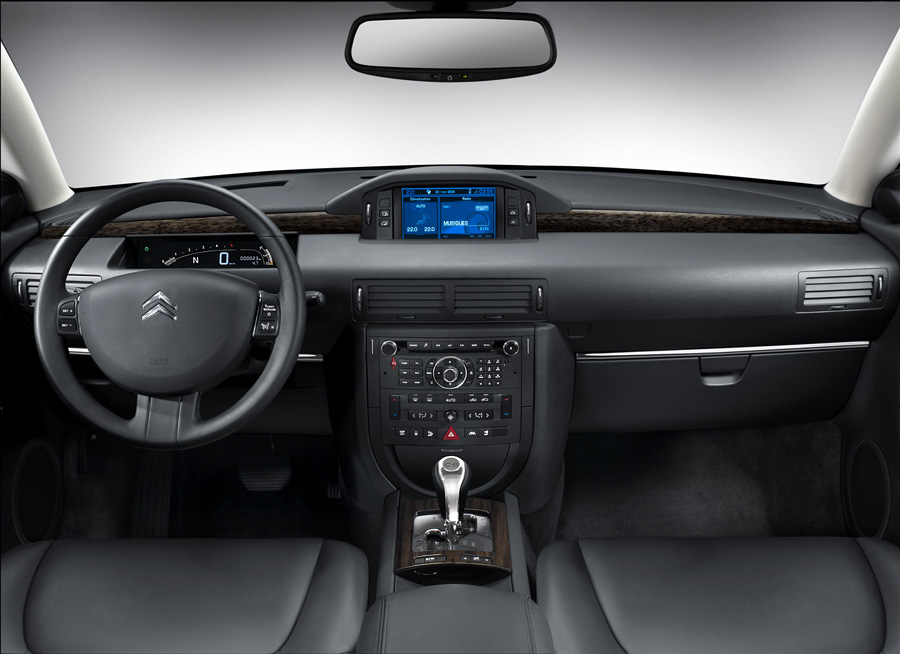
The ergonomics of the central console also raise questions. The abundance of buttons is simply overwhelming, and you can't figure them out even on the third try. In terms of interface complexity, the French have even outdone BMW's iDrive. Such a number of buttons is due to the abundance of auxiliary electronics. However, I've seen cars with even more complex controls, but they were much easier to use. To be fair, it's worth noting that the main functions of the audio system and cruise control are duplicated on the steering column switches and on the steering wheel itself.
 The car also has its own electronic tricks. The C6 was a pioneer in being equipped with a system that monitors the vehicle's position relative to lane markings. If the driver changes lanes without signaling, a vibration is triggered in the seat, indicating the direction of the shift. This function both disciplines — you have to use turn signals regularly — and wakes up a dozing driver if the car starts drifting. Simultaneously with the vibration, information about crossing the markings is displayed on the windshield, where speed is normally shown.
By the way, falling asleep in the C6 is as easy as pie — in comfort mode, the suspension works so smoothly and quietly that it lulls you to sleep, and the triple-layer side windows perfectly dampen noise. The car swallows small irregularities and asphalt waves completely imperceptibly, and only large joints, especially on bridges, make the heavy body shudder slightly. Over other defects of Russian roads, the Citroen glides like a yacht, gently rocking from side to side. This isn't the kind of rocking that exhausts you — it's just how the car "lives," how it feels the road and conveys these sensations to the driver. Notably, the excellent ride smoothness coexists perfectly with moderate body rolls: electronics vigilantly ensure the body doesn't lean too much in corners or "dive" during braking.
 The C6 behaves very confidently on the road. But people with a weak vestibular system might get motion sickness from the overly soft suspension. To avoid this, the shock absorbers are switched to sport mode. In it, the Citroen remains just as comfortable, but the rocking almost completely disappears, and body rolls in corners become smaller, although calling this behavior sporty would be a stretch. In this mode, the C6 resembles solid German business-class sedans.
Another useful option is the ability to increase ground clearance. The manufacturer doesn't provide exact figures, but visually, in the upper suspension position, the clearance is about 180-190 mm.
But despite the abundance of electronic assistants, from the perspective of an ordinary driver, the C6 is not quite the right car. The steering wheel isn't very informative even in sport mode, the six-speed automatic often hesitates, and the engine isn't as torquey as you'd expect from a three-liter "six." At high revs, it reveals its power, but during calm driving, it behaves phlegmatically, not showing its potential.
 So, is the C6 a car only for passengers? Not quite. It's a car for driver-passengers — those who value comfort behind the wheel above all, not the nuances of handling. They don't take corners with screeching tires and rarely use the manual mode of the gearbox. Such drivers are in the majority, and they can't be accused of slowness or inability to drive. They're just judicious, don't exceed speed limits, and therefore rarely get into accidents.
Prices for the C6 start at 49,900 euros (63,400 dollars). The base trim includes a three-liter engine, automatic transmission, hydropneumatic suspension, climate and cruise control, ESP, nine airbags, tire pressure monitoring, heated seats, front and rear parking sensors, xenon headlights, and electric adjustment of front seats.
The Exclusive version with leather interior and wood inserts, navigation, and CD changer will cost 57,000 euros (72,400 dollars). The tested car was in maximum configuration: with electric rear seats (1,500 euros) and a sunroof (900 euros). The final price of such a car is 59,400 euros (75,500 dollars).
Leonid Pavlov
When you first see this car, the first thing that comes to mind is how unusual it looks. The design chosen by the creators is clearly intended to stand out from the crowd. I got a version with a petrol engine, and I immediately noted that the car feels quite light and responsive.
The interior greets you with pleasant finishes, although in some places the materials could be more expensive. But ergonomics are top-notch: all buttons and levers are intuitively placed, and you get used to them in a couple of minutes. Rear passengers have enough space, but a third will definitely be extra here — the central tunnel is quite high.
On the move, the car shows itself confidently. The suspension is tuned more for comfort than sportiness: it swallows small irregularities imperceptibly, but on large joints and potholes, some rocking is felt. The steering is informative but not sharp — at high speeds, you want a bit more feedback.
Acceleration to 100 km/h for this version takes 10.9 seconds, which is more than enough for everyday tasks. Fuel consumption in the combined cycle was about 8.5 liters per 100 km — an acceptable figure for this class. But the sound insulation could be better: on the highway, both the tires and the wind are clearly audible.
In the end, I got exactly what I expected from this test: a car that can be comfortable in the city and doesn't get lost on the highway. It doesn't claim to be a driver's car, but it offers an honest compromise between price and quality. For those looking for a practical and not too expensive car, this option is definitely worth considering.