
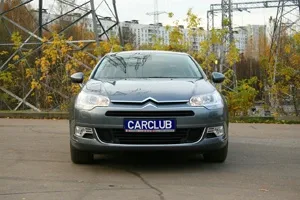
 On the Russian market, the Citroen C5 is available with two four-cylinder engines of 1.8 and 2.0 liters with 127 and 143 hp, as well as a 210-horsepower V6 with a volume of 3.0 liters.Comments
 French cars have always been able to attract attention without having any striking differences from competitors. Rarely has any other car heard so many mutually exclusive assessments in its address — except perhaps the Italians. Some are delighted with the design and temperament, others criticize for excessive boldness and non-standard solutions. French cars are usually either accepted unconditionally or not accepted at all — there is no third option.
The previous Citroen C5 could not boast of high demand either in Europe or here. Engineers decided to figure out the reasons. Hydropneumatics is there, engines are decent — but that's not enough. What if we raise the new generation of the C5 to a higher level by adding German precision to it? The combination of such precision with the signature French originality could compete with the leaders of the D-class. To match the status of a business-class car, they had to abandon the hatchback. Now the new model exists only in two body styles — sedan and station wagon.
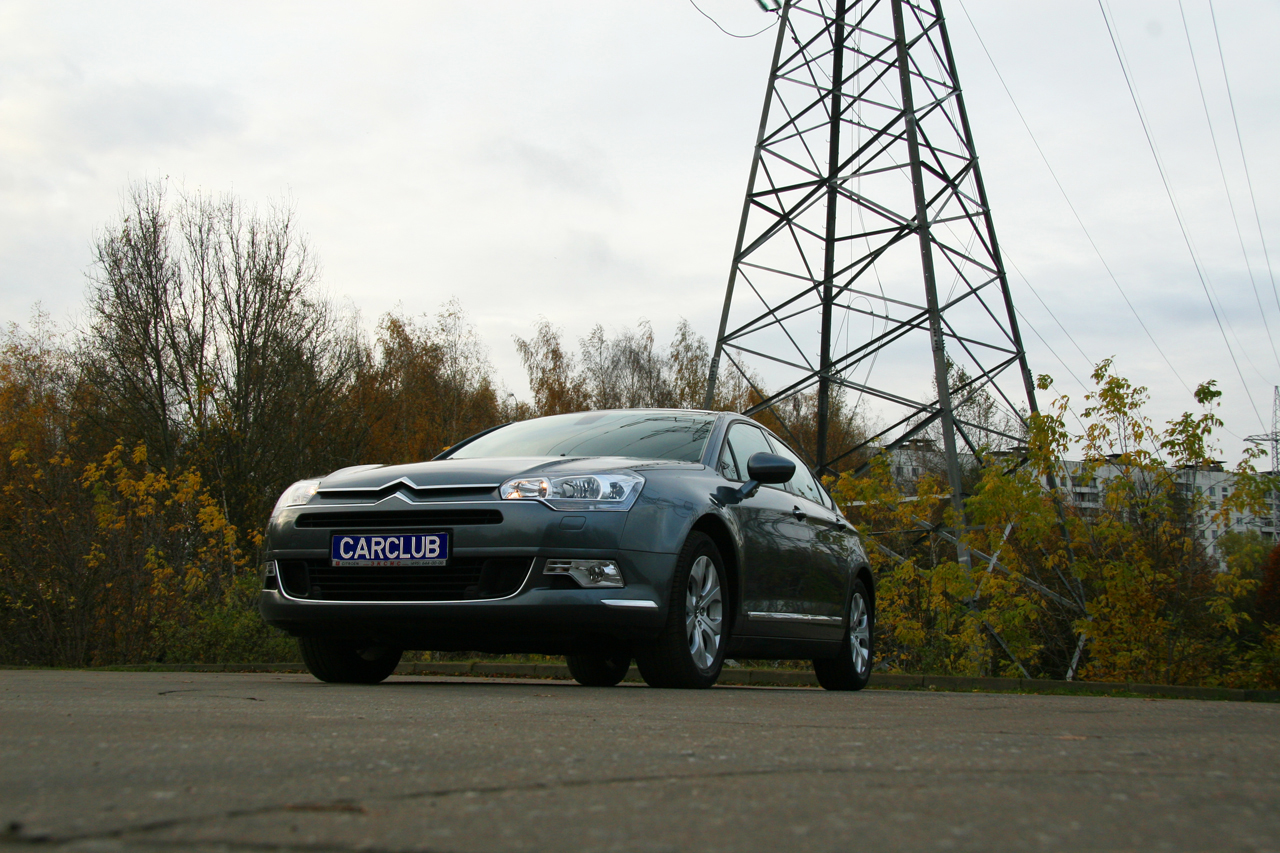 |
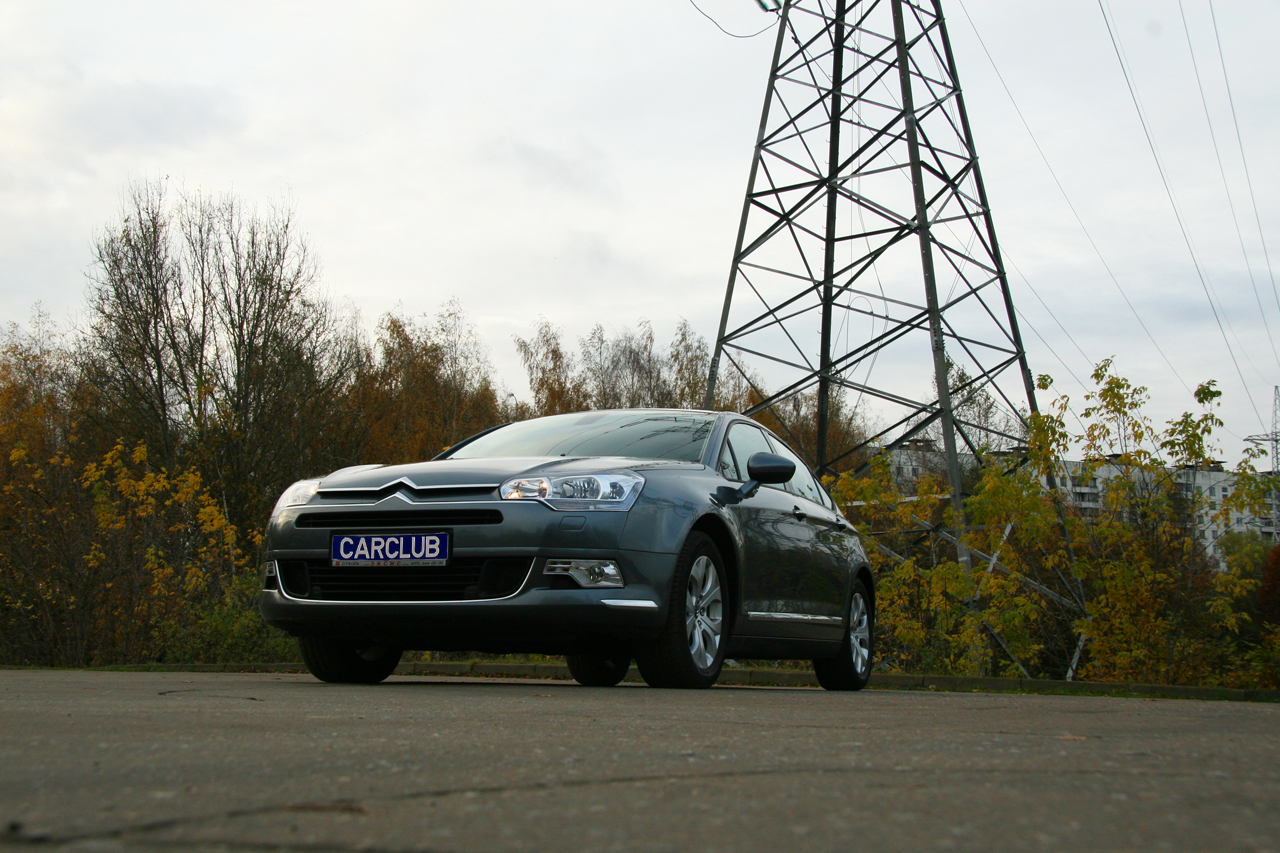
| The exterior of the new model turned out to be truly attractive and, importantly, interesting. |
When creating the car, much attention was paid to sound insulation, quality of finishing materials, and an expanded list of options. But the main thing is that while working on "Germanness," the Citroen designers did not lose their own style. The new Citroen C5 stands out with intricate body lines, unusual optics, and a signature feature — a fixed steering wheel hub with "double chevrons." In terms of design, the new generation has made a huge step forward: the car looks both attractive and truly interesting.
For Russia, two gasoline four-cylinder engines are available — 1.8 L with 127 hp and 2.0 L with 143 hp, as well as a 3.0-liter V6 with 210 hp. There are also three diesels: 2.0 L with 138 hp, 2.2 L with 173 hp, and the senior V6 with a volume of 2.7 L and 208 hp. In Europe, a modest 1.6-liter diesel with 110 hp is also sold, but such cars are not brought to us.
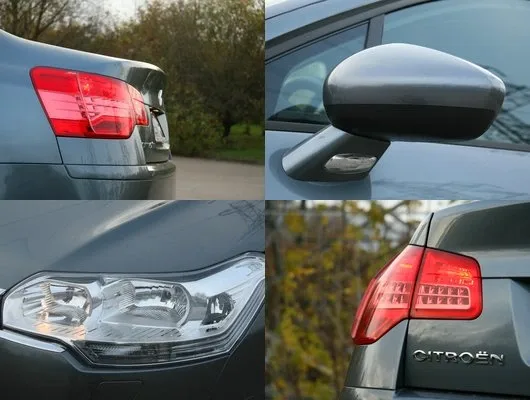 |
| The new generation of the Citroen C5 flaunts intricate body lines and a complex shape of optics. |
With gearboxes, the French arranged a real puzzle. The weakest gasoline engine is equipped with a 5-speed manual as standard, while the 2.0-liter unit can work with an old 4-speed automatic. Diesels of 2.0 and 2.7 liters and the senior gasoline V6 are equipped exclusively with a 6-speed automatic, but the 2.2-liter diesel is only with a six-speed manual. The station wagon repeats the sedan's lineup, but without the 1.8-liter gasoline and 2.2-liter diesel engines.
Since the new generation has noticeably become more expensive, as an alternative to the signature hydropneumatics, which was refined and named Hydractive 3+, a classic spring suspension taken from the Peugeot 407 appeared.
Dimensions, as usual, have grown: wheelbase — 2.82 m, sedan length — 4.78 m, width — 1.86 m, and height, on the contrary, decreased to 1.45 m, which added dynamism to the car. The station wagon stretched to 4.83 m — this is even more than the business sedan Toyota Camry.
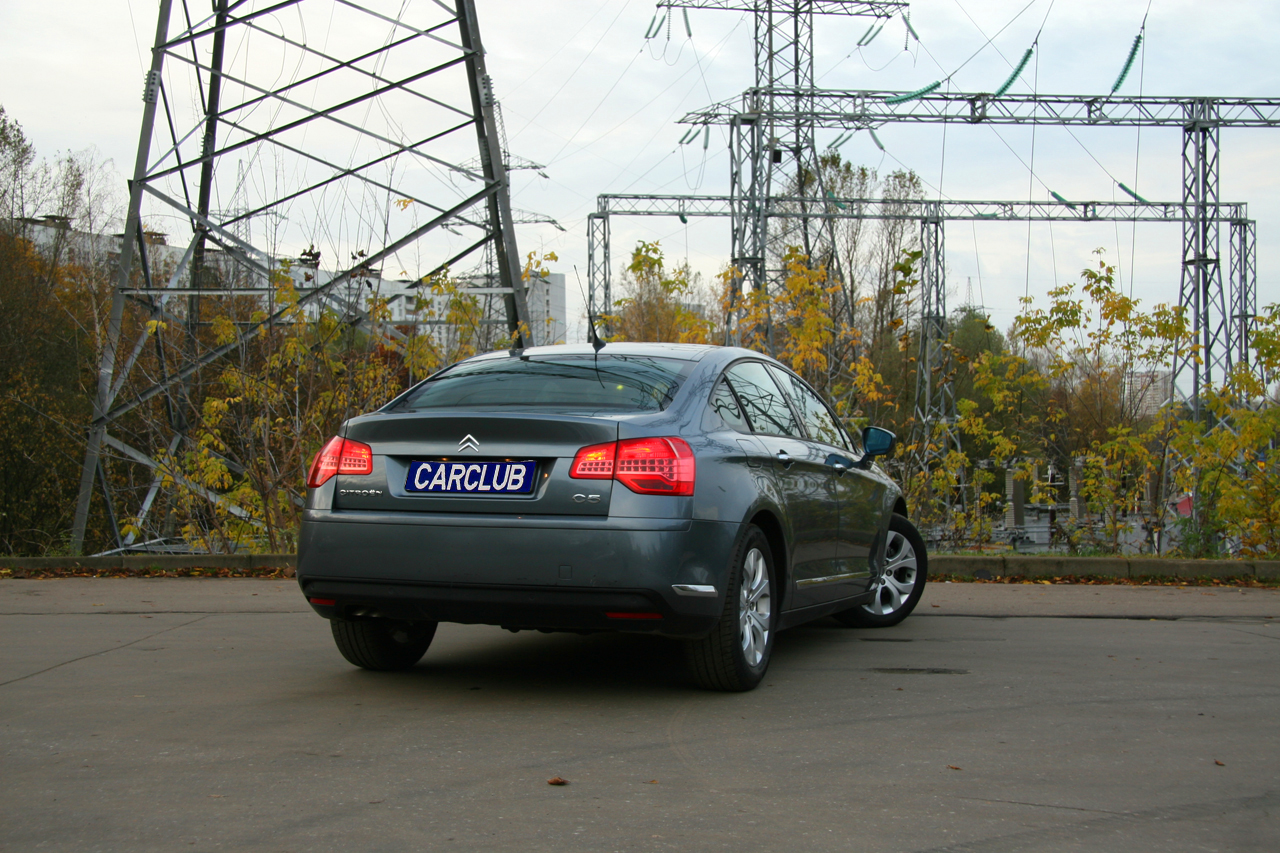 |
| Traditionally, the new generation of the model has grown in size: the car's base is 2.82 meters, length – 4.78, width – 1.86, and height decreased to 1.45 meters, thanks to which the new C5 began to look more dynamic. |
For the test, we took the diesel version with a 138-horsepower engine, 6-speed automatic, and Hydractive 3+ suspension. The appearance raises no questions: serious funds were invested in the design, and the result is obvious. It turned out to be a modern and dynamic car with many details that noticeably refreshed the image of the C5.
The interior pleased with unexpected solidity and quality. Clear lines, neat gaps, a solid instrument panel, a neat climate control unit — all this smacks of German strictness. Finishing materials are soft plastic, and no crickets on bumps. However, some elements are familiar from other Citroen models: steering column switches, power window buttons, monochrome display of the audio system and trip computer.
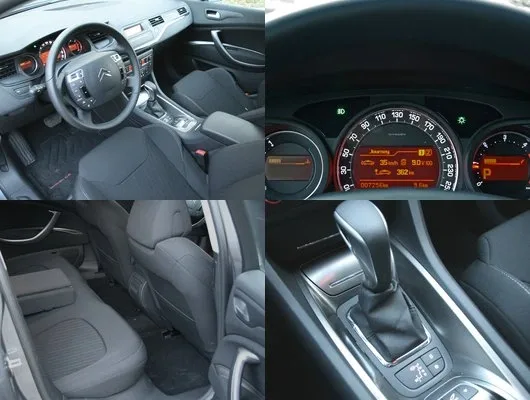 |
| All finishing materials are made of soft high-quality plastic. The buttons on the fixed hub are convenient to use, and in an accident you are guaranteed optimal airbag deployment, but the classic layout is somehow closer and dearer. |
The "double chevrons" are also reminded by the fixed steering wheel hub, on which many buttons for controlling the car's systems are placed. Personally, I did not find this solution convenient even after several days behind the wheel. The buttons on the hub are indeed convenient, and in an accident the airbag will deploy optimally, but the usual layout is still dearer. Moreover, because of the fixed hub, the diameter of the rim had to be increased, and during active steering you constantly catch yourself thinking that you can touch this fixed part. And the small horn buttons in an emergency require sniper precision.
The front seats deserve special mention — with an excellent profile and developed lateral support. Rarely do you experience such comfort and calm. The adjustable tilt of the upper part of the backrest allows you to adjust the seat to any back. Rear passengers are also fine: the sofa is well profiled, there are cup holders and comfortable armrests in the doors. But there is still not enough space — tall riders will rest their knees against the back of the front seat.
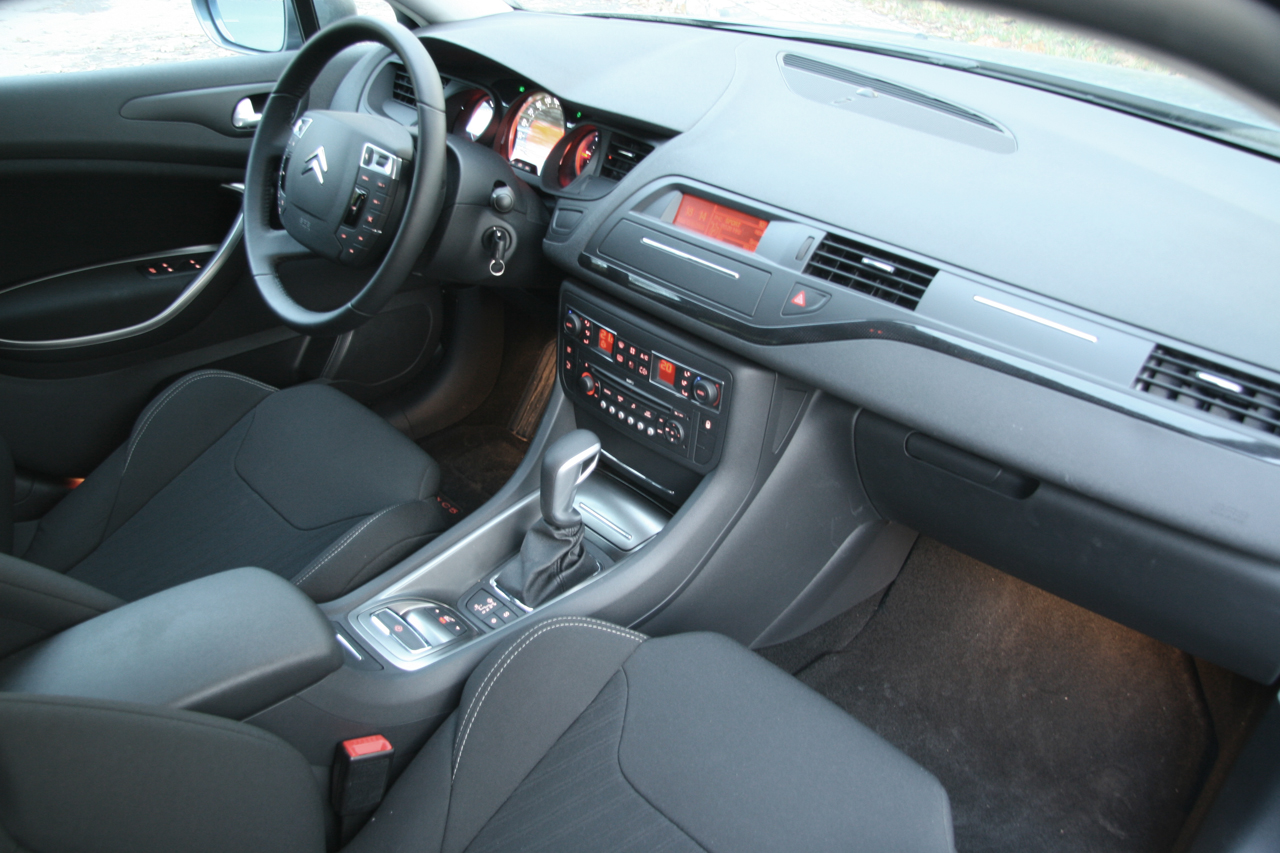 |
| The front seats with developed lateral support and an excellent profile pleasantly surprised. Smooth clear lines, minimal gaps, an excellent instrument panel and a climate control unit evoke a feeling of German strictness and precision. |
The 2.0-liter diesel is not distinguished by enthusiasm. It is not suitable for racing, but for the city — just what you need. Traction is confident from the very bottom: the peak torque of 320 Nm is available already at 2000 rpm. On overtaking, you should be more careful — the automatic is not too quick, especially when downshifting, when it begins to frantically search for the right gear out of six.
The Hydractive 3+ suspension can change the ground clearance, sometimes doing it independently — for example, it lowers the body by 45 mm for ease of boarding or adds stability with increasing speed. In "comfort" mode, the C5 pleases with impressive smoothness: it swallows joints and small irregularities easily, and copes with larger potholes decently. Together with good sound insulation, this makes a long highway a real pleasure. In corners, the car goes clearly, but rolls are noticeable. On a broken road in comfort mode, the C5 confidently works out asphalt "traps." If you press "sport," smoothness decreases, but rolls become smaller.
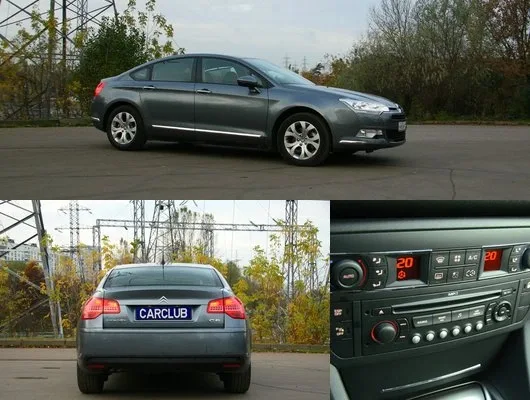 |
| The hydropneumatic Hydractive 3+, like previous versions, allows you to adjust the ground clearance, and sometimes does it independently (for example, it lowers the car by 45 mm for ease of boarding, or to increase stability with increasing speed). |
The presentation of the new generation Citroen C5 showed that the French brand seriously intends to compete with the German giants. And they succeeded. The price range also pleases with diversity: the starting version with a 1.8-liter engine and manual gearbox costs from 689,000 rubles, while the flagship station wagon with a 2.7-liter diesel and six-speed automatic is estimated at 1,470,000. True, the latter figure makes you think — for this money you can really look at BMW 5-Series or Audi A6, albeit in a modest configuration. However, on the roads the new C5 is no longer a rarity, and at the end of the year it will be possible to sum up the first sales results. But it is already clear: the "double chevrons" have their own flagship.
Ruslan Galimov