
Citroen C5. Hit after hit
Amazing things are happening with the Citroen brand. Previously, the French could boast primarily of striking design, while in other respects they only tried to catch up with recognized leaders from Germany and Japan.
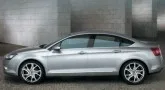
Amazing things are happening with the Citroen brand. Previously, the French could boast primarily of striking design, while in other respects they only tried to catch up with recognized leaders from Germany and Japan. Today, the situation has changed dramatically: now the "trendsetters" should learn from the French. The first warning signal for competitors was the C4 Picasso compact MPV — it combined striking looks with a level of comfort and finish worthy of premium brands. Buyers appreciated this: the model became the brand's bestseller and secured Citroen 20% of the European MPV market. Now a similar scenario could repeat in the business class, where the French are launching the new C5.
The new model is based on the platform of Citroen's flagship C6. However, the kinship is not limited to the common technical base, which is also familiar from the previous generation C5 and the Peugeot 407. It's not just about similar body proportions with a long hood and compact rear, or the designers' signature feature — the concave rear window. The main thing that unites both models is the incredibly comfortable interior. The creators of the new model clearly did not skimp, ordering the best materials for the trim: pleasant-to-the-touch plastic, ribbed metal, quality textiles, and expensive Nappa leather. Moreover, not only the seats and door cards can be upholstered in leather, but also the dashboard — who else in this class can boast of such?
In addition to premium-level trim, the C5 boasts excellent sound insulation. To make the cabin quieter, engineers worked on aerodynamics (drag coefficient — 0.29), minimized gaps between body panels, added seals in the doors, laid sound-absorbing mats in all problem areas, and installed double-layer side windows. The application of polymer sound insulation was entrusted to robots — their work is more precise than human. Also, in collaboration with Michelin specialists, the quietest and most comfortable tires were selected. Of course, during acceleration you can hear the engine's voice, on the highway it is joined by aerodynamic whistling from the mirrors, and on rough asphalt the tires start to hum. But the overall sound picture remains very comfortable: even at high speed, passengers can talk in a low voice.
The sedan's trunk is not the most spacious in its class — only 439 liters. Those for whom this indicator is important should take a closer look at the station wagon. It looks no less attractive than the sedan but offers much more cargo-carrying capability. Its trunk volume is 505 liters, and with the rear seats folded — 1462 liters. The compartment features rails and hooks for securing cargo, as well as a removable flashlight that can be used as a lighting lamp. The station wagon's fifth door is optionally equipped with a power drive — the trunk can be opened and closed by pressing a button.
Thanks to the impressive wheelbase of 2815 mm (the best in its class!), four passengers of average build feel at ease in the C5's cabin. But if tall people sit in the front, rear passengers will have barely enough legroom. Partly to blame are the massive front seat backs, which "eat up" several precious centimeters. Five can also travel quite comfortably — there will be no shortage of shoulder room. True, in this case, it's better to refrain from drinks on the road: cup holders for rear passengers are hidden only in the folding armrest, and there is no other alternative. Front occupants are slightly better off: there is only one cup holder, and it's tucked away in a box under the armrest — reaching it while driving is extremely inconvenient.
Another complaint about ergonomics concerns the steering wheel hub, or rather, the buttons on it. They are designed to simplify control of the music, navigation, phone, and cruise control, but in reality, they only confuse. There are too many buttons: eight on each side, plus a couple of scroll wheels for menu navigation and horn keys. Perhaps over time one could get used to them and press the right ones blindly, but during a few hours of test drive, we failed to do so.
However, we did manage to test the most powerful versions of the new model. The model inherited the engine range from its predecessor: petrol units 1.8, 2.0, and 3.0 (127, 143, and 215 hp), as well as HDi turbodiesels with volumes of 2.0, 2.2, and 2.7 (138, 173, and 208 hp). Moreover, unlike the old model, the new C5 will be sold in Russia not only with petrol but also with diesel engines! Top versions are equipped with V-shaped "sixes" paired with a 6-speed automatic and hydropneumatic suspension, while 4-cylinder modifications are available with a "manual" and conventional springs.
A comparison of the powerful petrol 3.0 V6 and the less powerful but more torquey 2.7 V6 HDi turbodiesel (developed jointly with Ford) turned out to be in favor of the heavy-fuel engine. The diesel won primarily for efficiency, although it also slightly outperformed the petrol opponent in dynamics. A final verdict could be made by comparing prices, but for now this is impossible — the price will be announced in May when sedan sales start in Russia. The station wagon will have to wait until summer.
**From concepts to production**
That the new model would be a sensation was clear back in September last year, when the prototype of the future sedan — the Citroen C-Airscape concept car — was shown at the Frankfurt Motor Show. It impressed with both expressive design and impressive dimensions — the largest body length and wheelbase in the segment. The thoroughness of the detailing made it clear that the model would go into production almost unchanged. And so it happened: the production C5, presented a few months later in Brussels, differed from the concept only in the roof and the conventional mounting of the rear doors (in the prototype, they opened against the direction of travel).
**Driving**
The car is pleasant to drive, but the overall impression is spoiled by the "artificial" effort on the steering wheel.
**Interior**
The quality of the finish is not inferior to premium cars, but there are ergonomic miscalculations.
**Comfort**
The new model has a very quiet cabin and a rich standard equipment list, which includes climate control, an audio system, and a power package.
**Safety**
Standard equipment includes ABS and ESP systems, as well as seven (out of nine possible) airbags.
**Price**
The new C5 will become more expensive than its predecessor, approaching the price of the VW Passat.
**Advantages and disadvantages**
+ Stylish appearance, low noise level, rich equipment, choice options.
- Some ergonomic miscalculations, low steering sensitivity, increased price.
**Technical specifications**
Make and model — Citroen C5 3.0
Dimensions — 4779x1860x1458 mm
Engine — petrol, 2946 cm³, 215 hp/6000 rpm
Transmission — automatic, 6-speed
Dynamics — max 224 km/h; 9.2 s to 100 km/h
Competitors — Ford Mondeo, Honda Accord, Mazda6, Peugeot 407, Renault Laguna, Skoda Superb, VW Passat
**Our opinion**
The new C5 completely changes the previous perception of French business-class cars. Thanks to the highest quality of interior finish, "limousine" comfort, and excellent design, the new Citroen is capable of serious competition with the former favorites of this segment.
Source: 5koleso
Comments
No comments yet. Say the first word.