
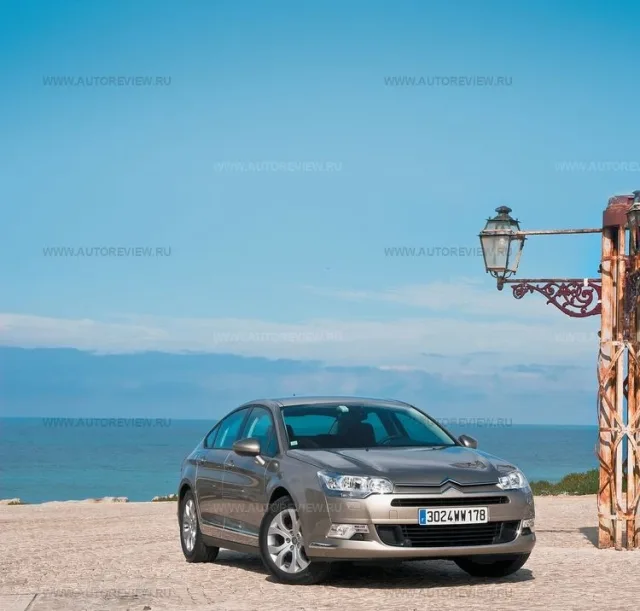
Massive steel body, play of light on the embossed sides, intricate headlights and a raised boot edge with tapering lights. A "five"? Only not BMW, but Citroen. We're talking about the new C5 sedan — a French car aiming at the German business class.
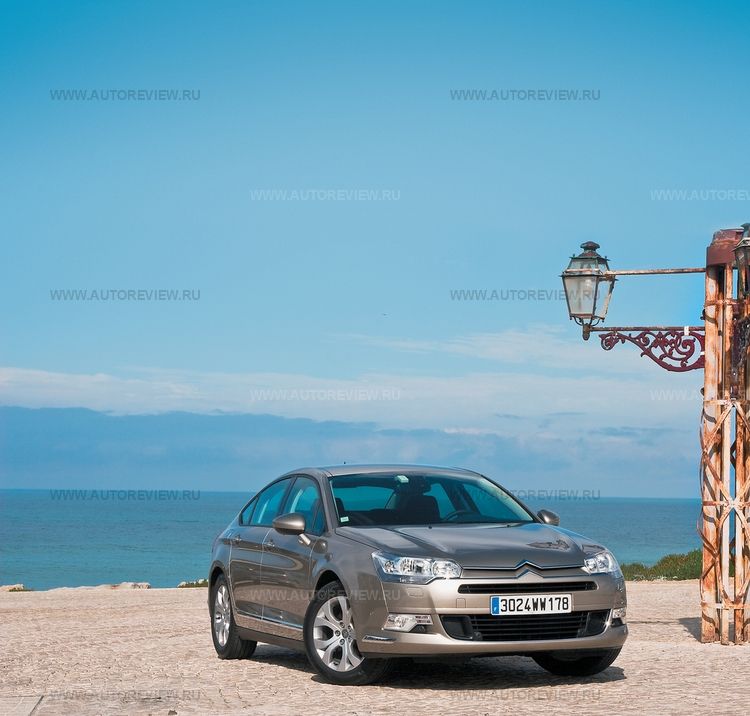
The creators of the new "C-five" bet on two things — appearance and build quality. Citroen has always been fine with design: the C5 continues the line of such elegant models as the legendary DS, futuristic CX and Xm. True, between them and the new model were the modest Xantia and the "fish-shaped" first-generation C5, but now the brand's style is clearly experiencing a renaissance. Therefore, the new C5 was conceived as very striking.
A month before the Lisbon premiere, I had the chance to visit the Paris design center, where early sketches of the "C-five" from 2003 were shown. The works were bright! But the version approved in 2004 turned out, as often happens, more restrained. Bold ideas like an aggressive bumper and a window line with chevrons at the rear remained on paper. As a result, the C5 got shapes typical of the European D-class, and executed in a German-verified manner. The front with a falling hood and chevrons between the headlights reveals Citroen's pedigree, but the rear with a concave glass — like on the flagship C6 — is not readable at first glance. However, the LED lights at the back strongly resemble BMW and Audi.
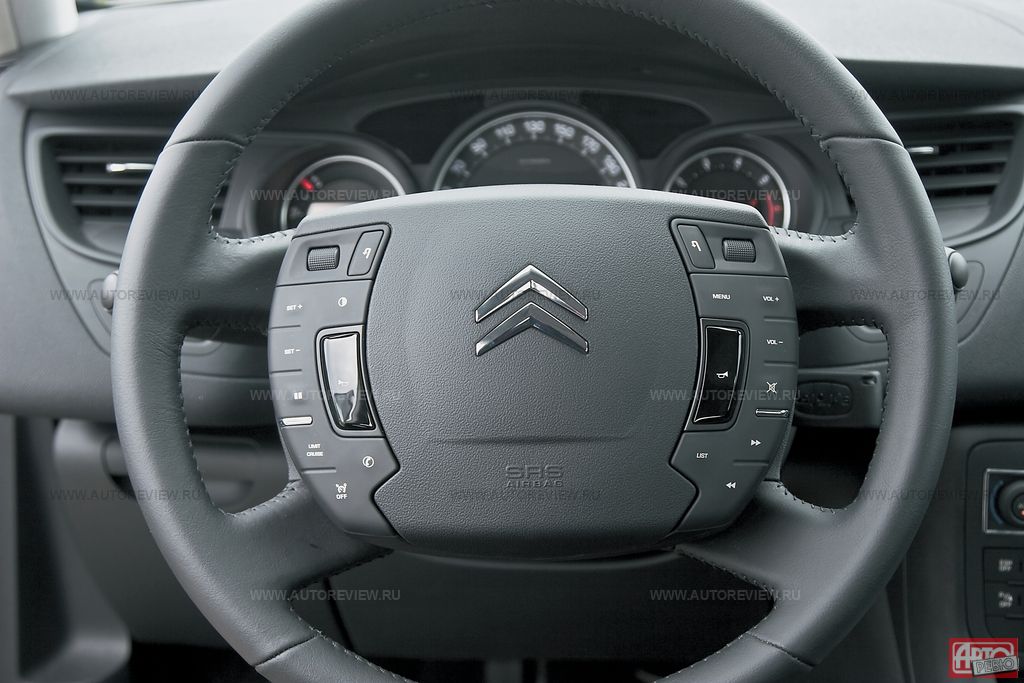 | 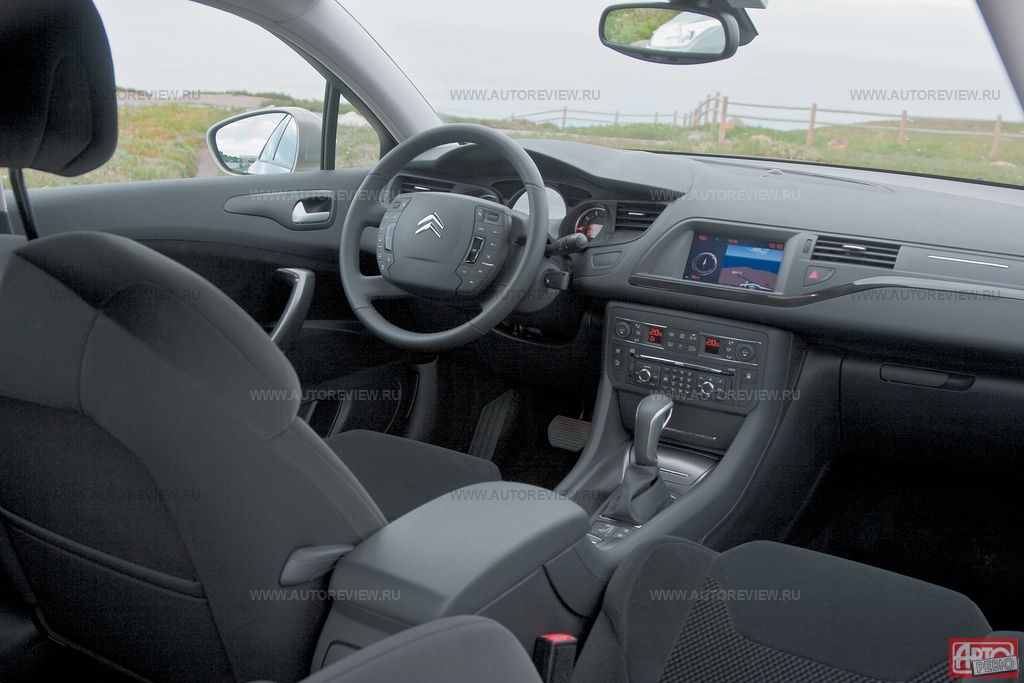 |
| On the fixed steering wheel hub, buttons are grouped by function: on the left — cruise control and trip computer, on the right — navigation and music control | Moderately strict design and quality materials match the new C5 image |
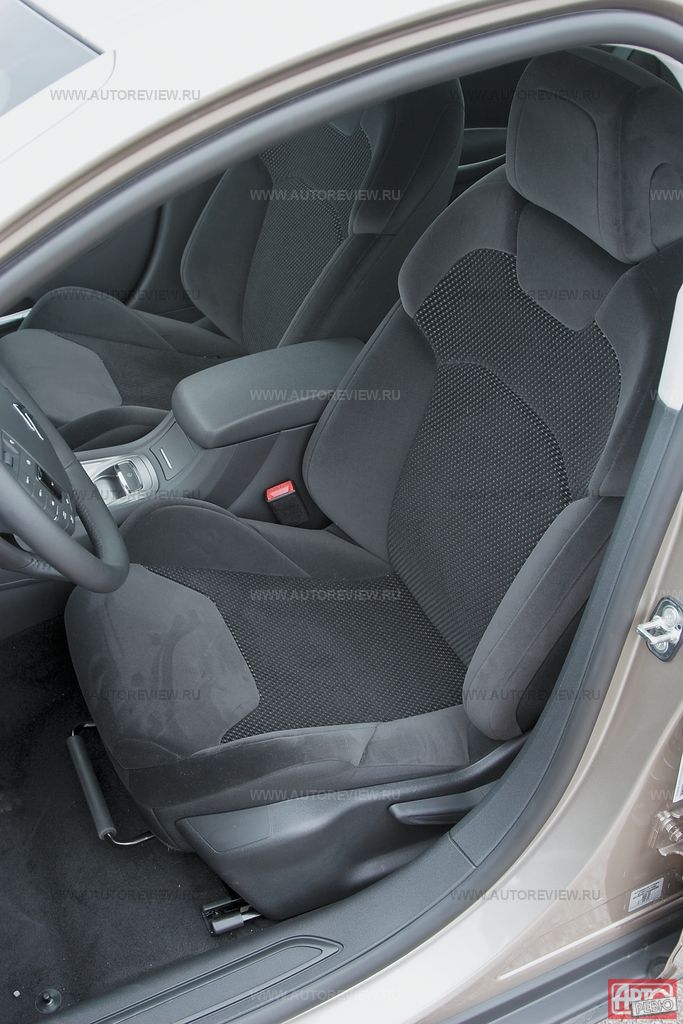 | 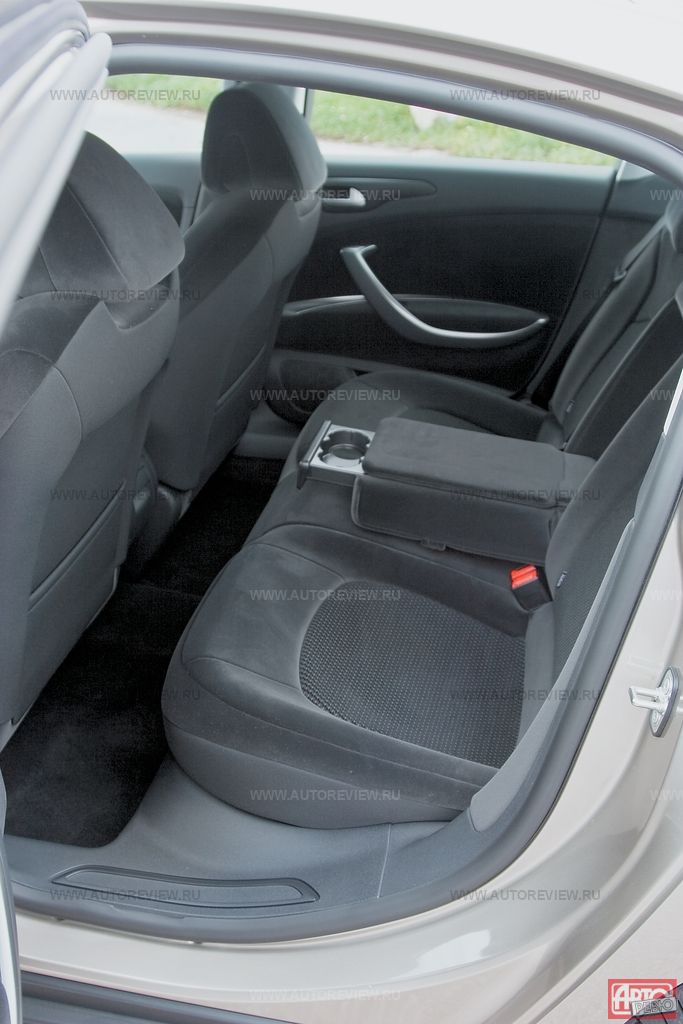 |
| Sport seats with expressive side support bolsters are still softer than those of German classmates | Rear seats — not the most spacious in the class |
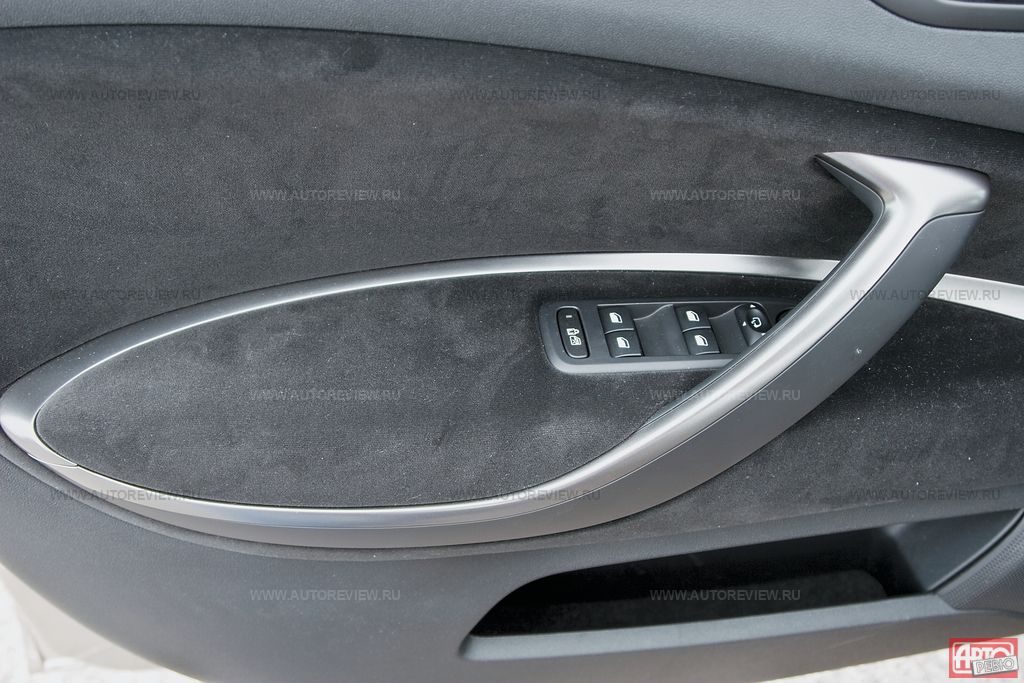 | 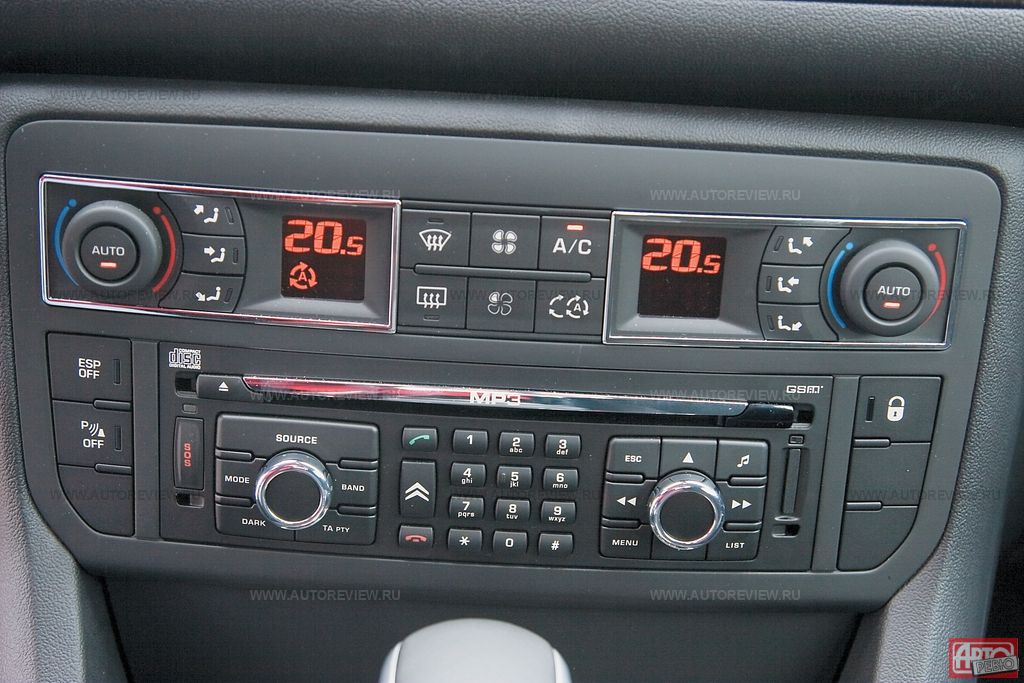 |
| Elegant door trim "curls" into a convenient handle | Climate control — of course, dual-zone |
And this is no accident. Previously, the C5's competitors were considered to be Renault Laguna, Ford Mondeo or Toyota Avensis, but now the French have set their sights on the BMW 3 Series, Audi A4 and Mercedes C-Class. Isn't it too early?
Citroen officials are sure it's not. Notice, they say, the soft leather in the cabin, the buttons on the steering wheel hub with a thin silicone coating, the multi-layer headliner. The desire for "premium" is understandable: in Europe, demand for D-segment cars is falling, and an exception is made only for German brands.
The trim is indeed pleasing: the front panel is pliable, the door trims are soft. And the controls feel "more expensive". Take, for example, the automatic selector — it moves along a zigzag groove with rounded corners, smoothly, without hesitation — almost like in "Mercedes".
But the steering wheel remains signature, with a fixed "hub". On the Citroen C4, I didn't like this solution — the buttons are inconvenient to use on the go. But in the "C-five" it somehow doesn't annoy. Maybe it's because the C5 holds the straight better and the steering wheel wanders less? Or because the large "rubberized" buttons are more pleasant to the touch than the plastic ones in the C4? Besides, they are grouped logically: the right ones are responsible for navigation, music, and everything displayed on the large screen in the center of the panel, while the left ones are for the trip computer and cruise control. After ten minutes, I was already "playing" on the hub with both hands.
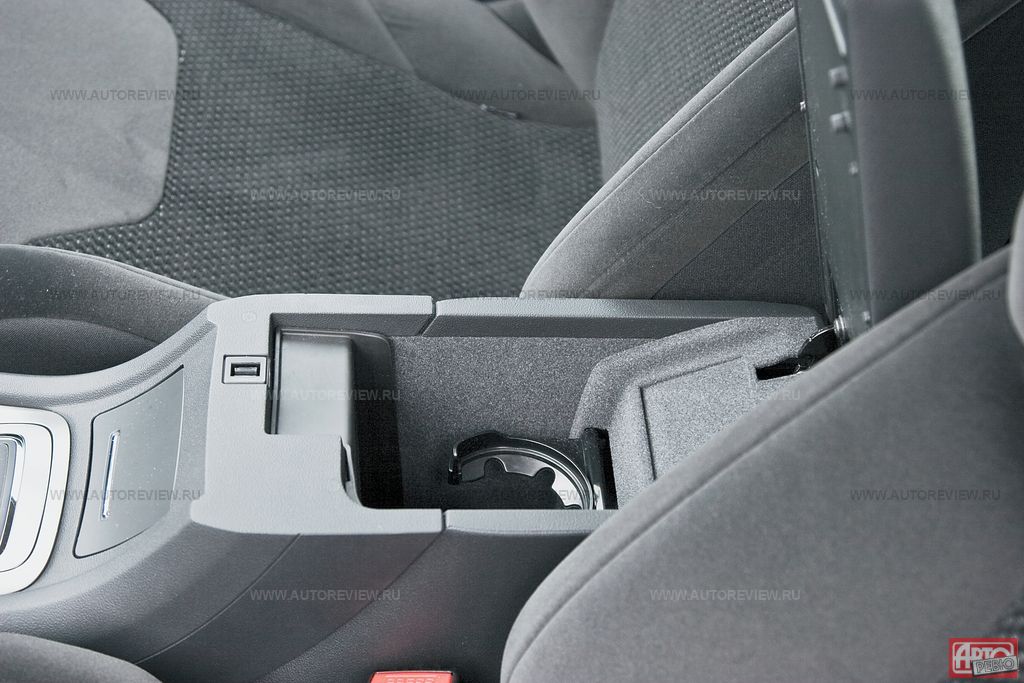 | |
| Mercedes, Volvo… And now Citroen has switched to instruments with console needles and large display saucers | The central armrest has a bottle holder |
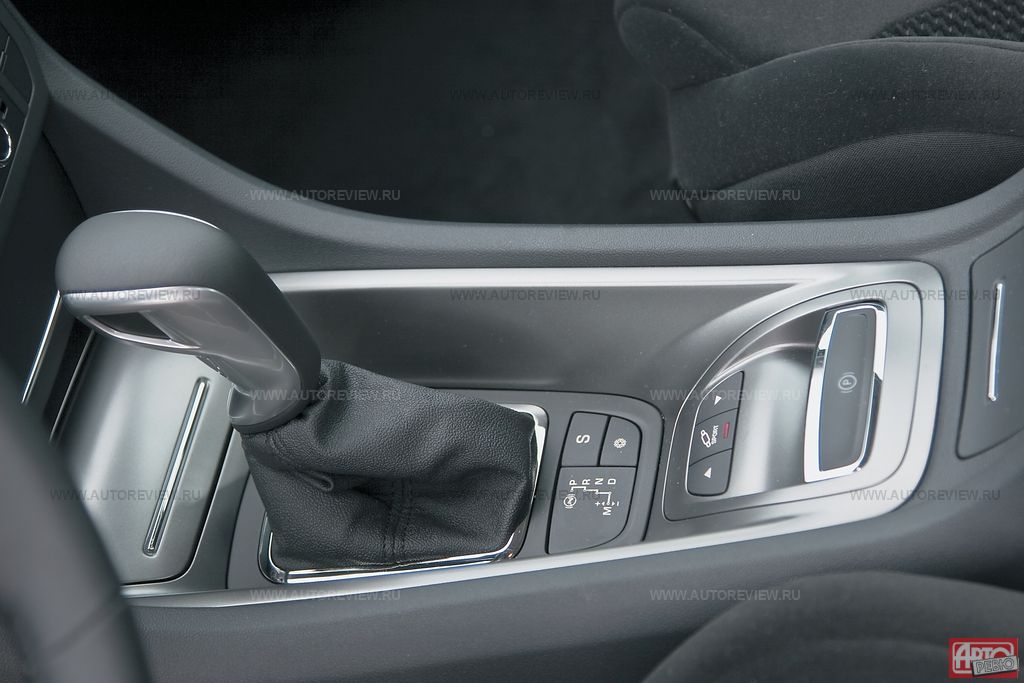 | 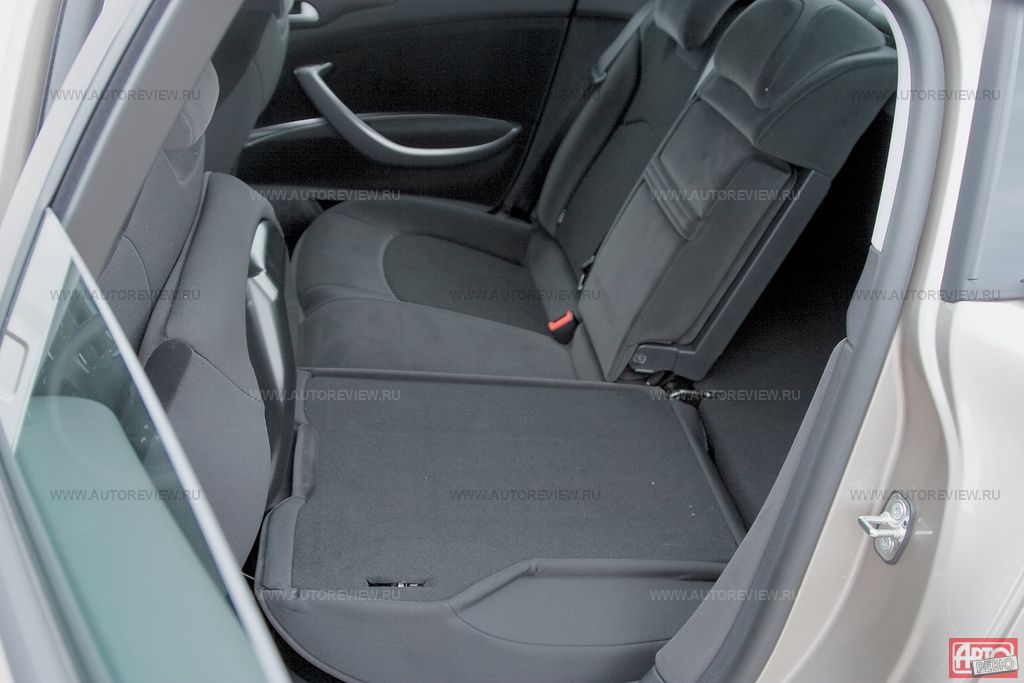 |
| The "automatic" selector moves softly along a winding groove hidden under a cover. Nearby are buttons for switching the gearbox to sport and winter modes, a bit further — suspension control buttons and electromechanical parking brake | To get a spacious trunk with a flat floor, you first need to lift the seat cushion, then fold its backrest to horizontal |
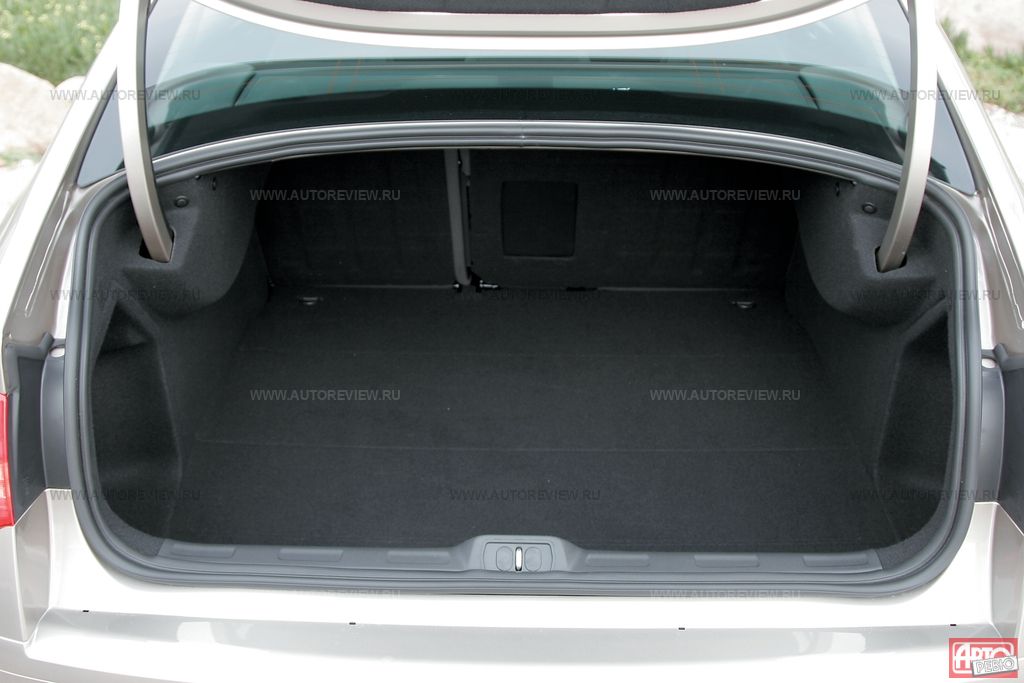 | 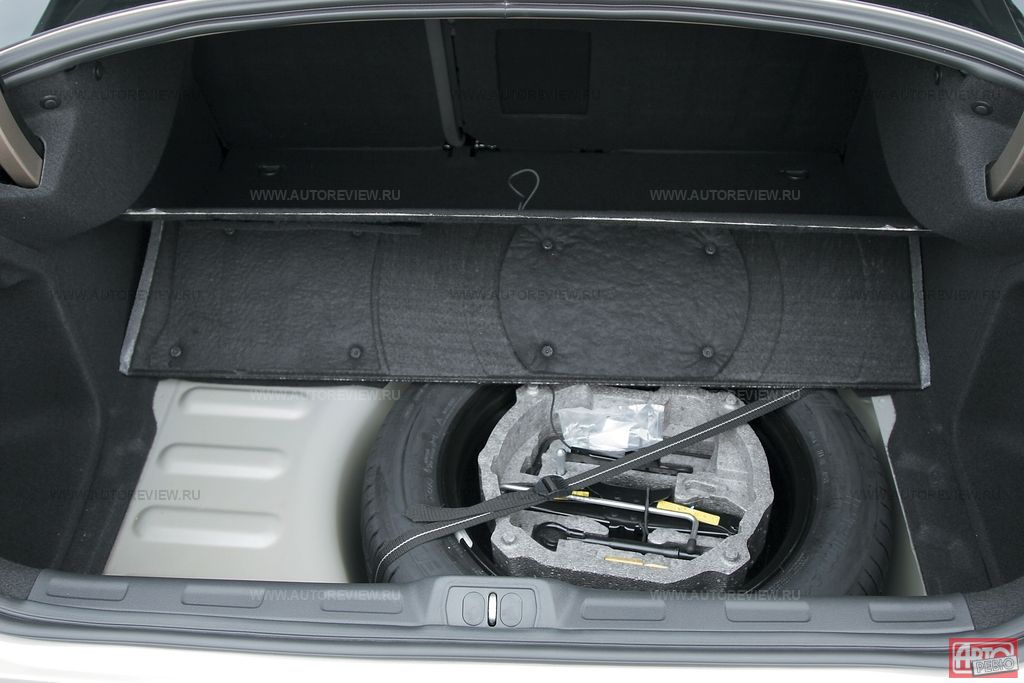 |
| The trunk is neat, but without additional conveniences | Under the mat — a full-size spare wheel and an emergency tool kit |
The instruments are also excellent — with color round displays inside the dials, console needles and clear scales. When the speed limiter is activated, a real road sign lights up on the display — numbers in a red circle. Beautiful!
And the seats! You can choose sport ones — with a more pronounced profile, but still with comfortable plump cushion and backrest, or comfort ones — more relaxed, with separate adjustment of the upper part of the backrest tilt, like in the Renault Vel Satis or BMW 5 Series. And in addition — with a built-in massager! You press a button — and the lumbar support rollers start kneading your back. Of course, it's far from the shiatsu of the Lexus LS 460 — the massage is light, amateur. But "premium" is felt.
The cabin is spacious, although with a wheelbase increased by 6.5 cm, a person 190 cm tall sits behind himself with a "stretch". Among the pleasant little things — a folding armrest with two cup holders and deflectors in the central pillars. For an extra charge, window blinds are installed. It's a pity only that the windows open only two-thirds.
The trunk is not a record holder by today's standards — 439 liters, but under the mat hides a full-size spare wheel, and the trim neatly covers metal parts. However, these are trifles. The main thing is that the new C5 is no longer a hatchback, as before, but a classic sedan and station wagon. For the Russian market, this is excellent news and a precise marketing calculation: a sedan has much more chances to establish itself in the business class than a hatchback.
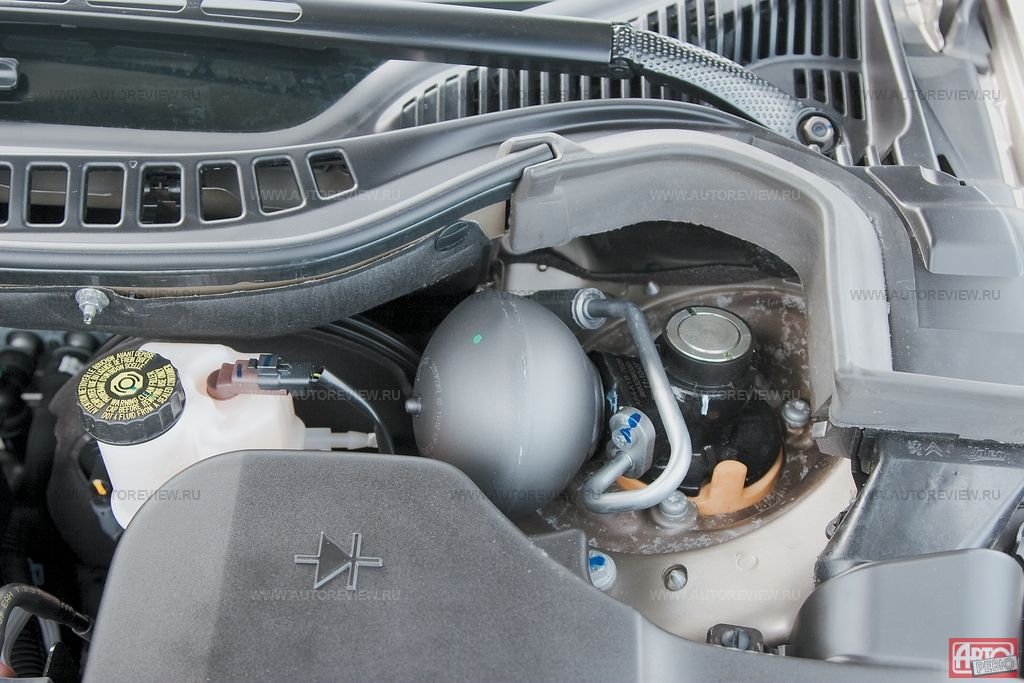 | ||
| Comfort seats offer not only a full set of electric adjustments and heating, but also massage! | And this is what the famous Citroen spheres look like: compressed nitrogen works in them as an elastic element | The fuel filler cap is locked with a key |
From a technical point of view, the new model hardly surprises. The "fifth" Citroen is based on platform No. 3 of the PSA concern, known from the Peugeot 407 and Citroen C6. The Hydractive III+ hydropneumatics here are the same as on the C6. Compared to the previous version, which was on the "C-fives" of the last generation, it differs in that it adapts not only to speed, changing the ground clearance and shock absorber stiffness, but also responds more accurately to load. As soon as you sit in the seat — and after a moment the sagging left side returns to normal. How much does the clearance change? I wasn't too lazy and looked under the car with a tape measure: in the standard state, from asphalt to body is about 150 mm, at the lowest point the Citroen sinks by 50 mm, and at the highest — rises by the same 50 mm. In total, the maximum ground clearance is 200 mm, like many crossovers! True, as soon as you accelerate faster than 10 km/h, the suspension automatically lowers. And there is no metal engine protection here — only plastic, saving from dust and dirt.
But here's the main technical sensation. Previously, the "C-fives" were equipped exclusively with hydropneumatic suspension, now the base version offers regular springs. A real French revolution! After all, both the DS, CX, Xm, and Xantia had only "hydropneumatics". Now Citroen has taken a step back.
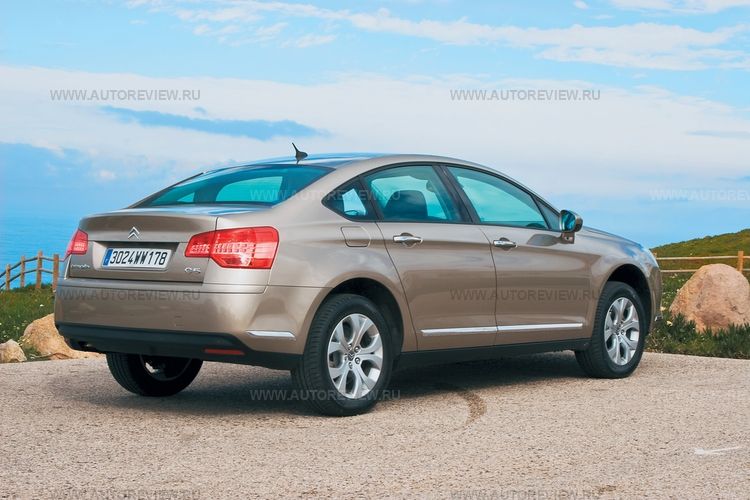
It's funny that Citroen presents this as an advantage. Like, before there was no choice, but now — please! The base version of the Citroen C5 will get a spring (in French — “metal”) suspension, and Hydractive III+ will be an option, and not a cheap one. This reminds me of Aeroflot: before, wine was served free on board, and a year ago the flight attendants happily announced a new service — alcohol for an extra fee. True, business class is not affected…
The petrol engines remain the same: 1.8 L (127 hp), 2.0 L (143 hp) and 3.0 L (215 hp). The weakest unit is only with a manual gearbox, the two-liter is either with a manual or a four-speed automatic, and the three-liter is exclusively with a six-speed automatic. Here, as before, the most popular will likely be the two-liter version with an automatic. That's the one I decided to start with.
In city traffic, the two-liter C5 feels quite confident. But on the highway, both the engine and the four-speed automatic somehow don't match the status of a solid car. When overtaking, you have to floor the pedal and listen to the strained roar of the engine. At the same time, the car itself is very quiet — it's not for nothing that the French spent a long time on aerodynamics, changed seals, and installed double glazing on expensive versions. Not for nothing did they wrap the wheel arches with sound insulation. When driving calmly, it's quiet inside, but as soon as you add gas (and for that you need to rev the engine above 4000 rpm) — acoustic comfort is disrupted by an unpleasant howl from under the hood.
However, there's no desire to rush in the Citroen C5 — it's made for calm and comfortable driving. Soft yet precise responses to steering wheel turns, good reactive action, smooth deceleration when braking — and, of course, amazing ride smoothness. Glory to Hydractive III+! I drove over speed bumps almost without slowing down — as if I were driving not a passenger car but a Toyota Land Cruiser 200. The C5 also doesn't notice small irregularities — it glides over the asphalt, ignoring potholes and seams. True, it's helped by high-profile tires by today's standards, Michelin Premacy HP 225/55 R17. There are also optional 19-inch wheels with 245/40 R19 tires — very beautiful, with “twisted” spokes, but I'm afraid you'll have to pay for them with ride smoothness.
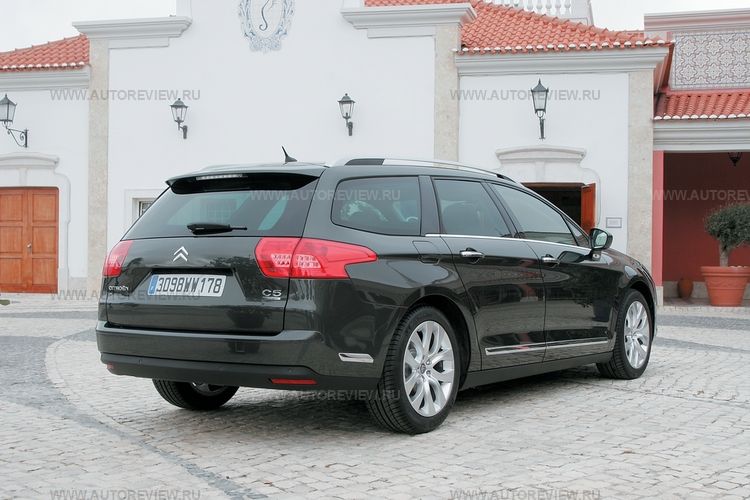
Unlike the “barrel-shaped” station wagon of the previous generation, the new Citroen C5 Tourer looks much more interesting
By the way, you can sacrifice smoothness even on regular tires — if you turn on the “sport” suspension mode. On the handling arc, the difference is felt — stability is better. But on a mountain road, the “Sport” button hardly helps: at high lateral accelerations, the “smart” suspension itself switches to “sport” mode even in “comfort”.
At the limit of tire grip, the C5 performs quite decently. It willingly dives into a turn, responds without delay to the steering wheel and throttle… The body rolls, however, turned out to be a bit large, but they don't throw off the trajectory. The tires are already squealing, and the stability system is silent. And only when I deliberately provoked understeer by over-turning the wheel did the electronics “steer” the car into the turn. But it did so nervously — selective wheel braking caused body sway on the soft suspension. And ESP, although it can be turned off, only at speeds up to 50 km/h.
I wonder how the C5 will behave with the spring suspension? And I switched to a car with a two-liter diesel and a manual gearbox.
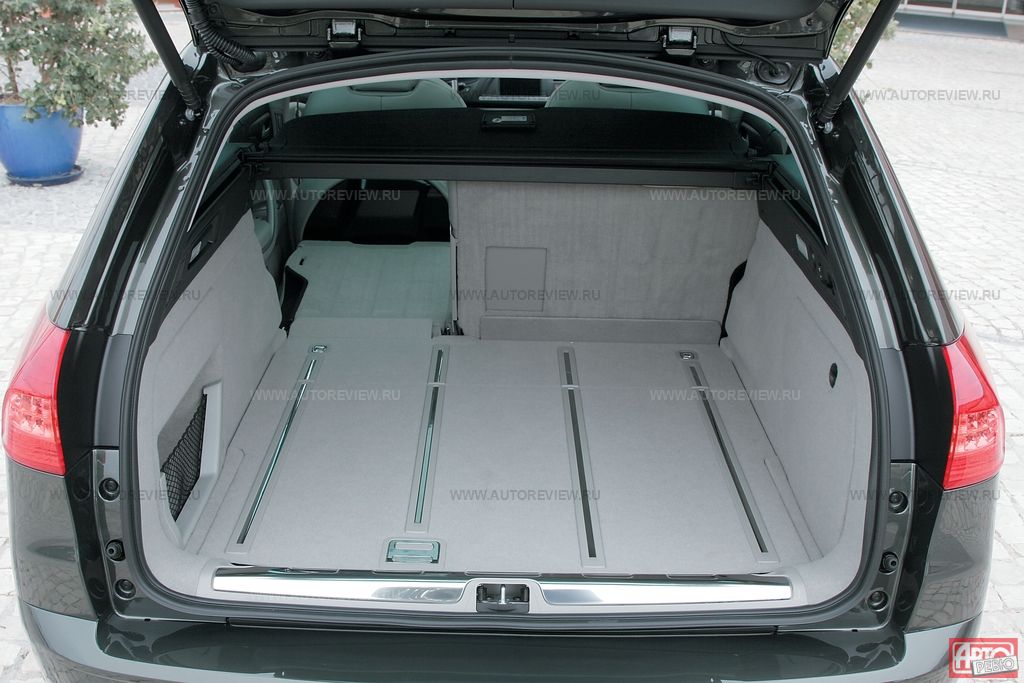 | ||
| In the station wagon's trunk there's a suspension control button — when loading, the body can be lowered to the lowest position. For an extra charge — electric drive for the fifth door | The station wagon's trunk volume when transformed increases from 505 liters to 1462 liters. Far from a record — the Ford Mondeo station wagon offers a maximum of 1745 liters of useful volume | From now on, the concave rear window adorns not only the flagship Citroen C6, but also the C5 |
Yes, no matter how much marketers say that the “metal” suspension is no worse than “hydropneumatics,” the difference is noticeable. The body trembles more on small irregularities, and you can't pass speed bumps at speed anymore — it's too stiff. From an amazingly comfortable car, the Citroen C5 has turned into an average one. About the same level as the Peugeot 407, from which the spring suspension is borrowed.
But the 138-horsepower diesel pleased me. Quiet, torquey. However, the French are experts in diesels — and the “C-five” now has not only four-cylinder heavy-fuel engines but also a three-liter V6 with 208 hp, which is installed on the C6. But what do we care — diesel Citroens aren't supplied to Russia, right? But the new C5 lifts this embargo. The French know that Euro-4 diesel fuel with low sulfur content (up to 50 mg/kg) has already appeared at our gas stations. But even if you occasionally fill diesel Citroens with Euro-3 standard fuel (with sulfur content up to 350 mg/kg), then, as Citroen assures, nothing terrible will happen.
But diesel “C-fives” will be more expensive than petrol ones. In France, where prices for the new models are already known, the base Citroen C5 1.8 costs 21,500 euros, the two-liter petrol version with a four-speed automatic costs 26,900 euros, and the diesel with a six-speed automatic costs 29,400 euros. And you can't get near the three-liter versions without 35,000 euros! Of course, there's hope that the Russian branch of PSA will secure more favorable prices for us (the Russian price list will be formed by April 1, when dealers start taking orders for the new C5). But with the current strengthening of the European currency, the hope is weak. In any case, you definitely won't be able to buy a new Citroen C5 for 666 thousand rubles, which is what the base car of the previous generation costs today. After all, now it's “premium,” a competitor to BMW, Audi, and Mercedes! At least that's what Citroen wants. But, one must assume, they should want even more to change the situation where Citroen turned out to be almost the only European manufacturer whose sales in Russia, contrary to market growth, fell.
Time will tell how correct the “course toward Germany” was.
| Specifications | ||||||
| Parameters | Vehicle | |||||
| Citroen C5 | ||||||
| Modification | 1.8i | 2.0i | 3.0i V6 | 2.0 HDi | 2.2 HDi | 2.7 V6 HDi |
| Body type | four-door sedan | |||||
| Number of seats | 5 | |||||
| Trunk volume, L | 439 | |||||
| Curb weight, kg | 1510 | 1521 (1583)* | 1725 | 1608 (1658)* | 1729 | 1766 |
| Gross weight, kg | 2015 | 2063 (2090)* | 2230 | 2155 (2190) | 2216 | 2310 |
| Aerodynamic drag coefficient | 0.29 | 0.29 | 0.31 | 0.29 | 0.31 | 0.31 |
| Engine | petrol, with distributed injection | diesel, turbocharged | ||||
| Location | front, transverse | |||||
| Number and arrangement of cylinders | 4, in-line | 6, V-shaped | 4, in-line | 6, V-shaped | ||
| Displacement, cm³ | 1749 | 1997 | 2946 | 1997 | 2179 | 2721 |
| Cylinder bore/piston stroke, mm | 82.7/81.4 | 85.0/88.0 | 87.0/82.6 | 85.0/88.0 | 85.0/96.0 | 81.0/88.0 |
| Compression ratio | 11.0:1 | 10.8:1 | 10.9:1 | 17.6:1 | 16.6:1 | 17.3:1 |
| Number of valves | 16 | 16 | 24 | 16 | 16 | 24 |
| Max power, hp/kW/rpm | 127/6000 | 143/6000 | 215/6000 | 138/4000 | 173/4000 | 208/4000 |
| Max torque, Nm/rpm | 170/3750 | 200/4000 | 290/3750 | 320/2000 | 370/1500 | 440/1900 |
| Emission compliance | Euro-4 | Euro-4 | Euro-4 | Euro-4 | Euro-4 | Euro-4 |
| Gearbox | manual, 5-speed | manual, 5-speed (automatic, 4-speed) | automatic, 6-speed | manual, 6-speed (automatic , 6-speed) | manual, 6-speed | automatic, 6-speed |
| Drive | front-wheel drive | |||||
| Front suspension | independent, coil spring, double wishbone/independent, hydropneumatic, McPherson | |||||
| Rear suspension | independent, coil spring, multi-link/independent, hydropneumatic, trailing arm | |||||
| Front brakes | disc, ventilated | |||||
| Rear brakes | disc | |||||
| Tires | 225/60 R16 | 225/60 R16 | 245/45 R18 | 225/60 R16 | 225/55 R17 | 245/45 R18 |
| Maximum speed, km/h | 200 | 210 (205)* | 224 | 204 (201)* | 219 | 224 |
| Acceleration 0-100 km/h, s | 11.0 | 9.7 (11.7)* | 9.2 | 10.6 (11.8)* | 9.2 | 8.9 |
| Fuel consumption, l/100 km | ||||||
| urban cycle | 10.8 | 12.0 (12.7)* | 15.6 | 7.9 (9.9)* | 8.8 | 11.8 |
| extra-urban cycle | 6.2 | 6.3 (6.7)* | 7.5 | 4.9 (5.5)* | 5.2 | 6.4 |
| combined cycle | 7.9 | 8.4 (8.9)* | 10.5 | 6.0 (7.1)* | 6.5 | 8.4 |
| CO2 emissions, g/km | 188 | 198 (212)* | 248 | 157 (189)* | 172 | 223 |
| Fuel tank capacity, l | 71 | |||||
| Fuel | AI-95 | Diesel | ||||
| * Data in parentheses — for vehicles with automatic transmissions | ||||||
Hydropneumatics — 70 years
Alexey VOSKRESENSKYThe fact that the "big" Citroen is abandoning, albeit not completely, the hydropneumatic suspension is a truly important milestone. After all, the lineage of this design, which even today does not look outdated, goes back to the distant past…
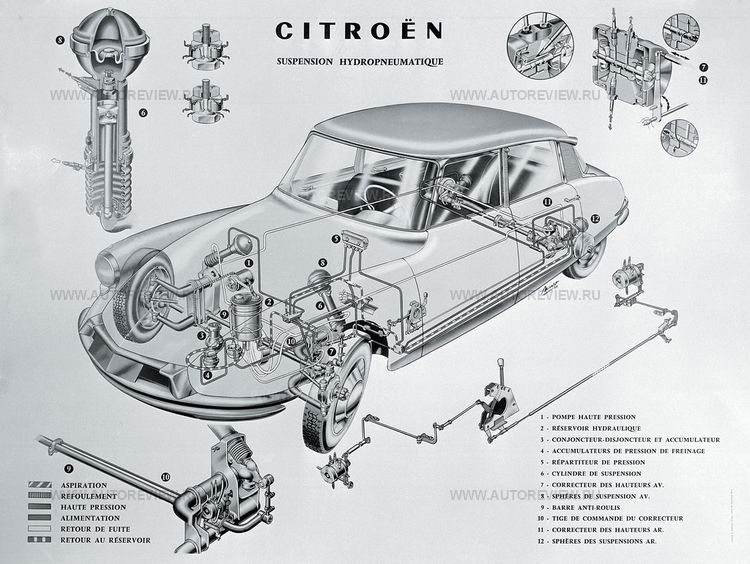
This 1955 poster thoroughly shows the suspension design of the Citroen DS. However, in reality, the "web" of tubes, valves, and hydraulic cylinders was much more complex. And, most surprisingly, it all worked
Like many other curious engineering finds, this suspension migrated to cars from aircraft construction — already in the twenties of the last century it was used in aviation technology. The role of the elastic element was played by gas (usually compressed nitrogen), and a fluid like mineral oil transmitted force from the levers to the gas "cushion." And then one day Paul Magès, an engineer who had worked at Citroen since 1925, proposed a bold idea: to separate the fluid and gas with a rubber membrane, and make the nitrogen reservoir removable — this would make it easier to repair and replace the unit. In addition, he built into the hydraulic cylinder a block of valves that, by throttling the fluid flow and creating resistance, turned the elastic element into a full-fledged shock absorber.
The patent for this invention was issued exactly 70 years ago — in December 1938. But due to World War II, it was only possible to bring the idea to fruition by the end of 1945, when a running prototype was assembled on the chassis of an experimental Citroen 2CV. Two years later, an experimental Traction Avant 11CV Legere with hydropneumatics took over. The tests were so successful that the company's management gave the go-ahead for further development of this scheme.
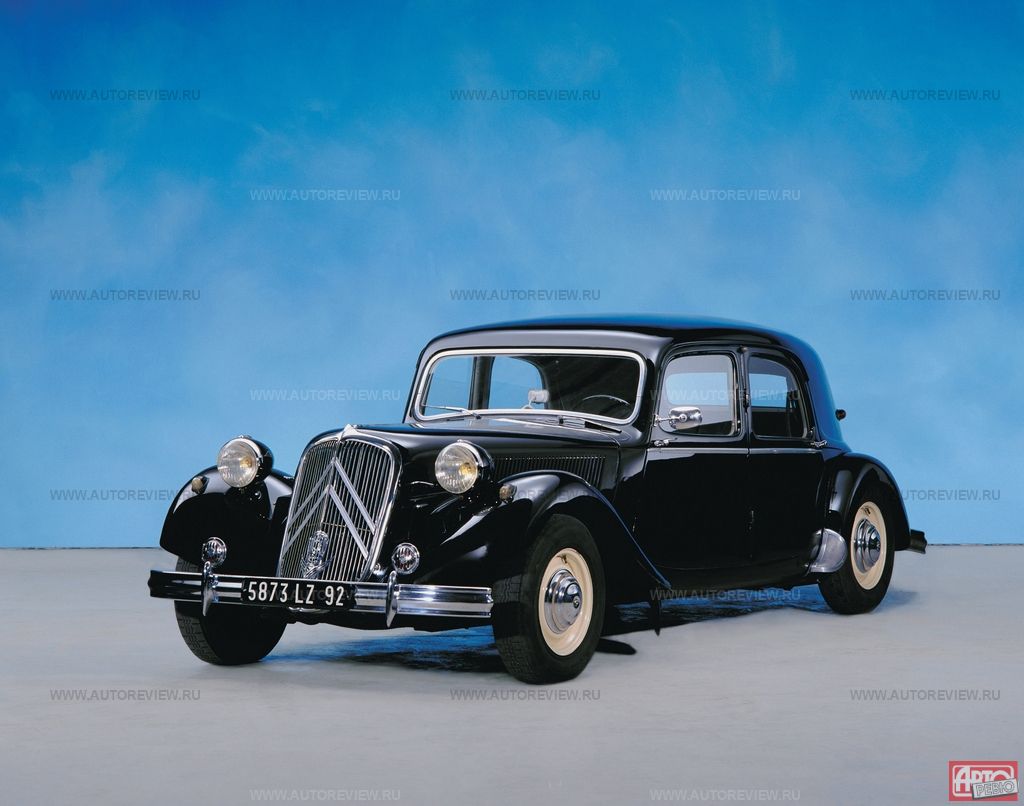 | 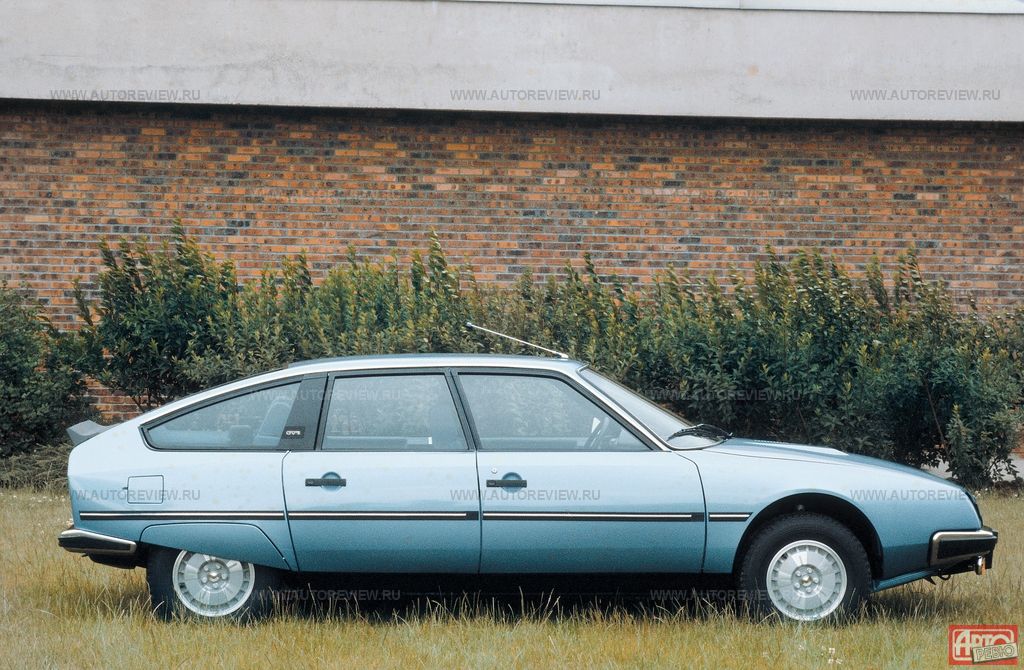 | |
| Citroen Traction Avant 15 Six H (1954—1956) became a kind of "test" bench. It was on this car that the production technology of the revolutionary suspension was refined and workshop personnel were trained | Citroen DS (1955—1975) was very bold both in design and in style. But this did not prevent it from gaining universal love and recognition. The illustration shows an early DS 19 | Citroen CX (1974—1989) was slightly simpler in its "hydraulic" part than its predecessor. The driver controlled the clutch and gearbox himself, without the intervention of a high-pressure pump. However, the power steering, brakes, and suspension were still linked together |
However, the production Citroen Traction Avant 15 Six H with independent rear hydropneumatic suspension on trailing arms saw the light of day only in 1954 — it took a full seven years to refine the design and build a separate factory for producing parts and components. And already in the autumn of 1955, the Citroen DS was presented to the public. This car could well be called a production concept car — so strikingly did it differ from its rivals both externally and technically. Despite its sedan-like silhouette, in terms of load distribution, the DS was more like... a convertible. The entire load was taken by a massive floorpan with developed sills and cross members, and the "superstructure" was a light frame to which body panels were attached. To lower the center of gravity even further, the long hood was made of aluminum, and the roof of plastic. Even the doors remained without window frames: the glass fit directly against rubber seals.
The main highlight was the very soft independent hydropneumatic suspension of all wheels with adjustable ground clearance and automatic level control under any load. To the box-section elements of the base on conical roller bearings (!) were attached levers: double wishbones at the front and trailing arms at the rear. They were connected to powerful hydraulic cylinders — one per wheel. On the opposite ends of the cylinders were screwed the famous "spheres" — containers with compressed nitrogen. By changing the amount of fluid in the cylinders, the ground clearance could be adjusted. Moreover, the high-pressure tubes connected not only the suspension but also the steering, clutch, gearbox, and brakes. In other words, hydraulics helped turn the front wheels, "depressed" the clutch, "shifted" gears, and pressed the pads against discs and drums. True, there was also a simplified version — the Citroen ID, where only the suspension and brakes remained "hydraulic."
The "red" synthetic fluid, created according to a special formula, had a stable viscosity at any temperature and was supplied to the hydraulic system under pressure up to 180 atmospheres. However, it had serious drawbacks: it actively absorbed moisture, which provoked corrosion of steel tubes, and easily ignited when leaking. When this problem led to a massive recall campaign of the "Goddesses" — as the Citroen DS was affectionately called in France — and the replacement of many leaking lines, engineers developed a new mineral-based fluid — green LHM oil.
The "Goddess" was constantly improved and remained on the assembly line for almost two decades, until 1975. During this time, the total output of the DS-ID family approached one and a half million cars. With the end of DS production, the old factory in Quai de Javel also closed.
At the new site in Aulnay-sous-Bois, in 1974, production of a worthy successor began — the large sedan Citroen CX. The new model differed not only in its body design but also in its layout: the engine and gearbox were installed transversely, not longitudinally. For better isolation from vibrations, the chassis and powertrain were mounted on a huge subframe — essentially a lightweight frame that connected to the unibody at twelve points. As for the hydropneumatic suspension, its scheme remained the same. The CX was produced until 1989 and sold just over a million units.
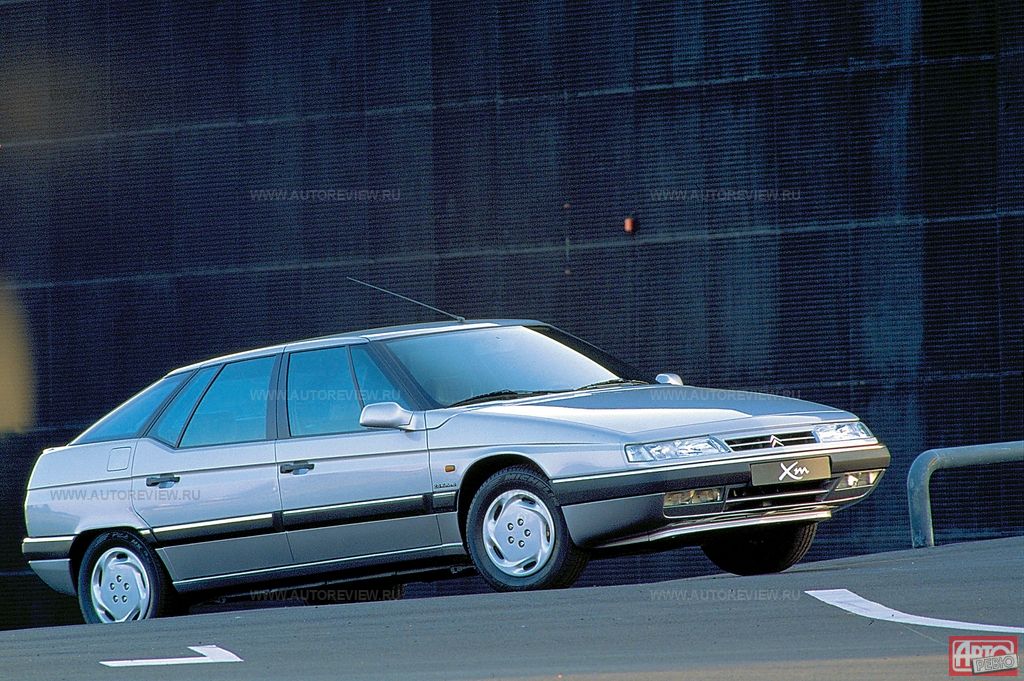
The next chapter was the XM model. The body of this hatchback was already a conventional unibody, with small subframes for mounting the suspension. But it was the XM that became the first Citroen with active Hydractive suspension: not only the damping settings changed, but also the stiffness. On a smooth road, each wheel "worked" on its own sphere, tuned for a sportier character. Additionally, there were two more spheres — one per axle. When switching to comfort mode, the electronics connected them to the hydraulic circuits, reducing stiffness, and simultaneously loosened the damping valves. True, the electronics of those years were far from perfect: changing modes did not so much improve smoothness as add body roll in corners, and the system's responsiveness left much to be desired.
 |
 |
|
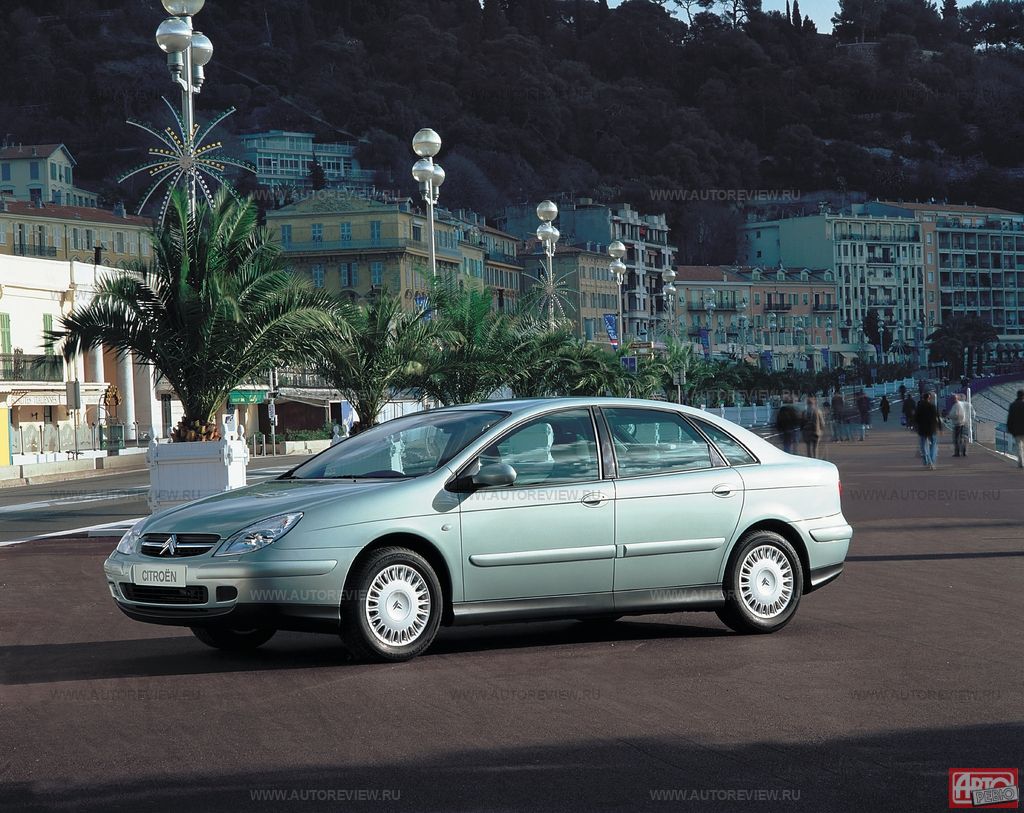
| Citroen Xm (1989—2000). Keeping the basic hydraulic scheme from the CX, the French added electronic control to it, creating one of the world's first "active" suspensions | Citroen Xantia (1993—2004). The first compact Citroen with an "active" suspension and the last with a unified hydraulic system | Citroen C5 first generation (2000—2007). Continued the trend of simplifying the "hydraulics" and complicating the electronics |
The period from the 70s to the mid-90s can rightly be called the "golden" era for Citroen's hydropneumatics. In 1970, the compact hatchback GS with such a suspension appeared, and in 1982 it was replaced by the elegant BX — it was the first to combine McPherson struts with proprietary hydraulic cylinders and gas spheres, and also abandoned bearings in the arm supports. Having refined this scheme, the French applied it to the flagship Xm as well. In 1993, the BX gave way to the Xantia, and from 1995, the updated Xm and expensive versions of the Xantia began to be equipped with the second generation of the "active" suspension — Hydractive II. The new electronics and hydraulics noticeably sped up operation: modes switched in just 150 milliseconds.
However, in 2000, production of the Xm ended, and in 2004 — the Xantia as well. They became the last Citroens where the suspension and brake hydraulics were unified. The C5, which appeared in 2000 and occupied a niche between the Xantia and Xm in size, received conventional brakes with a vacuum booster and a standard power steering with a separate pump. Hydropneumatics remained, but already in the form of Hydractive III, where a more powerful computer controlled everything. The electronics continuously analyzed driving style and road conditions, activating the "comfort" mode as needed. Switching time was reduced tenfold compared to the previous version. Additionally, the ground clearance changed automatically depending on speed and road surface quality. Engineers also returned to synthetic fluid, replacing the mineral oil LHM.
Nevertheless, the C5 did not remain the flagship for long. When the last Xantia rolled off the assembly line in 2004, its place at the Rennes-la-Janais plant was taken by the large Citroen C6 — a new flagship with a sedan body that visually resembles a hatchback. Now another sedan has joined it — the new C5. This is the first "big" Citroen since the "Goddess" for which a conventional spring suspension is available.