
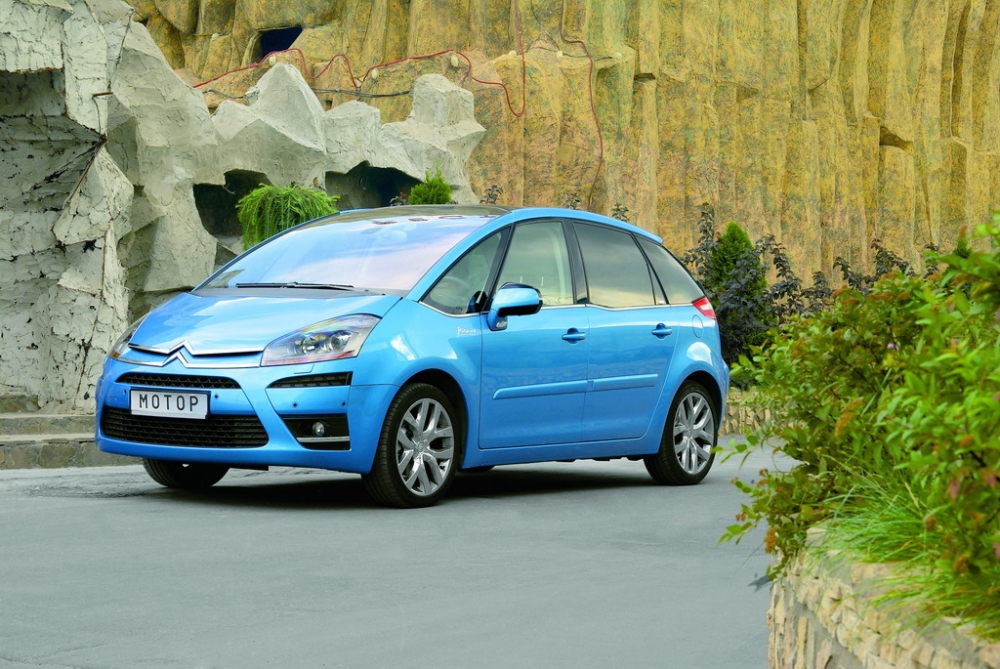
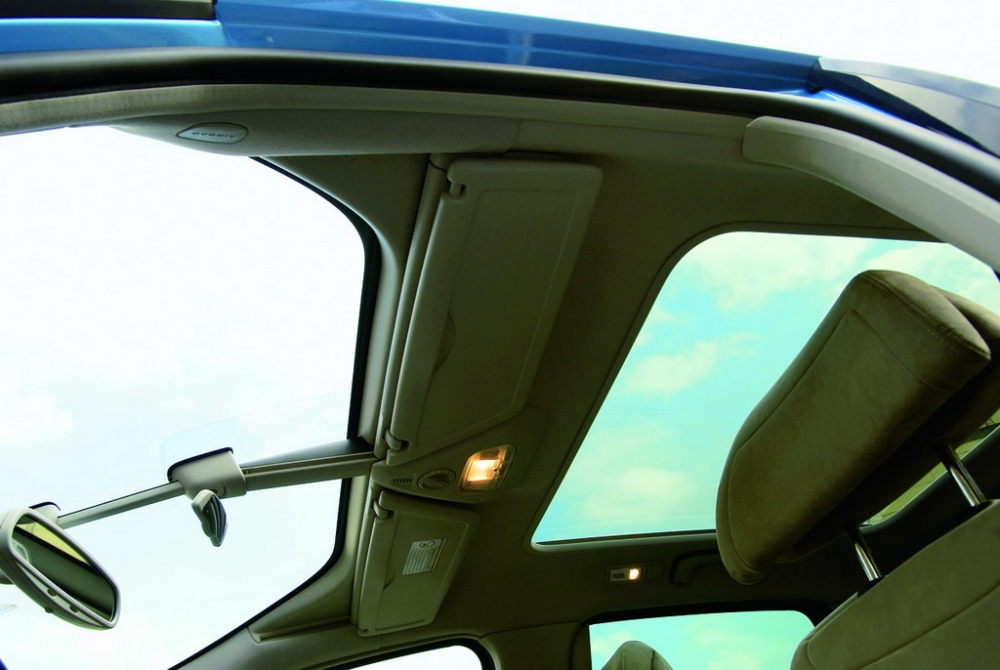
 In the Citroen C4 Picasso, the glazing covers 5.2 square meters, and if you order the panoramic roof, all six. That's comparable to a kitchen in a small apartment! Probably no modern car can boast such a share of glass in its total volume. The designers clearly tried: the beltline was lowered as much as possible, wide inserts were made on the sides at the front, and the windshield, whose area is two square meters, was extended far onto the roof. Combined with the transparent top, this gives an incredible feeling of space and light, plus noticeably improves visibility, which affects safety. In the Citroen C4 Picasso, the glazing covers 5.2 square meters, and if you order the panoramic roof, all six. That's comparable to a kitchen in a small apartment! Probably no modern car can boast such a share of glass in its total volume. The designers clearly tried: the beltline was lowered as much as possible, wide inserts were made on the sides at the front, and the windshield, whose area is two square meters, was extended far onto the roof. Combined with the transparent top, this gives an incredible feeling of space and light, plus noticeably improves visibility, which affects safety. |
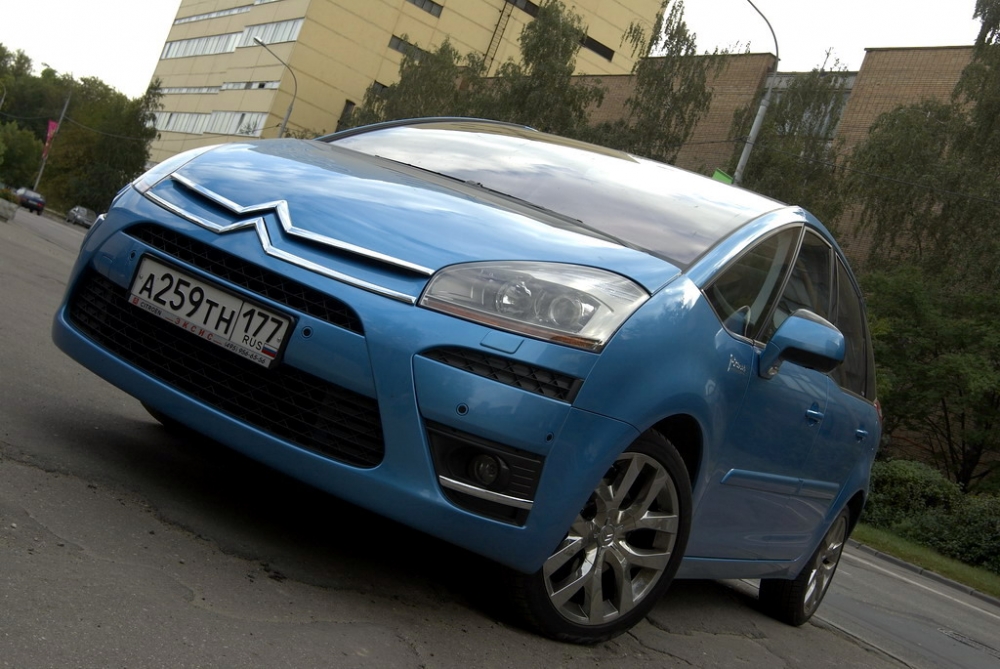
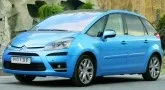
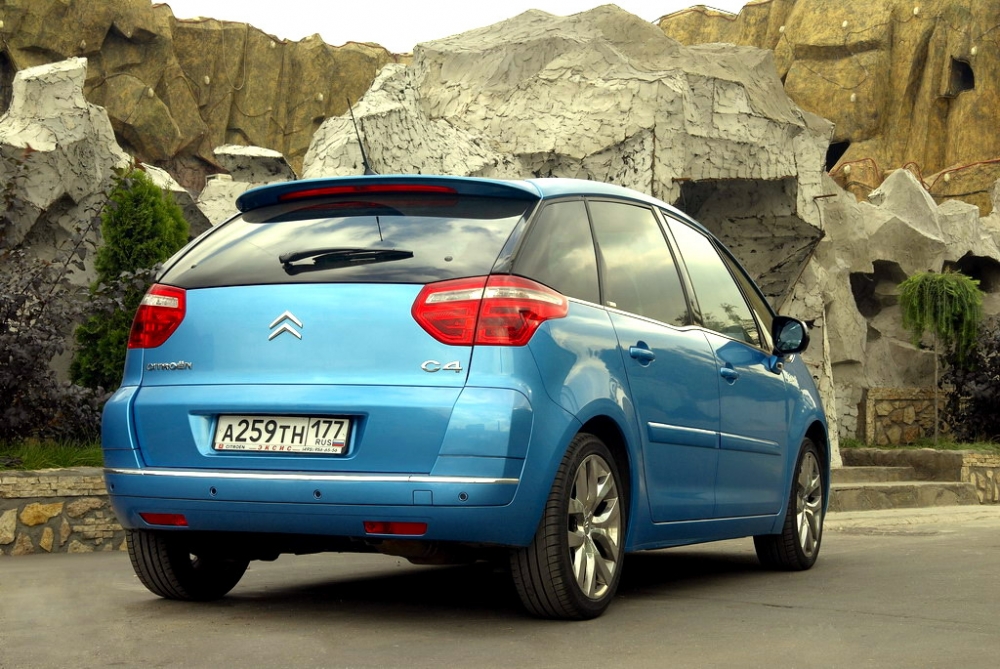 But apart from the glass, the C4 has plenty to surprise. Its exterior is pure originality. Yes, it's based on the motifs of the previous generation Xsara Picasso, but here everything is much more interesting. Smooth lines give the car elegance, while the silhouette remains swift. The body aerodynamics are excellent: the drag coefficient is 0.31. The unconventional image is complemented by details: a curved window line, a radiator grille in the form of the brand's chevron, a large air intake and huge "eye" headlights, as well as mirrors shaped like taillights, divided into two parts by the tailgate. The exterior designers went all out! And this azure color is just a song. The car is very flashy: every time I left the parking lot, I caught myself looking back at it. But apart from the glass, the C4 has plenty to surprise. Its exterior is pure originality. Yes, it's based on the motifs of the previous generation Xsara Picasso, but here everything is much more interesting. Smooth lines give the car elegance, while the silhouette remains swift. The body aerodynamics are excellent: the drag coefficient is 0.31. The unconventional image is complemented by details: a curved window line, a radiator grille in the form of the brand's chevron, a large air intake and huge "eye" headlights, as well as mirrors shaped like taillights, divided into two parts by the tailgate. The exterior designers went all out! And this azure color is just a song. The car is very flashy: every time I left the parking lot, I caught myself looking back at it. |
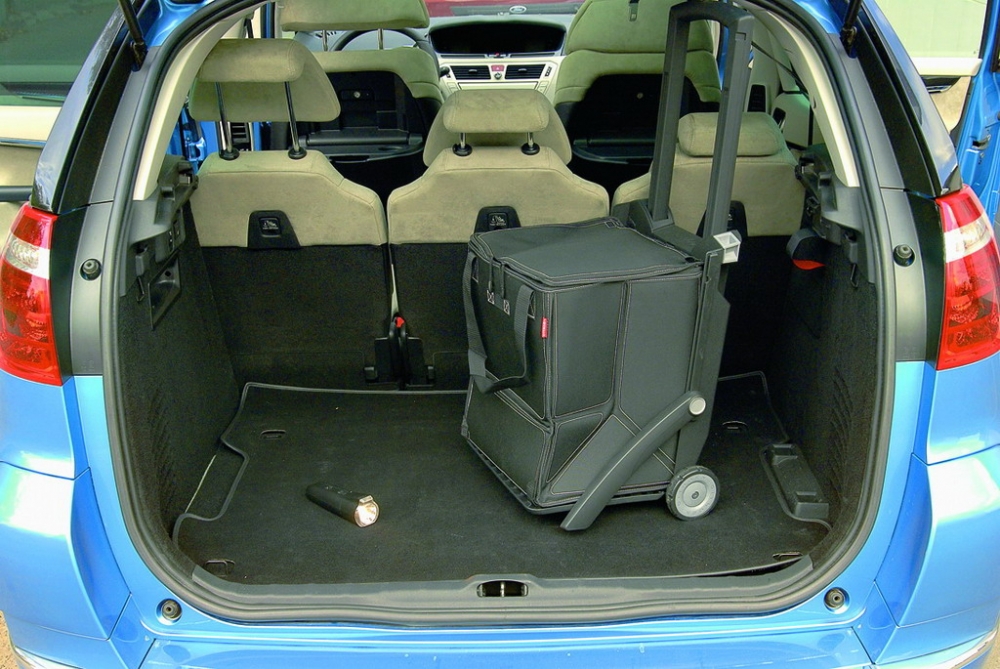 The interior is not far behind the exterior. The front seats, like all the upholstery, are trimmed in Alcantara (optional) and resemble home armchairs — just as massive, "broad-shouldered," soft both in appearance and to the touch. Their task is maximum comfort. In the back, there are three separate seats. Each can be moved forward and backward, raised (convenient for children), folded, or even removed. Under the feet of rear passengers, there are spacious drawers hidden — a pair of dirty boots will fit. With the rear seat pushed all the way back, I sat behind myself with plenty of room. There's plenty of space. The trunk, meanwhile, is the largest in its class. It's easy to load thanks to the low loading height. And if the car is equipped with rear air suspension, you can press a button to lower the "rear" closer to the ground. In the trunk, there's a branded Modubox trolley bag, a cargo net, and a removable flashlight. The interior is not far behind the exterior. The front seats, like all the upholstery, are trimmed in Alcantara (optional) and resemble home armchairs — just as massive, "broad-shouldered," soft both in appearance and to the touch. Their task is maximum comfort. In the back, there are three separate seats. Each can be moved forward and backward, raised (convenient for children), folded, or even removed. Under the feet of rear passengers, there are spacious drawers hidden — a pair of dirty boots will fit. With the rear seat pushed all the way back, I sat behind myself with plenty of room. There's plenty of space. The trunk, meanwhile, is the largest in its class. It's easy to load thanks to the low loading height. And if the car is equipped with rear air suspension, you can press a button to lower the "rear" closer to the ground. In the trunk, there's a branded Modubox trolley bag, a cargo net, and a removable flashlight. |
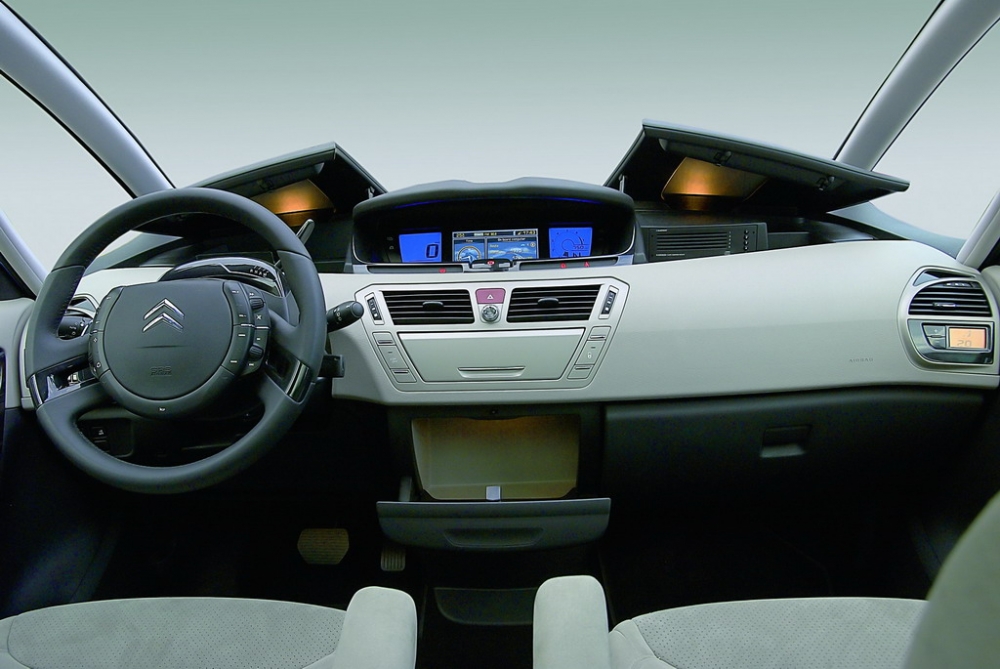 Getting behind the wheel, you immediately notice the clean and perfectly symmetrical front panel with instruments in the center, the absence of a central tunnel and the automatic transmission lever in its usual place. Instead, there's a small elegant lever on the steering wheel. There are also paddle shifters for manual mode. The steering wheel itself is like on the C4 hatchbacks, with a fixed hub. On it, there's a huge number of buttons and "dials," divided into four groups: audio system, onboard computer, climate with recirculation, phone and voice control, as well as cruise control and a parking assistant (it determines whether there's enough space for a maneuver). Getting behind the wheel, you immediately notice the clean and perfectly symmetrical front panel with instruments in the center, the absence of a central tunnel and the automatic transmission lever in its usual place. Instead, there's a small elegant lever on the steering wheel. There are also paddle shifters for manual mode. The steering wheel itself is like on the C4 hatchbacks, with a fixed hub. On it, there's a huge number of buttons and "dials," divided into four groups: audio system, onboard computer, climate with recirculation, phone and voice control, as well as cruise control and a parking assistant (it determines whether there's enough space for a maneuver). |
 Lights and wipers are turned on with the usual steering column switches, so it turns out that almost all auxiliary functions are concentrated on the "wheel." This is unconventional, but convenient — you can keep your hands on the wheel at all times. Except perhaps for adjusting the temperature or airflow intensity — for that, there are two blocks, for the driver and passenger. They are also located unconventionally — on the sides of the panel, near the vents. In the center, besides the large NaviDrive screen on top (in simpler versions, a more modest LCD panel), there's the electronic parking brake button, an audio system under a lid (after all, all buttons are on the wheel), and a spacious cooled box. Lights and wipers are turned on with the usual steering column switches, so it turns out that almost all auxiliary functions are concentrated on the "wheel." This is unconventional, but convenient — you can keep your hands on the wheel at all times. Except perhaps for adjusting the temperature or airflow intensity — for that, there are two blocks, for the driver and passenger. They are also located unconventionally — on the sides of the panel, near the vents. In the center, besides the large NaviDrive screen on top (in simpler versions, a more modest LCD panel), there's the electronic parking brake button, an audio system under a lid (after all, all buttons are on the wheel), and a spacious cooled box. |
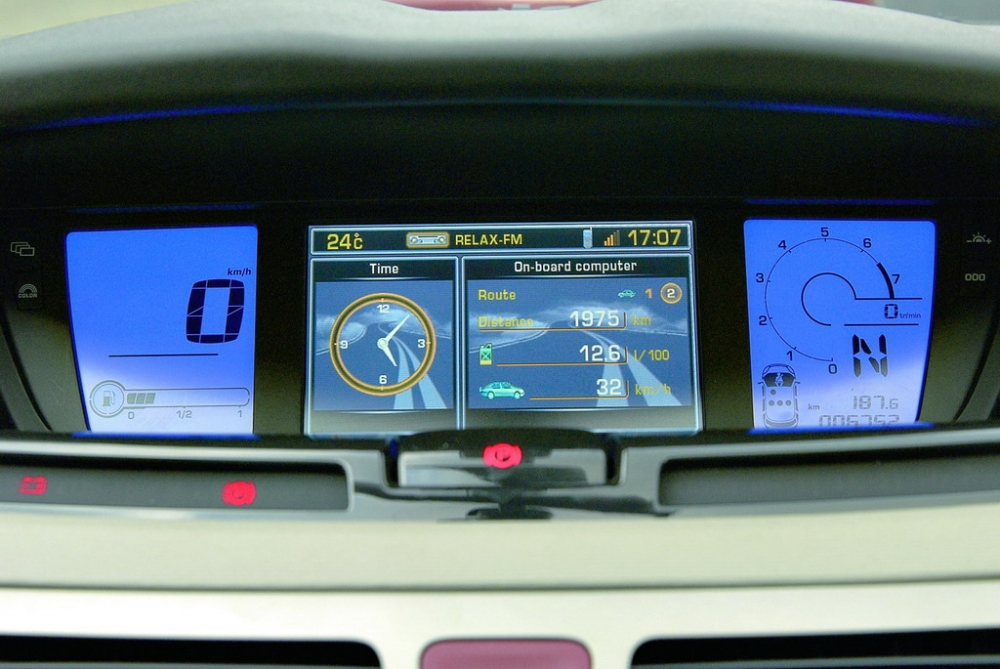 Now about NaviDrive. It's a toy! On the 7-inch LCD screen, you can display almost any information about the car: from standard onboard computer data to navigation and phone. It looks so colorful that at times it resembles a computer game. The graphics are excellent! After all the above, two things become clear. First, there's enough "quirkiness" here for several cars. And who needs all this? Hence the second conclusion: the compact van is designed for young energetic families with children. Now about NaviDrive. It's a toy! On the 7-inch LCD screen, you can display almost any information about the car: from standard onboard computer data to navigation and phone. It looks so colorful that at times it resembles a computer game. The graphics are excellent! After all the above, two things become clear. First, there's enough "quirkiness" here for several cars. And who needs all this? Hence the second conclusion: the compact van is designed for young energetic families with children. |
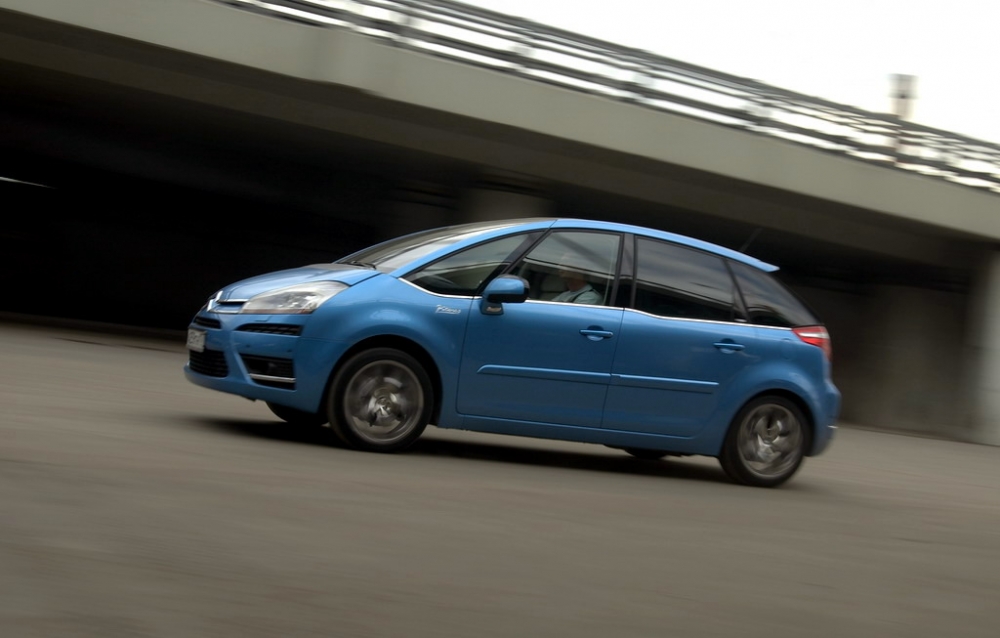 With a mass of one and a half tons, the two-liter 143-horsepower engine is just enough. Maybe with a manual it would be better, but with the 6-speed "robot," the car accelerates leisurely even with the pedal to the floor. During calm driving, every shift makes passengers nod their heads. It's better to press the gas harder — then at least it's clear what you're putting up with. In automatic mode, you can use the paddle shifters, but there's little benefit — still slow and jerky. Things go better if you move the lever to "M" position: shifts are faster, and at maximum revs the "robot" doesn't shift up — honestly. You can have a bit of fun. The suspension is well-tuned for a family car. Of course, not as sharp as in classmates like the VW Touran or Ford C-Max, but lane changes and maneuvers are easy. Although the trim even on 18-inch wheels is clearly biased toward comfort. Excellent sound insulation also contributes: even at speeds around 200 km/h, it's quiet in the cabin. With a mass of one and a half tons, the two-liter 143-horsepower engine is just enough. Maybe with a manual it would be better, but with the 6-speed "robot," the car accelerates leisurely even with the pedal to the floor. During calm driving, every shift makes passengers nod their heads. It's better to press the gas harder — then at least it's clear what you're putting up with. In automatic mode, you can use the paddle shifters, but there's little benefit — still slow and jerky. Things go better if you move the lever to "M" position: shifts are faster, and at maximum revs the "robot" doesn't shift up — honestly. You can have a bit of fun. The suspension is well-tuned for a family car. Of course, not as sharp as in classmates like the VW Touran or Ford C-Max, but lane changes and maneuvers are easy. Although the trim even on 18-inch wheels is clearly biased toward comfort. Excellent sound insulation also contributes: even at speeds around 200 km/h, it's quiet in the cabin. |
 The Citroen C4 Picasso is undoubtedly the most extravagant car in its segment. And for many, this will become a decisive argument when choosing a family car. It's a worthy choice. I'm sure that the unusual design, silence, and comfort will more than compensate for the shortcomings of the sluggish "robot" and the laid-back suspension. The only advice: when buying, pay close attention to the color and wheel diameter. These two parameters greatly change the car's appearance. The Citroen C4 Picasso is undoubtedly the most extravagant car in its segment. And for many, this will become a decisive argument when choosing a family car. It's a worthy choice. I'm sure that the unusual design, silence, and comfort will more than compensate for the shortcomings of the sluggish "robot" and the laid-back suspension. The only advice: when buying, pay close attention to the color and wheel diameter. These two parameters greatly change the car's appearance. |
 PRICES AND TRIM LEVELS PRICES AND TRIM LEVELS |
Aquarium life
Want to know how the fish feel in the aquarium? The new Citroen C4 Picasso will help you with that.
Test drive photos
Comments
No comments yet. Say the first word.