
Sergey ZNAEMSKY | Photos by the author and Citroen
An old white Seat, enveloped in thick smoke, pulled over to the roadside and a couple of minutes later turned into a torch on the outskirts of Barcelona. Apparently, its engine, having served its time, could not withstand another assault on the mountain serpentine.
Or maybe the modest little car burned with shame, seeing in the mirrors how dazzlingly beautiful a practical one-box Citroen C4 Picasso can be?
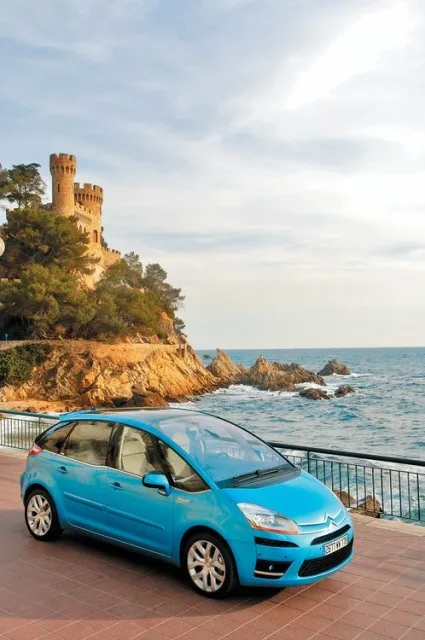
Even before the trip, while looking at the photos of the new five-seat minivan Citroen C4 Picasso, I decided that the first thing at the presentation I would thank the designers. Like, merci beaucoup, dear ones! The work done is brilliant!
But at the event dedicated to the five-seat version, neither designers nor engineers were present — only marketers. It is their brainchild. It was they who came up with this confusion with names so as not to reveal the secret of the "short" car ahead of time: last autumn, the seven-seat compact van was also presented as "just" C4 Picasso. However, in Europe, where about one and a half million compact vans are sold annually (and only 265 thousand full-size one-box models), few choose seven-seat models: for example, the extended Renault Grand Scenic sells three times worse than the regular "short" Scenic. Therefore, Citroen's marketers included the "small" minivan in the plan simultaneously with the "big" one, which has now been renamed Grand C4 Picasso.
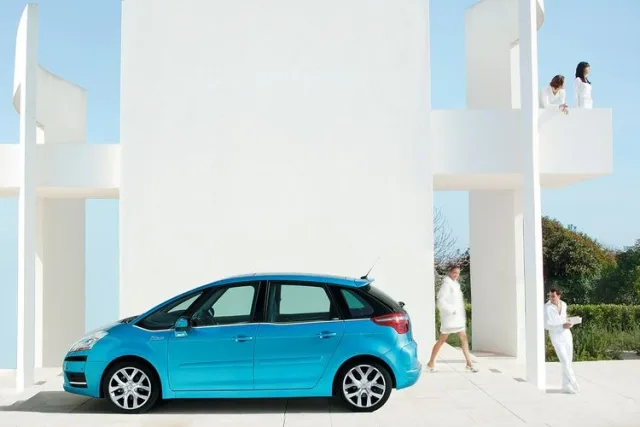
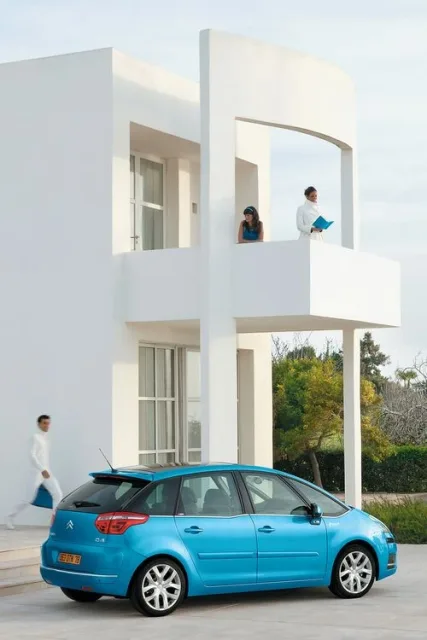
And the "short" version — here it is, before you: this is the "just" Citroen C4 Picasso.
But confusion is still unavoidable. After all, 45 thousand owners of the "Grand" are already driving around with the "simple" C4 Picasso badge...
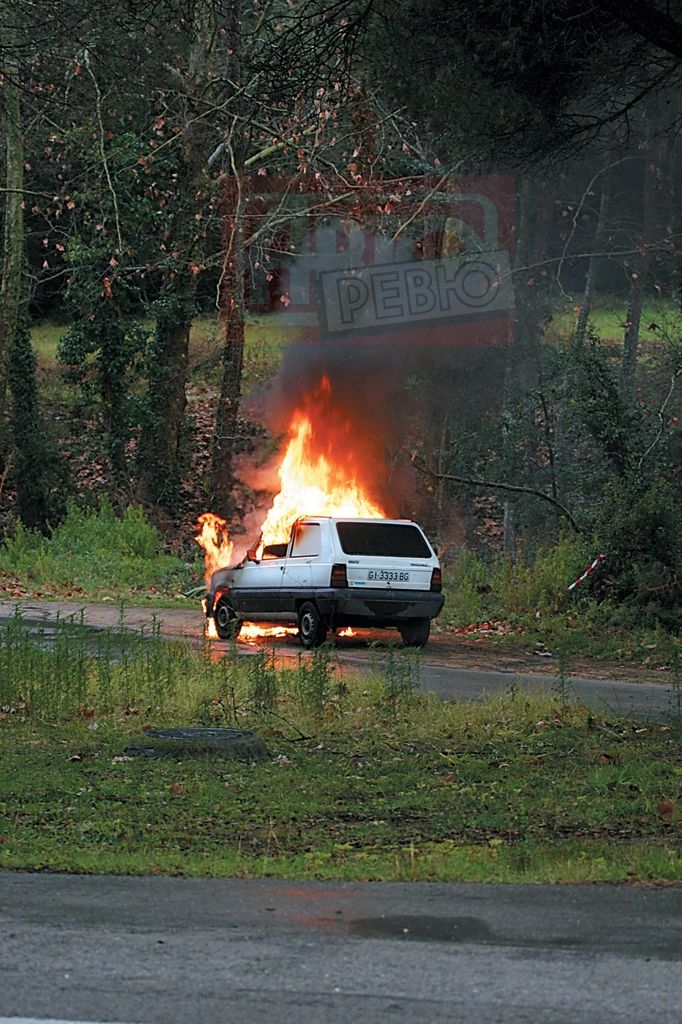 |
| The old Seat Marbella (aka Fiat Panda) could not withstand Citroen's beauty and ignited before my eyes. By the time the firefighters arrived, the little Seat had burned to the ground |
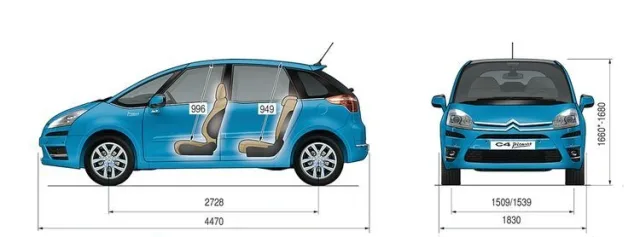
However, from a technical point of view, there are almost no differences between the two cars. They have the same wheelbase, height and width, the same engines, gearboxes and suspensions — except with a slight recalibration for weight. All that distinguishes the "small" Picasso from the "big" one is a rear overhang shortened by 12 cm and a design that makes cars ignite.
Both models were worked on by the same team of Citroen designers led by Oleg Son. But the one-box models are similar only from the front, and otherwise... The "short" one looks much more impressive! Interestingly, in profile, the new C4 Picasso and the old Xsara Picasso share a common detail — five pillar rays symmetrically diverging from the roof. But how elegantly this heavy palisade is blackened! How the bright "blobs" of the taillights enliven the rear! How refined is the small step of the beltline, whose curve was rehearsed on the C-Airdream and C-SportLounge concepts!
What will you have to pay for beauty? Fortunately, practically nothing. The "small" C4 Picasso retains both the "widescreen" windshield and the panoramic roof — the total glazing area reaches 6.2 m²: only 0.2 m² less than the "Grand".
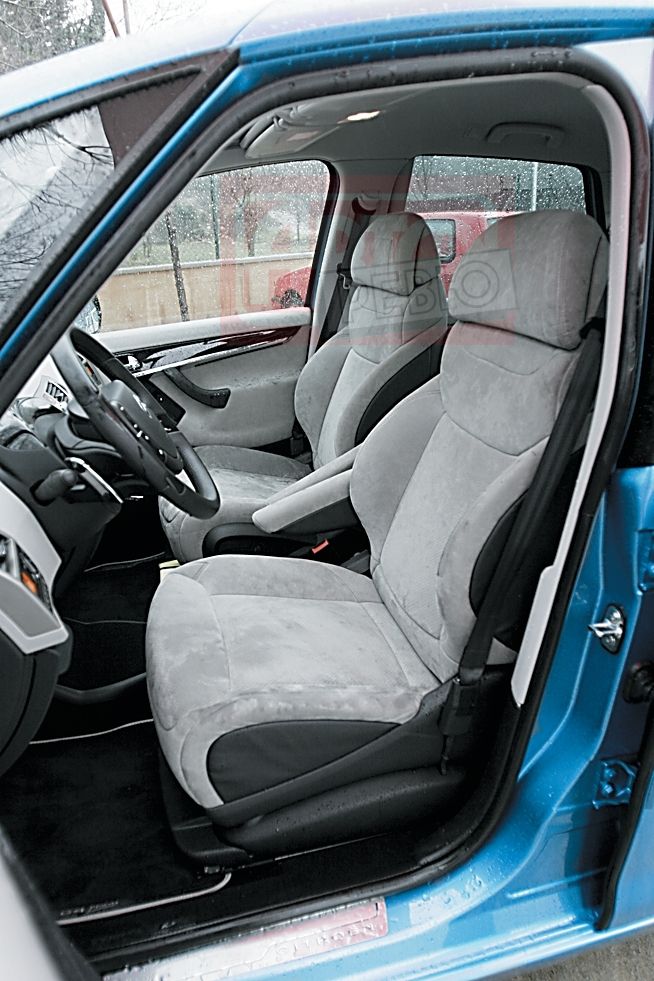
The interior is exactly the same. The fixed steering wheel hub with buttons for controlling the "music", navigation and cruise control. In the center of the front panel — three bright displays of the instrument cluster and four "glove boxes" around. And two more utility boxes — in the floor, under the feet of rear passengers. Excellent seats, expensive trim materials, high level of equipment. If you want, you can have DVD monitors in the front headrests. Or "almost four-zone" climate control (rear passengers only adjust the airflow intensity). And the electromechanical "handbrake" with hill-hold system is already "in the base".
 |
 |
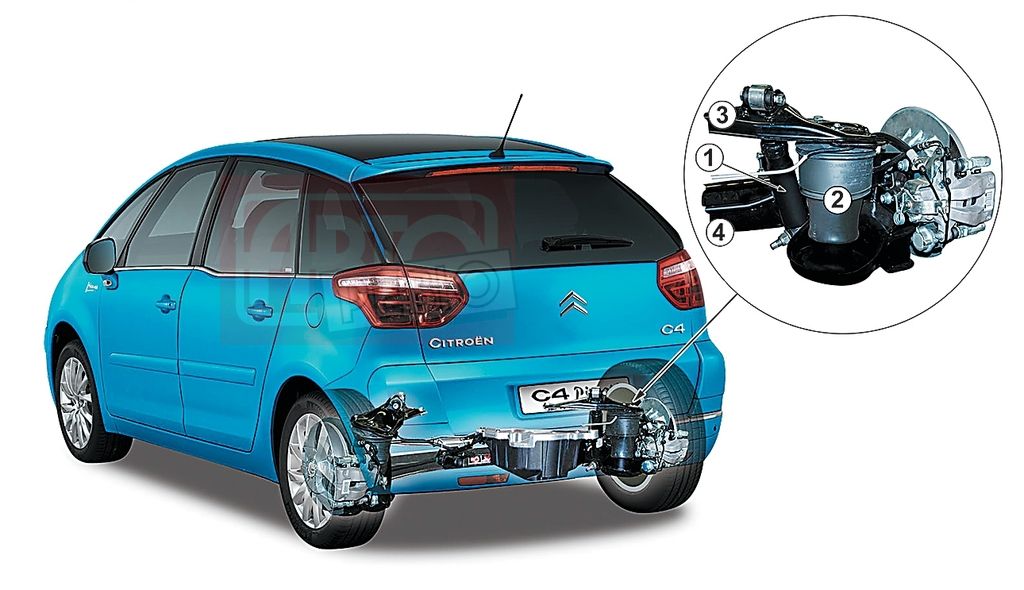
| The rear air suspension can maintain a constant ground clearance regardless of load, and using the buttons on the inner wall of the trunk, you can make the Citroen "squat" on its rear wheels, which reduces the loading height from 62 to 48 cm. The "air suspension" can only be ordered for the most modest C4 Picasso with a 1.8 petrol engine 1 — Shock absorber 2 — Air spring element 3 — Air spring element support 4 — Suspension crossmember |
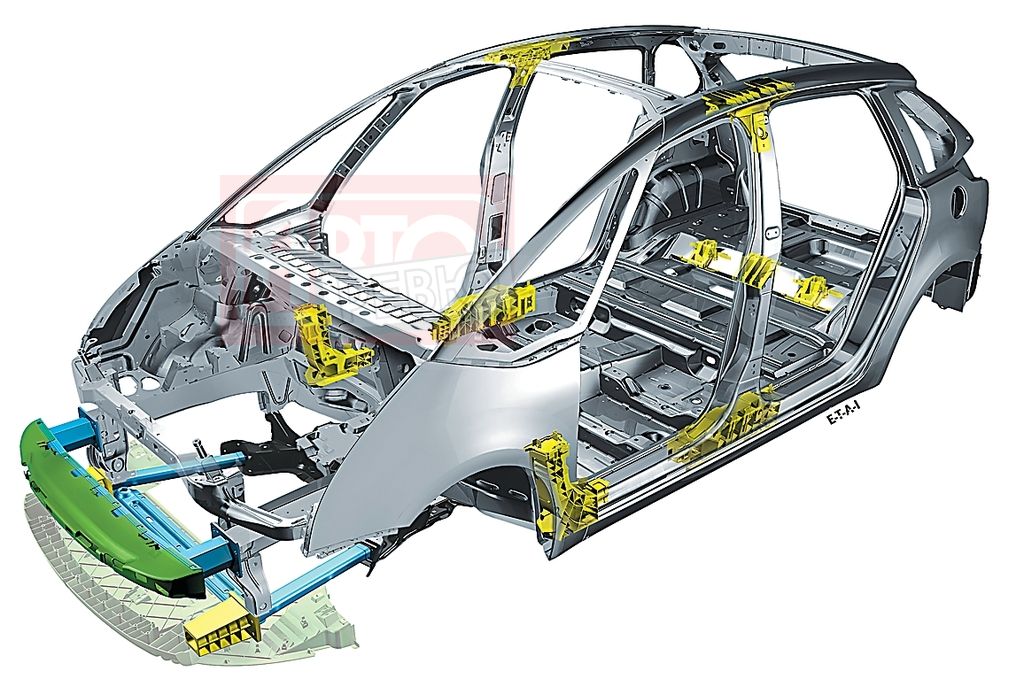
The body's power structure is exactly the same as that of the Grand C4 Picasso, which received five stars in the EuroNCAP rating. Under the front bumper, there is not one but two energy-absorbing structures — upper and lower. This solution migrated from the C4 hatchback and allowed the front pillars to be made thinner. Yellow marks the reinforcements at the bases of the pillars and the rear crossmember, made of polyamide fibers and structural foam — they are lighter than traditional steel |
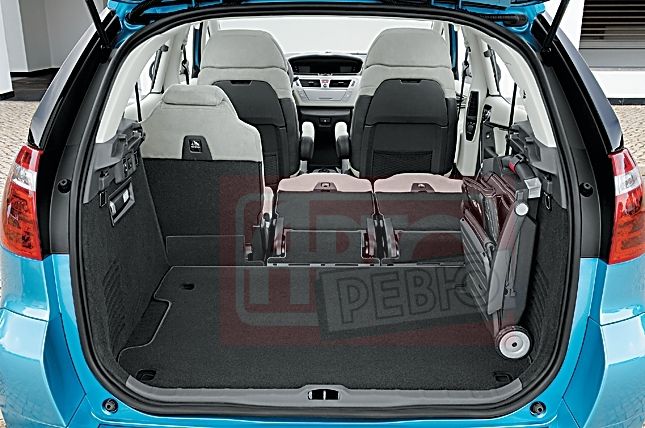
Behind the backs of the spacious rear seats — a full-fledged 500-liter trunk. If each of the three separate seats is moved forward by the maximum 13 cm, then without much detriment to passengers, the cargo compartment capacity increases to 605 liters. Fold the rear row — all 1734 liters will fit.
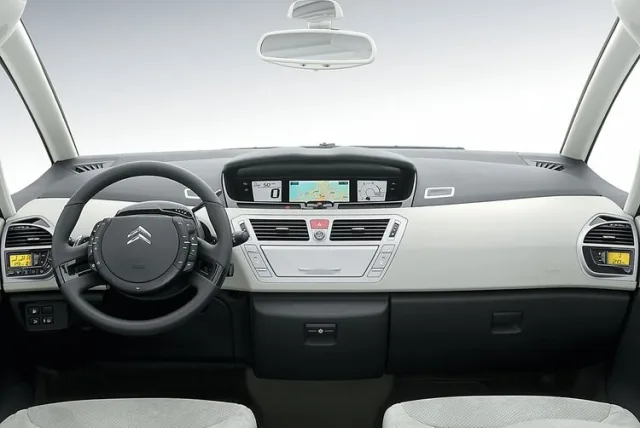
Design, materials, ergonomics — the interiors of the "big" and "small" C4 Picasso are identical.
The speedometer and tachometer are spread to the edges of the instrument cluster, but their large numbers are easy to read
Russian buyers will still only get cars with petrol engines — 1.8 liters (127 hp) and 2.0 liters (143 hp). For the 1.8 engine, only a five-speed "manual" is provided, and for the two-liter there is also a four-speed "automatic" or a six-speed "robot". But since in Europe petrol one-box models are hardly bought (only 35% of total sales), all presentation C4 Picassos were equipped with diesel engines — 110-horsepower 1.6 and 138-horsepower two-liter.
 |
 |
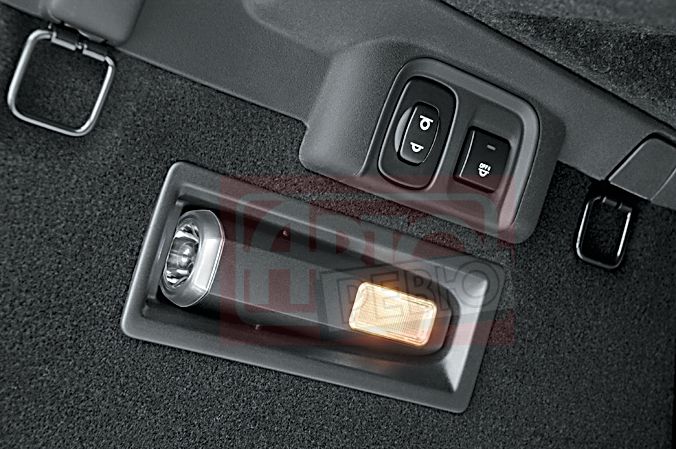 |
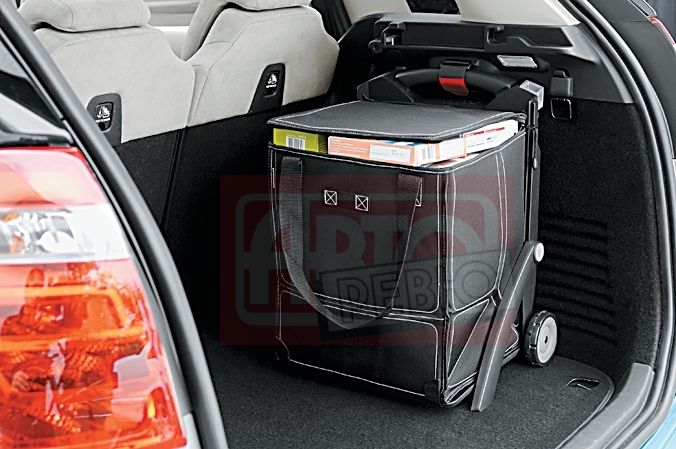
| With the seats folded, the floor in the trunk is almost flat, under it — either the compressor unit of the air suspension, or a "spare tire". As for the predecessor Xsara Picasso, a "branded" folding utility cart Modubox is offered: it holds 40 liters and supports a load of 22 kg. The removable flashlight — as on the "Grand" | ||
Both diesels were liked — especially the two-liter. The locomotive-like traction of 320 Nm is felt already from 2000 rpm. And the new six-speed "automatic" always has 11 gear shift algorithms at the ready — the gearbox works smoothly and promptly. By the way, paired with the "automatic", the 2.0 HDI diesel produces 50 Nm more torque than with the "robot".
 |
 |
| Suede seats in expensive trim levels are magnificent |
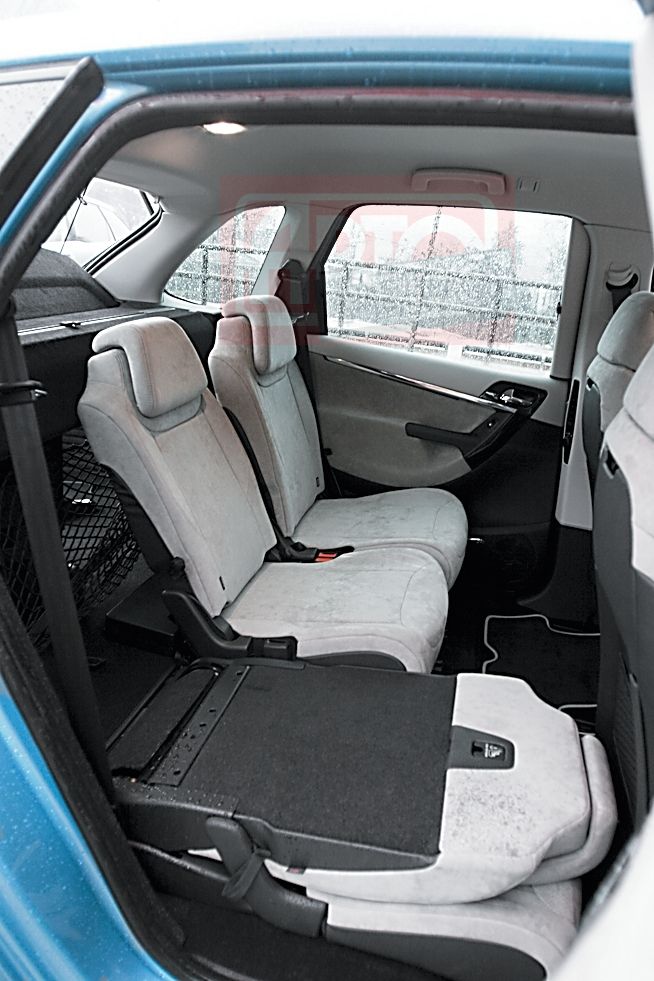
The separate rear seats are adjustable in length and backrest angle. But they fold more simply than in the "Grand" — the backrest "falls" onto the "dived" forward cushion |
The flattering reviews of Oleg Rastegaev about the handling of the seven-seat C4 Picasso (see AR No. 21, 2006) also apply to the "short" car. It confidently holds the highway straight and tenaciously, without significant rolls, rolls through the bends of mountain serpentines. You just need to get used to the uninformative steering wheel with an overly comfort-tuned power steering and learn to "aim" into a turn through the triangular embrasures of the additional side windows.
While there is smooth asphalt under the wheels, such driving is a pleasure: the C4 Picasso does not sway on the waves, and the cabin is very quiet. But on the rare Spanish potholes, the Citroen with its dense suspension begins to noticeably shake the occupants, accompanying the shaking with noise effects. Moreover, there is no big difference between the base spring suspension and the optional one, where there are air elements at the rear — both are tuned somewhat stiffly for Russian roads. And a package for bad roads is not provided.
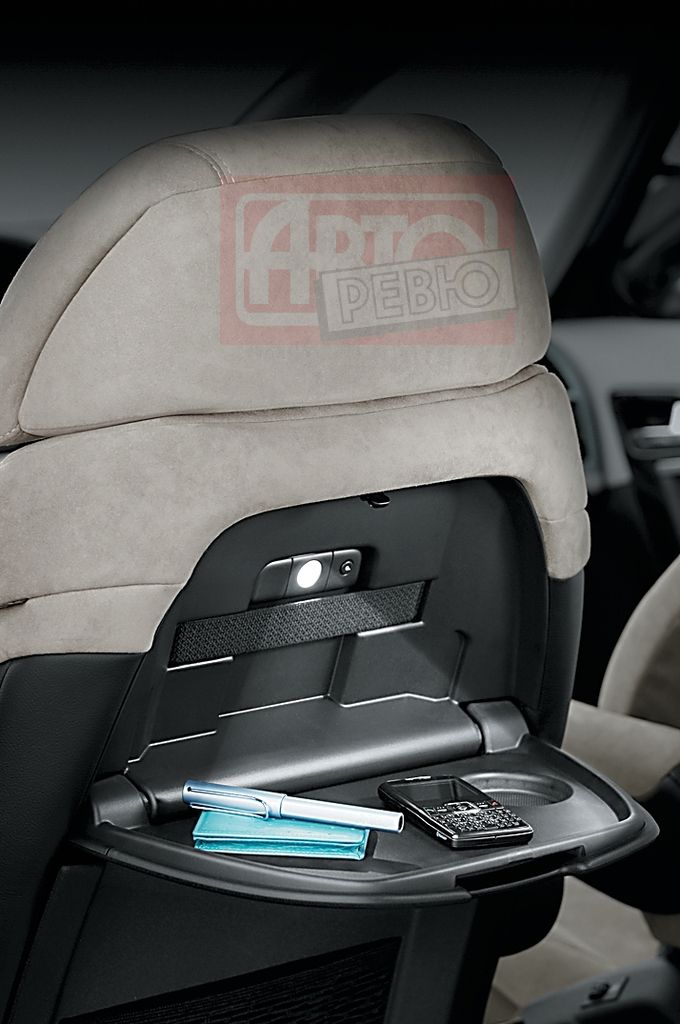 | 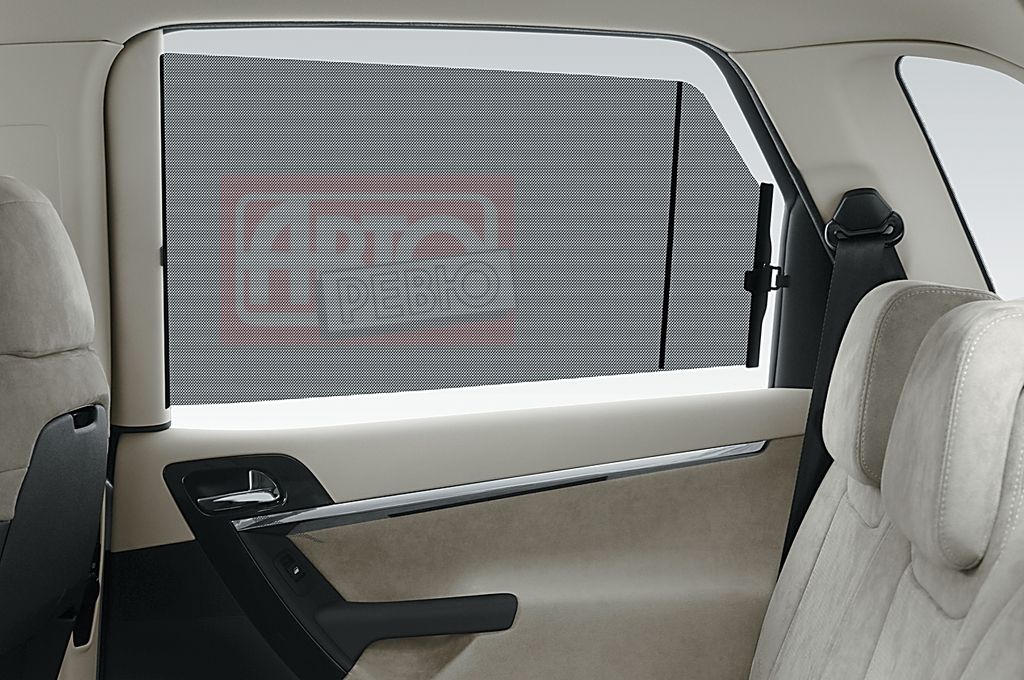 | 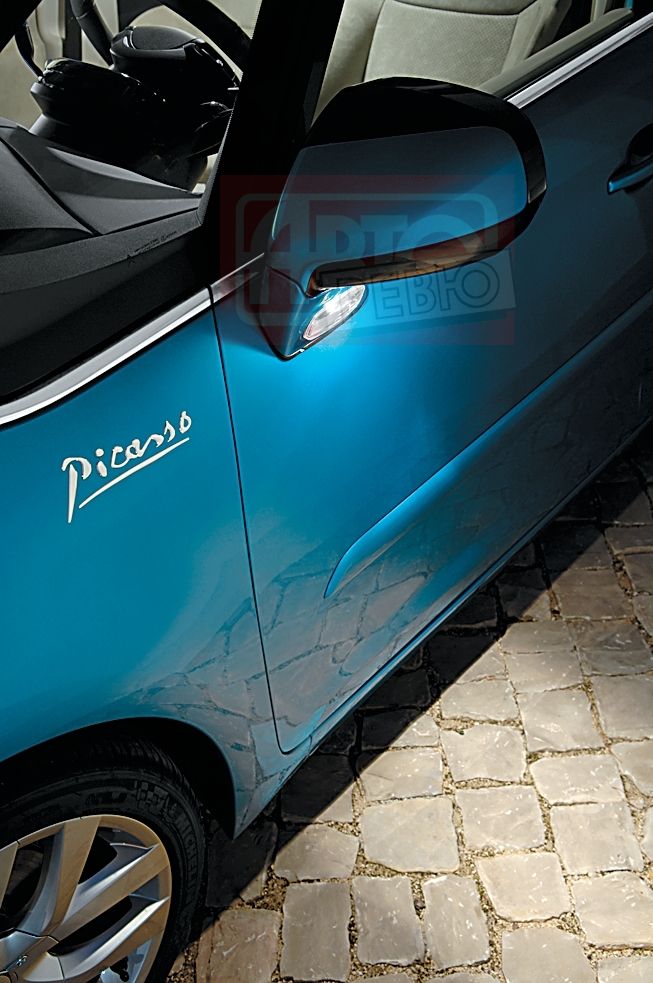 |
| Among the options are side window blinds, like in executive-class sedans, and illuminated tables. And DVD monitors can be built into the headrests of the front seats | Ground lighting under the mirror housings — convenient! | |
There are no exact prices yet either — the Grand C4 Picasso will appear at our dealers only in February, and the five-seat compact MPV will reach showrooms by May. However, in Europe, the base C4 Picasso with a 1.8-liter petrol engine is priced at 20 thousand euros — that's about 800 euros cheaper than the similar "Grand". Not cheap!
That is why at the plant in Vigo, along with the new Picasso, they will continue to produce the honored old-timer — the Xsara Picasso compact MPV until 2010. In Europe, it is still in demand: 180 thousand units are sold annually. And how will the new C4 Picasso be received? Especially since five-seat analogues like the Renault Scenic or Ford C-MAX are cheaper?
Cheaper — that's a fact. But such dazzling beauty, of course, cannot be found in them.
| Specifications | ||
| Parameters | Vehicle | |
| Citroen C4 Picasso | ||
| Modification | 1.8i 16v | 2.0i 16v |
| Number of seats | 5 | 5 |
| Trunk volume, l | 500—1734 | 500—1734 |
| Curb weight, kg | 1545 | 1586 (1627)* |
| Gross weight, kg | 2000 | 2040 (2090) |
| Engine | petrol, with distributed fuel injection | petrol, with distributed fuel injection |
| Location | front, transverse | front, transverse |
| Number and arrangement of cylinders | 4, in-line | 4, in-line |
| Displacement, cm³ | 1749 | 1997 |
| Compression ratio | 11.0:1 | 10.8:1 |
| Number of valves | 16 | 16 |
| Max. power, hp/kW/rpm | 127/92/6000 | 143/103/6000 |
| Max. torque, Nm/rpm | 170/3750 | 200/4000 |
| Gearbox | manual, 5-speed | manual, 6-speed, robotic (automatic, 4-speed) |
| Drive | front-wheel drive | front-wheel drive |
| Front suspension | independent, spring, McPherson | independent, spring, McPherson |
| Rear suspension | semi-independent, spring | semi-independent, spring (pneumatic)** |
| Front brakes | disc, ventilated | disc, ventilated |
| Rear brakes | disc | disc |
| Maximum speed, km/h | 185 | 195 (190) |
| Acceleration time 0—100 km/h, s | 11.7 | 11.3 (12.0) |
| Fuel consumption, l/100 km | ||
| urban cycle | 11.3 | 11.1 (12.9) |
| extra-urban cycle | 6.1 | 6.2 (6.6) |
| combined cycle | 8.0 | 8.0 (8.9) |
| Fuel tank capacity, l | 60 | 60 |
| Fuel | AI-95 | AI-95 |
| * Data in parentheses — for vehicles with automatic transmission | ||
| ** Rear air suspension is available for an additional charge | ||