
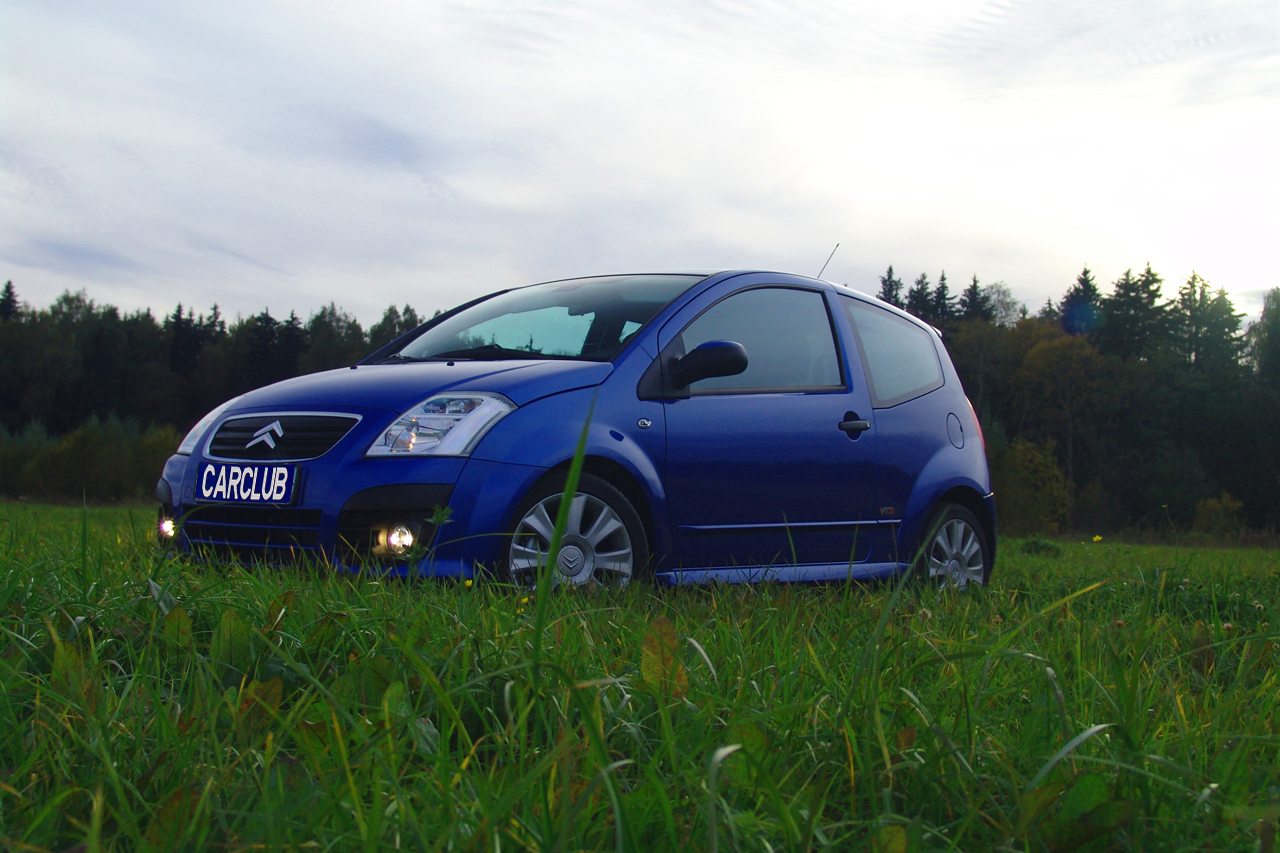
 The French automaker Citroen has long earned a reputation in the world of motorsport, and the "double chevrons" have been especially successful in rally racing. Our test drive features the smallest model of the brand sold in Russia – the Citroen C2.Comments (1)
Europeans have long appreciated all the advantages of compact cars. Constant traffic jams in big cities, a shortage of parking spaces, hefty fines for traffic violations, and ever-increasing fuel prices have step by step forced Europeans to give up large and powerful cars. The principle of "my car is bigger and more powerful," which is still alive in Russia, has been happily forgotten in the civilized world. How often do you see a small car speeding down the oncoming lane, risking a head-on collision, just to save a couple of minutes? I don't see it often either. Meanwhile, compact does not mean weak. And while a solid sedan or a huge SUV tries its best to "fly" to the destination, burning tens of liters of fuel, a small but nimble car, like that proud little bird, deftly maneuvers through dense traffic and reaches the imaginary finish line if not simultaneously with them, then certainly with a minimal difference.
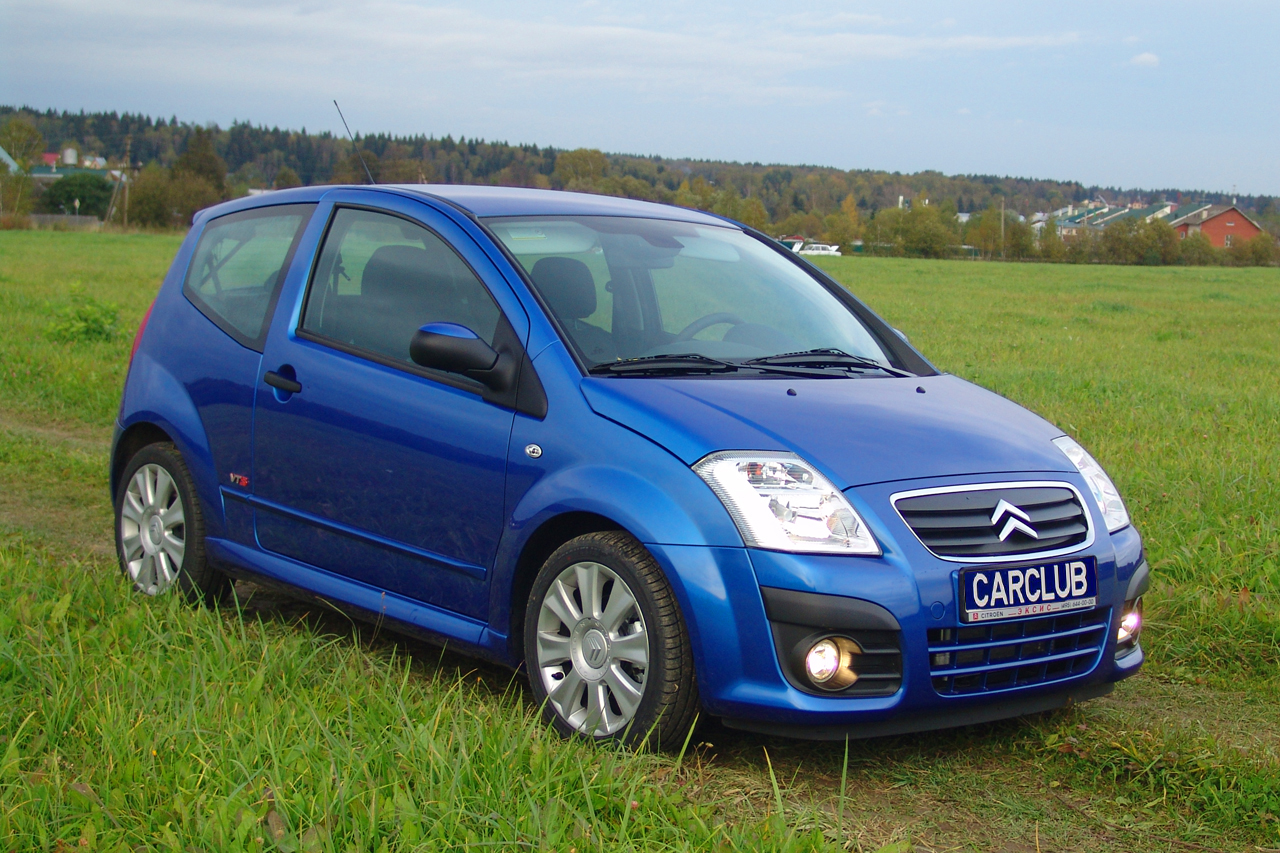 |
| In spring 2008, the C2 underwent a facelift, which refreshed the hatchback's appearance |
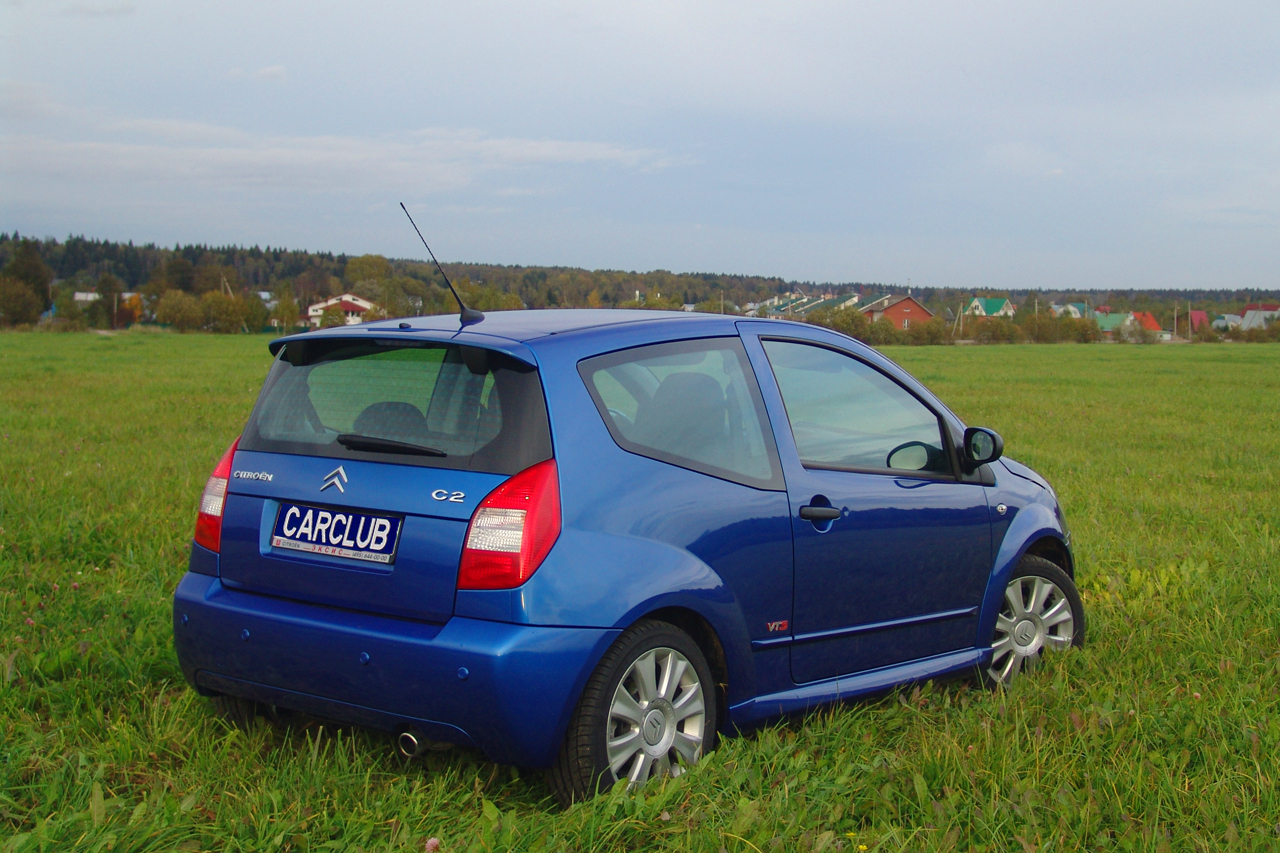 |
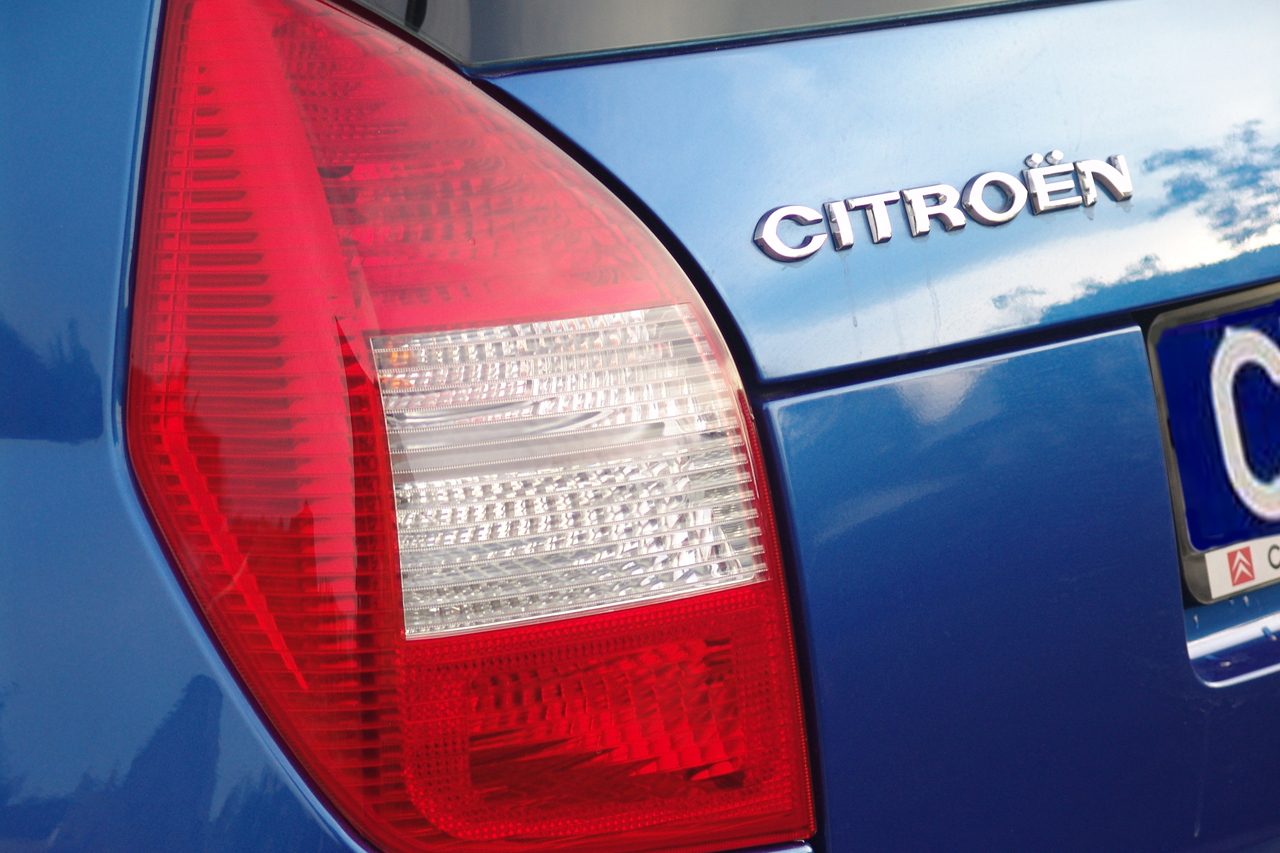
| The hatchback received a new front bumper, grille, and rear lights |
The French company Citroen is not without reason proud of its motorsport successes. The "double chevrons" are especially good at rally disciplines. We got our hands on the most compact model of the brand that is officially sold in Russia – the Citroen C2. This "little one" was first shown to the public at the Frankfurt Motor Show in 2003. The prototype was the Citroen C2 Sport concept, presented that same spring – a kind of hybrid of striking concept-car dynamics and the developments of Citroen's sports models. Thus, the French demonstrated their vision of the sports car of the future. Even then it was clear that the small C2 was imbued with the spirit of racing from birth.
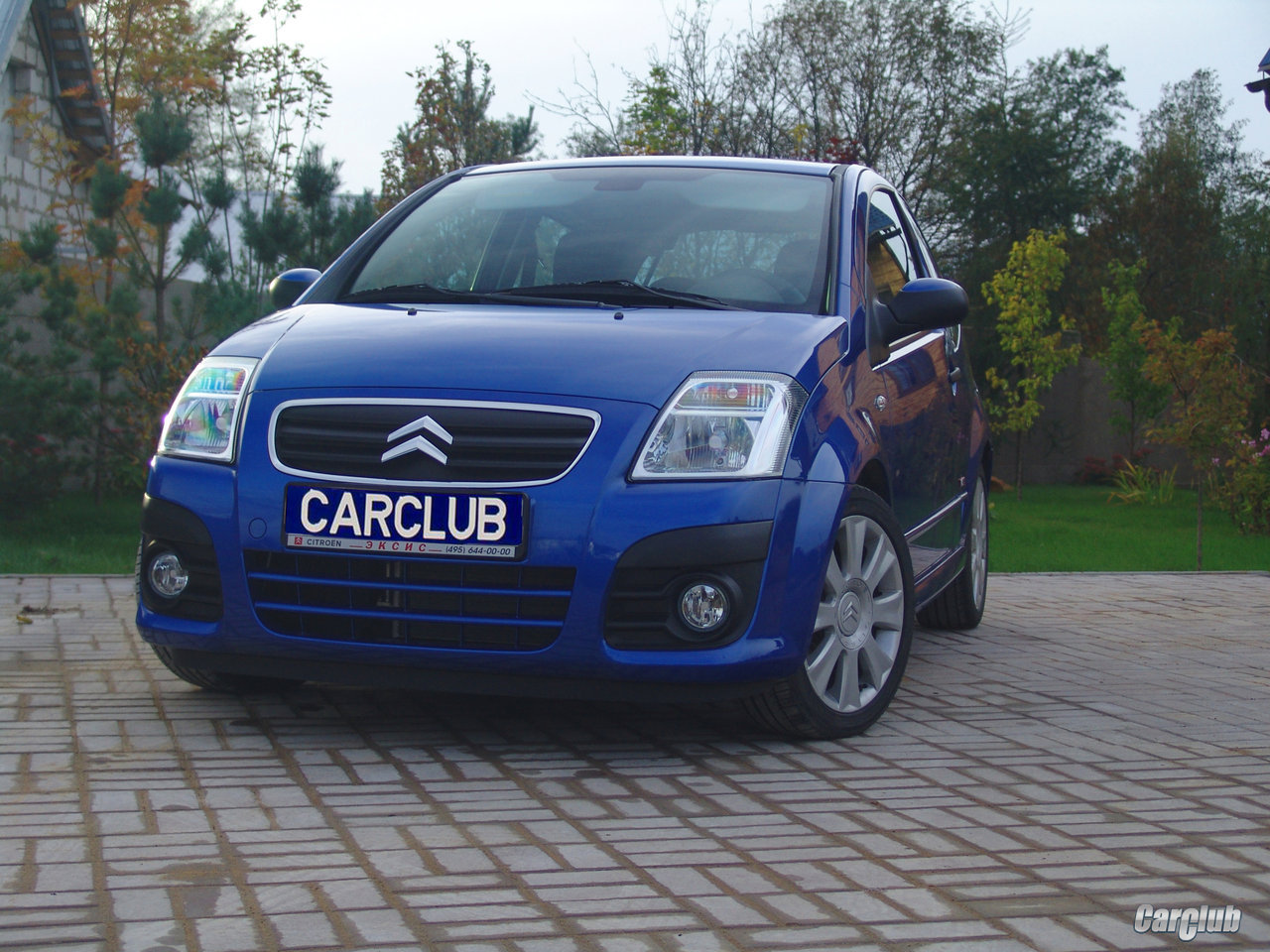
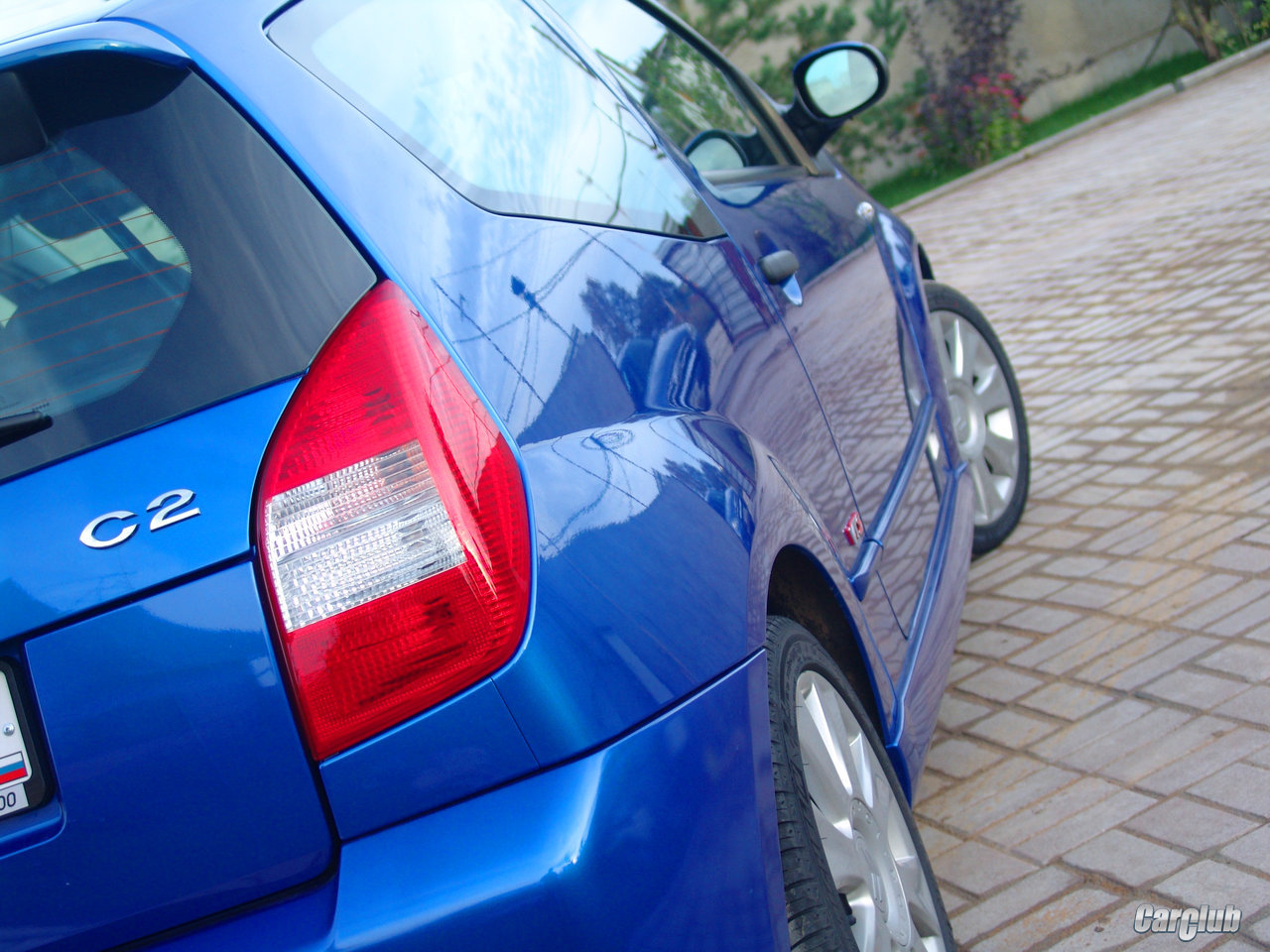
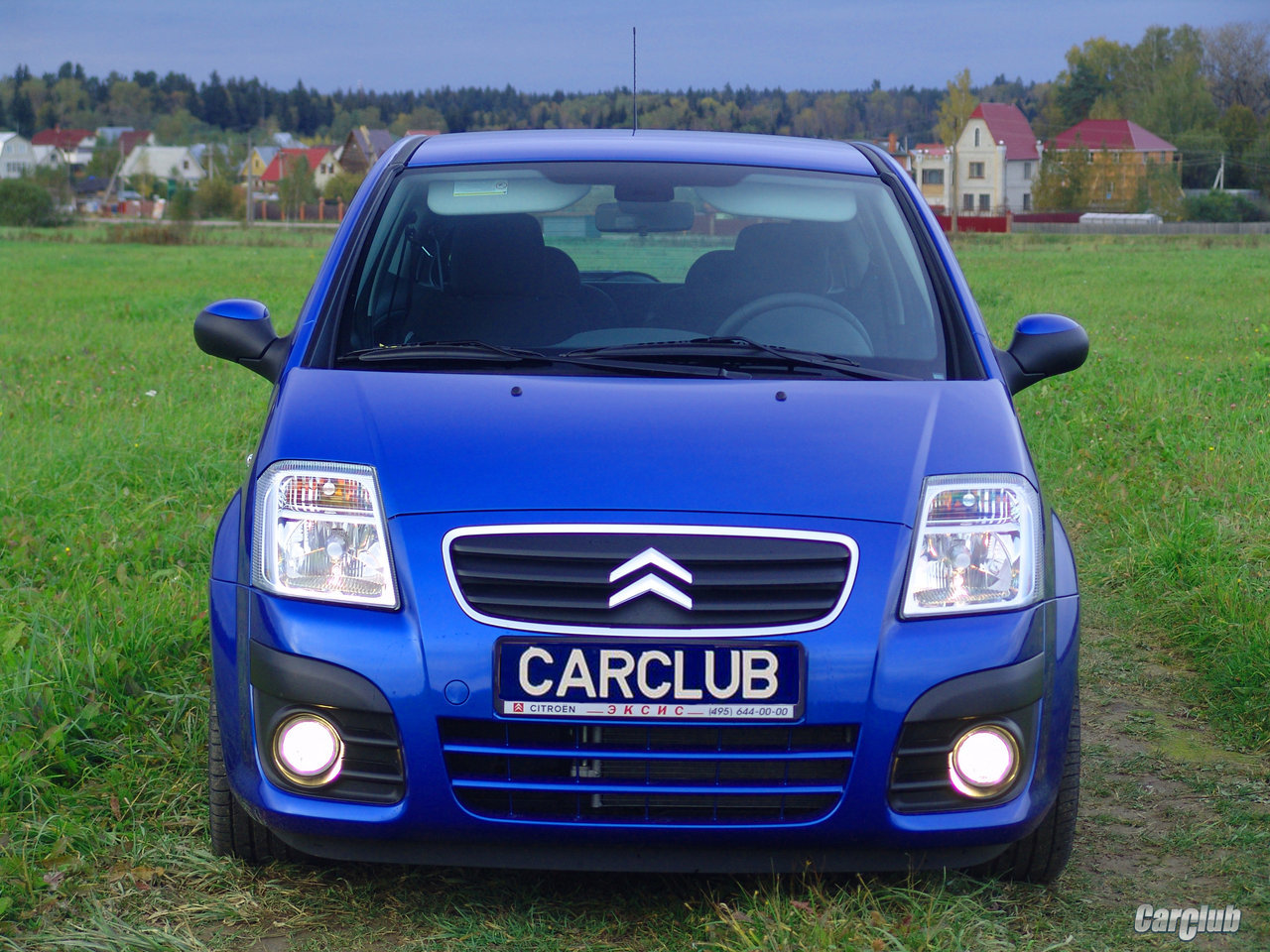
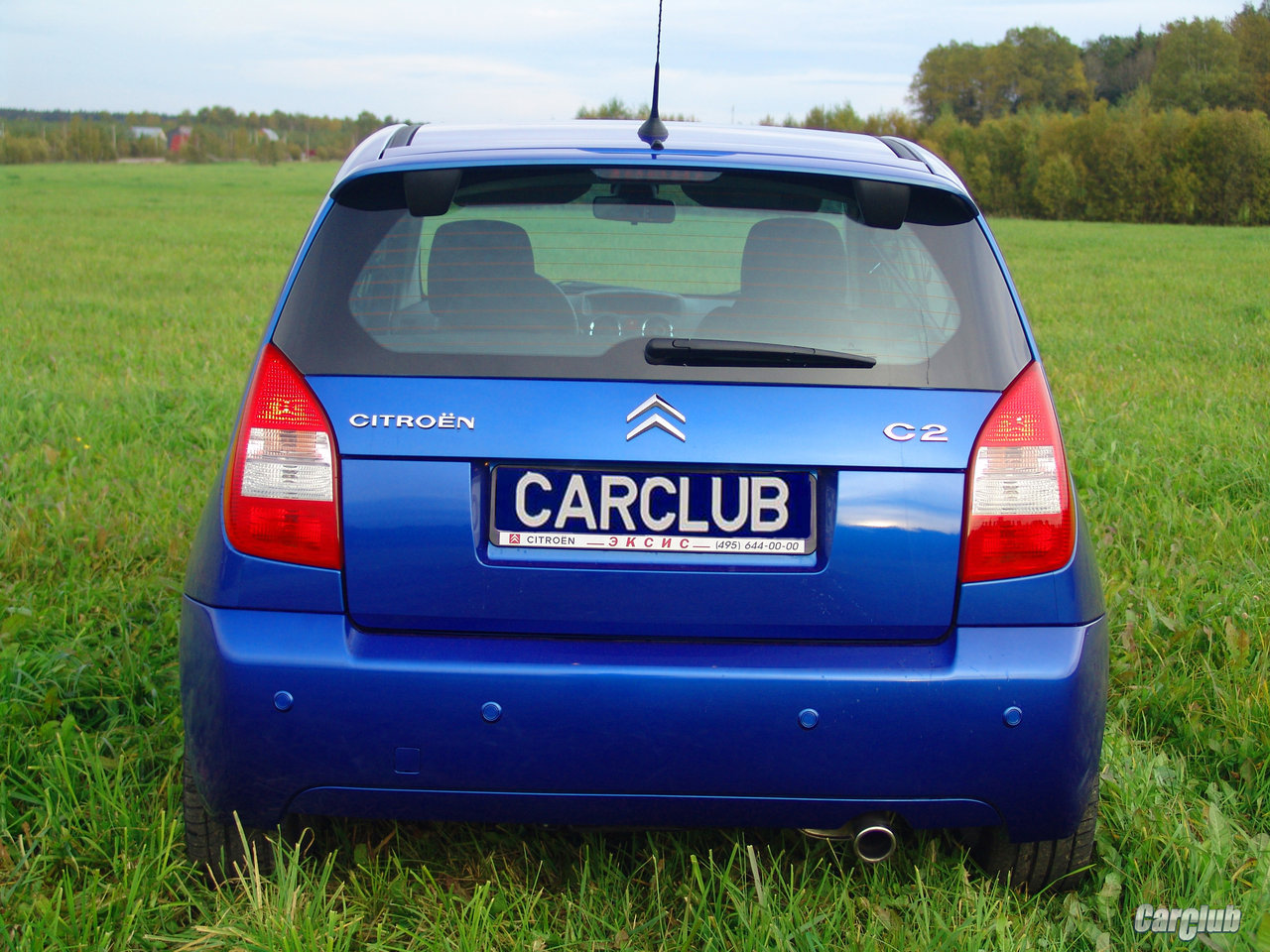
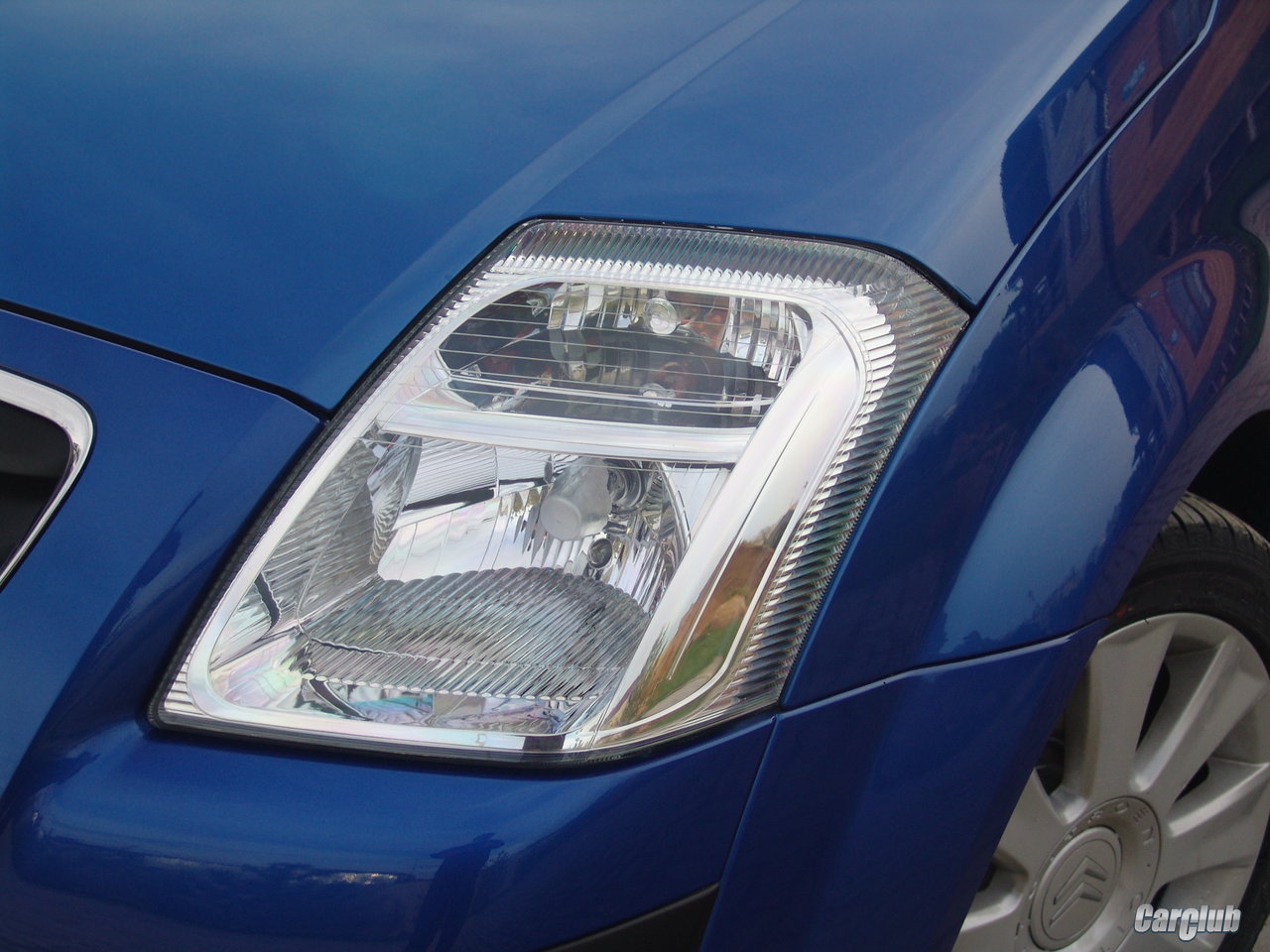
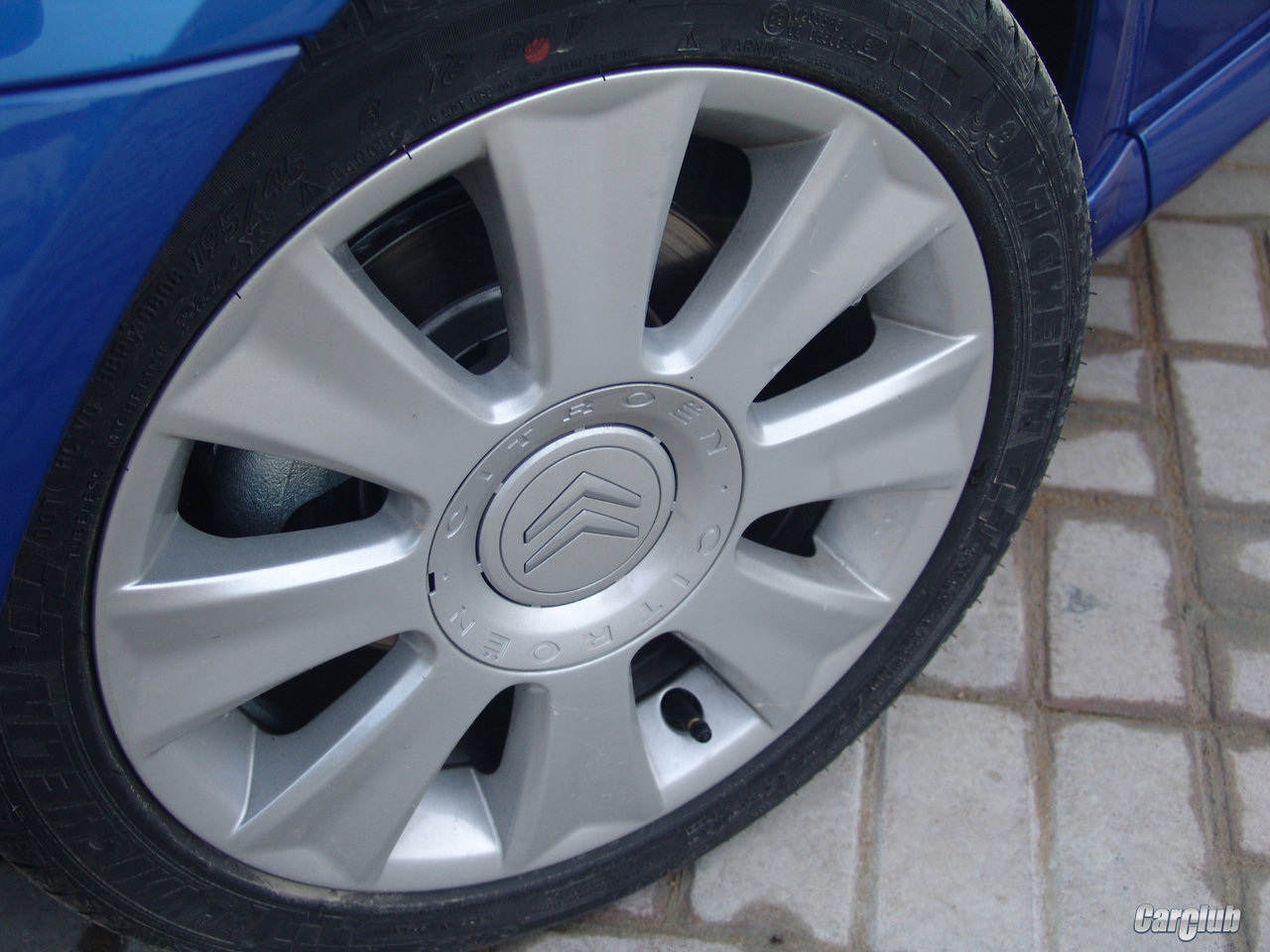
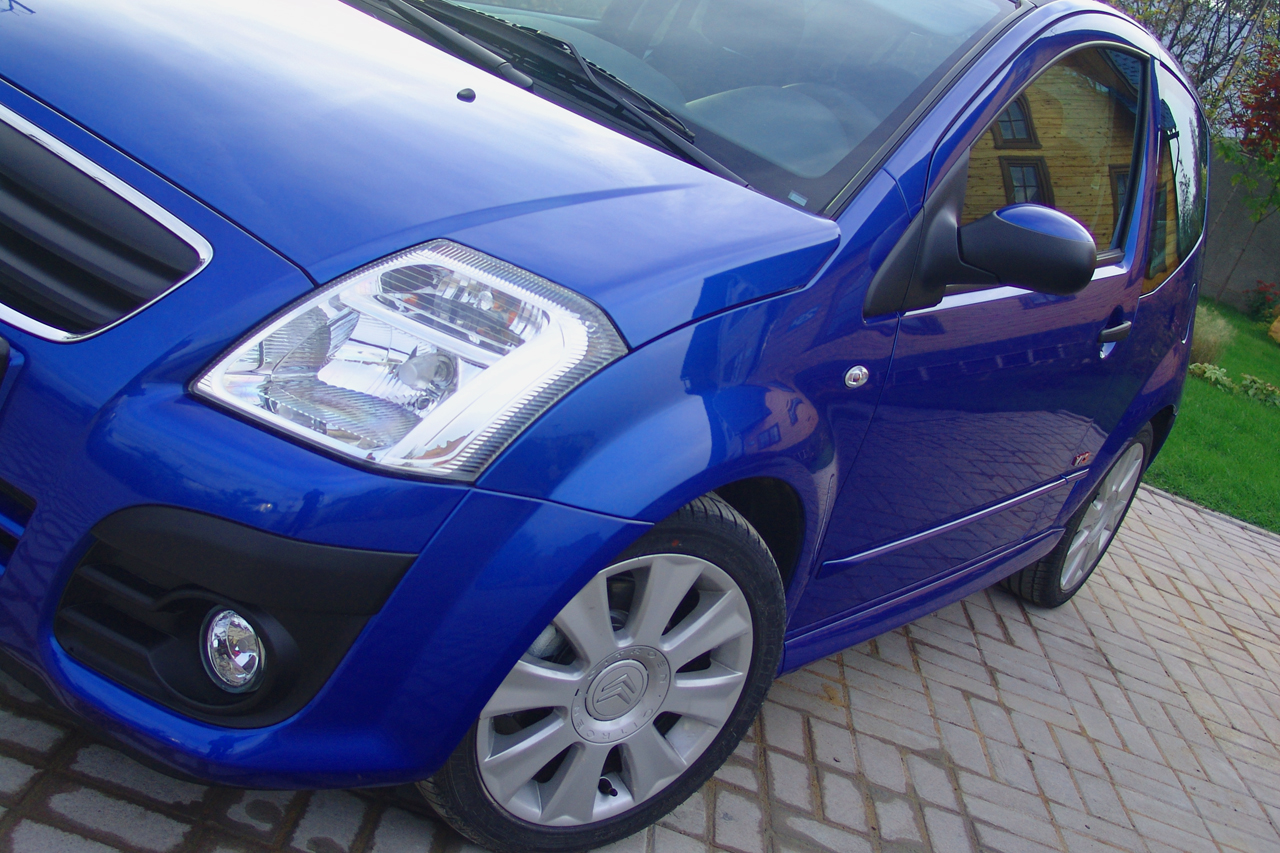
This spring, the Citroen C2 underwent a light facelift that slightly revived the hatchback's appearance. The car got a new bumper with different inserts around the fog lights, the grille was slightly redrawn, and the side mirrors became partially body-colored. In addition, the range of alloy wheels expanded.
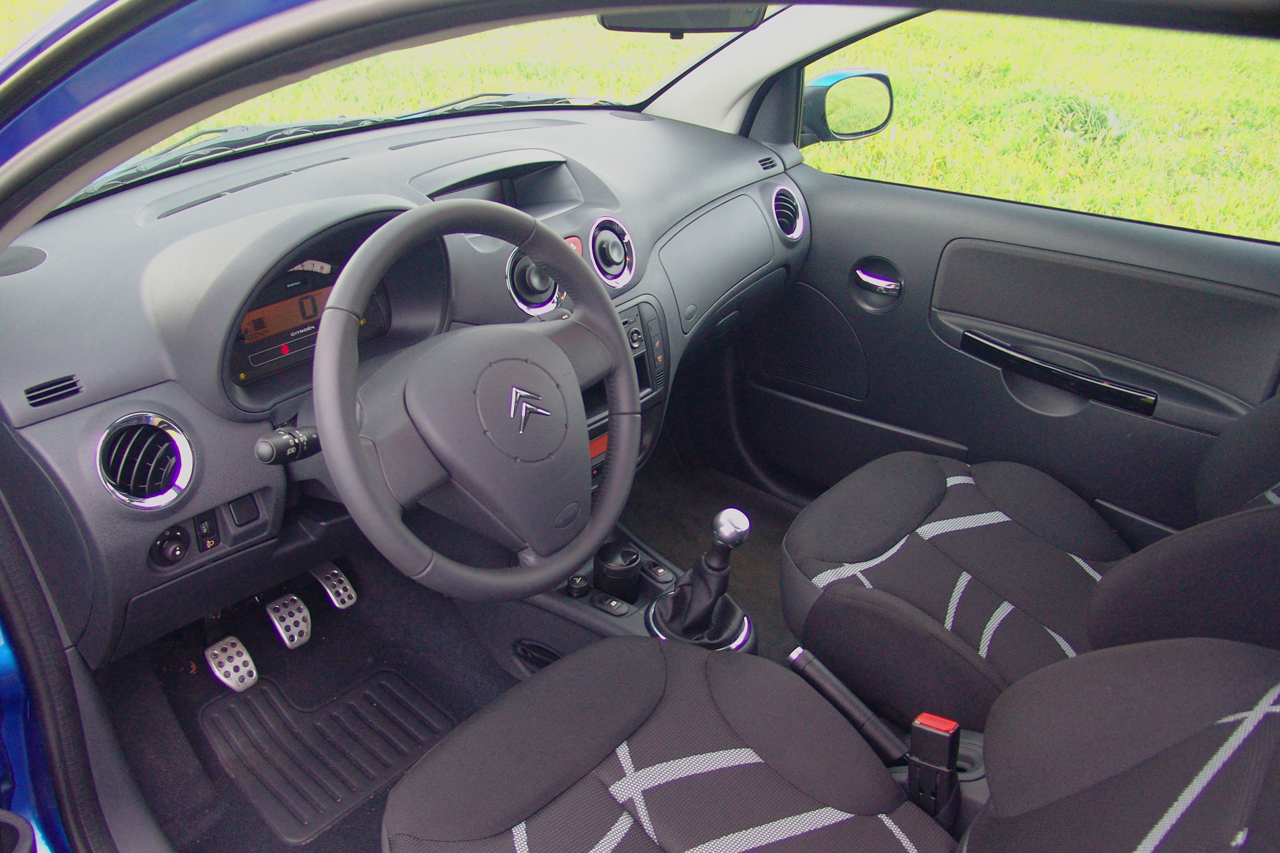 |
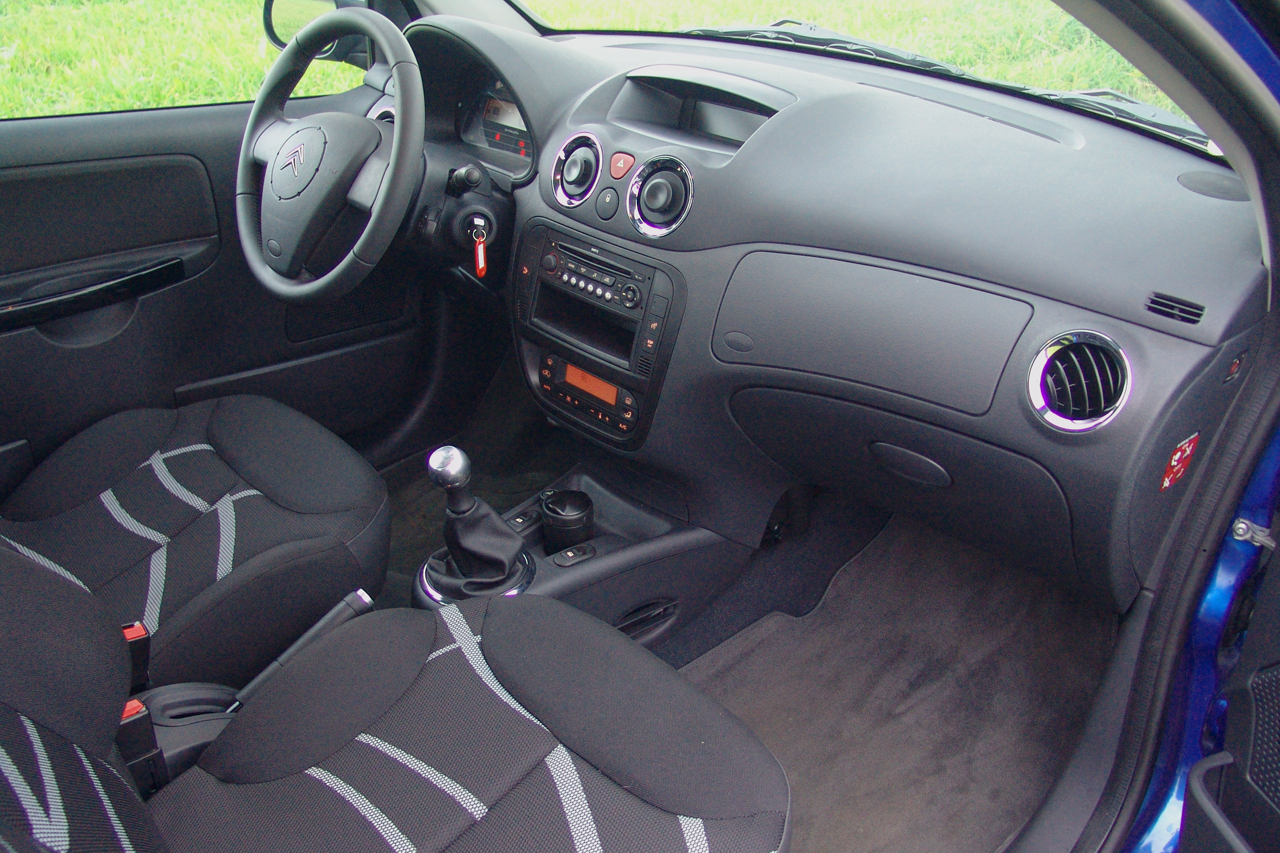
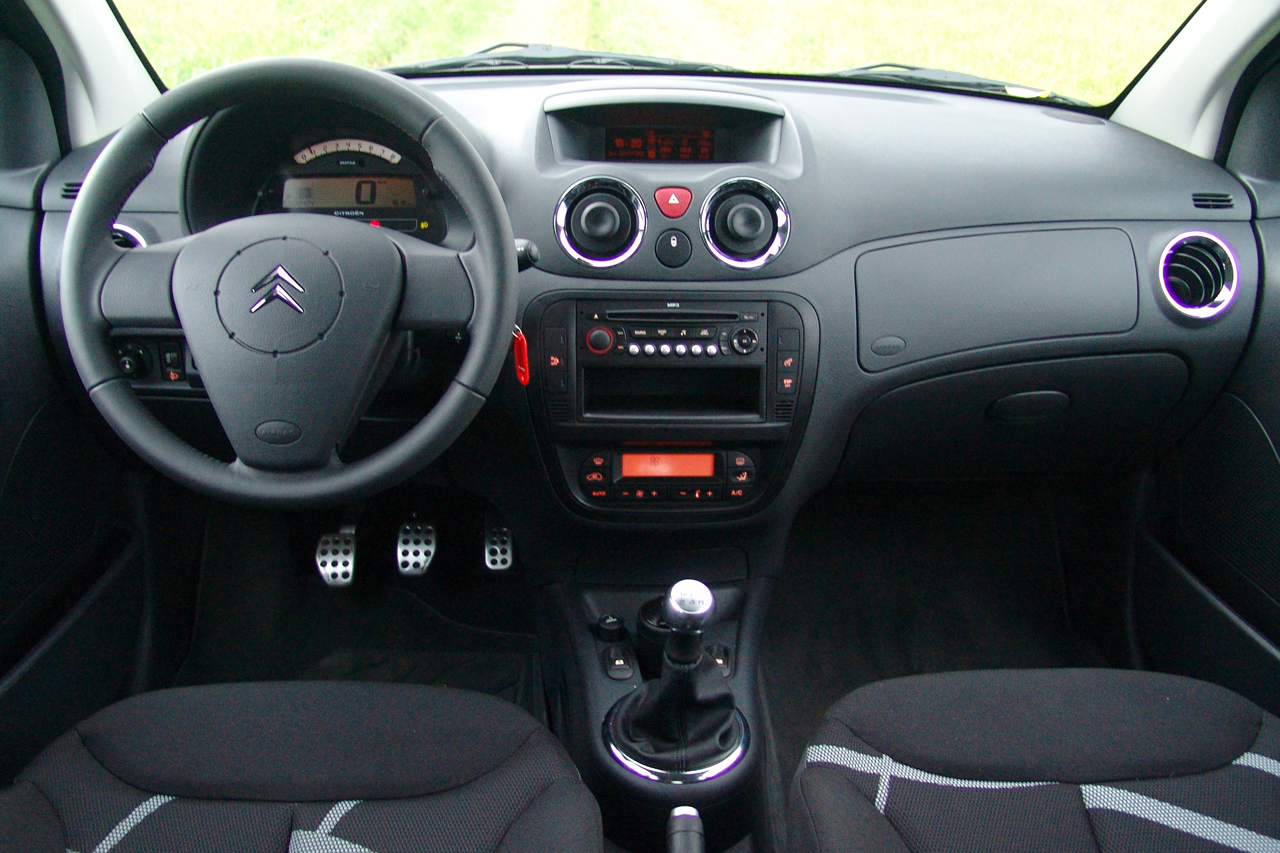
| The VTS interior is distinguished by aluminum overlays on the pedals and gear knob |
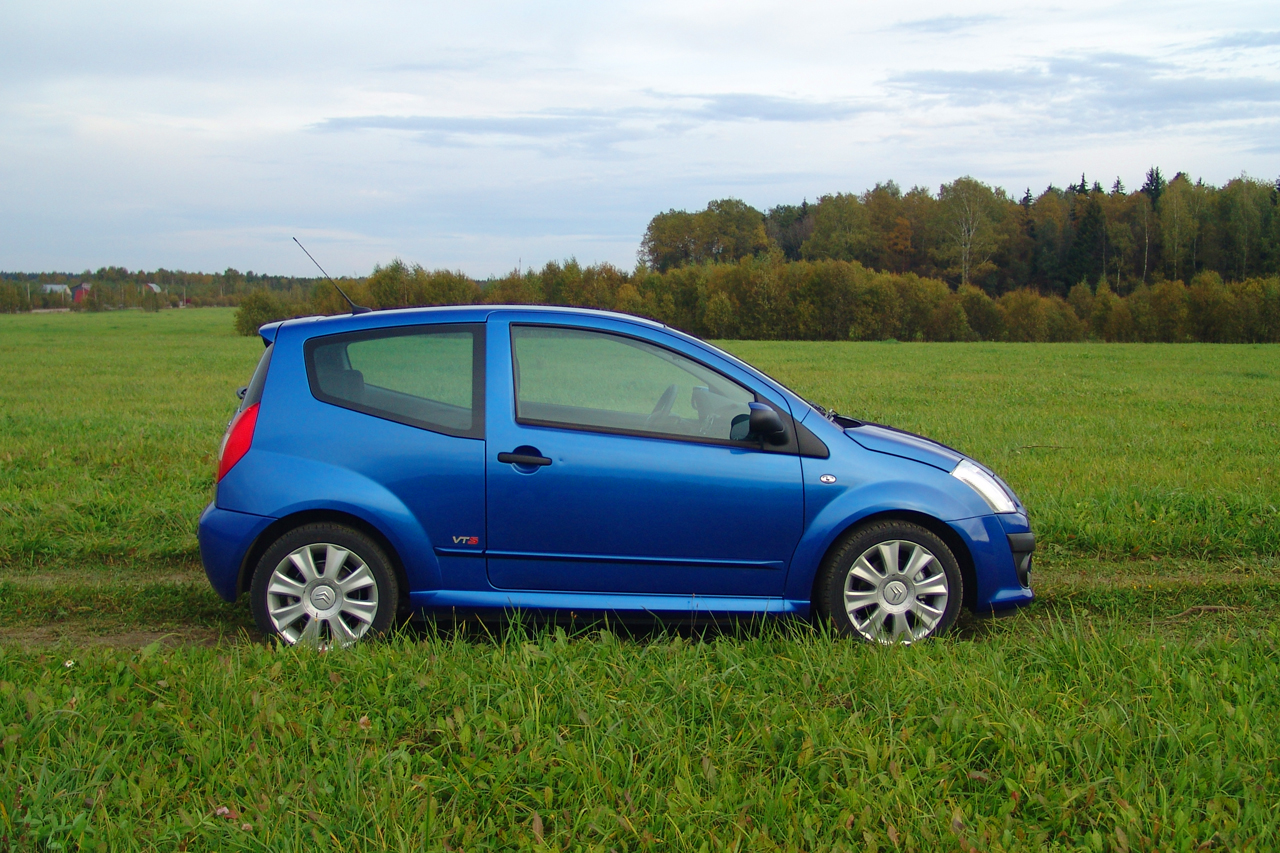 |
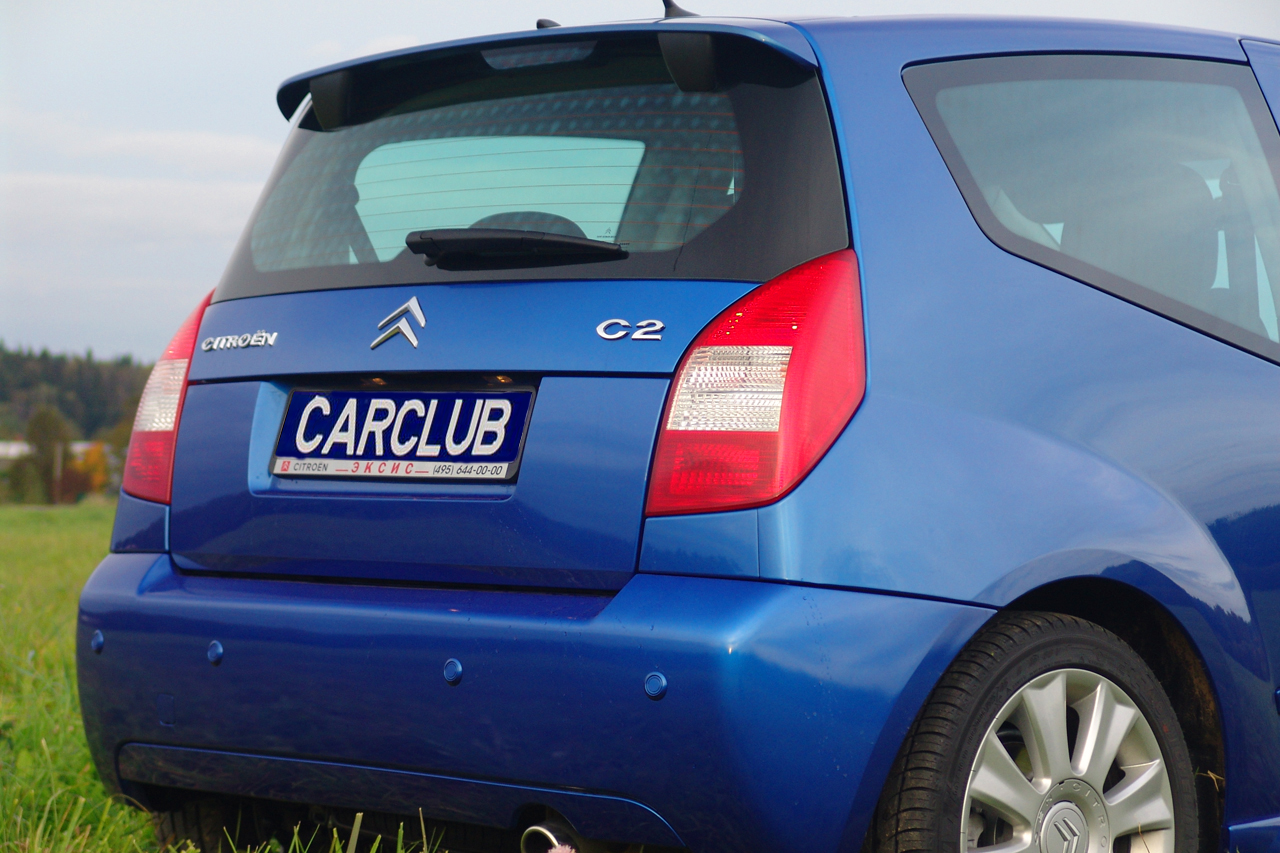
| The VTS version stands out with 16-inch wheels and a spoiler on the fifth door |
Technical innovations also look interesting, but that's relevant for Europe, where the C2, by the way, sells consistently well. As for us, the appearance of the 1.6-liter turbodiesel with 110 hp and the Start/Stop system, which reduces fuel consumption by almost 10%, is nothing more than a formality, since such versions do not reach Russia.
In our market, the Citroen C2 is offered with a 1.4-liter engine paired with a robotic Senso Drive gearbox (VTR version) or a 5-speed manual (Confort), as well as with two variants of the 1.6-liter unit. The first produces 110 hp and is combined with the same Senso Drive (VTR). But the second one deserves a more detailed discussion, especially since that's exactly the car we got for the test.
The VTS modification uses the same 1.6-liter engine, but unlike the "civilian" VTR, it has been refined. Thanks to new camshafts, altered valve lift height, a different intake manifold, as well as a new injection and exhaust system, power was raised to 125 hp at 6500 rpm. Peak torque – 143 Nm – comes at 3750 rpm. The result: the C2 accelerates quite briskly, especially when the tachometer needle passes 4500 rpm. With a weight of just over a ton, even at high speed the French little one confidently holds a straight line and doesn't tend to veer off course even after gusts of air from overtaking trucks. The sound insulation of the engine compartment is so-so, but that allows you to enjoy the rich sporty roar of the engine. And a well-tuned exhaust system adds a bassy rumble to this.
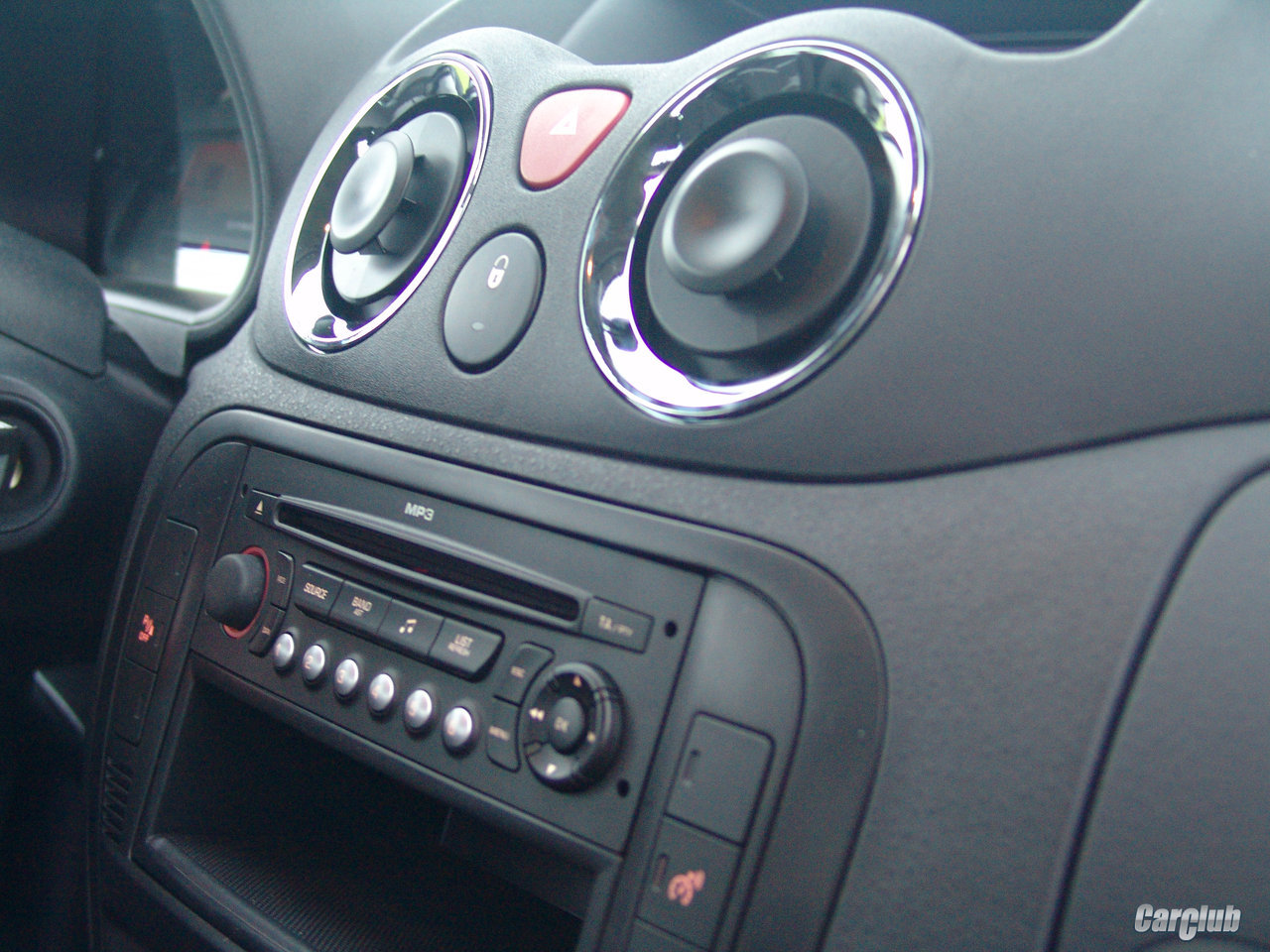 |
| Original round air flow regulators and a stereo that moved over from Peugeot models |
| The electronic speedometer is a long-standing Citroen tradition |
| The climate control unit is simple and logical |
But the 5-speed manual gearbox paired with the engine disappointed me a bit: the throws of the lever with the aluminum knob, like in real sports cars, are too long. Although the gears themselves engage clearly and with a pleasant effort. The gear ratios are perfectly selected. But due to the long lever throw, precious seconds are lost, which are needed to keep up with those who recklessly overtake on the oncoming lane.
The main trump card of the Citroen C2 VTS is not the engine or the gearbox, but, of course, the handling. In this regard, the little one can give many rivals a run for their money. The moderately stiff and resilient suspension gives the C2 a special sharpness and precision of reactions. The VTS version received special chassis settings: springs became stiffer, the front stabilizer – larger. The steering gear ratio was changed, and the electric power steering was recalibrated. As a result, there is more effort on the steering wheel, and the wheel makes only 2.6 turns from lock to lock versus three in regular versions.
 |
 |
The refinements made the C2 VTS more nervous on a straight line: you barely move the steering wheel, and the little hatchback immediately changes lanes. I'll say right away: you can forget about comfort on the highway. The "C" reacts sensitively to every pothole and joint. But on a series of turns, the steering wheel provides comprehensive information, as if the car itself tells the driver where the front wheels are – when to turn further into the arc, and when to loosen the grip. The suspension works with flying colors. Every corner is taken as if on rails. The lateral support of the front seats is just enough to keep the driver in place. Special thanks to the Michelin Pilot Exalto tires sized 195/45 R16 – they grip the asphalt tenaciously until the laws of physics come into play. And here the ESP stabilization system (standard for VTS) comes in very handy, delicately leveling the mini-hot-hatch, not allowing inertia to pull the C2 off the road. The brakes deserve special mention – an excellent combination of effectiveness and feedback on the pedal.
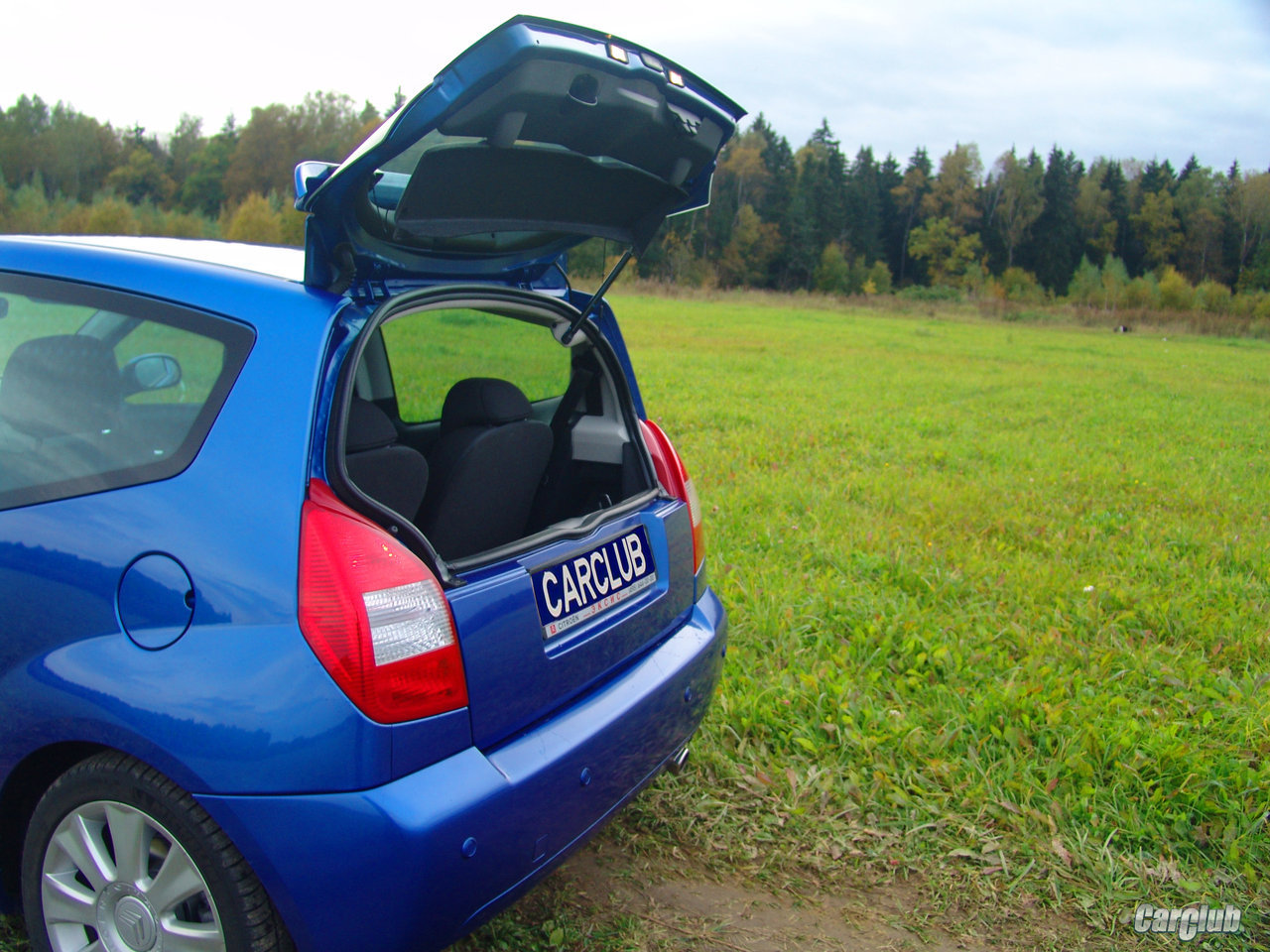 |
| The trunk is small... |
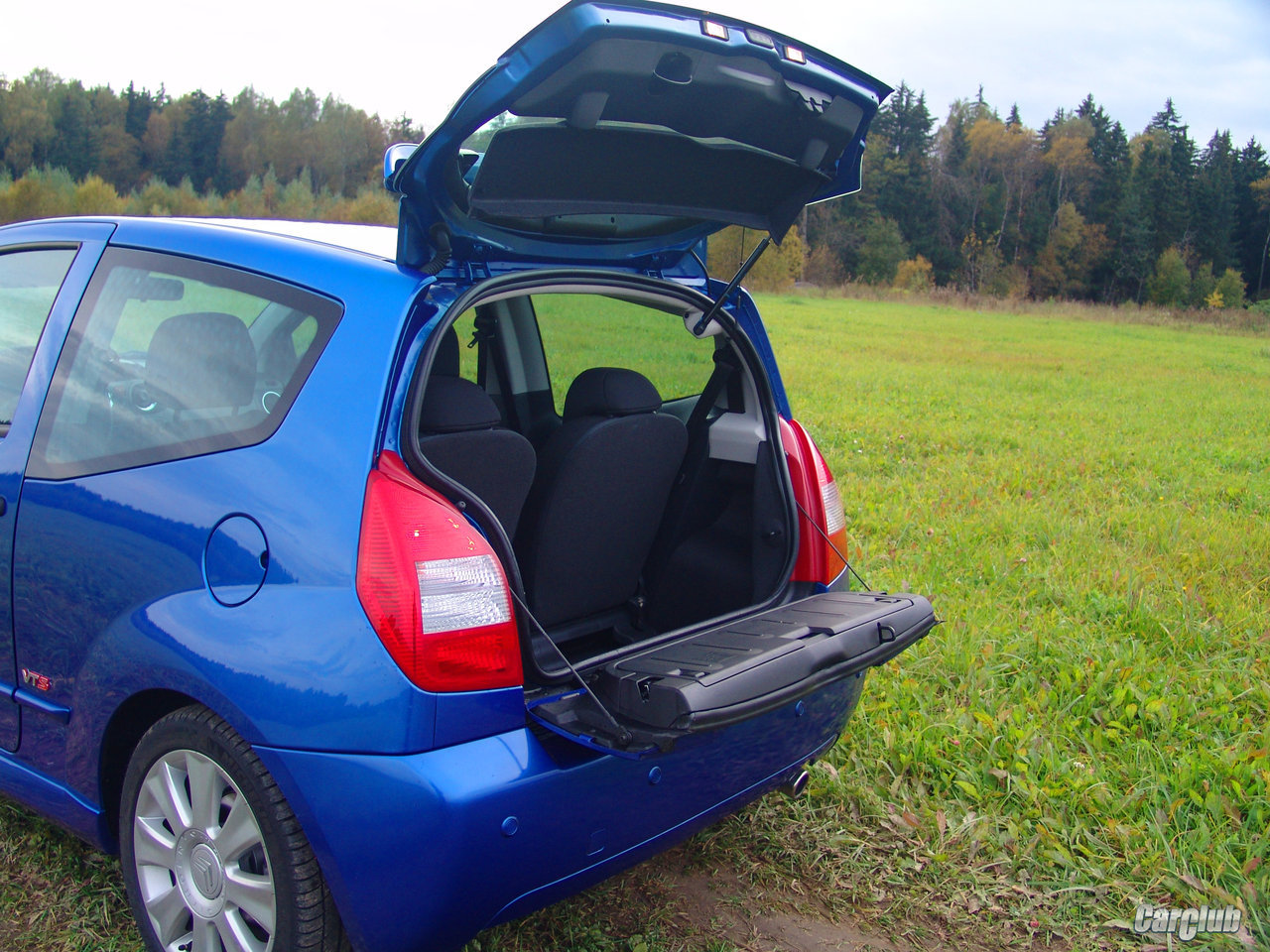 |
| ...but with a two-piece door... |
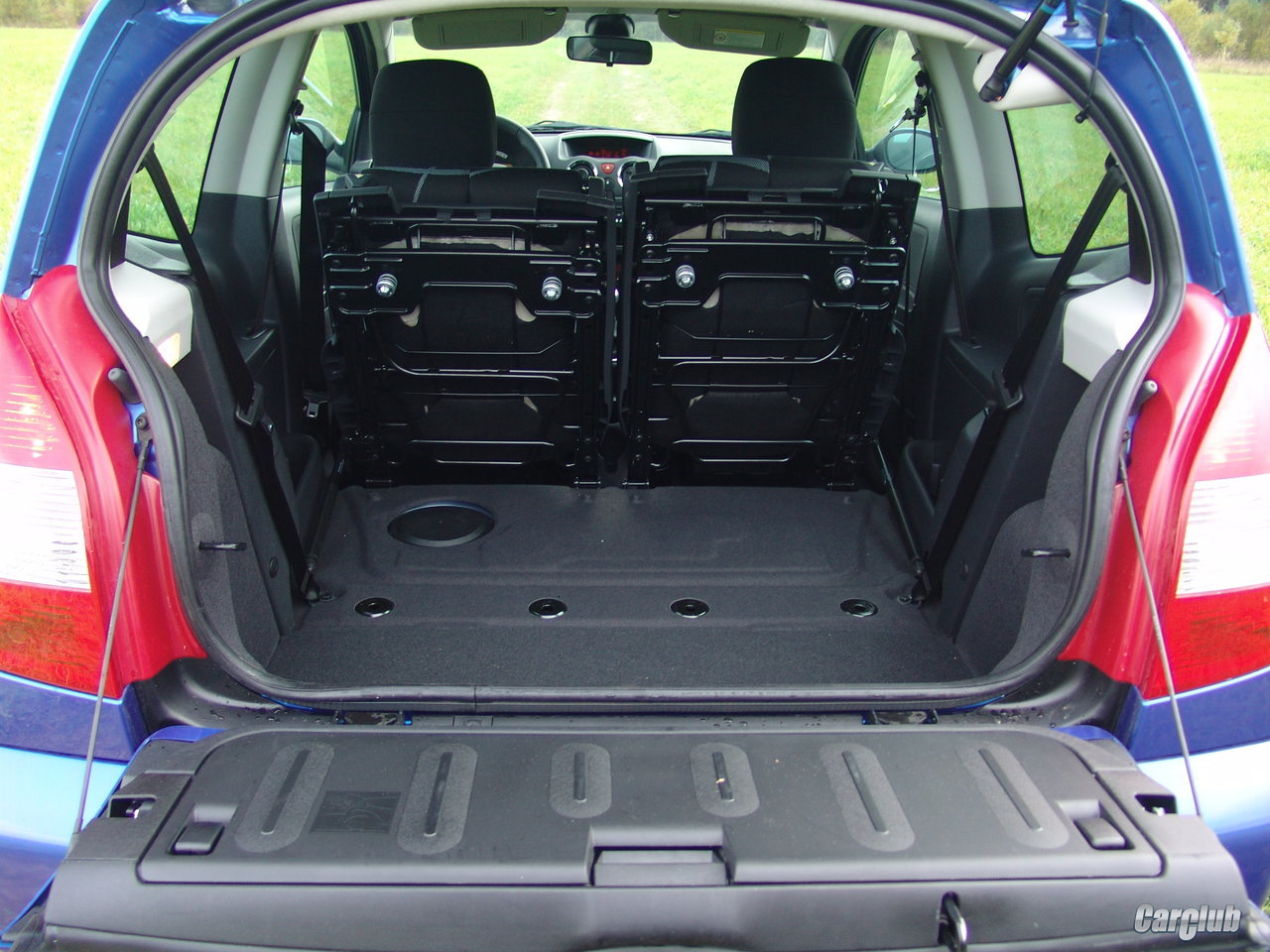 |
| and the rear seats can be folded down |
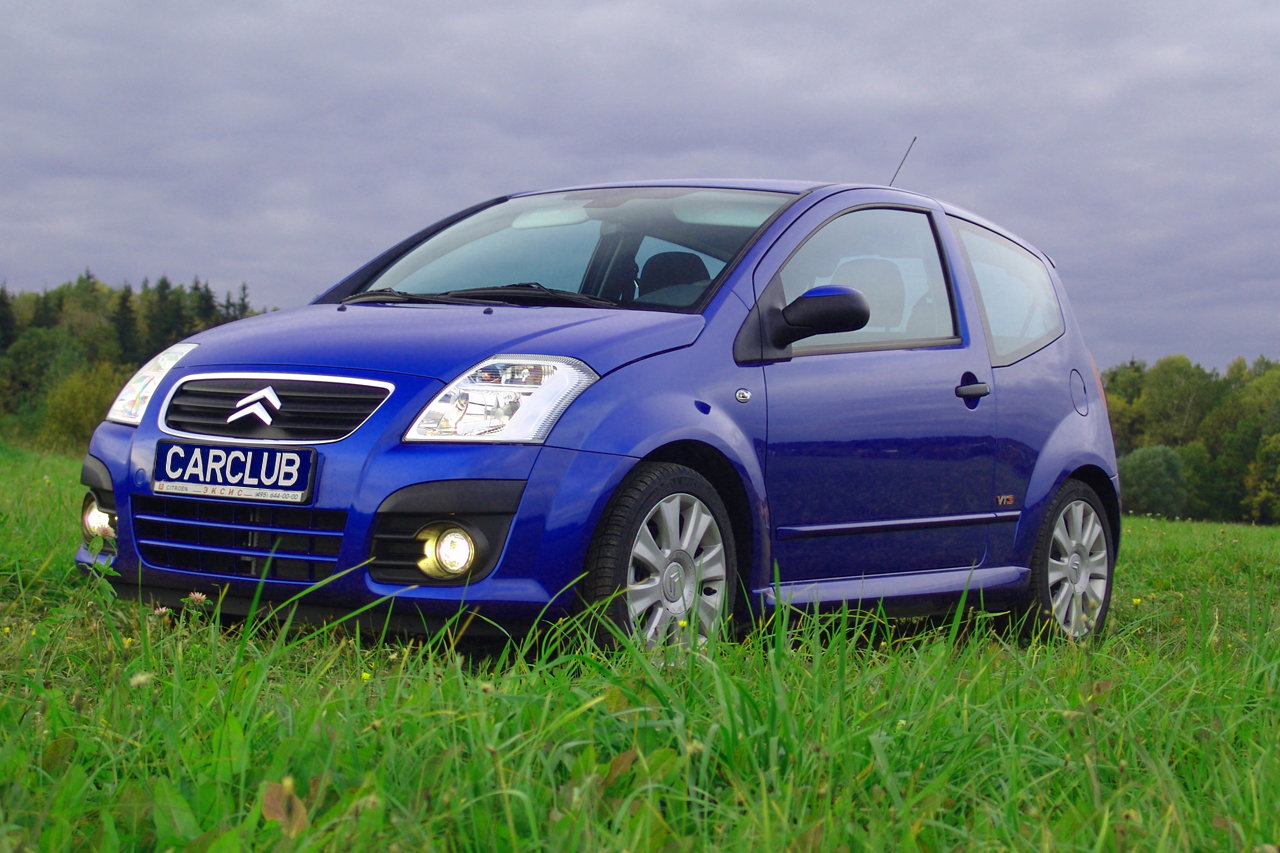
The exterior of the Citroen C2 literally screams dynamics and energy, and the execution is at a decent level. Anyone with even a slight knowledge of motorsport will easily notice the racing genes in its appearance. A wide wheelbase for its class, flared wheel arches, a sloping hood, a pair of parallel lines under the windows, and massive 16-inch lightweight alloy "rollers" hint at the lively character and good dynamics of this little one. The VTS differs from the standard version precisely by these enlarged wheels, a spoiler on the tailgate, and a lower body painted in the car's color.
The body here is only 3.66 meters long — 20 centimeters shorter than the C3, although the wheelbase is only 15 millimeters shorter than the older model.
With such modest dimensions, the tall body allows seating for four passengers. The design reflects the new signature French style, which clearly echoes the C3 — this applies to both the rounded "nose" and the unusual rear side windows.
 |
 |
Inside, there are almost no differences from the regular VTR: only aluminum pedal covers and the same trim on the gear shift knob. Overall, the interior made a good impression on me. The instrument panel is informative: the electronic speedometer typical of Citroens and a convenient analog tachometer that starts flashing an orange indicator as it approaches the red zone. The four round climate control knobs with intricate handles that change the direction of airflows brought a smile — in a good way. The front seats have a good profile and pronounced lateral support, but they lack height adjustment — even in the lowest position, you sit as if the center of gravity is high. This quickly dispels the illusion of being in a sports car, which the aluminum accents and aggressive exterior create.
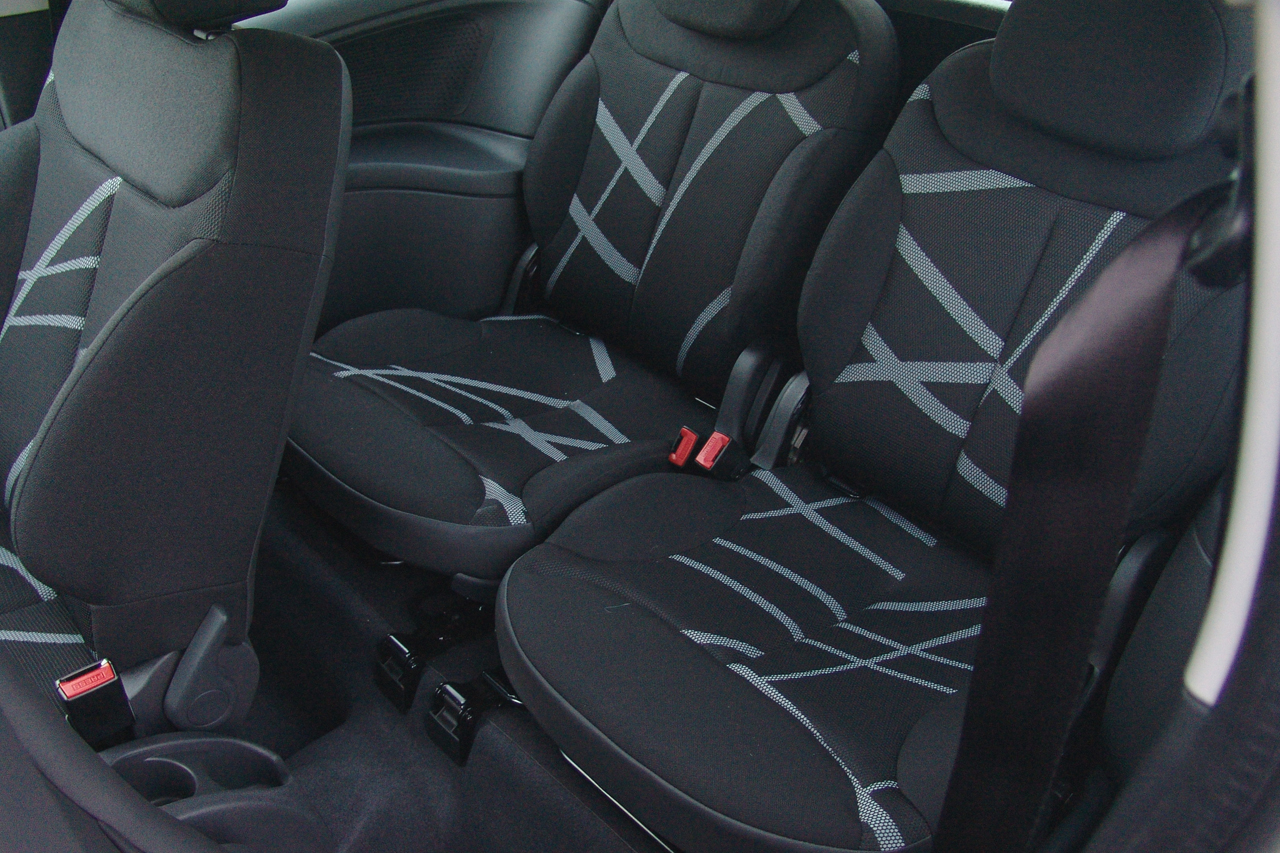
The trim materials, as expected, are not the C2's strong point. Hard plastic of average quality and simple fabric on the seats do not inspire delight, but they don't cause much rejection either. In the back, despite the compactness, with an average-height driver and front passenger, two adults can fit, although there is no question of any spaciousness or comfort, of course. The rear individual seats can be slid forward to increase the trunk. And for transporting large items, they fold down with one press of a lever, expanding the compartment's volume from 193 to 879 liters according to factory data. An interesting detail is the two-piece tailgate. To toss in a bag, you just lift the upper part. If the load is larger, you'll have to fold down the lower panel, which hides a convenient tray for small items.
 |
 |
 |
Honestly, I liked the Citroen C2 VTS, but after a couple of days behind the wheel, I caught myself thinking that I wanted something calmer. In this car, it's simply impossible to drive with the flow like everyone else. The sharp steering and peppy engine constantly provoke aggressive driving. You can, of course, slow down and drive leisurely, but then what's the point of buying a VTS? By the way, in Europe, this hatchback is very popular with young tuners. It's a kind of "lighter" — an excellent choice for those taking their first steps in motorsport or just into it. And its main element is the city, where the advantages of compact cars with a sporty character are best revealed.
Ruslan Galimov
 |
 |
 |
 |
 |
 |