
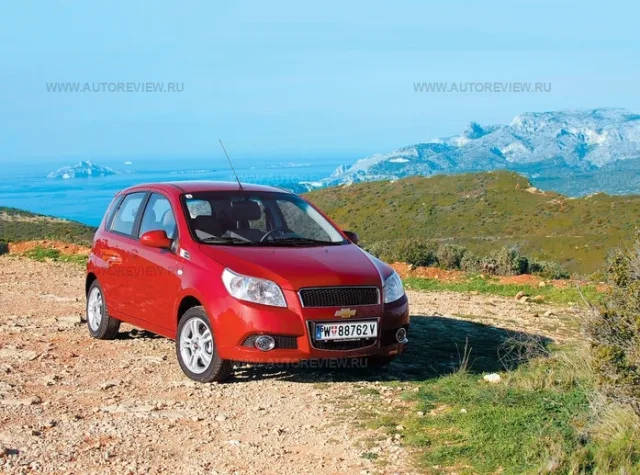
Two years have passed since the Chevrolet Aveo sedan was updated (see AR No. 3, 2006). But the "rejuvenation" of the hatchback just didn't come together — and the result is clear: if in 2006 the five-door sold on par with the sedan in Russia, then by the end of last year it sold three times worse!
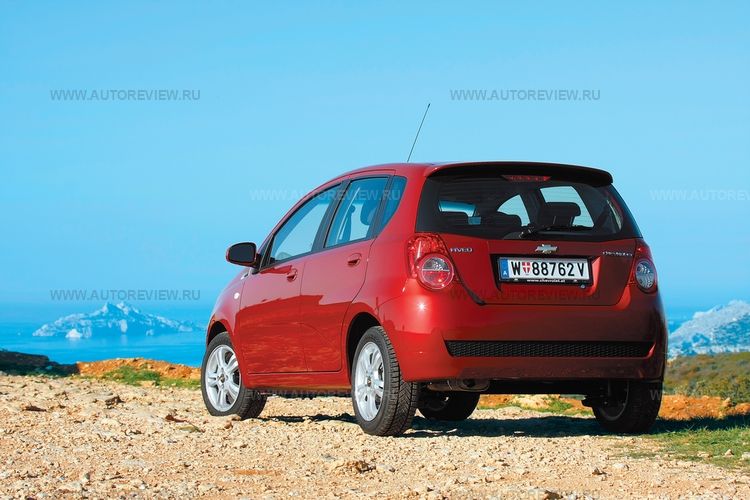
But as they say, every cloud has a silver lining — the updated hatch can boast not only the same interior as the sedan, but also a fresh "face" with the demonstratively displayed Chevrolet "cross". And on top of that — more powerful engines.
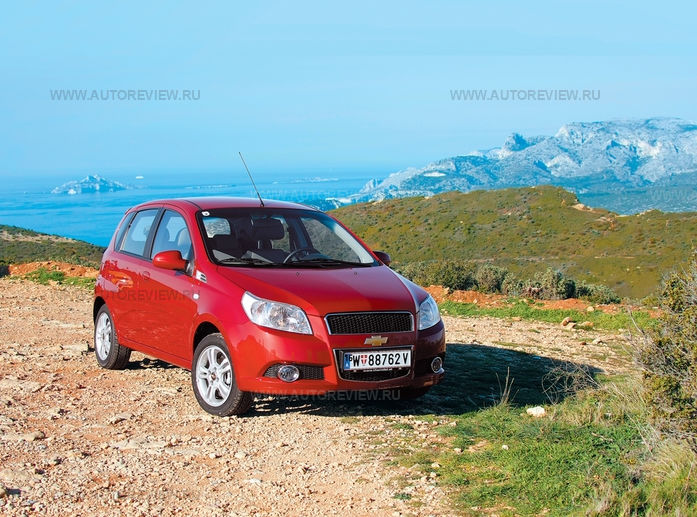
The Chevrolet Aveo hatchback, which was originally the Daewoo Kalos, lives a double life in the Old World. It is sold both in the West and in the East, but while in "developed countries" the Aveo is chosen either by less affluent young people or families needing a second car, in the former socialist bloc, including Russia, it is a car for all occasions.
The slanting "eye" headlights and massive radiator grille breathed a second youth into a body that was drawn at the Pininfarina studio six years ago. The cheerful interior with round ventilation deflectors reinforces the mood. So this charge of vigor should last for another couple of years.
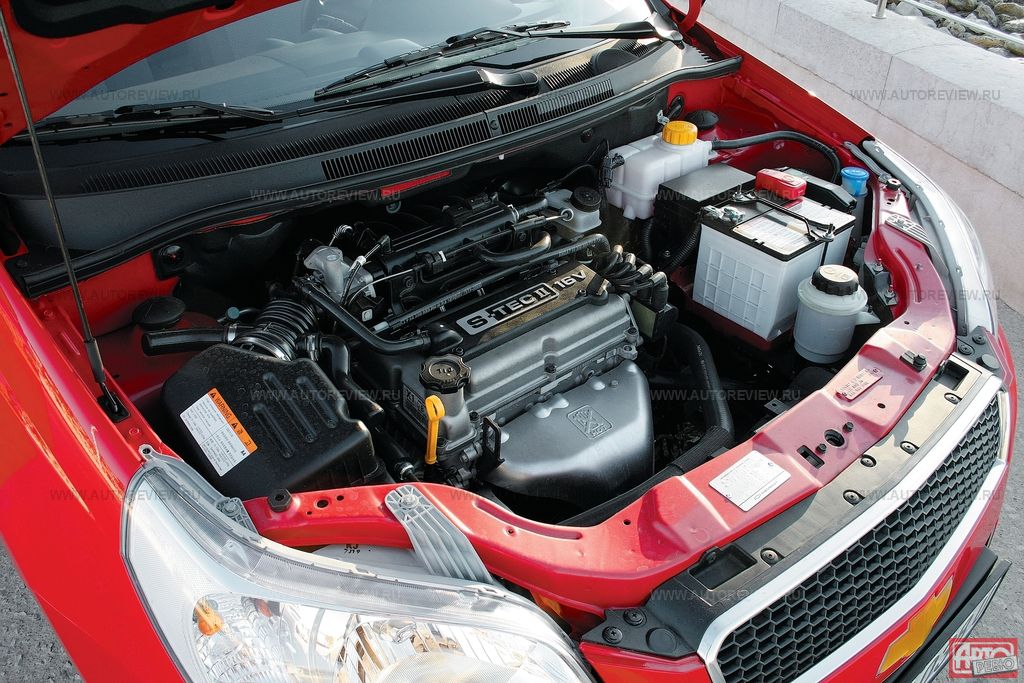 | 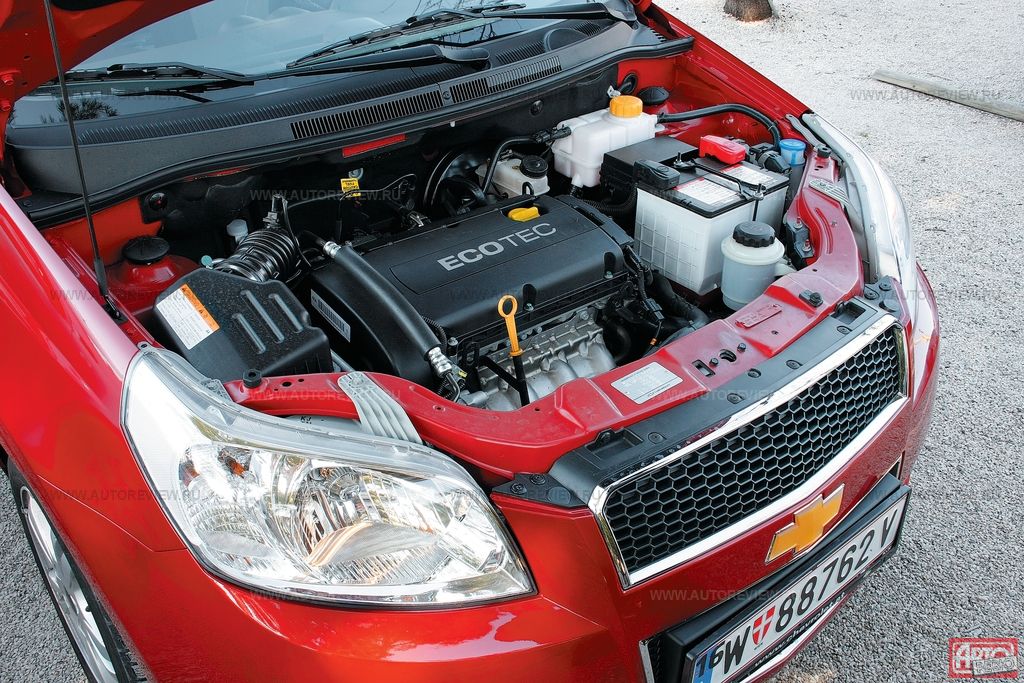 |
| The 1.2 and 1.4 liter engines belong to different families. The first has a cable throttle drive, but it's hard to appreciate its precision: the gas pedal here most often has to be floored. The electronic throttle on the 1400-cc unit reluctantly drops revs — jerks appear during quick shifts | |
The internals have also been updated. Although the 1600-cc engine with 106 hp is still not brought to Russia, unlike Ukraine, the most powerful available here — the 1.4-liter — now produces 101 horsepower, seven more than before. Thanks to variable valve timing systems on intake and exhaust, as well as an intake manifold with variable geometry, this engine gained power by increasing the compression ratio from 9.5 to 10.5. True, the five-speed manual with its vague shift mechanism remained without improvements, as did the not-too-popular four-speed automatic, which only 17 percent of buyers order.
Why so few? And why were we deprived of the 1.6 engine? GM reasonably believes that buyers of budget cars count every ruble: after all, two out of three Aveo hatchbacks sold in Russia have the base 1.2-liter engine. That's why it was modernized more seriously. First, the compression ratio was raised to the same 10.5. But the main thing is the installation of a 16-valve head with the Port Deactivation System, which, for fuel economy at low loads, shuts off one of the two intake ports of each cylinder. Power increased by 12 hp — to 84 hp. However, calling the Aveo 1.2 fast or at least "sufficiently dynamic" is difficult.
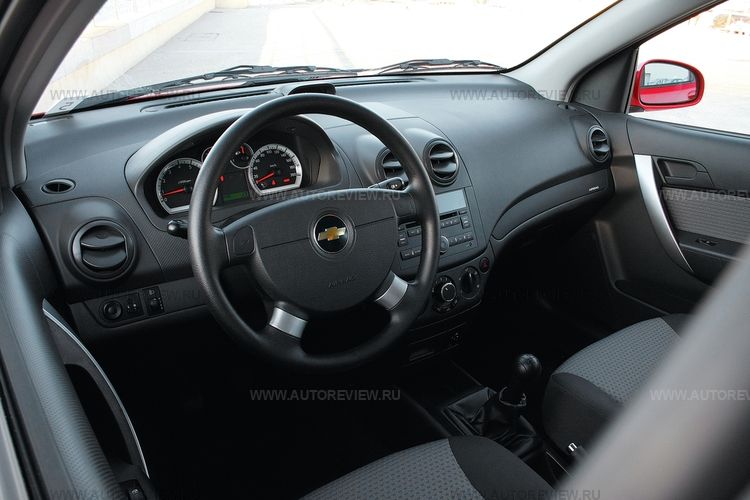
Visually, the interior is better than to the touch. The steering wheel is a bit large in diameter, but the heaviness in parking modes partially compensates for this
Getting moving is easy. But even in a calm European traffic flow, you can only keep up by constantly flooring the gas and revving each of the short gears to the redline — second gear "ends" already at 90 km/h. By the way, only after 5000 rpm does the engine perk up slightly, but after another thousand revs it finally goes flat. You can't even dream of accelerating in fifth gear — pulling into the left lane of a French motorway would mean turning the Chevrolet "cross" on the tailgate into a target. The more powerful unit is, of course, livelier — but in terms of torque reserve, it's far from the 90-hp engine of the Logan.
It's good that the Aveo's handling remains at a decent level compared to its classmates: in a limit turn — almost neutral understeer. Even on winter Vredestein Snowtrac 2 tires, the hatchback confidently holds the asphalt and again reminds that a more powerful engine wouldn't hurt this little car. However, we've praised the five-door's suspension settings before, while complaining about its stiffness. The chassis hasn't changed one bit.
The Aveo is the "locomotive" of the Chevrolet brand in Europe: this model accounts for 28 percent of sales — since 2002, 440 thousand people have bought it. In second place is the Lacetti/Nubira family (21%), and the Matiz closes the top three (20%).
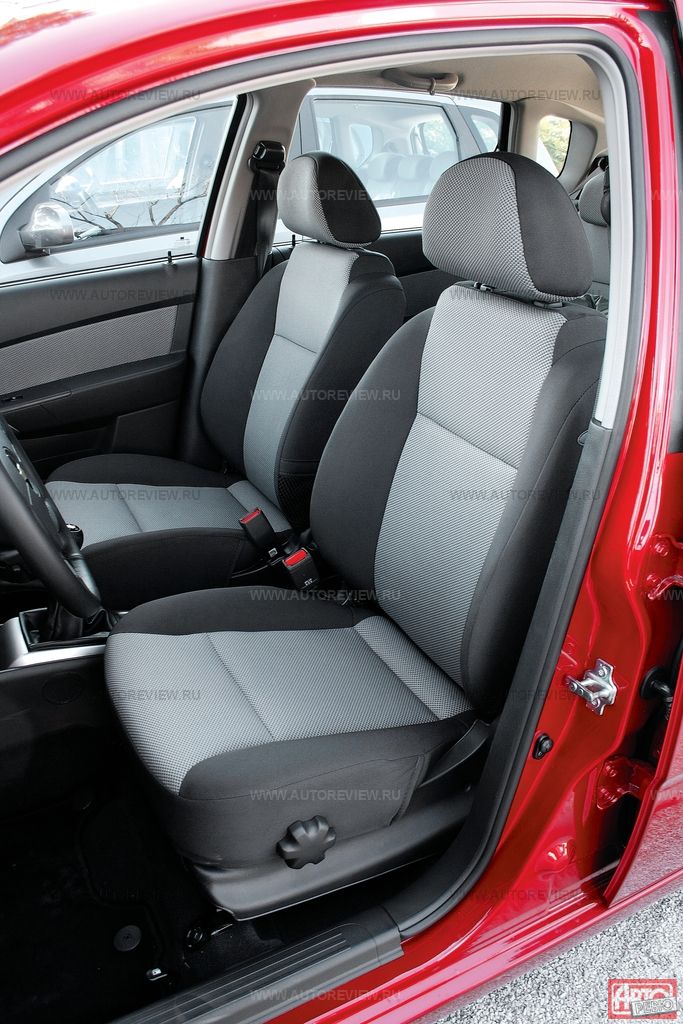 | 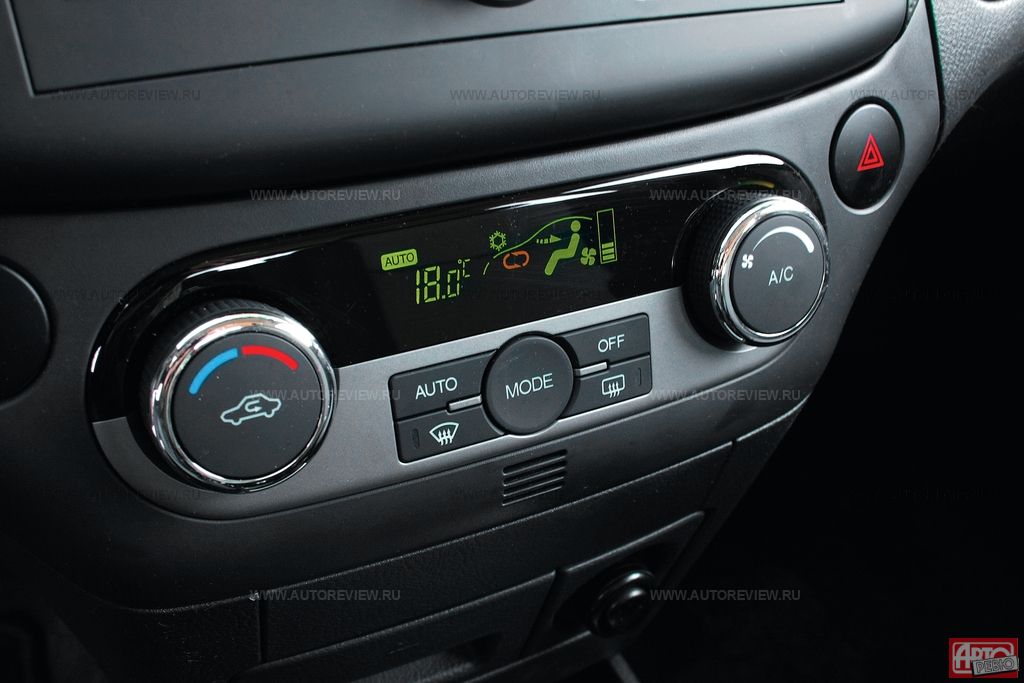 | 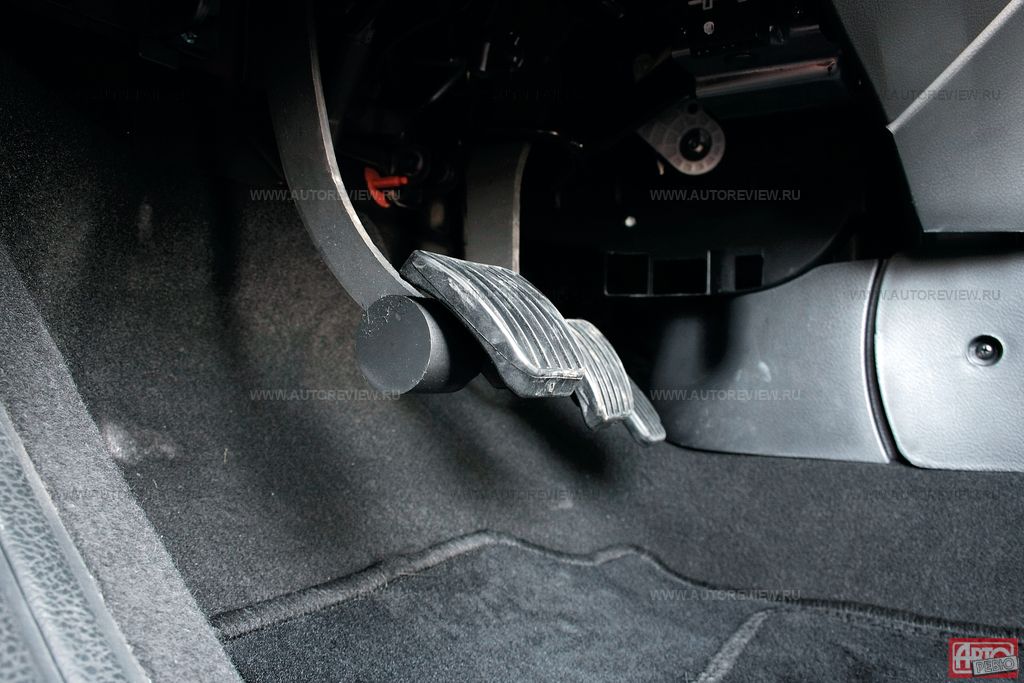 |
| The flat seats don't cause complaints. However, they don't deserve special praise either | The climate control unit has clear controls and a large recirculation button | The Aveo with the "junior" engine has a cable clutch drive and a weight on the pedal — according to Korean engineers, to reduce the effort needed to press it |
The updated Aveo has all the cards to maintain the current situation. But you can't escape the feeling of an inexpensive car — noisy engines, mediocre ride comfort, and the trim materials are "budget". Does this match the price? Let's wait for new price lists, which, like the cars themselves, will appear at dealers closer to May. It's clear that prices will rise and, most likely, cross the $14,000 mark — today the base Aveo 1.2 costs 328,900 rubles ($13,820). The similar sedan is more expensive — 345,200 rubles ($14,500), and if the hatchback remains cheaper than the four-door, it has a chance to regain buyer attention.
In Europe, they plan to sell 100,000 Aveos per year in three body styles — with three, four, and five doors. Moreover, by 2009, all these cars will be produced right here, at the FSO plant in Warsaw, 40 percent of whose shares belong to the Korean division of GM DAT, and 60 percent to the Ukrainian corporation UkrAuto.
But why do we still call the Aveo a Korean car? Despite the fact that the Aveo will never again be a "Daewoo" (they decided to abandon the name Kalos), it was developed as a Daewoo in Korea. Moreover, Korean engineers proudly said that to reduce costs, General Motors now entrusts them with all work on the concern's small cars. Are we waiting for a Korean Corsa?
All Aveos for the Russian market will still be assembled in Kaliningrad, at the Avtotor plant
| Specifications | ||
| Parameters | Vehicle | |
| Chevrolet Aveo | ||
| Modification | 1.2 | 1.4 |
| Body type | five-door hatchback | |
| Number of seats | 5 | 5 |
| Dimensions, mm | ||
| length | 3920 | 3920 |
| width | 1680 | 1680 |
| height | 1505 | 1505 |
| wheelbase | 2480 | 2480 |
| track front/rear | 1450/1410 | 1450/1410 |
| Trunk volume, l | 220 | 220 |
| Curb weight, kg | 1030—1093 | 1070—1133 (1075—1138) |
| Gross weight, kg | 1503 | 1543 (1548) |
| Engine | petrol, with distributed injection | |
| Location | front, transverse | |
| Number and arrangement of cylinders | 4, in-line | 4, in-line |
| Displacement, cm³ | 1206 | 1399 |
| Cylinder bore/piston stroke, mm | 69.7/79.0 | 77.9/73.4 |
| Compression ratio | 10.5:1 | 10.5:1 |
| Number of valves | 16 | 16 |
| Max. power, hp/kW/rpm | 84/62/6000 | 101/74/6400 |
| Max. torque, Nm/rpm | 114/3800 | 131/4200 |
| Gearbox | manual, 5-speed | manual, 5-speed (automatic, 4-speed) |
| Gear ratios | ||
| I | 3.54 | 3.55 (2.88)* |
| II | 1.95 | 1.95 (1.57) |
| III | 1.32 | 1.28 (1.00) |
| IV | 0.97 | 0.97 (0.70) |
| V | 0.78 | 0.76 (—) |
| reverse | 3.39 | 3.33 (2.30) |
| final drive | 4.05 | 3.94 (4.05) |
| Drive | front | front |
| Front suspension | independent, coil spring, McPherson | |
| Rear suspension | semi-independent, coil spring | |
| Front brakes | disc, ventilated | |
| Rear brakes | drum | drum |
| Tires | 155/80 R13 or 185/60 R14, or 185/55 R15 | |
| Maximum speed, km/h | 172 | 176 (167) |
| Acceleration time 0—100 km/h, s | 13.0 | 12.4 (13.8) |
| Fuel consumption, l/100 km, combined cycle | 5.5 | 6.0 (6.4) |
| CO₂ emissions, g/km, combined cycle | 132 | 141 (151) |
| Fuel tank capacity, l | 45 | 45 |
| * Data in parentheses — for versions with automatic transmission | ||