Tiger Strike
Chery Tiggo
Engine:
Mitsubishi 2.0 16V
Power (hp/rpm) 125/6000
Max torque (N*m/rpm) 168/3000
Fuel consumption (l/100 km):
city 10.7
highway 7.8
Dimensions (mm):
length 4285
width 1765
height 1715
ground clearance 180
Equipment:
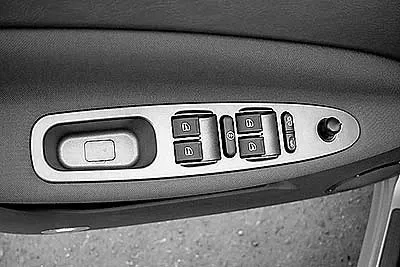
Power steering, ABS, 2 airbags, central locking with remote control, factory alarm, 4 power windows, air conditioning, heated seats, power mirrors, velour interior, audio system CD + 6-disc CD changer, alloy wheels R16.
Price $ 21,435 (171,477 UAH)
Vadim
driving experience 8 years.
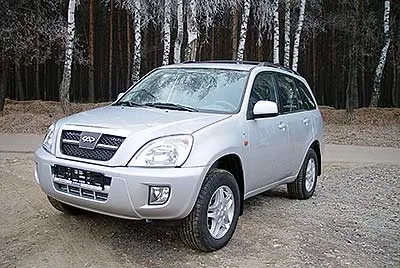
 I had long wanted to try a Chinese car in action — all around there was talk about inexpensive "Chinese" cars that were about to flood the Russian market. I admit, I went to the test with a ready conclusion: they say, there are plenty of drawbacks, but the price is pleasing. And here in front of me rolls out a nice silver SUV. First impression — this is definitely not a "cheap Chinese"! There are too many familiar Japanese notes in the exterior. That's when I threw away my prepared thoughts and decided to take a good look at the "tiger".
I did find drawbacks, and there were four of them. I'll tell you about them briefly so I don't have to come back to them later. First, the sound of the closing door was unpleasantly surprising — some squeaky sound, like in B-class subcompacts. For a solid SUV, you want a lower and richer sound. Second, while driving, you can hear the rear cargo cover squeaking. We loosened the fastening — it became quieter, but the squeak didn't disappear completely. Third, it's noticeably cooler in the back than in the front. Although, perhaps, we just needed to add more power to the fan. And finally, fourth, the main thing: this is not an SUV, but a regular front-wheel-drive car, just dressed in a "crossover" body.
While you ponder how significant these drawbacks are, I'll tell you about the Chinese auto industry. More precisely, I'll compare two auto industries — Soviet and Chinese, because they have much in common at the very beginning. Everyone knows that the "kopeyka" is a restyled Fiat 124, and the production itself was bought from the Italians entirely. Thanks to constant refinements, the "kopeyka" survived to our days in the form of the "semerka". The design of the "vosmerka" was ordered from the famous studio "Italdesign", so until the mid-80s it looked modern. But the "desyatka" we drew ourselves. We've gotten used to its appearance, but at first the "desyatka" sedan was called nothing less than "pregnant antelope". Take a closer look at it — it really looks ugly without external tuning. The "Kalina" bears the mark of outdated biodesign. For the same money, with the same biodesign, you can take a foreign car — Chevrolet Lanos.
GAZ started with Ford. The first cars were copies of Ford AA, the legendary "emka" is a Ford V8, and the post-war GAZ-151 is a copy of the American "Studebaker".
Even more interesting is the history of "Moskvich". In 1927, the Americans sold an automobile plant to Germany. In 1945, it was dismantled and taken to the USSR, right to Moscow. The first "Moskvich" cars are copies of the Opel Kadett. The "M-412" had a Bavarian engine from BMW, and these cars took prizes in international races. The "M-2141" is a modified Renault. The Izhevsk plant long produced the "M-412" under the brand "Izh-412", and there were differences both in design and assembly quality. I won't talk about "copies", but our own developments always lagged behind foreign cars — both in quality, design, and equipment.
The Chinese followed the same path as us, but turned out to be luckier — their products are bought all over the world. The fundamental difference with us: they take complaints about defective components very seriously and quickly implement improvements at the factory. Even non-specialists notice that the quality of parts, assembly, and painting is constantly growing.
After this historical digression, let's return to the "tiger". First, we walked around the car and inspected the body. Gaps are minimal, paint is excellent, doors close with the first click. Inside, everything is neat but simple, despite the air conditioning, CD stereo, and changer. The plastic is, of course, hard, but well-fitted, without burrs or squeaks while driving. The front seats have wide lateral support — the body doesn't sway from side to side in corners. The rear bench is softer, and there's enough space both in width and for knees with a margin.
Before leaving, we were warned that the suspension is stiff. It didn't seem that way to me — closer to stiff than soft, but nothing more. We drove over potholes and broken roads — quite comfortable, no shaking even in the back. The driver's seating is comfortable, especially pleasing is the effect of "sit high — see far". The dynamics are decent, because under the hood is a two-liter Mitsubishi engine. I emphasize: this is not a copy or a set of Mitsubishi parts, but a real, reliable, and torquey Mitsubishi. That's worth a lot. The peak torque is already at 3000 rpm!
Tiggo is an excellent choice for those who want to get a solid and beautiful car without big expenses.
Alfred
driving experience 10 years.
 On the way to the test drive of this "Chinese", I was haunted by a gloomy feeling. Think about the very phrase "Chinese car". One thought kept spinning in my head: "what good can these Chinese do, whom all famous automakers fear so much." But, as they say, in for a penny, in for a pound, I had to go.
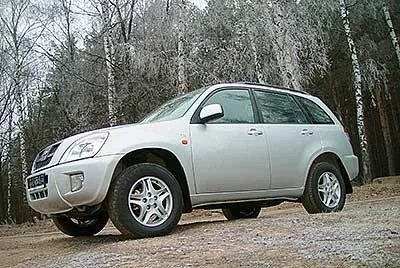
Wow, so this is a copy of the RAV4! Although no, it seems like a CR-V. Let me look from the side. Exactly — RAV4, one to one. What a twist! I knew the Chinese don't stand on ceremony with copying, but I didn't expect such audacity. At the same time, you can immediately see good paint quality and overall level of execution. The gaps between body panels are even, the optics are excellent. There you go, Chinese — in terms of assembly and paint quality, our neighbors have made a real breakthrough, reaching the level of if not European, then certainly Korean brands.
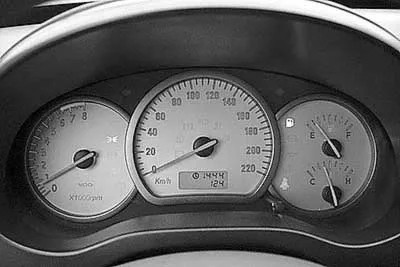
The interior. Well, what about the interior? The interior is like an interior — spacious and comfortable. Yes, it sins with cheapness of finishing materials on the dashboard, but the quality is in order here. The parts are even, carefully fitted — again, there's something to be surprised about. The seats are soft and quite comfortable. The instrument panel with a white background, red needles, and blue backlighting — in twilight it reads poorly, but with the onset of darkness, the cabin is flooded with a pleasant bright blue light in a semicircle, it becomes cozy and the mood lifts. The central place on the console is occupied by an audio system with a large, also bright blue display. If not for it, it would be empty here. Guess what brand of equipment is in the "Tiggo"? Who said "Abasonik" or "Funaiwa"? You didn't guess. It's (don't fall over) VDO, and even a six-disc CD changer under the seat. That's how it is!
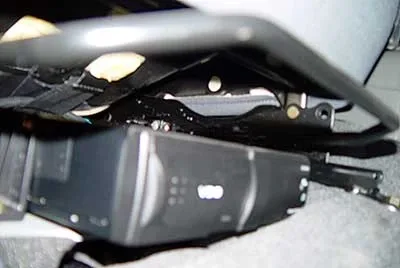
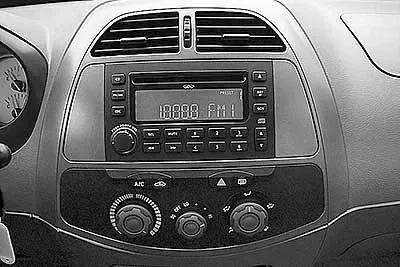
Never before on test drives had I checked sound quality, but here I decided — it's all coming together too well. Well, what can I say: there's no trace of the usual "Chinese" sound, the sound is quite decent.
All controls are maximally simple and even slightly utilitarian. Figuring out what to turn where to get warm or cold air from the vents won't be any trouble.
Even outside, I noticed the unusually smooth and soft operation of the engine. We open the hood — and again an involuntary exclamation of surprise: Mitsubishi 2.0.
Well, the day promises to be interesting. What other surprises has the "celestial" auto industry prepared?
The engine pulls great, but the car had summer tires, and the road kept having icy patches, so I had to be careful. And still, I constantly caught myself that, when pulling out from a secondary road or starting on clean asphalt, the wheels kept breaking into wheelspin. And what would happen if you deliberately tried to launch from a traffic light? The car seems like it would just shoot off.
The steering is very responsive, reacting to the slightest movements of the wheel, but, in my opinion, it could have been made calmer — after all, this is not a sports car. I liked the pedal assembly and gear changes. The clutch is light, without effort, shifts are clear, with a slight push. The only thing is the gearshift lever is positioned a bit low, and you have to reach for it slightly. Although you can adjust the seat differently, sit deeper — and the lever will be closer. The brakes are excellent: grippy and informative, the pressing force is adequate to the deceleration.
Despite the fact that even in the showroom we were warned about the stiff suspension, I didn't feel it. But the sound insulation is weak — especially noticeable on bumps. Moreover, vibrations are partially transmitted to the steering wheel, and the rear shades with their rattling also "get to you".
There are many more small nuances, but if you look overall, the picture is like this. The car is very solid on the outside, but suffers from technical shortcomings and not the highest quality interior trim material.
Here is the revised test drive text: You know, after getting acquainted with this car, a bitter aftertaste remained. It became somewhat offensive for domestic manufacturers — Asian engineers have gone far ahead in a number of parameters. I won't make final conclusions about how these cars will behave in real operation, but one thing can be said for sure: the Chinese auto industry is progressing by leaps and bounds, and this is already noticeable to the naked eye. Western auto giants should take a closer look at competitors from the Middle Kingdom.