
Chery Tiggo
Powertrain: Mitsubishi 4G64S4M
Displacement: 2.4 liters
Output: 130 hp at 6000 rpm
Peak torque: 195 Nm at 2500 rpm
Top speed: 190 km/h
Fuel consumption: city/highway — 11.2/8.5 L per 100 km
Curb weight: 1420 kg
Tires: 215/70 R16
Ground clearance: 180 mm
Height: 1715 mm
Length: 4285 mm
Width: 1765 mm
Chery Automobile Co., Ltd. was founded in 1997 in the Chinese city of Wuhu. Starting from very modest scales, the company managed to achieve impressive results and is now considered the most dynamically developing automaker in China.
The company focuses on creating world-class cars, attracting leading engineering and design bureaus for cooperation.
In 2004, DURR complexes were installed on Chery's painting lines, which is associated with strict requirements for coating quality. A year later, together with Austrian AVL List, production of the first boosted engines meeting Euro IV standards began.
The company actively works on exports, supplying cars to various countries. Currently, development of new models for the US and European markets is underway. In 2005, a strategic agreement was signed with American Visionary Vehicles to enter the US market in 2007.
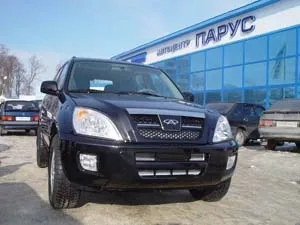
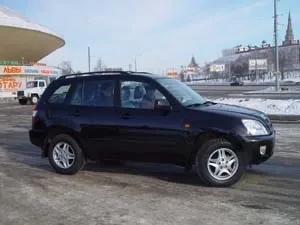
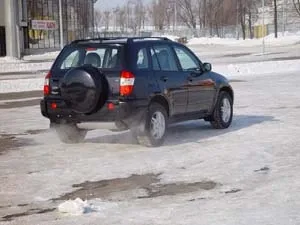
The Tiggo crossover (the name is a diminutive of "tiger") debuted in 2005. Specialists from Chery itself, as well as engineers from British Lotus Engineering and Japanese MAE Corp, worked on it. Although the car's exterior slightly resembles the Toyota RAV4, it is completely independent in design. Wheelbase — 2510 mm, dimensions — 4285x1765x1715 mm. Under the hood are licensed Mitsubishi engines with 2.0 (125 hp) and 2.4 (130 hp) displacements. A 4-speed automatic transmission is optionally available.

Marcel. Behind the wheel for 10 years
I've been eager to try the Tiggo for a long time. The main question is whether the Chinese managed to make a crossover with a unibody construction, without a frame. With body-on-frame SUVs, they are in perfect order, even authoritative publications acknowledge this.
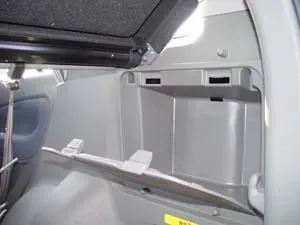
The car's appearance cannot be called boring; it looks attractive. The resemblance to the RAV4 is rather a plus: Toyota is a good reference point. Further acquaintance confirmed this. The interior also pleased: pleasant-to-touch plastic, comfortable steering wheel, a stereo with a six-disc changer, and enough space. But there are flaws: the stereo panel glares in the sun, and with the parking lights on, some readings on the instrument cluster are lost, even at maximum brightness. Apparently, it's the white shield — make it darker, and the problem would disappear. The interior transformation did not disappoint: the rear row slides back, like in a Toyota, and if necessary, the seats can be removed entirely. I rate the assembly a "four" on a five-point scale. I don't understand why on a car assembled at the same plant as BMW, but in Kaliningrad, there's an unsecured decorative trim piece dangling in the trunk on one side. I expected such shoddy work only from VAZ. This is probably a technological flaw that I hope will be fixed soon.
In motion, the car behaves understandably, the gearbox shifts without issues, and acceleration feels around 10–12 seconds. The engine's torque particularly pleased me. The 2.4 engine produces 130 hp — not a record, but not little either. It's unclear how the same unit manages to haul the body-on-frame Great Wall Hover weighing 1800 kg. Sound insulation is nothing special: it's relatively quiet in the front, but from the rear, you can clearly hear pebbles hitting the wheel arches.
Overall, the Tiggo left a pleasant aftertaste. I think the Chinese will fix the minor flaws — their cars change before your eyes. The audience for this car, considering price and quality, is the next step after domestic cars. It's unlikely anyone will switch from Korean, let alone Japanese cars, to a Chinese one. Previously, Koreans occupied this niche, but the quality of their cars has grown, and with it, prices. So a place has opened up. The Chinese comrades are on the right track. It's just a pity that our auto industry doesn't notice this path.

Vadim. Behind the wheel for 10 years
Chinese manufacturers deserve credit: they take the best, meticulously copy, adapt to the target market — and the hit is ready. Plus, they update their model lineup very quickly. Our history started similarly: GAZ-AA — a copy of Ford AA, "Emka" — Ford V8, GAZ-151 — Studebaker, Moskvich-400 — Opel, Moskvich-412 — BMW, "Kopeyka" — Fiat 124. The list could go on. But then we turned onto "our own" path. First, the "Vosmerka" (though with Pininfarina's involvement), which only got a facelift after 20 years (in the West, this happens 2–3 years after the premiere). Then the independent "Desyatka", whose facelift — Priora — we never got. And, of course, the Kalina with early-90s design. By the way, the Japanese and Koreans also copied in their time.
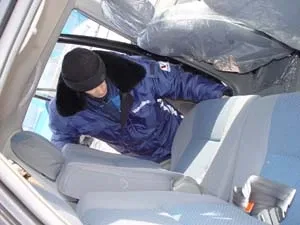

We've already tested the Chery Tiggo, though quite a while ago (see "Autoclub" No. 23(79) 2005 or www.autoclub-kazan.ru). So it was especially interesting to get reacquainted: the assembly is now Kaliningrad, not Chinese, and the quality of these cars is growing day by day.
Let me start with what has changed compared to the previous Tiggo. The door closes not with a squeaky "tinny" sound, but solidly and softly. I didn't notice any extraneous noises in the cabin. And importantly, now it's equally warm both in the front and rear.
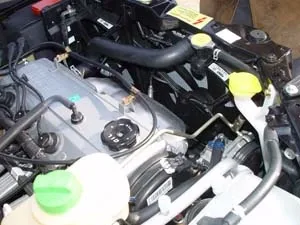
Under the hood is a 2.4 engine from Mitsubishi. It's certainly not the most modern, but the low-end torque and top-end pickup are impressive. I specifically studied the engine's behavior in fifth gear. The picture is contradictory: the car calmly drives even at 50 km/h, but at 80 km/h, for active acceleration, it's better to drop to fourth. By analogy with the Chery Amulet, I tried to start in second without revving. Alas, as with any other car, it didn't work. But in city mode, the engine has many virtues: you can leisurely roll at low revs (saving fuel in the process), then sharply press the gas and accelerate. You can also drive aggressively at high revs — here it pleased me especially.
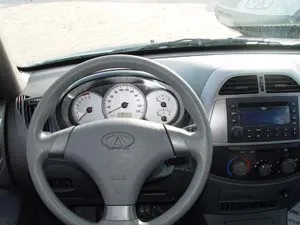

I should say a few words about ABS. It works ambiguously: with a light press on the brake, the car first gives full freedom, and only then does ABS intervene. But with a sharp press, the system activates instantly. I like this algorithm. The brakes on the test vehicle turned out to be so soft that at first I chalked it up as a huge minus. But, as it turned out, the problem is only in this car, which hadn't even undergone pre-sale preparation. At the Parus dealership, after the test, they kindly offered to check the brakes on other Tiggo — and there everything was fine.
Now about handling. Our car was front-wheel drive. Turns and lane changes are predictable, with no excessive body roll or skids. Of course, I wouldn't mind trying the all-wheel-drive version.
Sound insulation. Settling into the rear seat, I was surprised at how well passing cars could be heard. Thanks to Alfred — he noticed that I hadn't closed the door tightly. As soon as I closed it, the sounds disappeared. Bravo, Tiggo!
A car with crossover looks and a 2.4 engine at a ridiculous price of 475 thousand rubles. The Tiggo is an excellent choice for those who want a solid and beautiful car for little money. Especially since maintenance will be done at an official dealer — the Parus auto center, which has modern equipment for Chery and a decent stock of parts and consumables.

Alfred. Behind the wheel for 11 years
To be honest, I went to this test drive without much enthusiasm. We've already tested this model, and I really didn't want to encounter the same impressions again. Deep down, there was a glimmer of hope that the car had gotten rid of the flaws found last time. Although it's unlikely the manufacturer would change the quality of materials — this is the aspect that Chery previously "limped" on. This time, under the hood is a 2.4-liter engine instead of the previous 2.0, and the car is shod for winter, so we can be less ceremonious and test it harder, unlike last time. This car is assembled in Russia, in Kaliningrad. The plastic at first glance hasn't changed, but surprisingly, the cabin doesn't "smell," even though the car came to us straight from the car carrier and had no time to "air out." This isn't the first time Chinese cars surprise with the absence of that unpleasant cheap plastic smell. What the secret is — remains a mystery, but the fact remains.
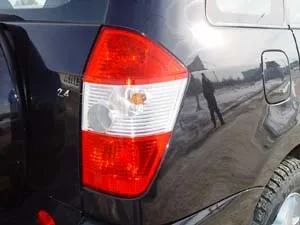
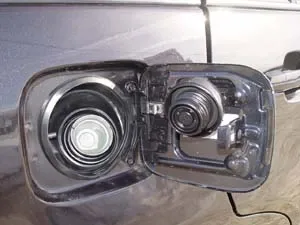
As usual, I settled into the second row, and we drove out onto Kazan's roads. The spring thaw had taken its toll: the road had turned into a surface with potholes, ice patches like a "washboard," and berms of frozen snow — a classic "Russian package." These were the conditions in which we had to test the car. Let me clarify right away: this version is front-wheel drive only, so we didn't venture off the asphalt. I would have liked to try the all-wheel-drive modification, especially since the 2.4-liter engine's power reserve would certainly have been enough for it. The first thing that stands out is that the car has shed its former "vagueness" in responses. It feels more composed, with a sense of structural integrity, which is important. If two liters were enough for this car, with 2.4 it literally flies. Sitting in the back seat, you can't help but notice the suspension's work and the sound insulation. You can feel that the settings are a compromise between comfort and handling. The Tiggo easily swallows small bumps and the "washboard," but on larger potholes it responds with a hollow thud. Unlike the Amulet, the cabin doesn't creak; only the trunk, or rather the cargo cover, hums slightly. The sound insulation has either improved, or I've forgotten the old one, but noise from the rear wheel arches is still audible. You have to make allowances for winter tires — they're always noisier than summer ones, but here winter lasts almost nine months a year. The instrument panel remains the same, which means the old ailments are still there — in twilight, the readings are hard to read. The controls for the instruments work stiffly. However, this could be a quirk of this particular example, as could the unbled brakes. Because of them, I had to drive more carefully in the city — the pedal frankly sank. But on a small lot, I could turn the steering wheel to my heart's content. As expected, the car doesn't shine in handling, though neither does any tall vehicle. The steering doesn't "load up" even at decent speed — the wheel remains light and sharp. Despite the brake issues, we did test the ABS: it works adequately, engaging at the very end, as it should. The system is modern; the pedal vibrates softly underfoot, without the awful grinding of cars with antiquated ABS. The gearbox gives no cause for complaint — neither the clutch nor the shifts. The engine pulls at any RPM: already at 50 km/h you can engage fifth and drive without much effort. Opening the hood, it immediately becomes clear why the car has become stiffer — a transverse strut bar is installed. A sensible solution for this car. Under the hood is an old friend, the workhorse Mitsubishi 2.4 (the same one found in the Hover). How our people need such a car — inexpensive, with good ground clearance and a powerful engine that lets you forget the vagaries of our roads and courtyard driveways.
The car is equipped with an electromechanical sunroof. Even though it's not May outside, we simply couldn't resist opening it. The huge sunroof, spanning half the ceiling, fills the cabin with light and sunshine. I love sunroofs. The trunk isn't overly spacious, but folding the rear seats gives you a large flat loading area in a couple of seconds. I felt sorry for the car because of the brakes. We specifically asked the dealership to show us the first similar car on the lot to compare brake performance. The result was predictable: on the other car, they were fine. Our example simply hadn't undergone pre-delivery inspection yet, hence the flaw. I'm confident that the "Parus" dealership is attentive to customers and handles pre-delivery inspection, so cars already purchased won't have such issues.