
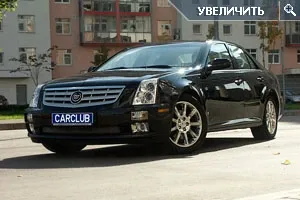
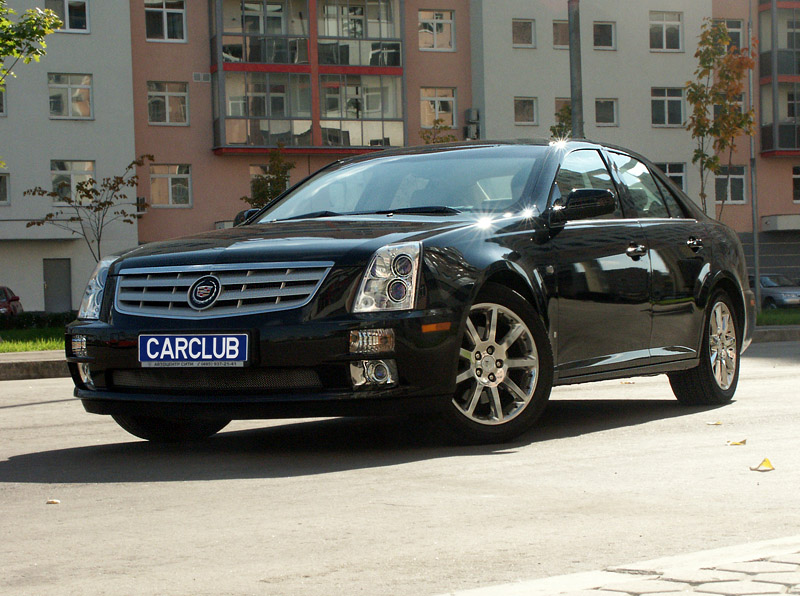
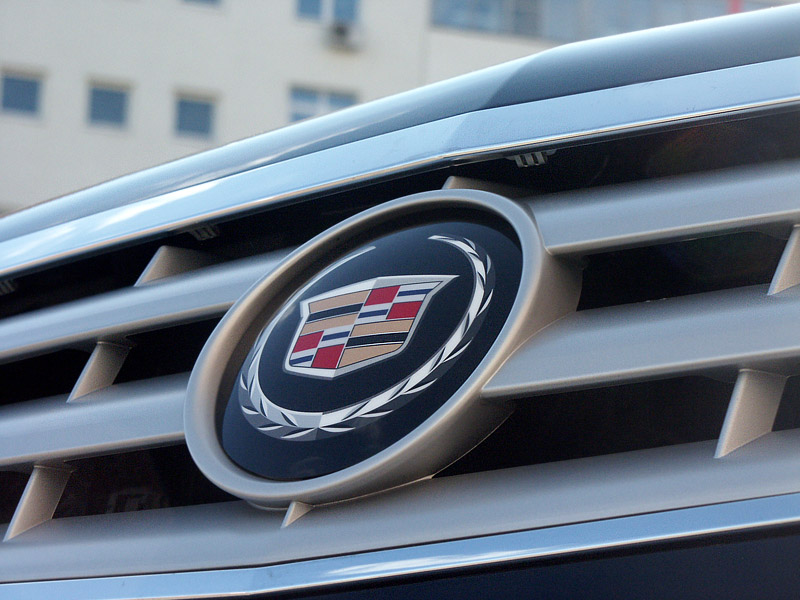
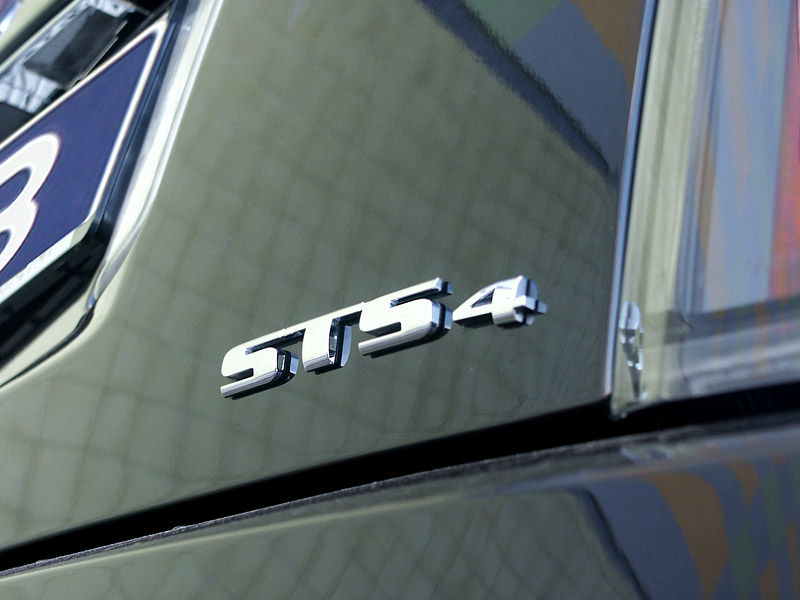
 The Russian office of Cadillac, part of General Motors, is actively promoting the SRX crossovers on our roads. But domestic drivers are much less familiar with the brand's luxury sedans. That's why it was doubly interesting to test the Cadillac STS (which stands for Seville Touring Sedan) — a representative-class model created to compete with the Mercedes S-Class and BMW 7 Series.
In the States, this sedan went on sale at the end of 2004, and reached Russia six months later, immediately landing on the assembly line of the Kaliningrad "Avtotor". Local assembly made the car 12 percent cheaper, and today the top version of the STS with a 4.6-liter Northstar engine, all-wheel drive, and maximum equipment is priced at $82,310. It was exactly such a car that we had for our test.
The flagship Cadillac model is based on the Sigma platform, familiar from other current models of the brand — the CTS sedan and the SRX crossover. All three are united by a massive, chopped design in the spirit of the signature Art & Science direction, which some associate with a stone block, and others with a faceted glass. It's funny that the chief designer and creator of this style, Kip Wasenko, is a native of Russia.
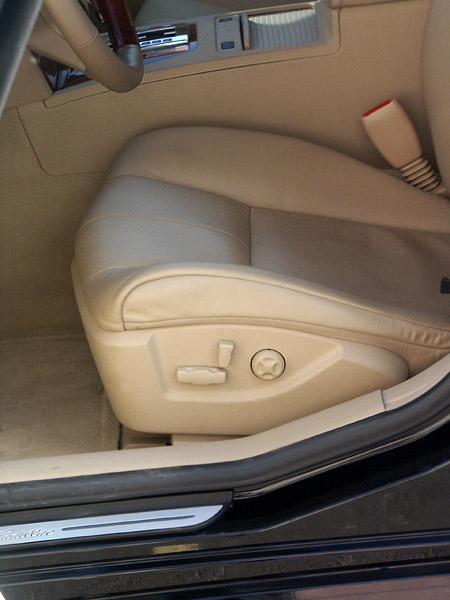
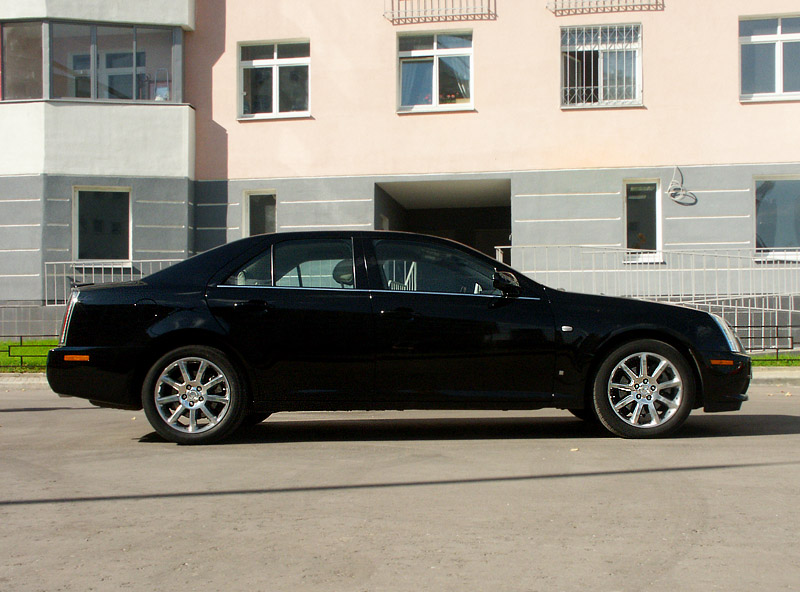 Our example is painted, as befits a car of this class, in deep black. While I was examining my reflection in the polished side, it was time to get into the cabin. The massive seat is adjusted by electric drives in eight directions, including lumbar support, which has both height and protrusion adjustment. The steering column is also electric — when getting in and out, it moves up. In winter, the heated steering wheel and all seats will come in handy, and in summer — the ventilation of the front seats.
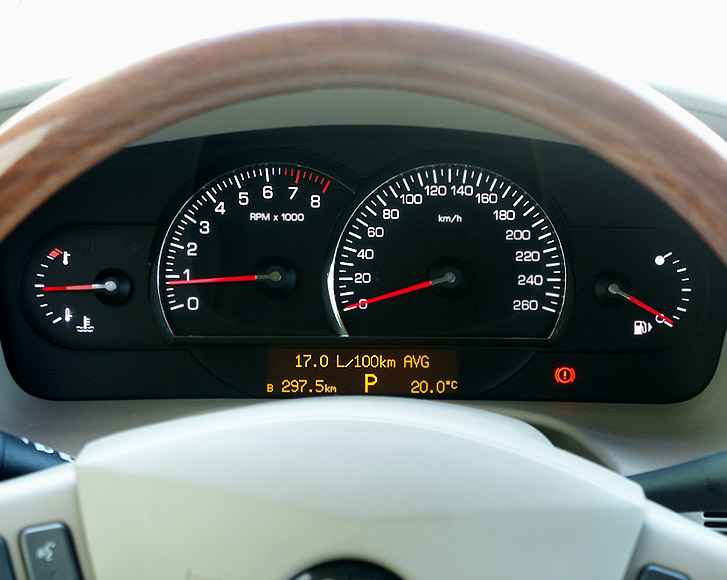
Time to start the engine. I press the large button with an arrow in a circle to the right of the steering wheel — silence. The instrument panel suggests: you need to press the brake again. I repeat the attempt — the engine comes to life, you can go. Green speed numbers are projected onto the windshield from a small window in the panel. A key to the left of the steering wheel can move the projection vertically and change its brightness, though on a sunny day the numbers still fade to almost invisible. And if you put on polarized glasses, the picture disappears completely.
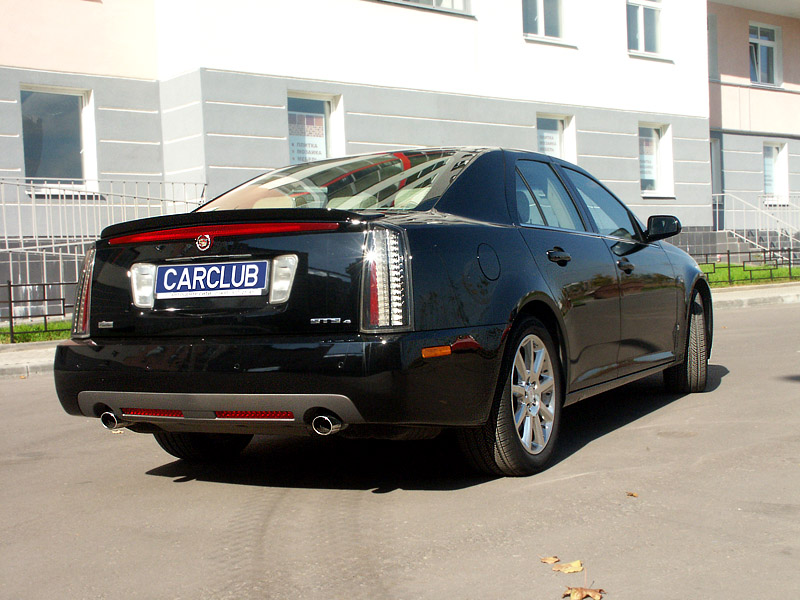 The 4.6-liter engine for an 1800-kilogram sedan is more than sufficient: with a sharp press on the gas, the Cadillac simply shoots forward. True, a spectacular start with smoke from under the wheels won't work: all-wheel drive doesn't allow you to spin the tires even on wet asphalt. By the way, the STS transmission is serious, close in architecture to that installed on Mercedes. Permanent all-wheel drive with a center differential distributes torque between the axles in a 40:60 ratio in favor of the rear. This gives confident behavior on any surface, and with electronics simulating locks, the sedan is not afraid of light off-road either.
The engine's thrust is simply bottomless — the car confidently accelerates even at 1500–2000 rpm, when the tachometer needle has barely lifted off idle. And if you really floor the pedal and wait for a downshift of a couple of gears, the STS will leave most of its classmates behind. There are also manual and sport modes of the automatic transmission, but there is little practical sense in them — except that the gear number and tachometer scale are displayed on the projection.
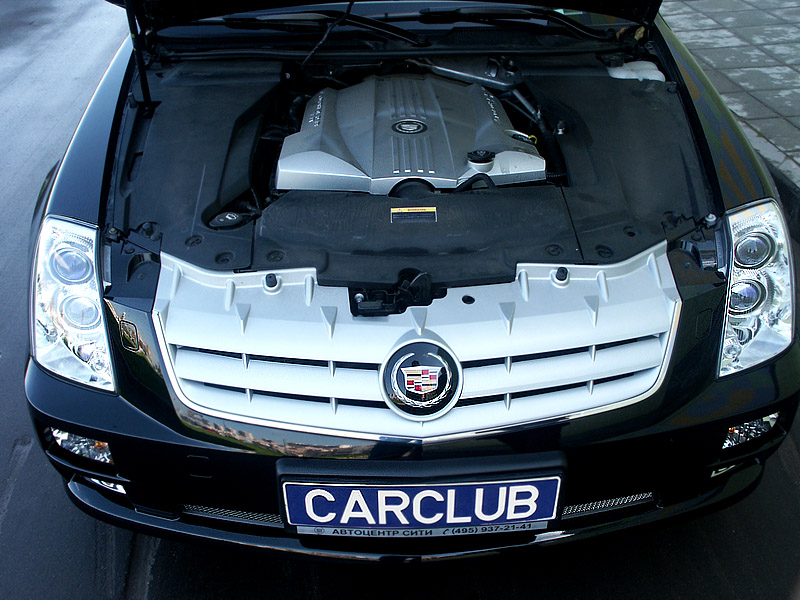 As expected, such a large engine is not distinguished by a modest appetite: the sedan does not eat less than 15 liters per hundred in principle, and according to the test results, the on-board computer showed an average consumption of 19.5 liters. Given that the tank holds only 66 liters, you will have to stop for refueling often — the fuel reserve is barely enough for 300 kilometers. The range indicator on the display behaves strangely: when there are 60 km left to empty, the inscription "Low Range" starts to burn constantly, but without numbers, which is confusing. You'll still have to stop at the pump. I fill with AI-92 — such a liberty is officially allowed by GM: the engine is not boosted as aggressively as German opponents, so it is content with cheaper fuel.
I wonder if I'll be able to leave the gas station on the first try? The narrow passage forces you to turn the steering wheel all the way, and the steering wheel of the car is not small, so the process turns into a real workout. The dimensions of the Caddy are also solid — almost five meters. I already thought I wouldn't fit, but the turning radius turned out to be surprisingly small for such dimensions. Only here there was no place for a front parking sensor — it's not even in the options list, and with such dimensions it would help a lot.
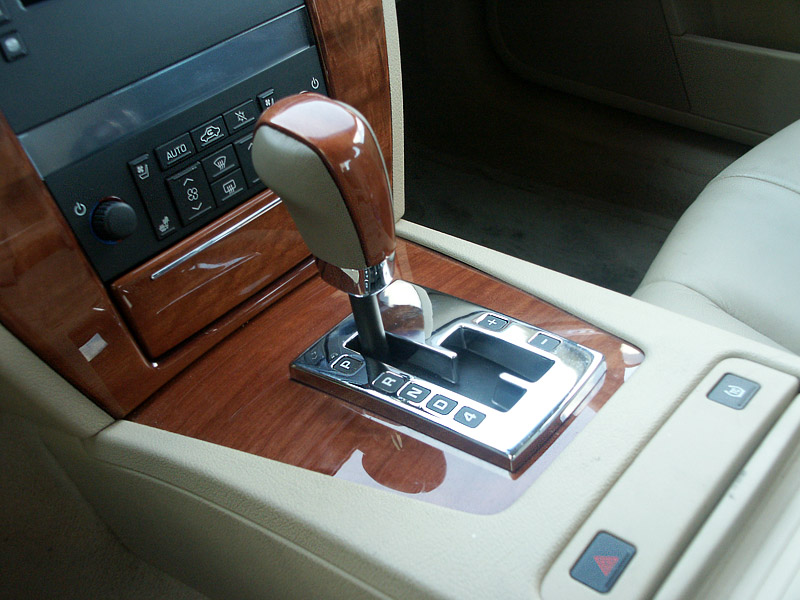
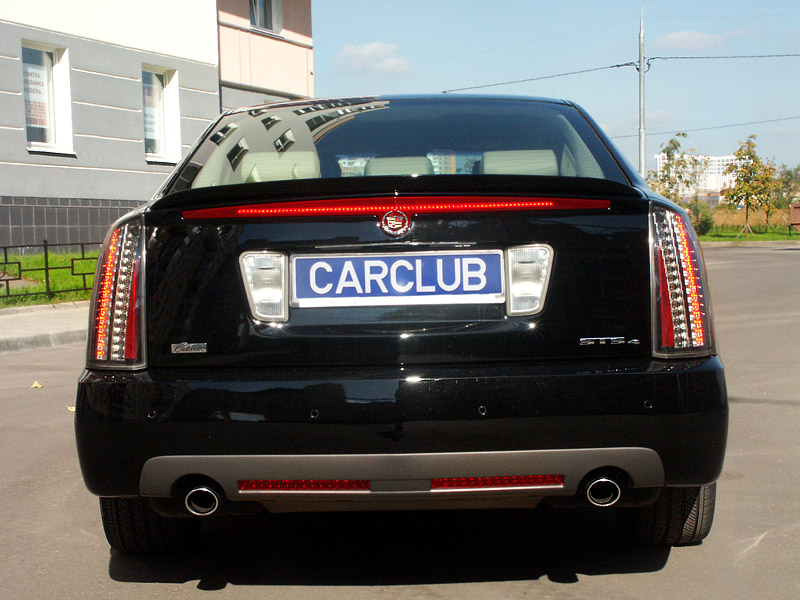 For Russia, sedans are supplied without navigation (it doesn't work here), so instead of a large color screen in the center console, there are two small monochrome ones: one manages the audio system, the second — the climate. The simplification clearly did not benefit either the appearance or ergonomics: despite the price, the STS interior looks simple. The plastic on the front panel and doors is also not of the highest quality. There are many options — for example, there is keyless access and engine start with the Easy Key system, which remembers the driver's personal settings (seat position, mirrors) and even greets him by name on the instrument panel. The audio system with a CD-changer is also configured for different scenarios. But all these functions have to be controlled through a small upper display, which is inconvenient and distracts from the road. And another strange point: in a car claiming to be a representative class, the glove box is sized only for the owner's manual — gloves no longer fit there.
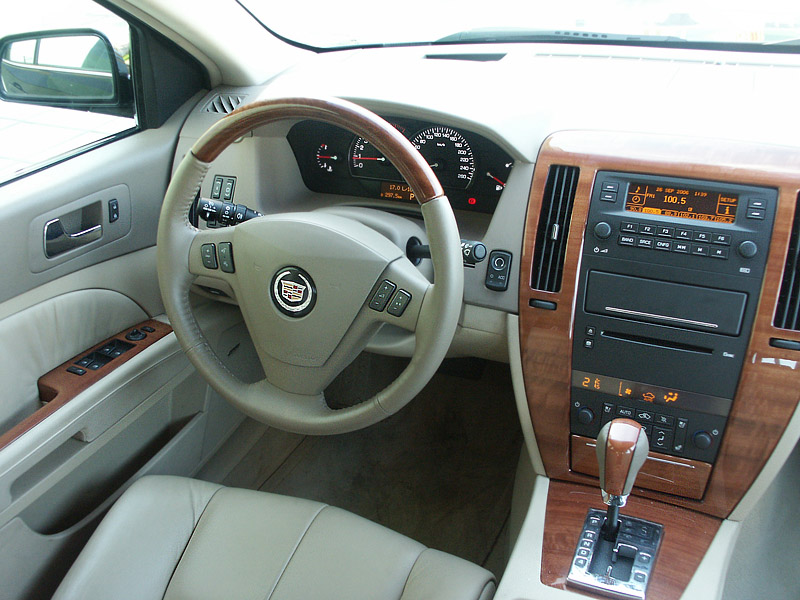 Surprisingly, the rear sofa is also cramped. Passengers taller than 185 centimeters will definitely hit their heads on the ceiling, and there is less legroom than you expect from a car of this status. True, there is a separate climate control unit and heated seats in the back.
The disadvantages of the Caddy also include the small glazing area — combined with a dark interior, this creates a gloomy atmosphere, almost like in a crypt, and can provoke claustrophobia. Our test example had a light interior, so the narrow windows did not cause much trouble. But because of them, rear visibility suffers — you have to rely on the side mirrors and completely trust the parking sensors.
But the adaptive cruise control here is excellent: it maintains a safe distance to the car ahead, which can be adjusted with a key on the steering wheel. On the highway, this option is very helpful, the main thing is not to lose vigilance before sharp turns: when the leading car turns, the radar gives a command to accelerate. If the cruise control is off, the radar still remains active and beeps when approaching an obstacle sharply. But it's better not to rely entirely on electronics: at speeds below 45 km/h, the radar sleeps, so in traffic jams it is of no use.
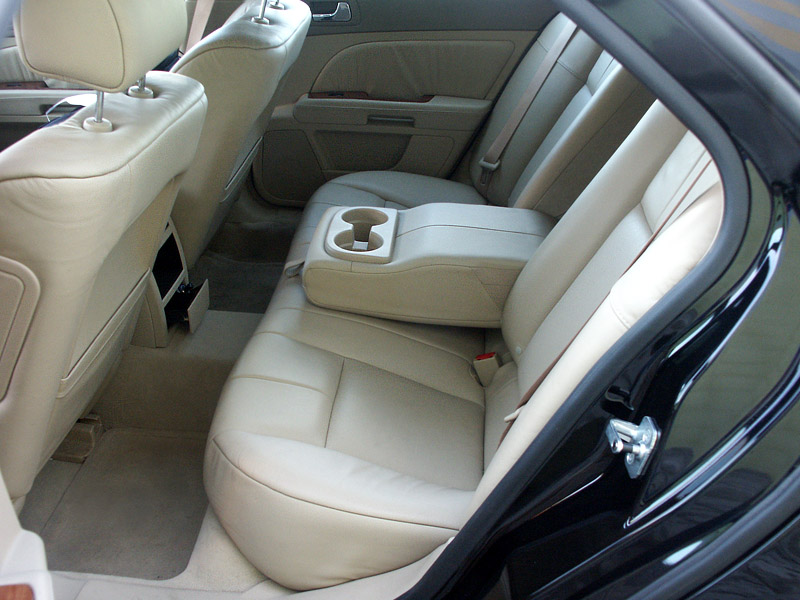 Magnetic Ride Control suspension is a thing with its own character. The electronics themselves decide how stiff the shock absorbers should be, and the springs here are long-travel and with a reserve of energy. Therefore, on a dirt road or a broken country highway, you can drive quite briskly. But this continues exactly until the system has time to monitor the wheel travel. As soon as a sharp pothole or a rough patch on the asphalt gets under the wheel, the electronics get confused, and the body meets the impact harshly and noticeably.
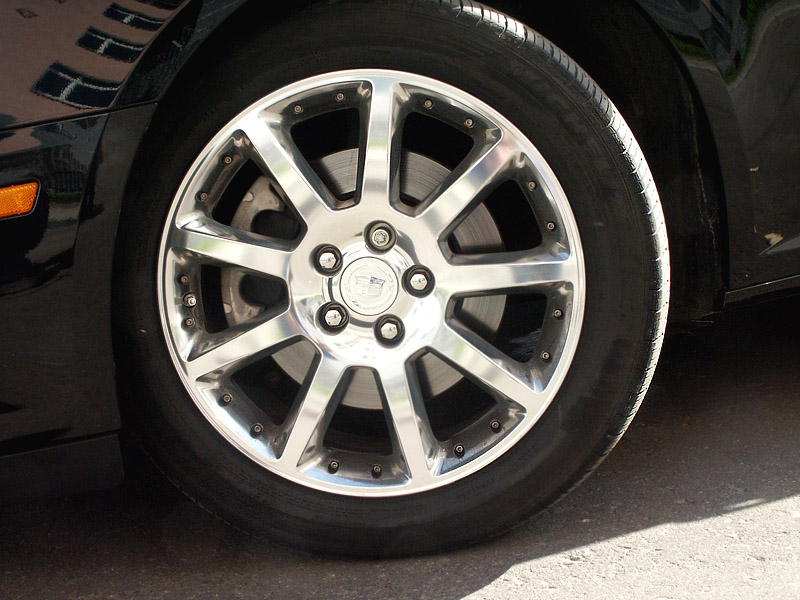
 In corners, the active struts dampen body roll well, but the tires, which are so loved in America, all-season, let us down. Someone accustomed to good rubber on European and Japanese sedans should be prepared for the fact that American tires have lower grip. In a sharp turn, the STS can simply leave the trajectory, and during hard braking, the ABS engages too early. If you take a Cadillac, it's worth immediately budgeting an extra thousand dollars for normal tires, otherwise body repairs will cost more.
And now let's try to bring together all the pros and cons of the American representative sedan. Comparing it with the Germans is a futile endeavor: the STS cannot compete with the formidable Europeans. Neither the powerful engine nor the cruise control saves it here. But if you look at the price tag, the picture changes — for 82 thousand dollars Mercedes offers only the E-Class 4-Matic with a 6-cylinder 3.5-liter engine and in basic equipment. Decently equipped cars go for a hundred thousand. And this is the most expensive Cadillac: the initial version with a 3.6-liter engine (255 hp) costs only $66,490. So for fans of the new American style, this is a good driver's car.
Leonid Pavlov