
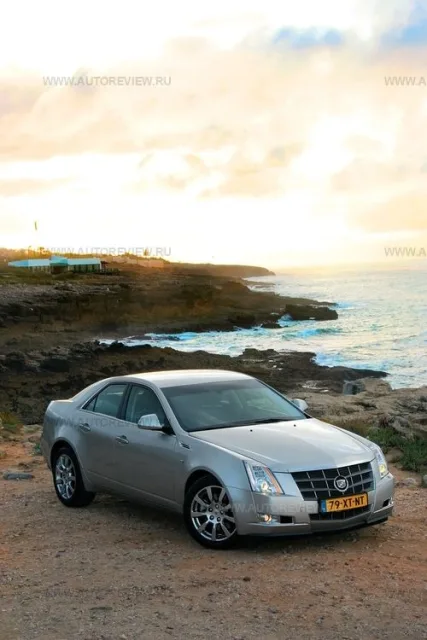
Cadillac? A pink "Eldorado" with tail fins? Elvis Presley? A blast from the sixties! Now — forget all that. Today's Cadillac is all about geometry: since 2002, all models resemble faceted crystals. And the names match: SRX, STS, BLS... Honestly, I get confused myself about which is which. But the updated Cadillac CTS hasn't faded from memory. This "crystal" has received a new cut.
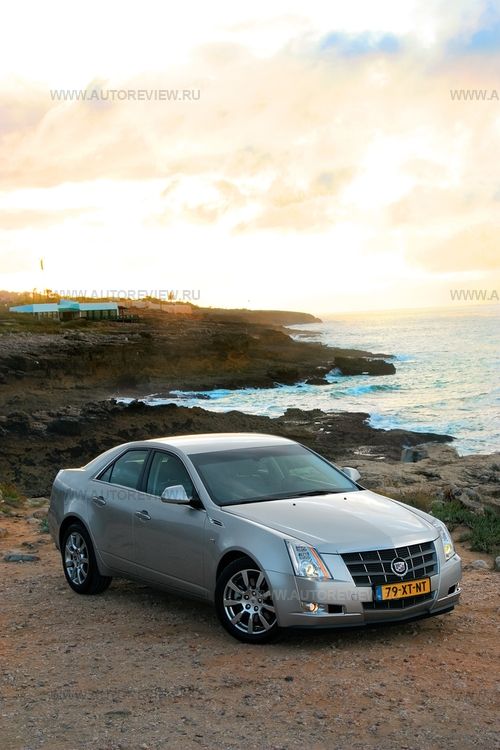
— We aimed to create a car unlike other business-class sedans, — says John Manougian, chief designer of the CTS project. — The progenitor of the "faceted" style was the 2002 Cadillac CTS. Now we are showing its successor.
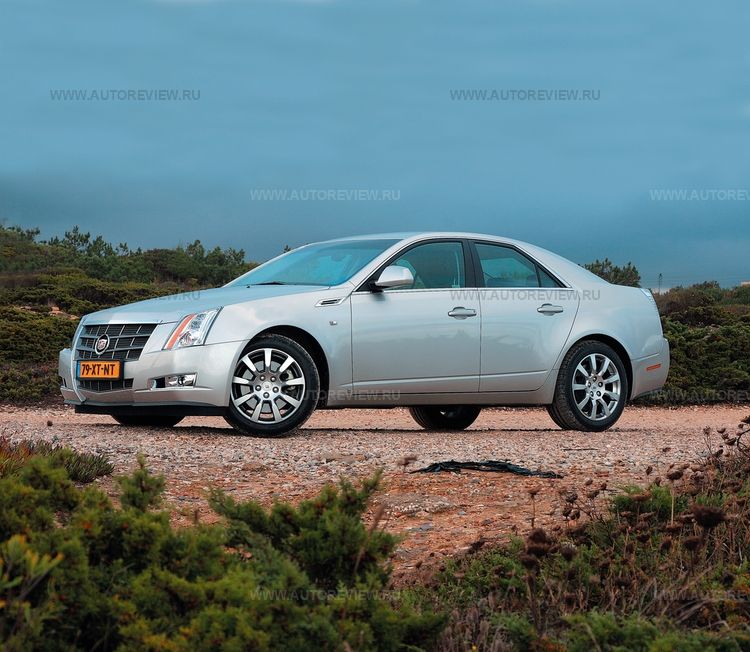
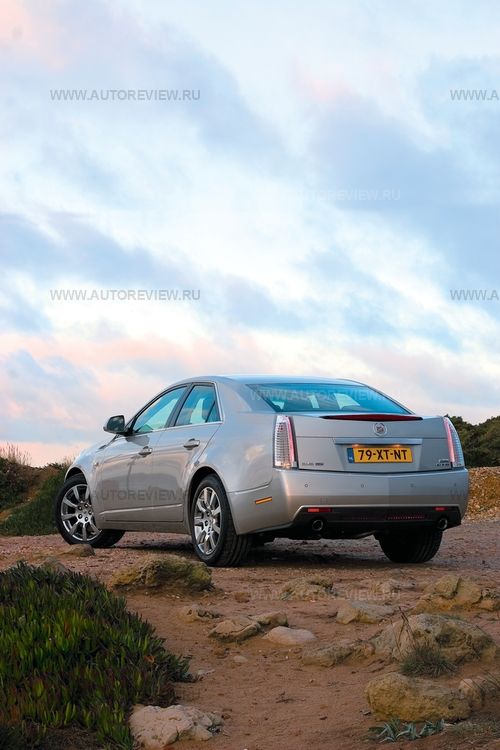
Well, you wouldn't suspect John Manougian of copying anyone... At first glance, the Cadillac CTS seems like rough work. As if the designers only did the initial faceting, and there wasn't enough money for the finishing touches. But if you look closely, you realize: all these facets come together into a unified image. The lines of the vertical headlights extend down the bumper, the lower grille perfectly matches the upper one, and the stampings on the front bumper transition into strokes on the sides. No, the rough work was more like the previous CTS, while here they've worked with a finer tool. The front and rear parking lights are made as thin vertical tubes. By these strips, a Cadillac is easily recognized at night. And if the driver presses the brake and turns on the rear fog lights, the CTS turns into a glowing rectangular box. Moreover, the lower side of this box — a bright garland of fog lights — blinds even during the day, and at night it simply burns the eyes...
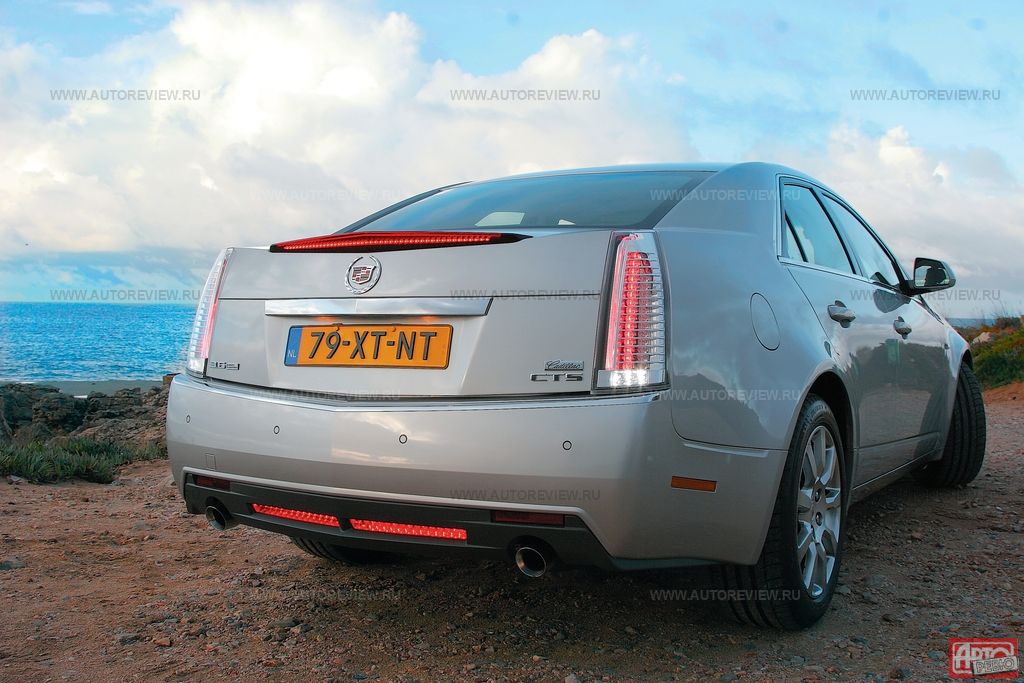 | 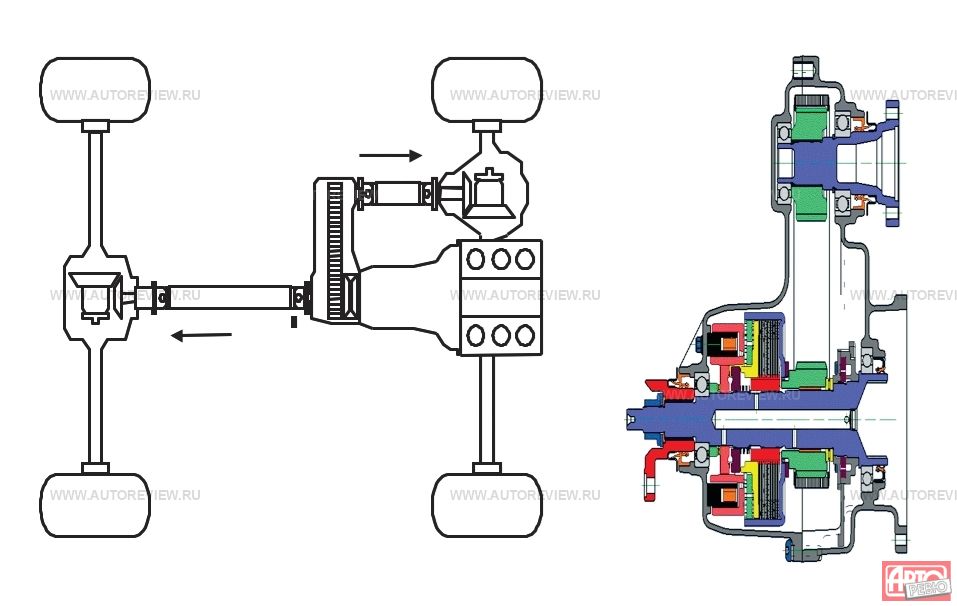 | |
| The transponder key card can be left in your pocket | Under the bumper — a bright garland of fog lights | The all-wheel-drive version has a Borg Warner transfer case with an electromagnetic clutch that, by default, sends about 30% of the traction to the front wheels due to friction slip. And when the rear wheels spin, the clutch locks up completely — up to a rigid connection between the axles |
But the main improvements are to be found inside. If previously Cadillac scared off buyers with a cheap "plastic" interior, now it attracts with genuine leather. It covers not only the seats but also the doors and the dashboard! At shoulder level, a so-called French seam runs around the interior perimeter — large and neat stitches. If previously the CTS was trimmed with wood inserts, now it's metal and carbon fiber! More precisely, their successful imitation. The sporty mood is also supported by "motorcycle-style" instruments recessed into three deep wells... Maybe the current Cadillac is a driver's car? And why not! After all, camouflaged CTS prototypes were seen on the Nürburgring Nordschleife!
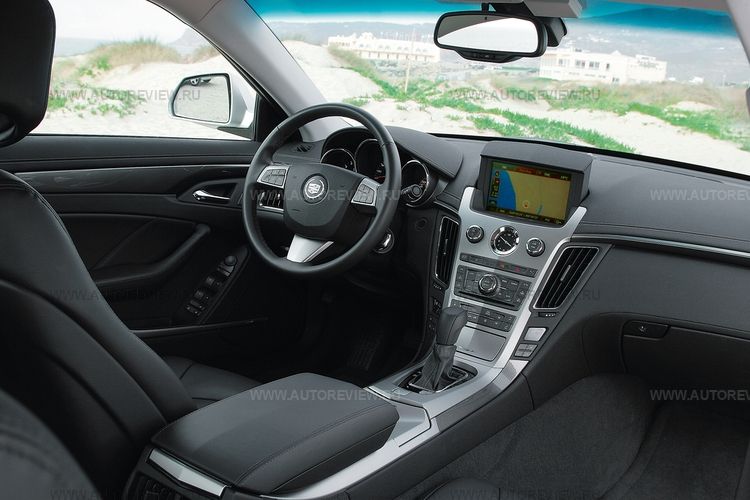
The interior has been transformed: both the dashboard and the doors are now upholstered in genuine leather
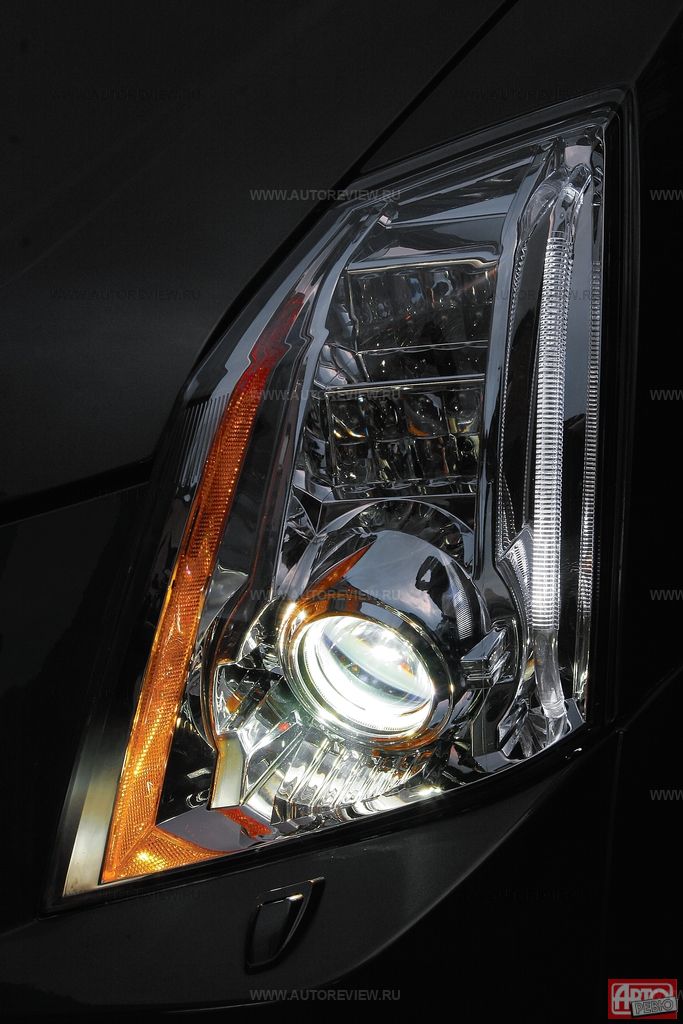 |
| The vertical tubes of the "parking lights" are a signature style of Cadillac vehicles |
However, the engineers were limited by the existing chassis — from the 2002 CTS model — and could only afford to increase the track by 50 mm. In addition to the old 2.8-liter engine (210 hp), the Cadillac CTS now also features a new V-shaped "six" with direct gasoline injection and variable valve timing. Interestingly, unlike European engines, this one is designed for 92-octane gasoline!
The engine is good. Without excessive noise and vibrations, it provides the car with "juicy" acceleration across the entire rev range — up to the limit of 7000 rpm. But the six-speed "automatic" lets it down. It seems there are "sport" and manual modes, and the "automatic" can brake with gears, but it does so roughly, with jerks. Once you start driving faster, you begin to switch between modes in search of the most suitable one. This gearbox, by the way, was developed by General Motors specialists. They'd better have commissioned a specialized firm, as they did with the power steering, ordering Servotronic from ZF. And they didn't miss: the steering has very informative effort. Plus precise responses. The widened track and proper weight distribution also contributed to handling: by installing an aluminum engine subframe and moving the battery to the trunk, the designers achieved an optimal weight distribution of 50:50. And when tuning the Stabilitrak stability system (available even in base trim), the engineers even overdid it: they pushed its activation threshold so far that on wet asphalt, the rear-wheel-drive Cadillac CTS easily breaks into a slide. These vivid moments are enough to get scared and even turn the steering wheel into the slide. But on a mountain road, nothing prevents taking corners with slight drifts — the stability system "wakes up" only in response to gross errors. And if the driver is one hundred percent confident in their abilities, the system can be turned off.
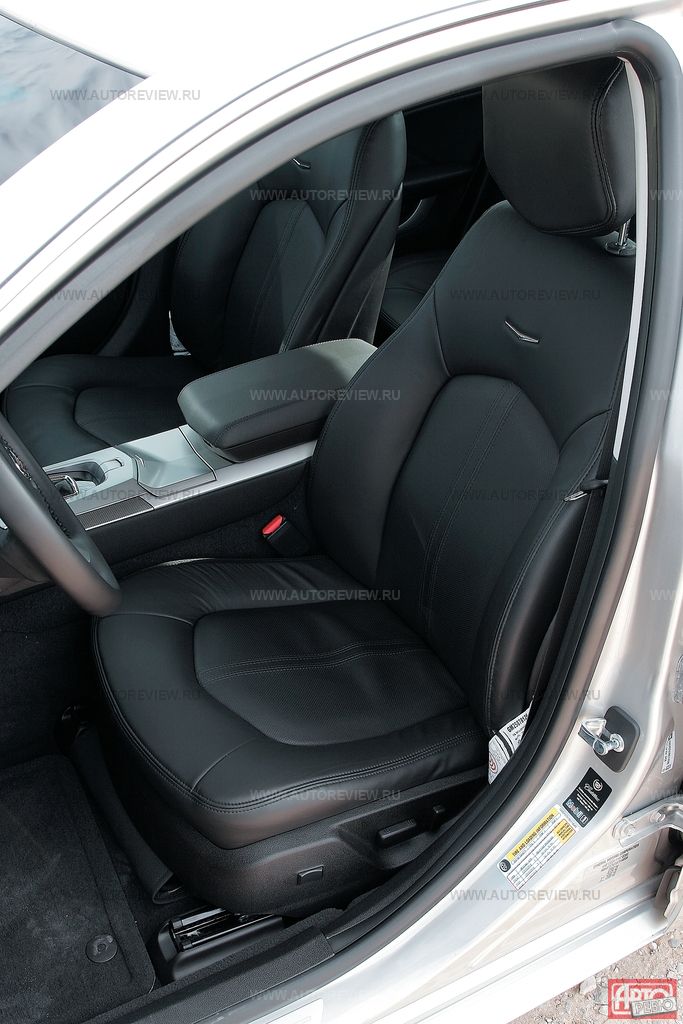 | |
| The onboard computer provides a wealth of useful information, including tire pressure | The driver's seat even has electric lumbar support adjustment |
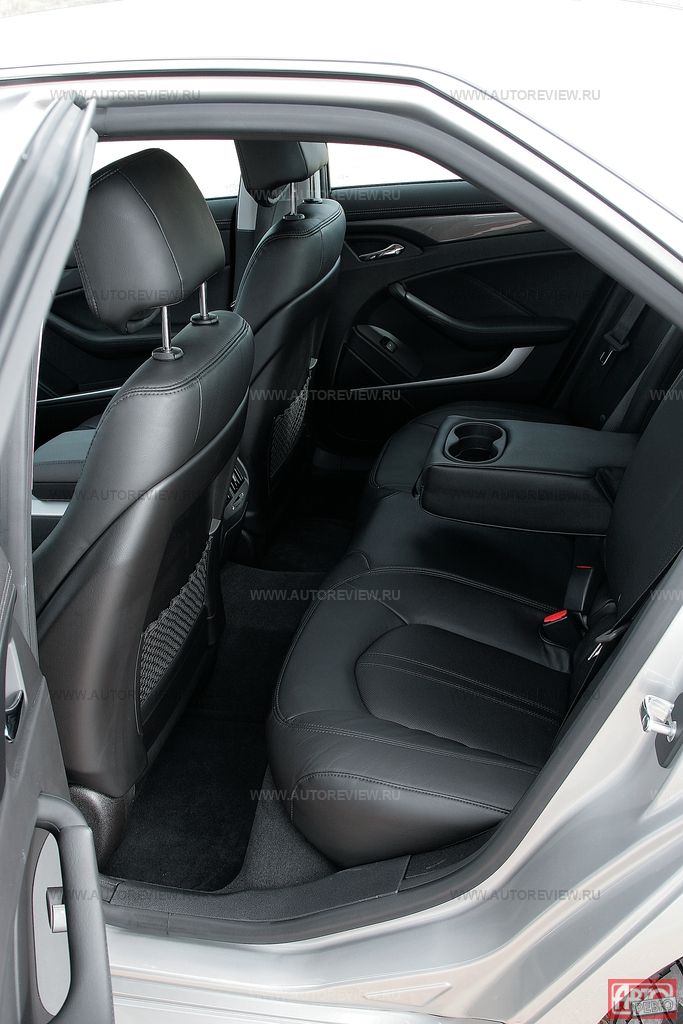 | 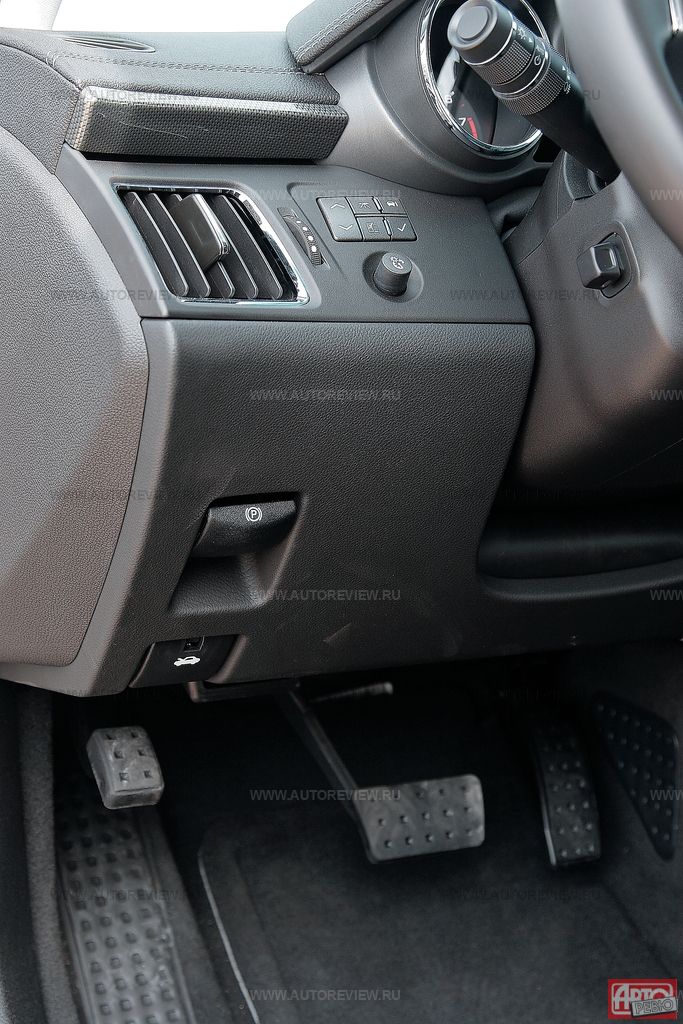 |
| The narrow door opening and low roof are unlikely to please large passengers | The third pedal is the parking brake |
Michelin Pilot Sport tires in size 235/50 ZR18 also made a significant contribution to good handling, without compromising ride comfort — the CTS handles small bumps without impacts, and there's no rocking on waves. Interestingly, this is just one of the possible suspension tuning options for the CTS, which received the FE3 index. The alternative is the comfort version FE1 or the "intermediate" FE2. But I would choose the FE3 suspension: a very good balance between handling and ride smoothness.
The cabin is quiet even at high speeds. Engine noise is muffled by sandwich panels — two steel sheets with composite material between them. Plus a 28-millimeter layer of "foam." In this coat, the engine is only heard after 4000 rpm.
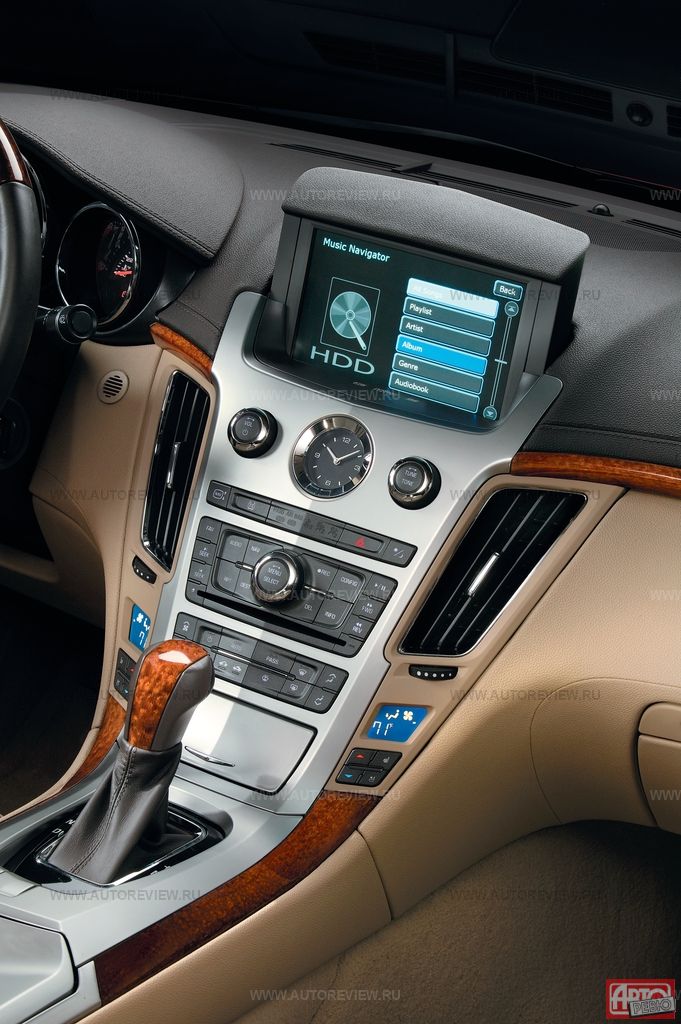 |
| As optional equipment, a Bose 5.1 Cabin Surround audio system with a 40-gigabyte hard drive is offered |
Acoustic comfort is great. But you also want space. And here, Cadillac is far from class leaders. Due to the small rear doors, getting in is difficult, and there's less room in the back seat than you'd expect from a sedan of this class. Headroom is minimal — at 190 cm tall, I hit the roof. And the trunk could be bigger — especially since under the mat there's not a full-size spare wheel but a narrow space-saver.
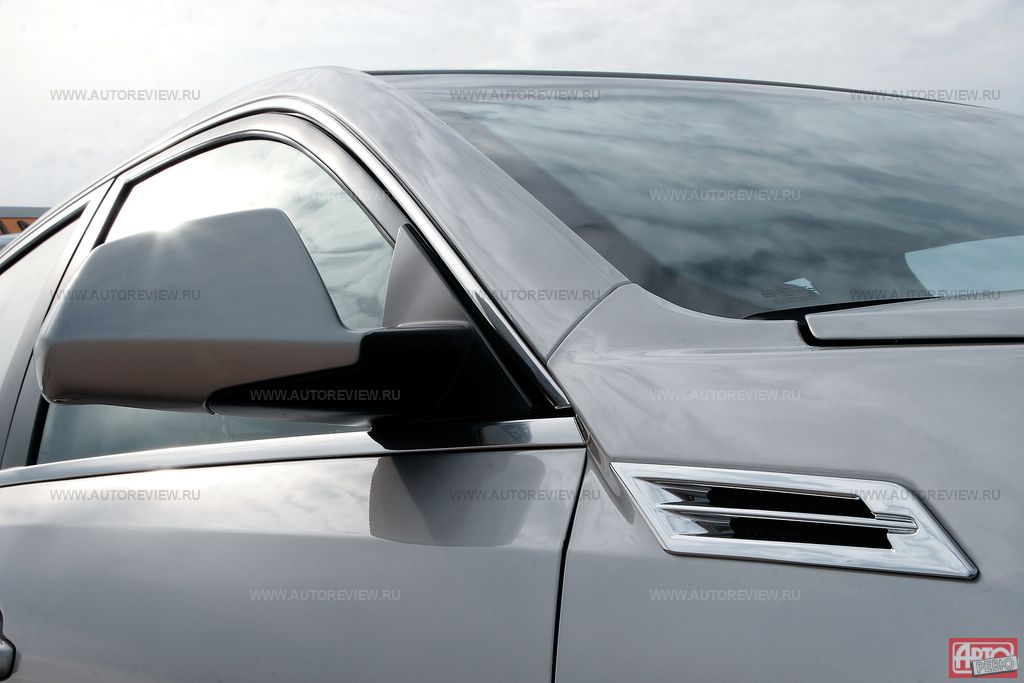 |
| The gills on the front fenders are for ventilating the engine compartment |
Unfortunately, in Portugal they didn't present the all-wheel-drive versions of the CTS, which dealers will offer exclusively with "automatics" and 3.6-liter engines. Drive to the front wheels is via a Borg Warner multi-plate clutch with electronic control. Under normal conditions, torque between the front and rear wheels is distributed in a 30:70 ratio, and in case of wheel spin, the clutch can send up to 100% of the torque to the front axle.
An all-wheel-drive Cadillac? Tempting. But I don't believe that if you already have or had a Mercedes, Audi, or BMW, you'll fall for an overseas Cadillac. Although GM marketers consider cars of these very brands as the main competitors of the CTS. Isn't it too early? Maybe for now, choose a more modest target — like Volvo or Infiniti? Then, perhaps, sales will go up, because the previous-generation Cadillac CTS found only 70 buyers in Russia over nine months of this year... And the most popular Cadillac model in Russia, as in the States, remains the full-size SUV Escalade: 312 cars were sold there in the same period.
The price list will only be known in a couple of weeks, and the Cadillac CTS sedan will appear in Russian showrooms no earlier than February next year. If the final price tag does not go far above fifty thousand dollars, the model has every chance to win over buyers.
| Technical specifications | |||
| Parameter | Vehicle | ||
| Cadillac CTS | |||
| Trim level | 2.8L V6 SFI | 3.6L V6 SIDI | 3.6L V6 SIDI |
| Body | four-door sedan | four-door sedan | four-door sedan |
| Number of seats | 5 | 5 | 5 |
| Trunk volume, l | 373 | 373 | 373 |
| Curb weight, kg | 1765 (1775)* | 1788 (1798)* | 1882 |
| Maximum weight, kg | 2360 | 2360 | 2425 |
| Engine | gasoline, distributed injection | gasoline, direct injection | gasoline, direct injection |
| Location | front, longitudinal | front, longitudinal | front, longitudinal |
| Number and arrangement of cylinders | 6, V-shaped | 6, V-shaped | 6, V-shaped |
| Displacement, cm³ | 2792 | 3564 | 3564 |
| Cylinder bore/piston stroke, mm | 89.0/74.8 | 94.0/85.6 | 94.0/85.6 |
| Compression ratio | 10.0:1 | 11.3:1 | 11.3:1 |
| Number of valves | 24 | 24 | 24 |
| Max. power, hp/kW/rpm | 211/155/6800 | 311/229/6400 | 311/229/6400 |
| Max. torque, Nm/rpm | 246/3600 | 374/5200 | 374/5200 |
| Gearbox | manual, 6-speed (automatic, 6-speed) | manual, 6-speed (automatic, 6-speed) | automatic, 6-speed |
| Drive | rear | rear | all-wheel, with electromagnetic clutch in front wheel drive |
| Front suspension | independent, spring, double wishbone | independent, spring, double wishbone | independent, spring, double wishbone |
| Rear suspension | independent, spring, multi-link | independent, spring, multi-link | independent, spring, multi-link |
| Front brakes | disc, ventilated | disc, ventilated | disc, ventilated |
| Rear brakes | disc, ventilated | disc, ventilated | disc, ventilated |
| Tires | 235/50 R18 | 235/50 ZR18 | 235/50 R18 |
| Maximum speed, km/h | 225 (205) | 249 (241) | 225 |
| Acceleration 0—100 km/h, s | 8.3 (9.0) | 6.3 (6.3) | 6.7 |
| Fuel consumption, l/100 km | |||
| city | n.a.** | 18.1 (16.6) | 16.8 |
| highway | n.a. | 8.4 (7.9) | 8.0 |
| combined cycle | n.a. | 12.0 (11.1) | 11.2 |
| Fuel tank capacity, l | 68 | 68 | 68 |
| Fuel | AI 91—95 | AI 91—95 | AI 91—95 |
| * In parentheses — data for vehicles with automatic transmissions | |||
| ** N.a. — not available | |||