
 Comments
  The fresh, Europe-oriented Cadillac BLS has sparked heated debate both among the press and brand fans. For the first time in history, Cadillac assembly has been set up in Sweden, and the technical base was the Saab 9-3 platform, which in turn has roots in the Opel Vectra. Cadillac's PR people present the BLS as a fresh stage in the brand's evolution, a step from purely American to global, while conservatives are opposed and brand General Motors with all conceivable sins.
I decided not to listen to the voices of the disputants and look at the car impartially, without regard to marketing tricks.
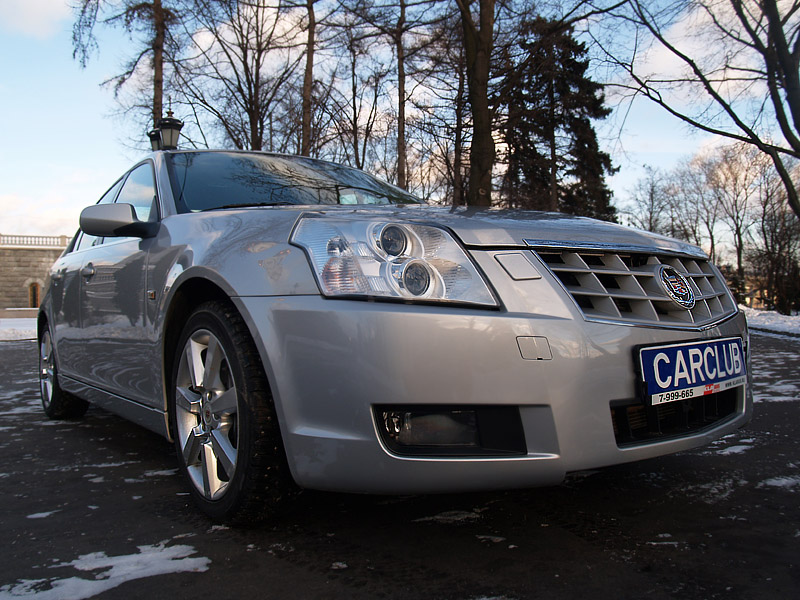
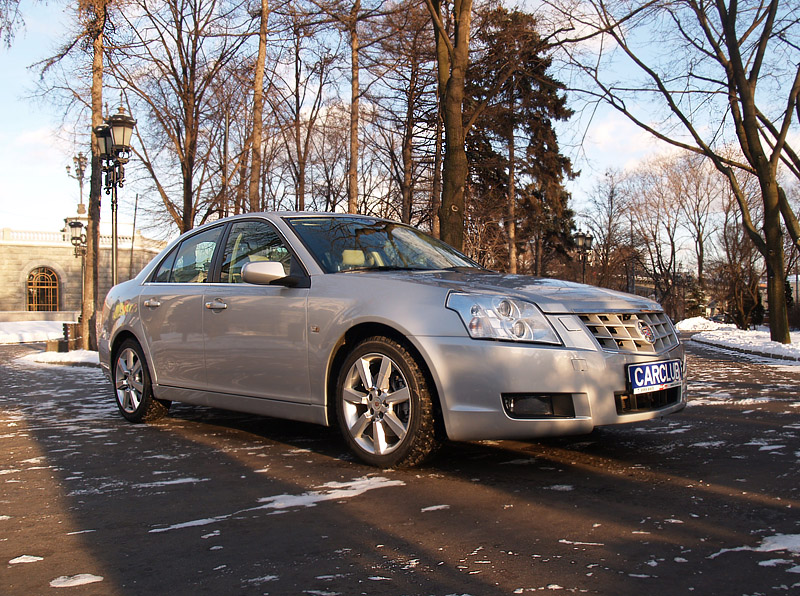
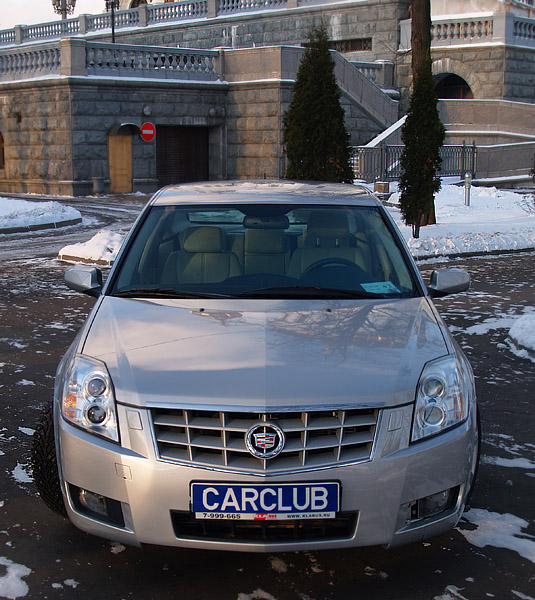
Outside, it's hard to shake the feeling that several styles are mixed in the appearance. The recognizable mesh grille with a large Cadillac emblem is in place, but it sits somehow strangely — too low and noticeably tilted. The low window line is also confusing: usually Cadillacs look like armored fortresses on wheels, and large windows are not typical for them. But the rear of the BLS turned out just right, truly American: high, angular, with vertical taillights and a red brake light repeater strip across the entire trunk lid.
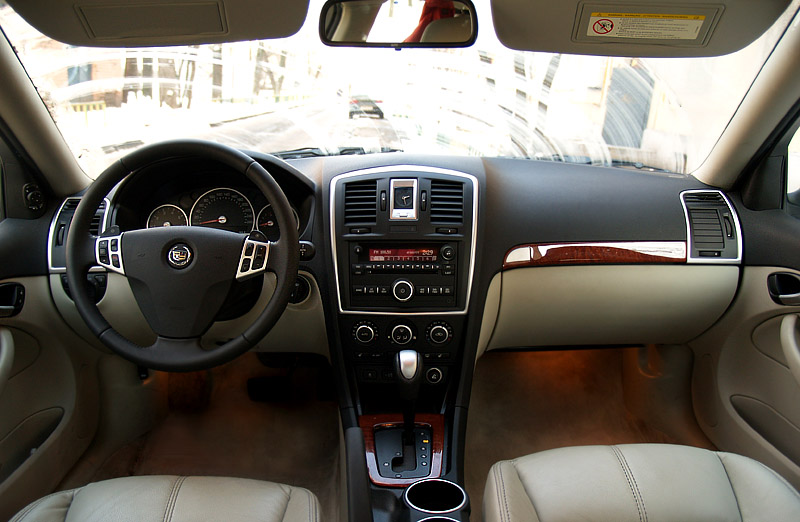
 Inside, there are also reasons for reflection. Some interior details can be replaced with branded ones without much cost, but there are those whose replacement will cost a pretty penny. The center console is certainly made in the spirit of "from Cadillac" — without elegant analog clocks and a powerful audio system, entering the European market would be pointless: the Saab interior is so distinctive that even those who have never sat behind the wheel of a Swedish car know about its features.
But behind the massive Caddy badge on the steering wheel, wide leather seats without a hint of lateral support, and analog clocks, the signature Saab solutions are easily guessed. Take the handbrake, for example: its button is not on the end, but under the index finger. Once during amateur ice racing behind the wheel of a Saab 9-3, I painfully pinched my finger with this handbrake a couple of times, and many rivals generally flew off the track without ever finding that ill-fated button. The Swedish origin is also betrayed by the steering column switches, which have moved over unchanged. Good thing the ignition lock in the BLS was moved from the center tunnel to the steering column.
Okay, enough comparing from photographs — especially since the interior as a whole is assembled and thought out quite successfully, with no serious ergonomic flaws, except for the soft front seats and the somewhat cramped rear sofa. And let's leave the question of borrowings to the engineers' conscience. Time to start the engine (by the way, the key is also exactly Saab-like), especially since we got the top version with the newest 2.8 V6 turbo engine producing 260 hp.
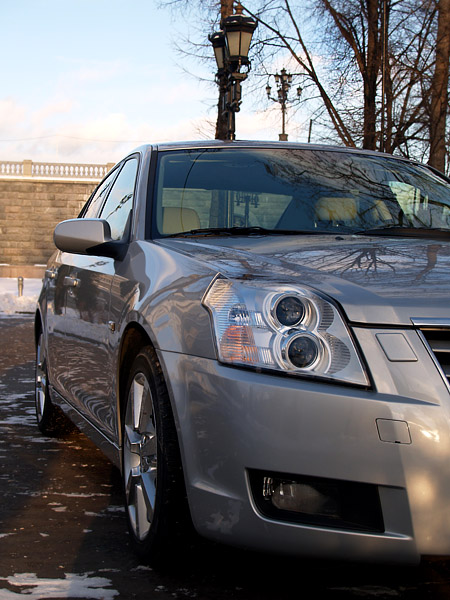 Even though the engine comes from America and Australia, this "world engine" General Motors feels very close to the signature Saab 2.0 Turbo unit. Excellent traction from 2000 rpm holds all the way to the cutoff (according to the passport, the peak torque of 365 Nm falls in the range of 1800–4500 rpm). Such a smooth characteristic is especially good with a manual gearbox, but with the "automatic" the Cadillac also accelerates briskly. The only thing that hinders a brisk start is wet or slippery surfaces, and in Moscow such weather lasts almost half the year. It's hard for the powerful engine to realize all its torque through the front axle. A differential lock, as on many powerful front-wheel-drive cars, would partially help, but the BLS doesn't have it. I consider myself an active driver and usually try to do without electronic assistants even in the city. The absence of a "leash" allows you to better feel the car and enjoy the driving. But in the BLS, the habit of turning off ESP played a cruel joke on me. Flying into a steep 180-degree turn at speed and adding gas, I felt the BLS helplessly polishing the asphalt with one wheel and instead of accelerating, almost stopping...
After this incident, the stability system was returned to service, and I left the storming of steep bends for a more suitable car. The element of Cadillac, like most American cars, is the highway. Here the electronics no longer interfere with the front wheels spinning, and the BLS confidently gains speed. The modern 6-speed "automatic" works promptly. However, the shift paddles on the steering wheel are active only in manual mode, whereas on Audi they work always and allow you to engage a lower gear at any moment for engine braking or acceleration.
Despite the powerful engine, the Cadillac's suspension is quite comfortable, and this is perhaps its main difference from the Saab 9-3 Aero with the same engine. Of course, for many Cadillac fans, comfort is the main thing, but even here the car had shortcomings.
 A powerful engine on a front-wheel-drive car, alas, does not get along well with a soft suspension. The drive and steered wheels have too much travel relative to the body, which affects the precision of reactions. Of course, on a straight line the BLS flies like an arrow from a bow, and for that, thanks go to the thoughtful aerodynamics from Saab engineers. The car also handles gentle bends perfectly, but as soon as you hit broken asphalt on an arc — and control over the Caddy slips through your fingers. The suspension cares about passenger comfort, while the driver suffers from an empty steering wheel, and you have to turn the wheel almost by feel.
Over the past couple of years, General Motors has been doing poorly: in the American market, the company is suffering heavy losses, closing plants, and cutting staff. These unpopular measures hit the corporation's authority and its stock quotes. Therefore, the desire to strengthen its position in Europe with a new Cadillac model is quite understandable. However, the result of such research, alas, is not impressive. It is completely unclear why take the BLS in maximum configuration for $49,100, when for comparable money (from $40,410, but with a smaller list of options) you can buy an almost identical Saab 9-3 Aero, which has no less interesting design and pedigree, but at the same time is more composed on the road and better obeys the driver. Moreover, Saab offers a choice between a sedan and a stylish wagon, and options can be selected as needed, rather than paying for everything as a package. Another alternative to the Cadillac BLS is the platform-sharing Opel Signum. Thanks to its long wheelbase, it is better suited for the role of a business car, and the top version with the 2.8 Turbo engine and "automatic" costs from $40,390.
If the desire to become the owner of a "Cadillac" with a capital letter is great, and there is not enough money for classic models, it is better to pay attention to the BLS with a more modest 175-horsepower 2.0 Turbo engine. Given slippery roads and front-wheel drive, the difference in dynamics will be barely noticeable, and a lighter car will likely be more obedient. Moreover, the price of such a version starts from $34,100, and for an additional $2,000 you can get a version with an "automatic" — a truly people's Cadillac.
Leonid Pavlov went on a test drive of this model to find out how good it is in real conditions. The first thing that catches the eye is how the car looks in photographs: it really attracts attention with its design, which is clearly designed to stand out from the flow. However, appearance is only part of the impressions; much more important is how the car behaves on the road.
Behind the wheel, you quickly understand that the engineers tried to make the car comfortable for everyday driving. The suspension is tuned for softness, and this is felt on bumps: small joints and cracks in the asphalt are absorbed almost imperceptibly, which adds points to the comfort piggy bank. At the same time, at speed the car maintains confident stability, not forcing the driver to strain during lane changes.
Inside, everything is thought out to the smallest detail: the seating position is comfortable, the controls are logically arranged, and the finishing materials make a pleasant impression, although they do not claim to be premium. Sound insulation is at a decent level — the engine is audible only during active acceleration, and at cruising speed the cabin is quite quiet.
As for dynamics, the engine runs smoothly and willingly pulls from low revs, but you should not expect a sporty temperament from it. Fuel consumption stays within reasonable limits, which is an important plus for this class of cars. Overall, the car leaves the impression of a balanced and practical choice that suits those who value comfort and reliability in everyday use.