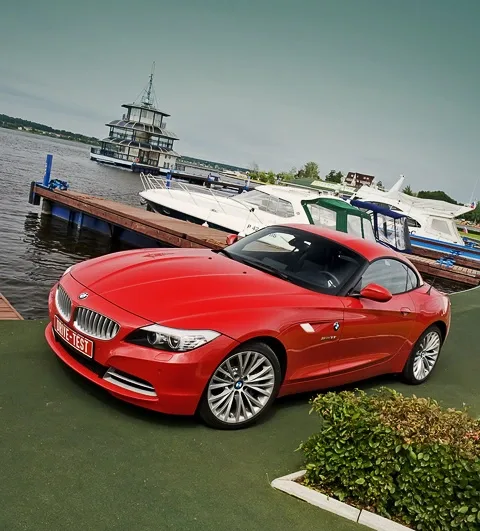
Have you ever watched the movie "Easy Virtue"? You'll agree that Jessica Biel is stunning as the triumphant winner of the pre-war Monaco Grand Prix. Remember that scene where she sits behind the wheel of the BMW 328 roadster — the legendary Bavarian sports car of those years and the ancestor of today's "Z"? In that fragment lies the essence of her character, Larita Whittaker. She drives the car casually, with one hand, while the other holds her newlywed husband's hand...
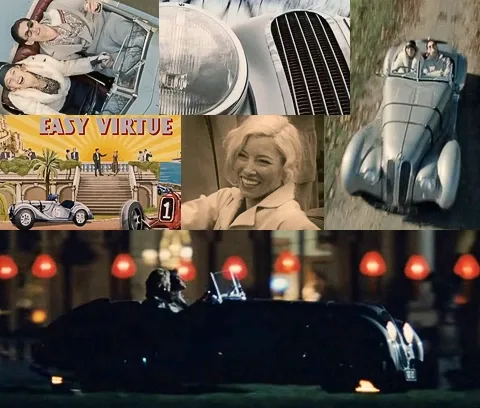
The movie "Easy Virtue" hit the screens only after the Bavarians had finished working on the Z4. Otherwise, these shots would certainly have adorned the "inspiration boards" in Munich's marketing department.
I'm almost certain: if the Germans, while designing the new generation of the "Z", had thought of a woman behind the wheel, they would have imagined her as a modern-day Larita Whittaker. Say, Sabine Schmidt, who races BMW M5 ring taxis on the Nordschleife, or a NASCAR diva like Jessica Simpson. What other lady would appreciate that particular softness of ride, which to me, a person who has never worn heels, seems like running in stilettos. With knees straightened.
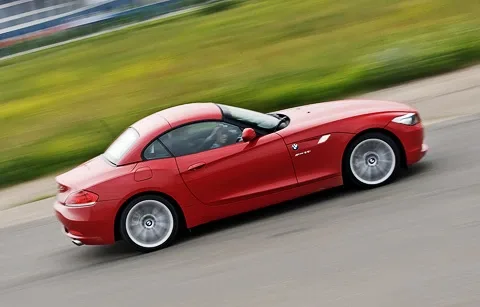
The Z4's manners remain unchanged, whether the roof is up or down. The lack of body rigidity makes itself known even with the top raised: during active maneuvers, the seal under the rear window starts to creak, pressed against the plastic shelf.
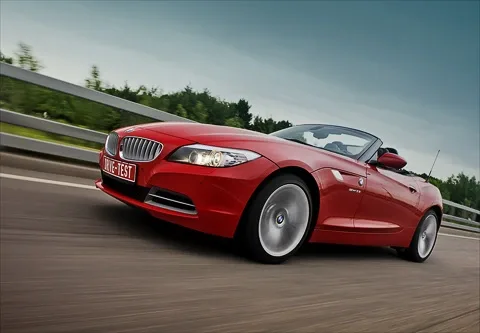
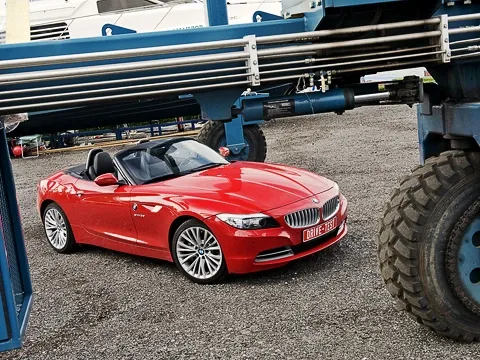

Nevertheless, from Munich they broadcast on all frequencies that the fresh roadster is a car with two X chromosomes. Like, both the exterior and the interior are the fruit of girlish dreams. Journalists from reputable publications were even shown female designers... If the Z4 was indeed conceived by Nadya Arnaout and Juliana Blasi, then they put all the masculine essence they had into their creation. Just look at those lean flanks — would you call such a car a little pony?
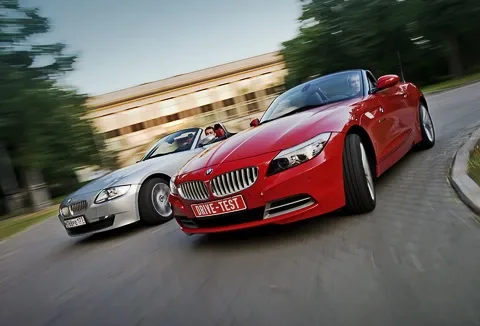
Whoever is credited as the design author, it is this person who breathed new life into the car. The roadster now has a completely different attitude. The old and new cars are like Bruce Willis and Ashton Kutcher. But the platform remained the same — it can be compared to Demi Moore. The base from the BMW 3 Series.
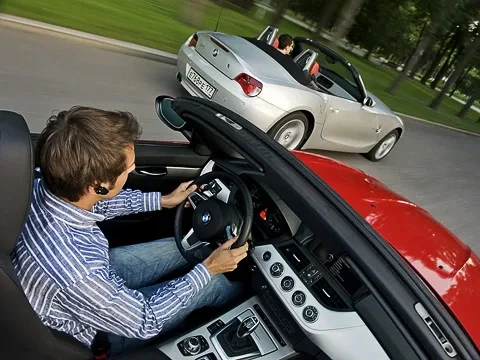
The interior of the new car can't be called luxurious. The impression is worsened by a monochrome silver insert on the dashboard, which could have been two-tone and looked more striking. But even with that, the previous interior seems ascetic. And cramped. Which is surprising, since the wheelbase hasn't changed. Unlike the new body, the 2006 version has not an ounce of excess on its hips — the fabric top requires very little storage space.
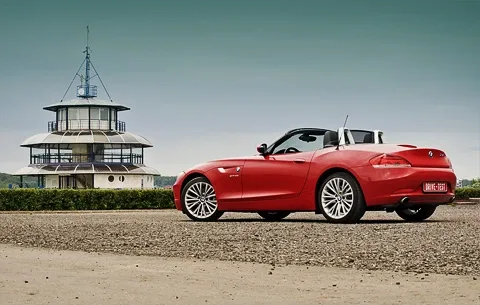
The list of chassis refinements could easily pass for a scientific treatise on materials science. But the increase in dimensions is a consequence of the layout of the new folding hardtop. The aluminum structure doesn't tolerate misalignment, so the roof can only be folded after a complete stop.

Under the stowed roof, only a small suitcase fits: the space for it is separated by a special movable curtain. The claimed 180 liters in reality turn into a noticeably smaller useful volume.
Twenty seconds — that doesn't seem like much, but while the scarlet trunk lid finally swallows both roof sections, a driver, say, of a Mazda MX-5, having handled the same operation, would already be accelerating past a hundred. What a cheap upstart!
Oddly enough, the "Z" doesn't at all push you to immediately rush off in pursuit. It has lost its former uncompromising nature. The car's philosophy is to calmly descend the mountain, without fuss. Despite the 306 "turbo horses", the BMW doesn't immediately sprint, but, having powerfully pushed off from the starting block, confidently swims freestyle. The robotic "manual" with dual clutches shifts gears so imperceptibly that acceleration intoxicates no more than a ride in a high-speed elevator to the seventh floor. No comparison to walking up the stairs.
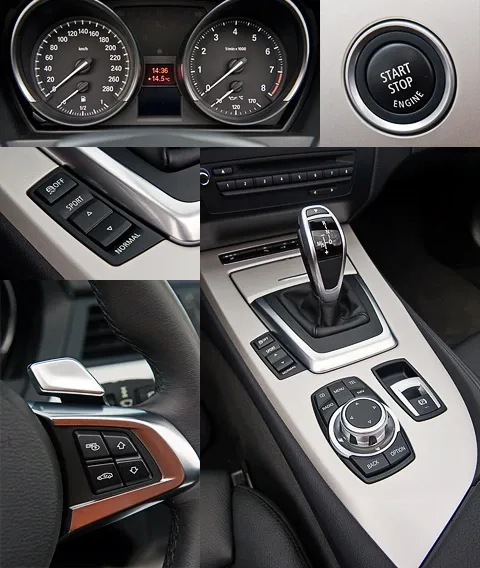
The iDrive controller is positioned so that every time the driver reaches for the transmission selector, it ends up under their elbow. On other BMW models, the "dial" is moved closer to the passenger.
The paddle shifters for manual mode are arranged so that the gearbox can be operated with one hand. Push away — downshift, pull toward you — upshift. In practice, the metallic levers are inconvenient — it's more familiar and understandable to use the lever on the central tunnel in the classic sports style.
The two-position button to the left of the "robot" lever switches transmission modes. In principle, even the most aggressive Sport+ is quite tolerable in city traffic. On more advanced Z4 versions, this same button tightens electronically controlled dampers. But on our example — the suspension is passive.
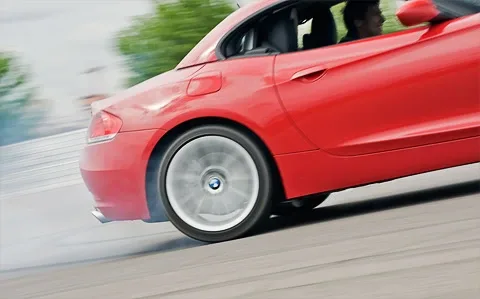
But the car doesn't tire you with pressure: at every traffic light, you can confidently start from low revs. No fussing with the clutch and lever — just a game of two pedals. And that's much more pleasant than with a regular "automatic": you feel a rigid connection in the drivetrain. True, launch control only activates with the DSC system active. But the electronics honestly perform for the audience: the "Z's" thrill is precisely in the smoke generated by the Run Flat tires, not in perfectly clean acceleration.
For the onboard electronics to recognize the desire to really cut loose, the "robot" must work in the hardest Sport+ mode. The tachometer needle flies to 4000 rpm and freezes there, nervously twitching. Meanwhile, on the instrument cluster display, an animated checkered flag appears — like an invariable attribute of racing. It looks amusing: I haven't even moved yet, and they're already waving the finish flag at me — a hint at the imminent end of the gearbox?
The engine, although turbocharged, feels like a very angry electric motor: the thrust gushes like a waterfall — a furious and merciless stream. The "robot" is magnificent even in fully automatic mode. Not only for its rapid-fire shifting, but also for its ability to do everything imperceptibly, without jerks. But no matter how I insisted, it wouldn't let me touch the redline. Even in manual mode, it shifts up on its own, not allowing the engine to rev to the limit of 7000 rpm.
And so be it. Anyway, the "Z" no longer sounds on the edge. Gears should be shifted manually around five thousand, when the bimetallic "six" booms with the exhaust, spitting out the mixture exploded right in the exhaust manifold. And between these pops, the engine delivers a powerful, velvety, and truly sporty note. Five thousand — bang — five thousand — bang — five thousand... Dash — dot — dash — dot — dash... This Morse code sends shivers down your spine.
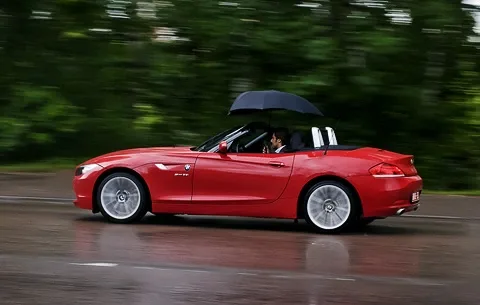
They're immediately blown away. With the roof down, the wind rules the cabin: it familiarly tousles hair, hits the face, crawls under the collar, rummages through pockets. And this is with the side windows (whose increased area the Bavarians are so proud of) raised, and the wind deflector installed.
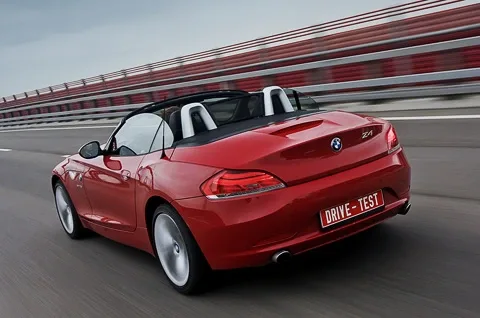
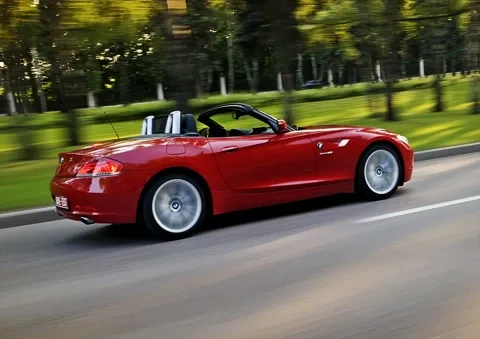
Even the few days we can dedicate to sunbathing, BMW cuts to a minimum. Raised windows and wind protection don't save from drafts. But here's a funny optical illusion: the rear side windows create the impression that there's another pair of seats behind you, like in a full convertible. It seems you're driving a larger car than it actually is.
Simply put, the Z4 is not one of those cars you can drive with the top down until late autumn. With the roof in the trunk, the BMW is a strictly summer option. Moreover, the lower the speed, the more persistently the draft seeps to your feet. But on a leisurely city stroll in warm weather, nature itself becomes your automatic climate control.
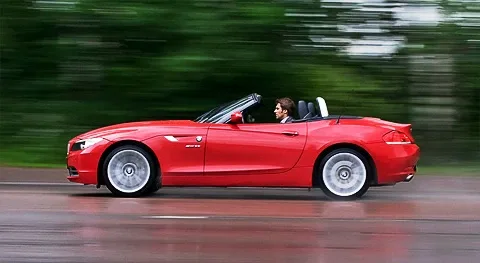
Open cars are for those who have sex. The Z4 roadster is for those who have moved from quantity to quality.
The stiffness of the shock absorbers and the misanthropy of aerodynamics completely don't match the steering wheel, which remains clean from suspension vibrations. Everything around can rattle and shake, while your hands calmly converse with the electric power steering. Such a mismatch of the local vibration background to the overall one — like in a computer game. And the very character of the effort on the wheel is far from analog: with an increase in the steering angle, the reactive force builds artificially. Or stops changing altogether.
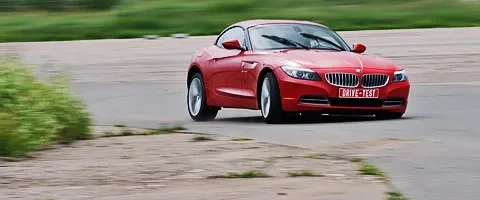
In a high-speed corner, the BMW almost scrapes the asphalt with plastic flaps under the bumper.
Judging by first impressions, the chassis is indeed tuned with a feminine character. Body roll turns out to be unexpectedly large — it feels as if someone has already accustomed the roadster to a relaxed driving style. When you abruptly open the throttle in a corner, the "Z" just settles onto its rear, then pushes the front axle outward. Added gas — and the trajectory straightened out. Pressed hard — got a response. Where do such front-wheel-drive manners come from? Over 450 km of testing, the front tires wore noticeably more — a rare occurrence for a powerful rear-wheel-drive car that was also driven around for photo shoots.
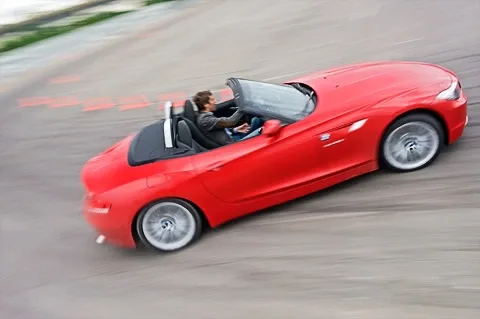
Even after deactivating the DSC stability system, you can count on its help if the car starts to slide outward in a corner.
The rear axle, despite the stiff run-flat tires, behaves surprisingly stable. You can only break the wheels into wheelspin if you first lift off the throttle and disturb that perfect weight distribution. Only then does the unloaded rear reluctantly step into a slide, which is immediately quelled by sharp stabilization. No need to fear reverse rocking: inertia will simply sway the seductive shapes on the springs — but the tires have already gripped the asphalt again.
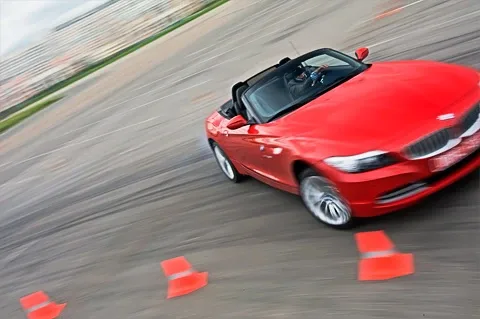
Losing the Z4 in a corner is difficult — the electronics are on guard. Not like on a straight road cut by ruts. Here, DSC does not register a prolonged increase in the yaw angle, so the driver must tame the dance on the transverse road profile half a meter from the barrier alone.
Floor it! Only someone who has tested the car exclusively in a slalom on a small lot can call the Z4's handling feminine. The roadster feels cramped among cones. Find a sweeping corner that can be taken in third gear (second accelerates to just over a hundred), and slightly close the throttle before the apex — you'll get a real adrenaline rush.
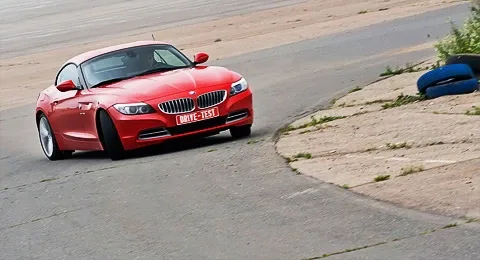
The higher the speed, the more interesting the Z4's handling. A bit sharper with the lift-off — and the roadster breaks into a slide at any opportunity.
The car seems transformed. Reflections on the edges of the hood, which already points toward the inside shoulder, dance like crazy. The slide builds rapidly and requires precise steering and throttle work. True, neither is particularly sharp.
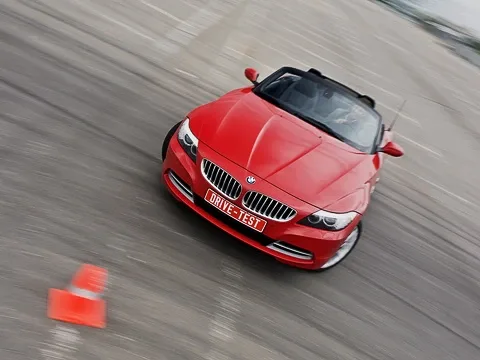
In a controlled slide, engine responsiveness is sorely lacking, but the power steering does not resist quick rotation.
All reactions to the driver's actions — whether a change of course or a request for traction — no longer have that spontaneity of the previous "Z." Yes, the driven wheels pull forward of the steered ones, and the non-defeatable electronics keep the Z4 in power oversteer — but the roadster has already had its horns polished and its tail curled.
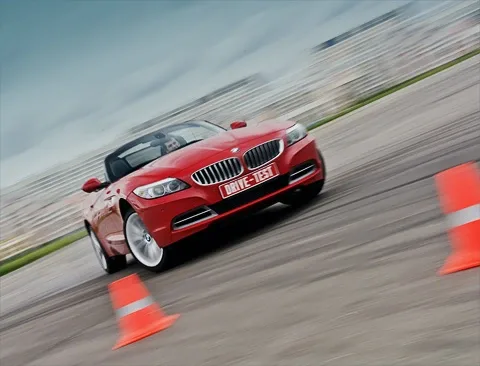
In a slide, the stability system simulates a locking differential.
Eyebrows are plucked, chest is shaved — I even miss the active steering system, which is not on the test car and which I usually dislike for its excessive nervousness: here it would be appropriate. But on the two-spoke button that switches engine modes, I would wrap tape on the side that makes the accelerator more aggressive.
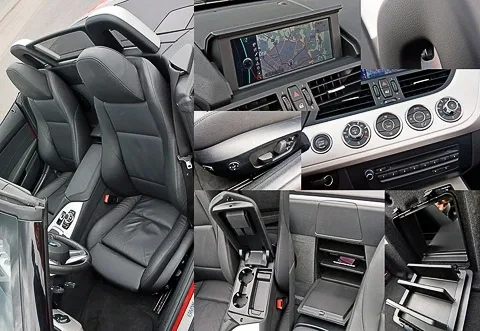
You'll have to pay extra for climate control, navigation system, and comfortable seats with adjustable side bolsters and memory. Even the wind deflector, so necessary for the car, is on the options list. With the roof up, the Z4 can carry narrow long items like golf clubs or skis.
I agree with the idea of the sports car's "fall from grace" only in one thing — the brake system settings. Here, the marketing serpent and I are unanimous. Because the Z4 is the first "Bimmer" whose brake pedal does not require steel muscles in the driver's leg. One might say the pedal has low sensitivity and noticeable free travel. And in the working range, the force builds up sluggishly. By BMW standards, this pedal could be called mushy...
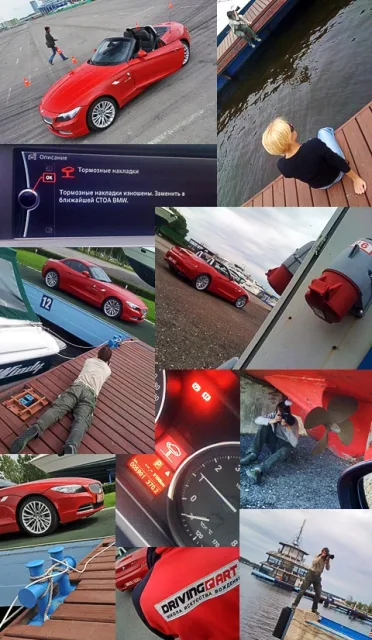
However, such brakes are perfect for city routine. The pedal feel hardly suffers. The usual BMW jerks and nose dives in traffic jams — nothing like that was noticed behind the red roadster. But at 6000 km, the "Z" is already asking for service to replace the pads — too soft?
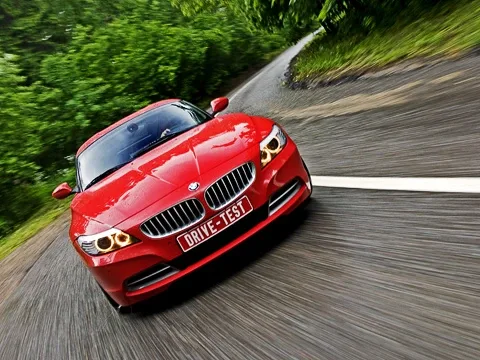
The roadster feels better on highways than on twisty country roads. And, as already said, only if the highways are perfectly smooth. Outside the city, the suspension constantly bottoms out, not only on compression but also on rebound.
If not for the mediocre ride comfort, I would call the BMW Z4 the best city car of the brand. Not the "One," not the "Three," but the Z4. A completely non-stressful car, at least until the first rut. I also like the roadster's versatility — how its temperament changes with speed. It's great that the "Z's" habits depend little on whether the roof is up or down, although the body itself is not stiff enough.
But still, this is not the car whose name I would whisper during the August meteor shower. I already have a roadster — three times cheaper and just as crazy. Also, by the way, with a hard folding roof, which, moreover, closes much later for winter. And for a sum comparable to the Z4's price, you can buy a Porsche Cayman — not as glamorous, but with hair in the right places.
For those who have their eye on the Z4 as a gift for a girl, I would advise weighing everything carefully. Not because your girlfriend will find it hard to handle the heavy steering, her hair will be covered in lipstick from the wind, and her veneers will need replacing more often. Girls like that too. They are familiar with off-season temptations.
It's just that the Z4 roadster still hasn't become a women's car. And personally, when I see a girl behind the wheel of a men's car, I immediately want to throw counterfeit cornflowers bought from underage illegal immigrants onto her seat. A woman with character — not of easy virtue. You definitely need to get her phone number or at least an email. The keys to such a roadster are the keys to a chastity belt. In my opinion, you're taking a risk giving them to your companion, friends.
Specifications
| Model | BMW Z4 sDrive35i |
| Body |
| Body type | roadster |
| Number of doors/seats | 2/2 |
| Length, mm | 4239 |
| Width, mm | 1790 |
| Height, mm | 1291 |
| Wheelbase, mm | 2496 |
| Track front/rear, mm | 1511/1537 |
| Curb weight, kg | 1600 |
| Gross weight, kg | 1855 |
| Trunk volume, l | 180–310 |
| Engine |
| Type | petrol, with direct fuel injection and turbocharging |
| Location | front, longitudinal |
| Number and arrangement of cylinders | 6, in-line |
| Number of valves | 24 |
| Displacement, cm3 | 2979 |
| Max. power, hp/rpm | 306/5800 |
| Max. torque, N•m/rpm | 400/1300–5000 |
| Transmission |
| Gearbox | manual, robotic, seven-speed |
| Drive | rear |
| Chassis |
| Front suspension | independent, spring, McPherson |
| Rear suspension | independent, spring, multi-link |
| Front brakes | disc, ventilated |
| Rear brakes | disc, ventilated |
| Tires | 225/40 R18 (255/35 R18)* |
| Ground clearance, mm | n/a |
| Performance characteristics |
| Maximum speed, km/h | 250** |
| Acceleration time from 0 to 100 km/h, s | 5.1 |
| Fuel consumption, l/100 km |
| — urban cycle | 13.3 |
| — suburban cycle | 7.1 |
| — combined cycle | 9.4 |
| Toxicity standard | Euro-5 |
| Fuel tank capacity, l | 55 |
| Fuel | AI-95–98 |
* In parentheses — rear axle tires
** Electronically limited
Equipment of the tested car
Basic equipment - Front airbags
- Side airbags and inflatable "curtains"
- Isofix child seat mounting
- Dynamic stability control
- Bi-xenon headlights
- Air conditioning
- Steering column with electric adjustment of tilt and reach
- CD radio
- Trunk lid closer
- Satellite anti-theft system
- Leather interior trim
- Run Flat tires
Additional equipment - Robotic gearbox — 129,792 rub.
- Automatic climate control — 31,388 rub.
- Adaptive headlights — 24,326 rub.
- Light and rain sensors — 7,062 rub.
- Front and rear parking sensors — 42,139 rub.
- Multifunction steering wheel — 8,082 rub.
- Electrochromic rear-view mirrors with heating and electric drive — 28,092 rub.
- Sport seats with electric adjustments and memory — 118,412 rub.
- Seat heating — 20,010 rub.
- Wind deflector — 14,595 rub.
- Navigation system with USB media support — 99,144 rub.
- Alloy 18-inch wheels with mixed tires — 41,668 rub.
Price of basic configuration — 2,580,800 rubles
Price of the tested car — 3,161,756 rubles
Design
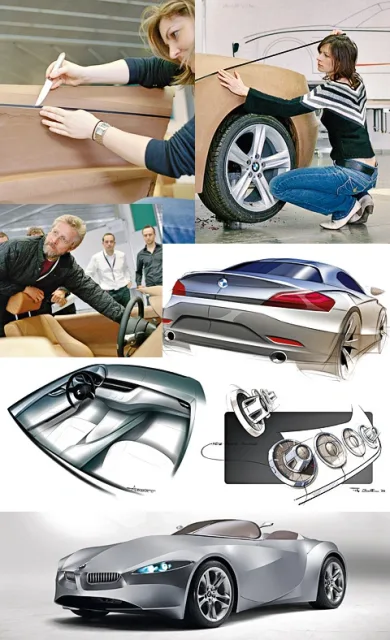
Interior designer Nadya Arno (top left) and exterior designer Juliana Blasi are the public authors of the BMW Z4. This work was done by a team still led by Chris Bangle (center), who has since left BMW. Below is the prototype of the "Z", the "fabric" concept car GINA.
Technology
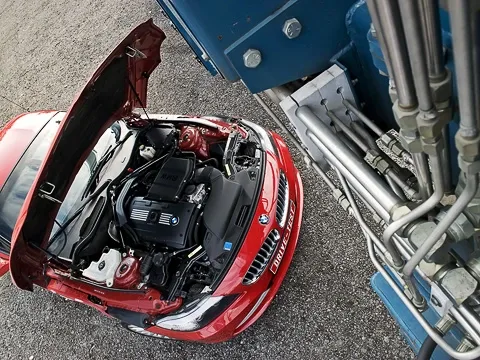
The combination of direct injection with twin turbocharging gave the three-liter engine phenomenal characteristics, but deprived acceleration of any development. Speed is gained perfectly smoothly. But the sound is good! The "turbo-six" is paired with a preselective "robot" from Getrag.
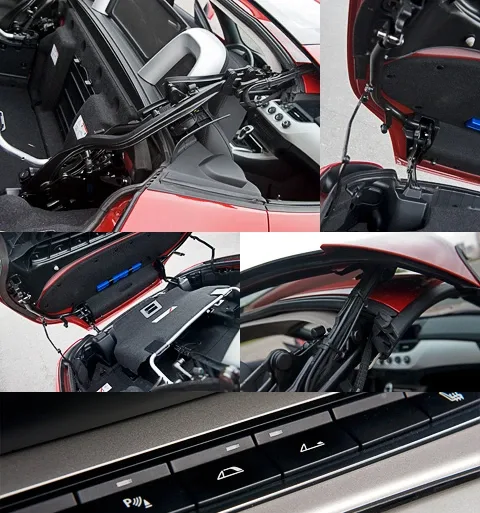
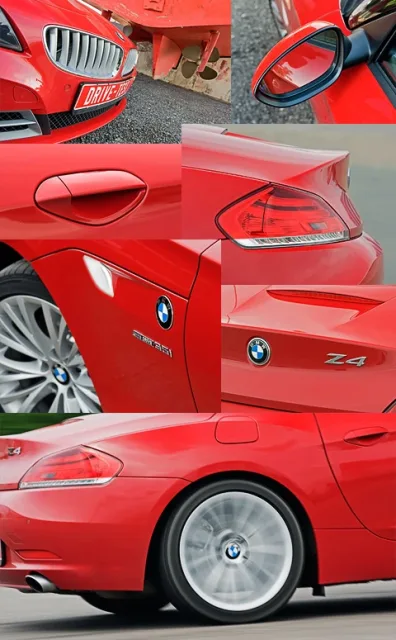
The rigid folding roof is the main fundamental difference of the new roadster from its predecessor. The roof module is produced by the same German company Edscha, which once created the 29-kilogram canvas cover for the previous Z4. Now the mechanism is much heavier, and the lever system steals useful trunk space. The keys controlling the servo drive must be held pressed for the entire operation. The electronics for some reason completely hides the windows, and before raising them again, takes a long pause.
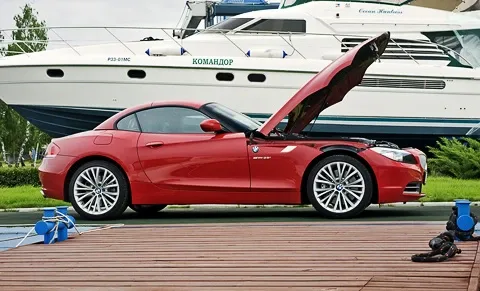
The Bavarians continue to introduce new production technologies that reduce car production time, but often increase the cost of repair and maintenance. The aluminum hood is a colossal part, including part of the front fenders. Not cheap — 45,600 rubles. And a small front fender costs 15,200 rubles.
Behind the scenes
We are no longer surprised that BMW test cars love oil: the prepared canister of synthetic oil came in handy this time too. The roadster also complained about problems in the adaptive headlight control system and transmission overheating after several hard launches in a row. But fuel consumption in the tough test mode was only 22 l per 100 km!
We, with Nesterov, who this time decided to photograph the Z4 necessarily in the atmosphere of the beautiful life, want to thank the yacht club "Komandor" for their hospitality. And also traditionally thank our friends from the Driving Art school for their comprehensive support.