
 Under the hood of the test BMW X6 lies a flagship petrol V8 biturbo engine with a displacement of 4.4 liters, producing 408 horsepower and 600 Nm of torque, with peak torque maintained across a wide range from 1750 to 4500 rpm.Comments (24)
Progress in the global automotive industry is not just about introducing fresh technologies that allow increasing power, improving fuel efficiency of powertrains, and adding new options to enhance comfort for the driver and passengers. To attract discerning buyers, manufacturers are forced to constantly surprise the public by offering something original — both in design solutions and technical innovations.
 |
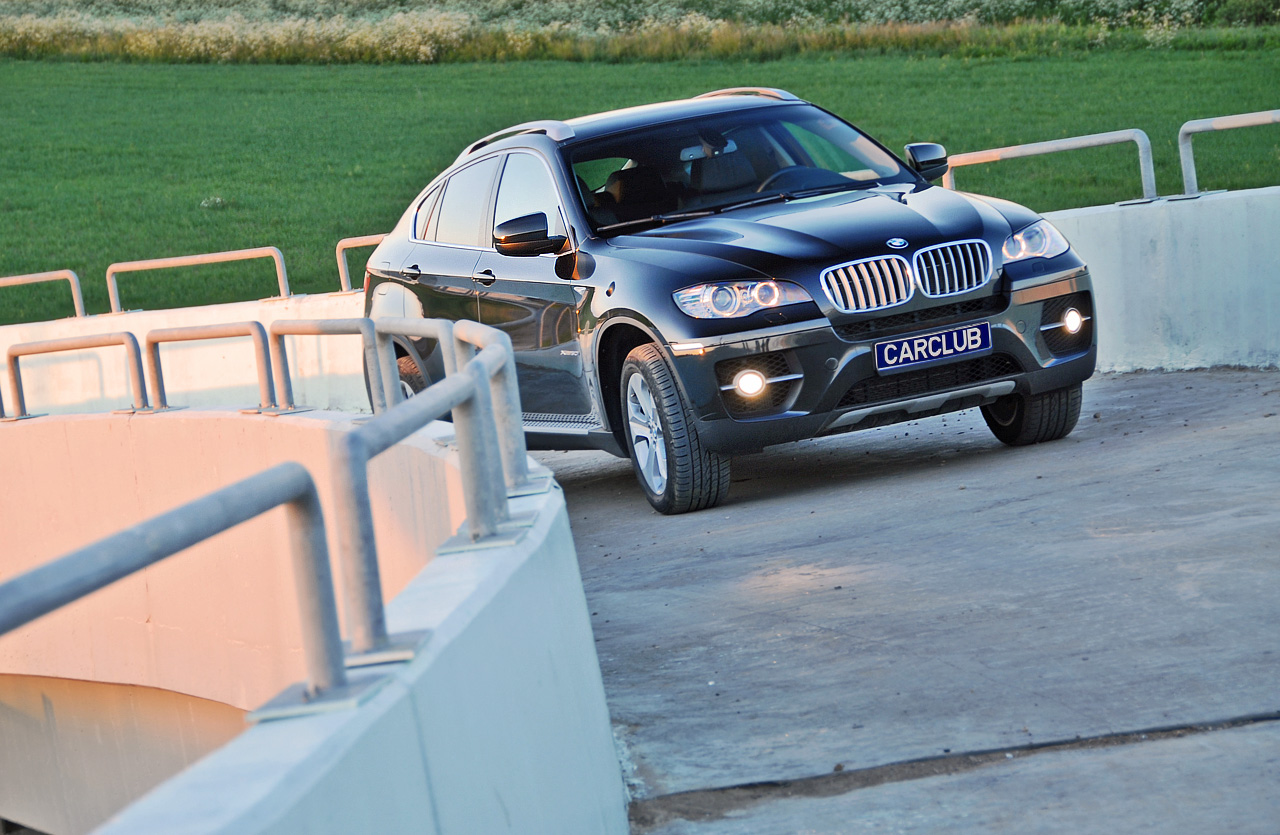
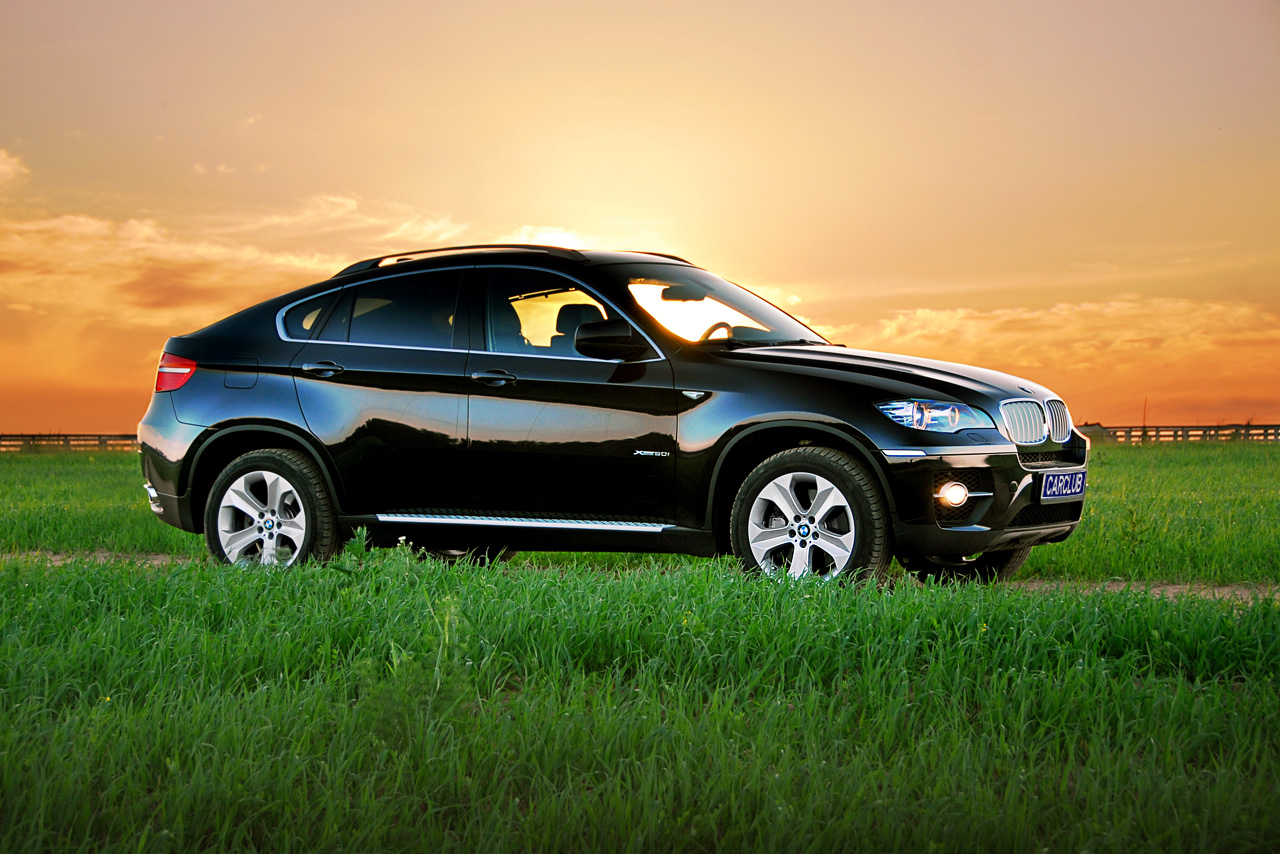
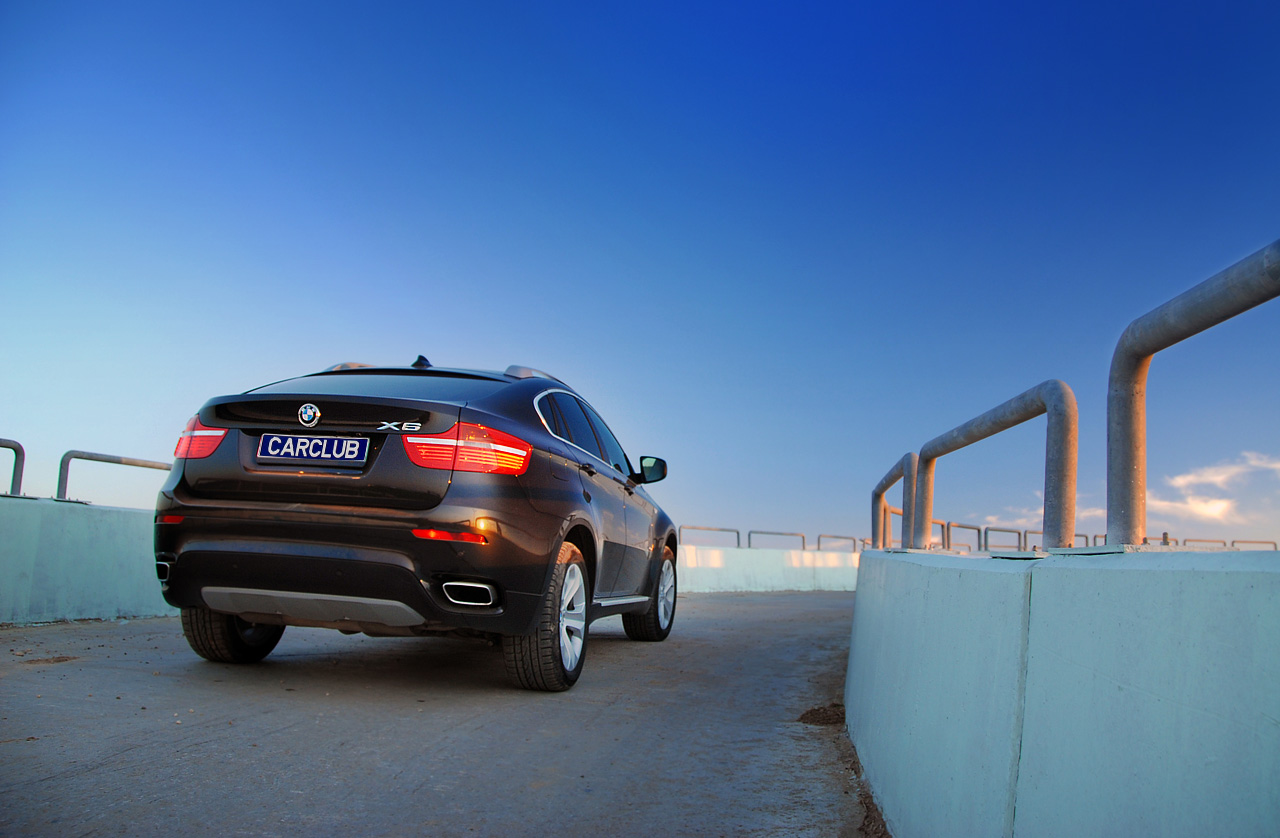
| Ambiguous appearance, vaguely reminiscent of a prehistoric lizard, and a somewhat heavy hunchbacked rear — honestly, at first acquaintance with the BMW X6, its exterior didn't grab me. However, after the drive, I reconsidered my opinion about the appearance of the "X-six." When you start perceiving the "Bavarian" precisely as a Sports Activity Coupe, you realize that it fully justifies the declared body type. |
The prototype of the new crossover BMW X6 debuted in autumn 2007. However, in Munich they preferred to call it differently — Sports Activity Coupe. Literally, this can be translated as a sports coupe for an active lifestyle, although in reality the X6 is just a slightly modified version of the BMW X5 crossover. The production version was first shown to the public a year later at the Detroit Motor Show.
 |
| The interior of the X6 almost completely replicates the donor's cabin, the only difference being that the rear sofa is divided into two separate seats by a partition, which houses cup holders and niches for small items. Otherwise — excellent finishing materials, luxurious leather, and many decor options: from aluminum inserts to piano lacquer. |
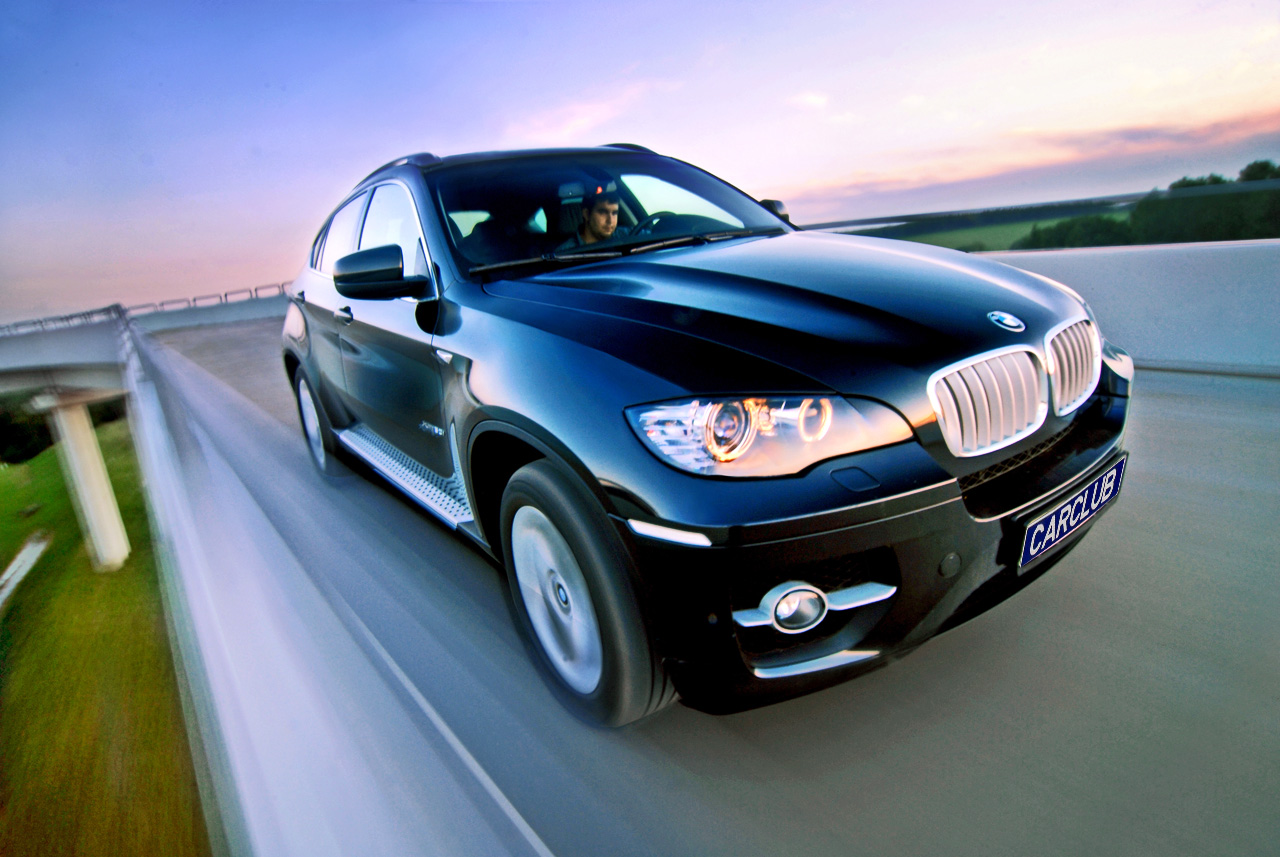
Hardly any other model in the entire history of BMW has generated so many contradictory responses. Immediately after the premiere, heated debates flared up around the appearance of the new model. Ambiguous appearance, vaguely reminiscent of a prehistoric lizard, and a somewhat heavy hunchbacked rear — honestly, at first acquaintance with the BMW X6, its exterior didn't grab me either. But besides creating a revolutionary appearance, engineers and designers were solving a difficult task — to clearly separate the two related models X5 and X6 so that they would not compete within the same brand. As a result, after the test drive, I changed my attitude towards the appearance of the "X-six." When you start perceiving the "Bavarian" precisely as a Sports Activity Coupe, you realize that it fully justifies the declared body type. So why not, damn it?
 |
| Under the hood of the test BMW X6 lies a flagship petrol V8 biturbo engine with a displacement of 4.4 liters, producing 408 horsepower and 600 Nm of torque, with peak torque maintained across a wide range from 1750 to 4500 rpm. With such potential, the crossover-coupe rushes forward like a bullet, responding equally briskly to the gas from any rpm and at any speed. The six-speed automatic transmission instantly reads commands from the electronic control unit and immediately selects the appropriate gear. |
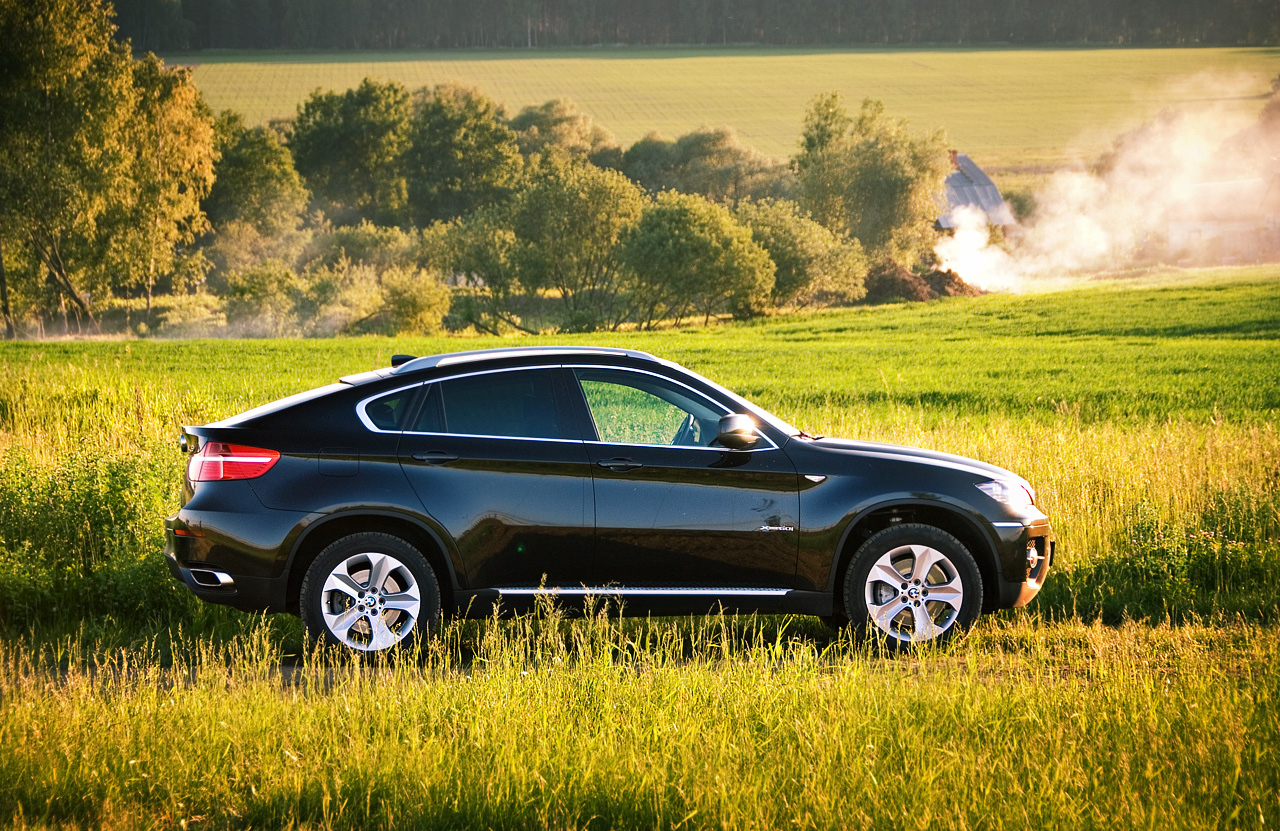
The sloping roofline, shortened overhangs, stretched wheelbase, sculpted wheel arches, and large wheels emphasize the power and signature style of "Bavarian Motor Works." Built on the basis of the BMW X5, the "X-six" turned out to be 85 mm lower, 22 mm longer, and 48 mm wider than the original. Place these crossovers side by side — and the difference in concepts becomes obvious: the X5 looks like a solid premium SUV with a daring character, while the X6 against its background is a typical pumped-up athlete who never leaves the gym.
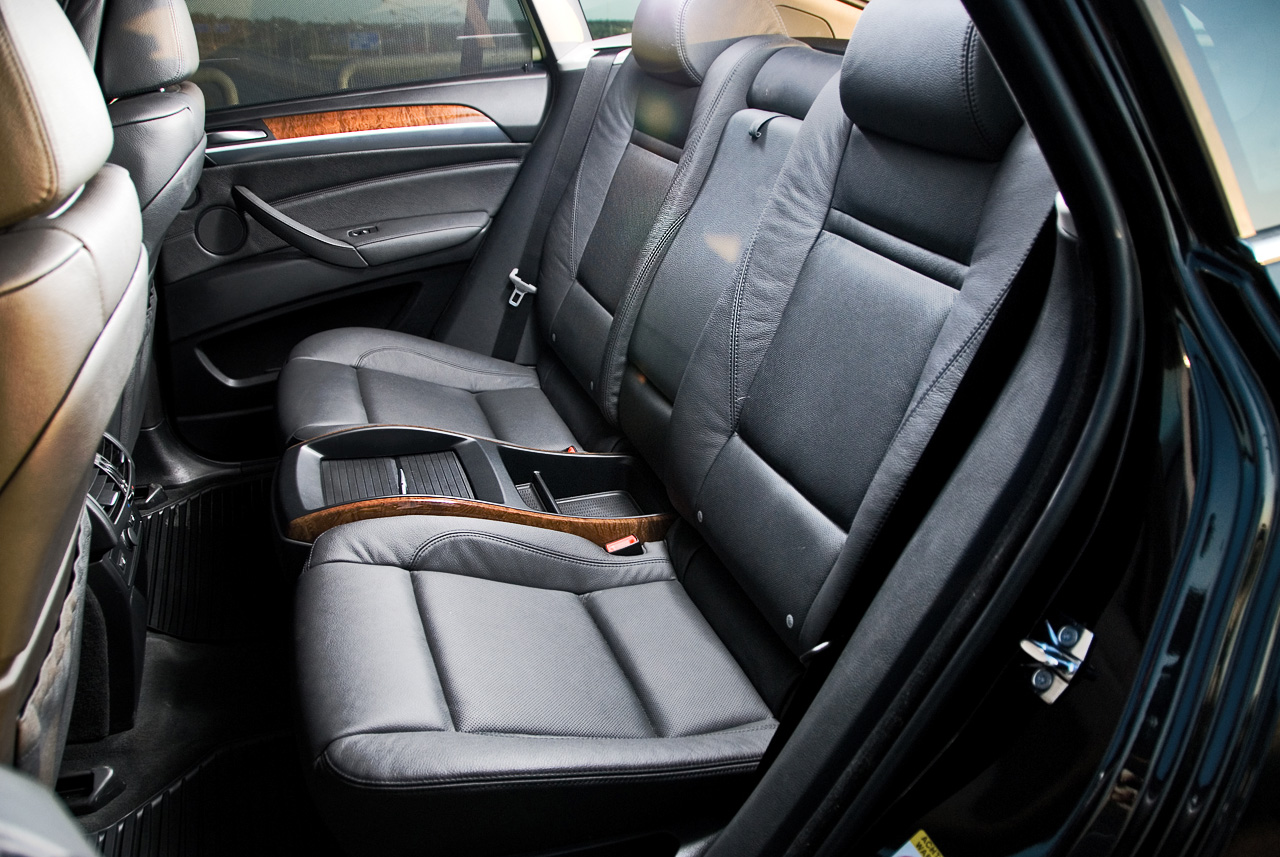 |
| The rear sofa offers well-thought-out seats for two passengers — there is a comfortable armrest and seat heating. In richer versions, a multimedia system or an additional climate control unit can be installed in the rear. Tall passengers will have to put up with the sloping roof — an inevitable price for the coupe-like silhouette. And the legroom is not as much as it might seem. |
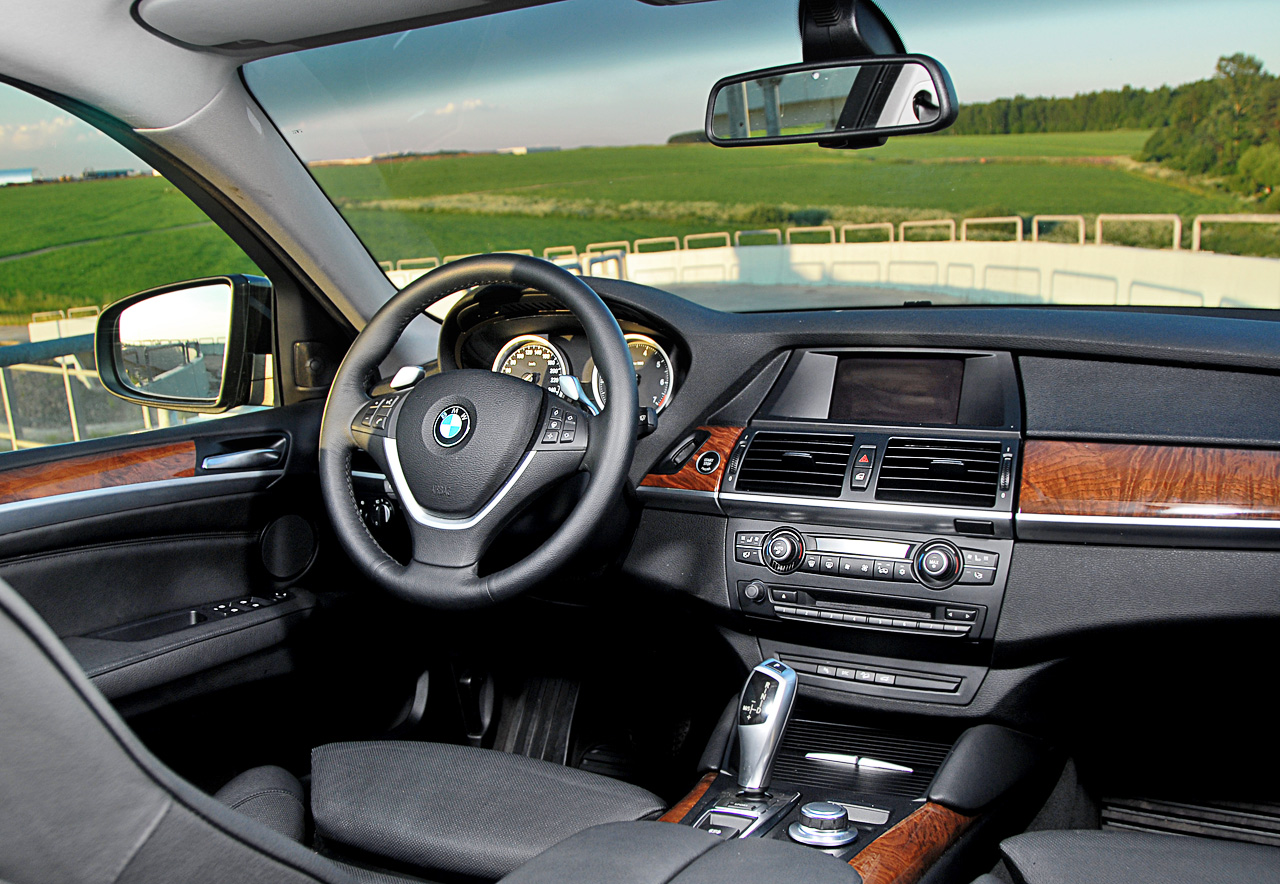
The interior of the X6 almost completely replicates the donor's cabin, the only difference being that the rear sofa is divided into two separate seats by a partition, which houses cup holders and niches for small items. Otherwise — excellent finishing materials, luxurious leather, and many decor options: from aluminum inserts to piano lacquer. The front seats, as is customary for BMW, are a model of ergonomics: impeccable profile, pronounced lateral support, and a huge number of electric adjustments, including adjustment of the upper backrest tilt and lateral support bolsters.
Otherwise — the same familiar instrument panel with excellent readability and the characteristic amber backlighting of the keys. On the central console there is the iDrive system display, as well as control units for the audio system and climate. Between the front seats — the already classic electronic gear selector and the iDrive knob, through which you can control climate control, vehicle settings, and navigation.
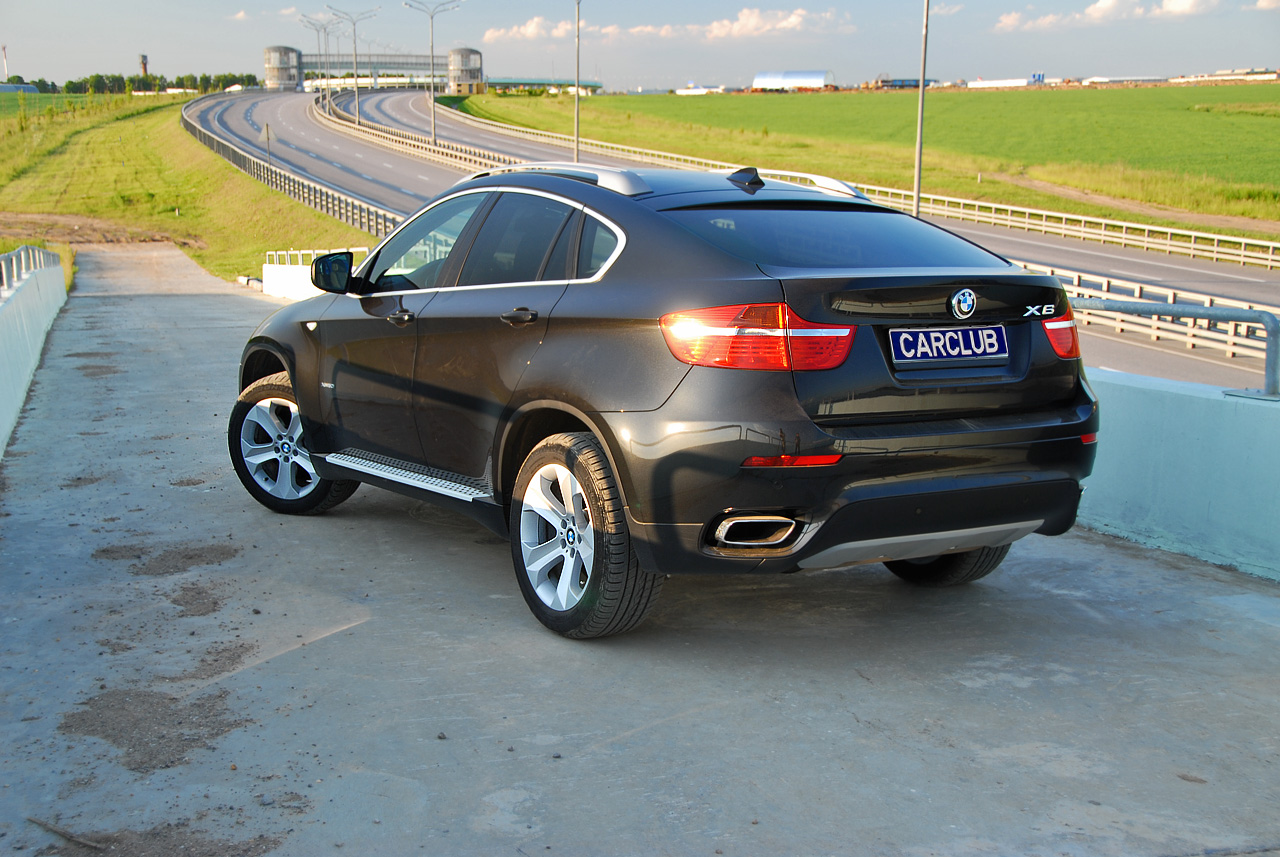 |
| Due to the heavily inclined fifth door, rear visibility is severely limited, so the rear-view camera here is not a whim but a pressing need. |
The rear sofa offers well-thought-out seats for two passengers — there is a comfortable armrest and seat heating. In richer versions, a multimedia system or an additional climate control unit can be installed in the rear. Tall passengers will have to put up with the sloping roof — an inevitable price for the coupe-like silhouette. And the legroom is not as much as it might seem. Due to the heavily inclined fifth door, rear visibility is severely limited, so the rear-view camera here is not a whim but a pressing need.
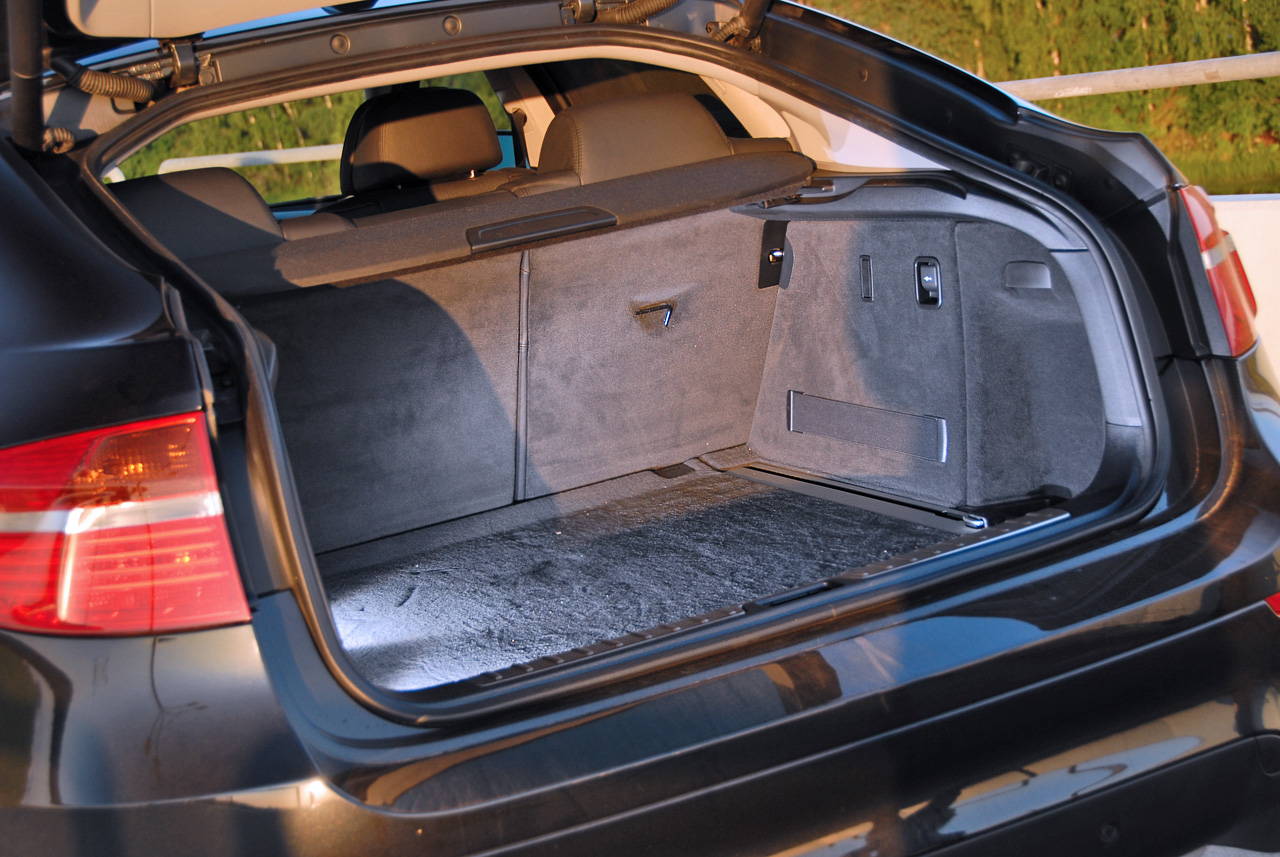 |
| The luggage compartment holds 570 liters. Not too generous. But it is unlikely that potential buyers of the BMW X6 consider the trunk volume a key criterion when choosing a car. Moreover, if necessary, you can fold the rear seat back in parts, increasing the space for cargo to 1450 liters. |
The luggage compartment holds 570 liters. Not too generous. But it is unlikely that potential buyers of the BMW X6 consider the trunk volume a key criterion when choosing a car. Moreover, if necessary, you can fold the rear seat back in parts, increasing the space for cargo to 1450 liters.
Under the hood of the test BMW X6 lies a flagship petrol V8 biturbo engine with a displacement of 4.4 liters, producing 408 horsepower and 600 Nm of torque, with peak torque maintained across a wide range from 1750 to 4500 rpm. With such potential, the crossover-coupe rushes forward like a bullet, responding equally briskly to the gas from any rpm and at any speed. The six-speed automatic transmission instantly reads commands from the electronic control unit and immediately selects the appropriate gear. In addition, the gearbox can be controlled via paddle shifters, although they are not very convenient to use. When activating the "Sport" mode, the ZF automatic not only shifts down one gear but jumps straight to two gears down.
 |
| The prototype of the new BMW X6 crossover debuted in autumn 2007. However, in Munich they preferred to call it differently — Sports Activity Coupe. Literally, this can be translated as a sports coupe for an active lifestyle, although in reality the X6 is just a slightly modified version of the BMW X5 crossover. |
Optional active steering changes the steering ratio depending on the speed of the vehicle. Therefore, in a parking lot, just a couple of turns of the wheel are enough to go from lock to lock. As speed increases, the steering ratio increases, and the steering wheel begins to fill with pleasant effort. The chassis of the test X6 was also active. The Adaptive Drive system with electronically controlled dampers and stabilizers continuously monitors a large number of external parameters and, if necessary, "tightens the collar." As a result, on an arc, the BMW X6 stands as if it were driving in a straight line, and in a corner, passengers only feel lateral acceleration. There is no talk of body roll here at all! Although this option is already familiar to us from the BMW X5 crossover.
 |
| For an additional charge, an active steering system is available that adjusts the steering ratio to the driving speed. And the Adaptive Drive system with electronically controlled dampers and stabilizers constantly monitors many external factors and, if necessary, "tightens the collar." But all this was already familiar to us from the BMW X5 |
The all-wheel drive of Bavarian crossovers is also no different: the electronically controlled xDrive clutch with continuously variable torque distribution under normal conditions splits the moment between the front and rear axles in a 40:60 ratio. When necessary, the transfer case redirects the drive torque to where it will bring maximum benefit.
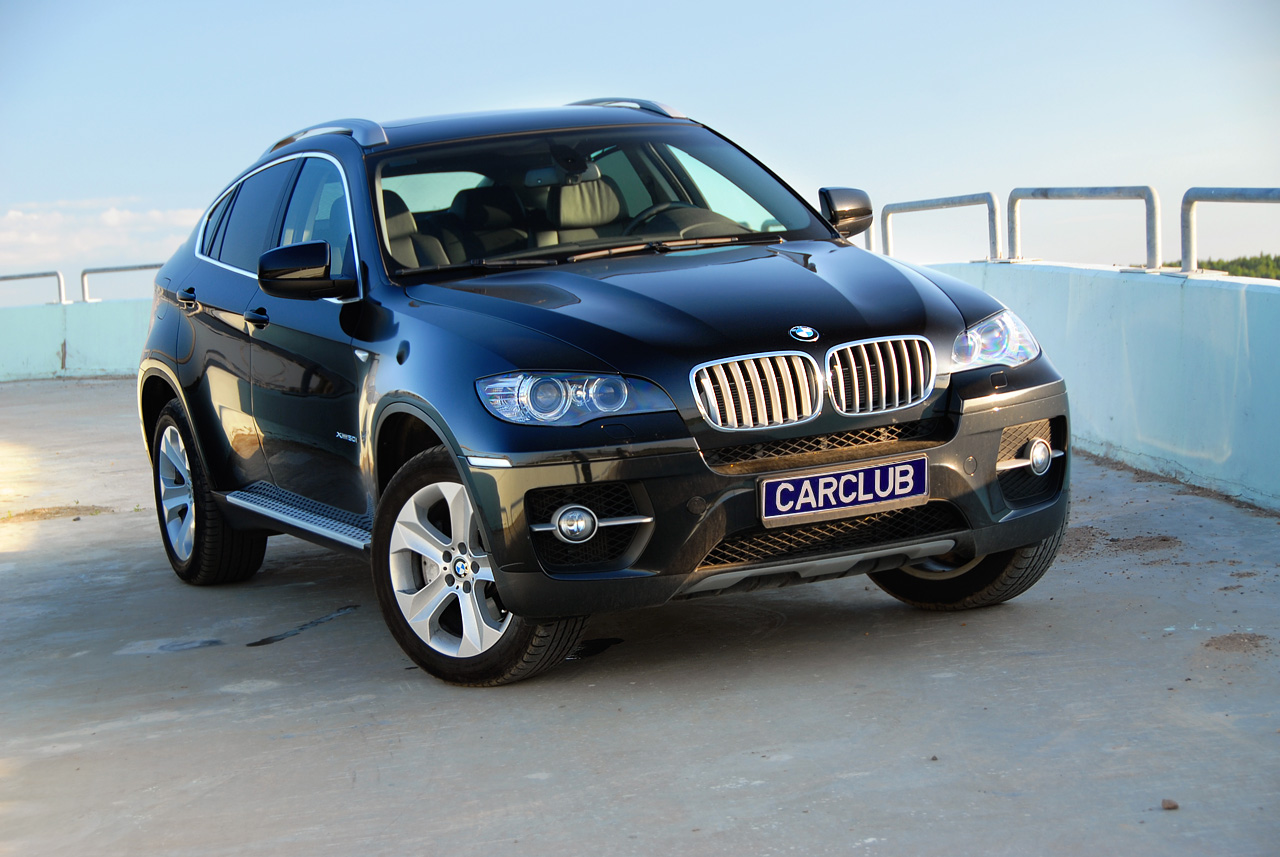 |
| The "X-six", built on the BMW X5 platform, is 85 mm lower, 22 mm longer and 48 mm wider than its donor. When both crossovers stand side by side, the conceptual difference between them is immediately visible: |
The main feature of the BMW X6 is the active rear differential DPC (Dynamic Performance Control). The essence of its operation is that with partial locking, it is capable of directing more torque to one of the wheels. This is very useful: for example, when cornering, the DPC adds torque to the outer rear wheel, thereby "screwing" the car into the turn.
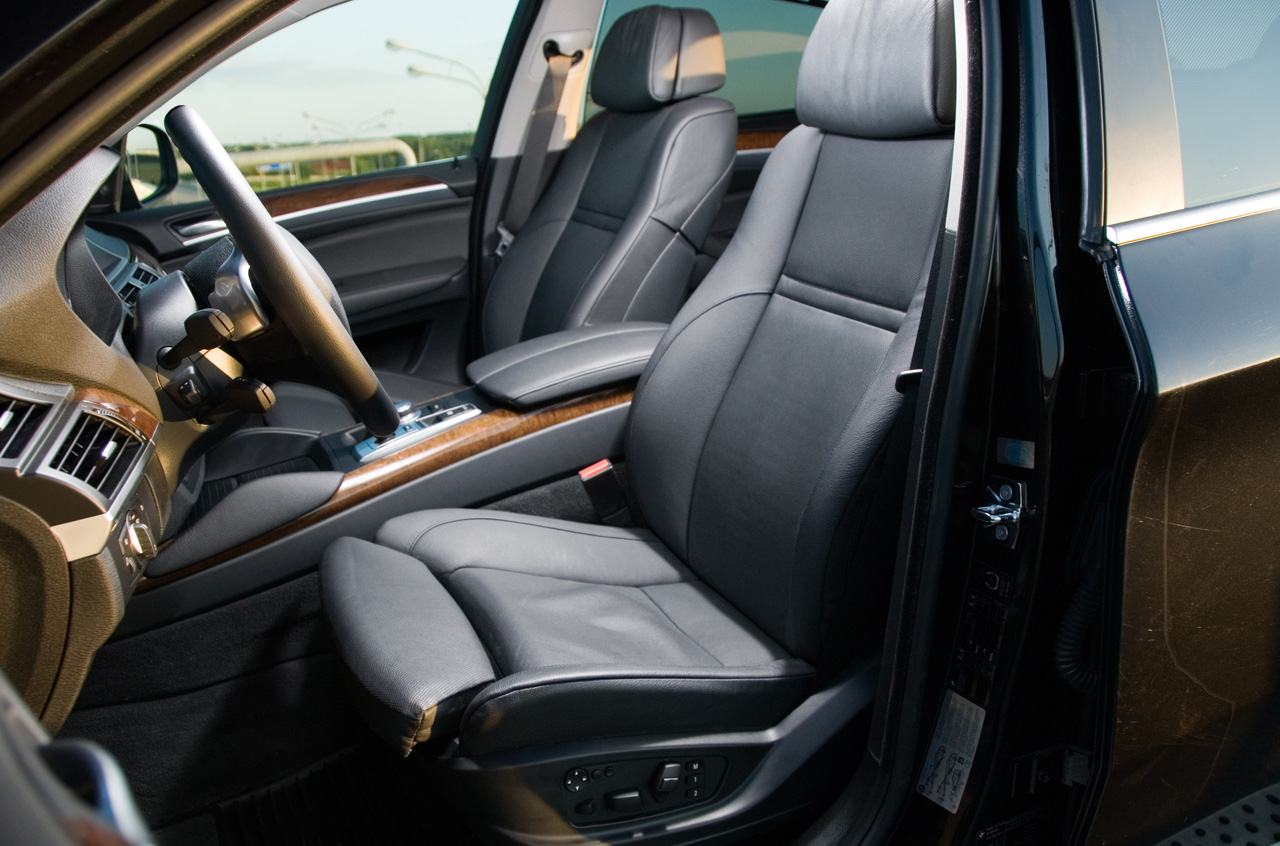 |
| The front seats, as is customary for BMW, are the standard of ergonomics: excellent profile, developed lateral support and many electric adjustments, including adjustment of the upper part of the backrest and lateral support bolsters. |
Without a doubt, in Russia the BMW X6 is primarily an image thing. The bright and non-standard appearance has turned this coupe-crossover into a fashionable accessory. But besides this, the "X-six" still remains one of the few cars that is capable of a little more than "just everything." And this is precisely its main advantage. It will be all the more interesting to look at sales statistics if a BMW X5 with the same turbocharged engines and an active rear differential appears. After all, from the point of view of practicality, the "X-five" puts the X6 on both shoulder blades. Then only the extraordinary design will remain in favor of the latter. And this, you will agree, is not so much!
Ruslan Galimov
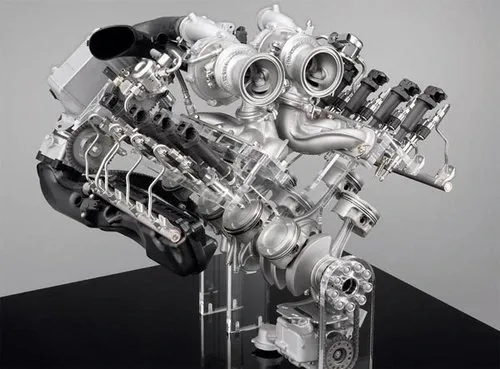 |
| A distinctive feature of the 4.4-liter V8 with Twin Turbo twin turbocharging is that the exhaust manifolds, turbochargers and catalytic converters are located not on the sides of the cylinder block (as is usually done), but on top - in its camber. This layout made it possible to make the intake channels extremely short. Because of this, the exhaust gases do not have time to cool down and enter the turbines hot, which automatically reduces energy losses. Plus, in the camber, the exhaust pipelines can be given the correct shape, in which the exhaust pulses in the collectors do not overlap each other and do not interfere with filling the cylinders with a fresh fuel-air mixture. |
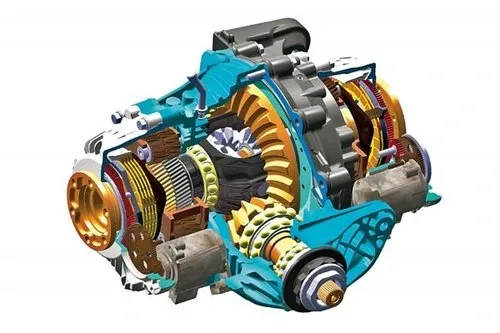 |
| The BMW X6 became the first Bavarian model to receive the DPC differential (Dynamic Performance Control – dynamic torque vectoring). An active differential with planetary gears and multi-disc clutches, which is located in the rear axle of the X6, operates on the principle of the AYC system installed on the Mitsubishi Lancer Evo. Under the control of electronics, the DPC differential redistributes torque between the rear wheels. This actively corrects the car's behavior on an arc. For example, when entering a turn, traction is redistributed, firstly, mainly in favor of the rear axle. Secondly, to the outer (relative to the turn) rear wheel: understeer is suppressed, and the car willingly dives into the turn. And when exiting a turn, everything happens in the reverse order. As a result, the handling of a heavy and tall crossover has almost equaled a sports car. |