
 Comments (17)
 Practice suggests that for the vast majority of passenger cars (SUVs don't count), a reserve of 250–280 horsepower is enough to reach the 250 km/h mark, after which the limiter kicks in. Not everyone dares to go faster without proper preparation — the price of a mistake is too high.
So it turns out that increasing power further is pointless: if the speed ceiling is almost the same for everyone, why do we need more powerful engines? Technical reference books offer no explanation for this arms race paradox. However, demand for powerful cars remains, so supply won't be long in coming. The main suppliers of such "beasts" are the big German trio: Mercedes, BMW, and Audi. They juggle horsepower like circus performers, releasing ever hotter new models each year.
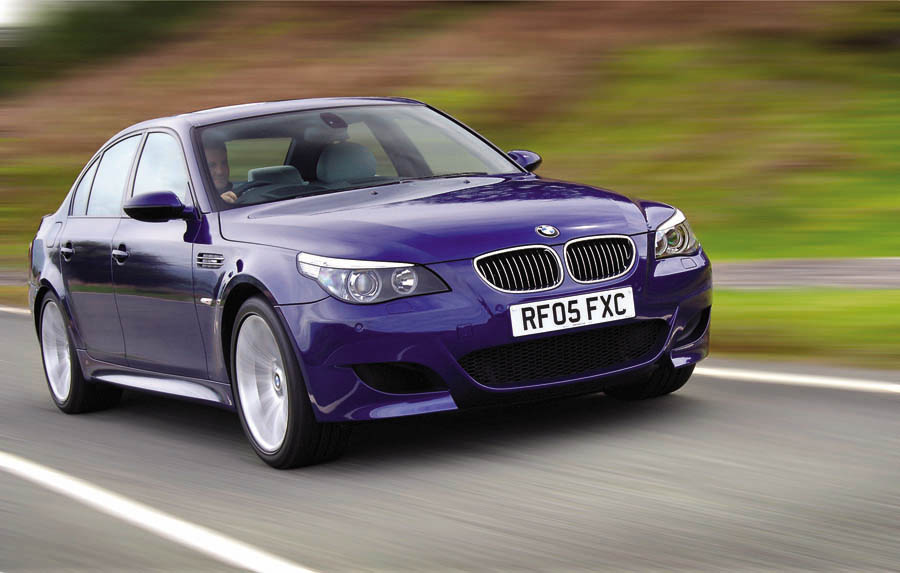 In 2003, Mercedes rolled out the E 55 AMG business sedan with a supercharged V8 producing 476 horsepower. A year later, Audi responded with the all-wheel-drive RS6 with a turbo engine rated at 450 hp. The Bavarians didn't stay silent, and their trump card — the new M5 — struck unexpectedly: 507 hp was extracted from a five-liter naturally aspirated engine. No superchargers — only racing technologies that allow building high-revving engines with furious output. Additionally, BMW engineers created the third-generation SMG sequential gearbox, borrowing the idea from Formula 1 cars. At the time, competitors made do with conventional automatics.
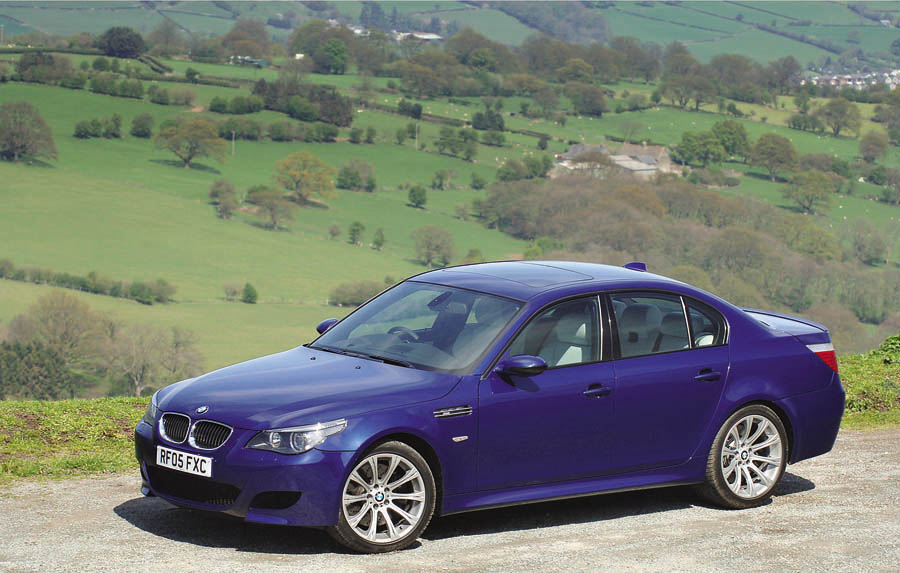
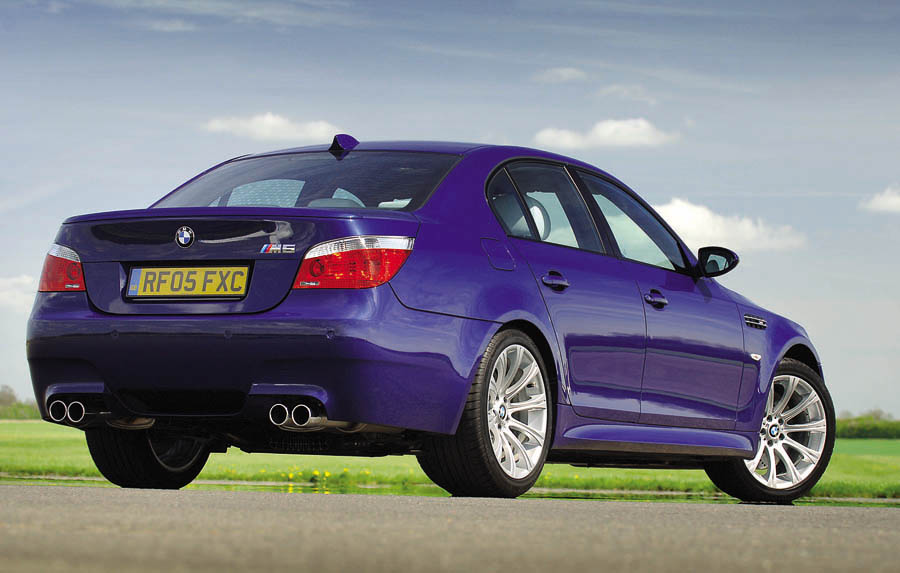
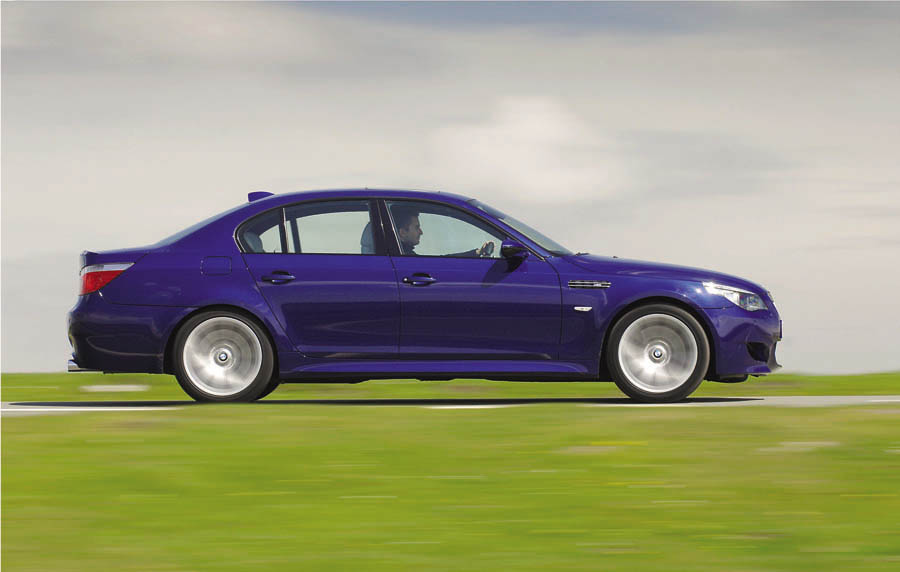
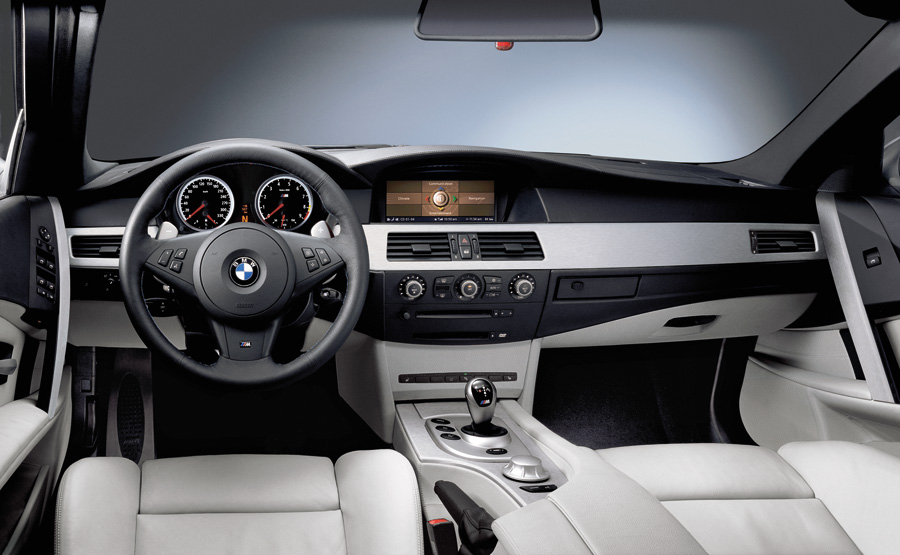
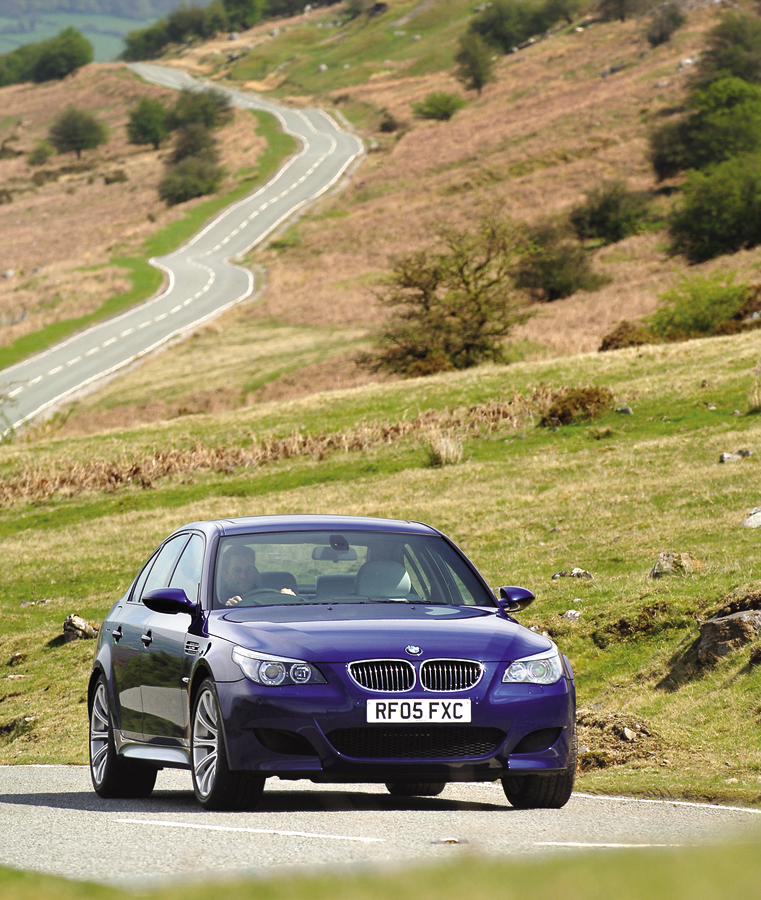
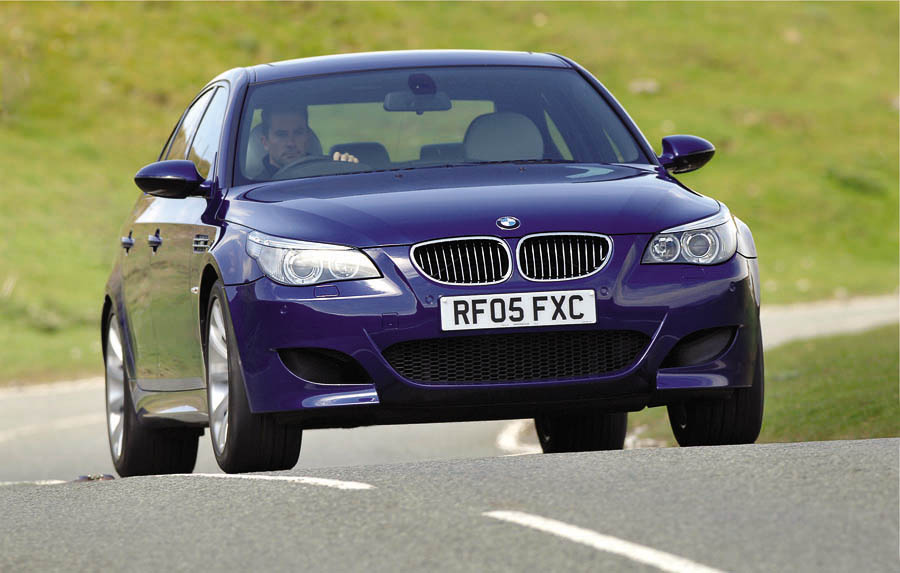
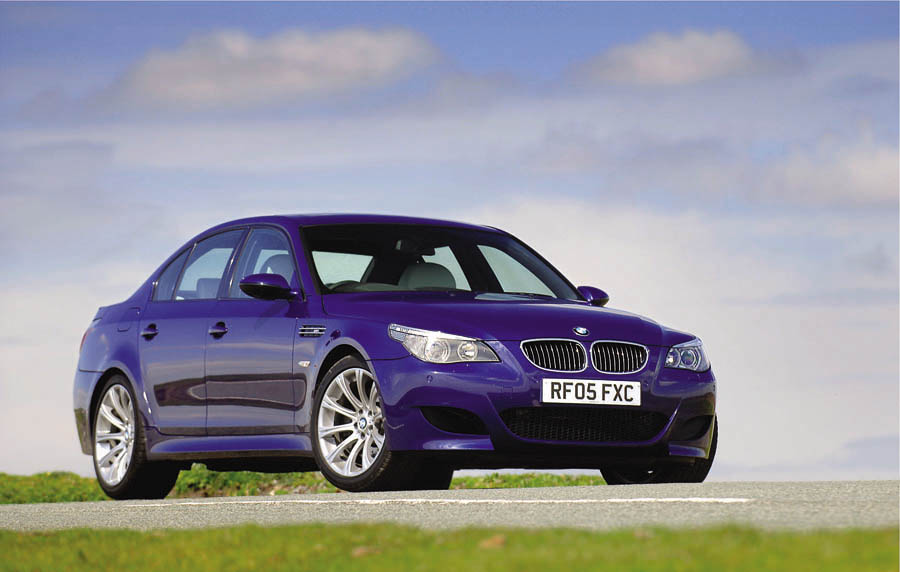
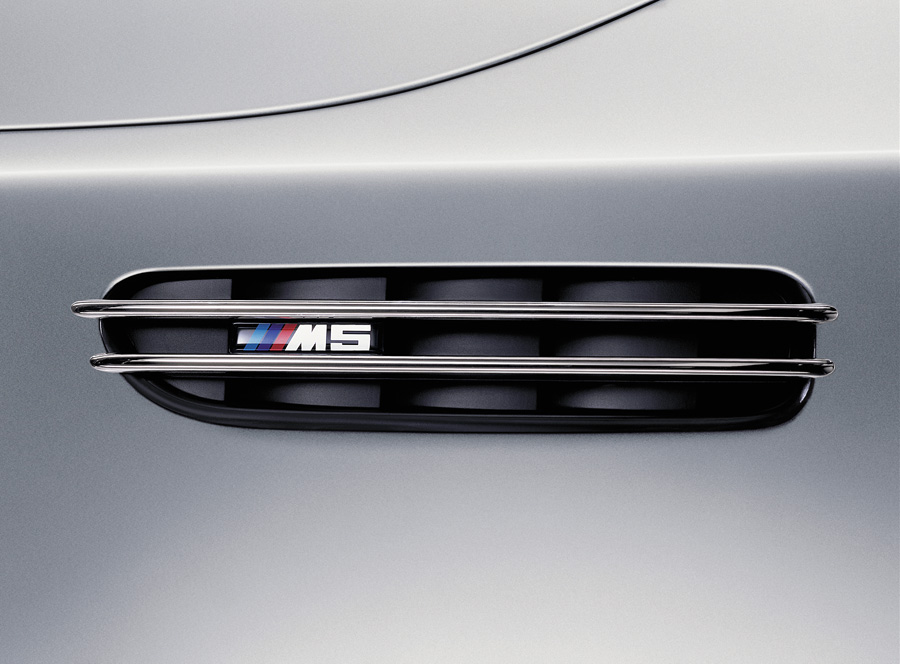
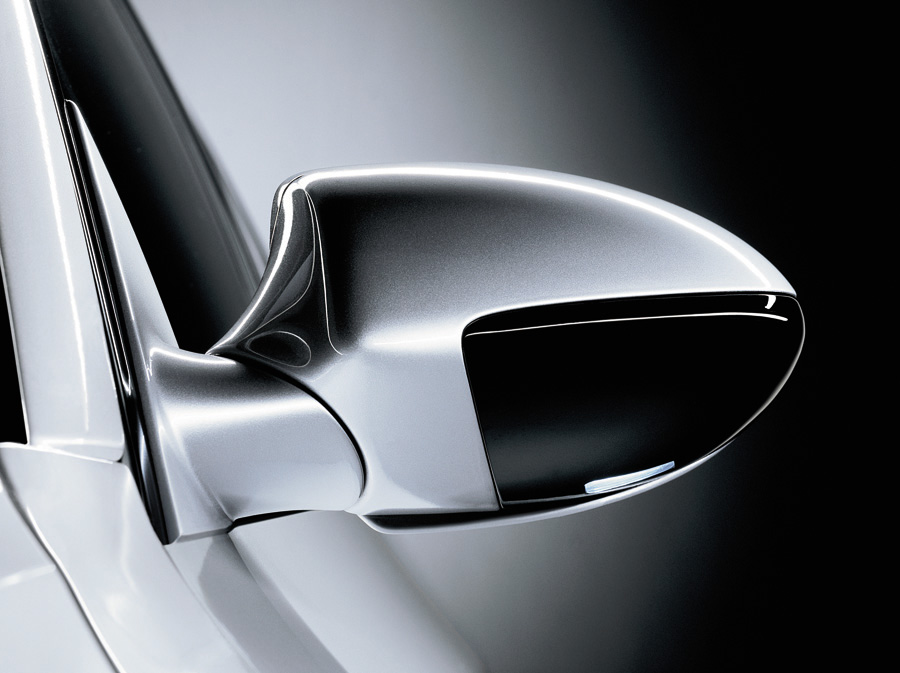
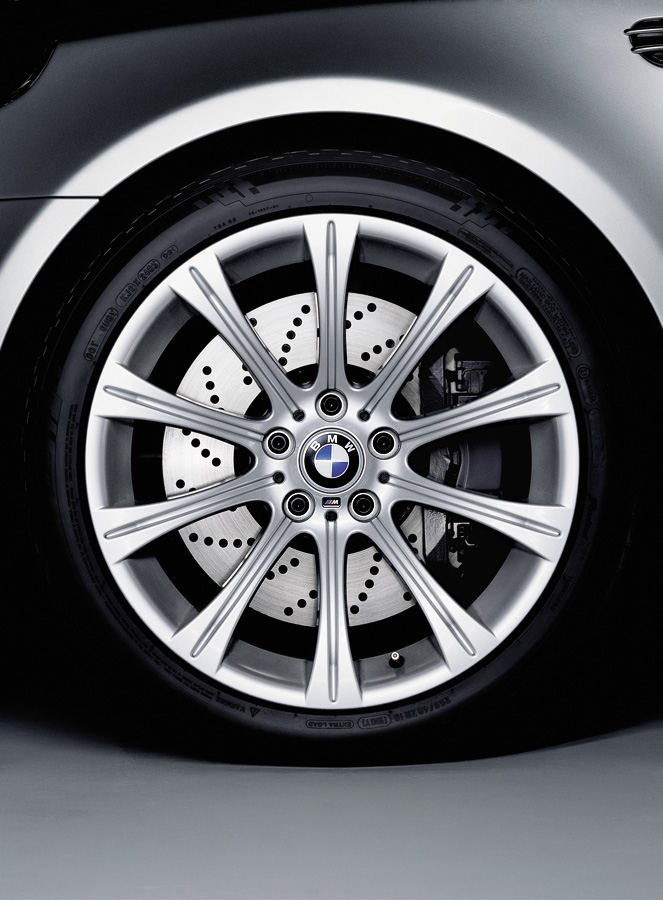
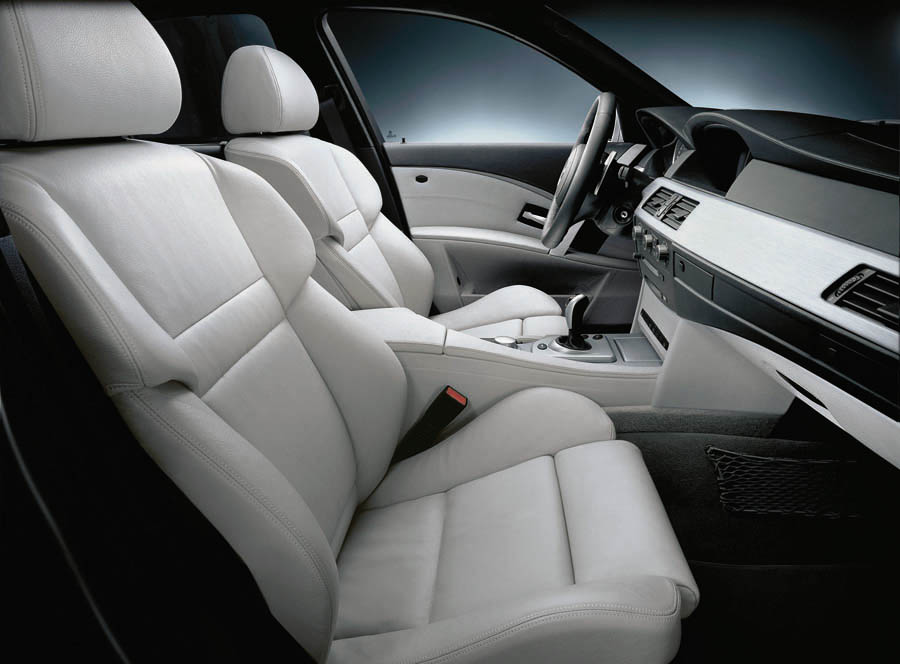
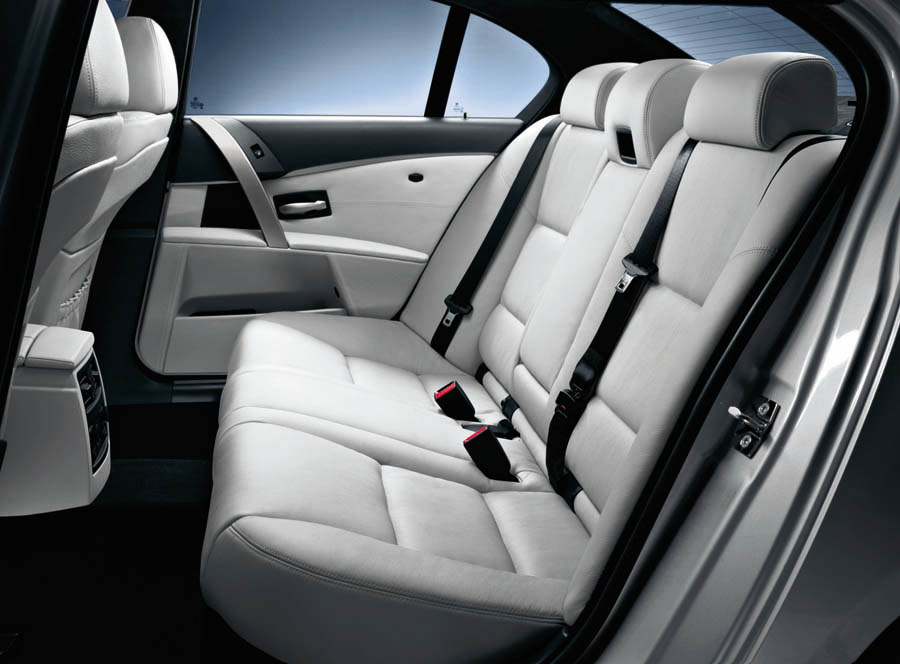
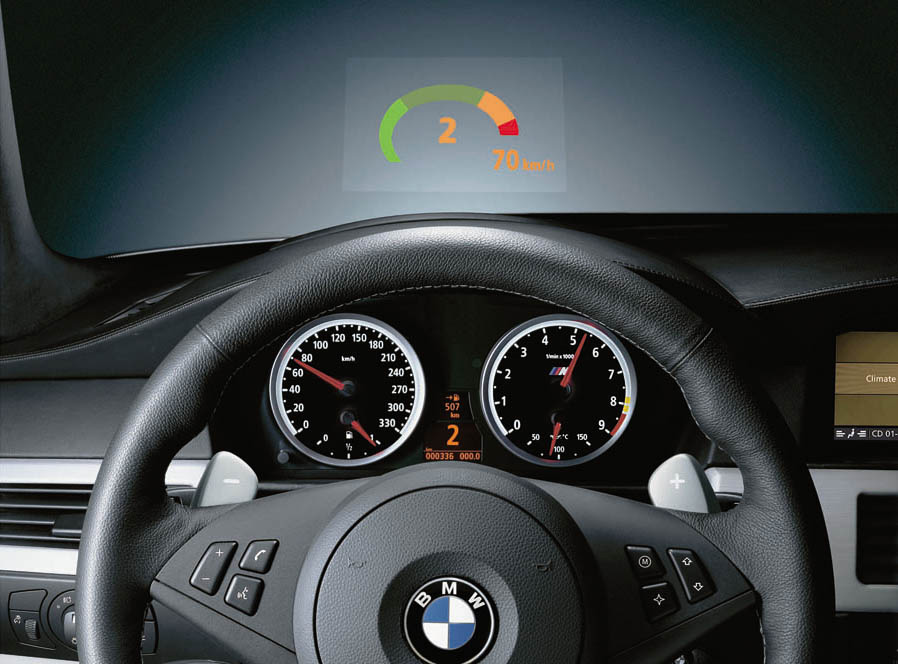
Externally, you can distinguish the M5 from a regular "five" on one hand's fingers: a front bumper with a large air intake, a rear one with a massive diffuser for downforce, 18-inch wheels of different widths, and four exhaust tips — a signature feature of all M5s. If the sedan is also equipped with the M package, it can easily be mistaken for a standard model. Inside, the difference isn't striking either. I'll only note the comfortable seats, in which you can sit behind the wheel for hours without the slightest fatigue, and the head-up display projecting instruments onto the windshield — though this option is also ordered on standard "fives".
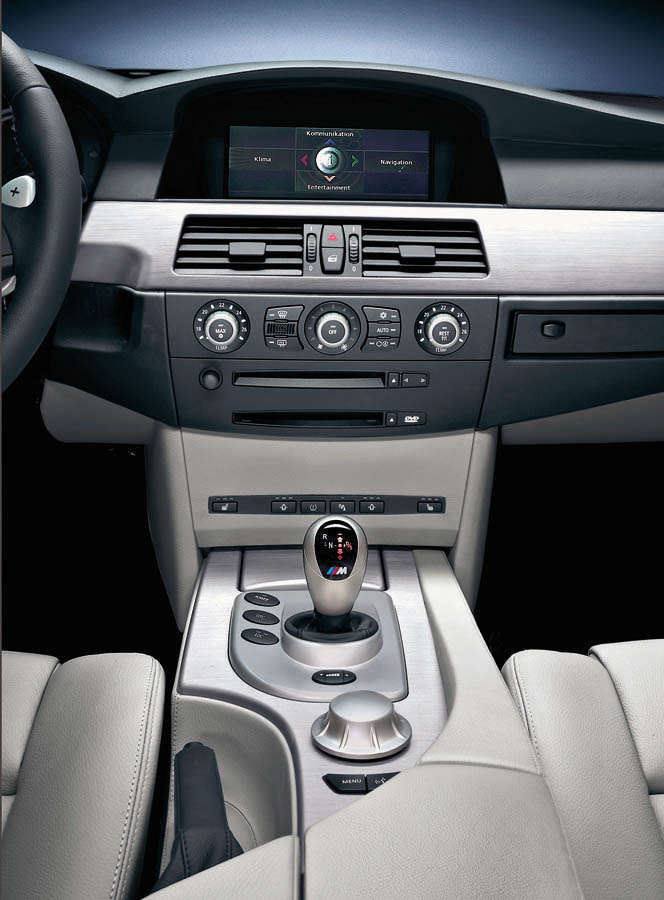
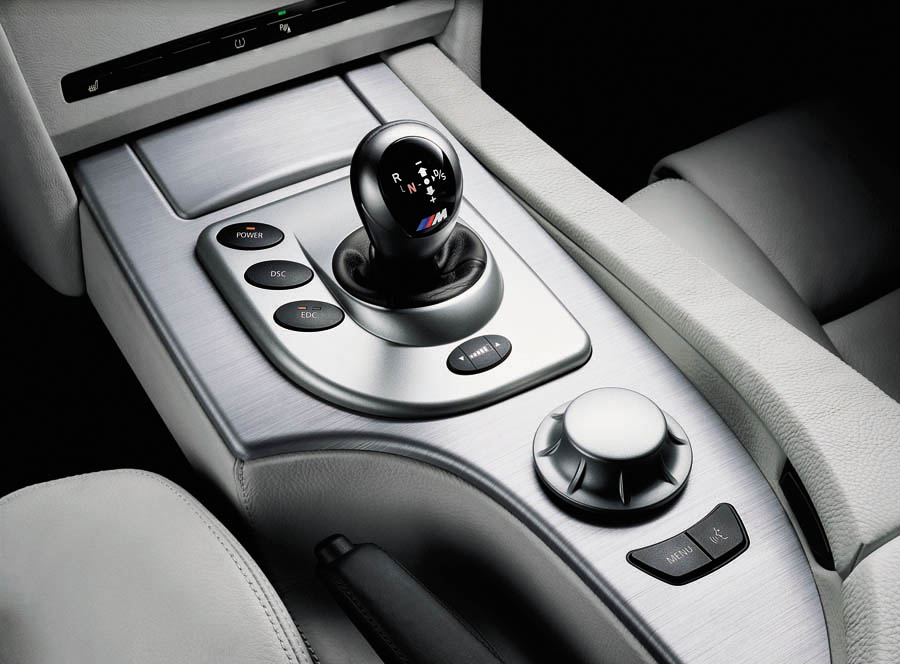
 But the technology is a completely different matter. The five-liter engine has ten cylinders, like the Formula 1 cars of 2005, and the mentioned SMG III Drivelogic sequential gearbox has seven gears. To prevent a novice from suffering from excess power, the iDrive menu includes a gentle P400 mode: the engine then delivers "only" 400 hp. If you're confident in your abilities, switch to P500 — here you get all honest 507 hp, and the P500 Sport mode adds even sharper throttle responses. Additionally, you can choose one of five gearbox shift speeds and three shift algorithms: Drive, Sport, and Manual. Plus, steering effort and suspension stiffness are adjustable via the EDC system.
So many settings — and it might seem that we're not dealing with a sports car but pliable clay, from which you mold the car to your mood. The impression is deceptive: in any mode, the engine's power reminds you of itself.
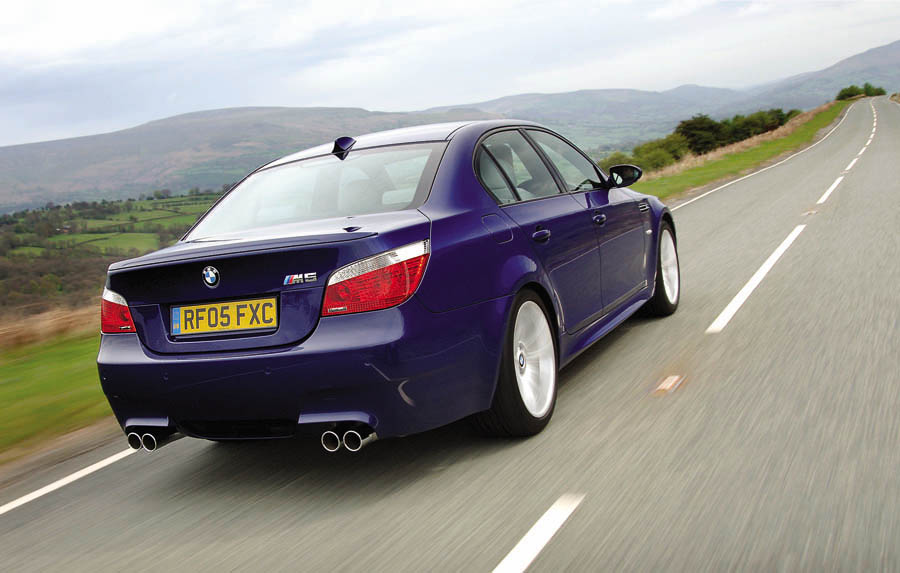 I start with the most modest option: a 400-horsepower engine, comfortable suspension, and the gearbox in its softest mode. The M5 pulls away smoothly, but the sporty stiffness can't be hidden: body roll is minimal, and low-profile tires meticulously tap out every uneven seam. The first shift — and my head nods forward: gear changes occur depressingly slowly, like in robotic gearboxes.
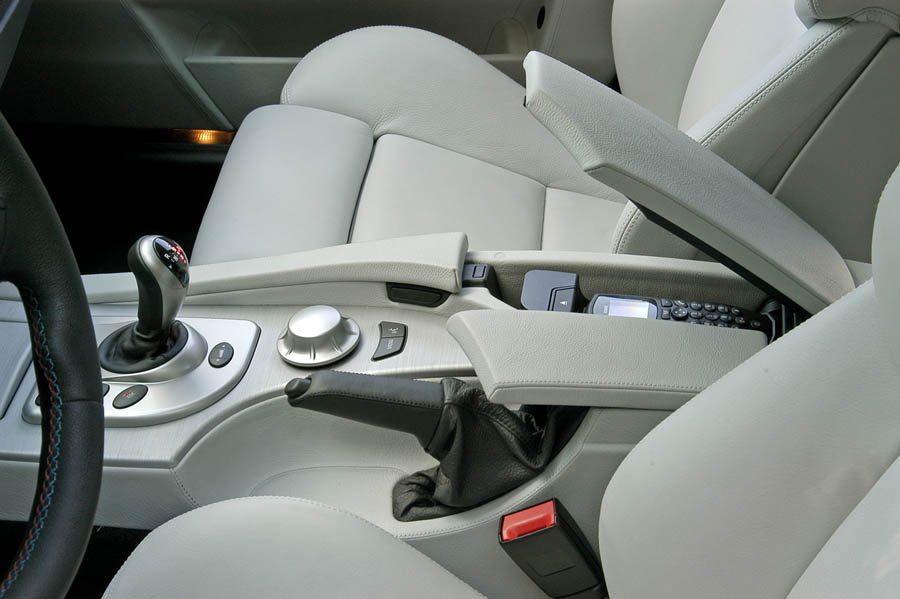
Using the button on the selector, I switch the transmission to a faster algorithm — in the slow mode, comfortable driving doesn't work out. On the third position out of five, it gets better, but the steering lacks reactive effort, so I switch EDC to normal mode. Now driving the M5 is noticeably more pleasant: an adequate modern car with moderately stiff suspension, but still that same unusual gearbox. Shifts can no longer be called drawn-out, but they're far from the crispness of today's automatics. Switching the engine to P500 doesn't radically change the picture: you feel the difference in dynamics only during very sharp accelerations.
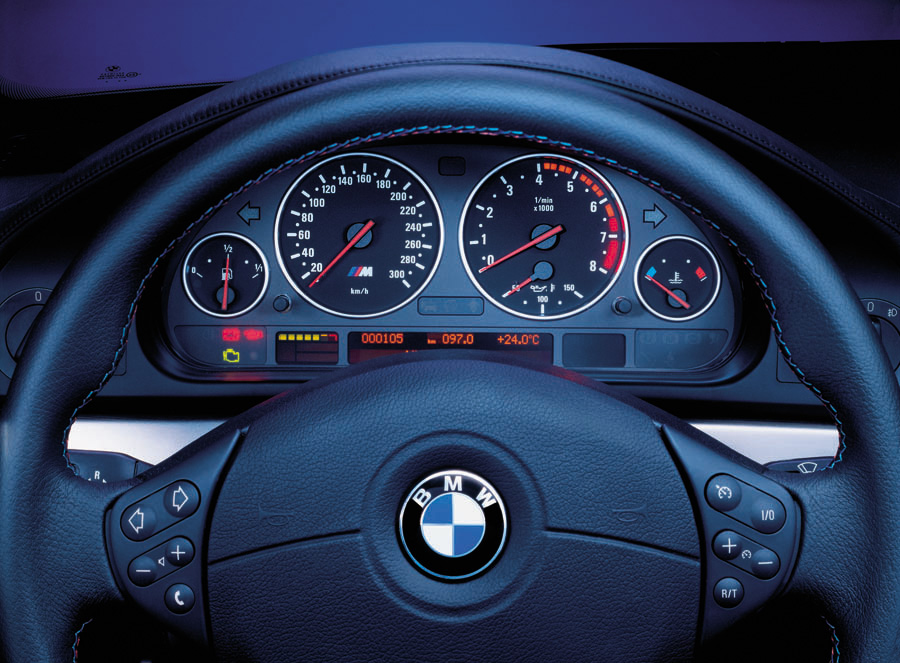
 I can't resist the temptation to test the limits — I switch to P500 Sport and minimize shift times. According to the specs, that's 65 milliseconds, twice as fast as the Ferrari F430, and almost on par with Formula cars, where shifting takes 40–50 ms. Launch from standstill... and again disappointment: on dry asphalt, the wide rear tires can't realize the full potential, the wheels spin, and the DSC stability system strangles the engine, not letting it spin up. Another button — and the electronics are off. Now this is a real "M"! On the first two gears, the wheels spin almost constantly, and you have to catch the car with the steering wheel, otherwise it'll spin out. Acceleration goes with strain: gears change at the limit of 8500 rpm. The M5 shakes from hard jolts in the drivetrain, and the driver feels the hurricane power with every cell. Probably, Formula 1 pilots experience something similar. Even beyond 200 km/h, the dynamics don't drop — it's at high speeds that all 500 horses are revealed: the car seems to ignore its own weight and aerodynamic drag, flying like an arrow from a bow. True, the jolts in the back during shifts eat away at that intoxicating sense of acceleration that Mercedes or Audi provide.
In sport mode, the suspension becomes truly stiff, body roll almost disappears, but every bump resonates in the body. With these settings, the M5 is a pure racing machine. Unlike competitors, BMW doesn't use ceramic brakes, sticking with cast iron, but their reserve is more than enough. The huge disc area allows braking at maximum intensity as many times as you like, and these brakes seem to know no overheating.
 In short, you shouldn't expect calm driving from the M5 in almost any mode. The car is built for racing on the edge, and any hesitation goes against its nature. At low and medium revs, the torque of the highly boosted engine isn't as great as you'd expect from five liters of displacement. When driving at a measured pace, it's better to shift manually — with the selector or paddle shifters on the steering wheel: this way the gearbox works at medium speed and without jerks.
Returning the M5, I caught myself feeling slight annoyance — like a child who was promised a new toy but given an old one, albeit improved. Undoubtedly, the M5 is a unique car that opens the door to the world of real racing technology for mere mortals. At the same time, it costs at least half as much as a comparable Ferrari F430. On a track like the Nürburgring, the "M" surely outperforms most road cars and can compete with supercars. But in the city, its potential has nowhere to be realized — the car feels cramped in the concrete jungle. We haven't yet built autobahns where you can feel all 500 horses. That leaves circuit tracks, but in the Moscow region there's only one small track. So, when choosing a fast car for the city, I'd rather take the BMW 550iA. With 367 hp, it loses to the M5 in acceleration to 100 km/h by less than a second (5.6 vs 4.7 s), and the top speed is the same. But it has a comfortable automatic, softer suspension, and a price of "only" €73,000. And the saved 50 grand would be just enough to build a decent race car.
Leonid Pavlov