
BMW M3 is like Pushkin for us: everything at once. The compact and light E30 coupe of the mid-eighties, into which a 200-horsepower engine was installed for racing homologation, forever etched the M3 abbreviation into memory. It was a wolf in sheep's... no, the 'three' never went in sheep's clothing. Rather, a wolf dressed as a German shepherd.
It was. And what has it become in the body of the two-door coupe of the new E92 series?
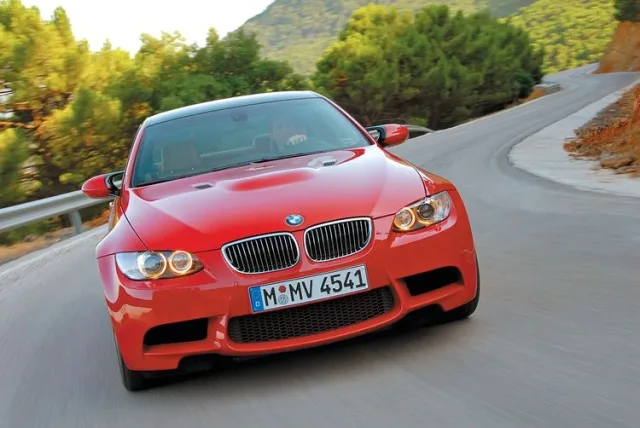
Light shimmers on the sculpted sides, the black back of the carbon-fiber roof is arched, the optics are narrow and angry, the wheels are forged with thin darkened spokes. And behind the front arches are decorative grooves that resemble... a female navel. With a piercing.
The new 'M' is elegant. If you're not afraid of a hackneyed word, it's glamorous, that is, glossy. It's definitely 'she'. And it's much easier for me to imagine such a car at the entrance to a trendy club than in the parking lot at the barrier of the Nürburgring North Loop.
And that is a disappointment.
In the word 'disappointment' hides 'enchantment'. BMW M3's enchantment has always been of a different kind. The first generation with flared fenders, a rear wing, and a plastic trunk lid did not lose the natural modesty inherent in all E30 'threes'. The second 'M' (E36) differed from regular cars only in aerodynamic sills, spoiler skirts, and the famous M wheels with double spokes, which later everyone copied. The third? It was different then: in the late nineties, the Bangle era arrived, and the E46 'three' in M version spread, bloated, and was covered with details like an antenna fin or gill slits.
Don't the Bavarians themselves be embarrassed by this deep contradiction between the first and last 'M's? The first was created to win races. The last one—to... reflect in boutique windows?
 |
 |
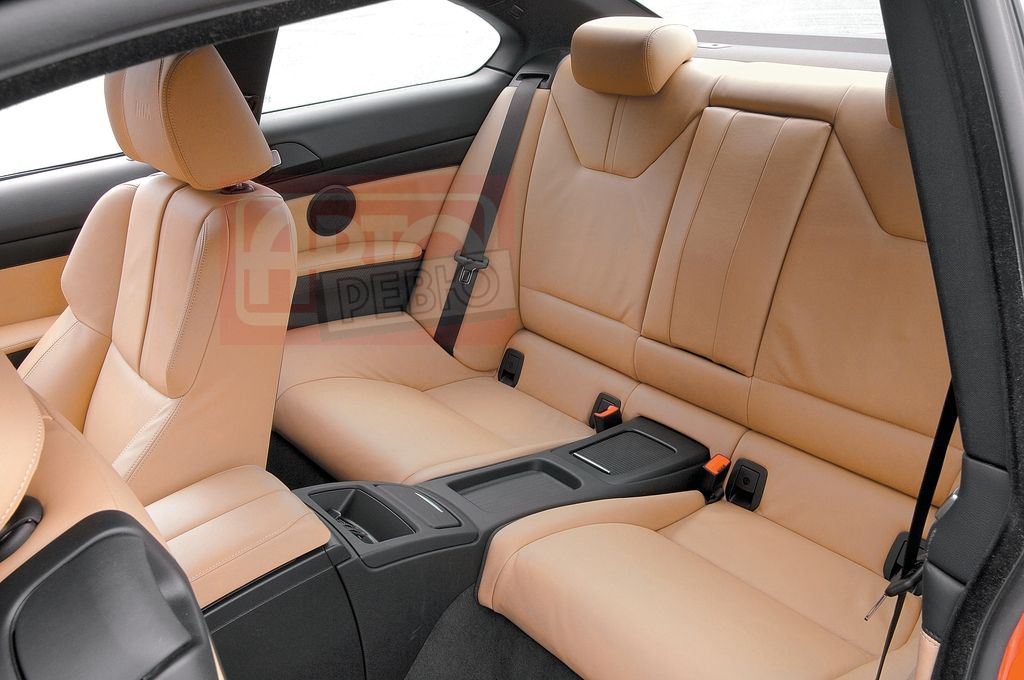 |
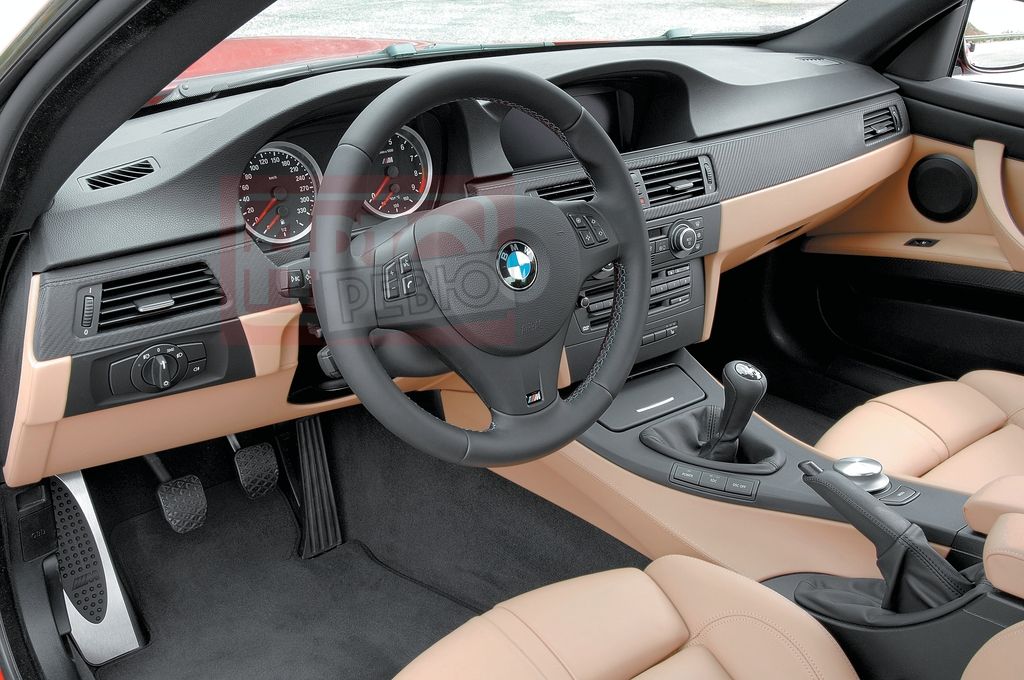
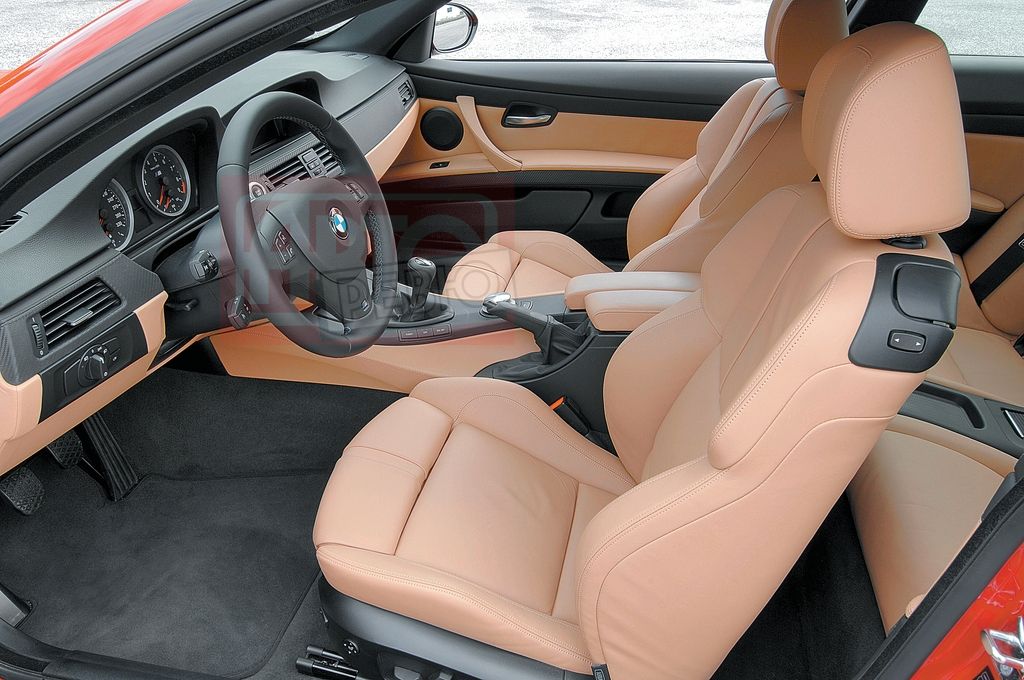
| The interior is almost like a regular coupe: leather with 'carbon' embossing, a very thick M steering wheel with a rim stitched with red-blue harsh threads, sport seats, an 'i-drive' knob made of thin-walled aluminum... And optionally—a high-end 825-watt audio system with an amazing dynamic range: the floor vibrates from the announcer's voice! | ||
The first was a two-hundred-horsepower wolf in the skin of a German shepherd. The last one? Of course, it's also a wolf—more precisely, a she-wolf. But she is shy about pulling the raw skin of a victim over herself. That's not how it's done now... Nowadays, the predator takes the skin to a designer atelier and gets a stylish fur coat—with fur trimmed, plucked, and dyed according to the latest fashion.
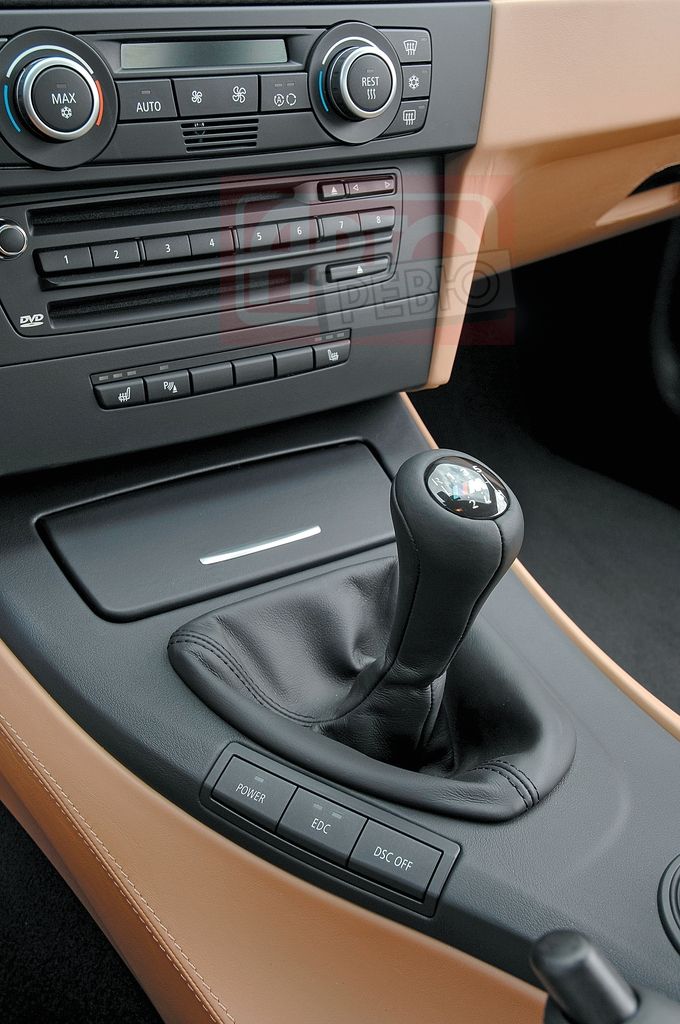 |
| The Power button only sharpens the response to the gas pedal, the EDC button switches one of three modes of shock absorber operation |
However, what difference does it make how the BMW M3 looks? The magic of M has never been in the exterior. Nor in the interior, which in the new 'M-three' is almost identical to the 'civilian' E92 coupe—that is, done in a cold techno style, familiar from the Bangle and Van Hooydonk era.
No. The enchantment of the 'M' is sound and thrust. Word and deed.
The inline 'six' with a volume of 3.2 liters in previous 'M-threes' rumbled hollowly at idle, filled the cabin with 'truck-like' howls at medium revs, and when releasing the gas, bubbled violently through the muffler... But the resource of the honored engine is exhausted: more than 343 hp without supercharging cannot be squeezed out of it. And the purists (from the English 'pure') from the BMW M division are still faithful to the strictly naturally aspirated concept.
Therefore, under the sculpted aluminum hood, for the first time in M3 history, there is a V-shaped 'eight'. In essence, it's a ten-cylinder engine from the M5/M6, from which two cylinders were 'cut off'. There were five liters—now four. There were 507 hp—now 420.
First discovery: at idle, the engine is almost inaudible. The clutch engages softly. First gear engages routinely, without the familiar clatter of Getrag M gearboxes. And the most powerful production BMW 'three' in the world starts off easily and simply.
No, no, don't think—the eight-cylinder engine is magnificent. In its muffled predatory gurgle, there is not the fury that the 'six' had, but there is no doubt: only a BMW engine can sound like this. Previous 'M's growled wolf-like during acceleration, but the current one filters that growl through tightly clenched teeth. And it spins the steel forged crankshaft to a fantastic 8400 rpm. That's more than the V10 with its cutoff at 8250 rpm!
 |
 |
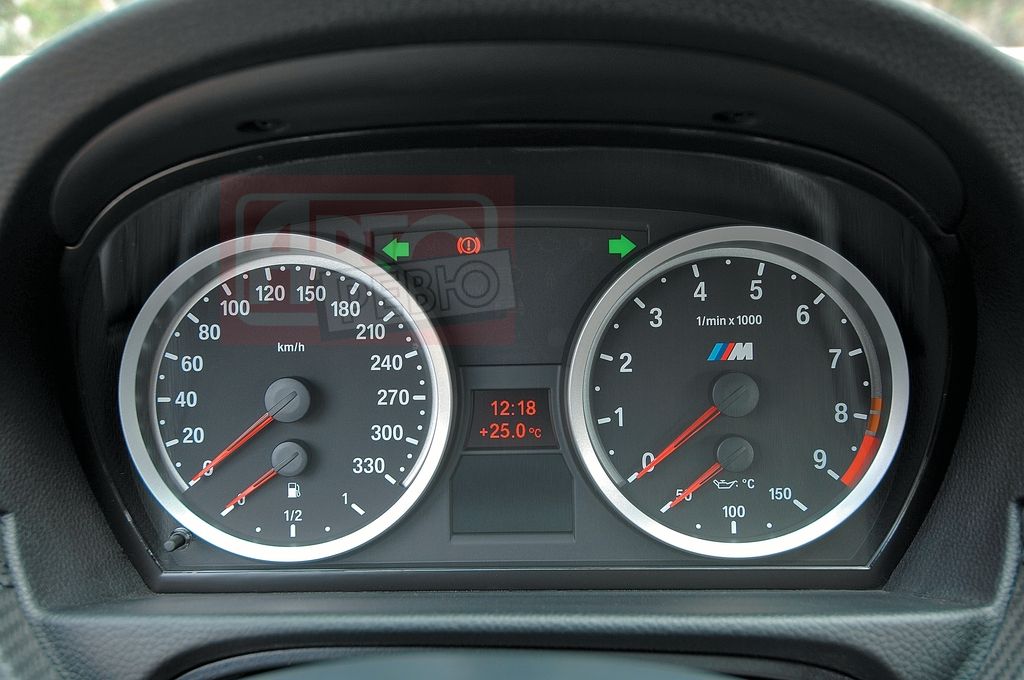 |
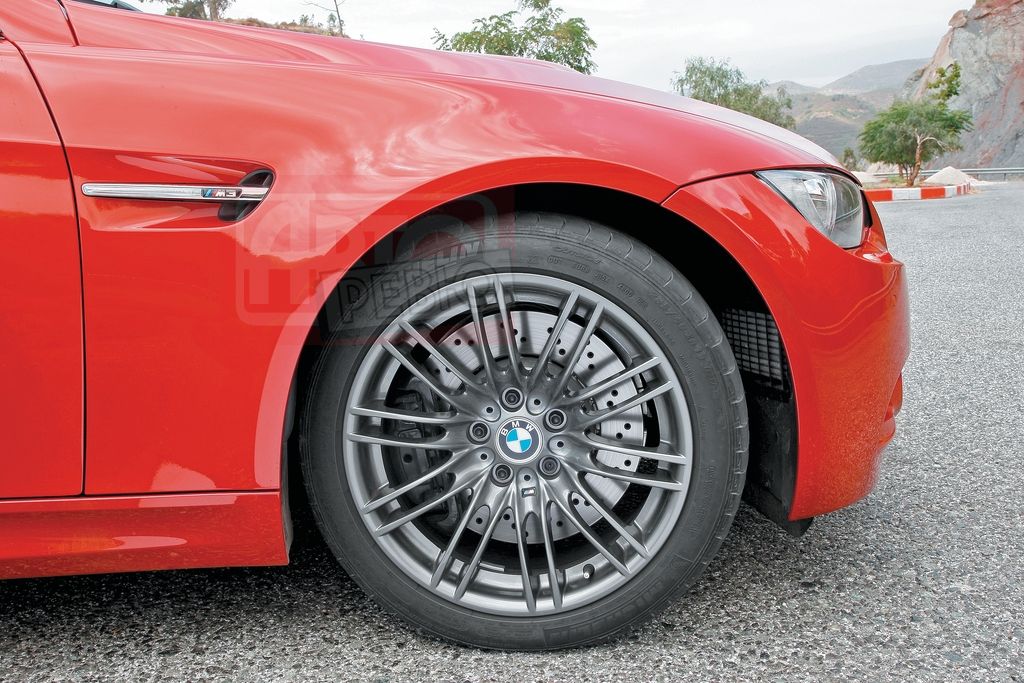
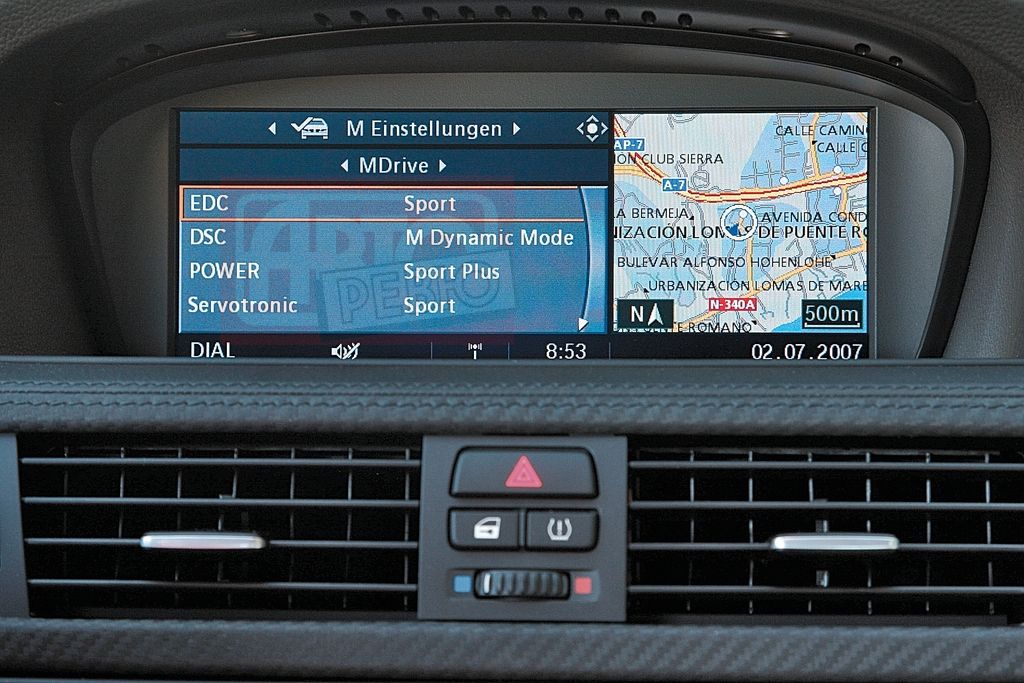
| The most powerful composite brakes (cast-iron discs on aluminum hubs) work flawlessly | If you press the 'i-drive' knob from above, the MDrive menu opens, where you can program a combination of EDC shock absorber modes, DSC stability system, accelerator 'sharpness', and steering 'weight' | As befits M cars, the yellow sectors on the tachometer scale go out as they warm up |
At the same time, the engine of the 'M-three' pulls noticeably smoother.
— Ensuring good low-end torque with the V10 scheme with its firing order in the cylinders was very difficult, — explain the BMW M engine builders. — That's another matter with the 'eight'! Besides, over the past few years we have learned a lot...
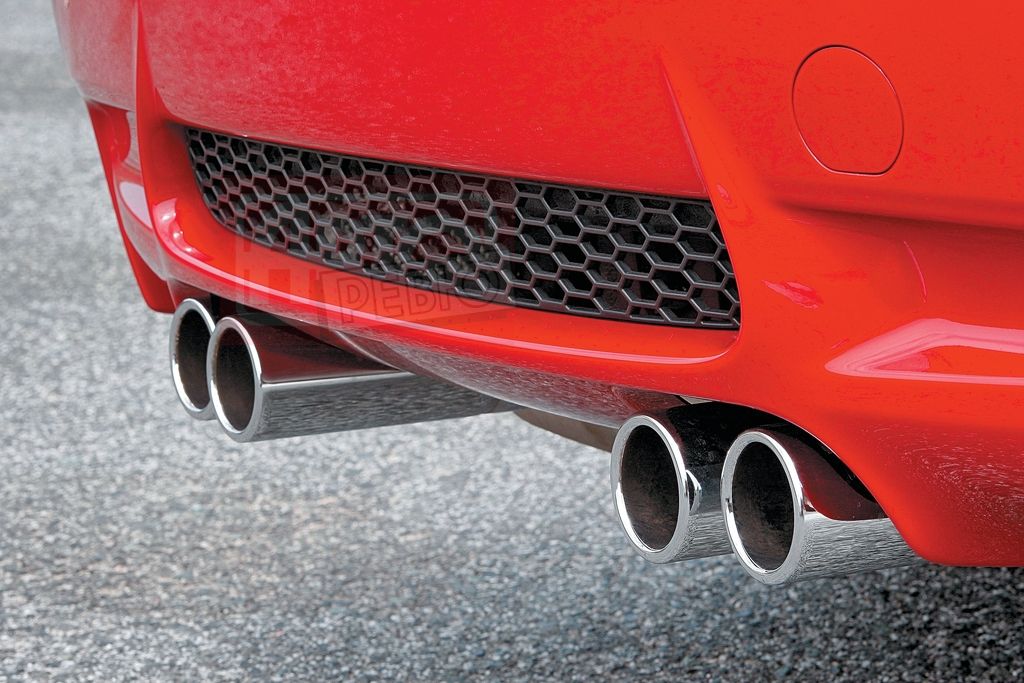 |
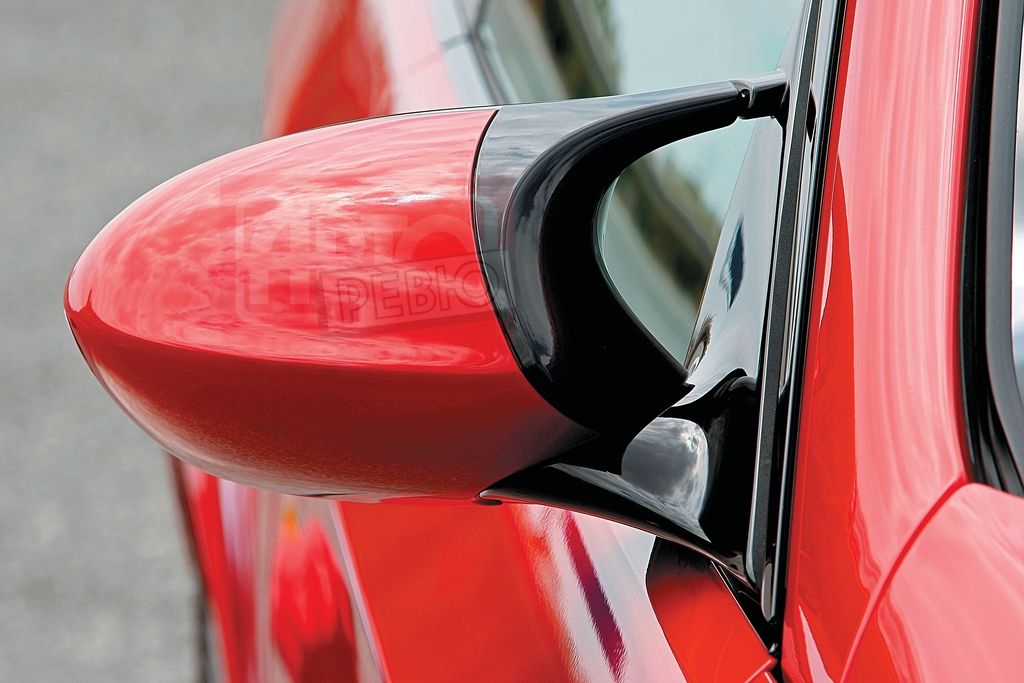 |
|
| The accessories resemble tuning ones. However, the BMW M3 of the second generation E36 series also had fancy mirrors on legs... | ||
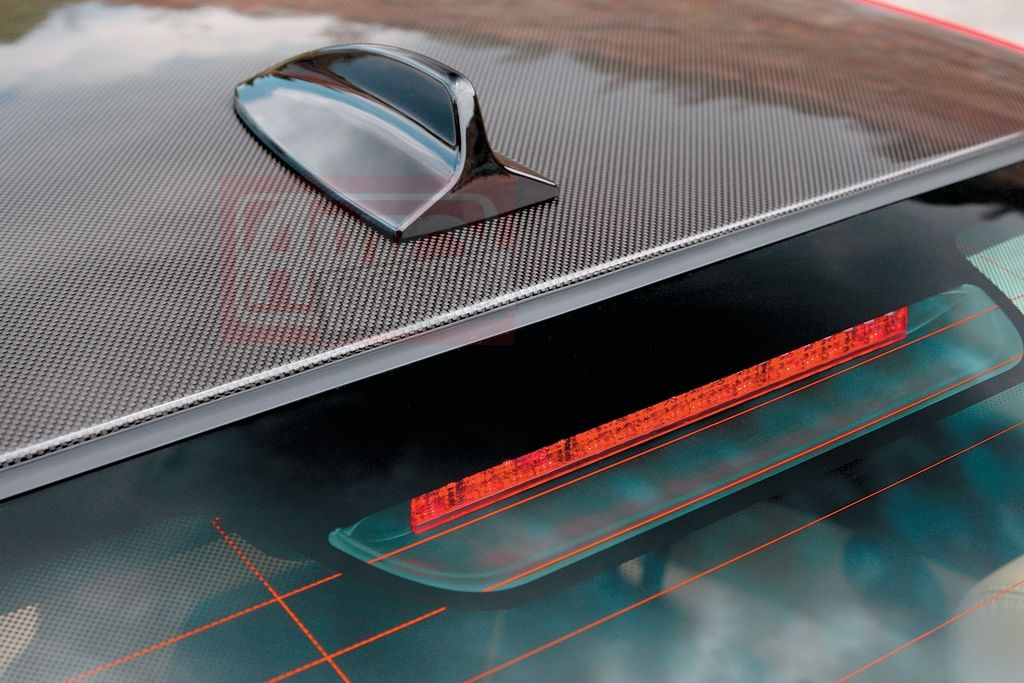 |
| The roof made of carbon-fiber reinforced plastic (CFP, Carbon-Fibre Plastic) is made using the same technology as for the BMW M6—it saves 5 kg and lowers the center of mass |
That's true. Look at the external speed characteristic of the new M-'eight': a triumphant surge that only goes up! Furious acceleration right up to the cutoff. A small gap in the solid center line, no oncoming traffic—and you can safely overtake in the M3. Second gear, gas 'to the floor', a powerful jerk—and the yellow triangle of the stability system starts blinking hysterically. The elegant body trembles nervously: if not for the electronic 'collar', the wide rear wheels would have long been polishing the hot asphalt. Third gear engages with a soft push. The engine gurgles predatorily again, gaining revs. And a second later, the overtaken car is left far behind: it has been devoured by the elegant she-wolf, only its bones whitening alone in the gaps of the center line...
On the magnificent mountain Spanish road that winds like a snake between Ronda and Marbella, behind the wheel of the M3 you feel omnipotent. You are a god. You can overtake a dreary crawling line of a dozen cars without even breaking the rules—unlike others, a couple of hundred meters is enough for you. And it doesn't matter if you have to finish the overtake by diving into a turn on the oncoming lane. After all, the turn is visible, there's no one ahead—and the 'M', slightly pushing with its front wheels and loading the plump steering wheel with low effort, flies into it with incredible ease. It seems to help you trace tricky bends, steering with the modified suspension kinematics.
At the same time, I really didn't break the rules! Well, maybe just a little... The speed limit.
And the M3 fully reveals its character on the private racing track Ascari Race Resort—the same place where two years ago journalists were introduced to the BMW M6.
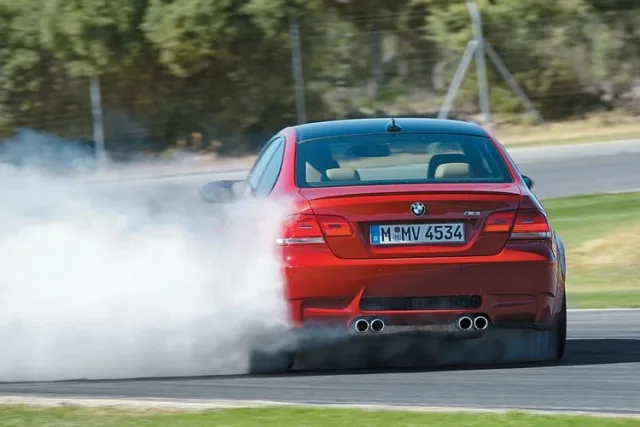
Michelin Pilot Sport PS2 tires (the French company supplied 'original' tires for M3 of all generations) on the smooth track asphalt start to slide a little earlier than they could—but they do it softly and predictably. If you press a special button on the steering wheel, all the 'driver' electronics can be switched to M mode. The 'M' can be safely thrown into slides, pressing the gas on the exits of turns—the drift is perfectly controlled, and the electronics in M Dynamic Mode will correct the slides only if the car is 'set' at too large an angle.
If the 'sixth' M-series felt heavy in turns, the M3, which is 130 kilograms lighter, literally flutters along the Ascari track. Incredible lightness of high-speed flight!
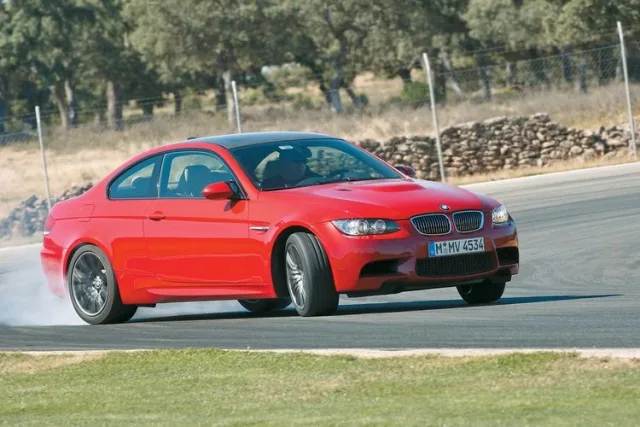
Rigid body, revised suspension geometry, insane engine, precise manual gearbox, 100% differential lock and "soft" Michelin tires: the chassis is balanced almost perfectly.
Both cars, by the way, are built to the same scheme. Lightweight plastic crash modules hidden behind the front and rear bumpers save six kilograms of weight. The front aluminum subframe is slightly modified for rigidity (the rear steel one was left alone), and the suspension kinematics with aluminum arms have been completely revised — that's why the M car dives into corners even more eagerly than a regular BMW 335i coupe. Almost all suspension joints are rigid ball joints, i.e., metal spherical connections. Sachs shock absorbers with aluminum bodies, like those in the 7 Series, are equipped with electronically controlled valves: algorithms (comfort-normal-sports) are switched by a button on the center console, but the computer in any case decides what the damping should be. Keep a high pace — even in "comfort" mode, the shock absorbers will be "clamped" in corners.
And yet, on imperfect Spanish roads, the M car remains soft and comfortable! Sometimes it even seems too soft: if a steep wave hits the wheels at full speed, the suspension works to its limit. The question remains whether its energy capacity is enough for Russian roads. And even more interesting is how the "base" version with regular shock absorbers, without any electronics, will behave.
The GKN Viscodrive differential has moved from the previous M3, but now it can "lock" completely, like on the M5/M6. The gearbox of the new BMW M3 also comes from the ten-cylinder M cars.
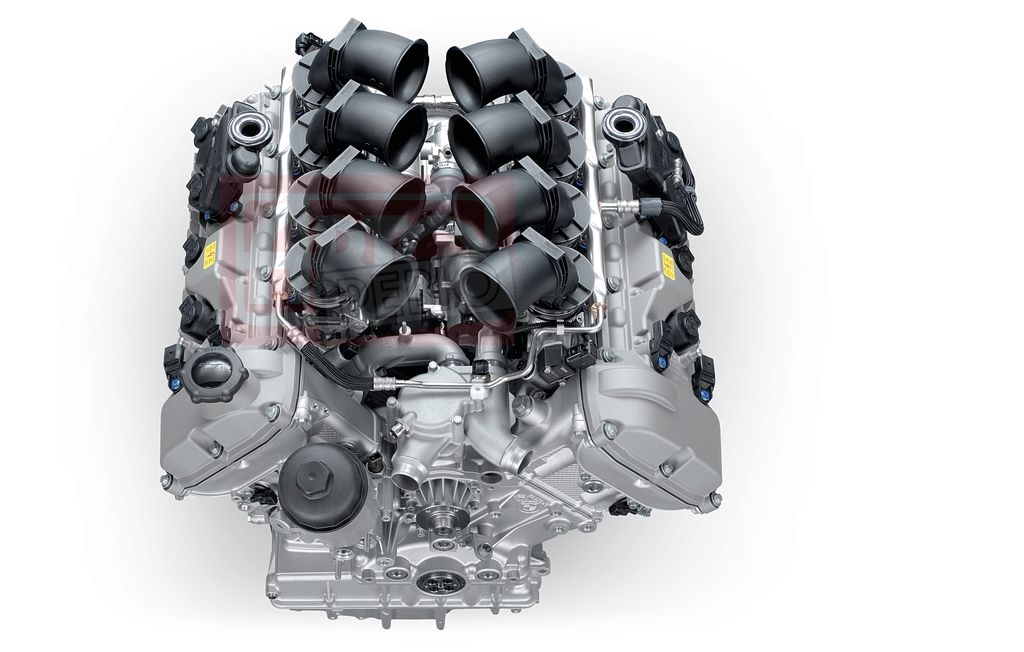 | |
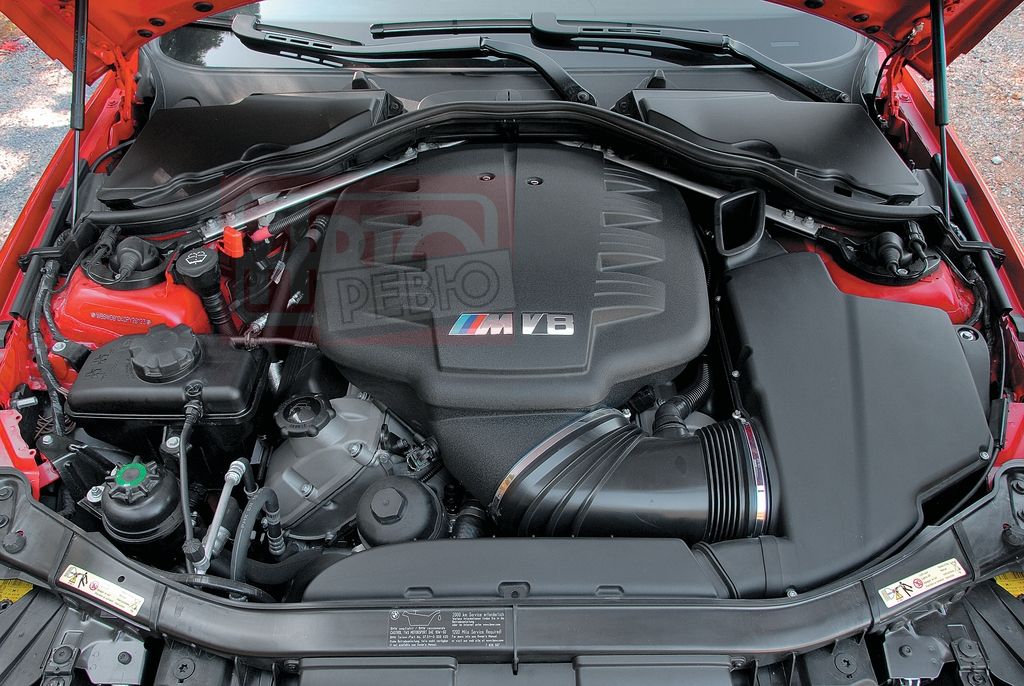
| The 4.0 V8 is based on the V10 engine from the BMW M5/M6. The block, of course, is different, not to mention the steel forged crankshaft weighing 20 kg. However, the pistons, connecting rods, valves, and valve springs are unified for both engines. Common technologies include individual throttles with short intake pipes leading into a common plenum, Double VANOS variable valve timing on all four camshafts, and a lubrication system with a "wet" sump but with two oil pumps (the main one with variable displacement) that reliably supply oil even under lateral loads up to 1.4 g. The main feature of the V8 is the absence of a mass air flow sensor on the intake, unlike other gasoline engines! Plus, like all new BMWs, the alternator disconnects during acceleration, saving 2.4 kW of energy The complete engine weighs only 202 kg. For comparison: the 5.0 V8 in the previous BMW M5 weighed 240 kg, and the inline-six of the previous M3 with a cast-iron block weighed 217 kg | |
 | |
"Wait, but the M5/M6 has the SMG-III robotic gearbox!" — any BMW expert will immediately object. Yes, a couple of years ago it was exactly like that. However, the lack of a regular manual on the M5 and M6 didn't suit... the Americans. It was their demands that forced the people at BMW M to adapt the manual gearbox from regular BMWs for cars with the V10! True, to transmit the huge torque, the clutch had to be made dual-disc.
It is with this reinforced six-speed ZF manual and dual-disc clutch that the BMW M3 debuts.
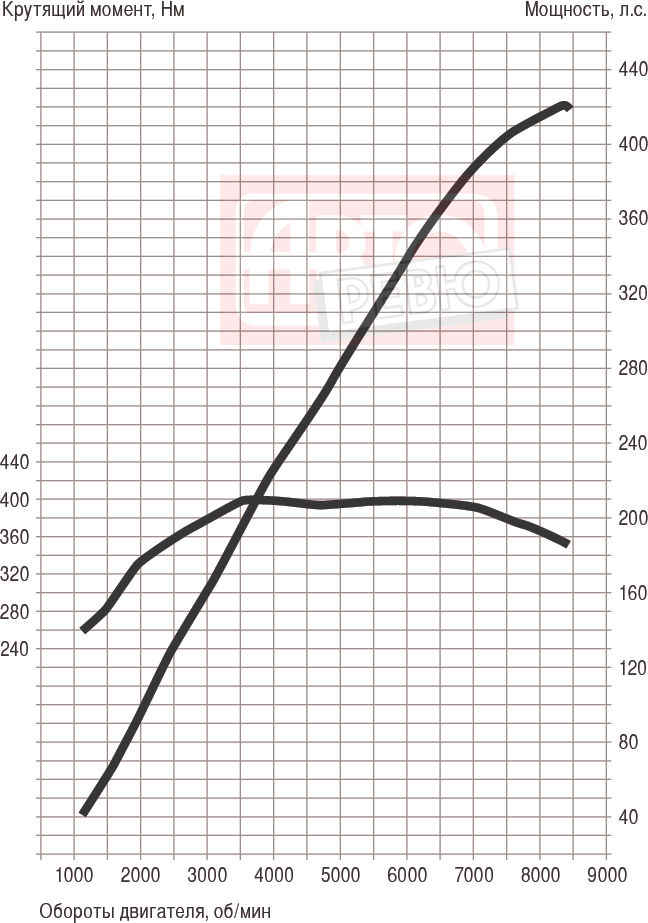 |
| The external speed characteristics of the BMW M3 engine (V8 4.0) are ideal for a naturally aspirated engine |
And where is the SMG "robot" that more than half of the previous M3s were sold with? It's not there; it's not ready yet. The SMG has accumulated too many shortcomings — accelerated clutch wear (despite electronics) and jerks when driving in automatic mode. BMW M engineers admitted that they are currently developing three independent transmission concepts in parallel. And they are choosing what is best for M cars — a single-clutch "robot" like SMG, a dual-clutch preselective gearbox like Volkswagen's DSG (or Porsche's future PDK), or... a regular torque converter automatic.
Yes, yes, that's possible too. But if they choose an "automatic" in Garching, then how will BMW M cars differ from Mercedes AMG?
This is all strange. The M cars of recent generations have become more and more comfortable, trying to combine business driving with real speed in corners, and the M3 is the culmination of this process. Quiet engine, "light" steering, soft responses, comfortable suspension. The Bavarians themselves, for the first time in the history of M cars, do not rule out an "automatic".
What's wrong with them? Are these unbending people really being pressured by marketers? Or is it the corrupting influence of Ulrich Bruhnke — the former head of Mercedes AMG, who unexpectedly took over BMW M in December 2003? True, six months ago, the cheerful fat man Bruhnke resigned and now directs a large German company that produces automotive mirrors.
— Bruhnke is a good person, but he didn't fit in, — Bernhard Peltner, financial director of BMW M, reluctantly explains. — You see, at BMW we are all like one family. We all have gasoline in our blood...
And Peltner makes a characteristic gesture at the bend of his elbow, as if injecting the hydrocarbon drug we love so much into his vein with an imaginary syringe.
But this doesn't explain anything. If Bruhnke was rejected by the "family", then where does this Mercedes spirit come from? Where does this conformist philosophy come from?
We are used to BMW M being the quintessence of the Bavarian slogan "Ultimate driving machine". We have firmly learned that M cars are created to give a dose of adrenaline high. But will glamorous and comfortable M cars suit adrenaline junkies?
Or maybe the Bavarians will simply show, following the "just M3", which would perfectly suit the index 340i, a more "evil" version — some superleggera M3 CSL that will become the real "M car"? Or were the presentation cars specially "softened" for journalists so that they wouldn't scare readers with stories about extreme rigidity? This has happened before — for example, at the premiere of the new second-generation Mini.
Or maybe...
Guessing is useless. There is only one way — to use a razor. Occam's razor.
Once upon a time in the 14th century, there lived a monk-philosopher, a certain William from the English village of Ockham. It was he who first formulated the principle that went down in history as Occam's razor: of all versions, only the most plausible should be considered, cutting off, like with a razor, the most unlikely ones, so as not to breed conspiracy theories and false entities. For example, you can torment yourself with jealousy: where did your wife spend the night? With whom? Why? How could she? And the wise English monk, five centuries ago, advised brushing aside obsessive nightmares with a mental razor: she said she was at a friend's place — so be it.
And when the philosophical blade cuts off all the "whys" and "wherefores" about the character of the M3, one simple and obvious truth remains. It's just that the people at BMW M have become older, wiser, and more experienced.
— If we were creating all these cars now, they would be completely different, — nostalgically surveying the line of historical M3s from the BMW Mobile Tradition museum's storage, the veterans of the BMW M division say through clenched teeth. — Over the past quarter century, we have learned a lot. And we are still learning...
Back then, in the mid-80s, they were all under thirty. Now they are over fifty. They have finally learned to overcome the notorious engineering compromises. They have racked up hundreds of thousands of test kilometers on the Nürburgring Nordschleife and, through thorns, have gained the secret knowledge: to be fast on the Nordschleife, it is not at all necessary to shake on bumps and grip the steering wheel convulsively in corners.
By the way, according to the Bavarians, the new M3 laps the 20-kilometer Nordschleife 20 seconds faster than its predecessor, that is, in about 8 minutes and a bit — leaving even the more powerful M5 and M6 behind. Of all production BMWs, only the lightweight CSL M car was faster on the Nordschleife, which could compete on equal terms with the Porsche 911 (though on racing slicks). And surely a car with such an index will appear for the new M3.
In general, a lot of interesting things await us behind the M walls. After all, the M3 coupe in the E92 body is just the beginning. Most likely, there will be a sedan, a coupe-cabriolet, and even an M3 wagon...
The Bavarians have very big plans for the M3 — they hope to sell up to 100,000 cars a year. Reasons? The new M car, with its spacious four-seat interior, roomy trunk, and "soft" character, is one hundred percent suitable for daily, untiring driving. It looks fashionable. And another trump card is the price. Even in Russia, the BMW M3 can be ordered for 71,900 euros. Nonsense: the new 420-horsepower M car is cheaper than the cramped, noisy, and shaky two-seater BMW Z4 M! And competitors, the Audi RS4 and Mercedes C/CLK 63 AMG, are noticeably more expensive — from 100,000 euros. And for the amount they ask for the M car, you can only buy an Audi S5 coupe with a much less powerful 354-horsepower engine.
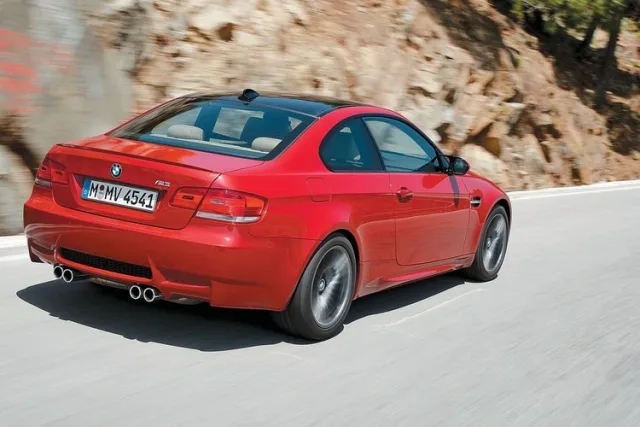
To be fair, the Audi S5 has all-wheel drive, and on our roads it easily compensates for those 300 milliseconds that the M car wins in the official acceleration to 100 km/h. So, maybe fans of the "three" with the M index will switch to the four rings, since the Bavarian sports car is not able to deliver brighter emotions?
But again we delve into these "unnecessary" musings. Instead of just getting behind the wheel of the "M" and dispelling all doubts to the quiet but piercing gurgle of the "V8" — sharp as Occam's razor.
| Specifications | ||
| Parameters | Vehicle | |
| BMW M3 | ||
| Dimensions, mm | Length | 4615 |
| Width | 1804 | |
| Height | 1424 | |
| Wheelbase | 2761 | |
| Track front/rear | 1538/1539 | |
| Engine | Petrol, with multi-point fuel injection | |
| Location | Front, longitudinal | |
| Number and arrangement of cylinders | V8 | |
| Displacement, cc | 3999 | |
| Bore/stroke, mm | 92.0/75.2 | |
| Compression ratio | 12.0:1 | |
| Number of valves | 32 | |
| Max power, hp/kW/rpm | 420/309/8300 | |
| Max torque, Nm/rpm | 400/3900 | |
| Drive | Rear-wheel drive | |
| Transmission | Manual, 6-speed | |
| Gear ratios | I | 4.06 |
| II | 2.37 | |
| III | 1.58 | |
| IV | 1.19 | |
| V | 1.00 | |
| VI | 0.87 | |
| Reverse | 3.68 | |
| Final drive | 3.85 | |
| Front suspension | Independent, coil spring, McPherson | |
| Rear suspension | Independent, coil spring, multi-link | |
| Front brakes | Single-piston floating calipers, ventilated and perforated discs, 360 mm diameter | |
| Rear brakes | Single-piston floating calipers, ventilated and perforated discs, 350 mm diameter | |
| Tires (wheels) | Front | 245/40 ZR18 (8.5Jx18 EH2 + IS 29) |
| Rear | 265/40 ZR18 (9.5Jx18 EH2 + IS 23) | |
| Minimum turning diameter, m | 11.7 | |
| Curb/gross weight, kg | 1580/2080 | |
| Trunk volume, l | 430 | |
| Maximum speed, km/h | 250* | |
| Acceleration 0-100 km/h, s | 4.8 | |
| At 1000 m distance, s | 23.3 | |
| Fuel consumption, EU, l/100 km | Urban cycle | 17.9 |
| Extra-urban cycle | 9.2 | |
| Combined | 12.4 | |
| Fuel tank capacity, l | 63 | |
| * Electronically limited | ||
M3: childhood, adolescence, youth
Igor VLADIMIRSKYThe BMW M3 owes its appearance largely to motorsport, namely circuit racing in touring car classes, where Bavarian cars had shone since the seventies. The start was made by the BMW 2002 and the large coupes 2800 CS and 3.0 CSL, then the baton was taken up by the turbocharged 320i "threes" and the six-cylinder 635 CSi coupe. However, by 1982 the Mercedes 190E came on the scene, and fundamentally new weapons were needed to fight it. According to factory legend, BMW's chairman of the board of management, Eberhard von Kuenheim, personally launched the M3 project, entrusting it to BMW Motorsport's technical director, the renowned engine builder Paul Rosche. Since the car was planned to be homologated not only for the circuit but also for rallying (Group A), a batch of road versions had to be built in a volume of 5000 units.
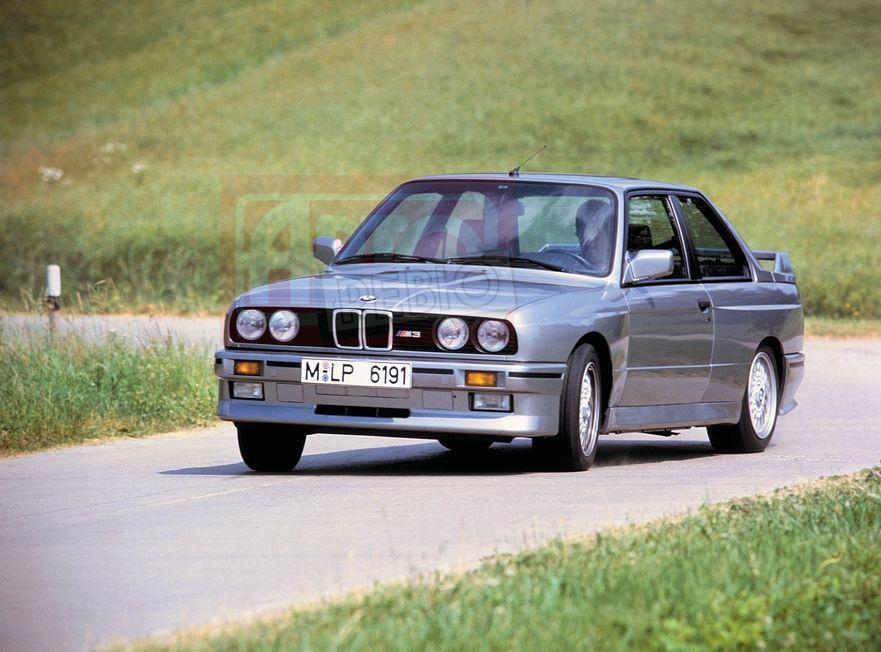 | 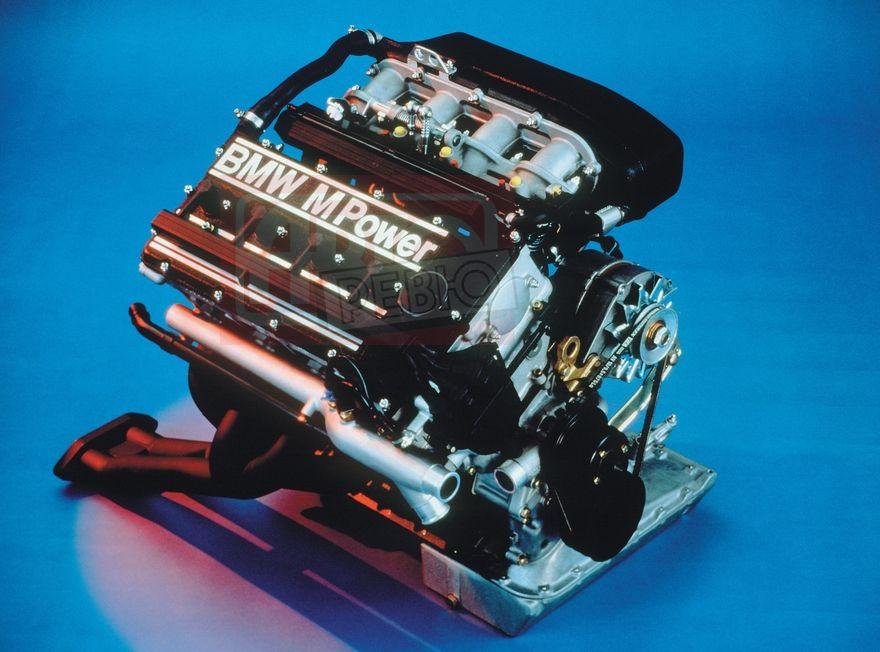 | 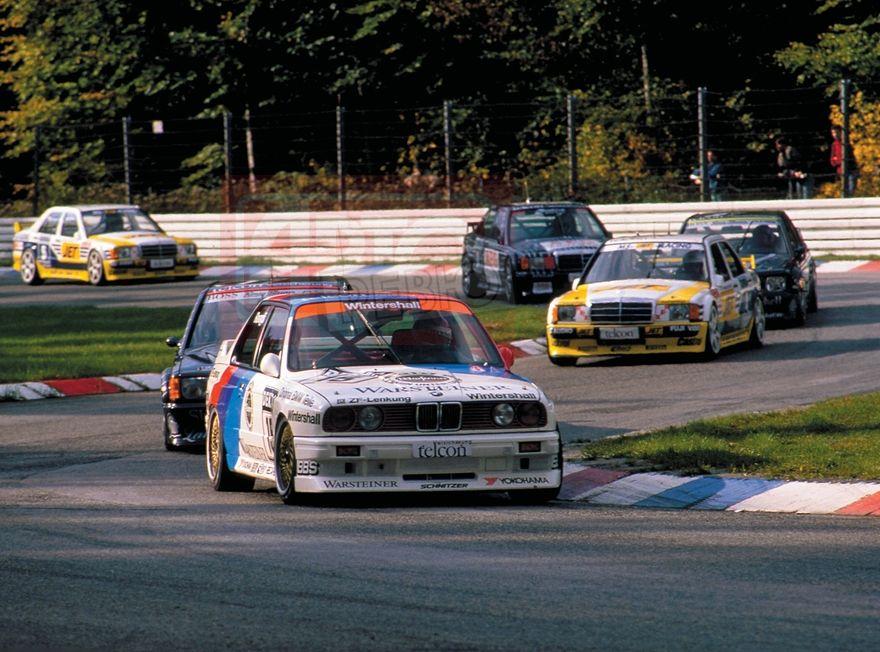 |
| BMW M3 E30 series (1986-1991): "four" with 2.3 L (195-220 hp). Produced 16504 coupes, 600 boosted M3 Sport Evolution coupes (2.5 L, 238 hp) and 785 convertibles - total 17889 cars | Engine S14 from BMW M3 E30: four cylinders, cast iron block, 2.3 L and 195-220 hp at 5500 rpm | Among the successes of racing BMW M3 E30 - WTCC cup 1987, victories in DTM, at Rally Corsica and in 24-hour marathons of Nürburgring and Spa |
The M3 prototype was assembled at a frantic pace - all the necessary components and technologies were already available at BMW Motorsport. For example, the first version of the engine was ready in just two weeks. The technical regulations of the class where the M3 was to fight Mercedes limited the engine displacement to 2.3 liters. BMW had only inline "sixes" in this displacement, but for the M3 they decided to make a "four" - it is lighter and more reliable. Rosche and his colleagues took a bored cast iron block from the 318i model, and placed on top an aluminum head with four valves per cylinder from the M1 "six", which was already installed on the M5 sedan. The head was shortened by a third. In the road version (compression ratio 9.6 - to allow using average European quality gasoline) 195 hp was extracted from 2.3 liters at 5500 rpm, and this with a catalytic converter. In the racing version, the S14 engine produced 300-360 hp and revved up to 10000 rpm.
The gearbox was borrowed from older sports BMWs, with a "racing" scheme: reverse was engaged in place of first, and the other gears were also shifted. In addition - a self-locking differential at the rear, different suspension geometry (caster, for example, tripled thanks to different bushings), new springs with shock absorbers, widened fenders and an aerodynamic body kit with a spoiler on the trunk lid and a high rear wing. Lift force decreased, Cx - 0.35.
The finished car was presented at the Frankfurt Motor Show in September 1985, and in spring 1986 journalists were allowed to drive on the track at Mugello. The light (1200 kg) two-door reached 100 km/h in 6.9 s and accelerated to 230 km/h. All 5000 cars of the homologation batch sold out instantly, despite the price of 58 thousand Deutschmarks. For comparison: a regular BMW 325i coupe with a 170-hp "six" cost 33000 DM, and an all-wheel-drive 325iX - 42500 DM.
True, the Porsche 911 in those years started from 80 thousand marks...
In 1987, for the first time in BMW history, shock absorbers with adjustable damping appeared on the M3, and in April 1988 the special version M3 Evolution was released with an engine boosted to 220 hp. 500 such cars were built, price - 85 thousand marks, and they did not appear in official price lists. At the same time, the M3 convertible was shown, produced in a run of 768 units.
In 1989 the base engine became more powerful - 215 hp, and in March 1990 the most powerful "civilian" version appeared - M3 Sport Evolution with a 2.5-liter engine producing 238 hp, which accelerated the light coupe to 250 km/h.
The second generation based on the third series E36 debuted in 1992. This was already a completely different car - it was created not for racing but for public roads. Externally there were few differences: different mirrors, bumpers and sills. But under the hood was an inline "six" with a displacement of 3.0 L with VANOS variable valve timing system, producing 286 hp at 6900 rpm. Electronics limited the top speed to 250 km/h, and acceleration to 100 km/h took 6.0 s.
In 1994 the convertible appeared, and then a four-door sedan - a response to the 280-hp Mercedes C 36 AMG. From July 1995, the M3 was equipped with a modernized 3.2 L engine with Double VANOS system and a six-speed manual. Power increased to 321 hp at 7400 rpm, so the BMW M3 crossed the threshold of 100 hp per liter of displacement, and acceleration to 100 km/h decreased to 5.5 s. In 1997, a robotic gearbox SMG appeared - a manual with electro-hydraulic clutch and gearshift drives (see AR No. 16, 1996).
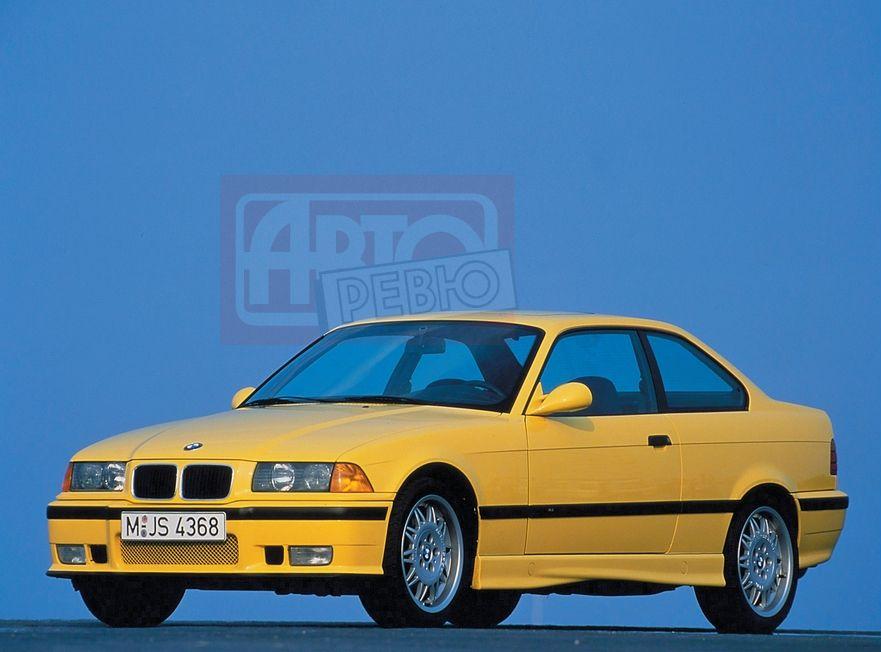 | 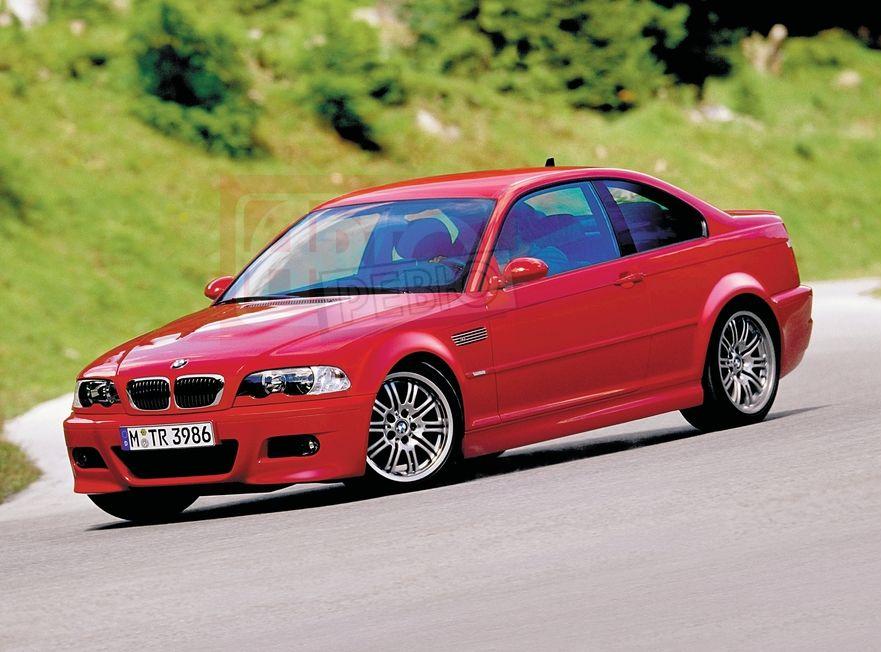 |
| BMW M3 E36 series (1992-1999): "six" with 3.0 L (286 hp) or 3.2 L (321 hp). Produced 46169 coupes, 356 M3 GT coupes (289 hp), 12603 sedans and 12114 convertibles - total 71242 cars | BMW M3 E46 series (1999-2006): "six" with 3.2 L (343 hp). Produced 54750 coupes, 1383 lightweight M3 CSL coupes and 29633 convertibles - total 85766 cars |
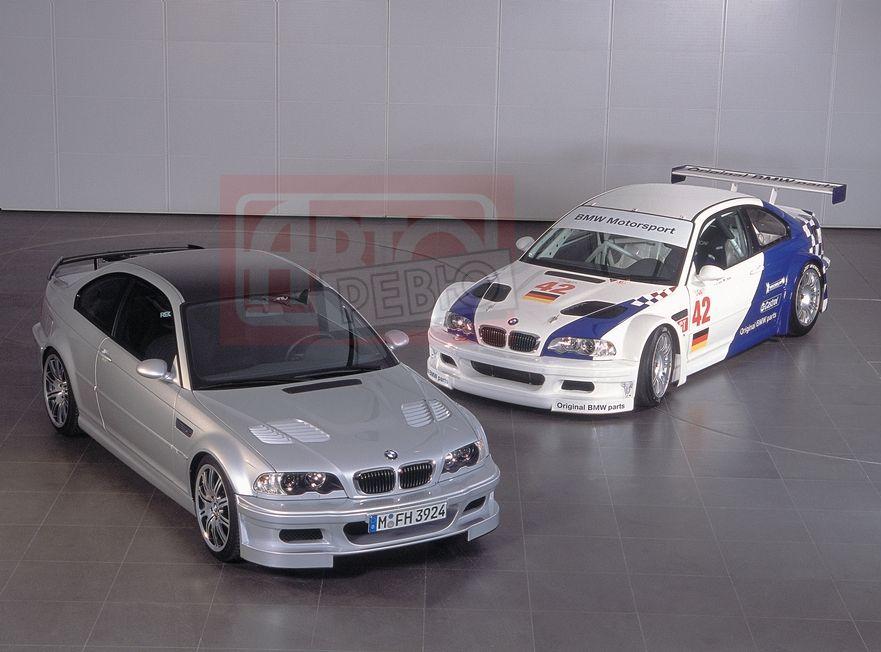 | 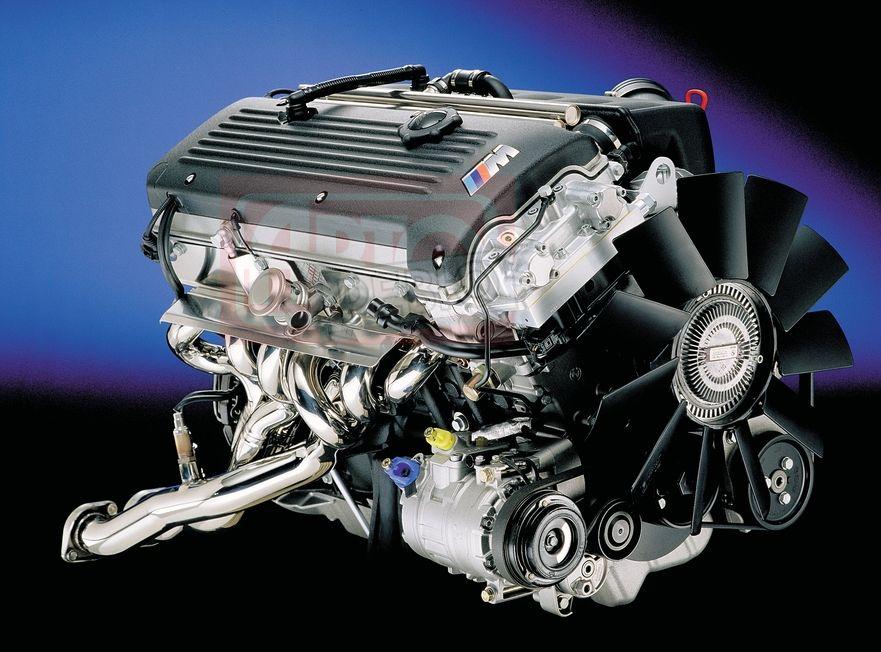 |
| In 2003, a small series of BMW M3 GTR with a V8 4.0 engine was released: on the left - road version with 350 hp engine, on the right - racing car (over 460 hp), the terror of the Nürburgring | Engine S54B32 from BMW M3 E46: six cylinders, cast iron block, 3.2 L, 343 hp at 7900 rpm - and six wins in the Engine of the Year competition |
In the spring of 1995, the lightweight BMW M3 GT coupe came off the assembly line, equipped with a 295 hp engine — only 350 of these cars were produced, and all were painted in dark green British Racing Green. The second generation M3 ended its life in 1999: over seven years, 71,242 units were assembled, with sedans and convertibles each accounting for 17% of the total volume.
Already in September of that year, the third-generation car in the E46 body was shown to the public, and its serial production started in 2000. The new "M" differed from standard "threes" by a front bumper with a massive air intake, an aluminum hood, decorative "gills" on the front fenders, and widened wheel arches that recalled the first generation of the coupe. The inline six-cylinder engine with a displacement of 3.2 liters developed 343 hp at 7900 rpm. A six-speed manual gearbox was standard, and a robotic SMG II could be ordered as an option. The claimed acceleration to 100 km/h was 5.2 seconds, although in Autoreview measurements the car showed only 5.9 seconds (AR No. 10, 2001). At the end of 2000, the M3 convertible appeared, but fans never saw a sedan. However, in 2003, the lightweight M3 CSL version was released, whose name referred to the legendary "Batmobile" BMW 3.0 CSL, which thundered in races in the seventies. The roof, new front bumper, rear diffuser, sill covers, and door panels were made of carbon fiber, and the engine power was raised to 360 hp. It is the M3 CSL that is considered the fastest production BMW on the Nürburgring Nordschleife.
The third generation M3 finally left the assembly line in the summer of 2006.