
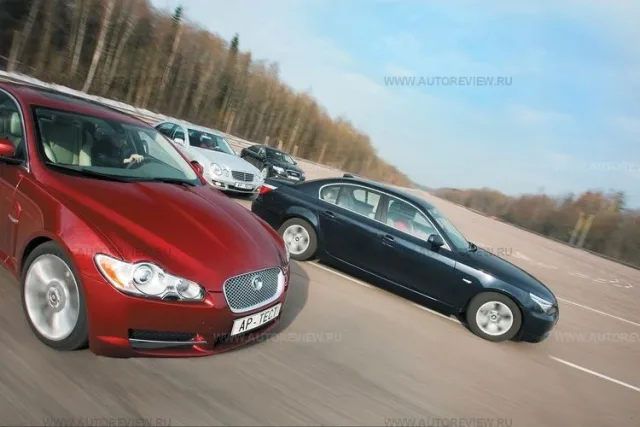
The TV commercial for the Jaguar XF sedan is accompanied by a familiar melody: «hush, hush, I thought I heard her calling my name now»… Why does your heart sink and a lump come to your throat? «Hush» in translation from English means «quieter», «shh». It's Deep Purple! But not the band that in the seventies unleashed the power of the album In Rock and the lightning of Fireball and Machine Head on the USSR. We're talking about the earliest lineup of the group, which, without Ian Gillan yet, covered an American song about a young man in love. Hush, hush… Yes, 1968, the record Shades of Deep Purple with a contrasting black-and-white cover — by the standards of those years, elite, for the initiated! — and that drawn-out «na-na-na-na…»
A couple of decades later, Yuri Antonov, concerned about copyright, would add a similar chant to his hit about birches, pines, and autumn. Although the composer might have envisioned another melody — A Day in the Life by the Beatles from the same LSD era. They sound similar.
Hush, hush, quieter, quieter… A precise hit on the target audience! And it doesn't matter that the song's lyrics are such that if you heard them in Russian, you'd immediately switch the radio in disgust. The main thing is the music from childhood-adolescence-youth. And who is this close to? Those who are now «fifty or thereabouts». The target audience.
Ladies and gentlemen, meet! A Brit, the Jaguar XF, and three true Germans — the Audi A6, BMW 525i, and Mercedes E 280. All have roughly three liters of displacement across six cylinders, two have all-wheel drive (natural for Audi, but rather a surprise for Mercedes), and the most powerful is the Jaguar: 238 horsepower or, in rock-scene language, 175 kilowatts. The Mercedes's power is 231 hp (170 kW), the BMW's is 218 hp (160 kW), and the Audi's is 210 hp (154 kW). Who will out-sing and out-play whom?
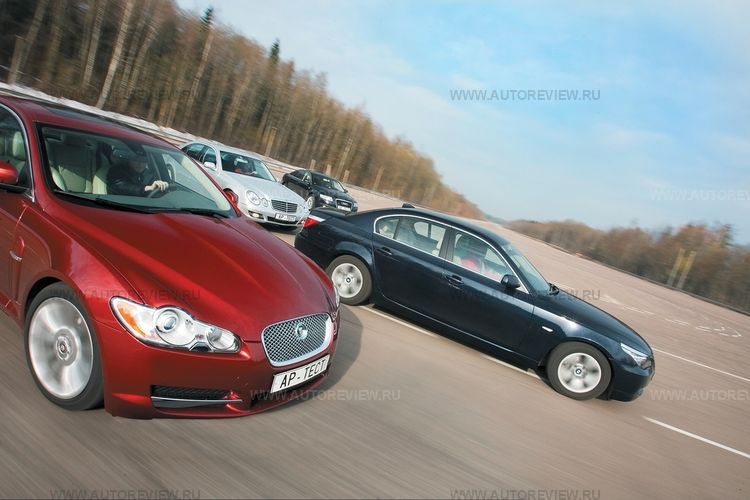
If this were a rock festival, the intrigue would die as soon as the British took the stage. No matter how hard the Germans tried, no matter how virtuosic their techniques filled the hall, they were doomed here. Their angular, contrived rock might get someone going for a couple of minutes, but it won't warm the soul. And if the Germans also started singing…
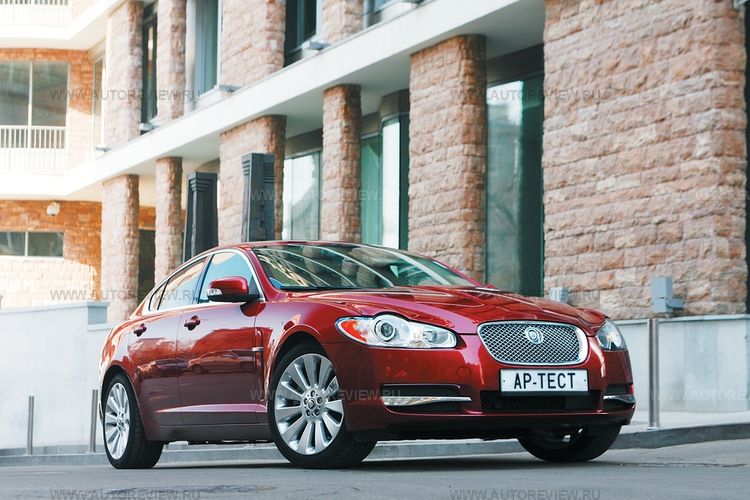
But we're not in a concert hall; we're at the Dmitrov test site. The only thing in common, perhaps, is that there will be no less adrenaline. Especially if you're behind the wheel… You didn't guess! The new Jaguar XF — it's the one that «got the crowd going» here too!
Even if the Jaguar isn't a handsome devil, it was the only one that drew glances. Both in Moscow, and in Dmitrov, and at the market in the village of Sinkovo, a couple of kilometers from the test site. Incredible magnetism! And how Uncle Vanya Shadrichev's jaw dropped when, leaving the cafe, he glanced toward the Jaguar and saw that… However, we'll save that story for later. For now, let's look inside the cabin.
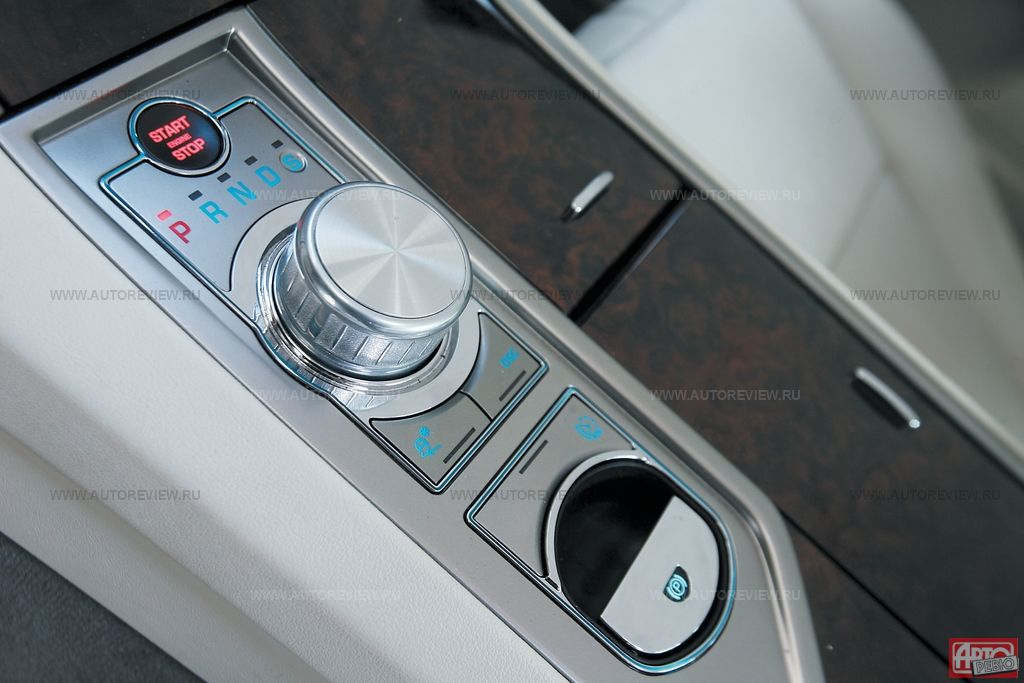 | 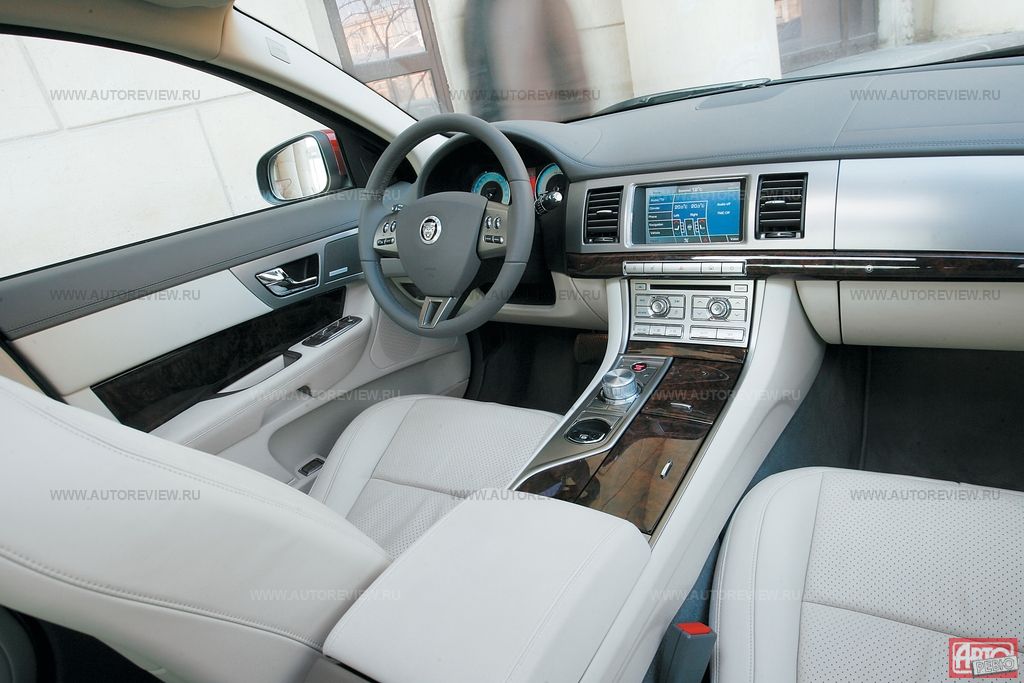 |
| Forget about the J-gate! The new Jaguar automatic selector is a rising «dial» | Light leather, «winged» metal — an «airy» mood in the Jaguar's cabin |
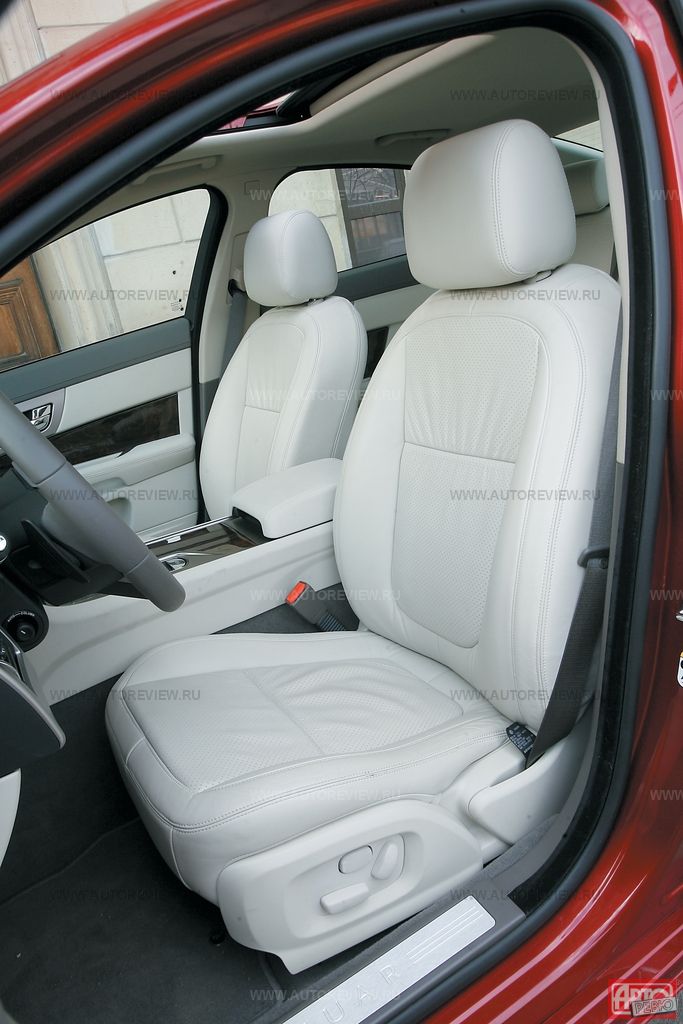 | |
| The seats are excellently contoured and upholstered in soft perforated leather | The wheels on the steering wheel spokes have a knurled texture, like Hi-End audio equipment |
It wasn't for nothing that chief designer Ian Callum received pounds sterling from the budget of the then-loss-making, Ford-owned Jaguar division! Stiffness? No, smile: light British banter! And the wooden inserts are just an element of the game, self-irony. As is the «club» turquoise lighting, the flip-up air vent covers, and, of course, the massive dial that took the place of the «handbrake». Something like iDrive on a BMW? No, the automatic selector! You press the brake with your foot, your finger on the Start button (you can keep the ignition key in your pocket; the Jaguar recognizes its owner itself) — and the dial automatically rises a couple of centimeters. Then it's like a regular «automatic», but instead of moving a lever, you turn the dial: Parking, reverse, neutral, Drive… A minute — and you're used to it.
| Audi A6 | BMW 525i |
 |  |
| Jaguar XF | Mercedes-Benz E 280 |
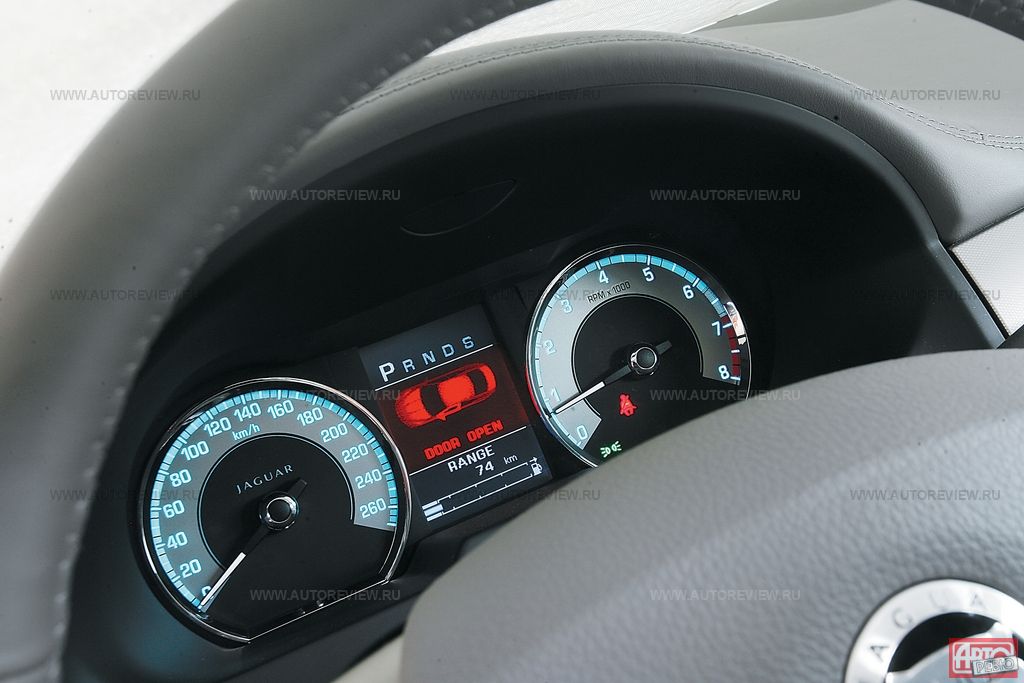 | 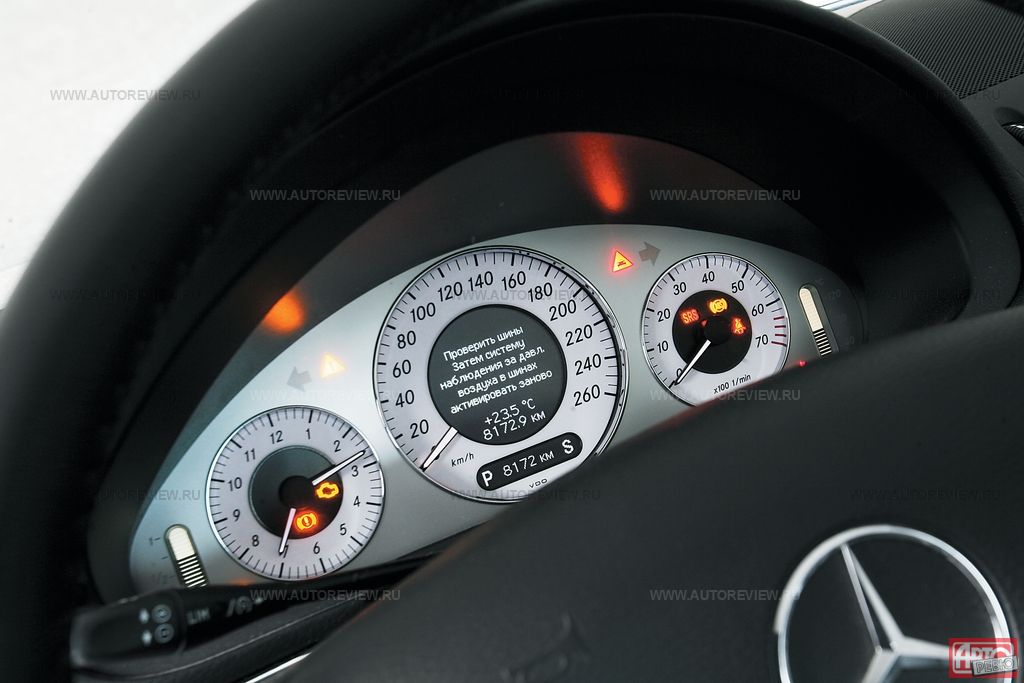 |
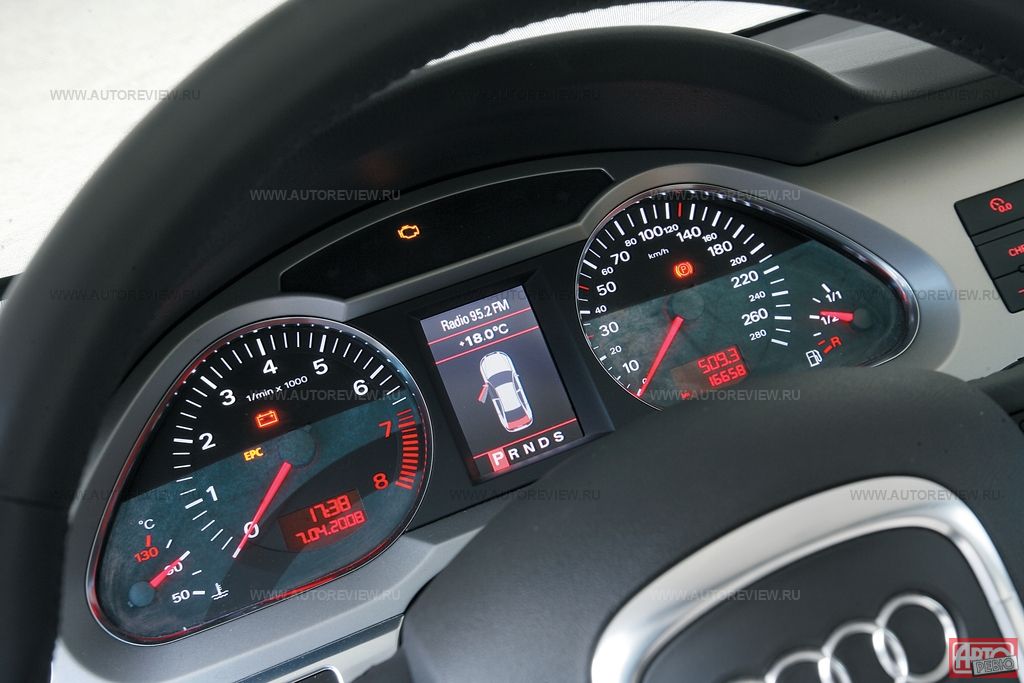
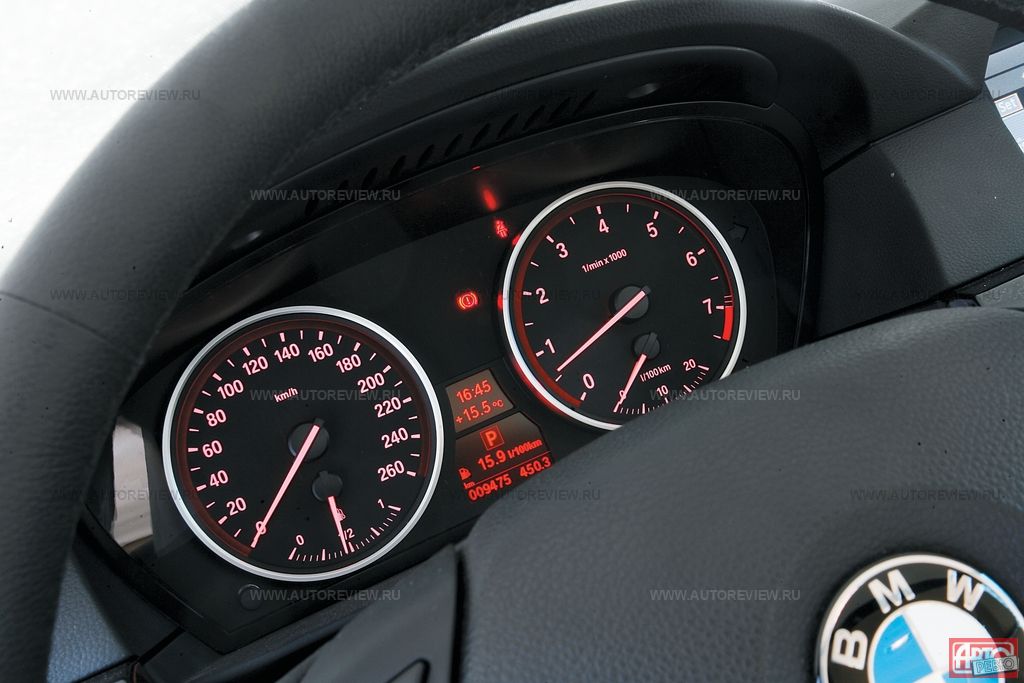
| In terms of clarity and informativeness, neither the classic Audi scales nor the Mercedes «antique clocks» with a modern display over the speedometer can compete with BMW's instrumentation. And the Jaguar's instruments look dull even with the backlight on | |
But something bothers me. The dial has a slight «play», there are burrs on the ends of the aluminum panels, and the electric adjustment of the steering column no longer works. But the mood doesn't drop. Let's consider that this is like the string ends sticking out of guitar tuning pegs. The main thing is that the instrument «tunes». And the Jaguar «tunes»!
But you have to get into the Jaguar gradually. Otherwise, you'll hit your knee on the front panel, and then your head on the low roof. We also chose a comfortable seating position without fuss — after all, the steering column was immobile. And it all works out! The seat is contoured, comfortable, the steering wheel is upholstered in the softest leather. Even the heated steering wheel, imagine, still works! Bliss.
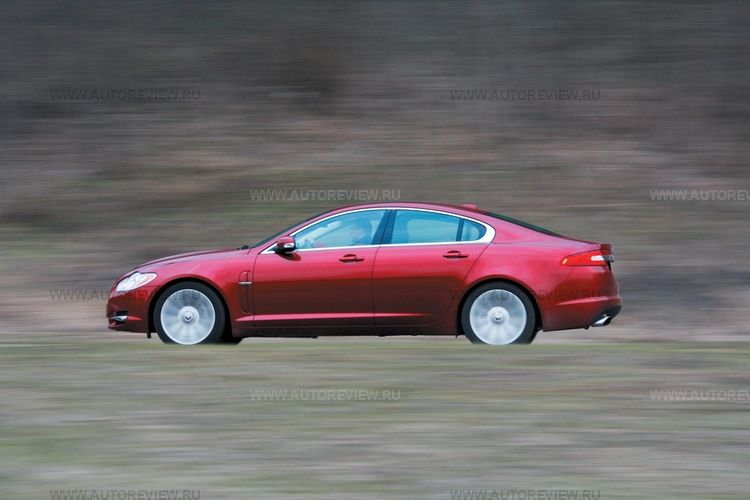
At maximum speed, the Jaguar XF holds a straight line as confidently as the Audi and Mercedes
And the others? We've known the others for years, so just a few strokes about them.
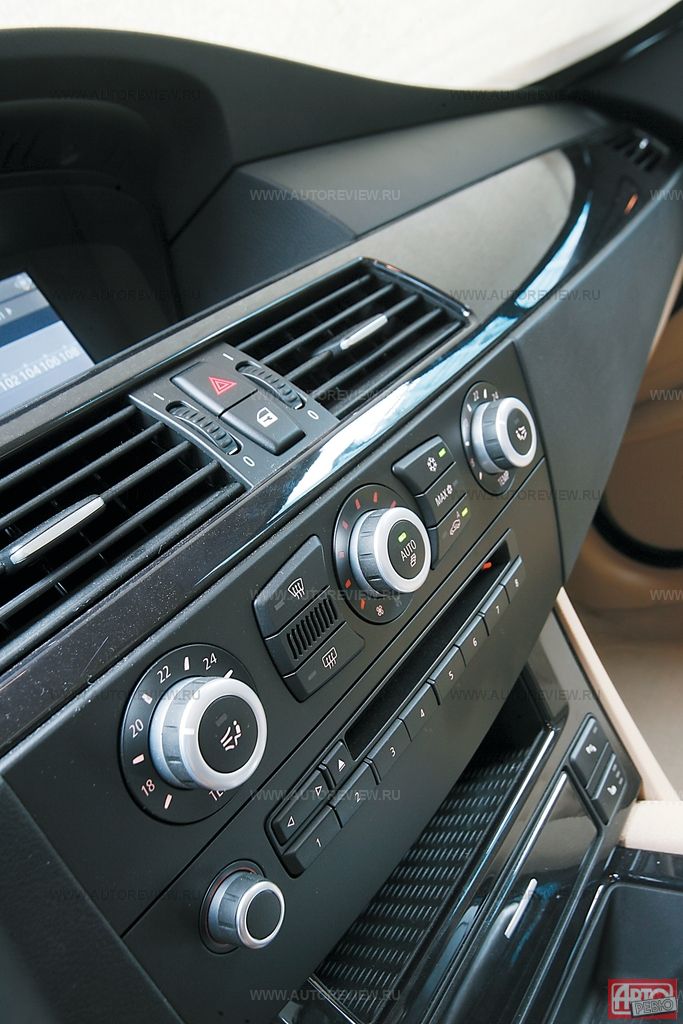
«Our» BMW has the simplest seats: the electric drive only changes the backrest angle and seat height, and there's no lumbar support adjustment on the convex backrest at all. But, compared to the multi-contour «cradles» of top versions, these thin seats with a concave back give more room for rear passengers. The compromise is accepted.
| Audi A6 | BMW 525i |
 |  |
| Jaguar XF | Mercedes-Benz E 280 |
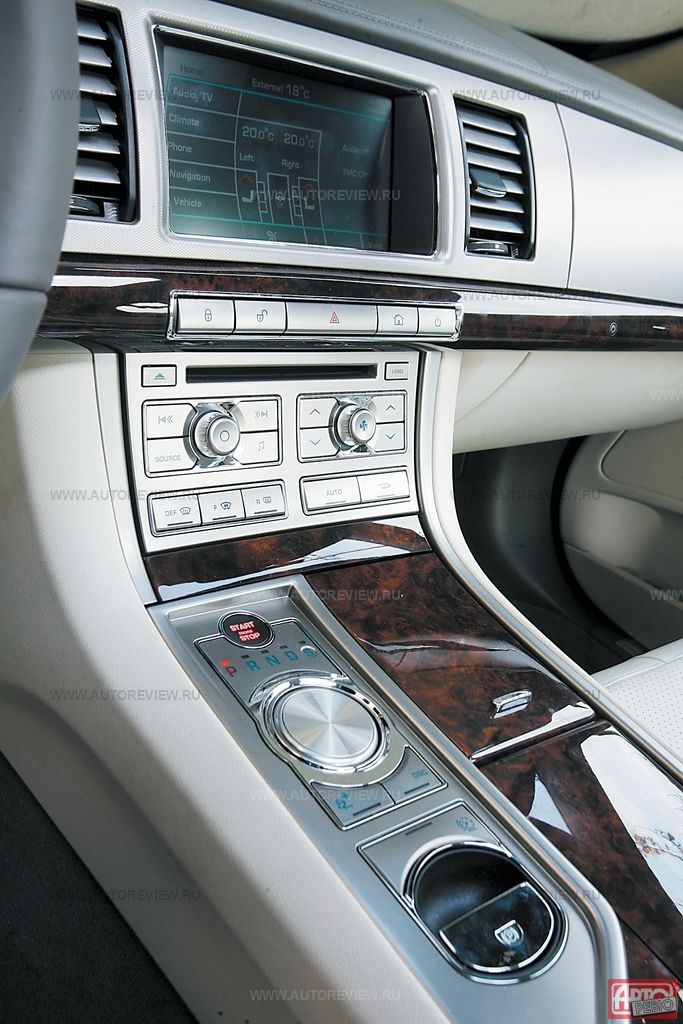 | 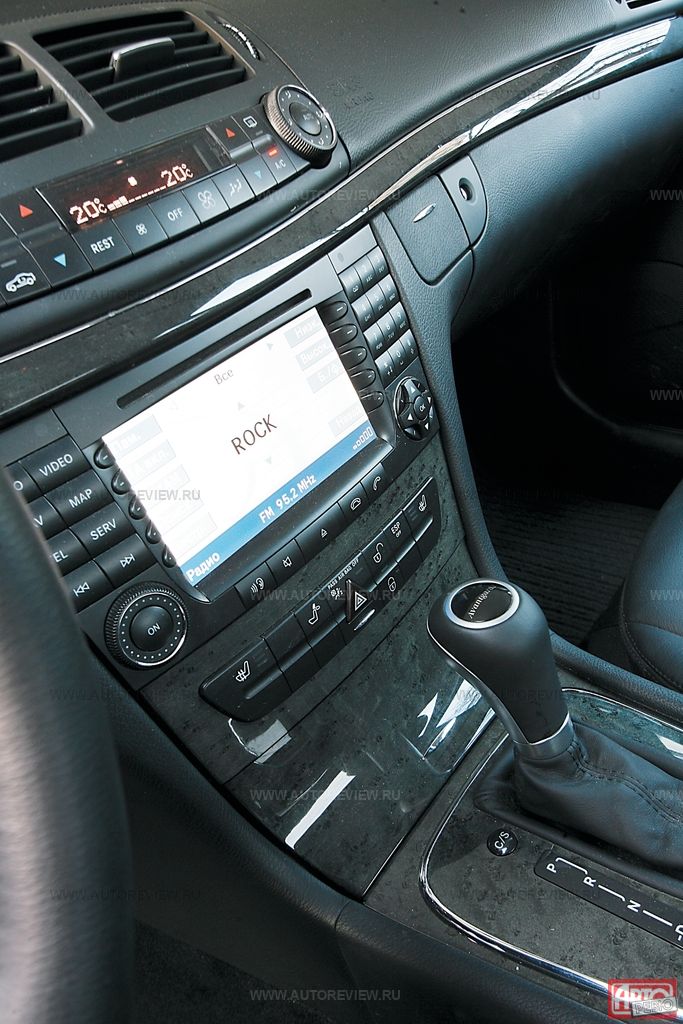 |
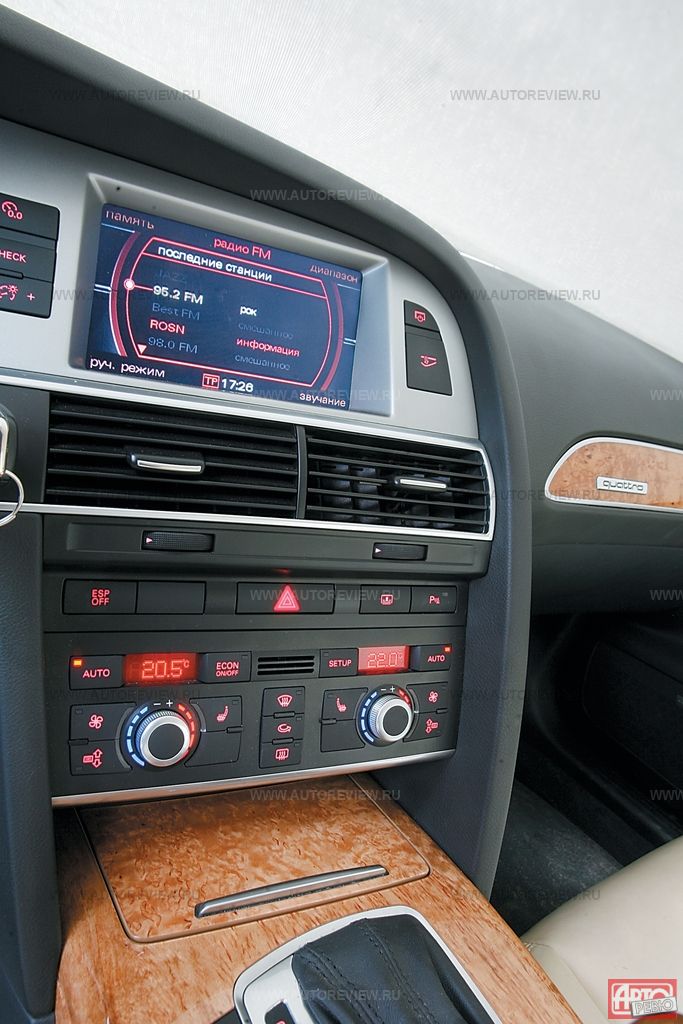
| Climate control in the German cars is organized much more conveniently than in the Jaguar, where most functions are assigned to virtual «buttons» on the touchscreen display | |
Mercedes, as before, puzzled with an abundance of buttons, and — what a surprise! — not the most comfortable seat cushion with a convex profile.
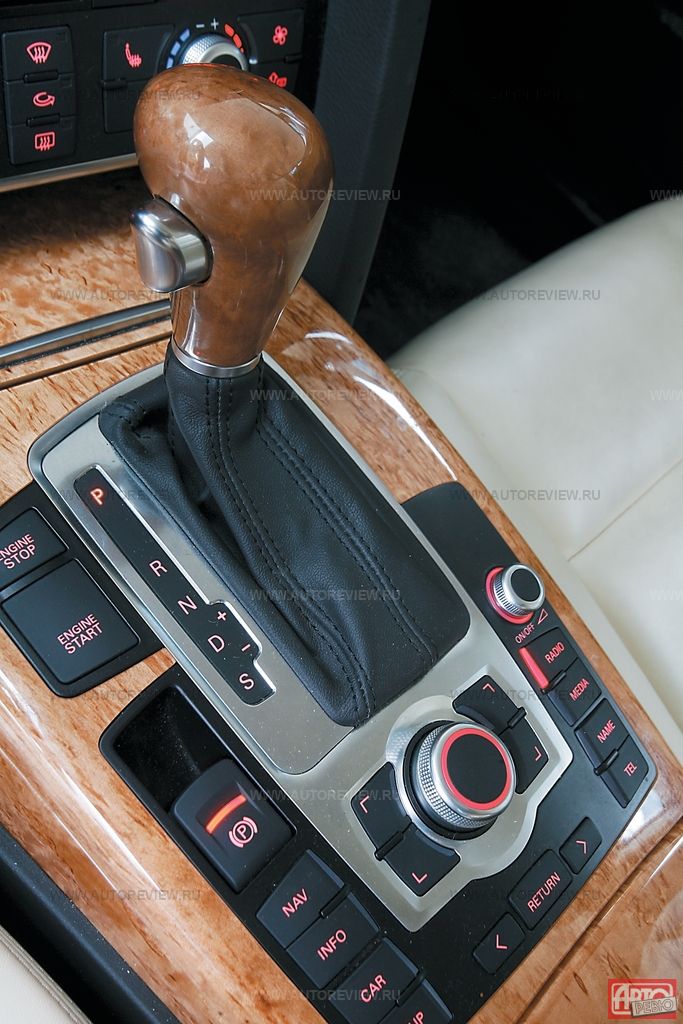
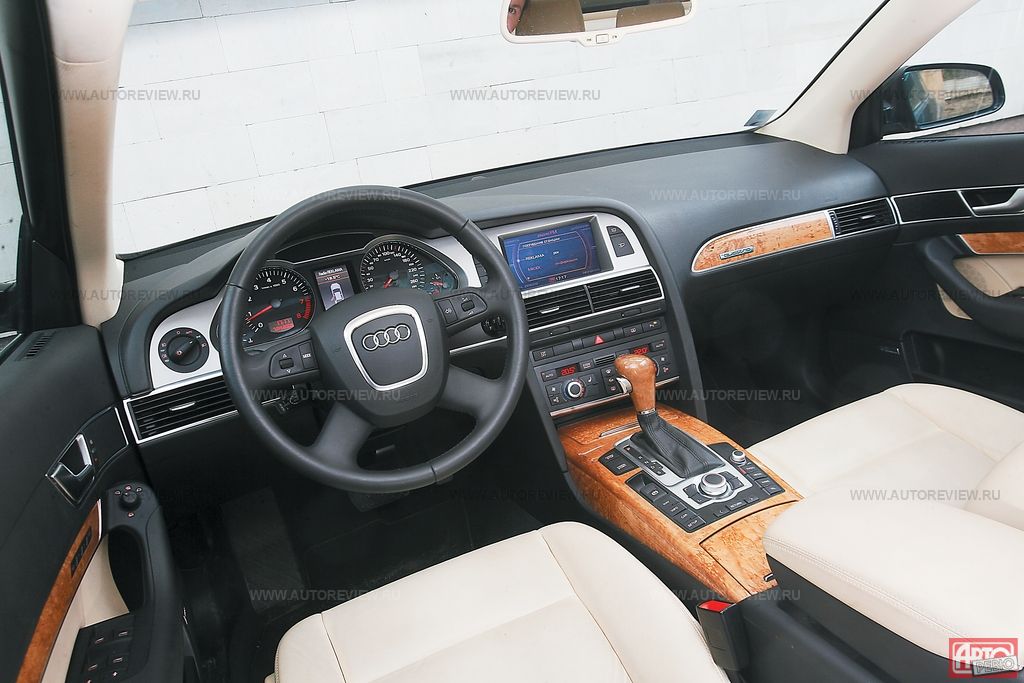
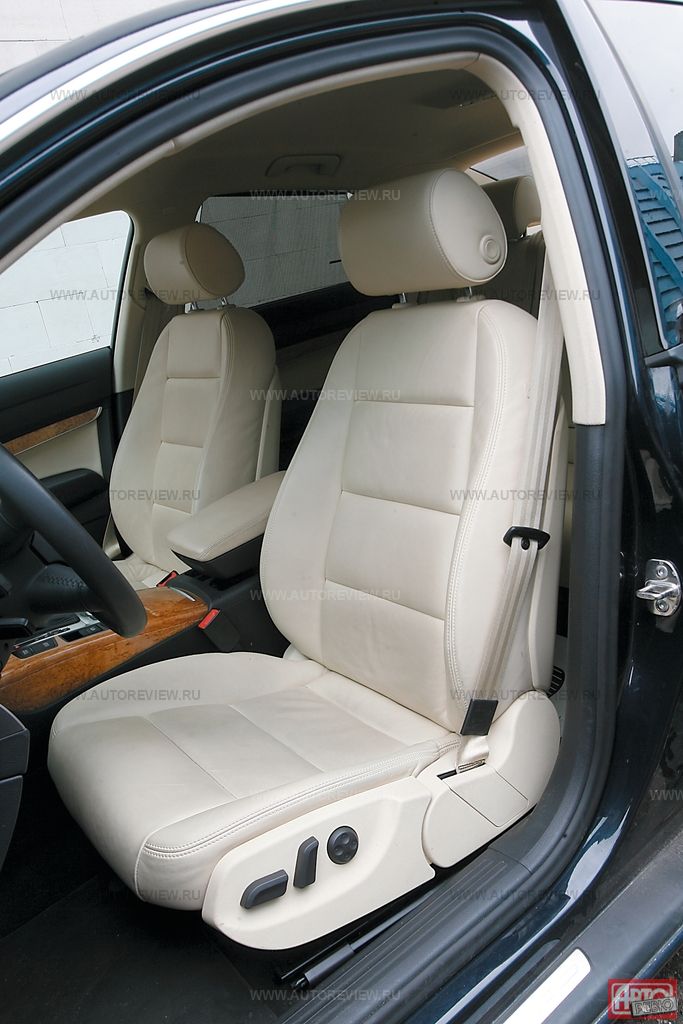
And in the Audi, you can only complain about the slippery leather of the seats with widely spaced bolsters. But overall — exemplary ergonomics!
| Audi A6 | BMW 525i |
 |
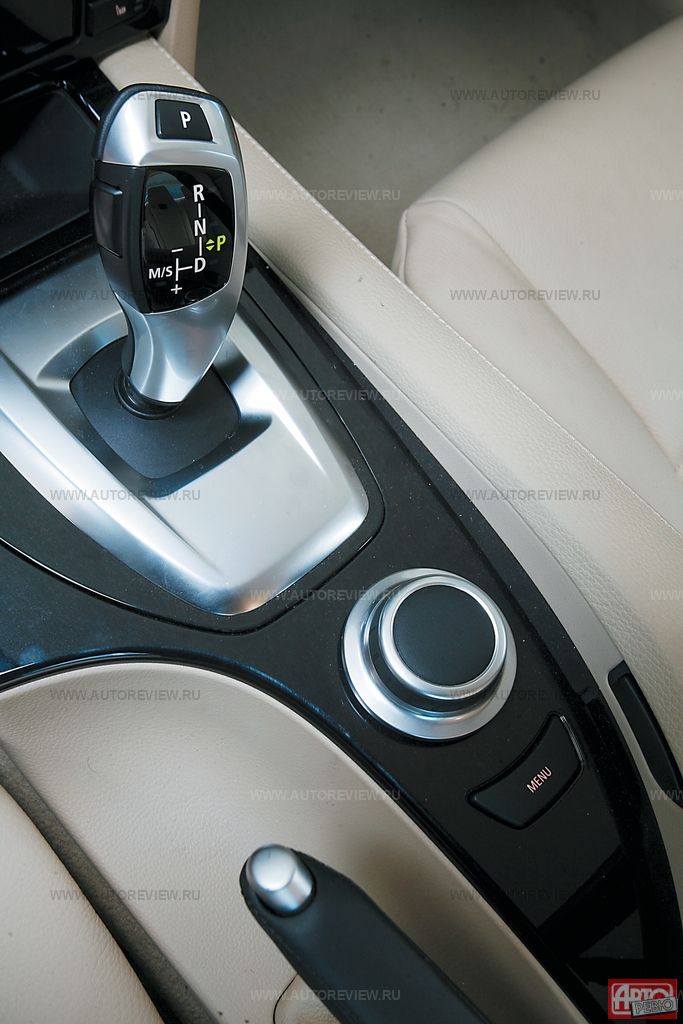 |
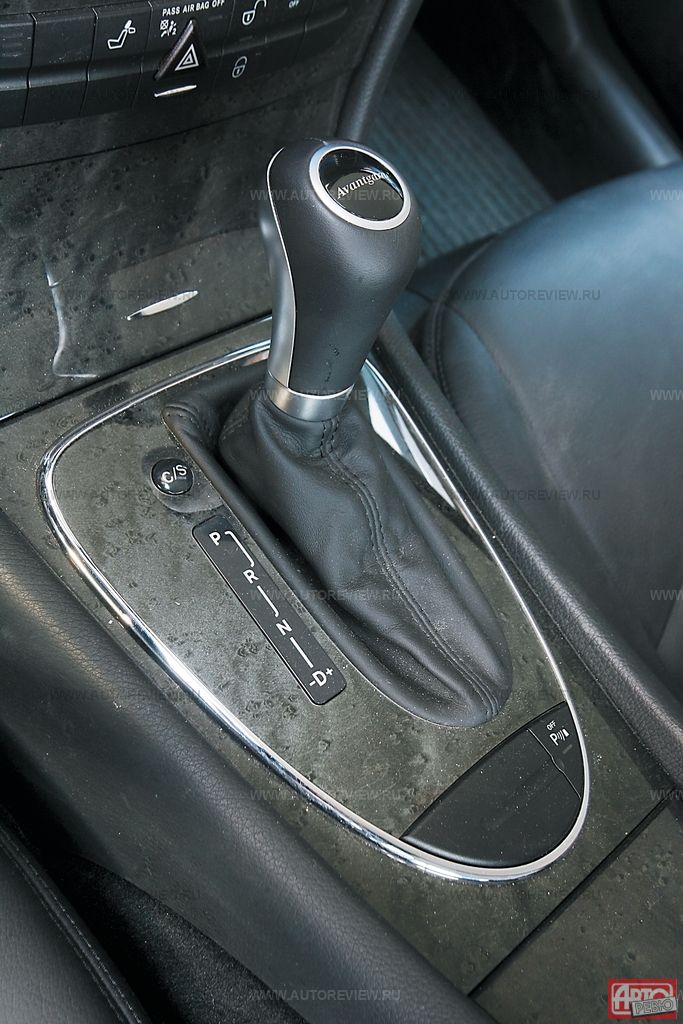
| Mercedes-Benz E 280 | The trendy electronic selector, which moved to the "five" from the new X5, is even easier to use than the classic levers of Audi and Mercedes |
 |
But all this is somehow bland, without soul... Neither blues nor rock. You're drawn to Jaguar.
Jaguar accelerates magnificently! Smoothly, powerfully, responding precisely to the pedal press. If there were a betting pool before the dynamometer run, we'd bet on the Jaguar: it must lead in the 0-100 km/h sprint! But there's no pool, and that's for the best — otherwise we'd have lost. Despite the BMW being 20 hp down on the Jaguar, the German sedan turned out to be the fastest of the four, hitting 100 km/h in eight seconds. What's the secret? First, it's a BMW. Second, the BMW is over 200 kg lighter than the other three cars.
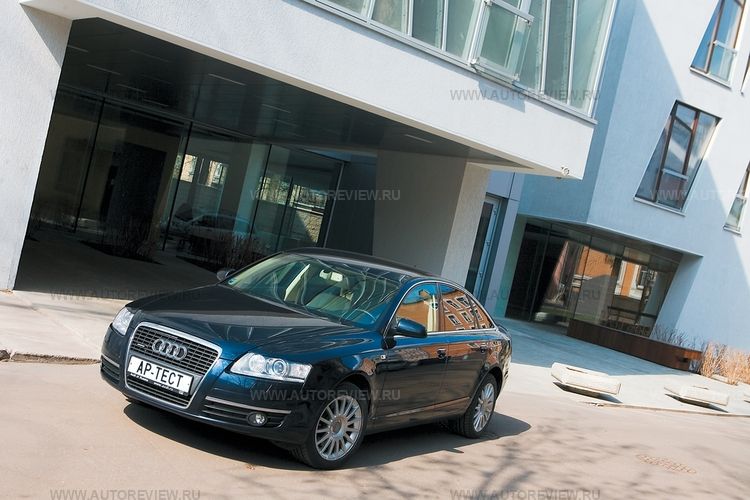
Behind it are Audi and Mercedes: they finished almost simultaneously, hitting 100 km/h in 8.5 seconds.
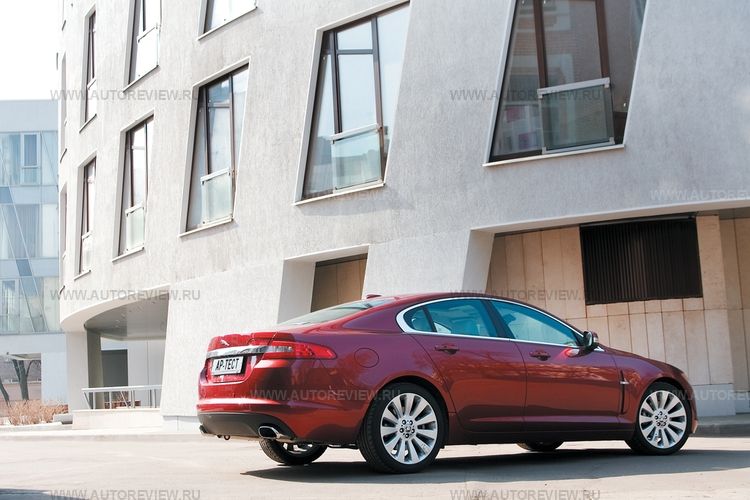
And our powerful, rear-wheel-drive favorite Jaguar was last. Well, well... In addition to weight, the "long" gears also played a role: in second, the XF accelerates to 109 km/h (the engine hits the limiter at 6800 rpm), in third — to 165 km/h. In the BMW, for example, the limiter kicks in at 91 km/h and 139 km/h respectively.
 |
 |
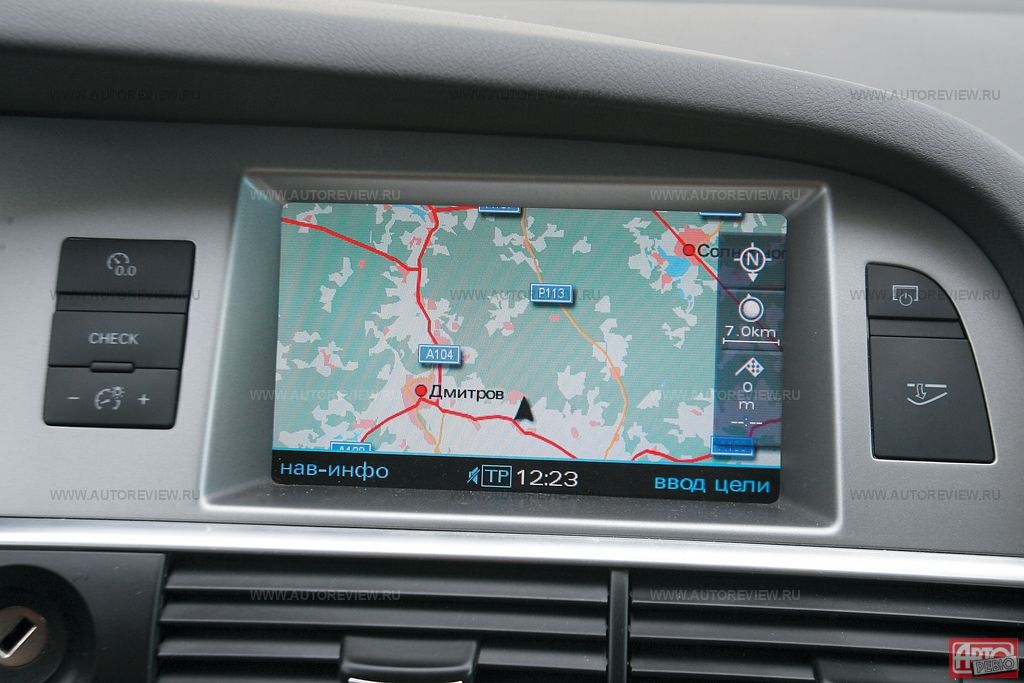 |
| Audi interior: a cockpit tailored for the driver, finished forms, perfect panel fit | Audi seat profile is impeccable, but the leather is slippery | Audi's factory navigation works great in Moscow and the region. Surcharge — 134 thousand rubles |
That's on the dynamometer road. But beyond it, when you rely on sensations rather than numbers, the Jaguar yields to none of the "Germans"! And how the engine growls under load! Every overtake is a little celebration. You just need to get used to the fact that the gearshift algorithm can change depending on how sharply you press the gas pedal: hit it — and the "automatic" will drop three gears; press more smoothly — and only one.
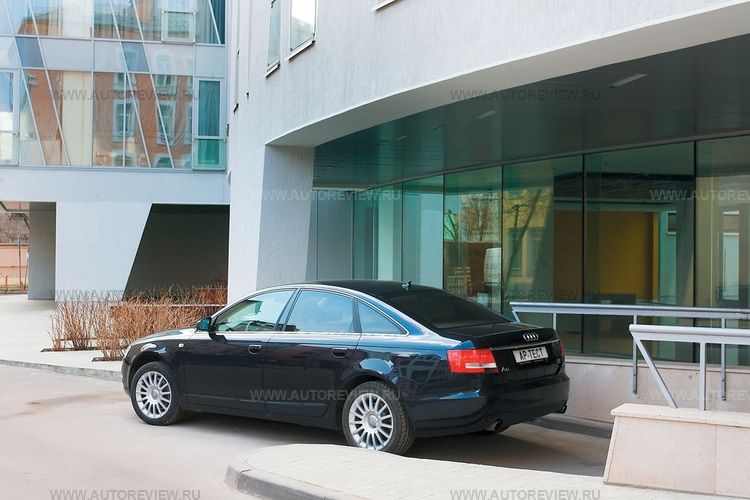
In the Audi — no improvisations: gears engage clearly, on time, and without surprises. A song? Yes. Under it, you want to march in step.
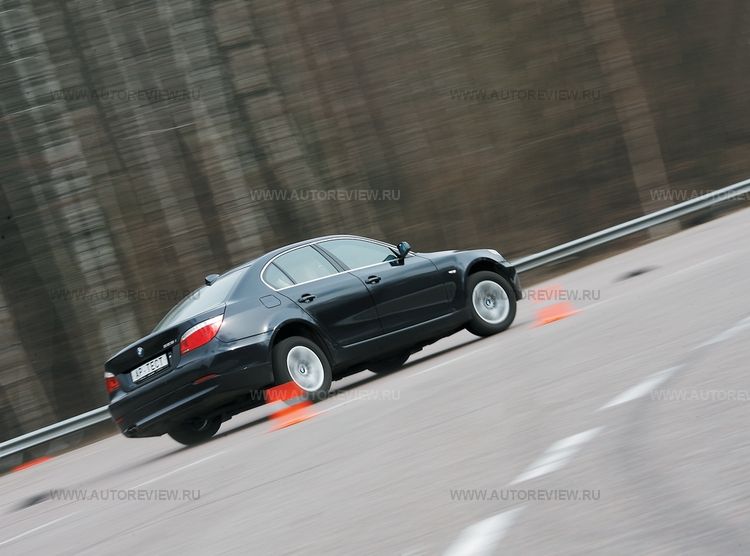
The BMW doesn't execute commands so zealously, and the Mercedes, due to its stiff gas pedal, seems the heaviest to accelerate. Or, if you will, the most solid. And sometimes the Mercedes got confused in gears. Unlearned notes?
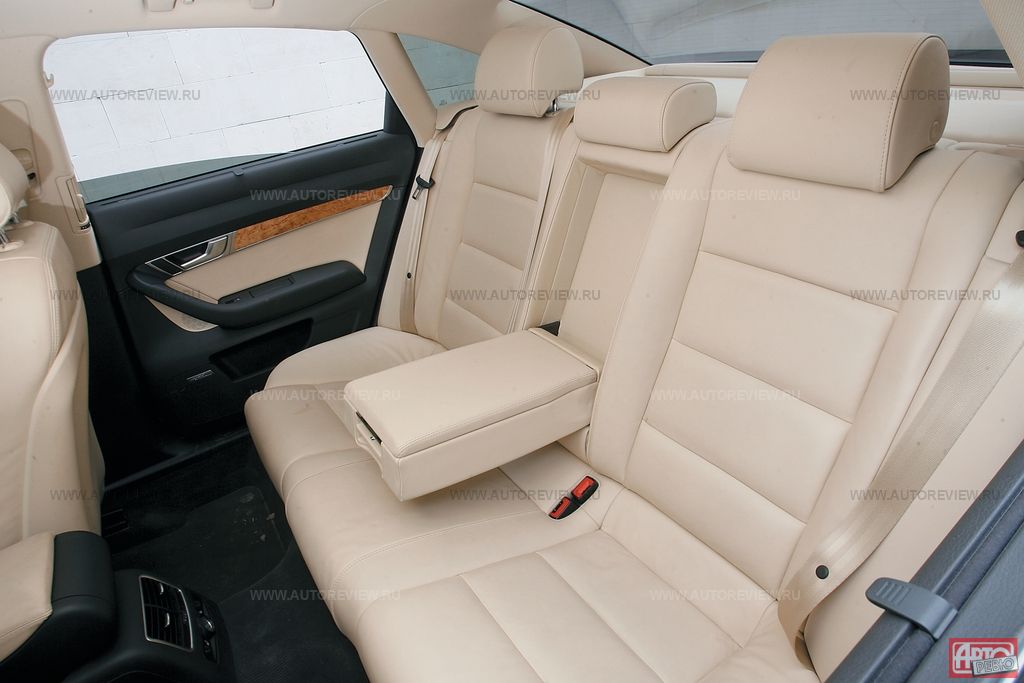
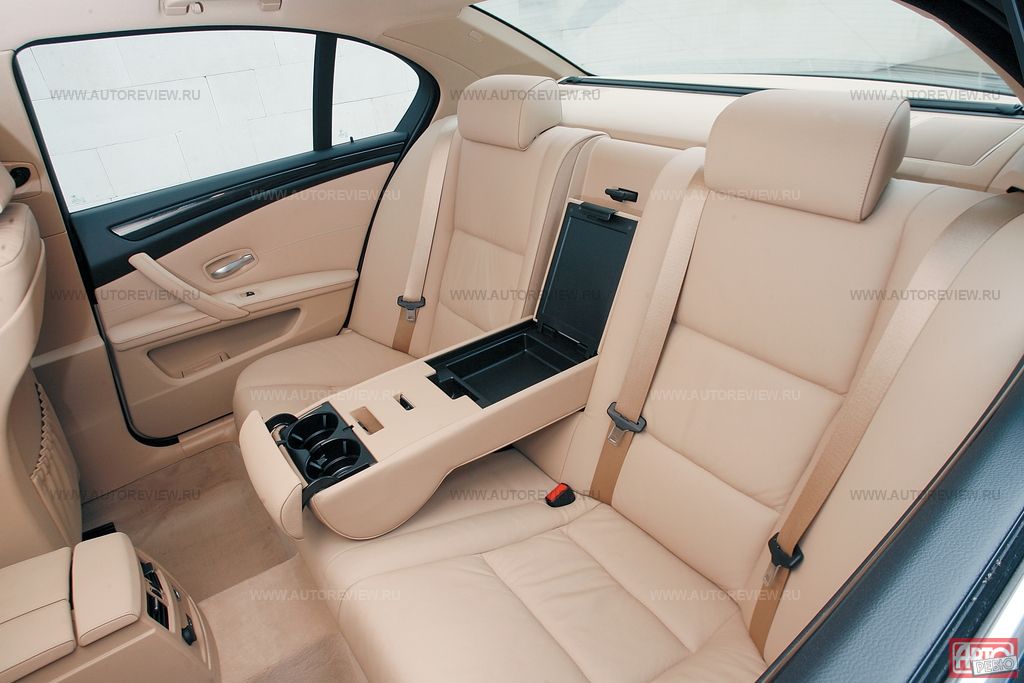
| Audi A6 | BMW 525i |
 |
 |
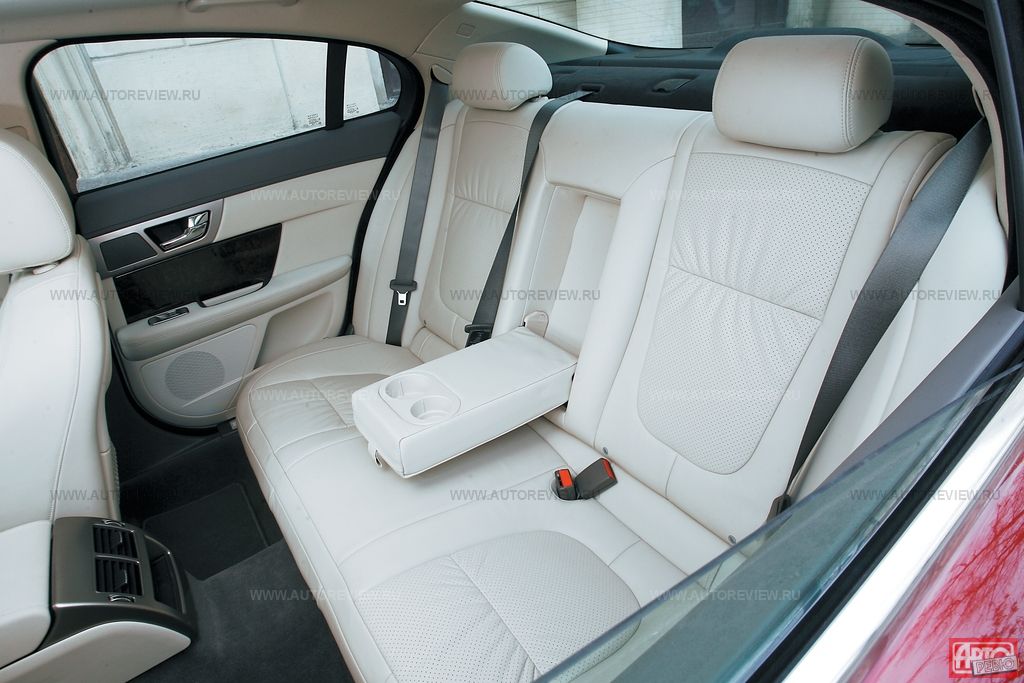
| Jaguar XF | Mercedes-Benz E 280 |
 |
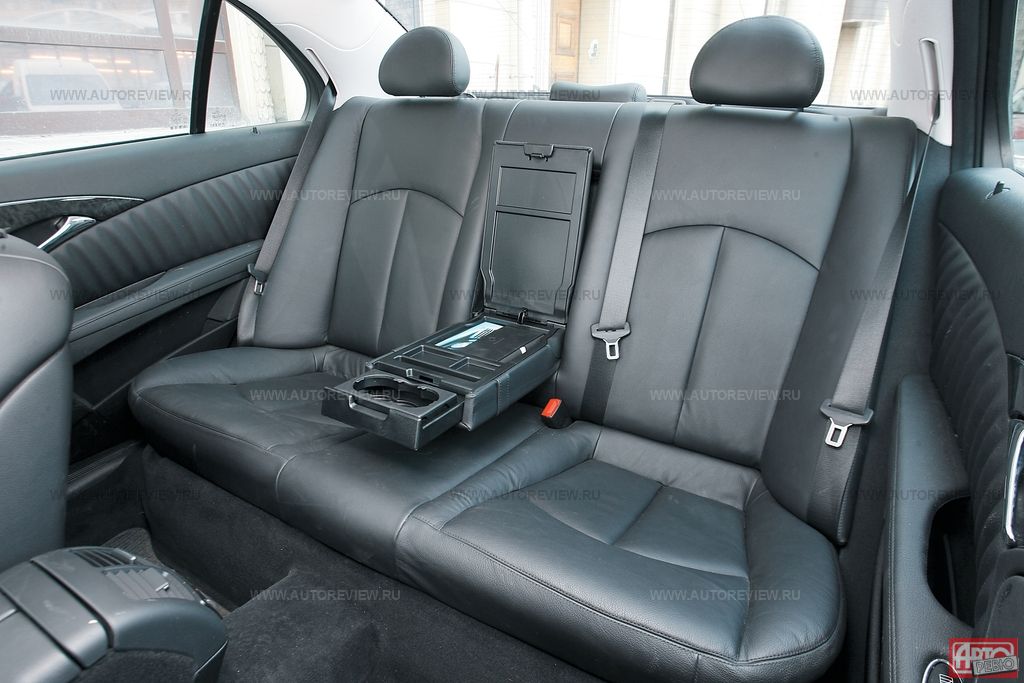 |
| Thanks to the semi-reclining position and maximum legroom (thanks to the high-mounted front seats with curved backrests), the BMW "five" leads in the "passenger comfort" category. Plus — the most comfortable armrests, a soft cozy "berth", and the windows lower completely. Audi is slightly worse. Mercedes is even less spacious, but a comfortable atmosphere is created by the deep seat molding and a multifunctional lamp with adjustable "milky" light intensity. Jaguar is unkind to passengers — cramped, uncomfortable, windows don't lower fully | |
But what the Jaguar pleased with not only subjectively (by feel) but also objectively, i.e., by measurements, is the brakes: from 100 km/h — in just 38.6 meters! Best result. It's a sin to complain about the brakes of the German cars, but the biggest discrepancy between feel and numbers is in the Mercedes: the pedal isn't very informative, goes deep, but, lo and behold, by measurements — second result after the Jaguar!
| Audi A6 | BMW 525i | |
 |
||
| Jaguar XF | Mercedes-Benz E 280 | |
 |
 |
|
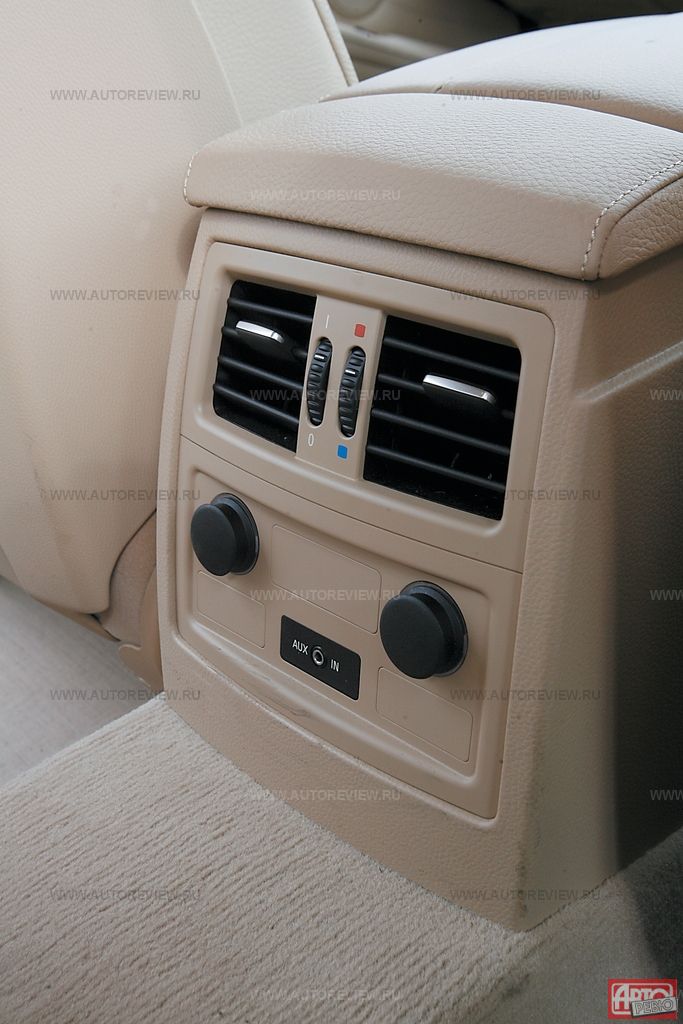
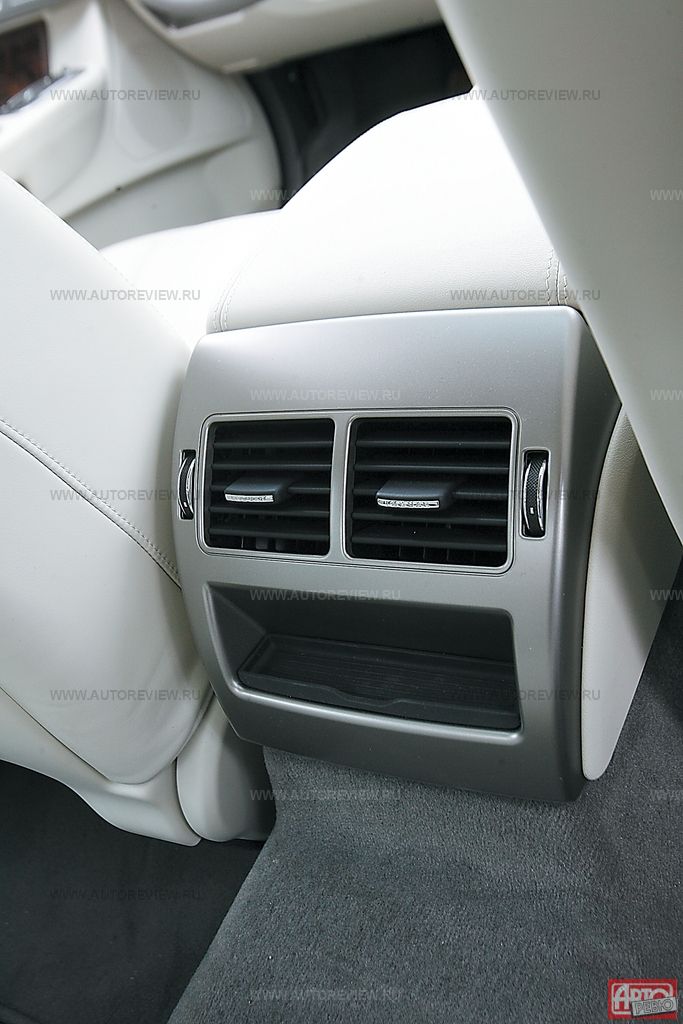
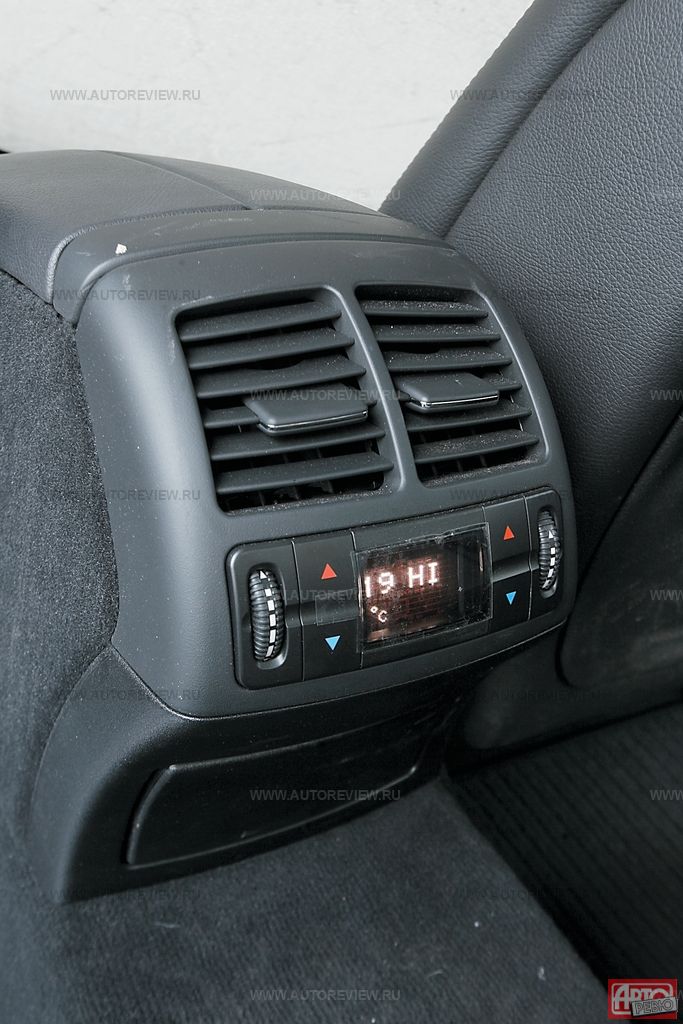
| A climate control unit for the rear of the cabin can be ordered for all four cars, but in our quartet only the BMW and Mercedes had it. Moreover, the latter — with separate temperature adjustment. But the vents on the center pillars are standard equipment for Audi and Mercedes | ||
On the highway, the Jaguar goes easily, doesn't shy away in ruts, is calm on transverse slopes, and the steering has a dense effort. It also pleased in corners, although... This is the case when there's an excess of energy, but the technique of execution is already lacking. Easily entering a corner, the Jaguar suddenly, under steady throttle and with the steering wheel stationary, begins to slightly "tighten" into the turn. There's no danger, but there's no confidence either. And what if faster? What if you turn off the stability system? Here's where blues turns into rock — on the edge, on the blade... The Jaguar smoothly goes into a slide, and then — you just have to keep up with the steering wheel! And keeping up is hindered by the high "background" effort on the wheel. Still, it's great, it gets you going.
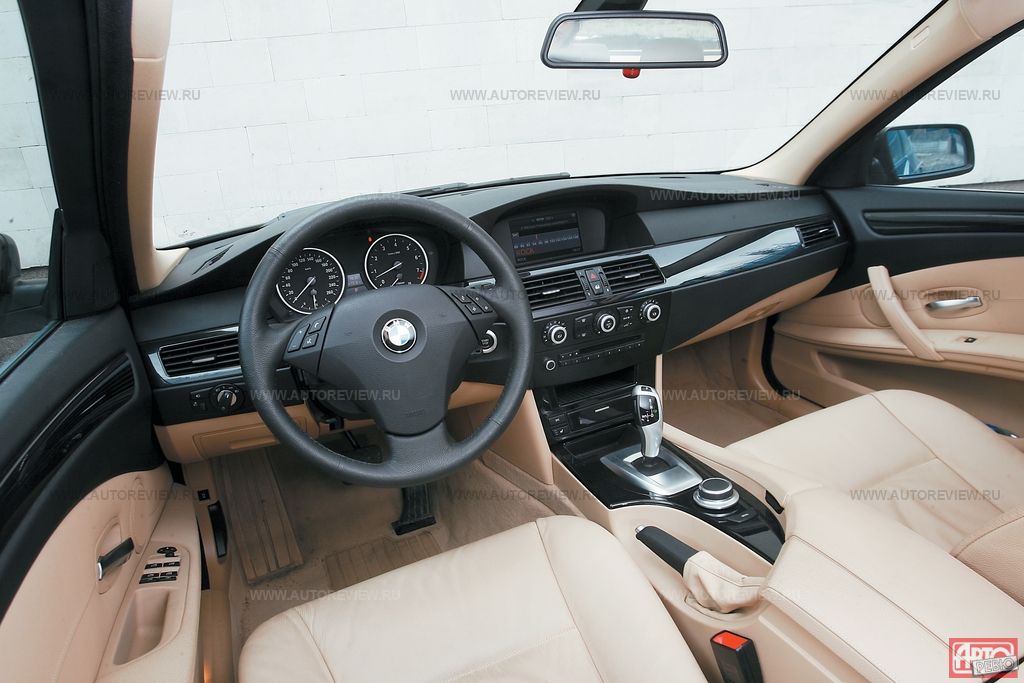 |
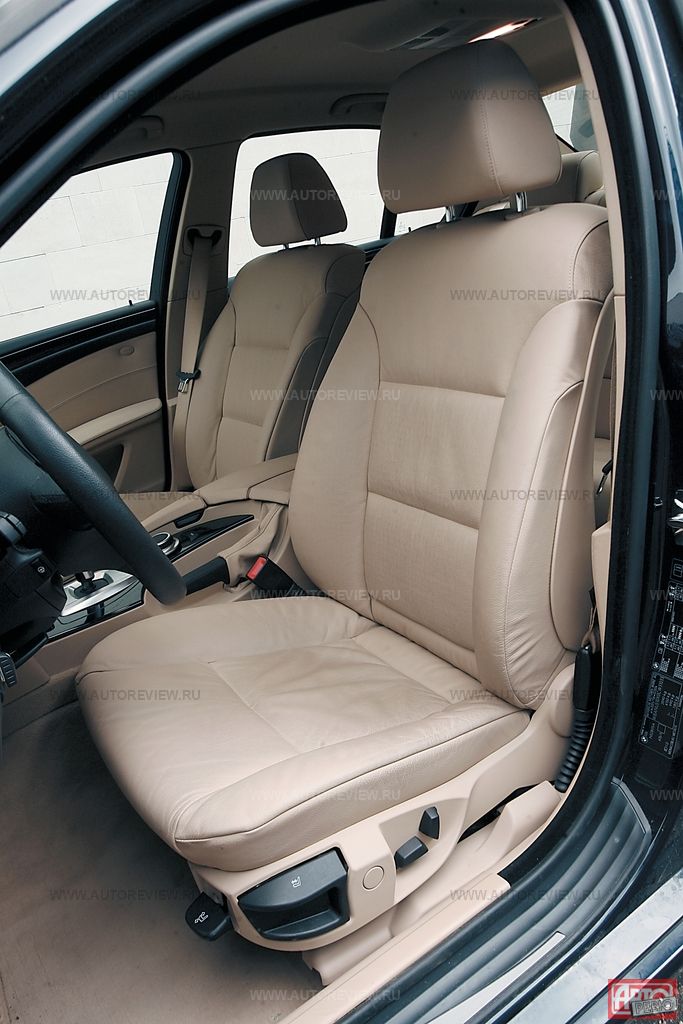 |
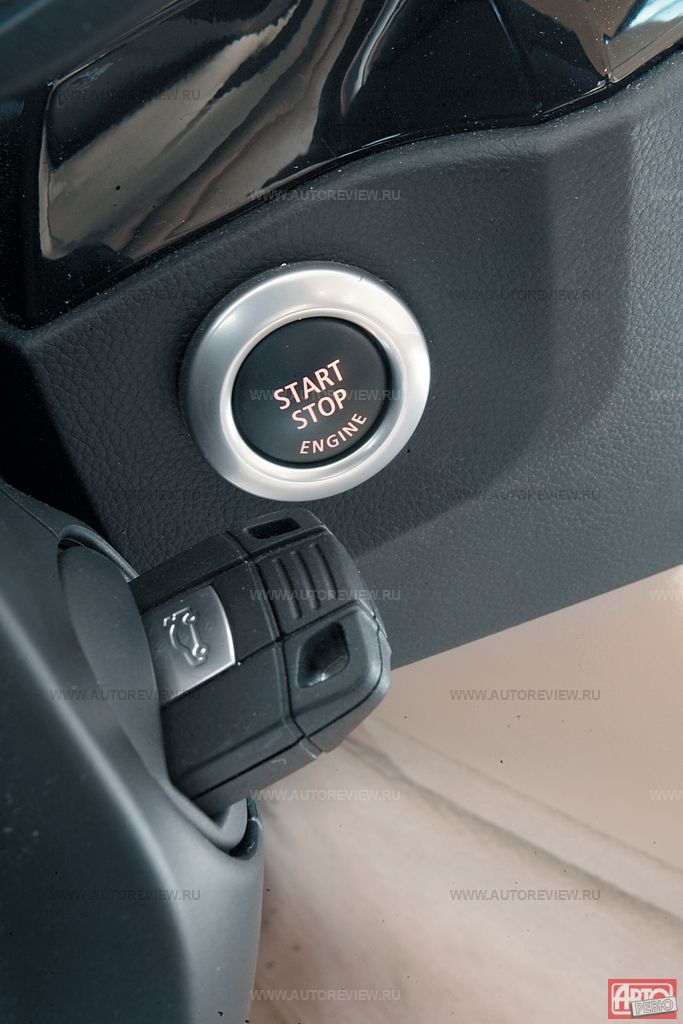 |
| The high "waves" of the dashboard don't allow short people to sit low — as befits a BMW driver | Grippy leather and developed seat bolsters hold you firmly in corners |
Push-button start — in base trim |
The Audi doesn't get you going; the Audi simply pleases. How methodically everything is calibrated here! What fantastic straight-line stability! And in corners? If you enter too fast, the Audi will also respond with a slide, but the beauty is that in most cases the driver won't even need to correct with the steering wheel! And that's not even ESP — it's the technique of execution, the technique of suspension tuning and torque distribution. And as for the risk of secondary oscillations ("whip"), unlike the Jaguar, there's no question.
The Audi's vibration is felt less, but only in the front seats. On serious road defects, the Jaguar is more composed and stiffer, but it doesn't differentiate between front and rear passengers. But on small bumps, it's simply magnificent — the Jaguar rides truly expensively.
And what about BMW? Still a "driver's car"? Unfortunately, all that driver's essence dissolved in the soft sidewalls of 16-inch tires — this is the smallest mounting diameter in the test, and therefore the tallest profile. In corners, BMW leans, which is uncharacteristic for it, and the understeer of the front axle turns not even into a full drift, but only a hint of it. But what comfort, including noise! Better than in the Mercedes! True, on transverse slopes, BMW still reacts more sharply than its rivals, forcing the driver to tense up at speed.
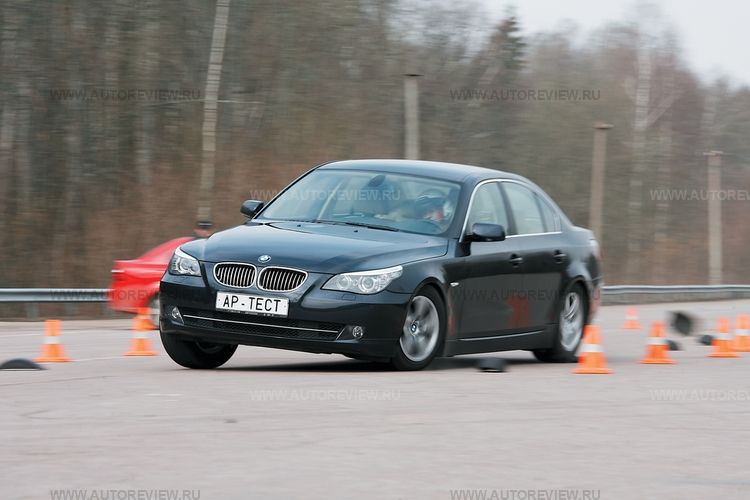
Soft leisurely reactions, front-end understeer, body roll... "Our" BMW was on "base" 16-inch wheels
Mercedes remains true to itself. At the very beginning of the journey, it takes aim with the three-pointed star — and forward. Neither potholes, nor slopes, nor ruts bother it... It just plows on and on. "Listen, boss, you've already shown me where we need to go once, right? Now relax — I'll take it from here." Even to decisive steering inputs, Mercedes responds lazily, and by the effort on the wheel, you can't immediately tell whether your command reached the car. But once in the arc, Mercedes generously makes contact and keeps the driver informed: a clear reactive force appears on the steering wheel. But at the limit, the connection is lost again. "Isn't it enough that I'm holding the highest lateral g-forces? Not enough? If you want to play, go play with the other cars!" And you can't argue: on a 35-meter radius arc, Mercedes indeed showed the highest stability limit!
What else is needed? Comfort?
In the back — best of all. Behind the wheel — slightly worse. Ideology.
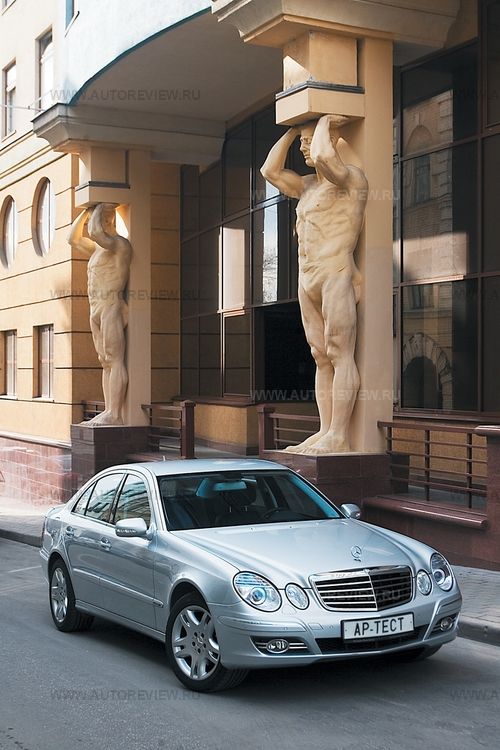
But in the Mercedes, perhaps, you can already hear the blues. That sunset, self-sufficient blues, as it should be. Everything is done, goals are achieved, the world is known. But not by us.
And what about the rear seats of the Jaguar? Oh, to get there, you need skill. You have to turn your feet a lot and bend yourself. Maybe there's another way? No, the sloping roof and the small gap between the cushion and the B-pillar offer no other algorithm. And sitting here isn't great either: the "seat contour" is shallow, and in corners you slide on the smooth perforated leather. There's no grab handle on the door, the armrest with uncovered cup holders is uncomfortable, the window doesn't lower fully by almost ten centimeters... Worst of all.
 |
 |
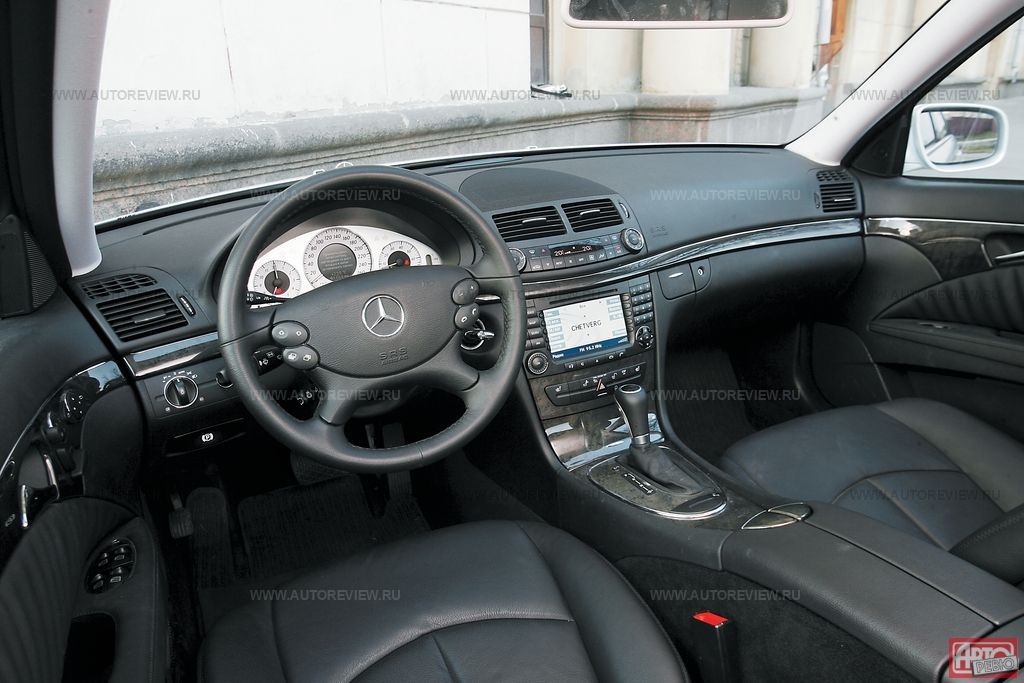
| A businessman's office or a personal driver's workplace? Both: this is the Mercedes |
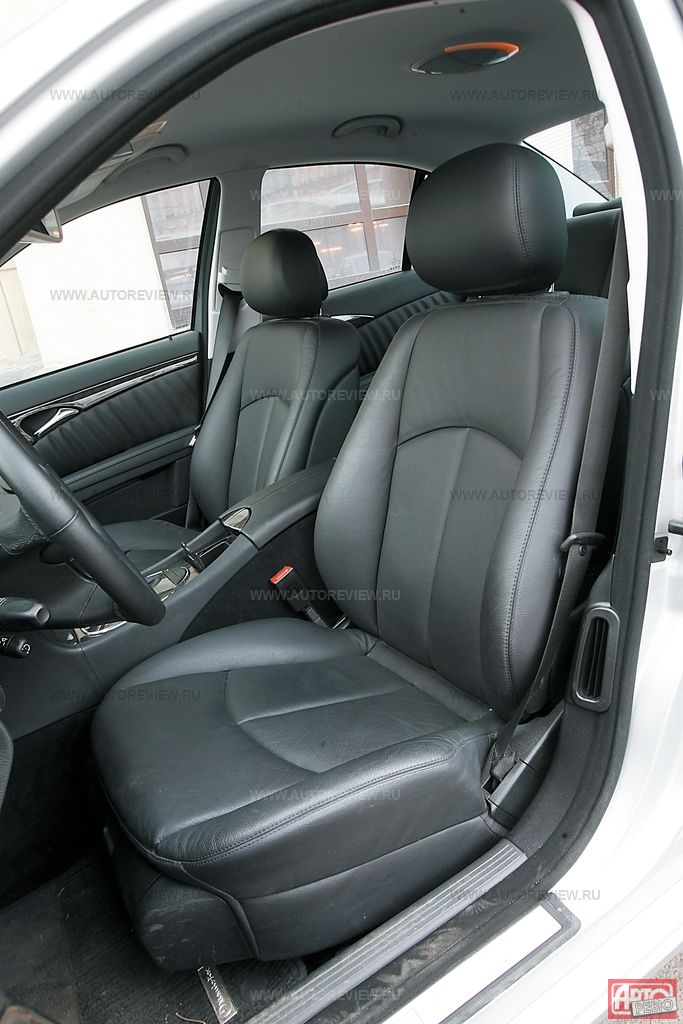
The "hump" on the Mercedes seat cushion presses on the legs and forces them to tilt forward |
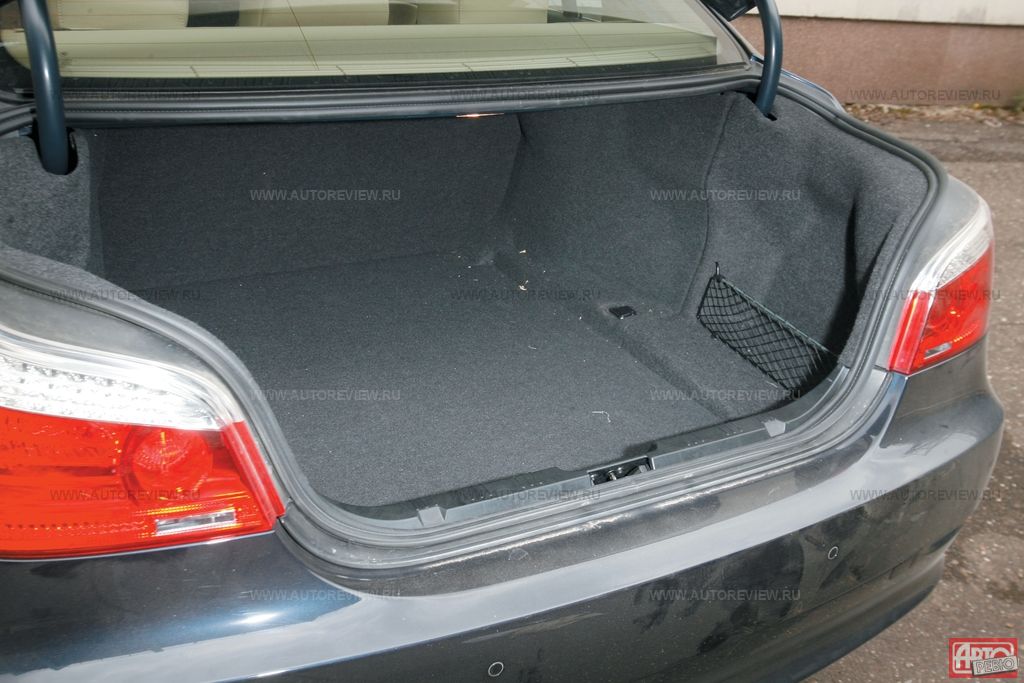
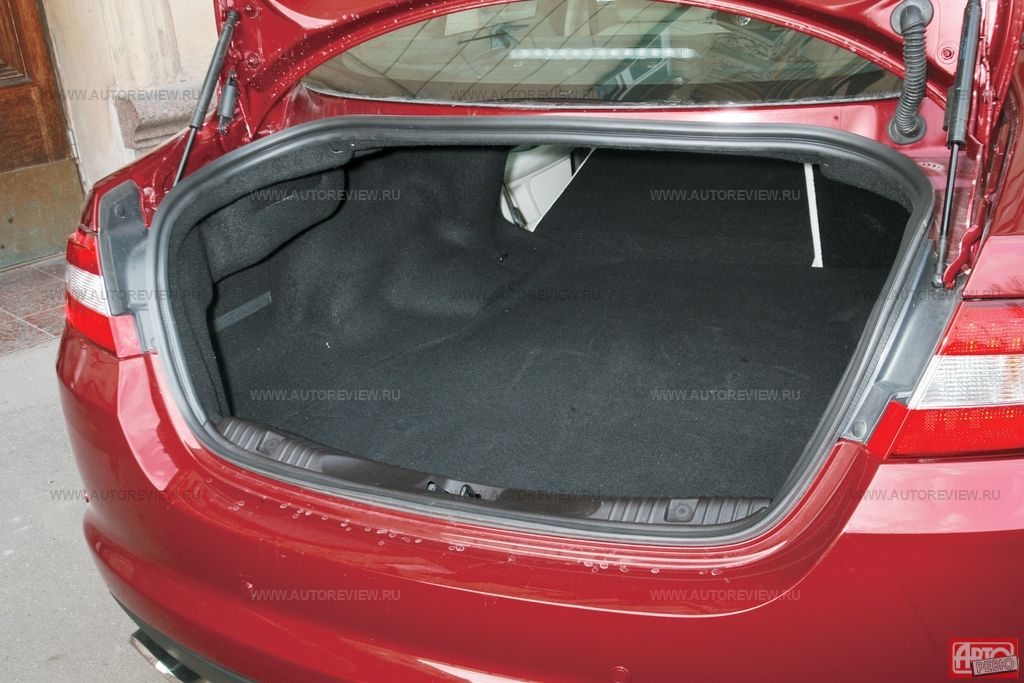
The Jaguar's trunk is a long cave with a narrow entrance and complex contours. The German compartments are both more spacious and easier to access. Except that the BMW "five" has a less flat floor, and the opening is narrowed by the raked rear lights.
Is it worth paying extra for folding rear seats for the Mercedes and BMW? "Our" cars didn't have them. We'd probably shell out, but only if everything is done as neatly as on the Audi: the latches are light and convenient, the opening is wide. But we wouldn't pay a cent for the pleasure of using the narrow and low hatch covered by the Jaguar's rear seatbacks.
And why did Uncle Vanya's jaw drop?
When we drove from the test site to the cafe, Shadrichev was driving the Jaguar. We arrived. Uncle Vanya shifts the selector dial to Parking, presses the Start button to turn off the engine, slams the door, presses the button on the key fob... We ate, we go outside. And then Uncle Vanya froze in his tracks, and his hand — into his pocket. Nervously took out the keys, made sure they were from the Jaguar, then stared at the parking lot again. And there — some devilry. The spot where the Jaguar was left is empty, and the car itself is calmly driving in circles. Uncle Vanya squinted: it seems the Jaguar isn't driving itself, but with a driver... That's right: Andrei Mokhov is behind the wheel.
| Audi A6 | BMW 525i |
 |
 |
| Jaguar XF | Mercedes-Benz E 280 |
 |
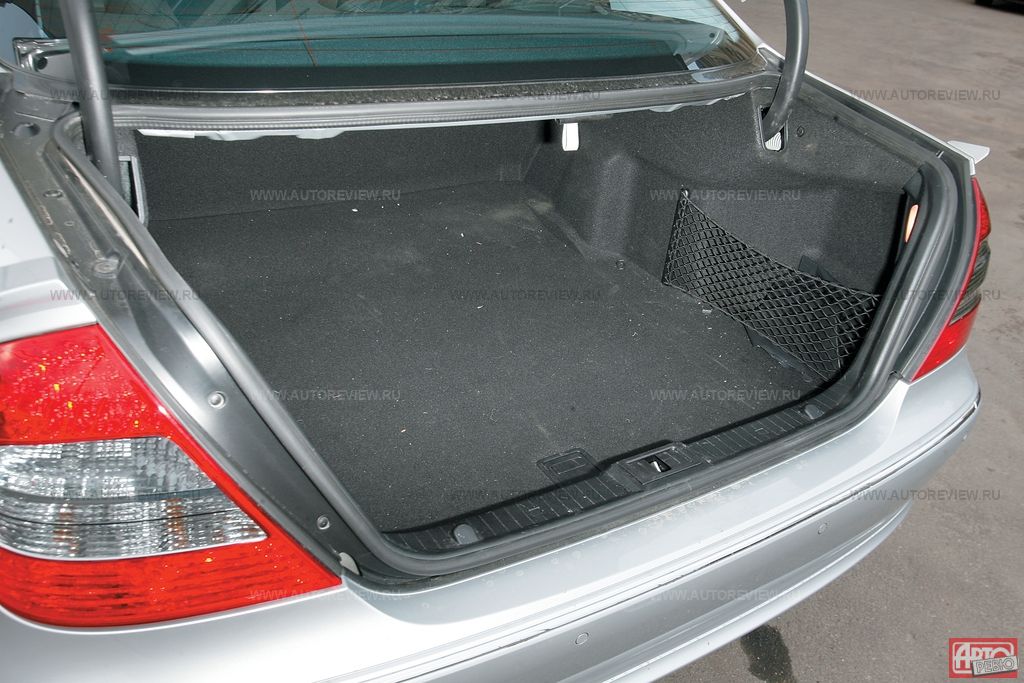 |
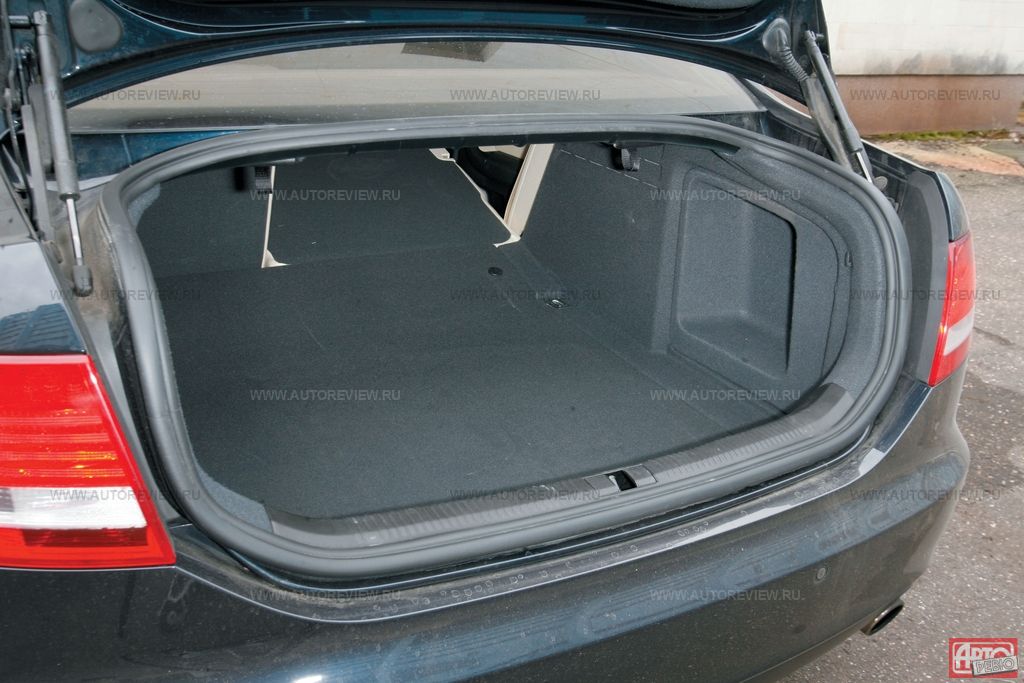
| The trunks of the Audi and Mercedes please with the correct shape, large volume, and convenient access. The protruding rear lights hinder loading suitcases into the BMW. Filling the Jaguar's small "pantry" is a pain: high loading height, and the opening is tiny | |
According to Mokhov, it went like this. He left the cafe a couple of minutes earlier than the others, and when he approached the Jaguar, he suddenly heard the engine running. He pulled the door — it opened. The alarm was silent. He got behind the wheel and drove off...
It turns out Uncle Vanya hadn't turned off the engine! And all because, unlike similar Start/Stop systems on many other cars, the button on the Jaguar needs to be pressed not "impulsively" but firmly, holding it for about a second. Both when starting and when stopping. And the door remained open because the Jaguar's alarm doesn't arm the car with the engine running. The manual, of course, says this, but there's little time, we don't have time to read all the manuals...
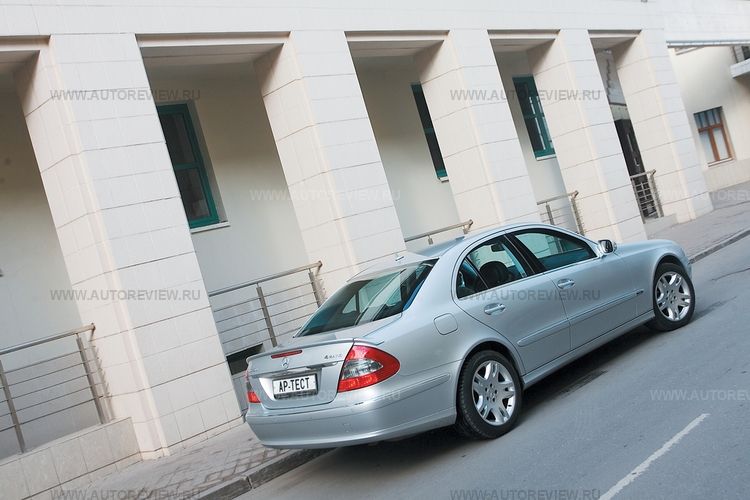
We didn't scold Uncle Vanya — he was scared enough as it was. But we deemed Mokhov's action irresponsible. Imagine if Uncle Vanya had had a stroke at that moment, how would we have learned that the Jaguar actually accelerates not faster, but slower than everyone else, and brakes — better? After all, the measurements on the dynamometer road are done by Shadrichev and Mokhov: Uncle Vanya behind the wheel, and Andrei on the right, with his sensors, wires, and computer.
In short, the Jaguar XF made an indelible impression on Uncle Vanya: a distinctive car, he says.
| Audi A6 | BMW 525i |
 |
 |
| Jaguar XF | Mercedes-Benz E 280 |
 |
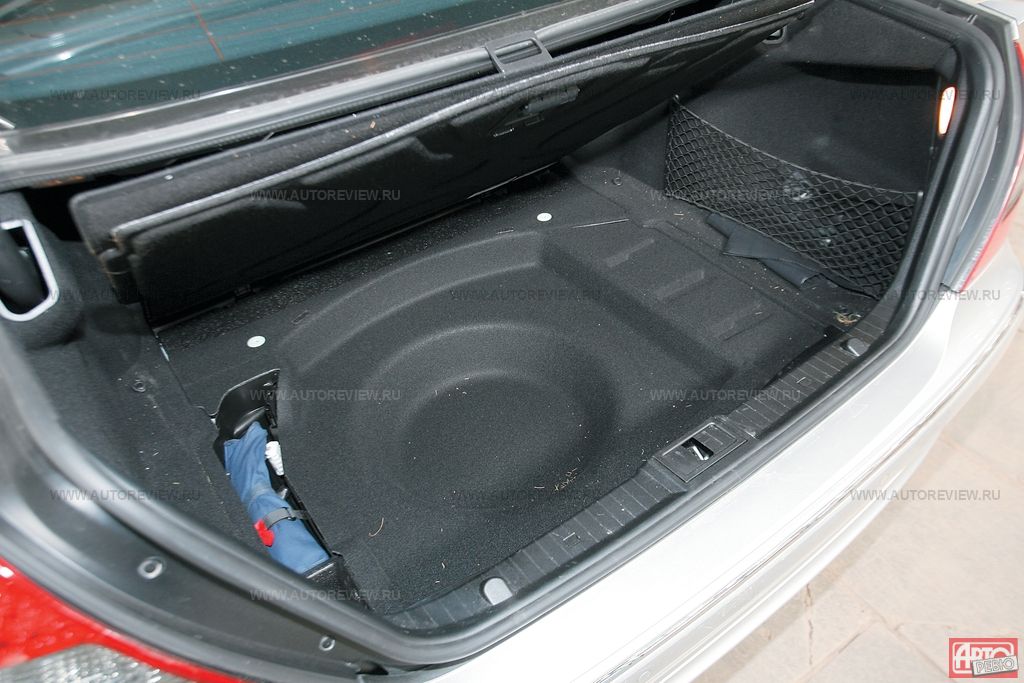 |
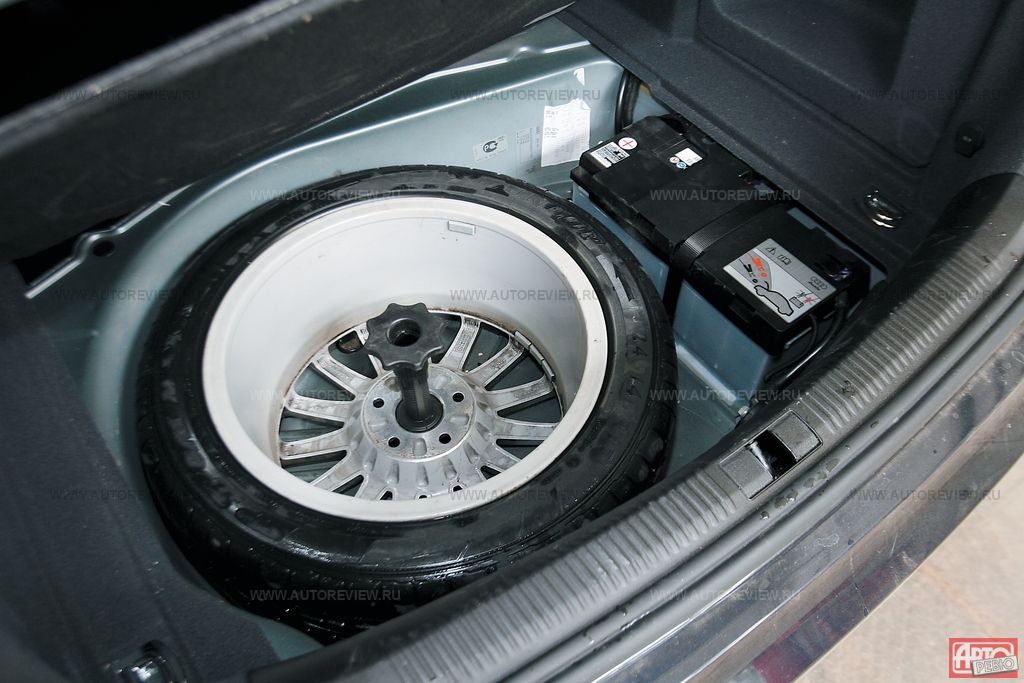
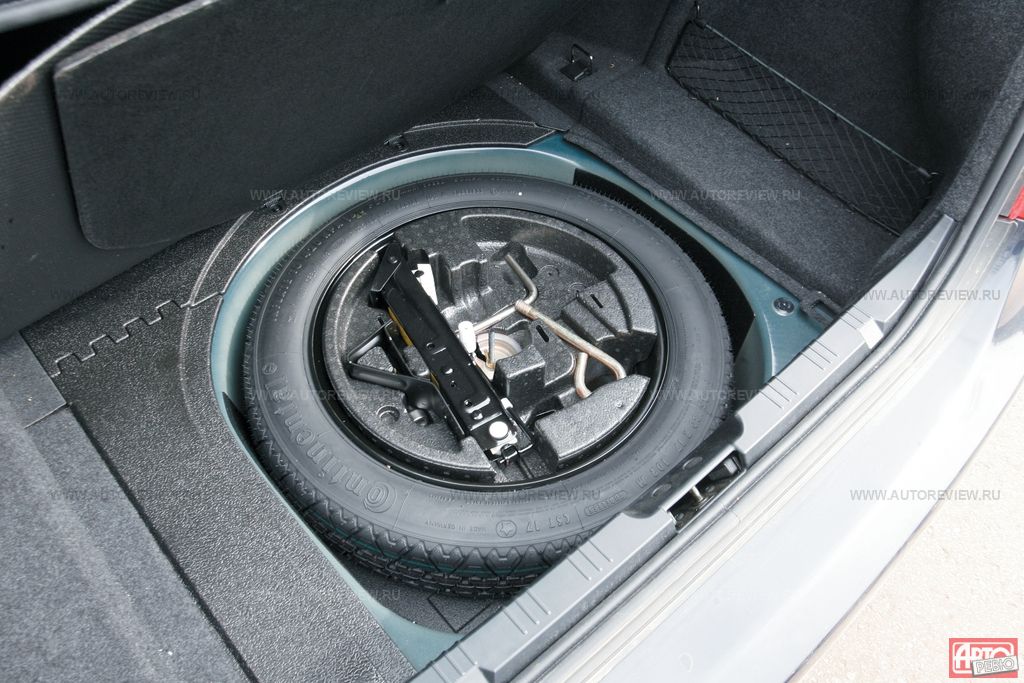
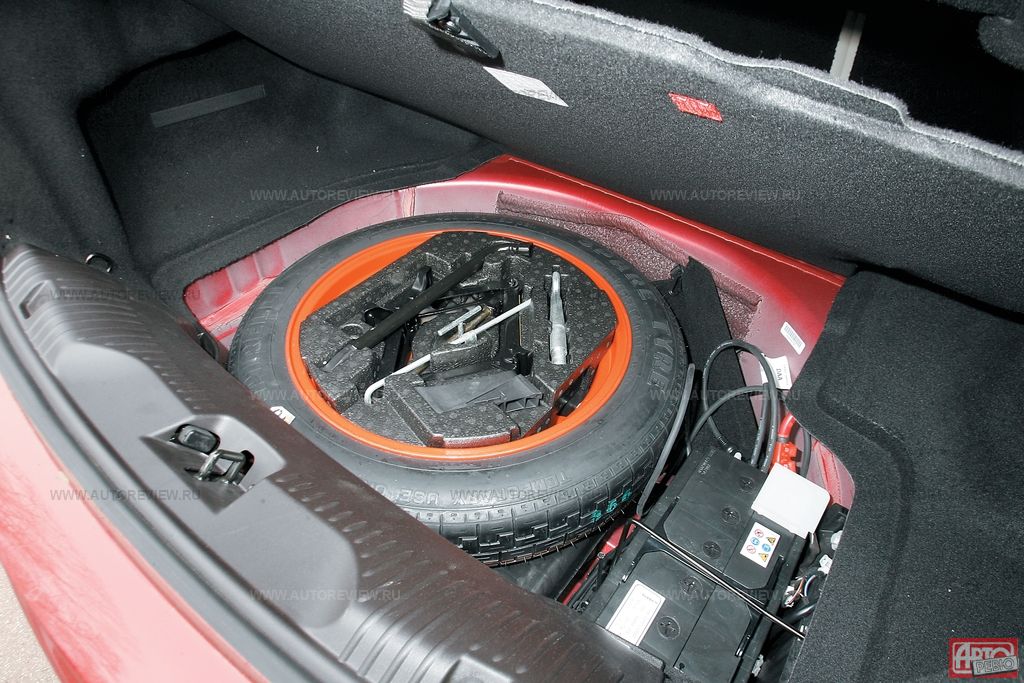
| A full-size spare tire — only the Audi has it, the rest make do with space-saver spares | |
Honestly, even before we got behind the wheel, it was clear: by total points, the Jaguar would most likely lose to the German trio. That's how it turned out, but this is explained solely by "practical" disciplines, like passenger space and trunk capacity. At the same time, the XF itself left an exceptionally pleasant impression. This is a car with character — melodic, cohesive, and truly English. The audience that grew up on early seventies music — those same young music lovers whose souls still respond to the sounds of Jon Lord's Hammond — will surely appreciate both the drive and the style of this car.
By the way, about the Jaguar, or rather about unrequited love, Pyotr Nalich recently sang — and his amateur video became a hit on the internet. "Guitar, guitar, guitar, jump to my Jaguar"... And it doesn't matter at all that Nalich himself sits behind the wheel of a "kopeyka" in the frame and doesn't even move. Jump to my Jaguar, baby!
Autoreview Readers' Forecast
Before this test, we asked visitors of www.autoreview.ru to choose which car from our quartet they would prefer.
The votes were distributed as follows:
Audi A6 29.53%
BMW 525i 33.87%
Jaguar XF 21.28%
Mercedes-Benz E 280 15.32%
A total of 21,574 people took part in the survey.
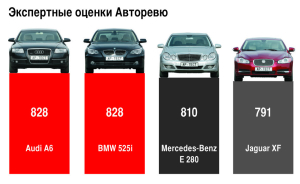
Autoreview Expert Assessments
| Expert ratings from Autoreview | ||||||
| Parameters assessed | Max. score | Cars | Why? | |||
| Audi A6 | BMW 525i | Jaguar XF | Mercedes-Benz E 280 | |||
| Ergonomics | 220 | 180 | 177 | 180 | 185 | The seats in the Mercedes and BMW are not as comfortable as those in the Audi and Jaguar. However, the Mercedes has the thinnest body pillars and an unobstructed rear window opening, which gave it a noticeable advantage in visibility. |
| Driver's workplace | 110 | 97 | 93 | 97 | 93 | |
| Visibility | 110 | 83 | 84 | 83 | 92 | |
| Dynamics | 320 | 280 | 273 | 275 | 260 | During acceleration and in corners, the Audi understands the driver's intentions better than the others. The Jaguar turned out to be the best in braking. The Mercedes loses only due to the driver's sensations: its ultimate capabilities are actually very high. |
| Acceleration dynamics | 100 | 88 | 85 | 79 | 76 | |
| Braking dynamics | 120 | 102 | 103 | 111 | 104 | |
| Handling | 100 | 90 | 85 | 85 | 80 | |
| Ride comfort | 270 | 216 | 233 | 211 | 221 | The BMW unexpectedly turned out to be the most comfortable, largely thanks to its highest-profile tires. Its cabin is also the quietest. The Audi is annoying with engine noise, but the Jaguar's engine sounds even louder. The Mercedes was let down by the oppressive hum of its tires. A separate climate control unit for rear passengers was only available in the Mercedes and BMW. |
| Ride smoothness, vibration protection | 100 | 80 | 85 | 80 | 80 | |
| Acoustic comfort | 100 | 80 | 85 | 75 | 75 | |
| Climate control | 70 | 56 | 63 | 56 | 66 | |
| Interior comfort | 190 | 152 | 145 | 125 | 144 | The most space and coziness for rear passengers is in the BMW. The Audi and Mercedes are slightly inferior in comfort, but they have the most spacious and convenient trunks. Climbing into the cramped Jaguar requires skill. Its trunk is the most inconvenient, and the opening with the rear seats folded down is almost half the size of the Audi's. |
| Passenger seats | 100 | 77 | 82 | 69 | 77 | |
| Trunk | 80 | 68 | 63 | 51 | 67 | |
| Interior transformation | 10 | 7 | 0 | 5 | 0 | |
| Total score | 1000 | 828 | 828 | 791 | 810 | |
| Technical specifications | ||||
| Parameters | Cars | |||
| Audi A6 | BMW 525i | Jaguar XF | Mercedes-Benz E 280 | |
| Body type | Sedan, 4 doors | Sedan, 4 doors | Sedan, 4 doors | Sedan, 4 doors |
| Number of seats | 5 | 5 | 5 | 5 |
| Trunk, l | 546 | 520 | 500/540* | 540 |
| Curb weight, kg | 1680 | 1530 | 1679 | 1780 |
| Gross weight, kg | 2260 | 2070 | 2215 | 2305 |
| Engine | Petrol, direct injection | Petrol, direct injection | Petrol, multi-point injection | Petrol, multi-point injection |
| Location | Front, longitudinal | Front, longitudinal | Front, longitudinal | Front, longitudinal |
| Cylinders | 6, V-shaped | 6, in-line | 6, V-shaped | 6, V-shaped |
| Displacement, cm³ | 2773 | 2996 | 2967 | 2996 |
| Cylinder bore/piston stroke, mm | 84.5/82.4 | 85.0/88.0 | 89.0/79.5 | 88.0/82.1 |
| Compression ratio | 12.0:1 | 12.0:1 | 10.5:1 | 11.3:1 |
| Valves | 24 | 24 | 24 | 24 |
| Max. power, hp/kW/rpm | 210/154/5500—6800 | 218/160/6100 | 238/175/6800 | 231/170/6000 |
| Max. torque, Nm/rpm | 280/3000—5000 | 270/2400—4200 | 293/4100 | 300/2500—5000 |
| Gearbox | Automatic, 6 speeds | Automatic, 6 speeds | Automatic, 6 speeds | Automatic, 5 speeds |
| Gear ratios | ||||
| I | 4.17 | 4.17 | 4.17 | 3.95 |
| II | 2.34 | 2.34 | 2.30 | 2.42 |
| III | 1.52 | 1.52 | 1.52 | 1.49 |
| IV | 1.14 | 1.14 | 1.14 | 1.00 |
| V | 0.87 | 0.87 | 0.87 | 0.83 |
| VI | 0.69 | 0.69 | 0.69 | — |
| Reverse | 3.40 | 3.40 | 3.40 | 3.15 |
| Final drive | 3.68 | 3.64 | 3.31 | 3.27 |
| Drive | Permanent all-wheel drive, Torsen center differential | Rear | Rear | Permanent all-wheel drive, open center differential |
| Front suspension | Independent, coil spring, double wishbone | Independent, coil spring, McPherson | Independent, coil spring, double wishbone | Independent, coil spring, double wishbone |
| Rear suspension | Independent, coil spring, trapezoidal arms | Independent, coil spring, multi-link | Independent, coil spring, multi-link | Independent, coil spring, multi-link |
| Front brakes | Disc, ventilated | Disc, ventilated | Disc, ventilated | Disc, ventilated |
| Rear brakes | Disc | Disc, ventilated | Disc, ventilated | Disc |
| Tires | 225/55 R16 | 225/55 R16 | 245/45 R18 | 205/60 R16 |
| Maximum speed, km/h | 237 | 246 | 237 | 244 |
| Acceleration 0—100 km/h, s | 8.4 | 7.7 | 8.3 | 7.8 |
| Fuel consumption, l/100 km | ||||
| City | 13.8 | 10.4 | 15.8 | 14.2 |
| Highway | 7.3 | 5.8 | 7.5 | 8.0 |
| Combined | 9.7 | 7.5 | 10.5 | 10.2 |
| CO₂ emissions, g/km (combined) | 231 | 178 | 249 | 245 |
| Fuel tank, l | 80 | 70 | 69.5 | 65 |
| Fuel | AI-95 | AI-95—98 | AI-95 | AI-95 |
| * With space-saver spare/repair kit | ||||
| Equipment of comparison test participants | ||||
| Equipment | Cars | |||
| Audi A6 | BMW 525i | Jaguar XF | Mercedes-Benz E 280 | |
| Price of starting configuration, RUB | 1 663 000 | 1 580 400 | 1 900 000 | 1 898 100 |
| Front airbags | + | + | + | + |
| Side airbags | + | + | + | + |
| Curtain airbags | + | + | + | + |
| ABS | + | + | + | + |
| Traction control system | + | + | + | + |
| Stability control | + | + | + | + |
| Power steering | + | + | + | + |
| Automatic transmission | O | P | + | P |
| Paddle shifters on steering wheel | – | – | + | – |
| Multifunction steering wheel | O | + | + | + |
| All-wheel drive | O | – | – | P |
| Tilt and telescopic steering column | O* | + | +* | O* |
| Leather-wrapped steering wheel | O | + | + | P |
| Heated steering wheel | – | P | + | P |
| Heated windshield | – | – | + | – |
| Power front seats | + | +** | + | +*** |
| Driver's seat memory | O | – | P | P |
| Heated front seats | + | P | + | P |
| Heated rear seats | O | – | – | P |
| Ventilated front seats | – | – | O | – |
| Ventilated rear seats | – | – | – | – |
| Auto-dimming interior mirror | + | + | P | P |
| Built-in phone | – | – | – | + |
| Bluetooth | O | P | + | – |
| Central locking with remote | + | + | + | + |
| Keyless entry | O | – | P | – |
| Alarm | + | – | + | P |
| Dual-zone climate control | + | P | + | – |
| Four-zone climate control | – | – | – | P |
| Power mirrors with heating | + | + | + | + |
| Power folding mirrors | O | – | P | – |
| Power front windows | + | + | + | + |
| Power rear windows | + | + | + | + |
| Folding rear seats | + | – | + | – |
| Rear center armrest | + | + | + | + |
| CD stereo | + | + | + | + |
| CD changer | O | – | + | – |
| DVD player | – | – | – | O |
| TV tuner | O | – | O | – |
| Engine start button | O | + | + | – |
| Light sensor | + | + | + | + |
| Rain sensor | + | + | + | + |
| Tire pressure monitoring | O | + | O | – |
| On-board computer | + | + | + | + |
| Cruise control | O | – | O | + |
| Electric sunroof | – | – | O | – |
| Front parking sensors | + | P | O | P |
| Rear parking sensors | + | P | + | P |
| Rearview camera | O | – | O | – |
| Folding rear headrests | – | – | – | +* |
| Leather upholstery | + | P | + | P |
| Wood trim | O | – | + | + |
| Leather dashboard | – | – | + | – |
| Remote trunk release | O | + | + | + |
| Bi-xenon headlights | + | P | O | P |
| Adaptive headlights | O | – | + | P |
| Fog lights | + | + | – | + |
| Headlight washers | + | P | + | P |
| Rear sunshade | +* | P* | O* | – |
| Side window sunshades | + | – | – | – |
| Soft-close doors | O | – | – | – |
| Alloy wheels | O | + | O | P |
| Full-size spare tire | + | –**** | –**** | –**** |
| Metallic paint | O | P | O | P |
| Steel engine underbody protection | – | – | – | P |
| Tires | Dunlop SP Sport Maxx 245/45 R17 | Dunlop SP Sport 01 225/55 R16 | Dunlop SP Sport 01 245/40 R19 | Continental SportContact 2 245/45 R17 |
| Price of test car, RUB | 2 591 190 | 1 836 000 | 2 462 200 | 2 758 680 |
| * Power-operated | ||||
| ** Manual fore-aft adjustment | ||||
| *** Manual fore-aft adjustment for passenger seat | ||||
| **** Space-saver spare | ||||
| (+) In base version | ||||
| (–) Not in base version | ||||
| (O) Options on test cars | ||||
| (P) In package equipment of test car | ||||
We brought together four business sedans in one place to find out which one is best suited for daily use. We used not only subjective driving impressions but also precise measurements that give a complete picture of each car's capabilities.
Figures and facts
The measurements showed that all four cars are very close in their dynamic characteristics, but there are also noticeable differences. For example, the maximum speed recorded by our instruments turned out to be higher for the BMW at 238 km/h, while the Jaguar stopped at 225.6 km/h. The Audi and Mercedes showed intermediate results — 234.6 and 232 km/h respectively.
In the sprint to 100 km/h, the BMW was the fastest at 8.0 seconds. The Audi and Mercedes lost to it by just a little — 8.5 and 8.6 seconds respectively. The Jaguar, despite having the most powerful engine in this quartet, showed a modest 9.3 seconds. This is explained by the fact that its automatic transmission does not work as promptly as one would like. However, on the highway, the difference between them is not felt as acutely as in the city.
An interesting picture also emerges when measuring elasticity. When accelerating from 80 to 120 km/h in gear, the Jaguar takes 6.7 seconds, while the Mercedes takes all of 7.4 seconds. This indicates that the transmissions are tuned differently: the BMW and Audi are more responsive to accelerator pedal input while driving.
With brakes, things are also not clear-cut. From 100 km/h, the Jaguar stopped the best — its braking distance was 38.6 meters, with deceleration of 10.0 m/s². The Mercedes was almost not far behind: 39.6 meters and 9.7 m/s². But the Audi and BMW stopped a bit later — 42.3 and 43.4 meters respectively. At higher speeds, the difference persists: from 150 km/h, the Jaguar again leads with a result of 86.4 meters, and from 200 km/h its braking distance is 152.7 meters versus 167.4 meters for the Audi.
Speedometer accuracy
Interestingly, the real speed of all cars is somewhat lower than what the needles show. The Audi "lies" the most: at 240 km/h on the speedometer, the real speed is 228 km/h. For the BMW and Mercedes, the discrepancy is smaller — about 8 km/h at the same readings. The Jaguar, which does not reach 240 km/h, at 220 km/h on the gauge travels at a speed of 209 km/h.
Headlight performance
We evaluated the effectiveness of the headlights at night, shooting the cars from one point. All four cars are equipped with bi-xenon headlights, and for the Audi, Jaguar, and Mercedes they are also swiveling.
The low beam of the BMW and Jaguar seemed to us the brightest and most informative — they illuminate the roadside and a pedestrian at a distance of 80 meters best of all. The Audi's picture is a bit dimmer, and the Mercedes illuminates the pedestrian only up to the waist, which may be insufficient for timely obstacle detection. However, the high beam of the Mercedes is beyond competition, although the other three cars also did not disappoint in this component.

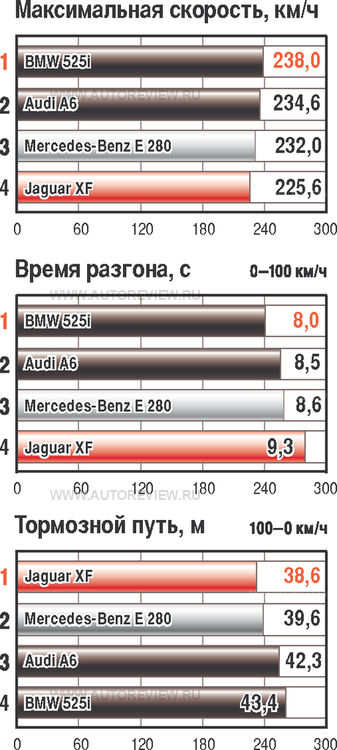
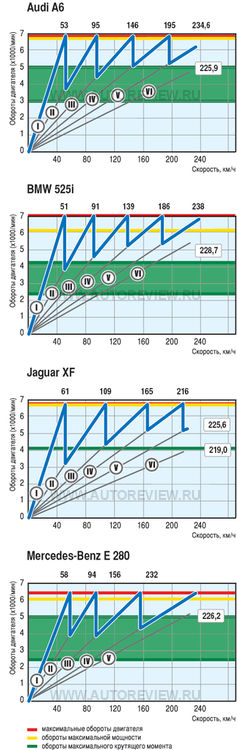
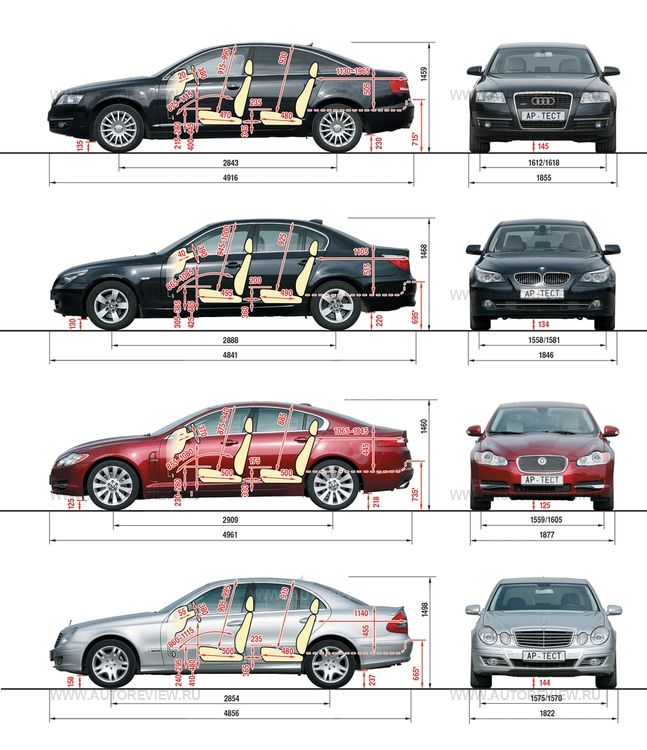
Black indicates manufacturer data, red indicates Autoreview measurement results
* Loading height
** With roof rails
Visibility
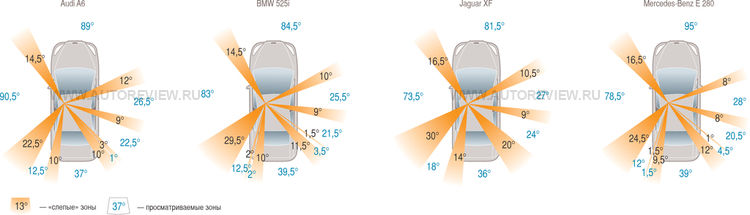
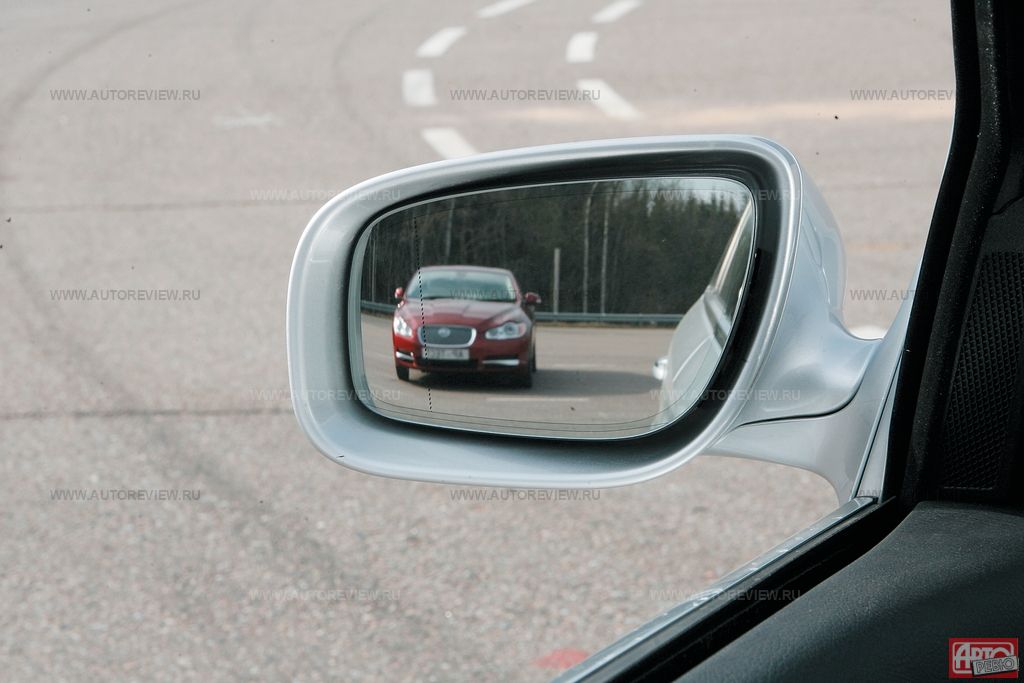
From a visibility standpoint, the Mercedes and Audi feel more confident than the others — their total viewing angle is 279 degrees. However, the driving sensations are different. The Mercedes E-Class is a real "aquarium": thin pillars, a low beltline, and retractable rear headrests create a feeling of spaciousness and transparency. In the Audi, the pillars already seem more massive, the beltline is higher, and the low rear window opening is partially blocked by headrests.
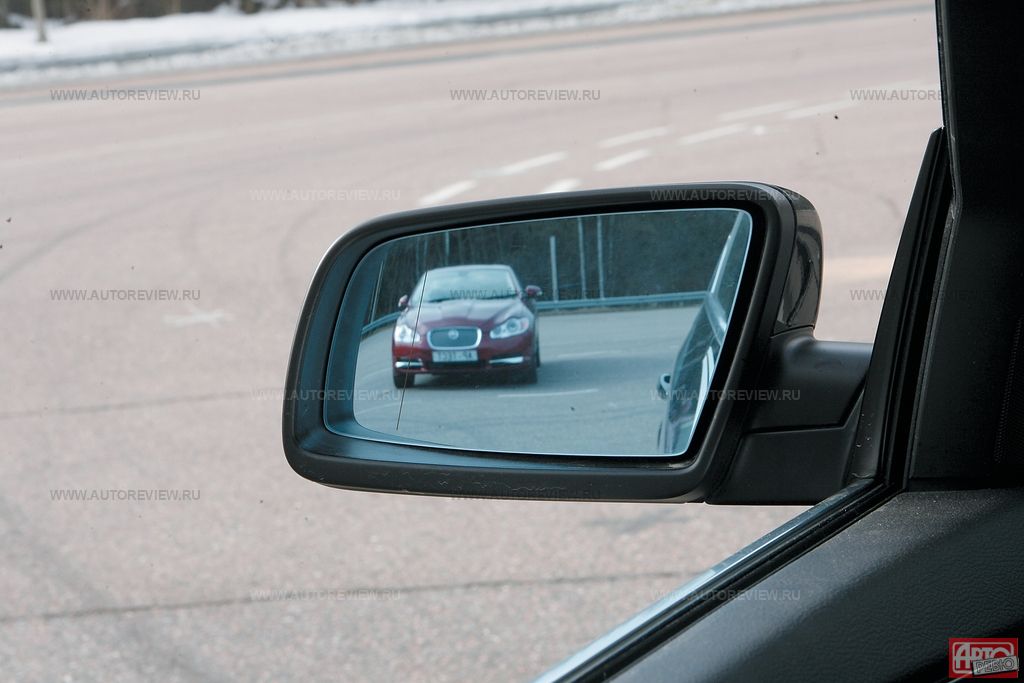
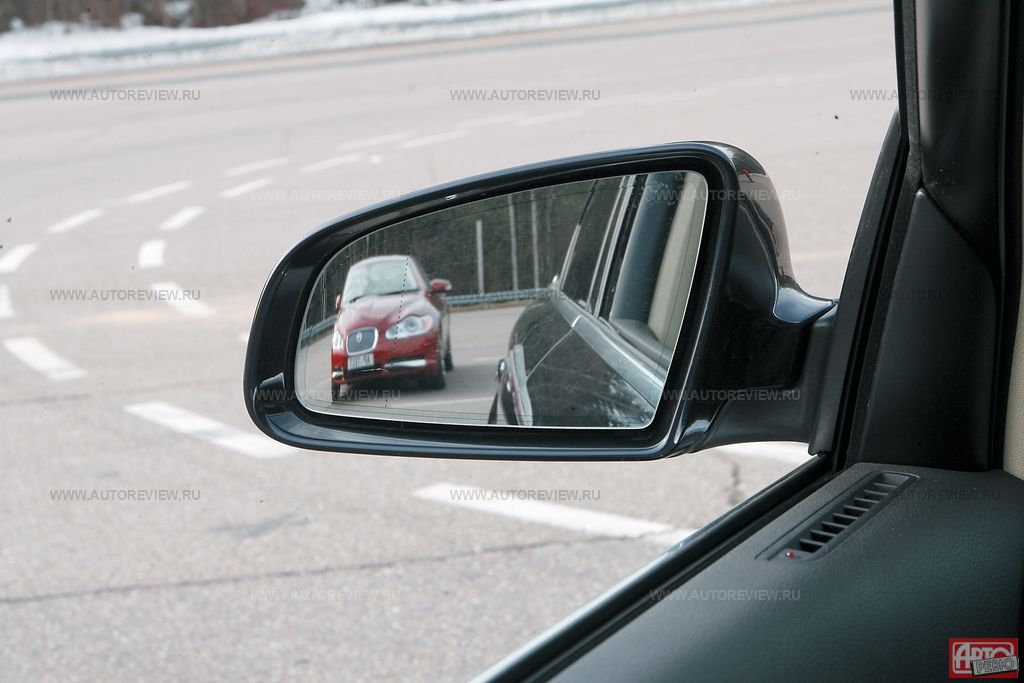
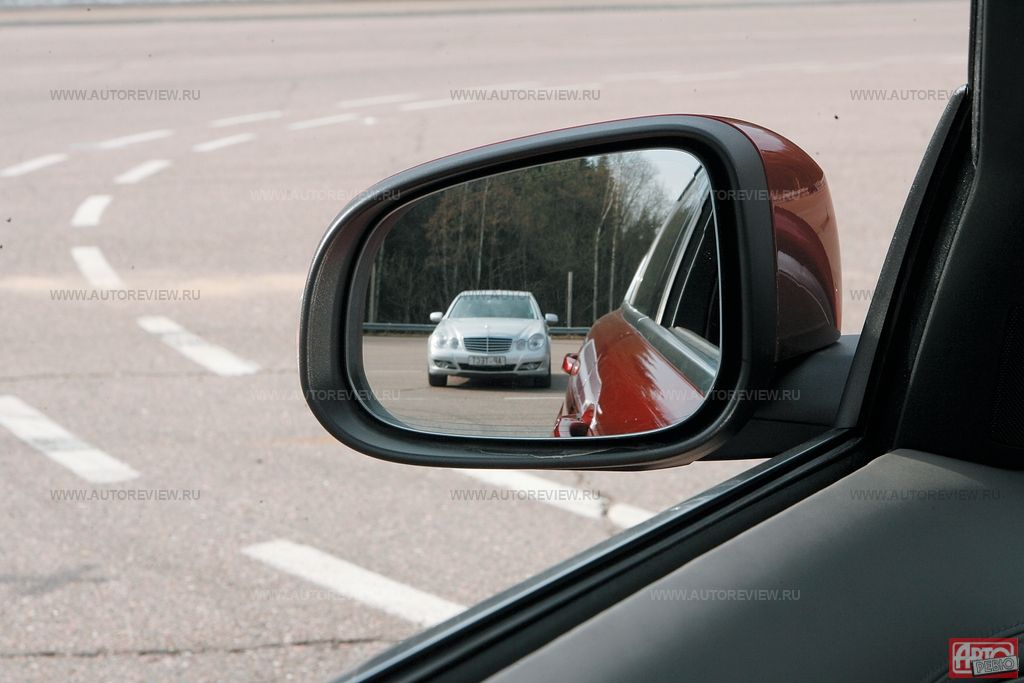
The BMW, with a viewing angle of 272 degrees, suffers from the same drawbacks as the Audi. But the Jaguar is the outsider in this regard: its total viewing angle is only 260 degrees, and its "blind" zones are 100 degrees. However, the rearview mirrors of the British car are larger than those of all three German competitors.
| Audi A6 | BMW 525i |
 |
 |
| Jaguar XF | Mercedes-Benz E 280 |
 |
 |
Jaguar and moose
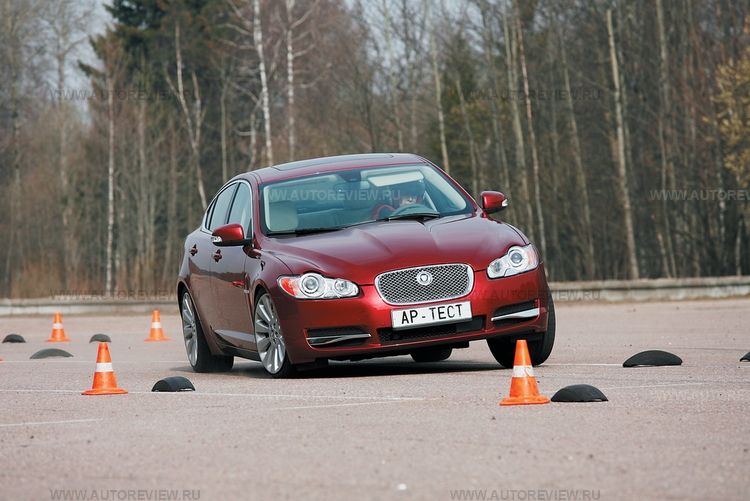
We conducted the "moose test" in two stages. First, five drivers, already having an idea of the cars' behavior in normal modes, tried to avoid a suddenly appearing obstacle on the first attempt at a speed of 65 km/h. Then an expert, in a series of runs, determined the maximum speed at which the maneuver could still be performed. All tests were carried out with the stability control systems activated.
The results were predictable: all four cars confidently passed the test at 65 km/h. However, when trying to increase the speed to the limit, the characters of the cars manifested differently. Some allowed driving faster, others did not, but in any case, they all demonstrated worthy behavior in an emergency situation.
Summing up, we can say that each of these cars is an excellent choice, but with different accents. The BMW pleases with its driver-oriented habits and best dynamics, the Mercedes with comfort and exemplary high beam, the Jaguar with brakes and mirrors, and the Audi with the balance of all qualities.
All test participants demonstrated excellent understanding with the pilot in an extreme situation, and the spread between the minimum and maximum speed of the maneuver turned out to be quite small — only 0.8 km/h.
The most pliable for the testers was the BMW "five" on 16-inch wheels — only one volunteer could not cope with its sluggishness. However, all five noted significant delays in reactions and understeer. The expert agreed with this — it was the front axle push that prevented him from accelerating above 77.5 km/h.
On the Mercedes, the tester achieved almost the same speed but with less effort: there was no need to turn the steering wheel so actively, the rolls were smaller, and the car maintained its trajectory like on rails until the ESP began to correct the course. But with this car, two "ordinary" drivers already failed, and both, as with the BMW, complained about a lack of sensitivity.
On the Audi, three also saved the "moose." The others were hindered by a tendency to oversteer and the rough intervention of the stability system when turning the steering wheel. These same reasons did not allow the expert to exceed 78.0 km/h, although the steering wheel maintained exemplary informativeness even during rapid alternating rotation.
Two volunteers could not save the "moose" in the Jaguar either — the reason was the abrupt increase in steering effort when the stability system operated, which disoriented the drivers and knocked the car off course. The tester, however, was pleased with the "neutrality" of the chassis — despite the ESP jerks that caused the car to jump, the expert managed to show the highest speed: 78.2 km/h.

| "Moose test" on the first attempt at 65 km/h | |
| Car | Maneuver completed |
| Audi A6 | 3 out of 5 drivers |
| BMW 525i | 4 out of 5 drivers |
| Jaguar XF | 3 out of 5 drivers |
| Mercedes E 280 | 3 out of 5 drivers |
| Maximum speed for the "moose test", km/h | |
| Car | Speed |
| Audi A6 | 78.0 |
| BMW 525iA | 77.5 |
| Jaguar XF | 78.2 |
| Mercedes E 280 | 77.4 |
Safety
All four cars in standard trim are equipped with six airbags, seat belts with pretensioners and force limiters, as well as a full set of protective electronics, including a stability control system. For the German trio, side airbags for rear passengers are available for an additional charge.
The Jaguar XF has not yet undergone independent crash tests, while all German cars have been tested according to the EuroNCAP methodology. The most modest result was for the BMW "five": even after several repeated tests and modifications to the steering column, interior panels, door locks, airbags, and safety system software, the car earned four stars out of five. The rating was reduced for increased loads on the dummy's chest and the injury risk of the lower part of the front panel.
The Audi A6 and Mercedes E-Class received the maximum five stars. Although the front panel elements of both cars are recognized as injury-prone, and the loads on the chests of the "drivers" exceeded the "green" threshold. Mercedes has an advantage — electronic scales built into the seats, on whose command the airbag deployment is "softened" for people of fragile build.
For the safety of young passengers, the Audi A6 and BMW 5 Series earned four stars out of five possible when using Fair BimboFix Type II child seats. The Mercedes E-Class underwent testing in 2002 with Britax Roemer Duo child seats, when experts did not yet give "point" and "star" ratings for child safety. Only increased loads on the chest of the "three-year-old" dummy were noted. However, all Mercedes E-Class models are equipped with an automatic passenger airbag deactivation system when a child seat is installed on the right front seat.
Pedestrian protection for all three cars is poor — only one star out of four possible and a modest 2-4 points out of 36.
| Audi A6* | ★★★★★ | 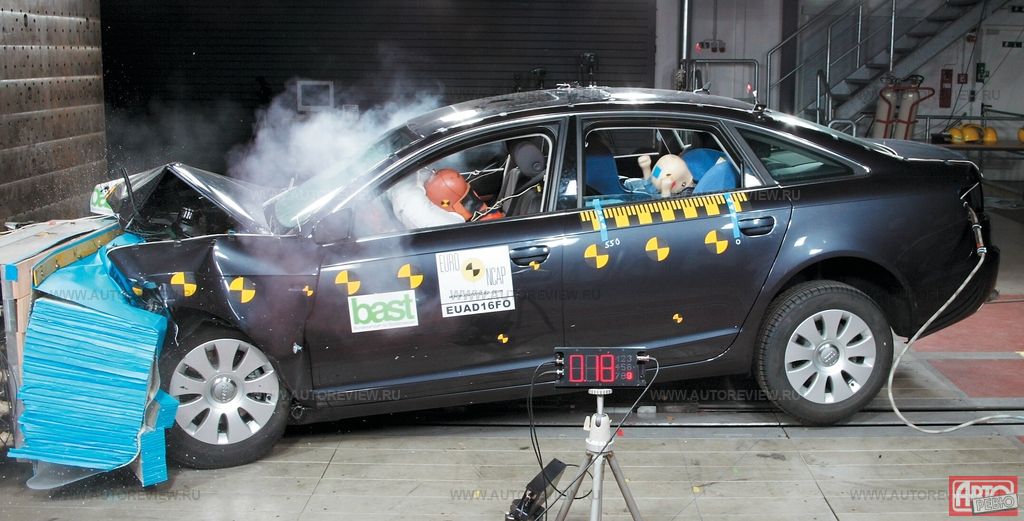 |
| Overall rating | 33 points | |
| Frontal crash test | 13 points (81%) | |
| Side crash tests | 18 points (100%) | |
| SBR** | 2 points | |
| Child passenger protection | 39 points (80%) | |
| Pedestrian protection | 3 points (8%) | |
| Curb weight | 1540 kg | |
| * Tests conducted according to EuroNCAP methodology | ||
| ** Presence of seatbelt reminder | Audi A6 | |
| BMW 5 Series* | ★★★★☆ | 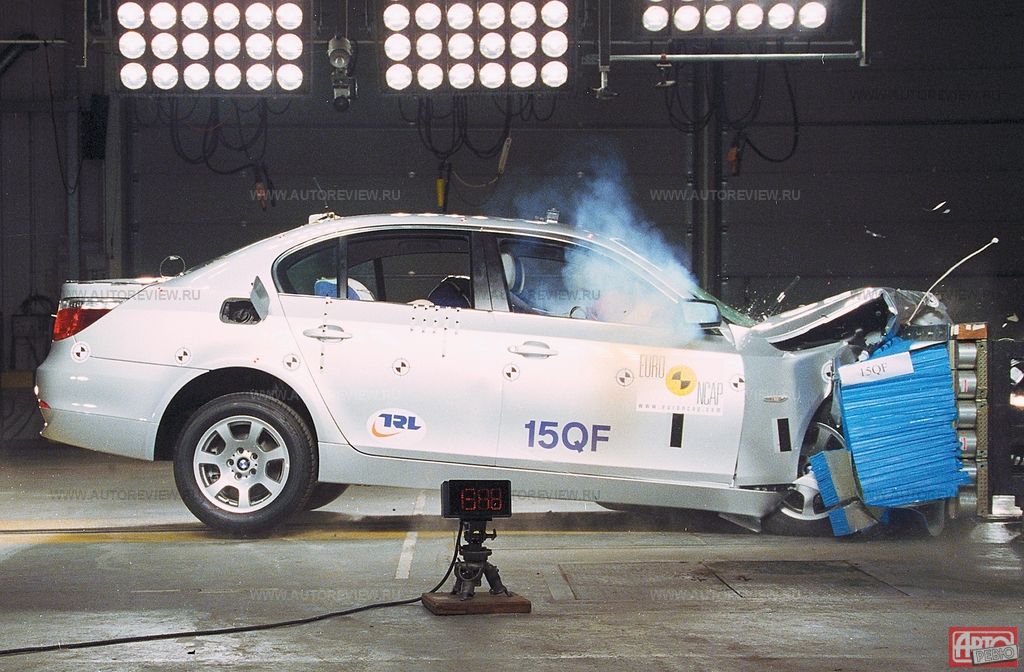 |
| Overall rating | 29 points | |
| Frontal crash test | 11 points (69%) | |
| Side crash tests | 16 points (89%) | |
| SBR** | 2 points | |
| Child passenger protection | 42 points (86%) | |
| Pedestrian protection | 2 points (6%) | |
| Curb weight | 1560 kg | |
| * Tests conducted according to EuroNCAP methodology | ||
| ** Presence of seatbelt reminder | BMW 525i | |
| Mercedes-Benz E-Class* | ★★★★★ | 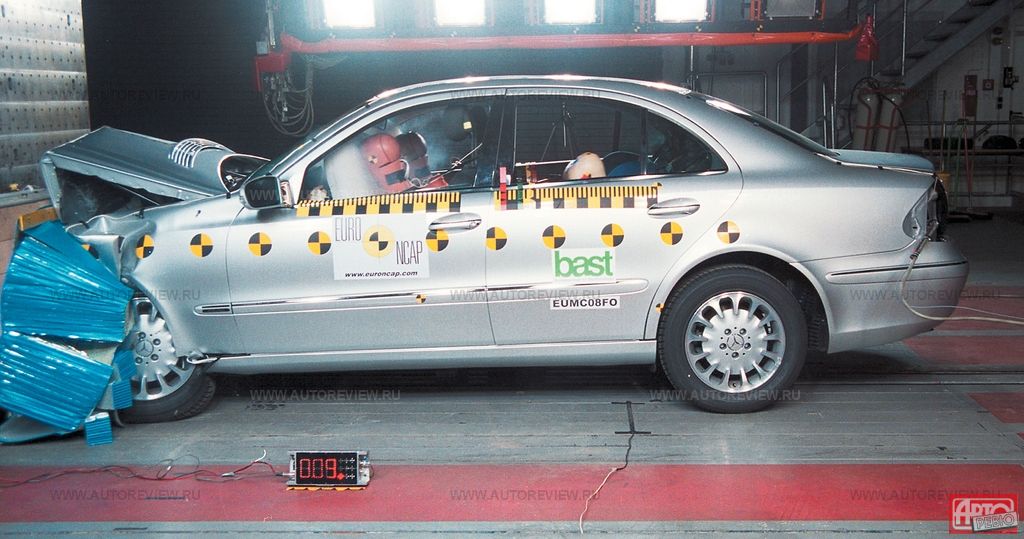 |
| Overall rating | 33 points | |
| Frontal crash test | 13 points (81%) | |
| Side crash tests | 18 points (100%) | |
| SBR** | 2 points | |
| Child passenger protection | — | |
| Pedestrian protection | 4 points (11%) | |
| Curb weight | 1650 kg | |
| * Tests conducted according to EuroNCAP methodology | ||
| ** Presence of seatbelt reminder | Mercedes | |
What's the price?
Prices for the BMW 5 Series start from 1,364,400 rubles for the base BMW 520i sedan (2.0 L, 150 hp), which includes six airbags, climate control, CD player, light and rain sensors. A similarly equipped BMW 525i (218 hp) will cost 1,580,400 rubles, and in the fixed Business trim (Kaliningrad assembly) with automatic transmission, leather interior, parktronic, and bi-xenon headlights — 1,836,000 rubles. It was exactly such a car that we had in our hands. Cars ordered from Germany will cost 8-10% more. Prices for the BMW 530i (272 hp) start from 1,717,200 rubles, for the BMW 540i (306 hp) — from 2,145,600 rubles, and the top version BMW 550i (4.8 L, 367 hp) will cost at least 2,516,400 rubles.
In addition, diesel BMW 520d (177 hp), BMW 525d (197 hp), and BMW 530d (231 hp) are available in Russia. The range of "base" prices is from 1,411,200 rubles to 1,742,400 rubles. All-wheel drive xDrive is offered only for petrol BMW 525i and 530i — a surcharge of 93,600 and 104,400 rubles respectively. All "fives" in the initial trim are equipped with a six-speed manual transmission, the surcharge for the "automatic" is 72,000 rubles. Cars in the most popular fixed trims are available from dealers, and delivery on order will take up to three months.
Warranty — two years without mileage limit. BMW cars are sold by 43 dealers in 30 Russian cities.
Audi A6 2.0 TFSI (170 hp) already in the base version offers more than "empty" BMWs: bi-xenon, electric front seats with heating, folding rear row, parktronic, as well as light and rain sensors. For such a car they ask 1,432,000 rubles, and if you take a slightly more powerful engine with a volume of 2.4 L (177 hp), the price will increase by only 11,000. Versions with 2.8 FSI (210 hp) and 3.2 FSI (255 hp) engines are priced at 1,663,000 and 1,886,000 rubles respectively. For front-wheel drive modifications, the multitronic variator is available, which will cost an additional 70,000. A six-speed "automatic" for a comparable amount can only be obtained together with quattro all-wheel drive, the surcharge for which is 84-100 thousand rubles for all versions except the two-liter one. The older modifications are exclusively all-wheel drive: the diesel A6 3.0 TDI (232 hp) with a manual gearbox starts from 1,848,000 rubles, and the petrol 4.2 FSI (349 hp) with an "automatic" — from 2,673,000. Approximately the same, 2,591,000 rubles, cost the tested A6 2.8 FSI quattro, equipped to the maximum — with navigation and TV tuner. The desired configuration can be found at dealers, and if you order a car, you will have to wait about three months.
The warranty on Audi cars is two years without mileage limit. In Russia, the brand is represented by 38 dealers in 28 cities.
Mercedes-Benz E-Class in standard trim looks more modest than all competitors: six airbags, climate control, and light and rain sensors. But the price is also more biting than BMW or Audi: for the E 200 Kompressor (1.8 L, 184 hp) they ask from 1,620,600 rubles. The E 230 (2.5 L, 204 hp) costs from 1,698,300 rubles, the E 280 (3.0 L, 231 hp) — from 1,898,100 rubles. A car in the fixed "special series" trim looks like a profitable purchase — for example, the E 280 for 2,120,100 rubles, although the BMW 525i (218 hp) with similar equipment is 284,000 cheaper. But the test E 280 with 4Matic all-wheel drive (it is offered only for E 280, E 350, and E 500 versions for an additional 96-211 thousand rubles) and a large list of options turned out to be 83,000 more expensive than the "base" top version E 500 (5.5 L, 388 hp) with air suspension, which costs from 2,675,100 rubles. Cars of the "special series" are available from official dealers, and a custom-ordered car will have to wait from two to four months depending on the modification.
Warranty — two years without mileage limit. Mercedes-Benz is sold in Russia by 31 dealers in 21 cities.
Jaguar XF in the initial version with a three-liter engine (238 hp), "automatic", six airbags, climate control, leather interior, CD changer, rain sensor, and rear parktronic costs 1,900,000 rubles. The Premium Luxury version for 2,045,000 rubles, which differs from German fixed packages only in the absence of bi-xenon headlights, turns out to be more expensive than Audi and BMW, but 75,000 cheaper than the Mercedes E 280 "special series". The test car, stuffed with additional equipment, almost caught up in price with the older Jaguar XF V8 4.2 (298 hp), which costs from 2,580,000 rubles. At the top of the range is the supercharged SV8 version (416 hp) for 3,160,000 rubles. Choosing a specific XF is not easy: dealers most often have cars with a bunch of expensive but optional options, and a custom-ordered car will arrive in three to four months.
Warranty — three years without mileage limit. Jaguar is represented in Russia by 16 dealers in 12 cities.
| Approximate prices for spare parts at dealers in Moscow, RUB | ||||
| Parts | Cars | |||
| Audi A6 | BMW 525i | Jaguar XF | Mercedes-Benz E 280 | |
| Oil filter | 1050 | 800 | 950 | 760 |
| Fuel filter | 1770 | 2200 | 770 | 10300* |
| Air filter | 1250 | 1300 | 1100 | 2330 |
| Cabin filter | 3120 | 1800 | 990 | 1190 |
| Spark plug | 930 | 900 | 320 | 620 |
| Front brake pads | 9450 | 8100 | 5260 | 8800 |
| Rear brake pads | 4960 | 5300 | 3950 | 3100 |
| Front shock absorber | 7500 | 12500 | 5130 | 12420 |
| Rear shock absorber | 9220 | 9500 | 5130 | 7540 |
| Front stabilizer link | 2060 | 1400 | 2950 | 5080 |
| Front headlight | 34500 | 47000 | 39480 | 49960 |
| Rear taillight | 7990 | 12200 | 8690 | 7430 |
| Front fender | 13790 | 12000 | 16580 | 15300 |
| Front bumper | 16020 | 24100 | 31580 | 24150 |
| Hood | 39620 | 39000 | 31585 | 45000 |
| Windshield | 16860 | 30000 | 20530 | 14560 |
| * Complete with fuel pump | ||||
| Cost of scheduled maintenance with consumables and parts, RUB | |||||
| Scheduled maintenance | Cars | ||||
| Audi A6 | BMW 525i | Jaguar XF | Mercedes-Benz E 280 | ||
| Labor rate per hour | 2200 | 2400 | 3100 | 2500 | |
| Mileage, km | 15000 | 12000 | 8750 | — | 11000 |
| 16000 | — | — | 14000 | — | |
| 30000 | 18000 | 18600 | — | 25000 | |
| 32000 | — | — | 14000 | — | |
| 45000 | 12000 | 8750 | — | 11000 | |
| 48000 | — | — | 14000 | — | |
| 60000 | 18000 | 33950 | — | 25000 | |
| 64000 | — | — | 14000 | — | |
| 75000 | 12000 | 8750 | — | 11000 | |
| 80000 | — | — | 14000 | — | |
| 90000 | 18000 | 18600 | 14000 | 25000 | |
| Total | 90000 | 97400 | 84000 | 108000 | |
Alternative
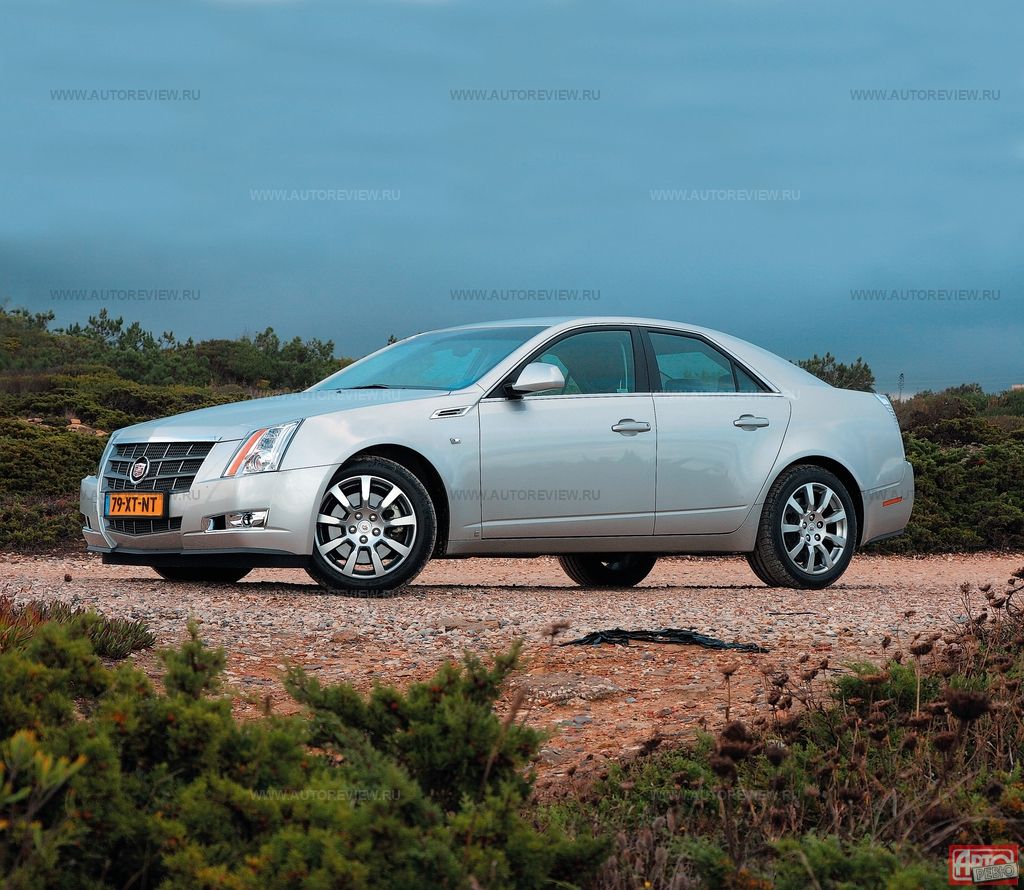
If we set aside more affordable business sedans, among comparable-sized cars the cheapest alternative to the E-class is the new-generation Cadillac CTS. Prices start from 1 million 206 thousand rubles for the base sedan with a 2.8 engine (211 hp), six-speed automatic, six airbags, climate control, leather interior, power front seats, CD changer, and xenon. The version with the 3.6 engine (311 hp) costs from 1 million 323 thousand rubles, and for all-wheel drive you will have to pay an extra 100 thousand. More about this model in AR No. 21, 2007.
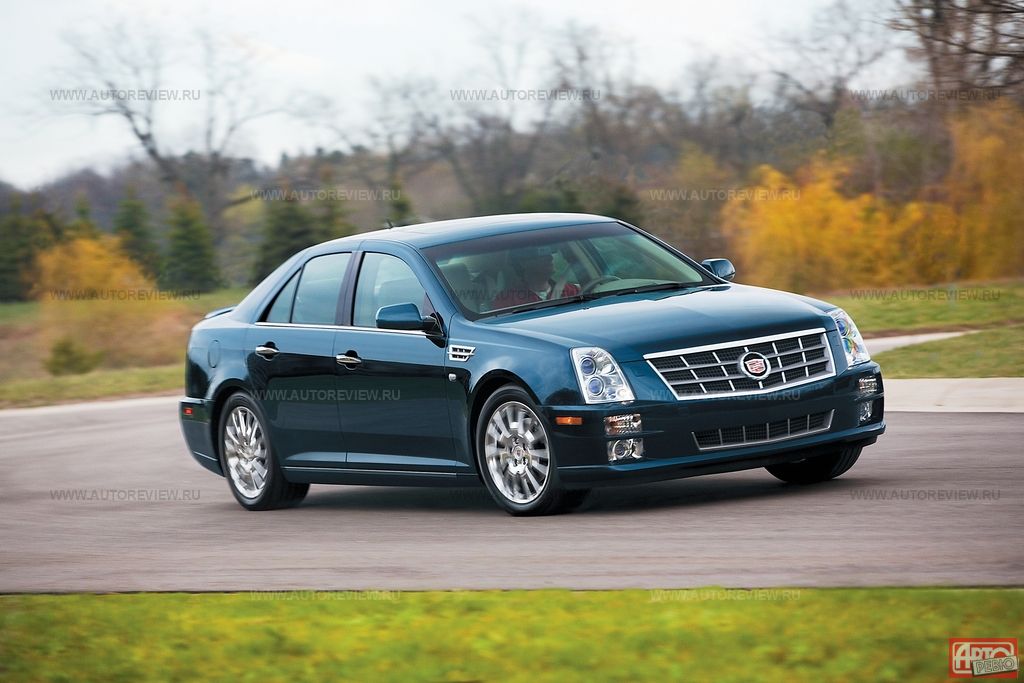
The larger Cadillac STS cannot be found for less than 1 million 719 thousand rubles — for this money the same 3.6 engine (311 hp) is offered. The model has been produced since 2004 and pleases with a spacious interior and comfortable seats, although the trim materials could be better. Details in AR No. 18, 2005.
| Cadillac CTS | Saab 9-5 |
 | |
| Cadillac STS | Crysler 300C |
 |  |
Saab 9-5 is a model that has been in production for over ten years. The flagship Aero version, equipped with a 2.3TS engine producing 260 horsepower and an automatic transmission, will cost at least 1 million 305 thousand rubles. At the same time, for xenon headlights and power front seats you will have to pay extra.
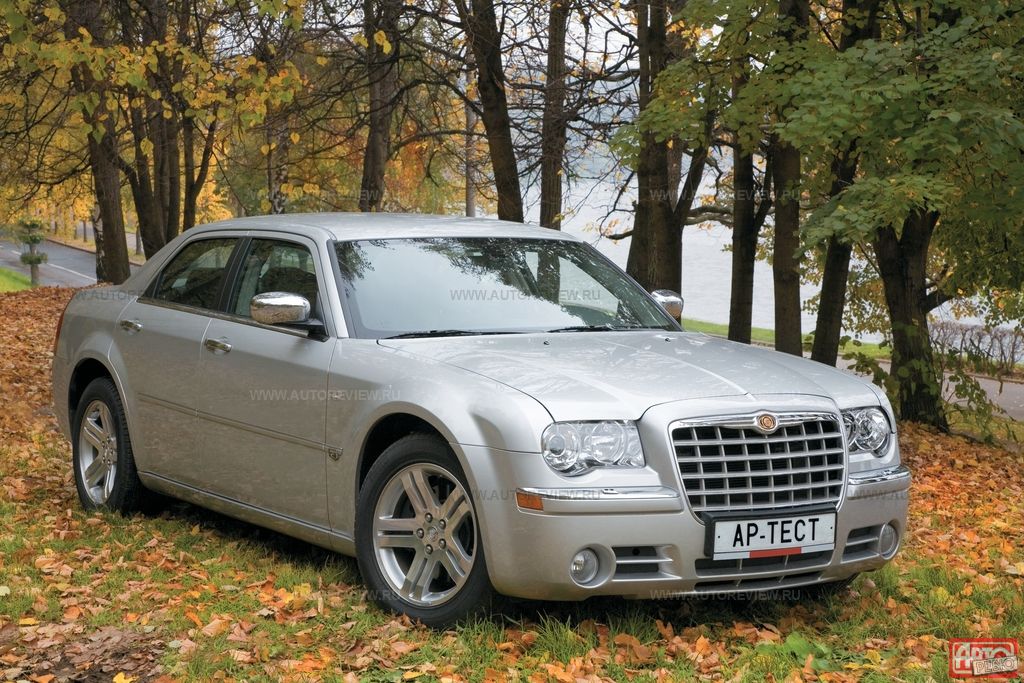
Chrysler 300C, built on the platform of the previous-generation Mercedes E-class, has been produced almost unchanged since 2003. The base version with a 2.7-liter engine (193 hp) is priced at 1 million 285 thousand rubles, while the modification with the 3.5 engine (249 hp) will cost 1 million 528 thousand rubles. Inside, the quality of trim and comfort level leaves much to be desired, but in terms of equipment it is not inferior to the Cadillac. More details in AR No. 21, 2006.
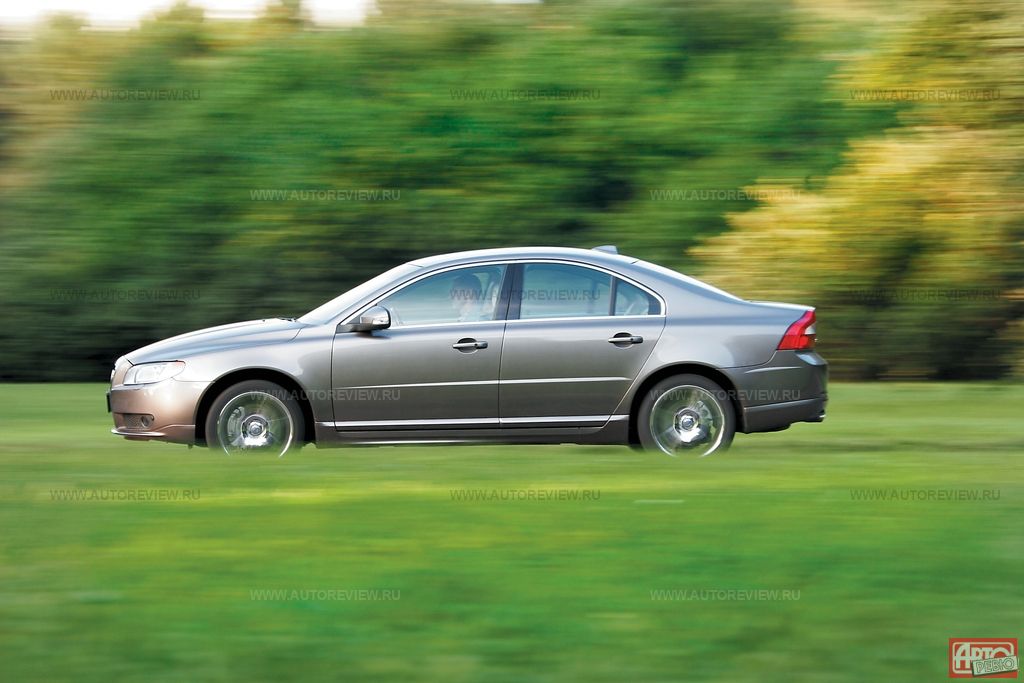
Volvo S80 of the 2006 model year in the version with a turbocharged 2.5T engine (200 hp), automatic transmission, and fabric upholstery costs 1 million 308 thousand rubles. If you want a more powerful 3.2-liter unit (238 hp), you will have to pay an additional 155 thousand rubles, and for all-wheel drive — another 52 thousand. This car stands out for its character and elegance, and according to the aggregate of expert assessments of Avtoreview, it came closest to the “German trio”. Details in AR No. 17, 2006.
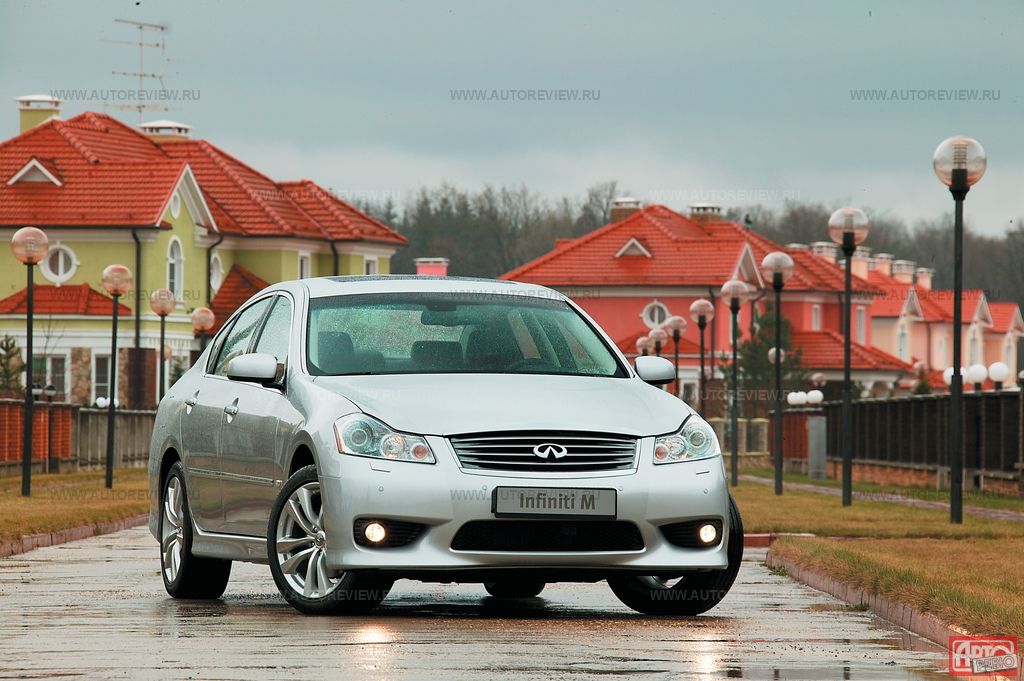
| Volvo S80 | Infiniti M35 |
 |  |
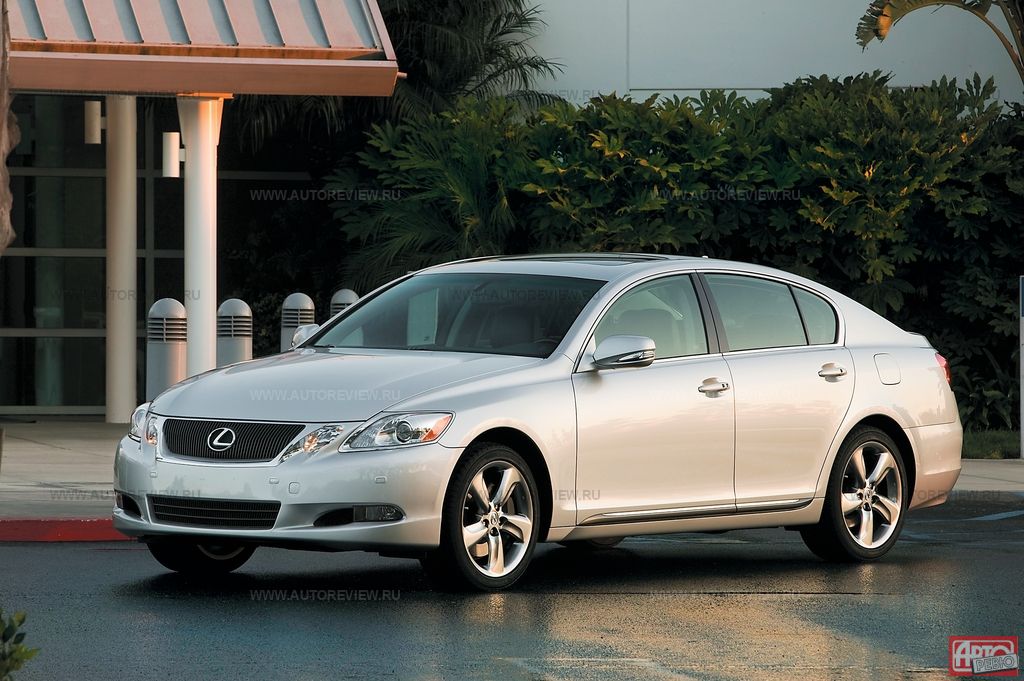
| Citroen C6 | Lexus GS 300 |
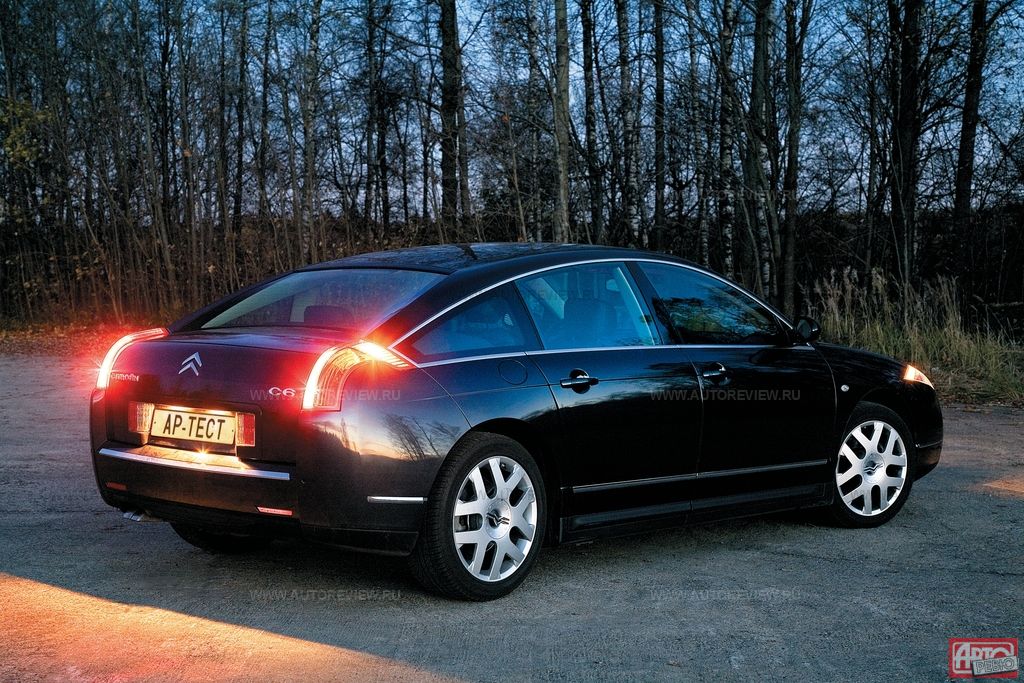 |  |
Citroen C6 appeared on the market a year earlier, and its starting price is 1 million 650 thousand rubles. For this money you get a car with a three-liter engine (215 hp), velour interior, seven airbags, and heated rear seats. Details in AR No. 21, 2006.
Infiniti M35 with a 3.5-liter engine (280 hp) after a recent update can be purchased for 1 million 740 thousand rubles. The base equipment includes six airbags, leather interior, sunroof, and CD changer. For the all-wheel drive system you will have to pay an extra 79 thousand rubles. The interior here is quite comfortable, and the chassis pleases with a driver-oriented character, but the suspension feels somewhat stiff. Details in AR No. 10, 2007.
Prices for the Lexus GS 300 (3.0 L, 249 hp) start from 1 million 753 thousand rubles. This amount includes ten airbags, but the sunroof is not available even for an extra charge. The car has been produced since 2005 and recently underwent a facelift. The front seats are comfortable, and the ride smoothness is top-notch… But to get to the spacious rear sofa, you will have to try hard — the low-slung roof is to blame. Details in AR No. 21, 2006.