
 Comments (38)
 In the years that followed the war, a two-door body mounted on a regular, uncut platform was called exactly the same as a four-door one — a sedan. Recall at least our famous Zaporozhets or the cult Alfa Romeo Julietta — according to the then classification, both of these cars were listed as sedans. Two-door versions cost slightly less than their four-door counterparts and were created primarily with an eye to economy. But over time, more practical and familiar sedans took the lead. And coupes were pushed into the niche of cars for egoists and those who like to drive fast, because a two-door body is noticeably stiffer than a four-door one.
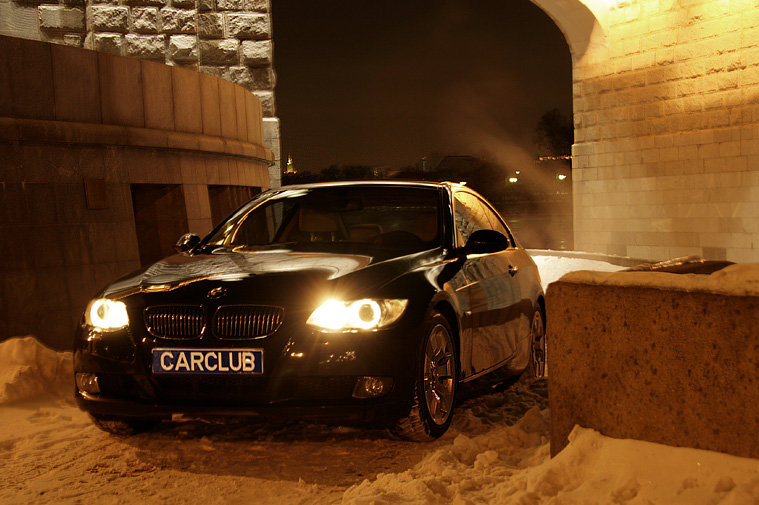
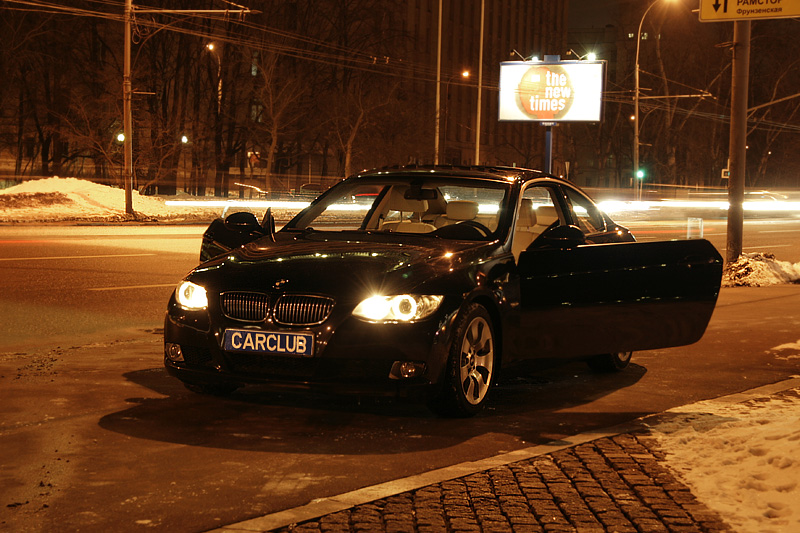
One of the most telling examples of a modern coupe is the freshest BMW 3 Series Coupe, which came to us for a test. If in the old days the difference between a coupe and a sedan was reduced only to the number of doors, then in the last couple of generations the Bavarian "threes" flaunt completely different bodies. The coupe has a lower and shorter roofline, more inclined pillars, and the entire exterior is completely new. Even the optics have changed. The angular headlights of the sedan gave way to calmer ones, and the rear lights seem to have migrated from the previous generation — apparently, BMW listened to the criticism that journalists poured on the "butterfly-shaped" lights of the sedan and decided to make the coupe more restrained. And, it must be admitted, it turned out excellent. The intricate convex-concave sides coexist perfectly with the classic squat silhouette of the coupe and its characteristic sloping pillars. They did not forget about the signature curve of the rear window, which was preserved even without rear doors. You can't approach the car from any side — you can't take your eyes off it, especially when the "glasses" of the parking lights are on. By the way, in combination with blue xenon, the yellowish circles look especially impressive.
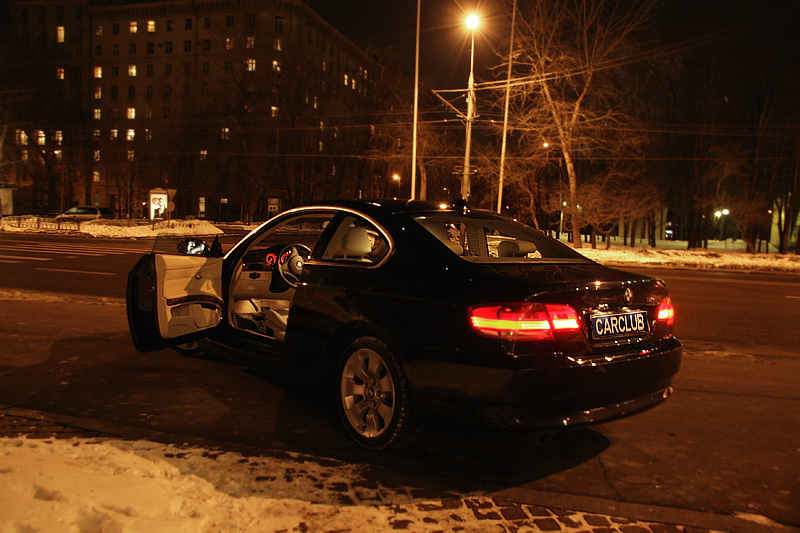
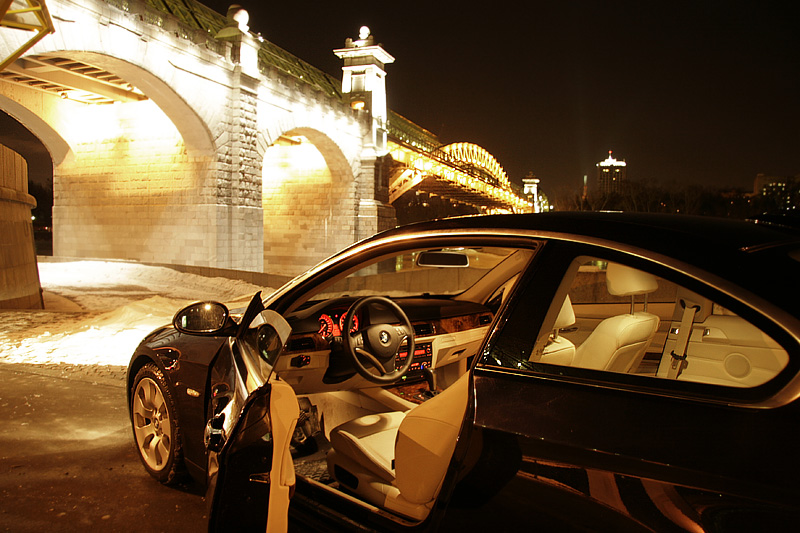
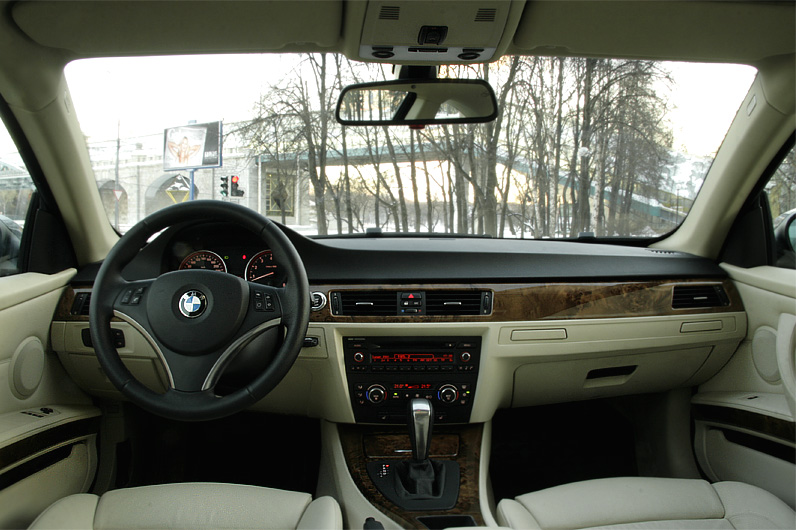
 We got a dark coupe with a beige, almost snow-white interior. This trim looks simply gorgeous, but caring for it is a troublesome task, especially in the Moscow winter, when fresh snow instantly turns into black sticky slush that eats into the car like a tick. Only dry cleaning saves, and most likely, you will have to resort to it often. Beauty demands sacrifices!
Against the background of this beige splendor, the ascetic black central console with two monochrome screens of the radio and climate control looks somewhat strange — it feels like they were moved unchanged from the previous "three". But the heater has a Rest function that warms the cabin with residual engine heat — in ten-degree frost, this is enough for 10-15 minutes to maintain a normal temperature.
The front seats, like those of other models, can be safely set as a standard. Even the separate adjustments do not bother: seat cushion tilt and longitudinal shift are mechanical, while height and backrest angle are electric. It is inconvenient only that when you fold the seat to let passengers in the back, it locks, and then you have to adjust it again. Rear passengers have the same amount of legroom as in the sedan, and the roof almost does not press on the head. But riding in the back is still uncomfortable — first of all, there are no handles to hold on to in corners: there is simply nothing to grab, you have to rely on the belts and, during sharp braking, push your hands against the front seat. You can't even grab your neighbor's shoulder — the rear sofa is divided into two separate seats by a section of small boxes. Here we can already talk about the lack of lateral support for rear passengers, although they are clearly not the main ones here. As does the quite spacious trunk, which the coupe inherited from the sedan, not matter.
 Those sitting in the back can only hope that the driver will not squeeze out all 218 "horses", but this is about the same as praying for snow in the Sahara. Driving a BMW calmly is simply impossible. Even if you get into the "three" in complete peace, it seems to give you an adrenaline shot — and you are already ready to at least half-disable the dynamic stability control system DTC (Dynamic Traction Control).
As on most fresh BMWs, the electronics have three modes. The two extreme ones are "everything active" and "everything off", plus an intermediate one, when the "leash" is loosened, but not so much as to let it go far. In this mode, only the traction control system is turned off: it allows controlled wheelspin on snow, catching slight drifts, and slowly spinning "nickels". But the electronics will not let you make a serious mistake, and only the driver knows about its intervention. Passengers are sure that the pilot does everything himself. Here he briskly enters a turn, the car drifts noticeably, everyone manages to gasp — and the driver at that moment stabilizes the car with a quick and precise counter-steer, not allowing the drift to develop. In fact, the steering wheel can be turned in the direction of the drift at almost any angle — this is just a command to the electronics to dampen the sliding, and it instantly levels the car. With increasing speed, the grip of the electronics becomes tighter, and after a "hundred" the difference between the enabled DTC and half-disabled is practically not felt.
In the safest option — with the active stabilization system — the electronics kill any understeer and oversteer in the bud. On any surface, all that is required of the driver is to press the pedals and turn the steering wheel in the right direction — the DTC itself decides how much power the rear wheels can digest, and which ones to brake to direct the car into the turn. True, with a rough error, the electronics intervene quite sharply, removing the driver from control.
 The last mode is the complete absence of electronic "collars", only ABS works. Here the driver needs care with the gas or extreme concentration. Experienced ones will ask: what about our fathers and grandfathers, who fifteen years ago raced on the classic and did not know about stability systems? Yes, but, fortunately or unfortunately, few of them had such powerful and sharp cars. The quick reactions of the "three"-coupe require instant corrective actions from the driver, otherwise it is not far to a spin. But what a pleasure — to drive the car in a spectacular drift and not fly into a snowdrift. True, before turning off the stabilization on public roads, it is better to first practice on a closed site, and ideally — take an active driving course at the BMW driving school.
Initially, we expected to get the top version 335i for the test — a coupe with the newest 3-liter turbo engine. But for technical reasons, we got the modest 325th. However, on the road you quickly understand that the 325th is practically in no way inferior. The 218 "horses" produced by the 2.5-liter inline "six" are quite enough for a squat and streamlined coupe. With a sharp press on the gas, even with the "automatic", the wheels can break into wheelspin up to a "hundred". So up to this mark on clean but cold asphalt, the coupe does not need more power. Of course, after 150 km/h the pace of acceleration drops somewhat, but up to 220 the coupe accelerates quite quickly and is certainly capable of more. Although at such a speed, the 306-horsepower turbo engine would be more appropriate.
However, the true calling of this coupe is not at all high-speed highways, where on joints and ruts the suspension sometimes works so harshly that after another impact there is a desire to stop and make sure the wheels are in place. The car shows its best side on wide avenues and ring interchanges, when you can confidently maneuver between lanes. When the flow moves around a hundred, without much effort you can keep the speed at 140-180 km/h. The steering wheel pleases with a juicy reactive effort, and the car instantly responds to the driver's actions, easily changing lanes through two or three lanes. The "automatic" gearbox, both in normal and sport modes, clicks gears very quickly, and under the right foot there is always both a reserve of traction and an elastic brake pedal, with which deceleration can be dosed with centimeter accuracy, stopping exactly at the right point. The secret of such confident handling lies primarily in the lowered suspension — it is supplied to Russia from the European market without any adaptation. The BMW representative office could not name the exact ground clearance, but, judging by everything, it does not exceed 12 centimeters: the coupe catches the bottom even in the most familiar situations, for example, when entering a car wash or on the ramps of underground parking lots. However, over five days of the test, this is perhaps the only minus that managed to be found against the background of general delight.
There is one more small caveat — rather a feature than a drawback: the 325i coupe starts at 43,900 euros, which is about 60 thousand dollars. For comparison, the sedan of the 325th model, albeit with more modest equipment, costs 36 thousand euros, and the 306-horsepower version 335 costs from 52,900 euros.
However, in this case, the price only emphasizes the car's status. It serves as a kind of filter, weeding out casual buyers who might choose a two-door, say, for the sake of economy, and then complain for years that it has too few doors and it's inconvenient to seat children in the back row, or complain about the stiff and low suspension. This coupe is made for those who are at least spirited, and ideally, in love and young at heart!
Leonid Pavlov