
In Arizona, in the height of summer, the thermometer can climb to almost 50°C. But now, in January, it's noticeably cooler here — only 15–18°C during the day, and at night the air cools to zero. Desert, sharply continental climate…
Locals show off — strolling in shorts and driving convertibles. But for me, a person from Russia, it's still chilly in January Arizona with the top down. So I press a button — and the latest BMW 335i Convertible, that is, a cabriolet, turns into a full-fledged coupe with a hard roof. For the first time in its history, BMW has released a coupe-cabriolet!
Although the company itself denies this in every possible way.
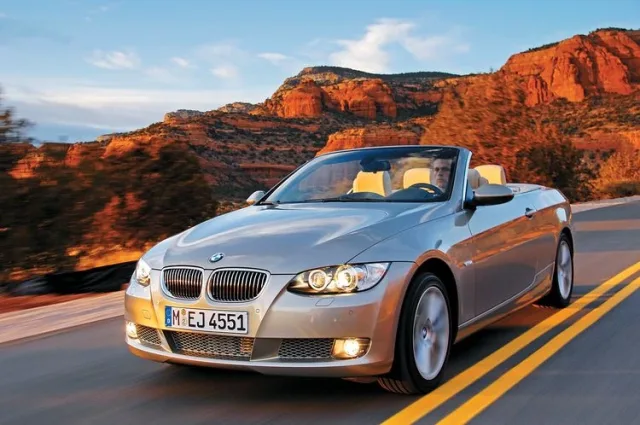
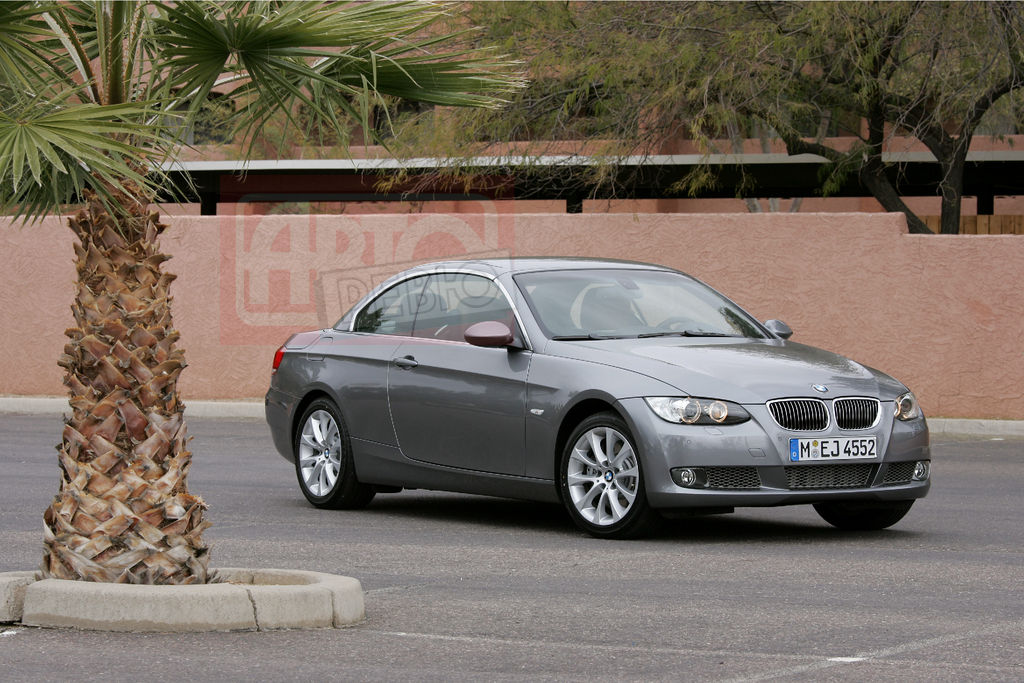 — It's just a cabriolet! We already have a coupe…
It's funny to watch how the Bavarians so stubbornly disown the label "coupe-cabriolet." What are they afraid of? That the open "three" will be lumped together with other cars equipped with a hard folding roof, and all of them are a class lower, right up to the new Volvo C70?
In fact, BMW should be proud that they are pioneers here. After all, both the Audi A4 and Mercedes CLK use traditional fabric tops in their open versions. Moreover, their creators explained the rejection of fashionable metal folding structures by saying they were too heavy — spoiling weight distribution and handling. And all past third-series cabriolets were exclusively with fabric tops.
So what made the Bavarians go against tradition?
— With a metal top, the car looks better, — the Germans answer. — Look: we even managed to preserve the signature Hofmeister kink at the rear pillars. The metal roof wins on all parameters. Both in sound insulation and aerodynamics: the drag coefficient Cx of the new cabriolet with a two-liter engine is only 0.28, just 0.01 more than the coupe. With a fabric top, that wouldn't have been possible. And visibility has become noticeably better: the glass area of the new cabriolet is 30% larger than its predecessor. And the rear window has grown by almost 40%!
That's the absolute truth. It's quiet in the cabin, and visibility is no problem. When the roof is closed, the coupe-cabriolet doesn't give away its "cabrioletness" at all — except that the front seat belts are attached not to the body pillars (there simply aren't any), but to the seats. Also, the coupe-cabriolet, like the new BMW X5, has "hot" buttons on the center console along with the iDrive controller — they can be programmed to dial a phone number, select a favorite radio station, or set a navigation destination.
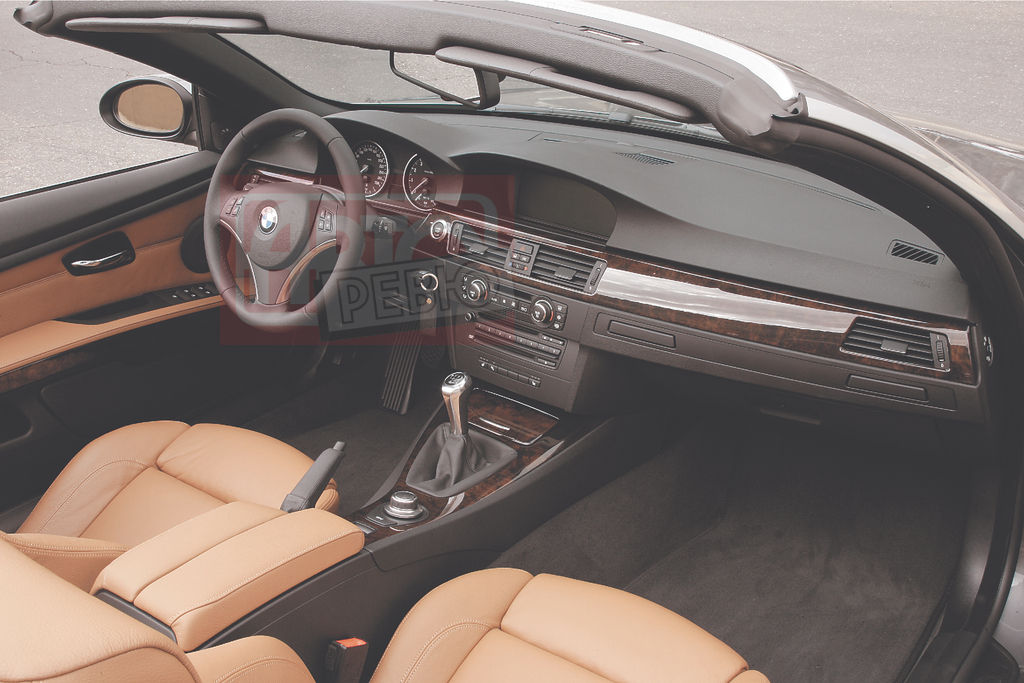 | 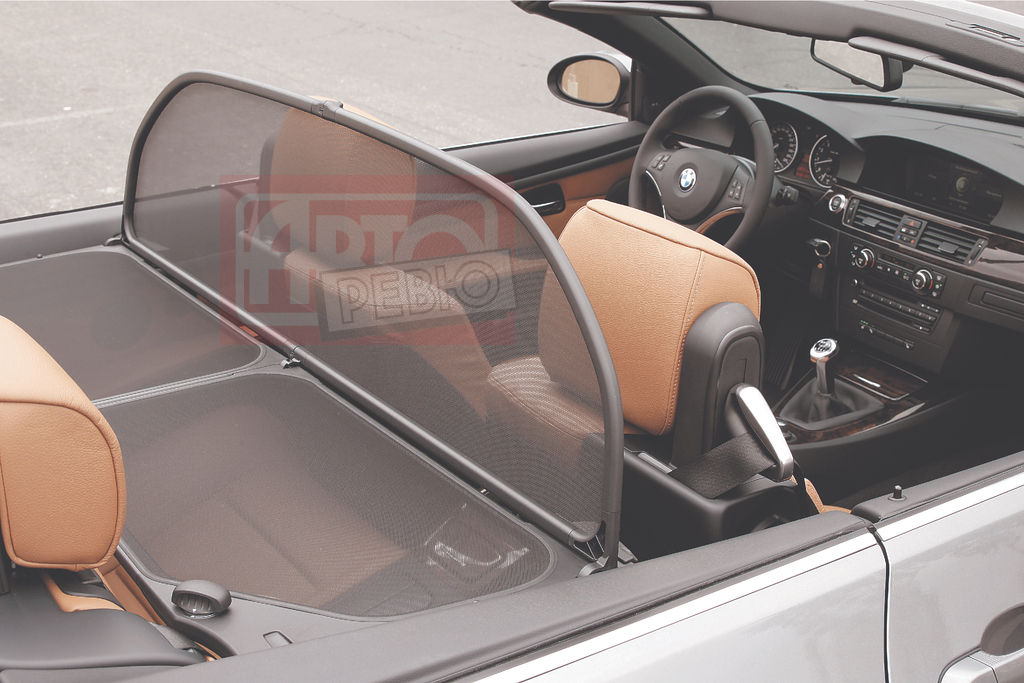 | 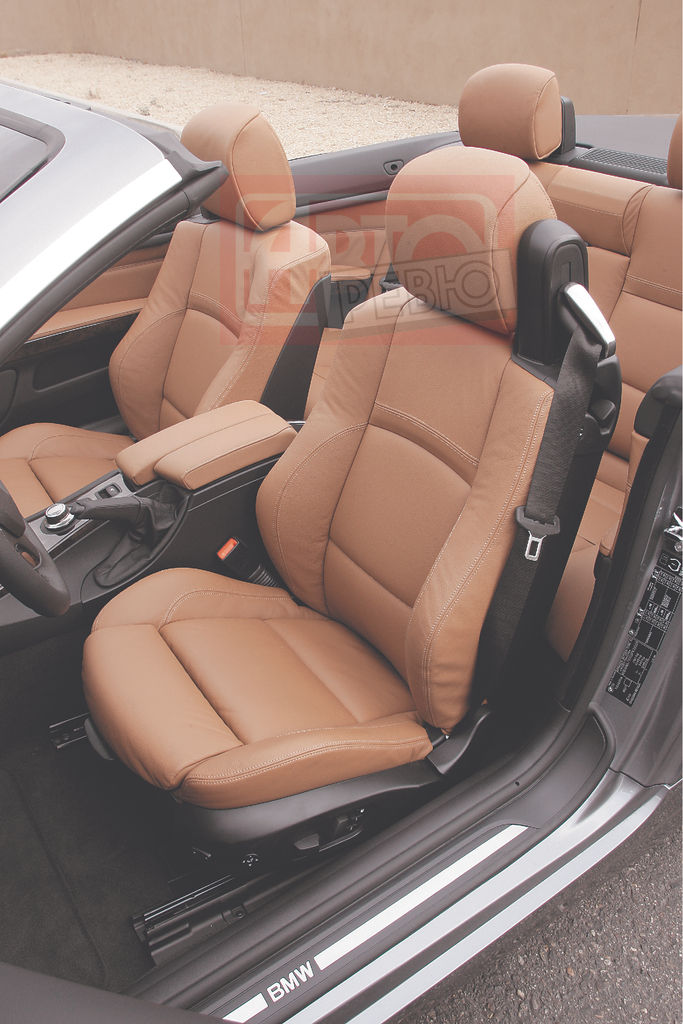 |
| Engine start button, iDrive interface dial, eight "hot" buttons. The cabriolet is packed with the latest electronics! | Special latches allow one person to install the wind deflector | Sport seats are a privilege of the top version BMW 335i. As an option — interior upholstery in reflective leather, which reflects infrared solar rays and reduces seat surface heating by 10–20°C |
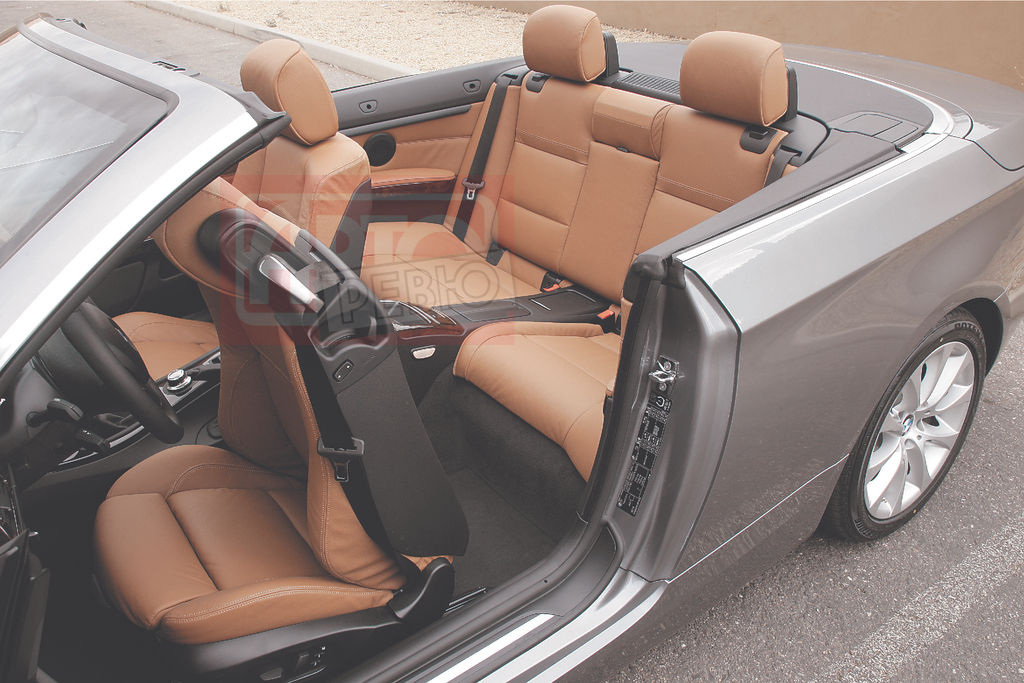 | 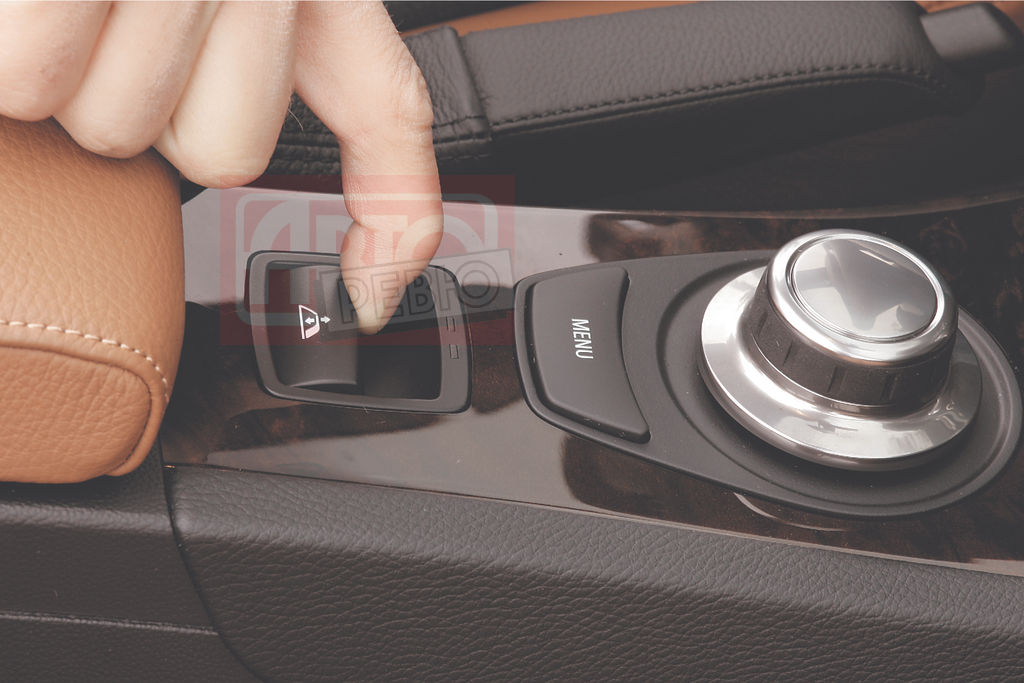 | 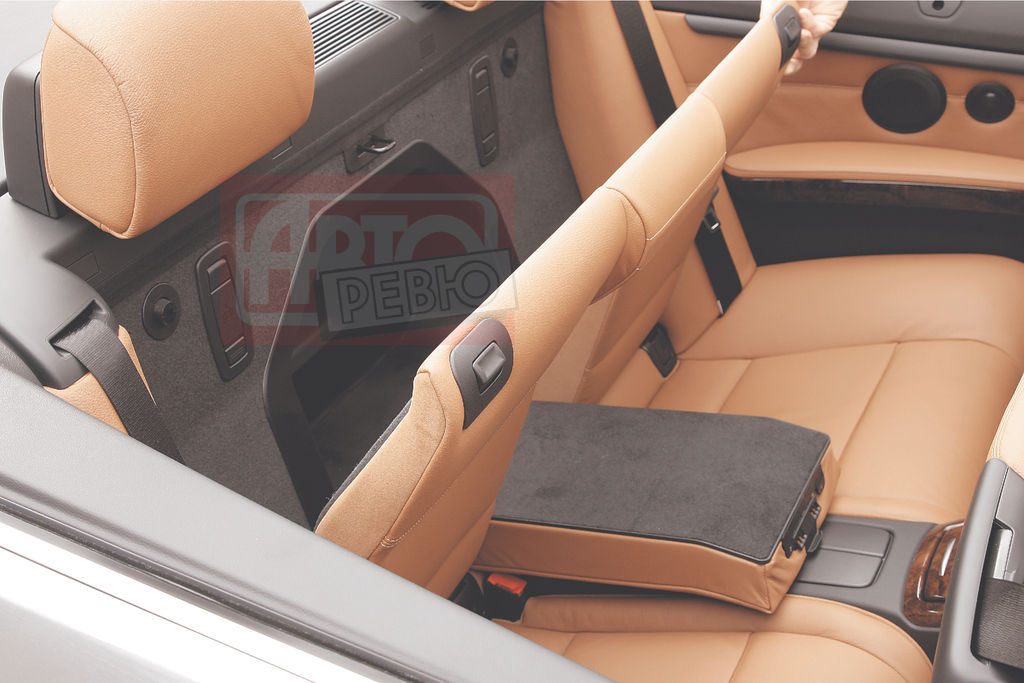 |
| At the back — two separate seats, which you can reach civilly, through the door, or jump right over the side! | You can control the roof either with this button or with the transponder key | Behind the folding backrest — a spacious window into the trunk |
There's one more difference: the open car doesn't have inflatable "curtains" to protect the head in side impacts and rollovers. Partially, their functions are taken over by side airbags of increased height and pop-up rollover bars that "shoot out" from behind the rear headrests in a dangerous situation.
And what about the back? Same as in the coupe: two separate seats, between which is a rigid console with cup holders and small compartments. Cozy, although there isn't much space: if a tall driver is at the wheel, then legs press against the front seat backrest. And there's no proper armrest as in the coupe — its role is poorly performed by a removable ottoman covering the window into the trunk.
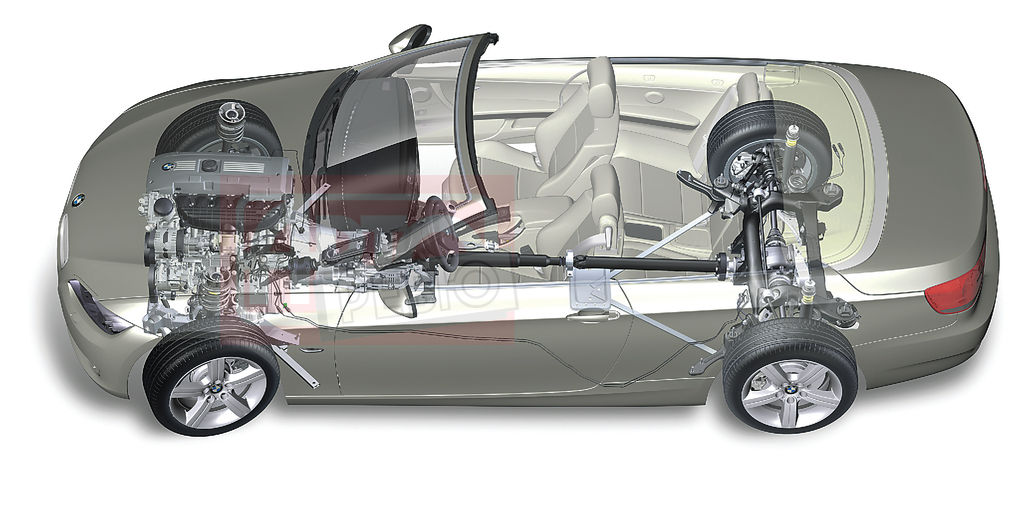 |
| The cabriolet is 210 kg heavier than the coupe: the suspension design hasn't changed, but the extra mass required increased spring and shock absorber stiffness |
The trunk itself has also shrunk. With the roof up, its volume is only 350 liters. And when the top is folded, only 210 liters remain for luggage!
However, this is normal for cabriolets. For example, the Audi A4 Cabrio has a trunk volume of 315/246 liters, but flat walls without additional "fittings" make it more practical.
But the roof on the BMW is metal! Moreover, it's complex, three-section, like the coupe-cabriolet Volvo C70. You press a button — and the ingenious mechanism folds the "hamburger" of three panels into the trunk in just 22 seconds. Surely a two-section top, like on the coupe-cabriolets Peugeot 307 CC, Renault Megane CC, or Ford Focus CC, would be simpler. But with the top closed, all these cars have disproportionately small cabins and long trunks. And the "triple" roof allows preserving the coupe silhouette: in the BMW 335i Convertible, everything is different — whether open or closed, the car maintains full harmony.
It's a pity only that you can't fold the roof while driving. But you can do it remotely — by pressing a button on the transponder key.
And the open "three" also has excellent "cabriolet" aerodynamics: only after 100 km/h does the wind start blowing inside. But parasitic turbulence is effectively fought by a large screen that needs to be installed behind the front seats. And with a drop in temperature — a two-zone climate control with a special "cabriolet" mode.
Of course, a cabriolet is primarily intended for relaxed driving — the 35 mph speed limit on small roads around Phoenix is taken calmly in an open car. You drive, enjoying the local scenery. The cacti alone are worth it! For local Arizona residents, they are like birches for us. But for us, cacti are a novelty. They are either big, like telegraph poles, or creeping along the ground, like boa constrictors. And there are also "jumping" cacti — these prickly balls, like burrs, cling to clothes and dig right into the skin.
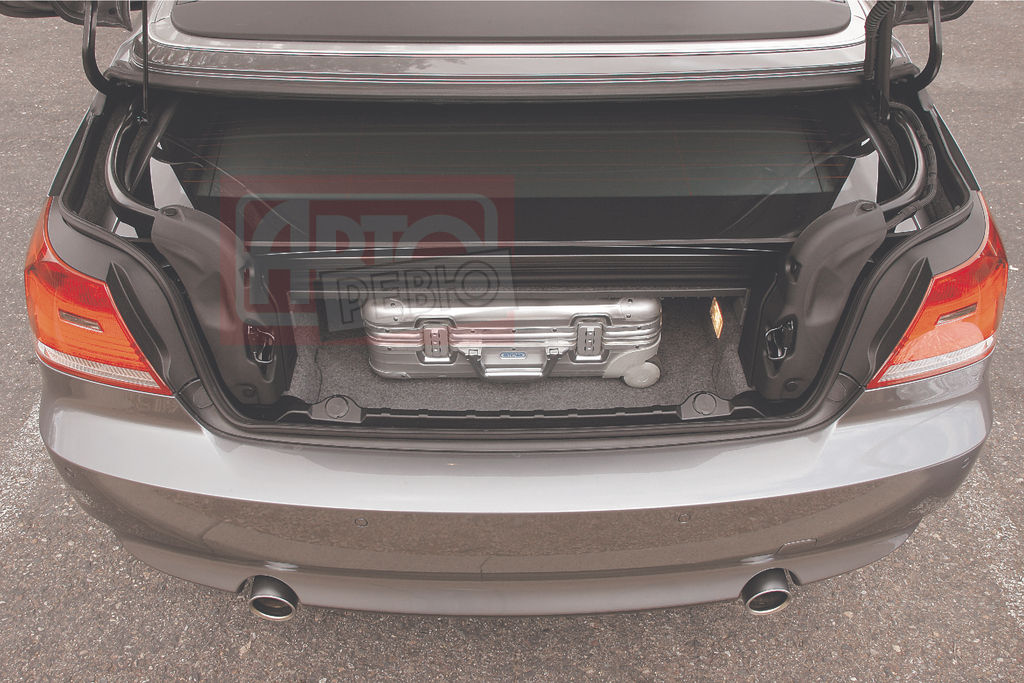 | 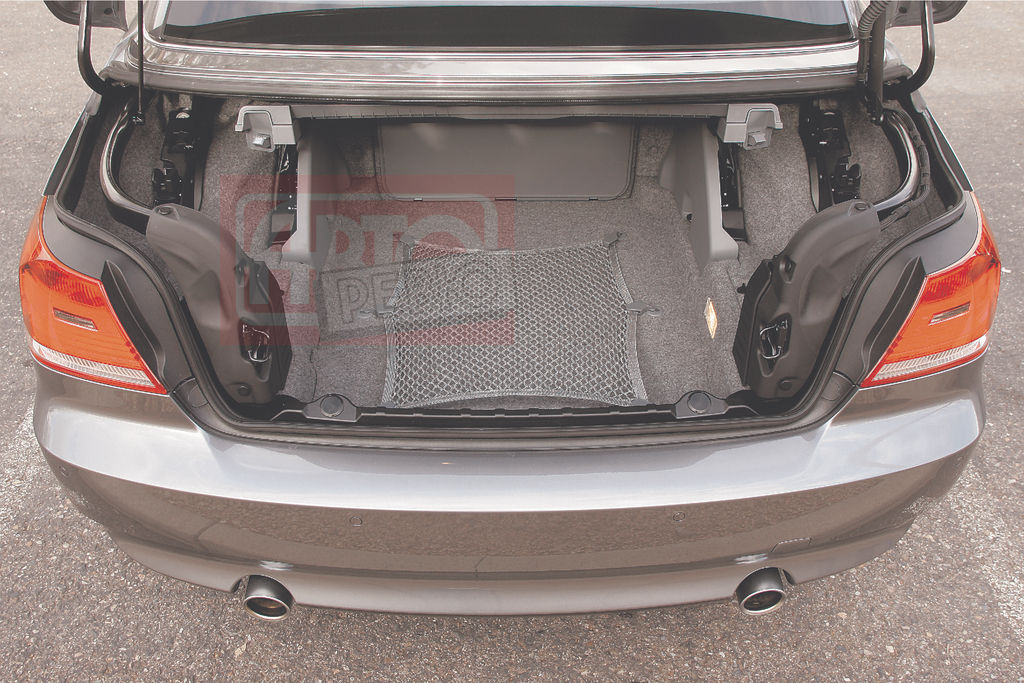 |
| The trunk of the coupe-cabriolet is small — with the roof folded, only a flat suitcase fits there (left), and even with the top up there's little space (right). But the trunk lid has a soft-close function | |
Nature sure comes up with things…
But when the winding mountain road began, I got distracted from contemplating the cacti. It's interesting to see how the open "three" handles, which is as much as 210 kg heavier than the coupe. The metal top alone with its folding mechanism weighs 140 kg. And the body had to be reinforced — additional elements made of high-strength steel helped bring torsional rigidity to 14,000 Nm/deg. Yes, that's a bit compared to BMW's all-steel bodies, whose rigidity has long exceeded 25,000 Nm/deg. But if you compare it with the previous open "three" with its modest 10,000 Nm/deg — there's clear progress.
However, the Bavarians themselves emphasize the "strolling" character of the open car. "Our car is not a coupe-cabriolet, it's just a cabriolet," they repeated at the press conference. "And for enthusiasts of active driving, we have a real coupe."
I don't know how the BMW 335i Coupe will handle these winding roads, but the Convertible is simply magnificent! The fantastic 306-horsepower twin-turbo engine, the new "rapid-fire" automatic transmission — and the extra two hundredweight of curb weight is as if it never existed. The car traces corners with lateral accelerations that are simply unattainable for many classmates. Both the ideal weight distribution (50:50) across the axles, and the low center of mass, and sufficient body rigidity — with the roof down, there's no looseness at all! And the academically correct tuning of the "coupe" chassis, adjusted for the increased mass of the coupe-cabriolet.
The folding three-section roof with electro-hydraulic drive is a true engineering masterpiece, consisting of more than 700 elements and weighing 140 kg. The full transformation cycle takes just 22 seconds to open and 23 seconds to close, and the process is fully automated.
However, this transformation comes at the cost of ride comfort. Low-profile tires (225/45 R17 front and 255/40 R17 rear) make the suspension overly sensitive to road surface quality — the car meticulously transmits every asphalt joint into the cabin and follows the smallest surface irregularities.
Despite manufacturers' claims, the BMW 335i Convertible is unequivocally a driver's car, not a passenger's. With the roof up or down, it remains a true driver-focused coupe-cabriolet.
True, this pleasure is not cheap: the Russian price starts from 60,300 euros. If you want to save, you can consider the less temperamental BMW 325i (218 hp) for 50,300 euros. However, competitors cost even more: the Audi A4 Cabriolet with a 2.0 TFSI engine (200 hp) is priced at about 51,800 euros, and the Mercedes CLK 280 (231 hp) will require 59,100 euros. Notably, both rivals make do with a fabric roof.
But the BMW has an iron roof!
Engines
In the Russian market, the BMW coupe-cabriolet is available in just two versions — the top 335i and the more affordable 325i. A curious detail: in Europe, the 325i index hides a new three-liter unit with direct fuel injection, while we get cabriolets with the old 2.5-liter "six." The power of both versions is the same — 218 hp, but the European engine is noticeably more economical and meets Euro 4 standards, while the Russian one is content with Euro 3.
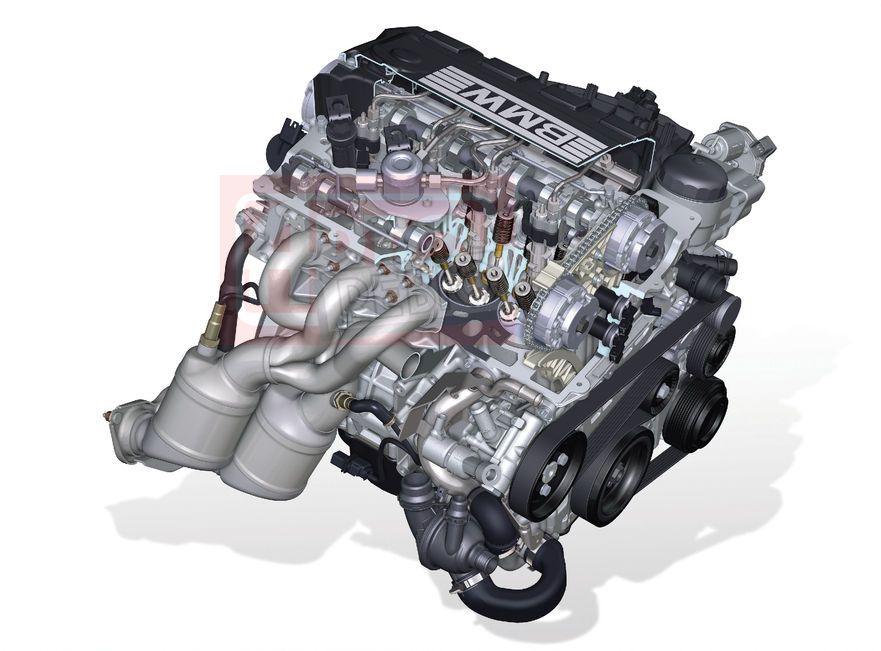
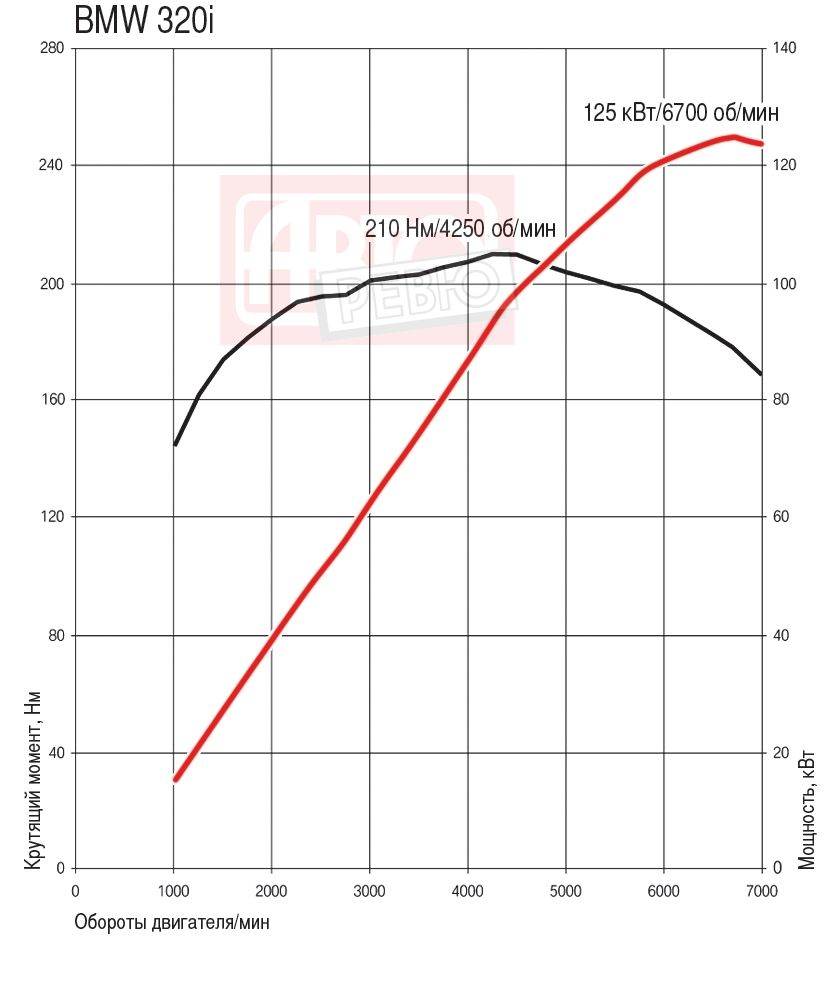
The European lineup also includes a three-liter turbodiesel with 231 hp and a base two-liter gasoline unit with 170 hp. It is with this engine that the BMW 320i Convertible demonstrates an impressive 6.7 l/100 km in the combined cycle — quite good for a car with a curb weight of 1670 kg. The new engine uses a third-generation direct gasoline injection system capable of running on a lean mixture. Additional savings are provided by an electric water pump drive that activates only when needed, energy recuperation by the generator during engine braking, and a "start-stop" system that shuts off the engine at traffic lights and restarts it at the first touch of the clutch pedal. Together, these technologies have reduced fuel consumption by 15% compared to the previous two-liter engine.
 |  |
 | 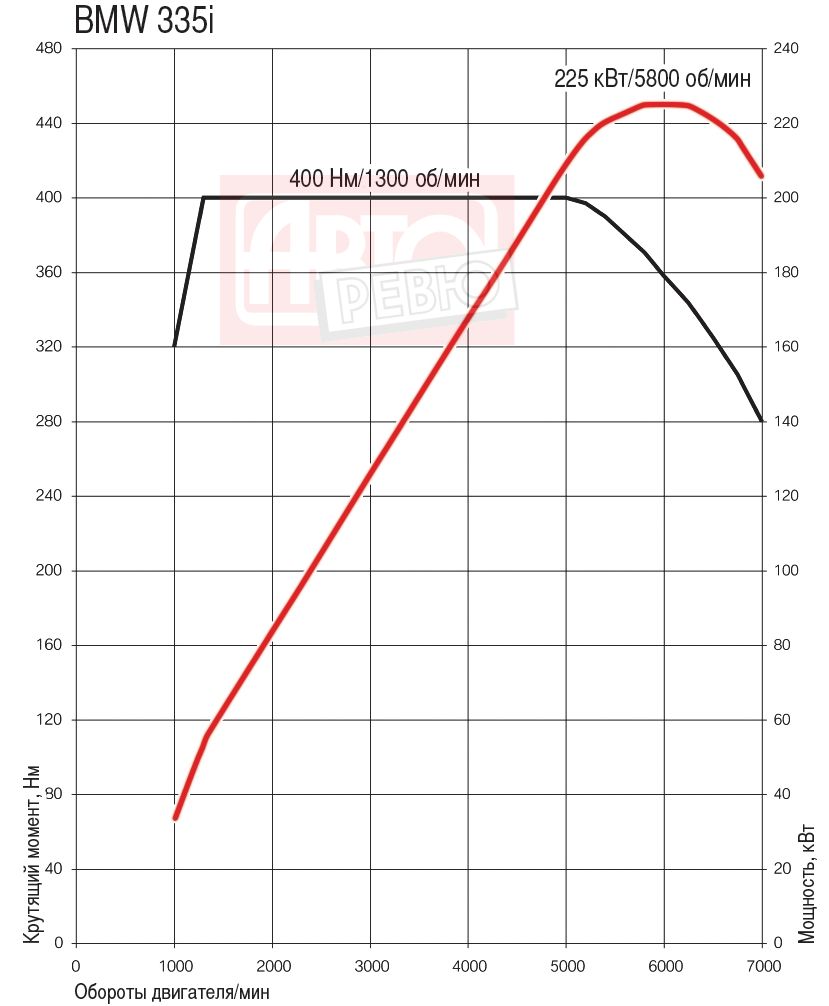 |
In Arizona, I had the chance to test only the top version 335i. We have already told about the merits of the new BMW engine with two turbochargers — incredibly torquey and devoid of any signs of turbo lag — on the pages of Autoreview (AR No. 15, 2006). And this time I managed to talk with one of its creators — engineer Norbert Klauer, whose experience in the BMW engine department exceeds 20 years.
— Turbocharging became possible thanks to direct fuel injection combined with variable valve timing on intake and exhaust, — explains Klauer. — This scheme allows extremely precise control of cylinder filling and combustion processes, especially at low revs, where traditional supercharged engines work poorly. During the intake stroke, only air enters the cylinders, not a combustible mixture, so at low revs we can increase the overlap phase of intake and exhaust valves — boost pressure more effectively displaces exhaust gases without harming efficiency or catalyst life. As a result, we feed 30% more air and gasoline into the combustion chamber. Torque grows, exhaust gas pressure on the turbine wheel increases, which raises boost pressure and further improves cylinder filling on the next intake stroke. It's a closed positive effect! The turbocharger rotors, made from aerospace alloy MARM, spin up to 160—170 thousand rpm, and in high-altitude conditions — up to 200 thousand rpm!
Interestingly, to what extent can this engine be tuned and how much can boost pressure be raised from the standard 0.6 atm? Considering that for tuning studios, a turbocharged BMW engine is a real delicacy.
— Tuning companies do increase power, sacrificing engine life, — Norbert notes with displeasure. — But we are solving this problem. Instead of one pressure sensor, we install three — at different points of the engine. They control the operation of the turbocharger and do not allow raising pressure above the factory setting. True, so far there are two loopholes left for tuners, but by September we will close them too!
It is obvious that in Munich they are seriously engaged in developing engine protection systems against tuning!
And one more question that will surely worry owners of BMWs with turbo engines: can the engine be turned off immediately after intense driving? Or, as on Japanese turbo cars, do you need to let the engine idle for a couple of minutes to avoid thermal shock and overheating of the turbocharger bearings?
— Why? You can turn it off immediately, — Norbert confidently answers. — We tested our engines both on the bench and on tracks, and the equipment never recorded any deviations in pressure or temperature from the norm. We don't have such a problem. And the turbocharger itself, by the way, is designed for the entire service life of the engine.
The Open History of BMW
The current open "three" has almost no direct predecessors — it is the first coupe-cabriolet in BMW's history! However, four-seat cabriolets have always been in the brand's history — even since the licensed BMW Dixi cars. As for the lineage of third-series cabriolets, from 1967 to 1985 their history is closely intertwined with Stuttgart: it was there, at the family body shop Baur, that all open BMWs were created for a long time. And not only them — the Baur studio built the BMW M1 coupe, Porsche 959, Opel Kadett C Aero…
The open "threes" of BMW were preceded by the Baur cabriolet, which appeared in 1967 based on the BMW 1600-2 coupe — a car of the so-called new class. The cabriolet was significantly more expensive than the coupe (11,980 versus 8,650 marks), equipped with an 85-horsepower "four," independent suspension, and front disc brakes. Since 1971, the open version received a two-liter engine with 100 hp, which raised the price to 14,985 marks. In total, from 1967 to May 1971, 1,682 cabriolets of the 1600 series and 200 cars of the 2002 model were produced.
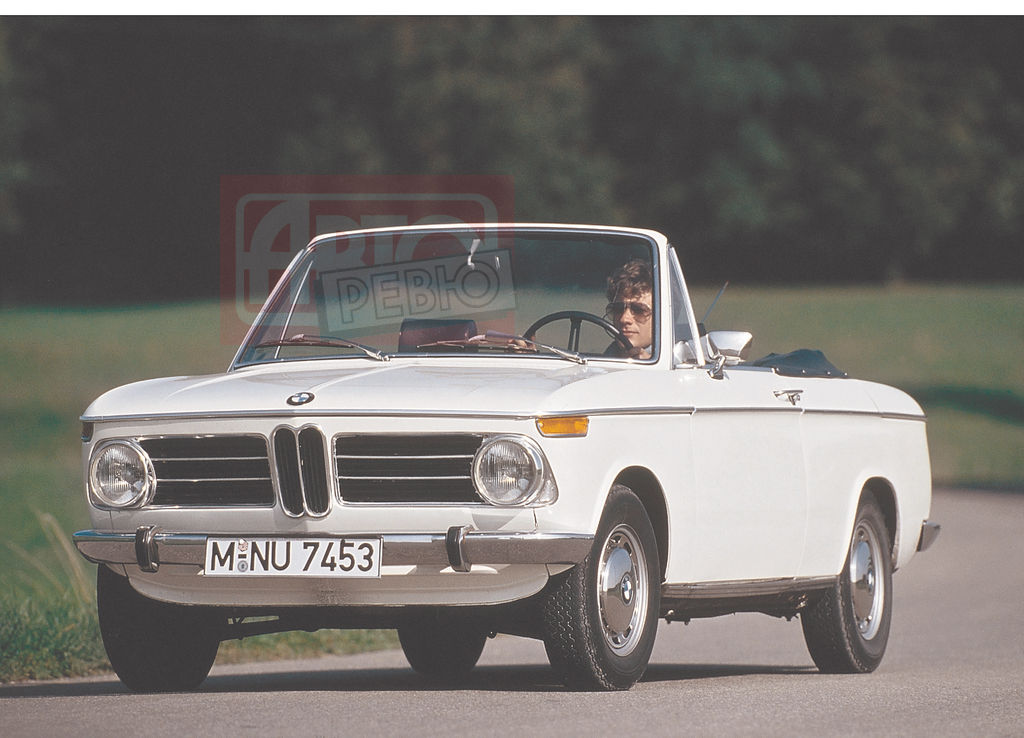 | 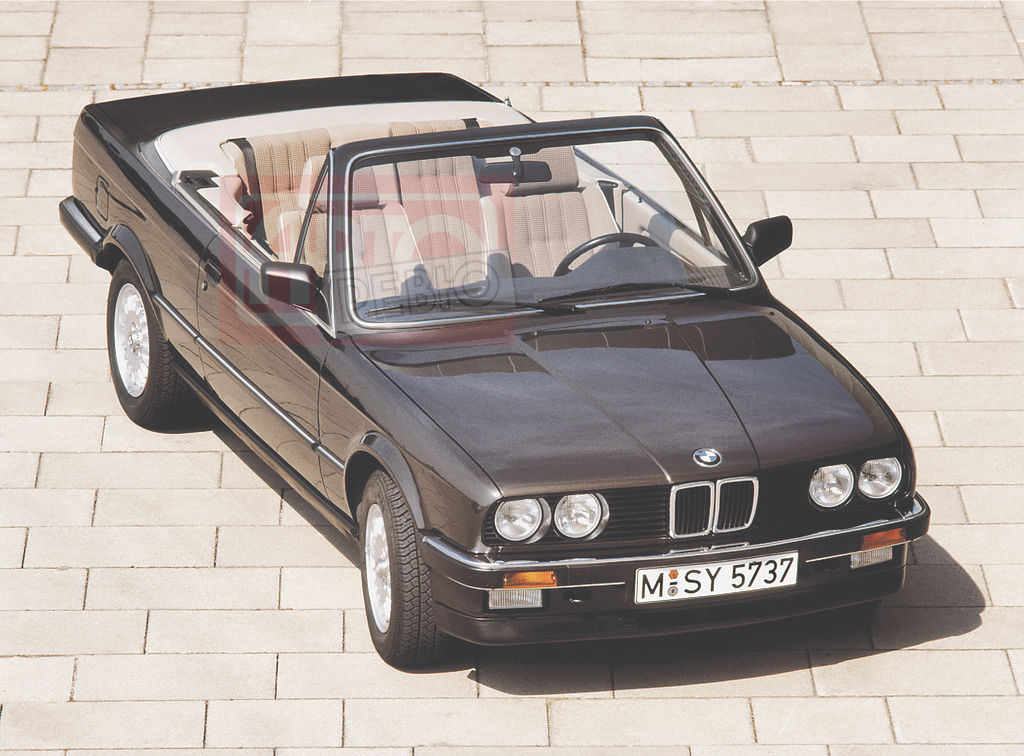 |
| BMW 1600 Cabriolet, 1967—1971 | BMW 3 Series E30 Cabriolet, 1986—1993 |
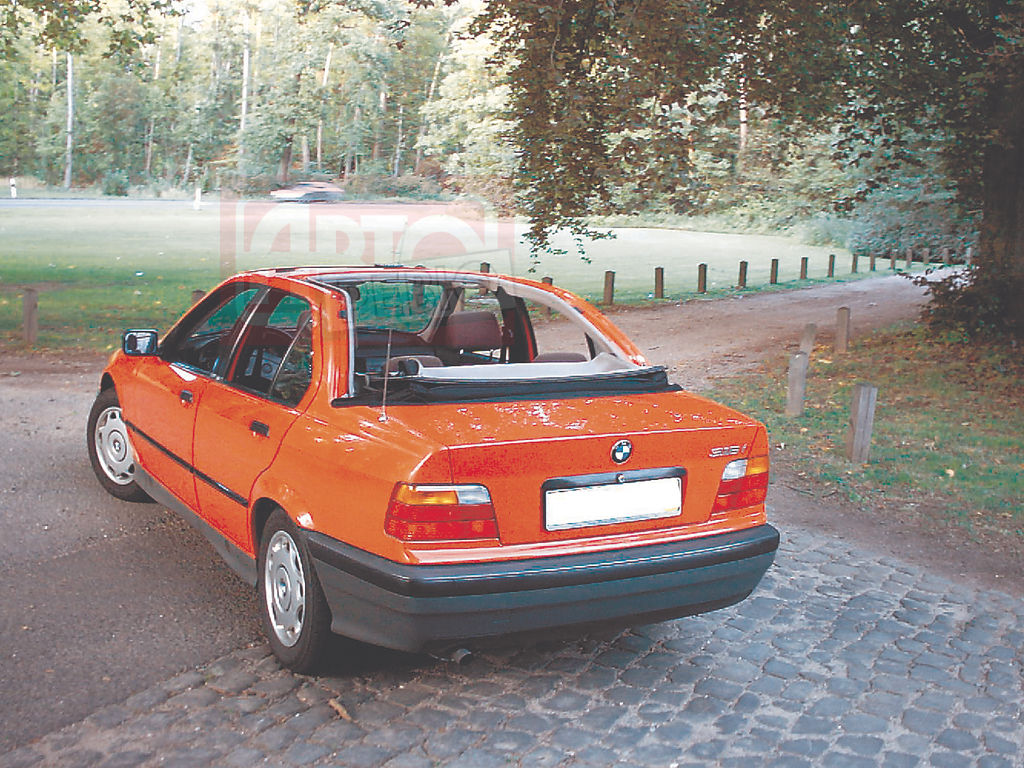 | |
| BMW 2002 Baur Cabriolet, 1971—1975 | BMW 3 Series E36 Baur Topcabriolet (TC4), 1991—1998 |
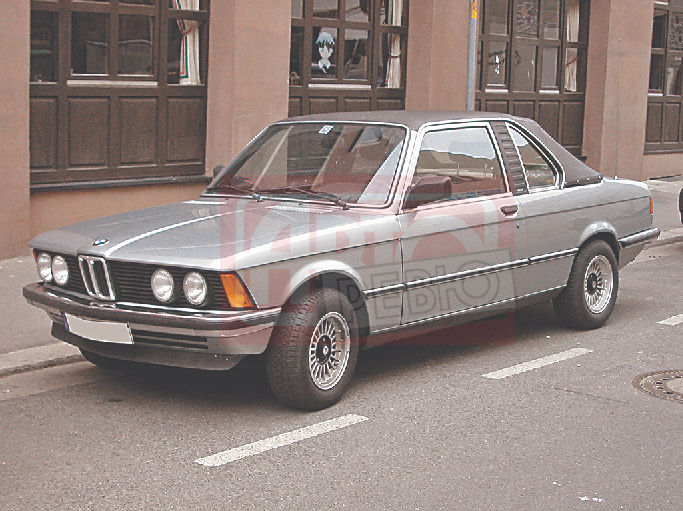 | 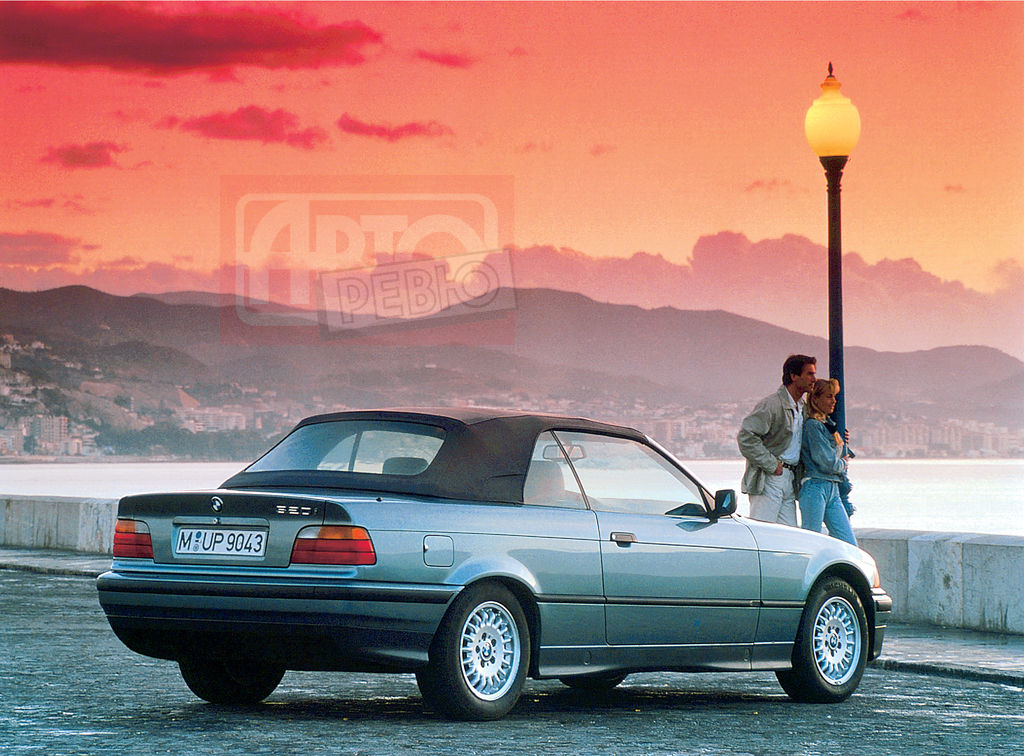 |
| BMW 3 Series E21 Baur Topcabriolet (TC), 1978—1982 | BMW 3 Series E36 Cabriolet, 1994—1998 |
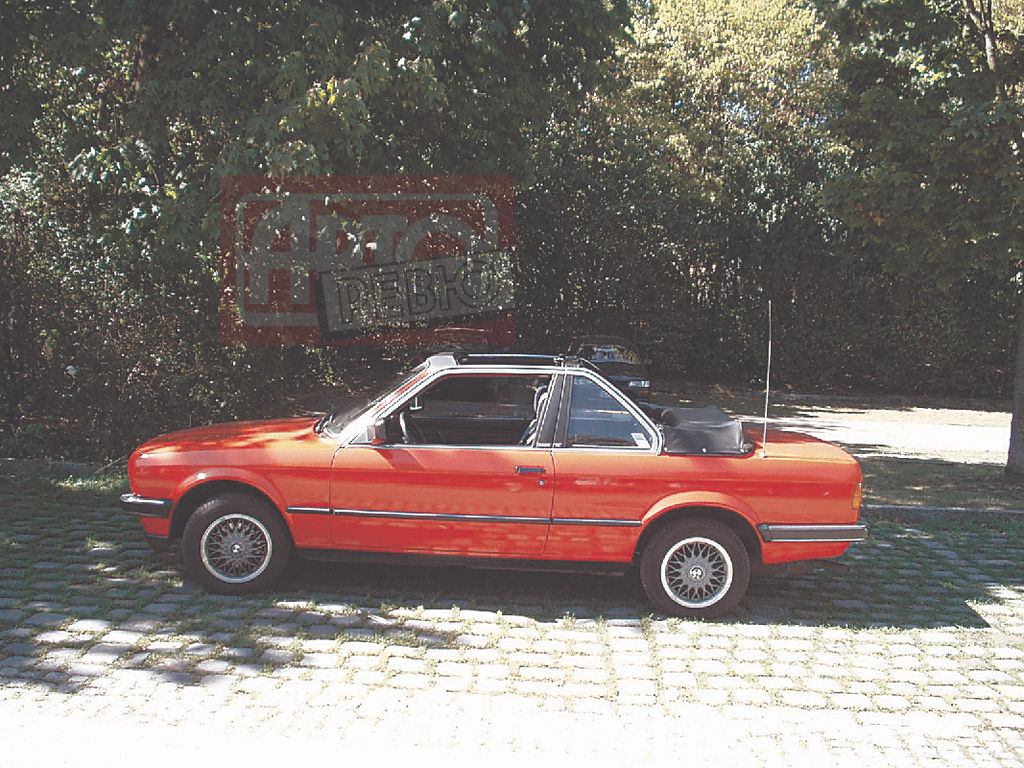 | 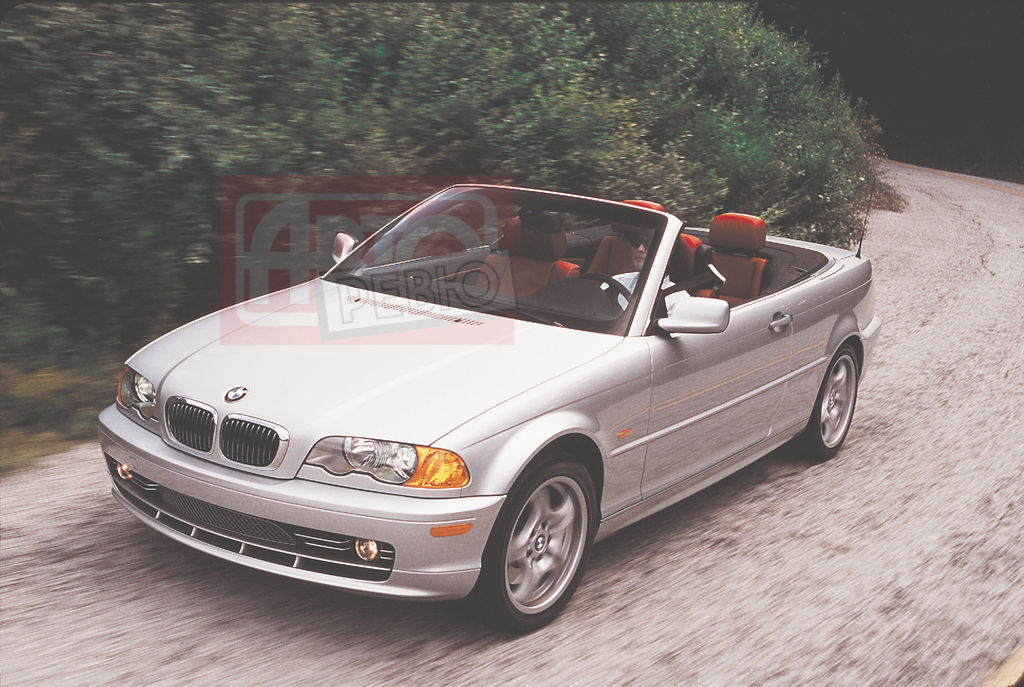 |
| BMW 3 Series E30 Baur Topcabriolet (TC2), 1985—1991 | BMW 3 Series E46 Cabriolet, 2000—2006 |
They were replaced by the "semi-open" version 2002 Baur Cabriolet — part of the roof over the front occupants was closed with a rigid panel, while rear passengers were under a soft folding section. In essence, it was almost a "targa" — if not for the thin roof gutters connecting the windshield frame with the central "arch." Production of the 2002 Baur Cabriolet continued until 1975 — a total of 2,317 cars were assembled.
In July 1975, the third series officially became an independent family — with the appearance of the E21 two-door models. But Baur offered the open Topcabriolet version only in 1978: in the car with middle pillars and door frames, only the roof and rear window folded down. The "semi-cabriolets" Baur TC were sold through official BMW dealers, although it was also possible to order a conversion of an already purchased car. From 1978 to 1982, 4,595 top-cabriolets of the E21 series were built.
In 1982, the E21 generation retired, and its place was taken by the E30 series "threes." Based on them, the company Baur launched production of its own convertible — the Topcabriolet model, known as TC2 — just three years later. Up until 1991, 14,455 such cars were built, with some of them coming off assembly lines in South Africa, Greece, and Jordan.
The real convertible based on the "three" was unveiled at the Frankfurt Motor Show in 1985. It was already a full-fledged open car with a retractable soft top. Baur engineers worked on its design and construction, but it went into production in March 1986 at BMW's own facilities. So from the mid-80s, buyers were offered two different convertibles on E30 underpinnings. However, the scales are incomparable: 142,638 units of the "factory" versions 325i, 320i, and 318i were produced until April 1993 — about ten times more than the Baur convertibles.
In the range of open E30s, by the way, the M3 Cabriolet version also appeared for the first time. Under the hood was an inline four-cylinder 2.3-liter engine producing 195 hp — with it, the car reached 230 km/h. The M version could be distinguished by widened wheel arches and a spoiler mounted under the front bumper. From 1988 to 1991, only 786 such convertibles were made.
The next generation of the "three," the E36, got a convertible only in 1994 — four years after the base sedan appeared. The two-door had its own body panels, and a removable hardtop was offered as an option. By 1998, 196,500 such cars had been built.
As for Baur, by the early 90s, its interests shifted towards bespoke, "exotic" projects. For example, the company made another open car on the E36 sedan platform — its rear part of the roof folded along with the glass. But this enthusiasm didn't go further: now Baur is just a division of the engineering company IVM Automotive.
The previous "three," the E46, appeared in 1998, with the convertible following two years later. This open version was remembered, in particular, for its rollover protection hoops that shot out from the rear headrests in case of a rollover. In 2001, the top modification M3 Cabriolet with a 343-hp engine was released. And since the year before last, turbodiesels with volumes of 2.0 liters (150 hp) and 3.0 liters (204 hp) became available for convertibles. Production of the open E46 ended in 2006. Along with them, as it turned out, the era of soft tops for BMW "threes" went into history…
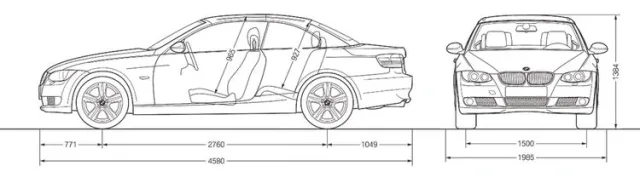
| Specifications | |||||
| Parameters | Vehicle | ||||
| BMW 3 Series | |||||
| Modification | 320i | 325i | 330i | 335i | 330d |
| Body type | convertible | convertible | convertible | convertible | convertible |
| Number of seats | 4 | 4 | 4 | 4 | 4 |
| Trunk volume, l | 350/210* | 350/210* | 350/210* | 350/210* | 350/210* |
| Curb weight, kg | 1670 (1700)** | 1730 (1760) | 1780 (1795) | 1810 (1825) | 1825 (1840) |
| Gross weight, kg | 2025 (2055) | 2085 (2115) | 2135 (2150) | 2165 (2180) | 2180 (2195) |
| Drag coefficient Cd | 0.28 | 0.29 | 0.29 | 0.31 | 0.29 |
| Engine | gasoline, direct fuel injection | gasoline, multi-point fuel injection | gasoline, direct fuel injection | gasoline, direct fuel injection with turbocharging | diesel, turbocharged |
| Layout | front, longitudinal | front, longitudinal | front, longitudinal | front, longitudinal | front, longitudinal |
| Number and arrangement of cylinders | 4, in-line | 6, in-line | 6, in-line | 6, in-line | 6, in-line |
| Displacement, cc | 1995 | 2497 | 2996 | 2979 | 2993 |
| Compression ratio | 12.0:1 | 11.0:1 | 12.0:1 | 10.2:1 | 17.0:1 |
| Number of valves | 16 | 24 | 24 | 24 | 24 |
| Max power, hp/kW/rpm | 170/125/6700 | 218/160/6500 | 272/200/6700 | 306/225/5800 | 231/170/4000 |
| Max torque, Nm/rpm | 210/4250 | 250/2750—4000 | 320/2750—3000 | 400/1300—5000 | 500/1750—3000 |
| Gearbox | manual, 6-speed (automatic, 6-speed) | ||||
| Drive | rear-wheel drive | rear-wheel drive | rear-wheel drive | rear-wheel drive | rear-wheel drive |
| Front suspension | independent, coil spring, McPherson | ||||
| Rear suspension | independent, coil spring, multi-link | ||||
| Front brakes | disc, ventilated | disc, ventilated | disc, ventilated | disc, ventilated | disc, ventilated |
| Rear brakes | disc, ventilated | disc, ventilated | disc, ventilated | disc, ventilated | disc, ventilated |
| Tires | 225/45 R17 | 225/45 R17 | 225/45 R17 | front 225/45 R17, rear 255/40 R17 | 225/45 R17 |
| Maximum speed, km/h | 228 (226) | 242 (240) | 250 (250)*** | 250 (250)*** | 245 (243) |
| Acceleration time 0—100 km/h, s | 9.1 (9.8) | 7.8 (8.4) | 6.7 (6.9) | 5.8 (6.0) | 7.1 (7.3) |
| Fuel consumption, l/100 km | |||||
| urban cycle | 9.0 (9.1) | 12.8 (13.3) | 11.1 (11.0) | 14.9 (14.4) | 9.3 (10.0) |
| extra-urban cycle | 5.2 (5.3) | 6.6 (6.8) | 6.3 (6.7) | 7.0 (7.3) | 5.3 (5.9) |
| Fuel tank capacity, l | 63 | 63 | 63 | 63 | 61 |
| Fuel | AI-91—98 | AI-91—98 | AI-91—98 | AI-95—98 | diesel |
| * With folded roof | |||||
| ** Data in parentheses — for vehicles with automatic transmissions | |||||
| *** Electronically limited | |||||