I find myself behind the wheel of the BMW 1 Series coupe just as, in distant Tokyo, the covers are being pulled off the bourgeoisified Mitsubishi Evo, packed with Nissan GT-R technologies and the five-door Impreza STI. I get into the BMW and demand retribution. For adaptive suspensions, robotic gearboxes, and intelligent transmissions. For that purity of contact between driver and car that we lost in the course of evolution and for which old BMWs were so famous. Has their spirit truly been reborn in the guise of the 1 Series coupe — and will it become my instrument of revenge?
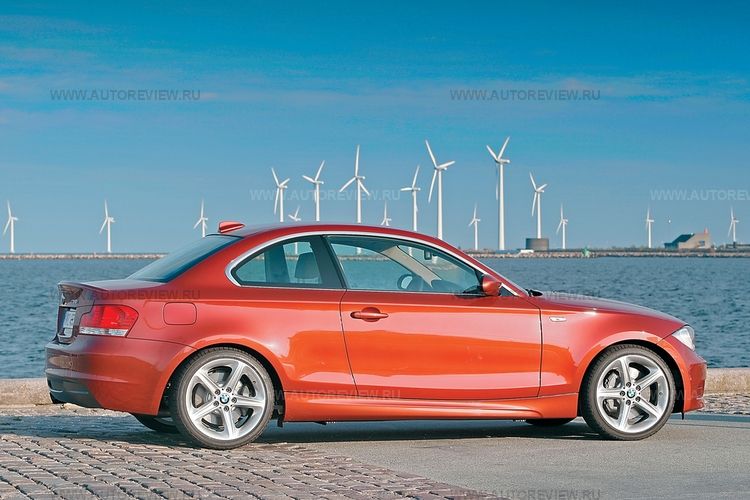
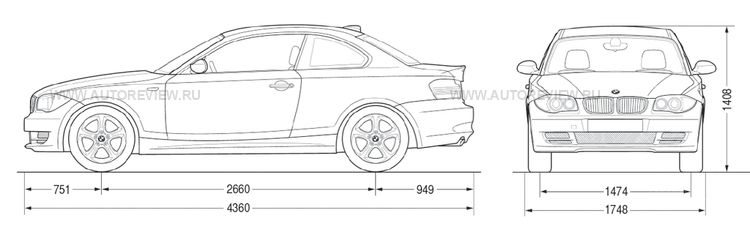
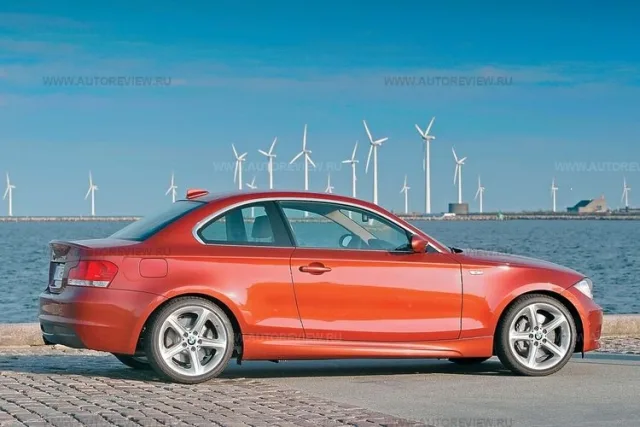
I couldn't avoid the topic of design, but they immediately positioned me sideways to the car. Not worth it: this magnificent three-box silhouette has been around for twenty years; I grew up on it. And the front is familiar: the coupe is a one-to-one replica of the "one series." But the rear bothers me...
That's wonderful, they assure me: when something bothers you, you show interest. No, I reply, when something bothers me, I lose interest. But that, the people from BMW counter, depends on the percentage of bother. And what, I ask, is the maximum percentage of bother before the customer walks away?
We had a laugh.
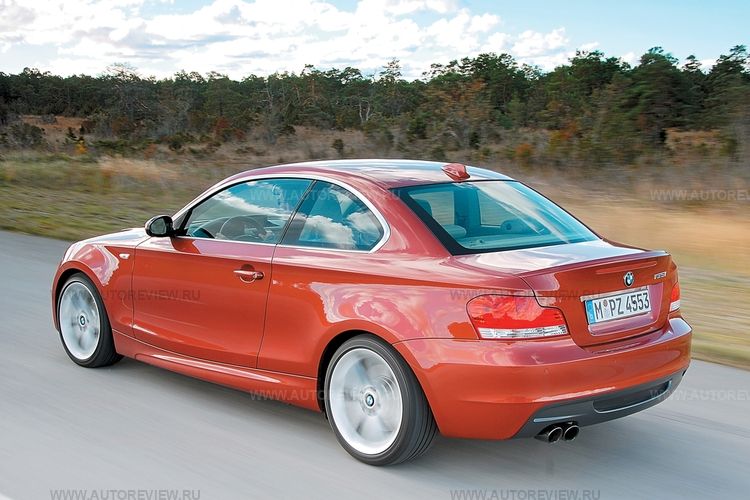
Actually, what bothers me is a specific line — the side edge of the rear light. This curve, broken in two places, looks contrived, as if it were originally an angle that was painstakingly smoothed out for the sake of technologists and homologation specialists. And so it was: the corner of the light was bent this way and that, the designers admit, until they found a compromise.
But you can't reproduce such a line on a napkin — it's not memorable, it doesn't play. It's clear that composing the rear of a small coupe is generally difficult: the rear lights here don't extend onto the trunk lid, as on the 3 Series coupe, and they limit the opening. With less width than the "three" and greater height, the artists needed to visually stretch the rear horizontally — hence the L-shaped lights and numerous stampings. But they failed to bring it all into a perfectly harmonious image. And then there are the Americans with their requirements for the area of side reflectors... After all, the coupe will be the first "one series" to cross the ocean.
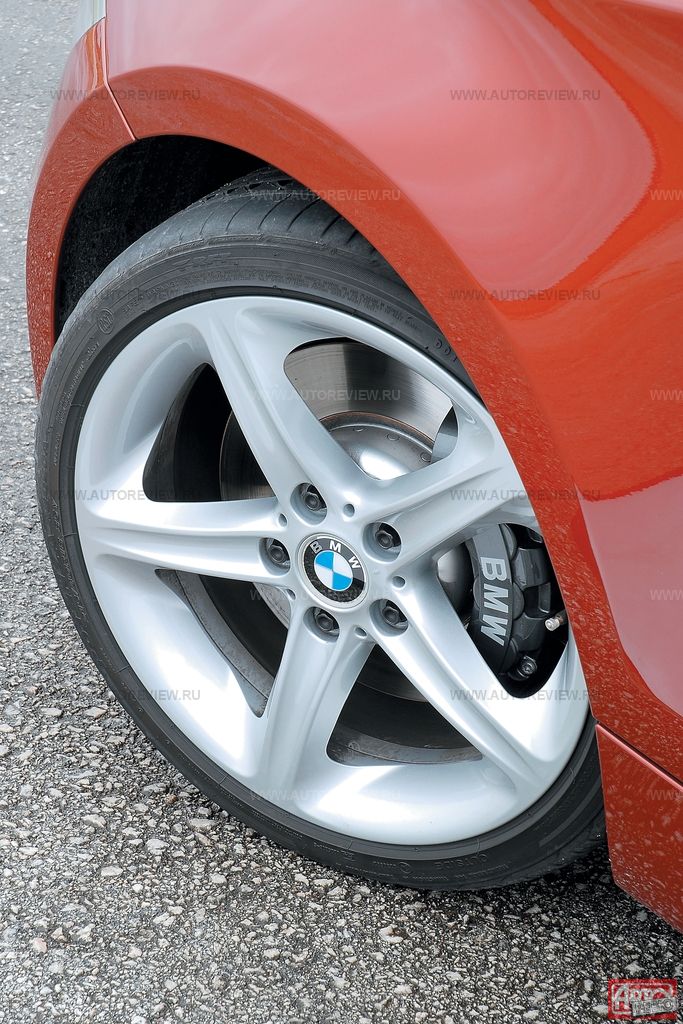 | |
| BMW logos are applied to Brembo brake mechanisms with six-piston front calipers developed specifically for the BMW 135i. These brakes are even more powerful than those fitted to the turbocharged BMW 335i coupe | In the sketches, the small coupe features more laconic, clear lines, while the real car makes you want to tweak something |
Oh, just don't talk about America now — don't anger the spirit of the old E30 3 Series from the mid-80s! But no: the 1 Series coupe was developed from the very start with an eye on the States. Moreover, the Germans never admitted what exactly pushed them more to create the three-box "one series" — the empty European niche or the new American fashion for small cars?
Frankly, these are not the words I expected from the creators of the two-door "one series." After all, the very idea takes your breath away: a light and rigid three-box body, powerful engines — what is this, if not the heir to the BMW M3 E30? And the road-going "M" of the 80s never dreamed of the 306 horsepower that the three-liter inline-six with twin turbocharging produces in the BMW 135i!
But the genealogical excursion during the presentation begins with the BMW 2002tii and ends with it as well, because it's the most hyped BMW "classic" in the States. And the Germans' main emphasis is on reducing CO₂ emissions and fuel consumption. And they address the coupe not to those who admired the battles of European "bodies" in the late 80s, but to those ready to consume a modern dish from the American barbecue with a lean side of "EfficientDynamics."
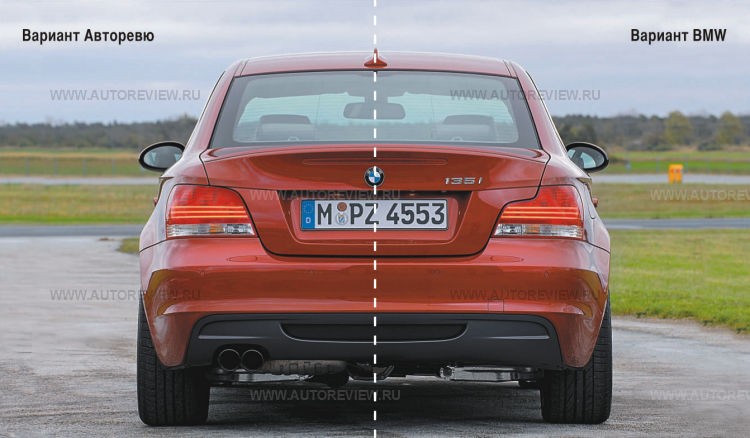
After sorting through many options, we concluded that the rear could only be made more harmonious at the cost of reducing the trunk opening, and that's beyond the designers' competence. And yet: which half do you like better? On the right is the production BMW version, on the left is our artists' version
But what do we Russians care about "EfficientDynamics"? Cars with the start-stop system that kills the engine at traffic lights are not delivered to us, our BMWs don't accumulate electricity during braking to release it during acceleration, and engines don't run on lean mixtures. And in general, I am a child of the Cold War: I drew anti-militarist posters and Uncle Sam in patched striped tights. So the very thought that the most "authentic" of all today's BMWs was created to expand presence in the US market turns my stomach! I want the 1 Series coupe to open a time portal for me: to where BMW cars existed for one thing alone — driving pleasure.
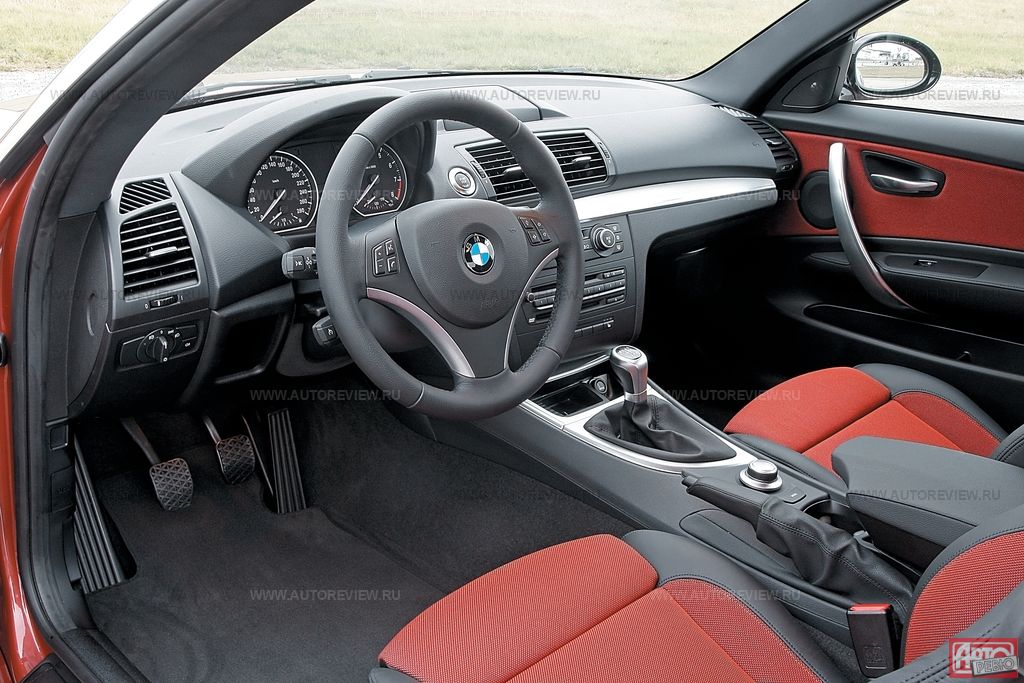 | 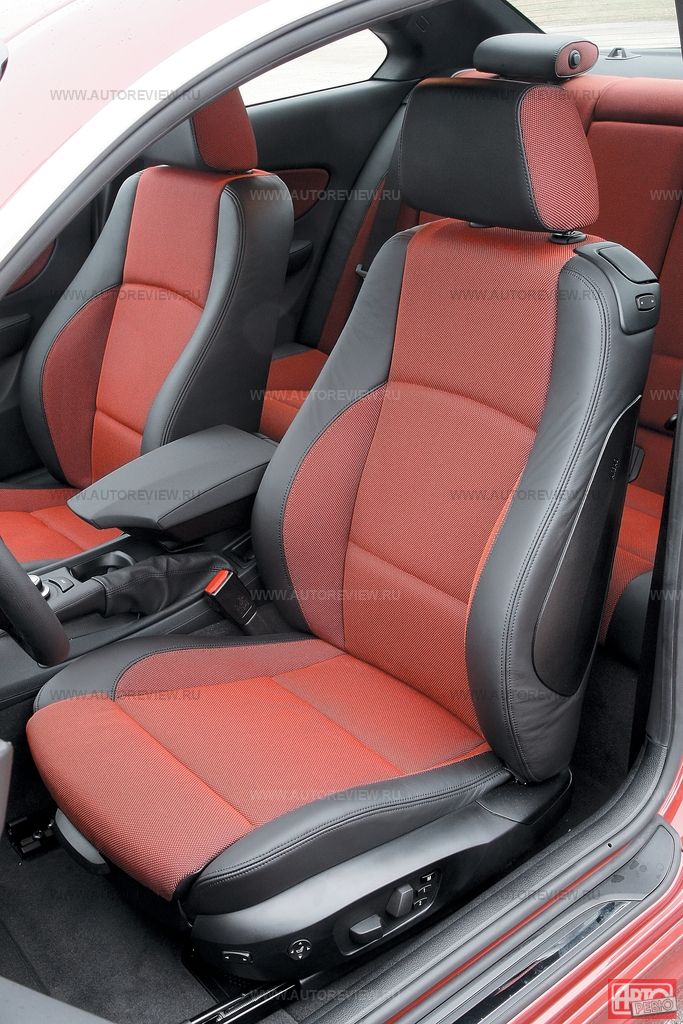 | 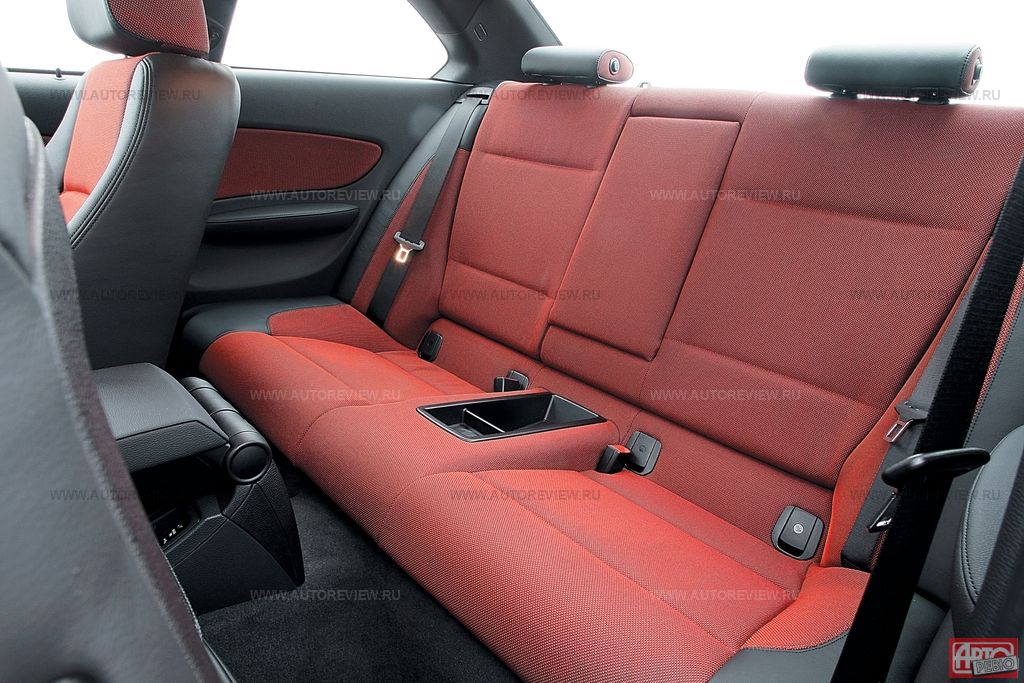 |
| The interior of the coupe is identical to the hatchback | The front seats of the top version have enough lateral support, but the backrest profile is not optimal | Rear passengers find it hard to get to their seats, but there's enough legroom even behind a tall driver |
But the coupe not only remained a "one series," noisy and vibration-laden, but also gained some non-European fat. It lubricates all the car's reactions. It's in the soft responses to the steering, in the deliberately safe handling with a tendency to understeer, in the algorithms of the protective electronics. The voice of the twin-turbo engine is muted: a bourgeois baritone at low speeds and a quiet, thoroughbred growl at the top end. Yes, the dynamics of the 306-horsepower engine are captivating, and its colossal torque range is impressive, but all the most interesting things — the precious moments of balance at the limit of tire grip — are in the mid-range zone. It's the surge of torque "in the middle" that breaks the rear wheels into a slide. But with such "torque-based" driving, you need not precise accelerator pedal work, but a well-tuned "automatic." And it, of course, will be there — exactly like the one in the BMW 5 Series after the facelift.
There will also be a BMW 123d with a new four-cylinder twin-turbo diesel with a displacement of 1995 cm3. This all-aluminum engine is more powerful than the "four" fitted to the BMW 120d: 204 hp and 400 Nm — the same torque as the six-cylinder turbo engine of the top 135i version! However, this super-diesel, sensitive to fuel quality, will not be supplied to Russia. The base modification here is the BMW 120d.
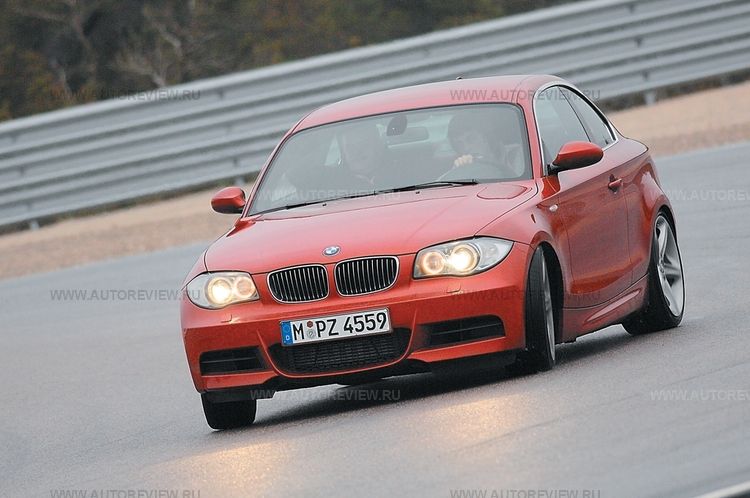
On wet surfaces, the understeer phase of the "one series" is especially prolonged, and the break into oversteer is very abrupt. But under power, even with the stability system off, the "smart" electronics beautifully simulate a differential lock, allowing even with such a short wheelbase to maintain the drift angle — a new word in BMW active safety
However, next spring we'll get the petrol modification BMW 125i — with a lighter six-cylinder naturally aspirated engine. I think this could be in some ways an even more interesting car than the 306-horsepower top version. I want to believe that the atmospheric engine will bring back the "sense of revs" and add character to the car. Moreover, the three-liter turbo engine was installed here along with the transmission from the BMW 335i — and compared to the four-cylinder version, the BMW 135i has 45 kg more hanging over the nose. The Germans admit: a perfect 50:50 weight distribution isn't achieved. The atmospheric version will be better balanced.
It's no coincidence, by the way, that the hood of the Tokyo concept car BMW 1 Series tii is made of carbon fiber. And in general, what does this concept car signify? Since the M GmbH division has nothing to do with it, does that mean Tokyo showed just a set of accessories — a lure for tuning-hungry Japanese and Americans? Or will we still see a BMW M1?
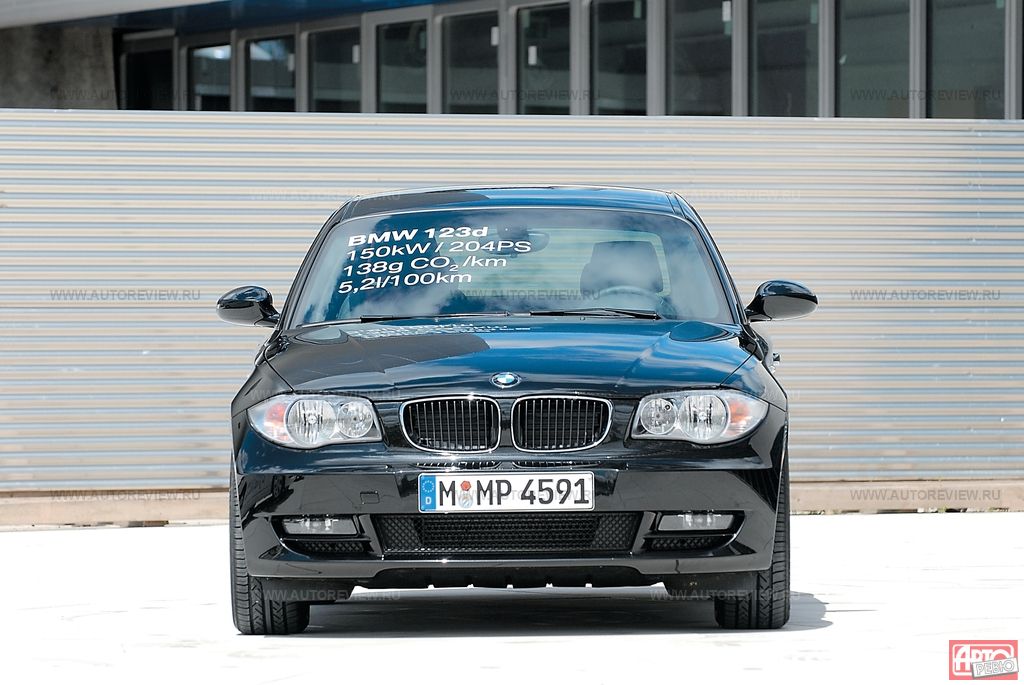 | |
| If the top model BMW 135i immediately gets the so-called M package — with a wide front air intake, body kit, and stiff suspension — the less powerful versions (pictured) are 15 mm higher and look less aggressive. For them, the M package is an option. By the way, even in Russia, the stylish coupe should be only 3-4% more expensive than the hatchback with the same engine | The BMW 1 Series tii concept car: a harbinger of a small "M" or a set of tuning accessories for boy racers? |
BMW employees prefer not to comment officially on the topic, although in private conversations they hint that it is not so difficult to bring liveliness back to the "American" "one-series". There is a basis for this: the coupe chassis is initially tuned stiffer due to the ground clearance reduced by 15 mm, the shock absorbers are more compressed, and the internal bump stops are recalibrated. However, during final handling refinement, the engineers resorted to a trick: the rear anti-roll bar was replaced with a thinner one, and wider tires were deliberately fitted at the rear than at the front—to remove excessive turn-in and make the car's character calmer.
It turns out that the ideal first-series coupe is the version with a naturally aspirated engine, narrower tires, a stiff rear anti-roll bar, and definitely brakes from the turbocharged modification. The Bavarians claim that the brake mechanisms, which Brembo developed specifically for the BMW 135i, work even more effectively than those on the BMW 335i.
If I had such a car, I would, without hesitation, strip it down to bare metal, try to reduce the weight from one and a half tons to about 1300 kilograms, weld in a roll cage—and head straight to the Nürburgring Nordschleife. There, among countless venerable "threes", the younger generation would receive a respectful nod from me. So that the past and present merge into one for a long eight and a half minutes. Alas, all this remains just a dream. The space-time continuum is not disrupted, and instead of the Nürburgring, I am at the Swedish Gotland Ring, trying to fit a plump top model, which in Germany costs from 39 thousand euros, into another corner…
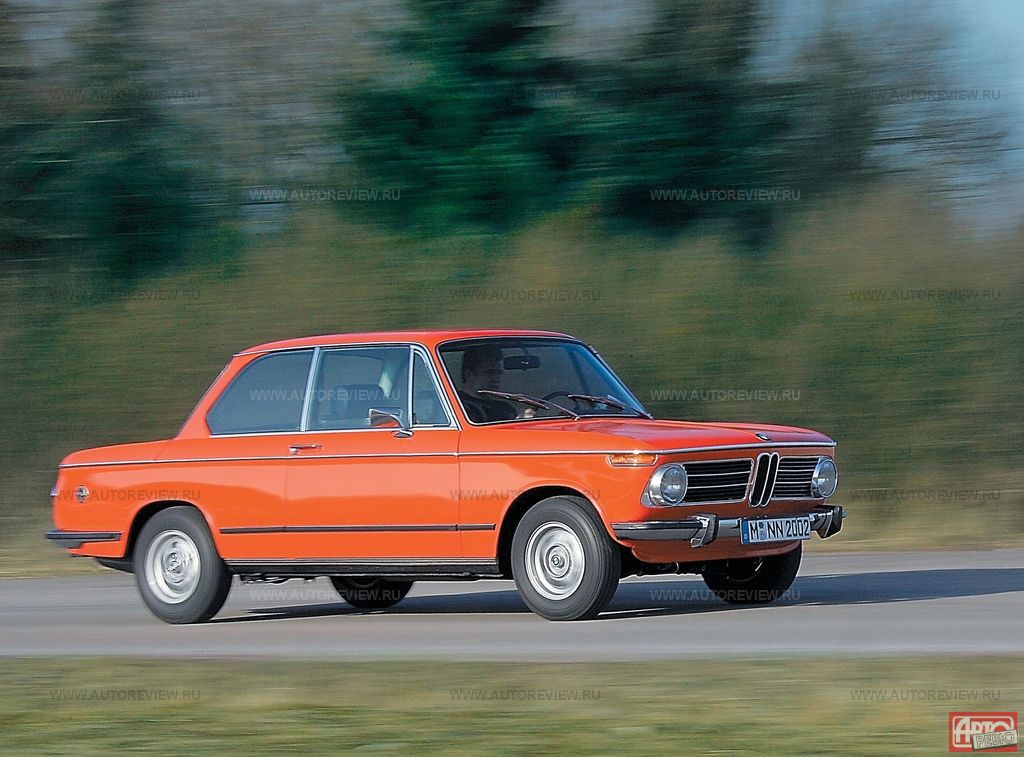 | 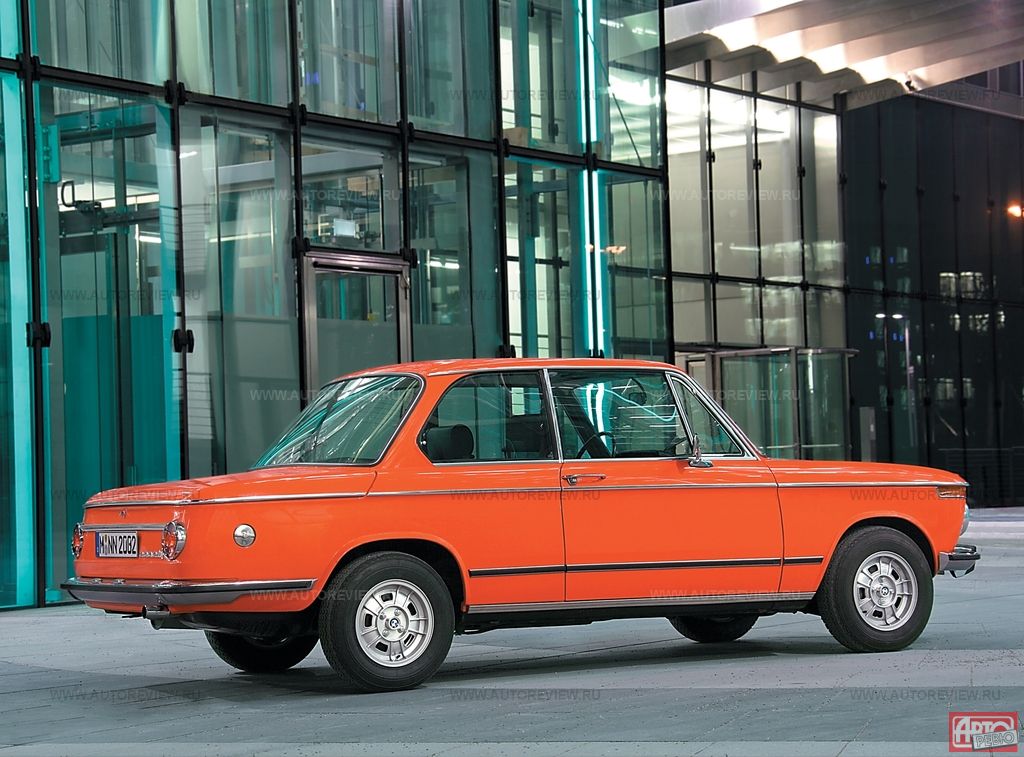 | 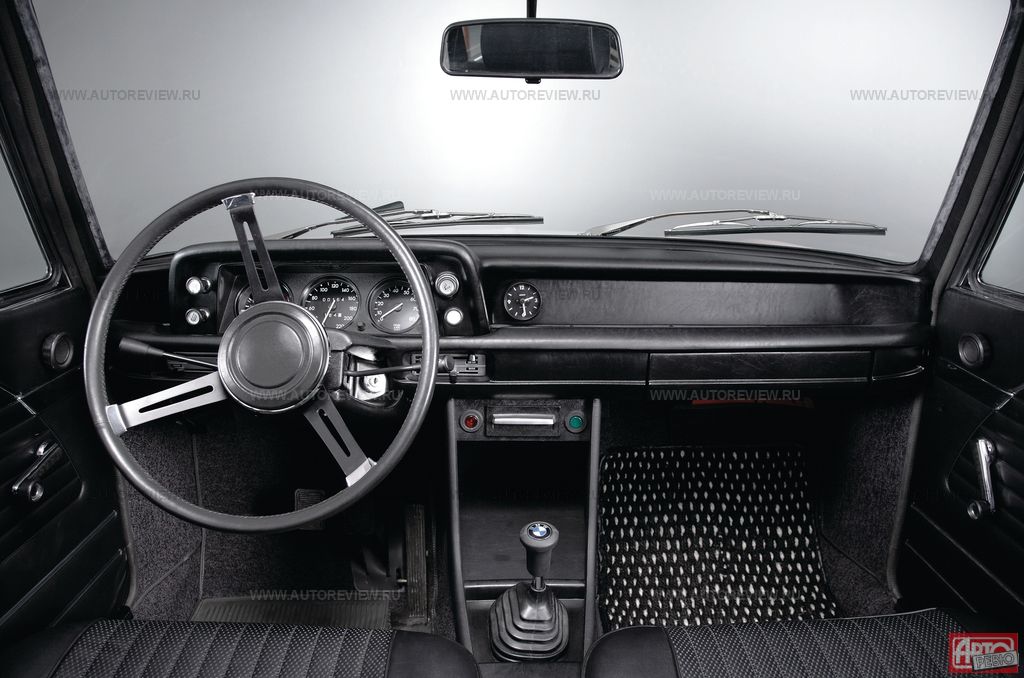 |
| The Bavarians officially designated the 130-horsepower BMW 2002tii from the early 70s (0-100 km/h in 9.3 seconds, top speed 190 km/h) as the ancestor of the first-series coupe—a true hero of American fan clubs. But with equal success, later E30-series "threes", comparable in size to the "one", could have been recorded as progenitors. The car in the photo, from 1973, was restored by BMW Mobile Tradition craftsmen in a special "glass workshop" right in front of visitors to the BMW Museum Exhibition. | ||
By the way, the Gotland Ring, located on the island of the same name, is three kilometers of pure shame. Shame that in our country it is unlikely there is a cement plant that would agree to give up a spent quarry for a race track. But the Swedes not only leased 200 hectares of land to an obsessed Finn with a tight wallet, but also provided all the necessary building materials—so that one of the most grandiose motorsport facilities on the planet could come into being. The three-kilometer track with a 25-meter elevation change should grow to seven kilometers within a year, and in the future—even up to 28 kilometers. That's longer than the Nürburgring! It will be possible to hold six separate races simultaneously. Plans also include a karting track, a rally special stage being designed under the patronage of Marcus Grönholm, hotels, a theme park, and an airfield… However, the Gotland Ring, hidden in the coastal forests, is oriented not so much toward sport as toward presentations and corporate events. Factory testers, tire companies, and racing teams needing a place for training and fine-tuning their equipment are expected here… And the person who started all this personally hands out brochures to journalists and with burning eyes talks about his grandiose plans.
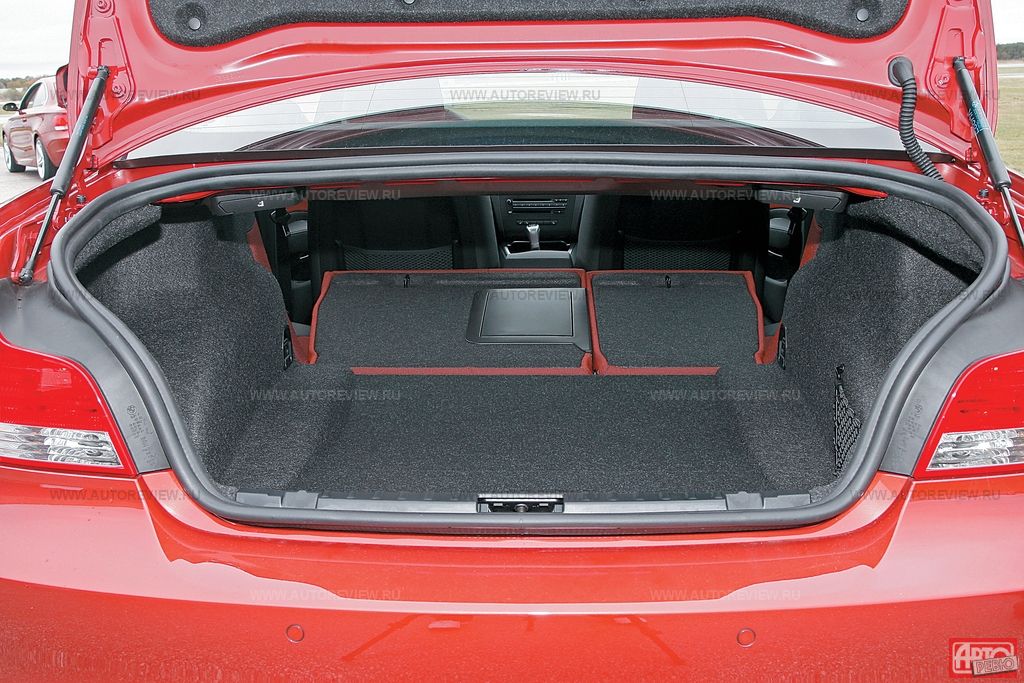 | 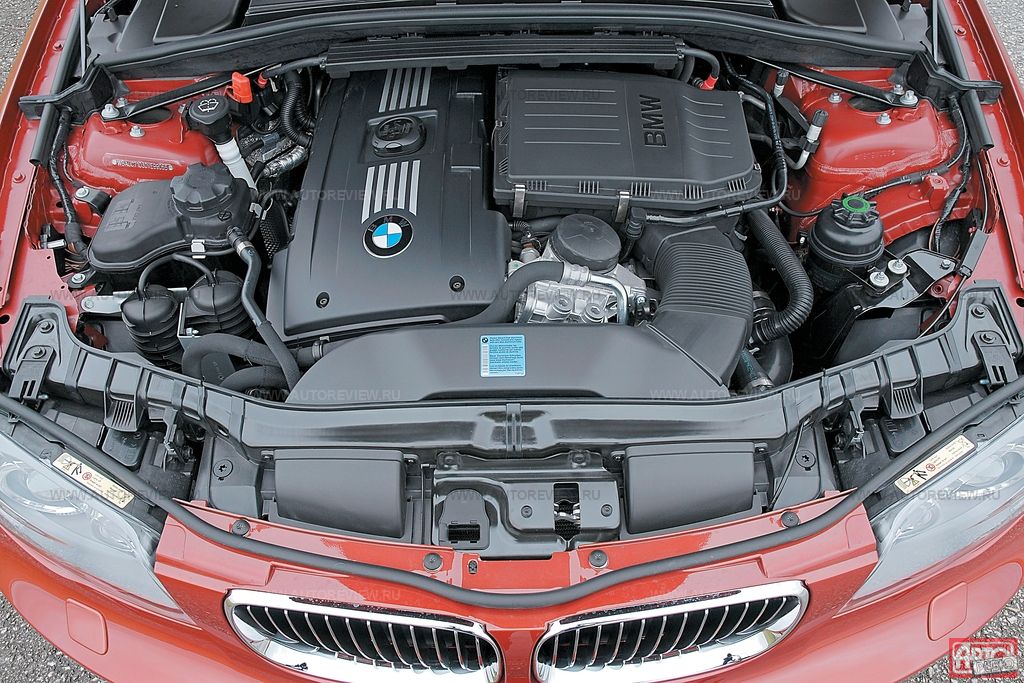 |
| The coupe's trunk is small—370 liters, and the opening is fitted between the rear lights. However, the seat backs fold down individually or together, forming an almost flat floor. Very convenient! | According to the manufacturer, the three-liter "bi-turbo six" accelerates the one-and-a-half-ton coupe to 100 km/h in 5.3 seconds, and to believe this, it is not at all necessary to rev the engine to the redline. The engine wins over with its mid-range torque—you couldn't ask for a better partner for the "automatic". |
It seems that it is precisely this fire in the eyes that the Bavarians lacked when creating the new coupe. The necessary dose of restraint and modesty in the car's character is there. But obsession—clearly in short supply.
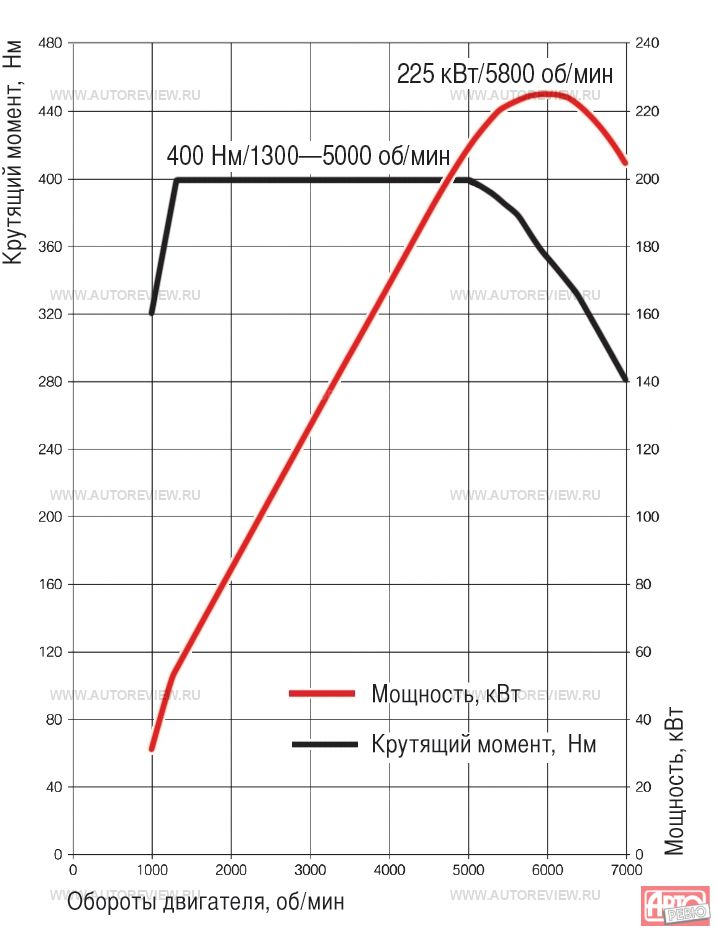 |
| External speed characteristics |
| Specifications | |
| Parameters | Vehicle |
| BMW 135i | |
| Body type | 2-door coupe |
| Number of seats | 4 |
| Trunk volume, l | 370 |
| Curb weight, kg | 1485 |
| Gross weight, kg | 1925 |
| Engine | petrol, with direct injection and turbocharging |
| Location | front, longitudinal |
| Number and arrangement of cylinders | 6, in-line |
| Displacement, cm³ | 2979 |
| Cylinder bore/piston stroke, mm | 84.0/89.9 |
| Compression ratio | 10.2:1 |
| Number of valves | 24 |
| Max power, hp/kW/rpm | 306/225/5800 |
| Max torque, Nm/rpm | 400/1300—5000 |
| Gearbox | manual, 6-speed |
| Drive | rear |
| Front suspension | independent, coil spring, McPherson |
| Rear suspension | independent, coil spring, multi-link |
| Brakes | disc, ventilated |
| Front tires | 215/40 R18 |
| Rear tires | 245/35 R18 |
| Top speed, km/h | 250 |
| Acceleration 0—100 km/h, s | 5.3 |
| Fuel consumption, l/100 km | |
| urban cycle | 13.0 |
| extra-urban cycle | 7.0 |
| combined cycle | 9.2 |
| Fuel tank capacity, l | 53 |
| Fuel | petrol AI-95—98 |