
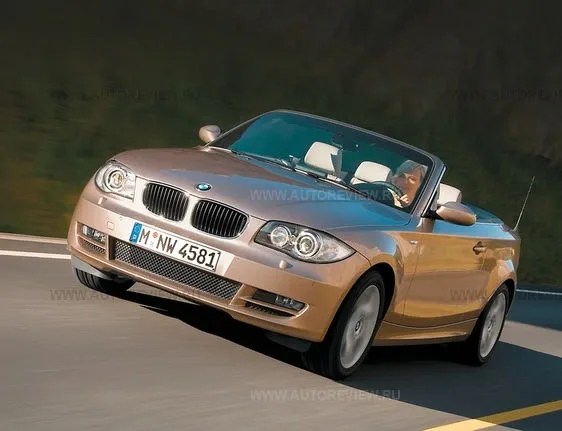
The BMW 125i Convertible is a case where the brand stays true to itself: soft top, rear-wheel drive, naturally aspirated engine, and perfect weight distribution. However, instead of keys, I was handed a scarf, a hat, and gloves — in Valencia, the thermometer showed only four degrees above zero. As they say, "this is not Rio de Janeiro." In California, for which this open-top "one" was conceived, it must be considerably warmer now...
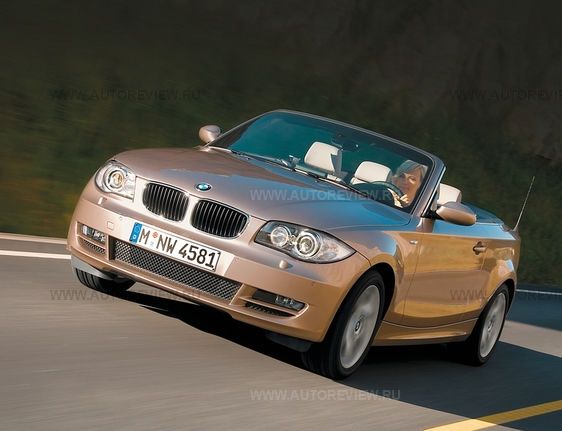
Automotive giants owe much to the American market. Especially those that produce convertibles and sports coupes. Without overseas demand, many "leisure" models would hardly have seen the light of day. The two-door BMW 1 Series is also a child of American love for compact but "thoroughbred" cars. The Bavarians cannot ignore the tastes of the public that buys more than a quarter of all cars with the blue-and-white propeller. The coupe was aimed at young men, and the convertible at their companions. Blondes, perhaps?
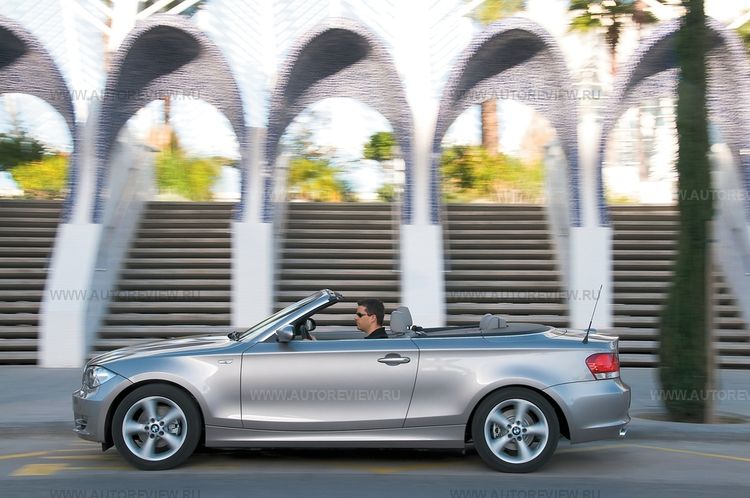
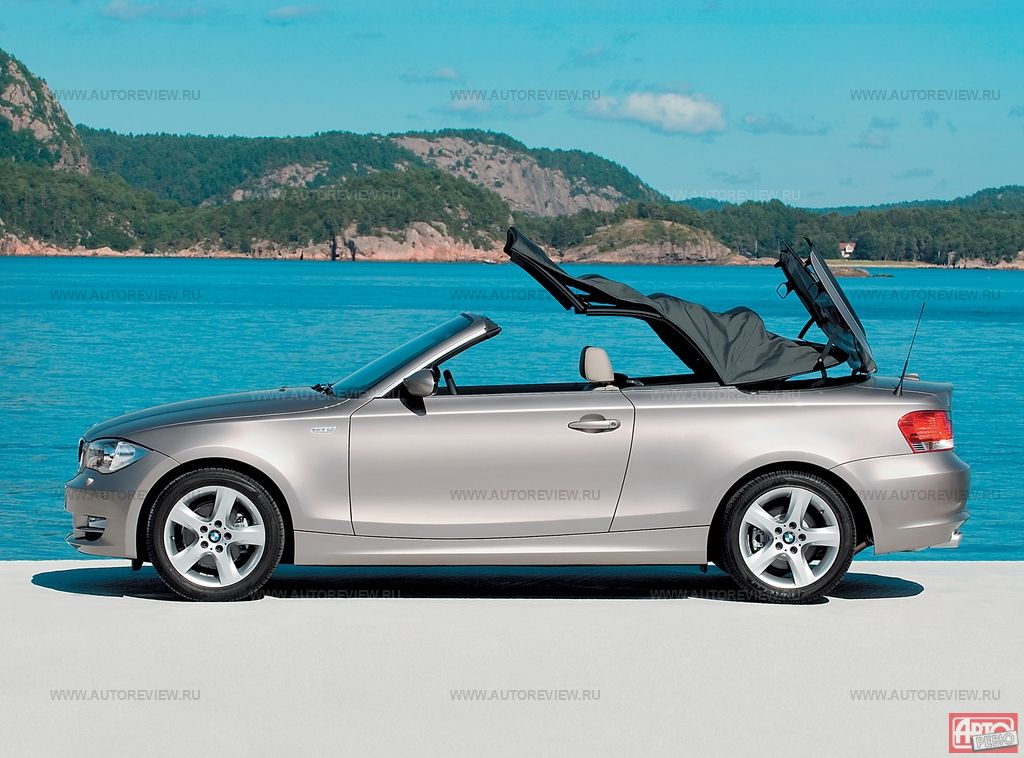
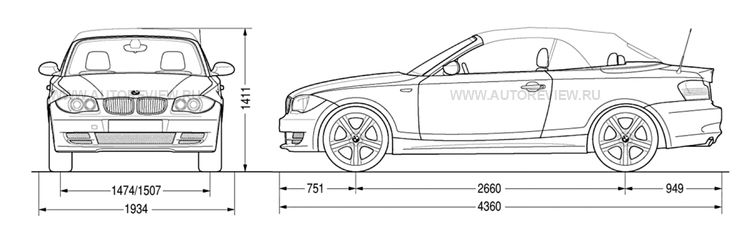
The profile of the roofless "one" looks classic
Although, I think, not only they will appreciate the elegant proportions. Finally, the long hood of the "one" has found a worthy continuation in the form of an elongated "box" of the cabin. Even the intricate lines and stampings on the rear, inherited from the coupe, do not bother — as if under the fabric top there is a place hidden for a hard roof. But the roof is still soft, and, alas, when raised, it noticeably spoils the silhouette. True, you can order it "with lurex": silver threads are woven into the three-layer material, which shimmer in the sun no worse than rhinestones on a fashionable blouse.
Four degrees of warmth is not the most suitable weather for a convertible. The electro-hydraulics in 22 seconds removes the three-layer "cape" — and I find myself in a warm and cozy cabin. Everything is familiar, everything is habitual — for the driver, there are almost no differences from the hatchback. Except that the seat is suspiciously soft, not in a German way. But rear passengers will feel the difference immediately. The niche for the folded top takes away a quarter of a meter from them in the shoulders, and there is also less space for legs — at my height of 176 cm, I barely fit "behind myself."
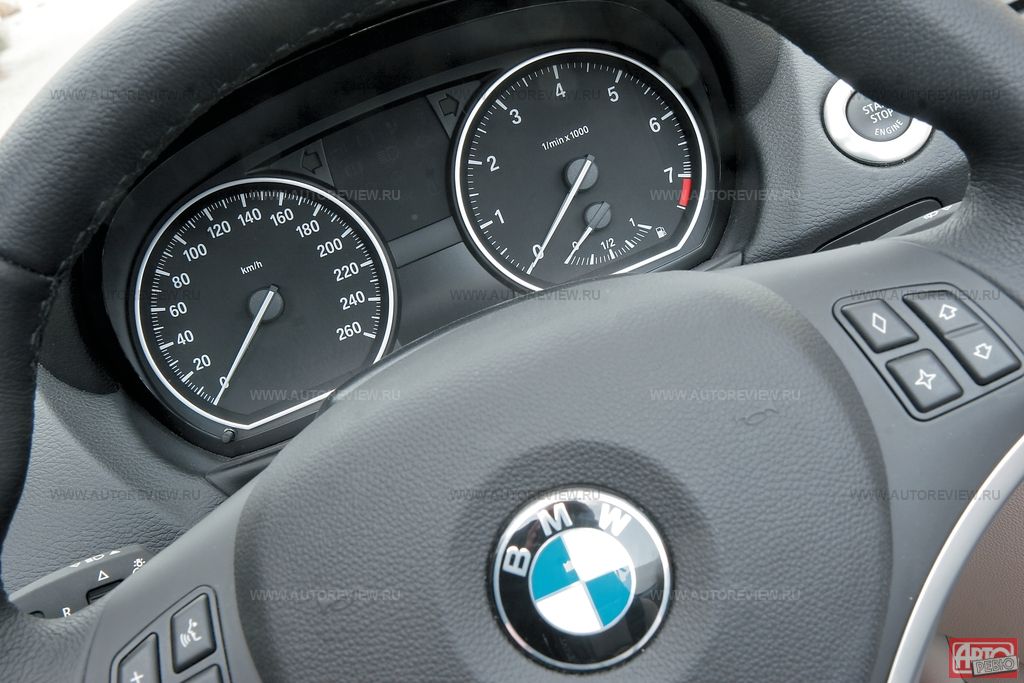 | 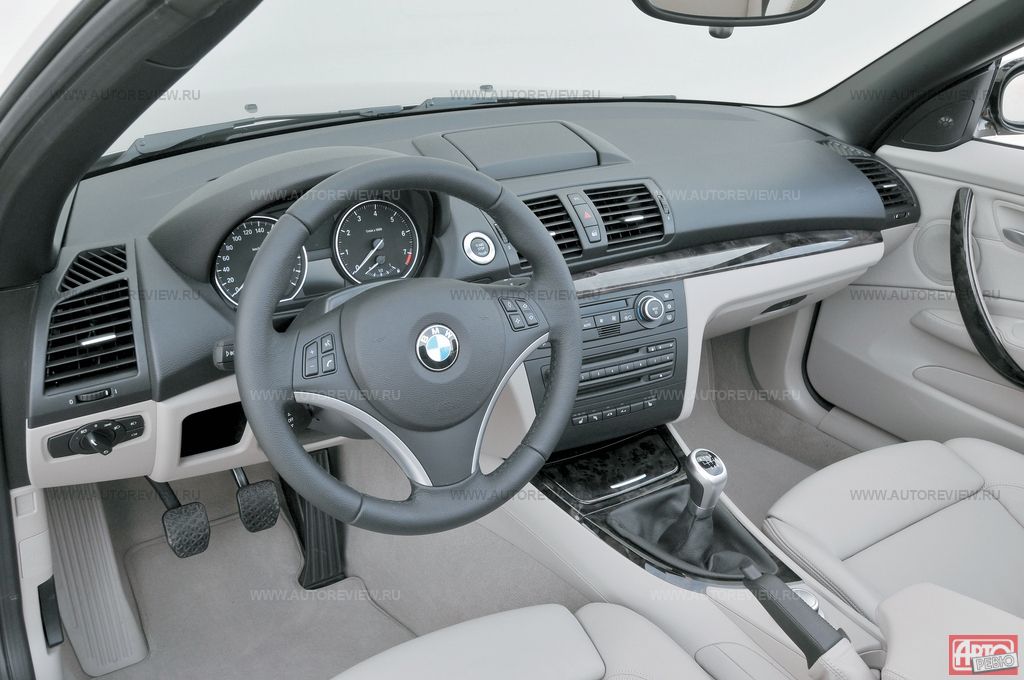 | 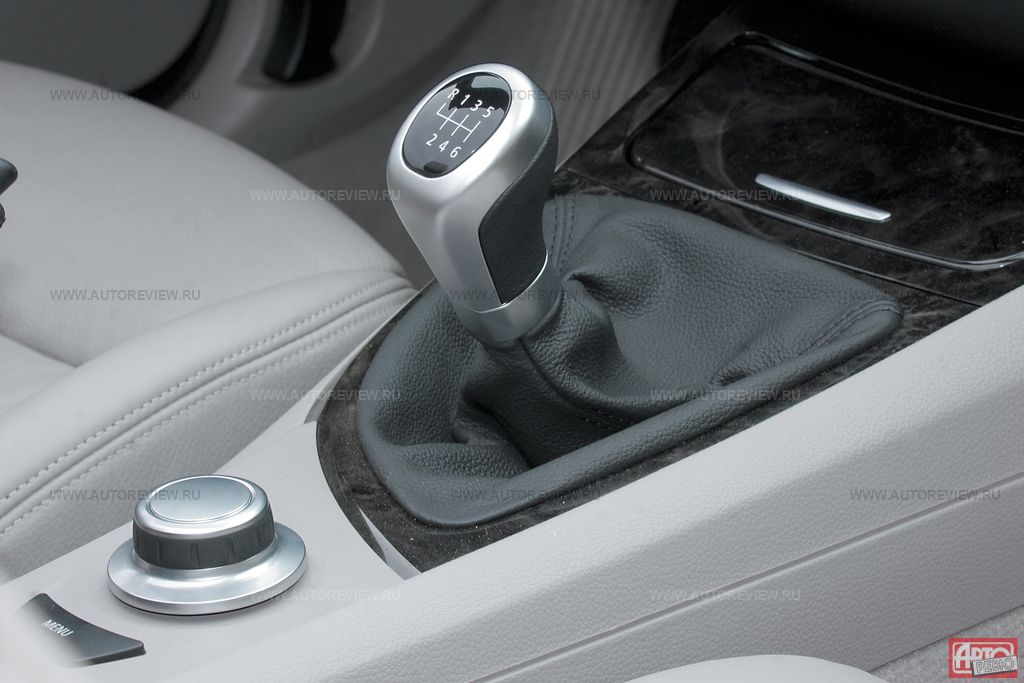 |
| BMW instrument panel: instead of the usual econometer — hints from the onboard computer | Inside — the same techno-world as in the coupe and hatchback | The Bavarian "manual" shifts easily and effortlessly — you click through gears like nuts |
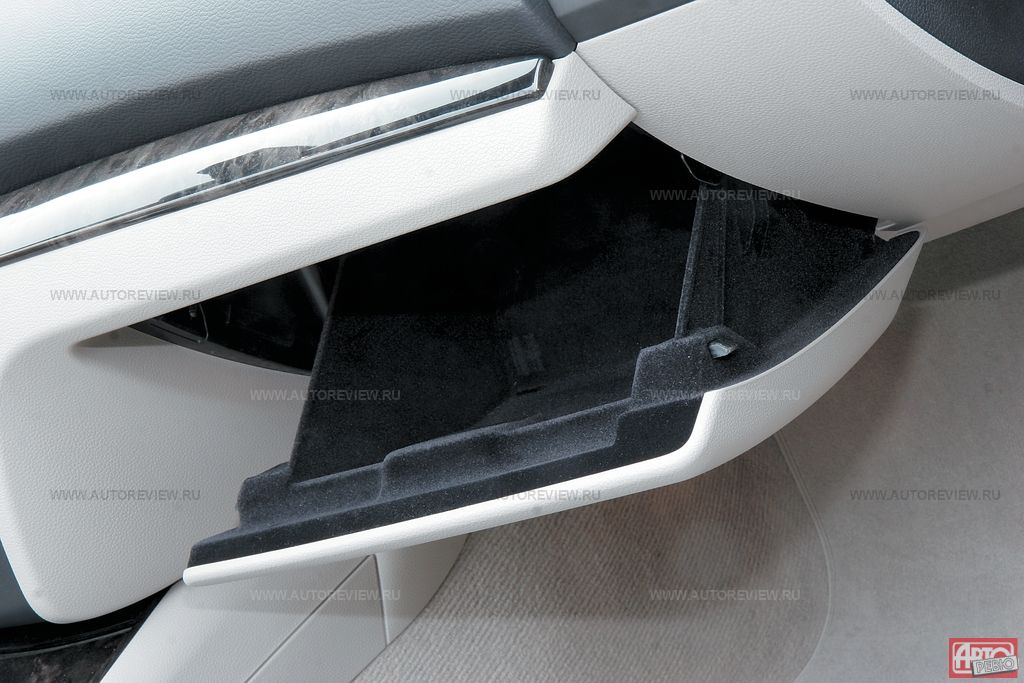 | 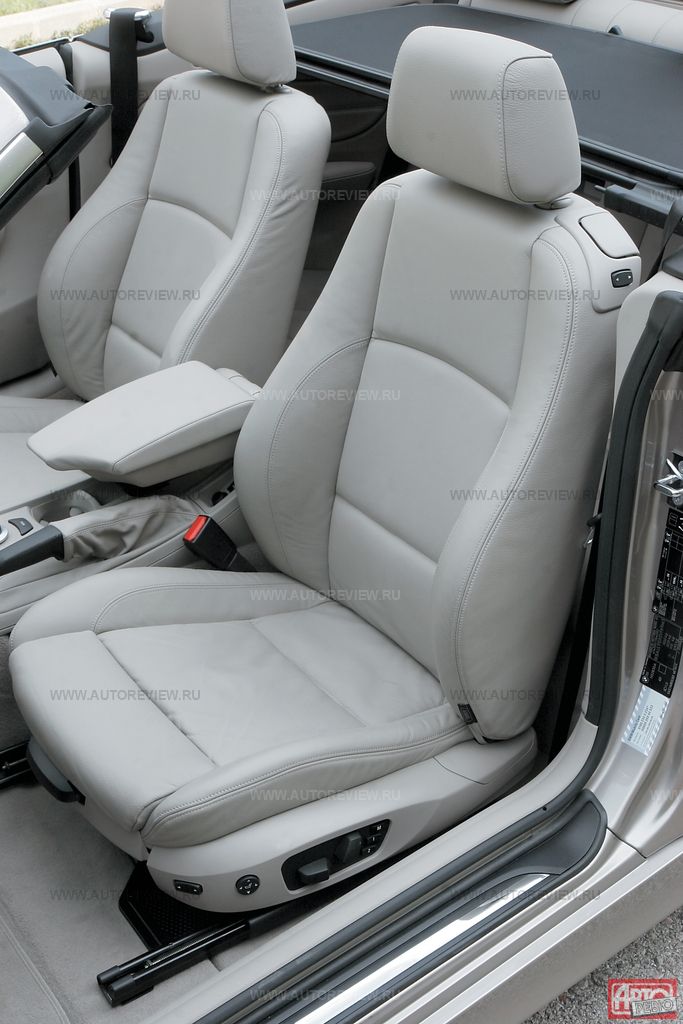 | |
| A lady's handbag is unlikely to fit here | The seats are soft, and the leather is treated to reflect ultraviolet and heat up less in the sun |
The fact that rear passengers are not the main ones is also reminded by a huge opening in the body partition, closed with a soft "plug" — its width is just right for a snowboard. The trunk, although smaller than that of golf-class coupe-convertibles, is neat and convenient for sports equipment, and the top compartment eats only 45 liters of volume. So, for two in a convertible — whether to the golf club or to the mountains.
I went to the mountains.
 | 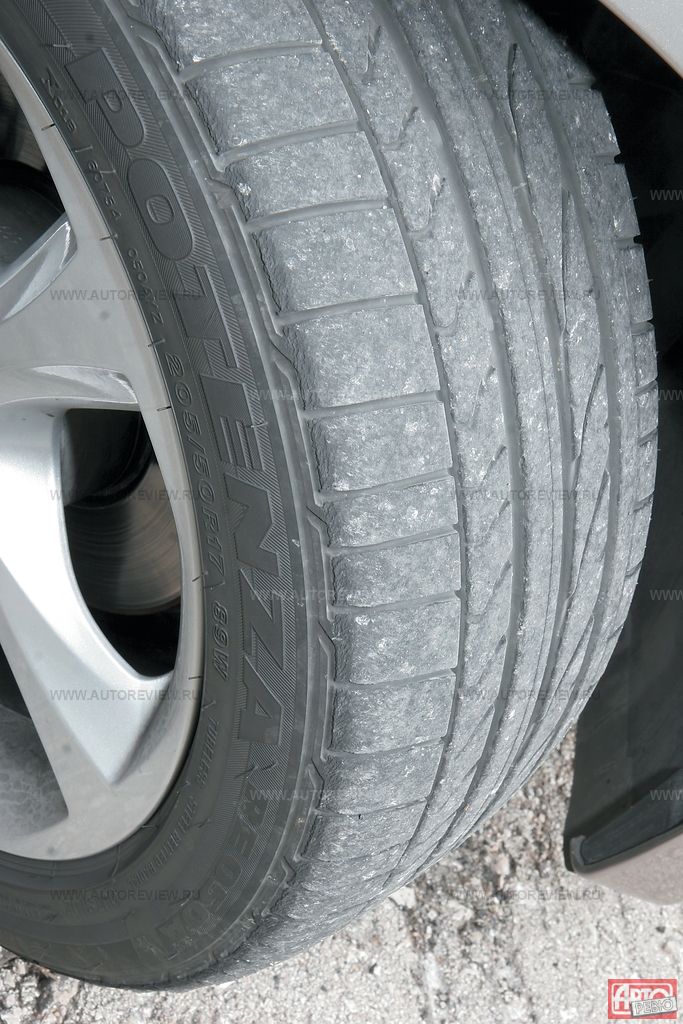 | 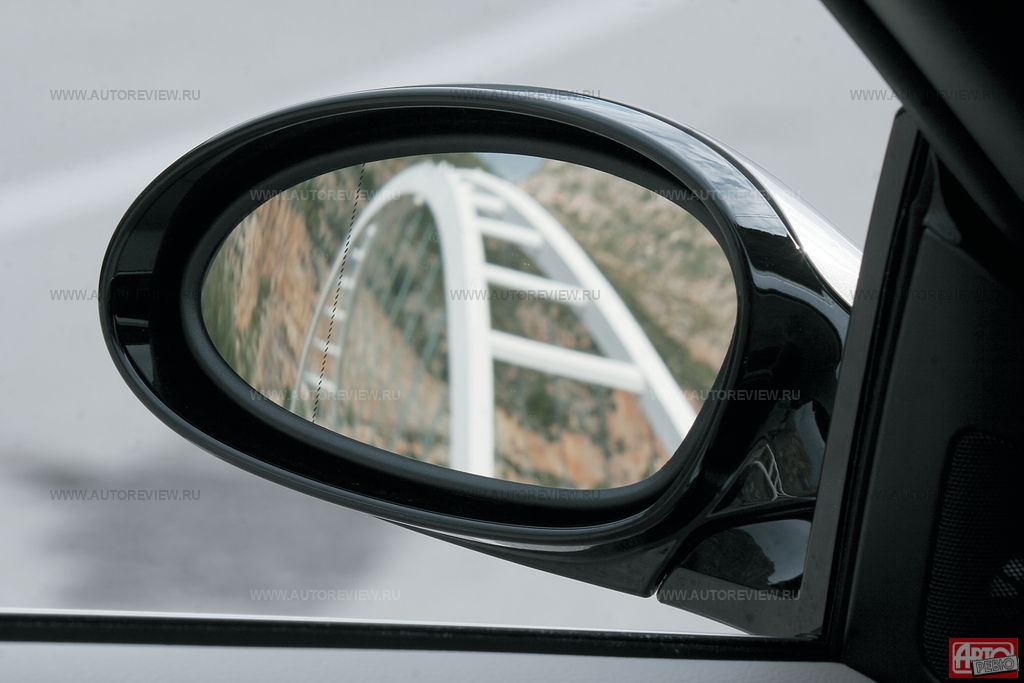 |
| The roof can be raised or lowered at speeds up to 40 km/h | Bridgestone Potenza RE 050A tires on both axles are the same — 205/50 R17. But when attacking serpentines, the front ones wear out four times faster due to the "safe" chassis setup | The mirrors are a bit small — as on all "threes" and "ones" |
For Russian buyers, the choice of engines is decent. There is even a 2.0-liter turbodiesel (177 hp), two gasoline "sixes" — two and three liters, as well as a 306-horsepower biturbo engine. Only the most modest version, the BMW 118i, is missing. And for the test, I only got the "three-liter" BMW 125i with a "manual."
The convertible, heavier for comfort and safety, weighs 190 kg more than the coupe: curb weight is 1510 kg, almost like an all-wheel-drive "five"! The torque characteristic of the three-liter "six" with Bi-VANOS phase shifters on intake and exhaust and the Valvetronic mechanism is as smooth as the bottom of a dried-up salt lake. However, the stated seven seconds to 100 km/h is convincing. The impression is only spoiled by delays in throttle response, made for the sake of environmental friendliness. You press — and the jerk comes half a second later. You release — and the revs continue to rise!
There is no aggression in acceleration, no pressure. And the reactions to steering wheel turns while speeding along the highway are dulled — you can hardly believe this is a BMW. But the steering wheel is filled with pleasant heaviness, and the convertible precisely tracks its deviations. Is that what American "golden" youth needs?
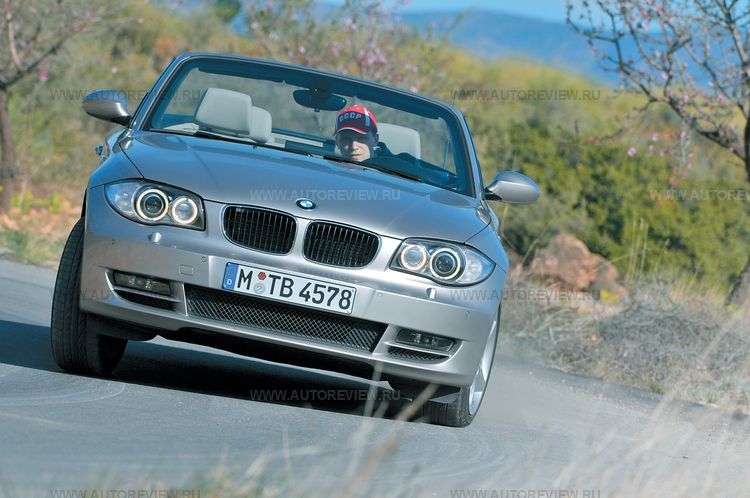
"Row or don't row..." No matter what you do with the accelerator pedal, with DSC off, the convertible inexorably slides toward the outer edge — despite rear-wheel drive and 218 hp.
In a tiny town, I get a burst of applause while folding the roof on the move — this can be done at speeds up to 40 km/h. I turn on the "convertible" mode of the climate control: in it, the heating system is oriented to the outside temperature and the intensity of sunlight. And forward — to storm the mountain serpentines.
One "mother-in-law's tongue," second, third... Everything is almost like on a real BMW: the steering wheel is extremely informative, lateral accelerations — wow. A thrill? But I'm scared! Because in a fast turn, a powerful rear-wheel-drive convertible in any situation tends to head for the outer edge — both under power and in response to lifting off the throttle. What a blessing that the DSC stability system can fight the drift...
How so? Could the Munich wizards, who created the ultimate driving machine BMW E36 and tuned the impish Mini, have voluntarily "tuned" the suspension this way?
They could.
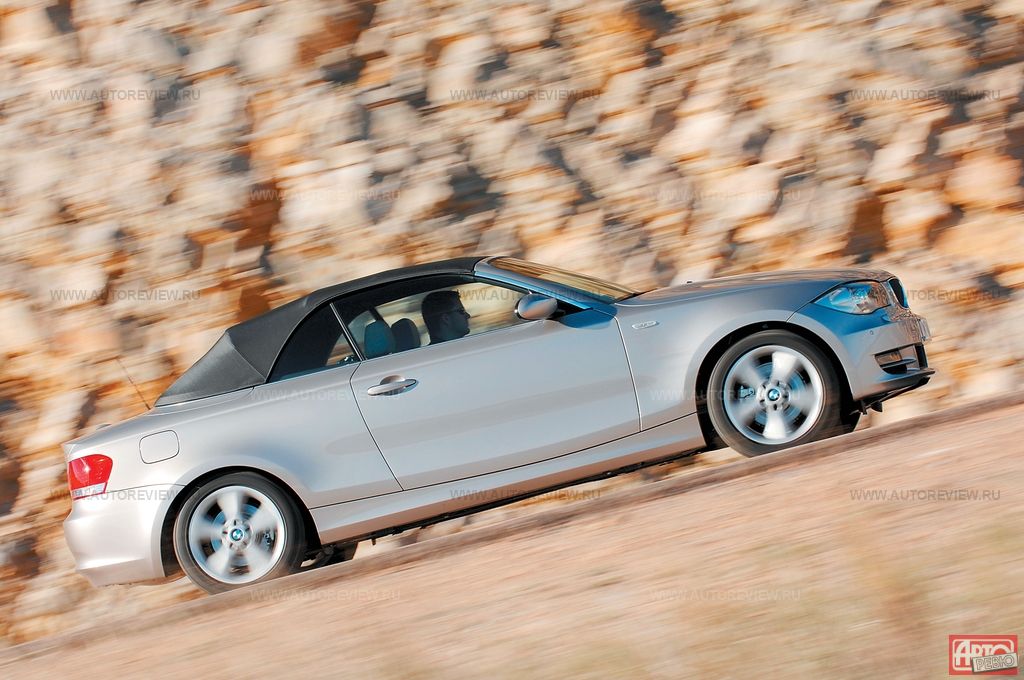 | 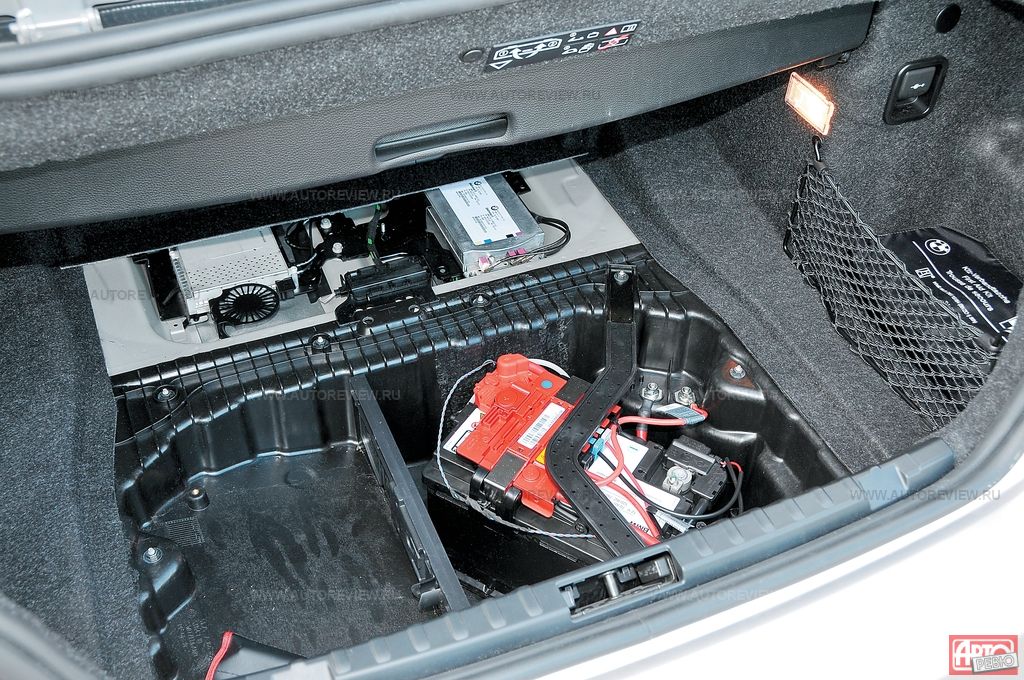 |
| The broken contour of the fabric top only vaguely resembles the roofline of the coupe | The battery, for ideal weight distribution, is traditionally hidden in the trunk |
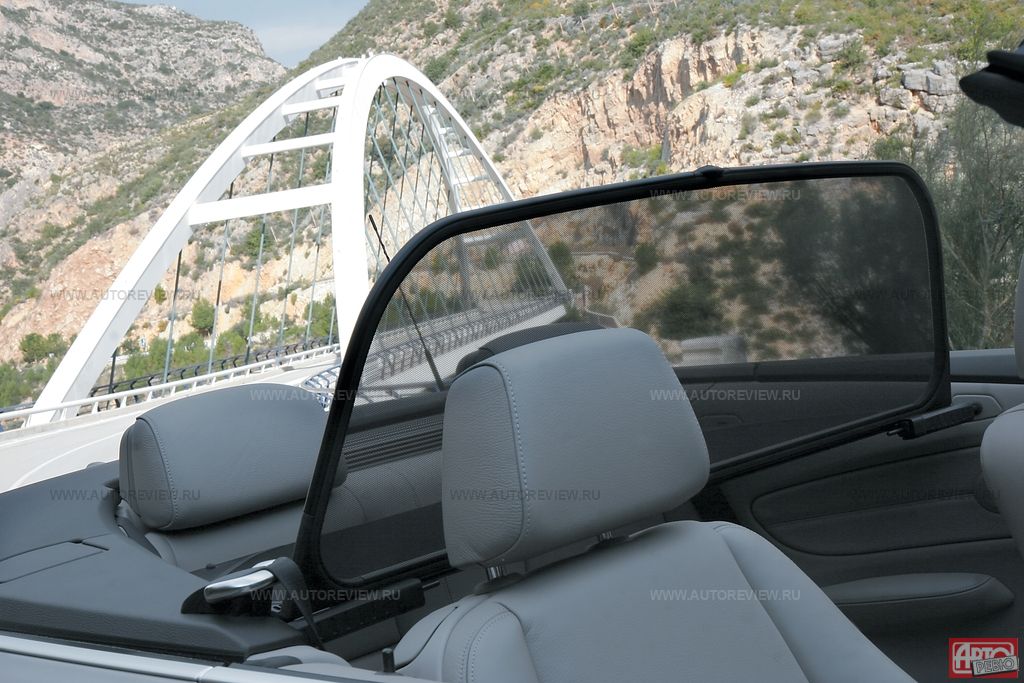 | 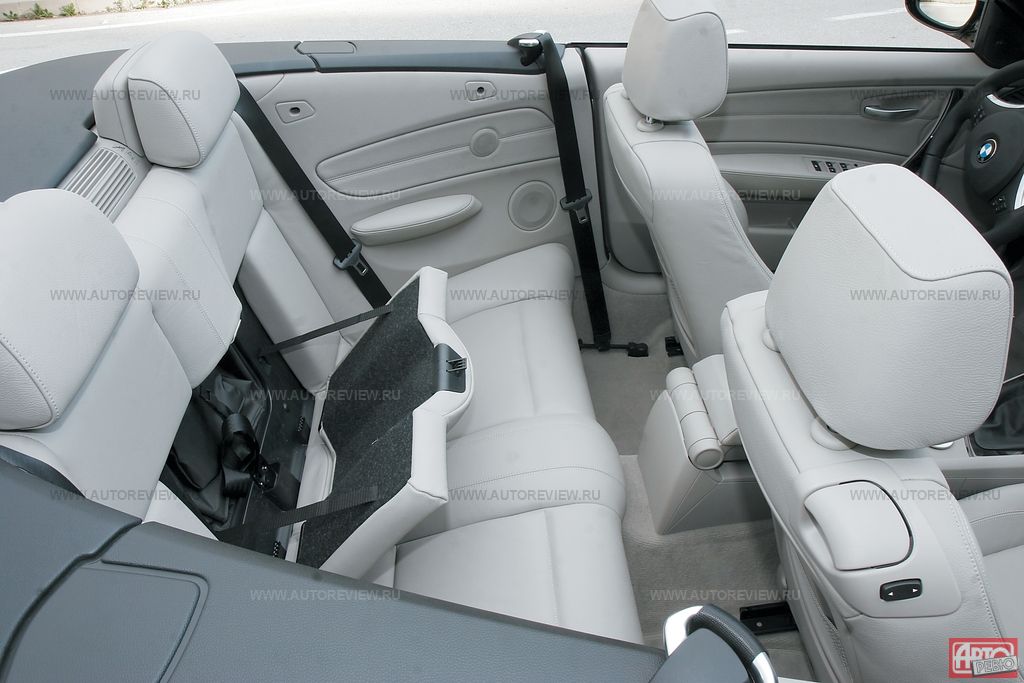 |
| Without the wind deflector, the cabin is uncomfortable: noisy and cold | There is little use from the cramped rear seats, but there is a wide opening into the trunk for sports equipment |
"The task was to create the safest possible car for not very experienced drivers," say BMW engineers. "Moreover, safe even with the stability system completely switched off." The task was accomplished, and for this, it wasn't even necessary to put wider tires on the rear. Simply, the front anti-roll bar was left as thick as on the top version of the BMW 135i coupe, and the rear one is two millimeters thinner even compared to the base BMW 118i. Classic suspension tuning: the stiff-in-lateral-direction front begins to slide earlier than the soft rear suspension, which grips the asphalt better.
When you turn off the DSC stability system, the picture hardly changes. Paraphrasing the classics, one can say: today even a housewife can handle a powerful rear-wheel-drive BMW convertible, even without electronic assistants. And if the driver feels uneasy in a turn and reflexively presses the brake pedal, the Cornering Braking Control system will come to the rescue. A similar algorithm was first used on the Porsche Boxster roadster: the electronics recognize hard braking as a distress signal and themselves pull the car into the turn along the steepest possible trajectory. And it really works! Funny, but after a few turns, I came across that very Porsche Boxster — it was standing, crashed nose-first into a rock. Apparently, the electronics didn't help: I had suspected before that protection from a fool and protection from a fooless should be different.
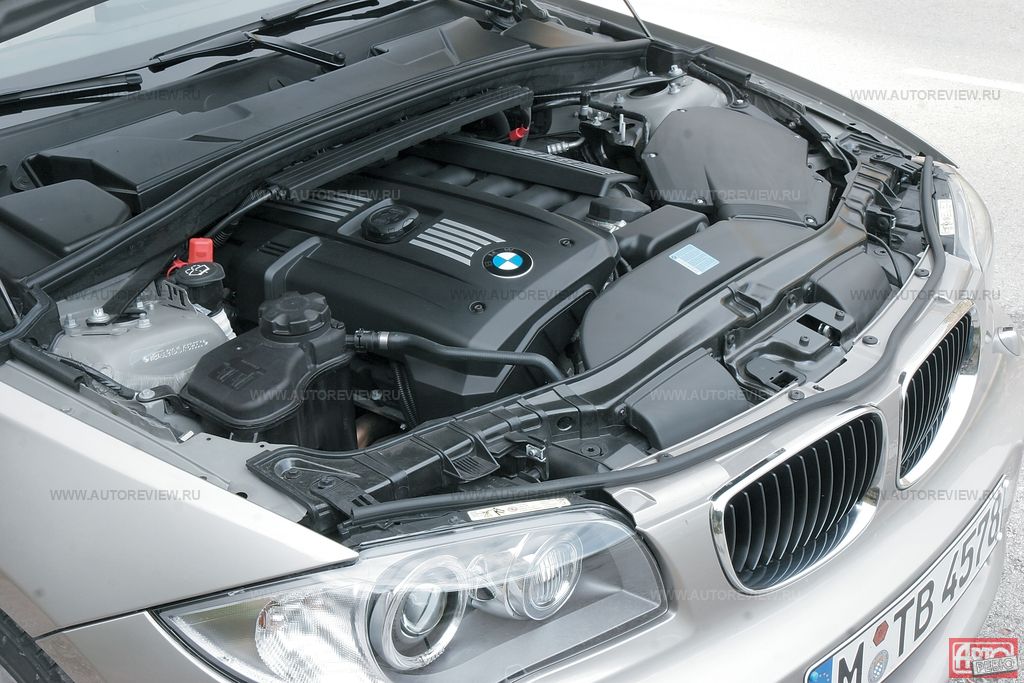 | 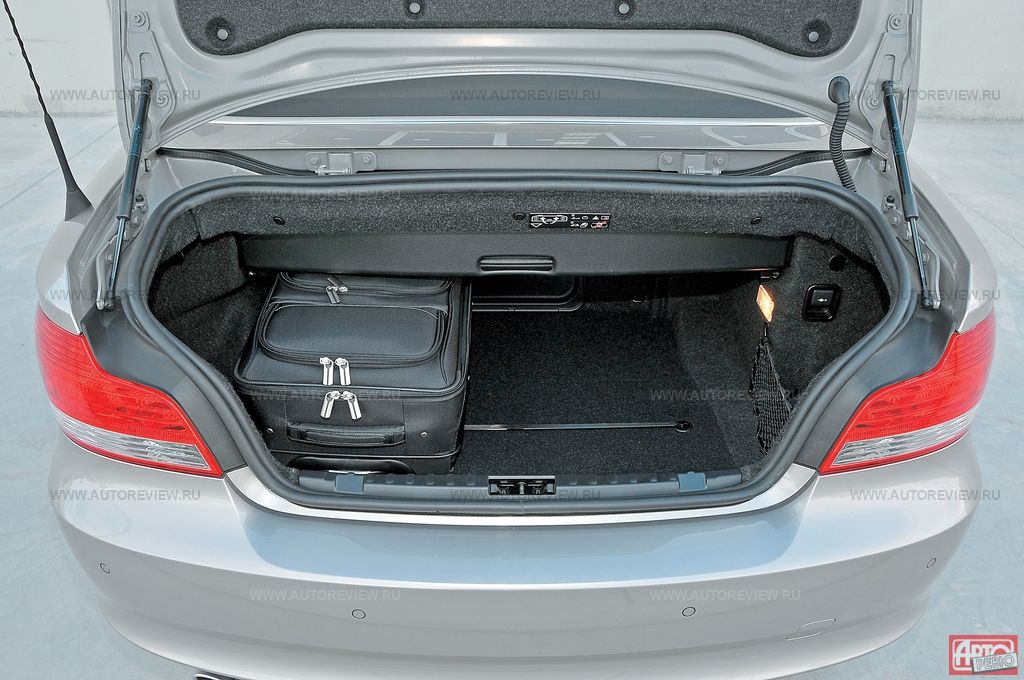 |
| The average fuel consumption of the three-liter naturally aspirated "six" over 700 km of serpentine roads was 15 l/100 km: not bad for assertive driving | The 260-liter trunk easily accommodates two medium-sized suitcases |
For dynamic driving, I liked the "intermediate" stabilization mode the most, which is activated by a short press of the DTC button. In this case, the electronics brake the understeer of the front axle but allow oversteer — and within quite wide limits. Honestly, with this new Munich "mechatronic" concept (see AR No. 1, 2008), you feel less like a driver and more like a hacker breaking through protective algorithms.
While I was engrossed in this "hacking," the yellow fuel pump icon lit up on the dashboard: either I was driving too fast, or the 53-liter tank is too small... But the hints on the display, advising to engage sixth gear already at 60 km/h, helped me reach the gas station. The start-stop system, which shuts off the engine at stops, the "economical" generator, and the electric power steering pump also contributed to fuel savings.
For Russian buyers, fuel efficiency is not yet so important. But comfort is another matter. The open "One" turned out to be unexpectedly quiet and well-assembled: nothing creaks or rattles. And the wind does not howl up to 140 km/h if the screen behind the front seats is installed and the windows are up. But if you want to lower the windows, it is better not to accelerate above 60 km/h: at the upper corners of the windshield frame, the air begins to pulsate unpleasantly.
Ride smoothness is also top-notch. On one hand, the suspension is quite firm (after all, it's a BMW), and on the other, the car does not meticulously follow the road surface. True, for comfort at low speeds, you have to pay with almost American-style rocking when passing road waves at high speed.
However, in such an elegant and "safe" car, even the most reckless blonde would not want to drive at breakneck speed. It is better to smoothly steer onto the embankment and turn on Mozart. Or the group "Blestyashchie." After all, that is also a kind of classic.
The price for compact luxury with a three-liter engine in Russia is quite acceptable — 1 million 267 thousand rubles ($51395). And the more modest BMW 120i Convertible (170 hp) is even cheaper: 1 million 76 thousand rubles ($44115) — that is how much a two-liter Mazda MX-5 costs now. If you pay for the BMW now, the car will be delivered by May. Although... Maybe there is no need to rush? After all, a worthy competitor to the open "One" will soon appear — the Audi A3 Cabrio (read Oleg Rastegaev's detailed story about this car in upcoming issues of Autoreview). And for the same money, you can also take a less elegant but much more practical and peppy Volkswagen Eos 2.0 TFSI. And also...
It is good when there is a choice. Or is it bad?
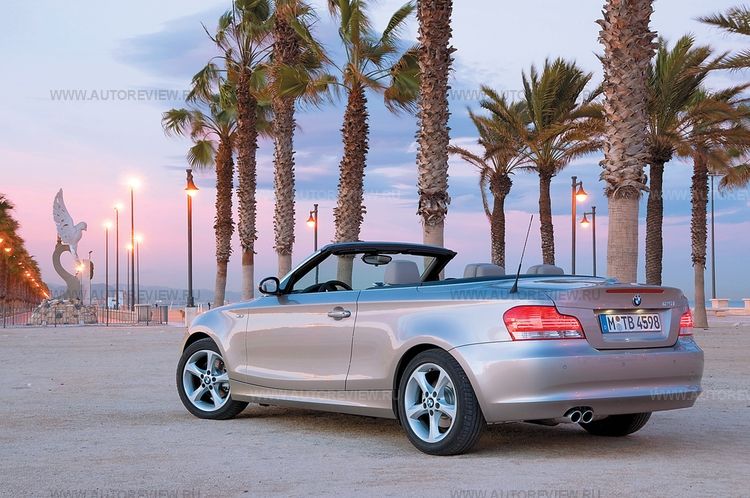
| Specifications | |
| Parameters | Vehicle |
| BMW 125i Convertible | |
| Body type | 2-door convertible |
| Number of seats | 4 |
| Trunk volume, l | 260/305* |
| Curb weight, kg | 1510 (1540)** |
| Gross weight, kg | 1950 (1980) |
| Engine | petrol, with distributed fuel injection |
| Location | front, longitudinal |
| Number and arrangement of cylinders | 6, in-line |
| Number of valves | 24 |
| Displacement, cm³ | 2996 |
| Cylinder bore/piston stroke, mm | 88.0/85.0 |
| Compression ratio | 10.7:1 |
| Maximum power, hp/kW/rpm | 218/160/6100 |
| Maximum torque, Nm/rpm | 270/2500—4250 |
| Drive | rear-wheel drive |
| Transmission | 6-speed manual (6-speed automatic) |
| Front suspension | independent, coil spring, McPherson, with stabilizer |
| Rear suspension | independent, coil spring, multi-link, with stabilizer |
| Brakes | disc, ventilated |
| Tires | 205/50 R17 |
| Maximum speed, km/h | 238 (236) |
| Acceleration time 0—100 km/h, s | 6.8 (7.4) |
| Fuel consumption, l/100 km | |
| urban cycle | 11.7 (11.6) |
| extra-urban cycle | 6.0 (6.1) |
| combined cycle | 8.1 (8.1) |
| Fuel tank capacity, l | 53 |
| Fuel | petrol AI-92—98 |
| * With the roof up | |
| ** Data in parentheses for the version with automatic transmission | |