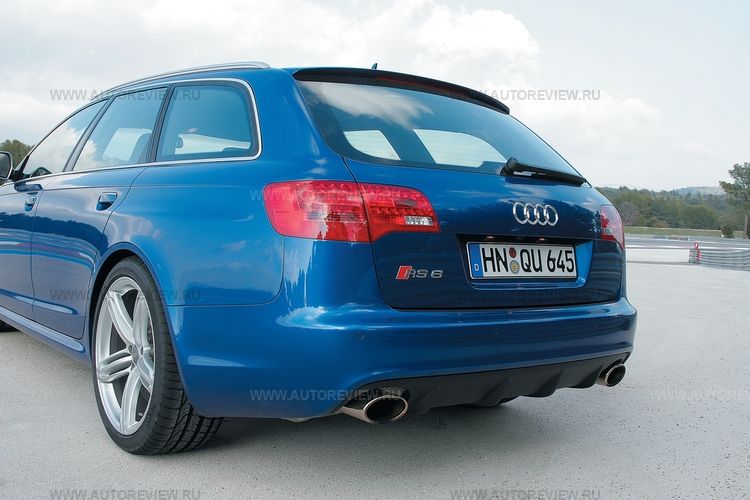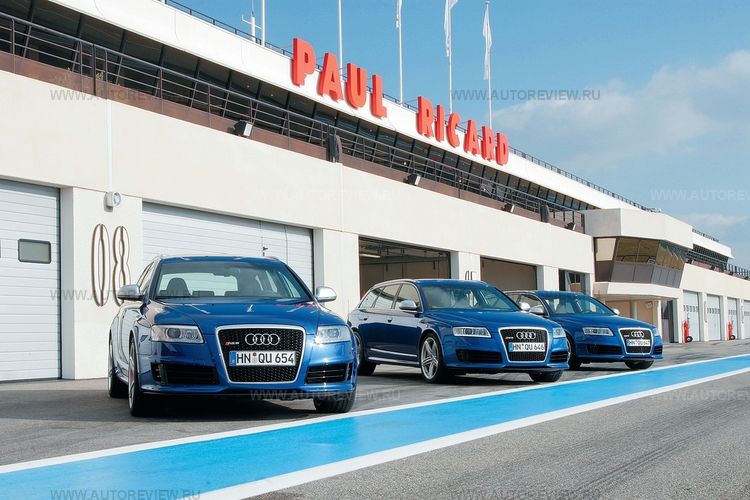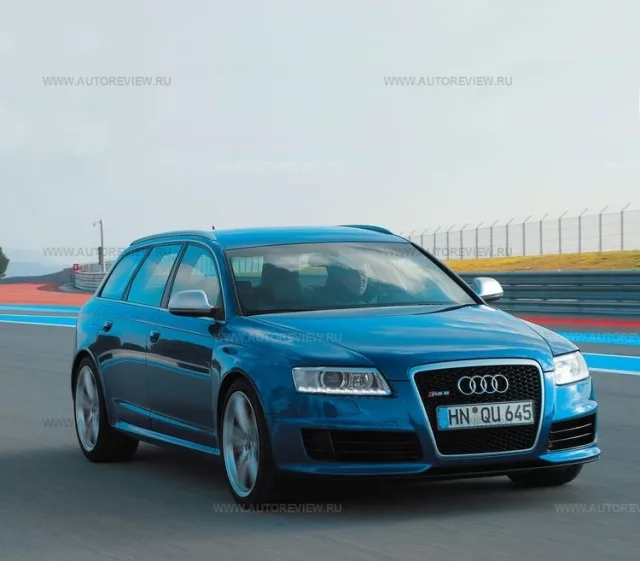
Any trip to the French Paul Ricard track is already an event. And here it's a double celebration: under the hood of the Audi RS6 Avant wagon hides a five-liter V10 producing 580 horsepower. That's 73 more than the BMW M5 and 66 more than the Mercedes E63 AMG with its V8. Plus, there's all-wheel drive, with 60% of the torque going to the rear axle. In short, the Avant in all its glory.
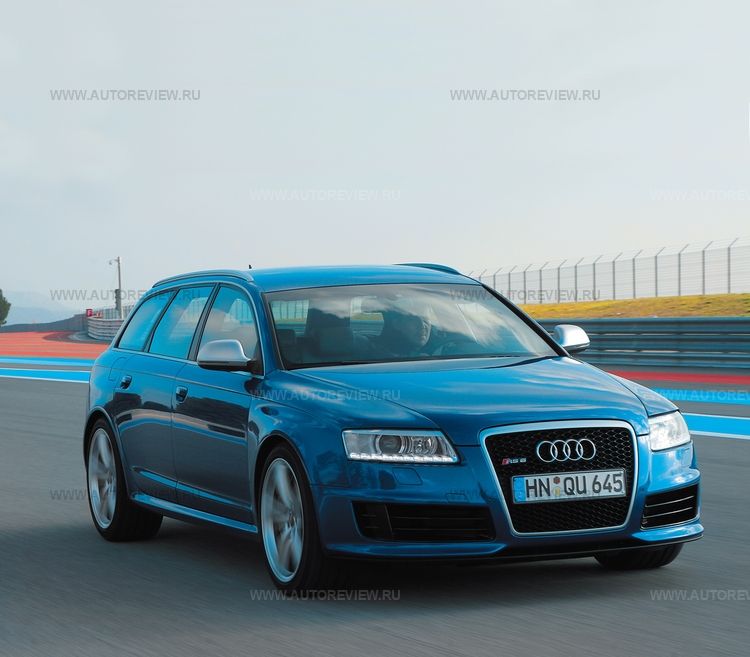
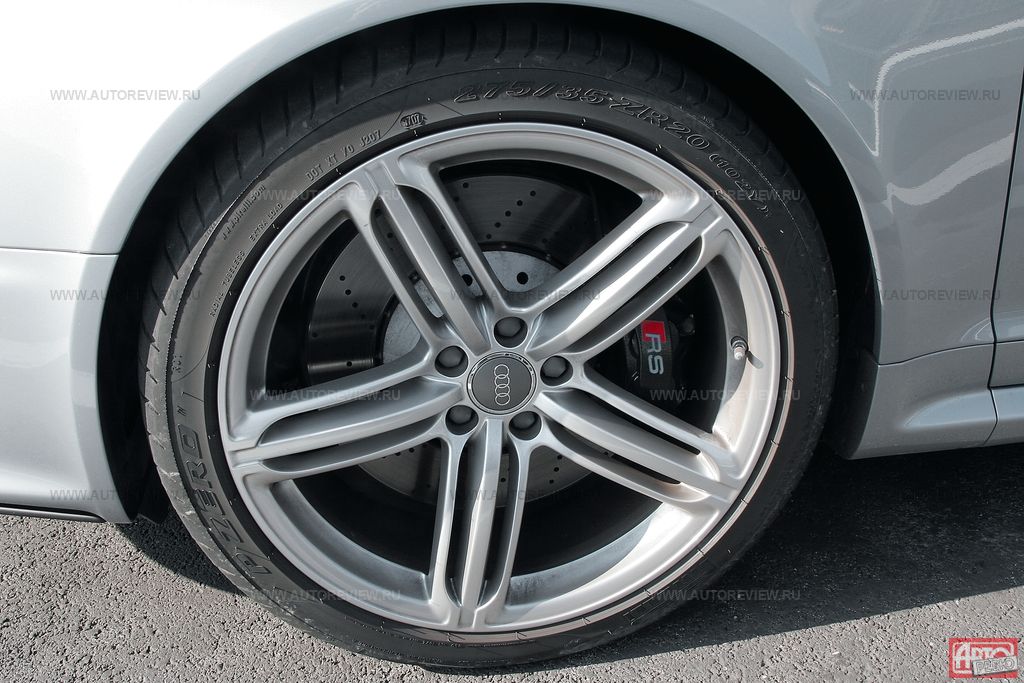
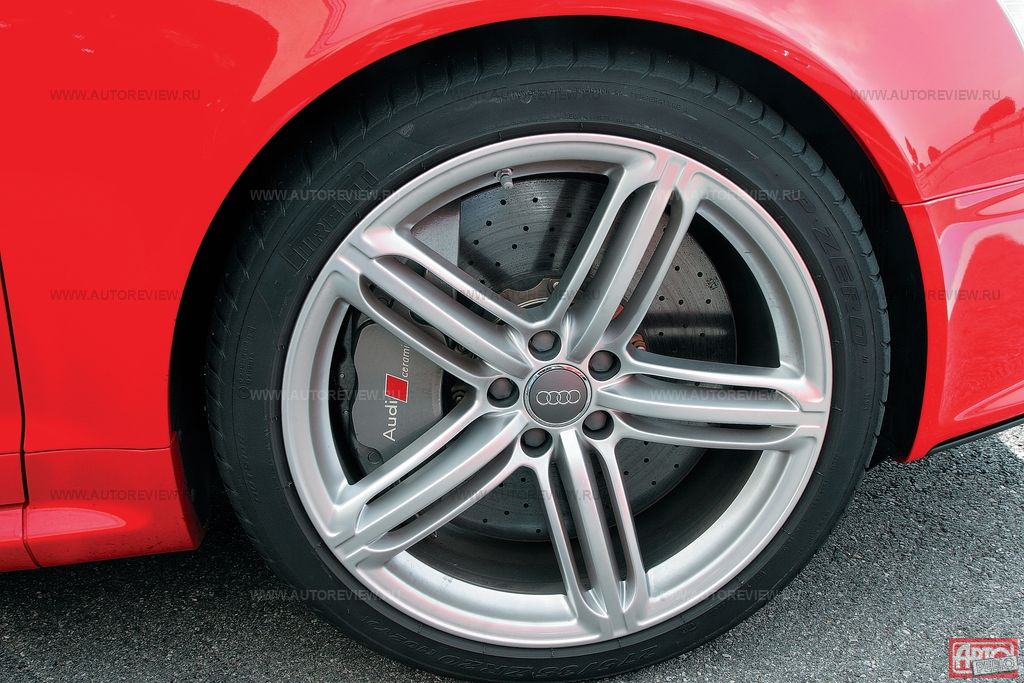
From the outside, the RS6 is revealed not only by its badges: the chrome honeycomb grille, more sculpted bumpers, and fender flares harking back to the first quattros. The flares are a must — tires are 255/40 R19, with optional 20-inch 275/35 R20. Of course, there are also the LED "eyelash" daytime running lights, a signature feature of new Audis.
Inside, the main differences are the sport seats and steering wheel. The base wheel is a regular round one, but for an extra cost, it gets a flat bottom, and for the most demanding, a suede-wrapped rim. The seats are expressive multi-contour units with "RS6" embossing and full power adjustment. There are also "racing" buckets with wide "shoulders" and separate side-bolstering adjustment. Naturally, there are plenty of trim options: different colors and materials, from carbon to wood.
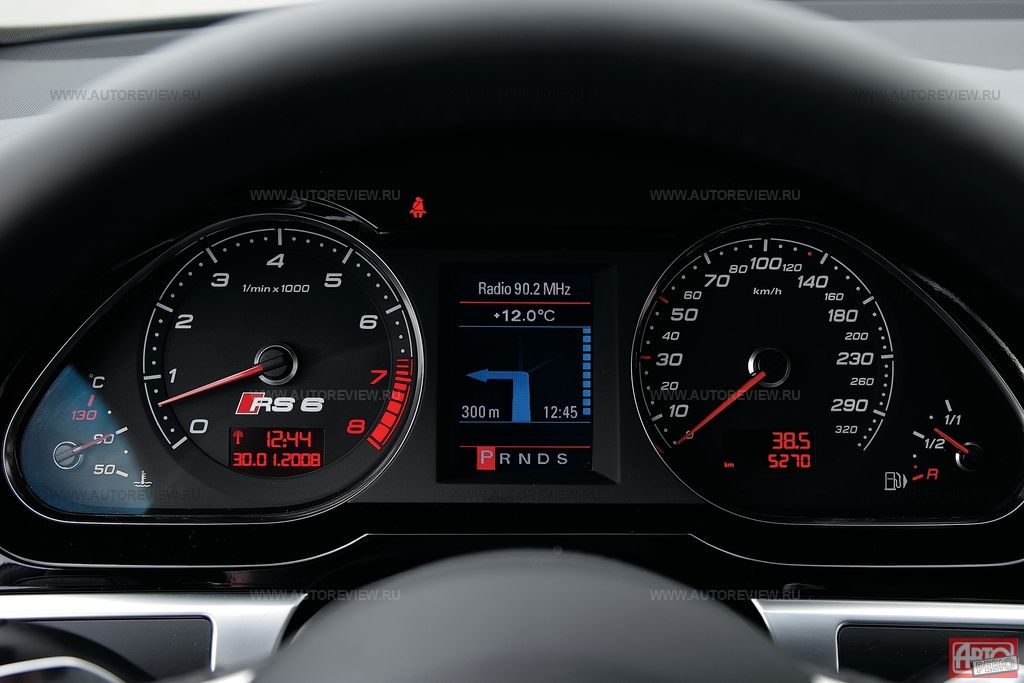 | 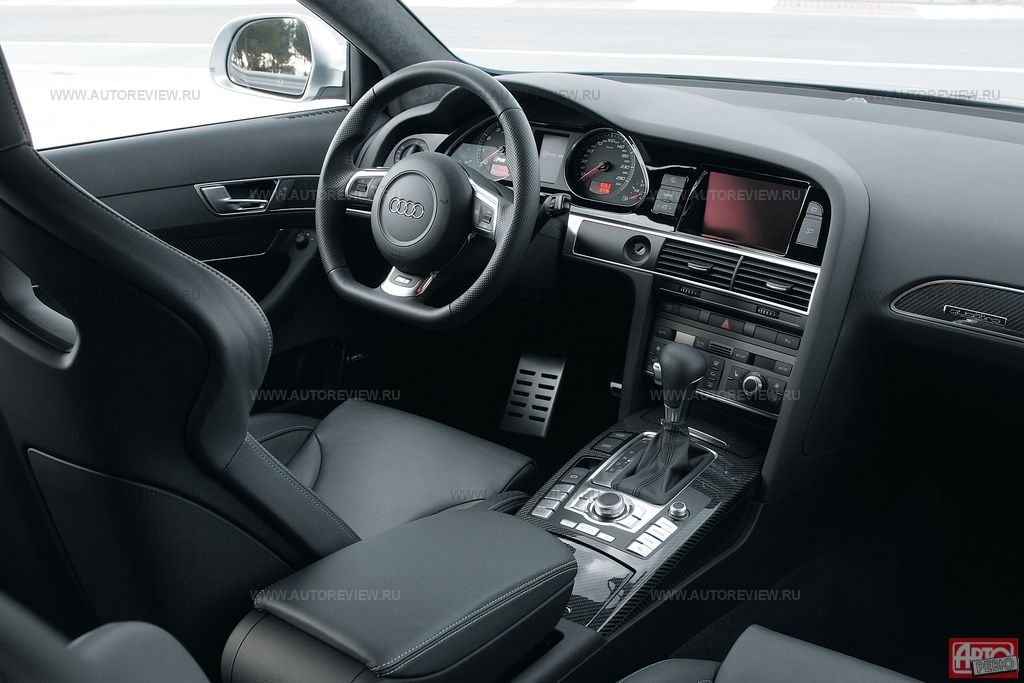 | 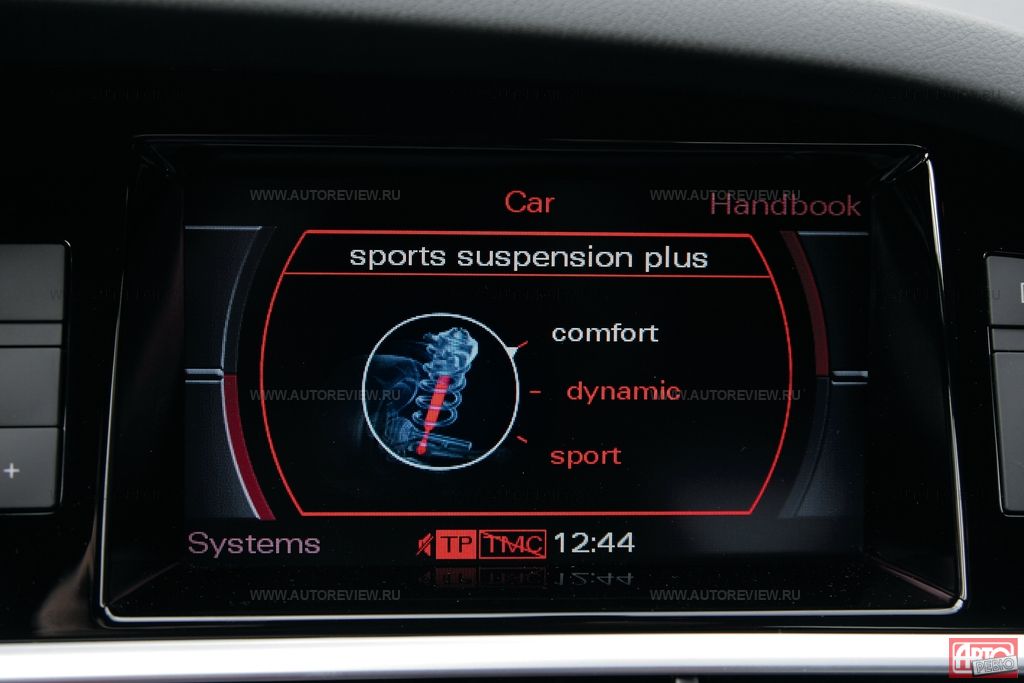 |
| The RS6 speedometer is marked up to 320 km/h, but electronics cut the speed at 250 km/h. However, for an extra fee, the limit is raised to 280 km/h | Carbon inserts are standard for the RS6, but the flattened sport steering wheel is already an option | The options list includes suspension with adjustable damper stiffness |
However, all this is just the frame, but the heart... I remember two years ago, when the "hot" RS4 wagon was presented (AR No. 18, 2005), the guys from quattro GmbH assured us they didn't need forced induction, saying they'd prove they could extract power without turbos. But in the RS6, they brought back two turbos. And complaining would be a sin.
God, what a voice this engine has! Gurgling, with a slight unevenness at idle... A real sporty roar! Just a bit muffled. The angriest notes are from 3000 to 6000 rpm, and when the engine "fires" during shifts... Full Avant!
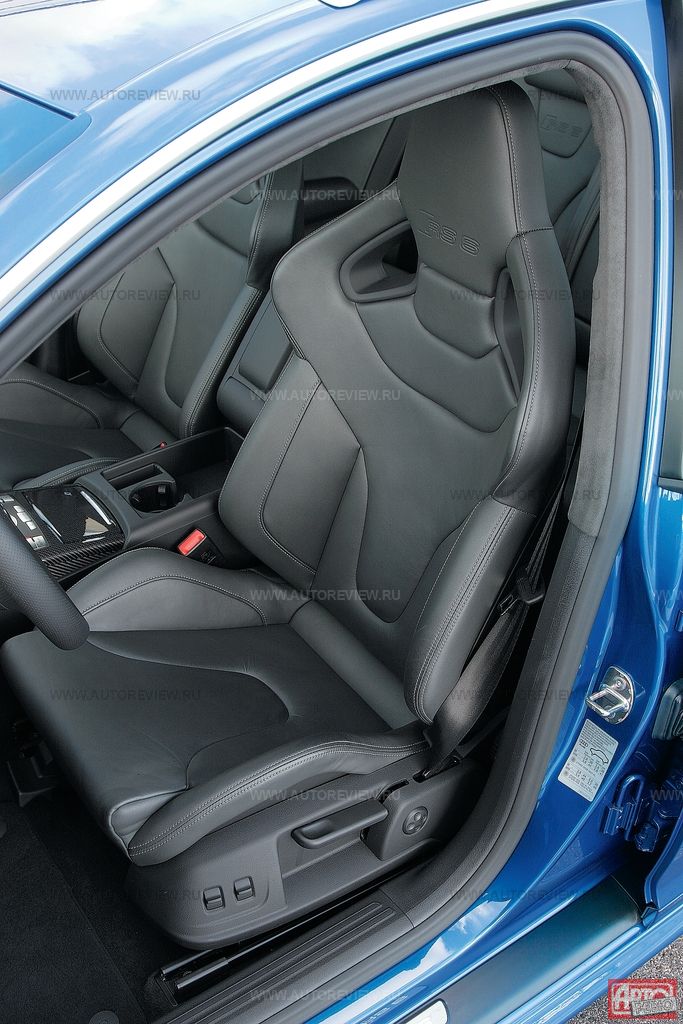 | 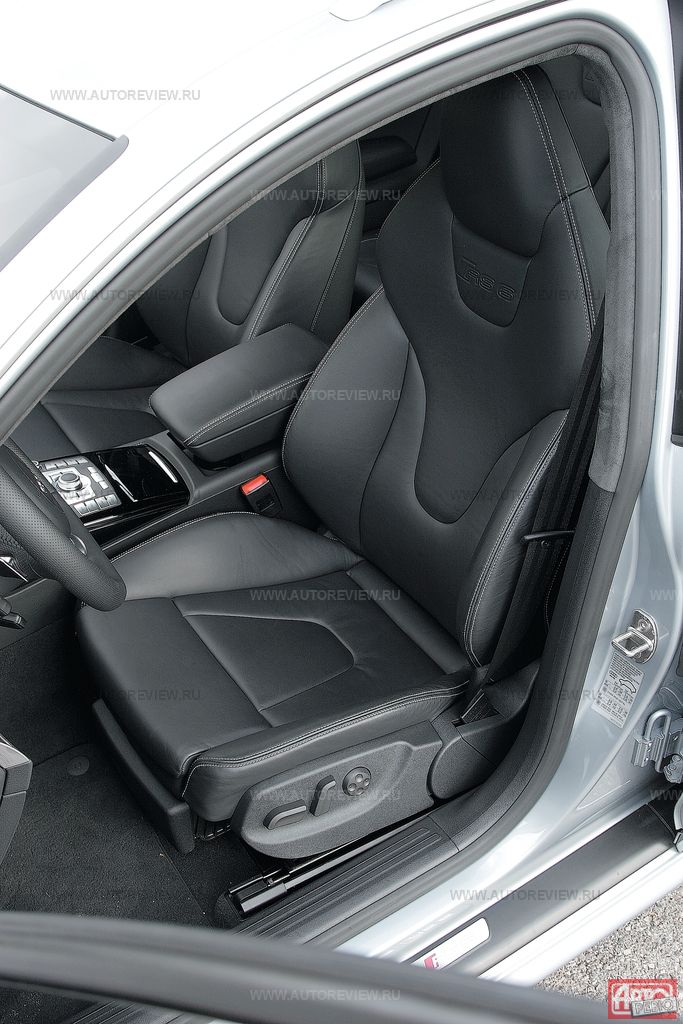 | 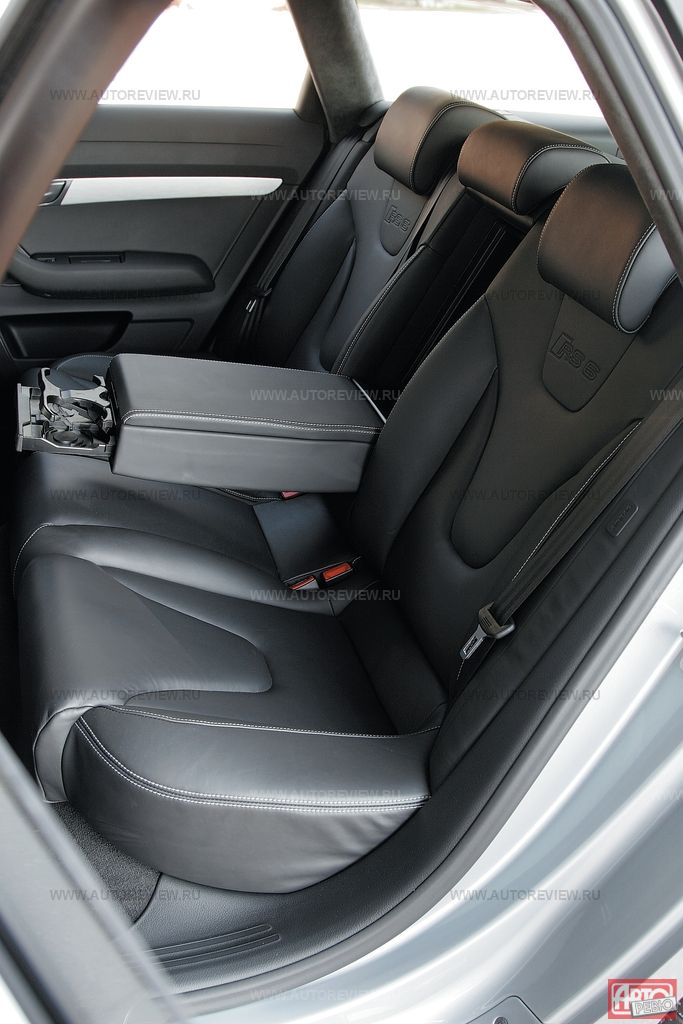 |
| The base seat (right) has full power adjustment, while the "racing" one (left) has only partial. But it adjusts in width: the side-bolstering "ears" are adjustable on both the cushion and backrest | The rear bench is profiled for two passengers | |
The familiar six-speed tiptronic automatic from other Audis was reworked for the RS6: gear ratios were brought closer, shifts were doubled in speed, and the torque converter now more often operates with a locked clutch. Circling the serpentines at the foot of the track, I never missed the lack of a manual: with it, I'd probably have broken the lever trying to shift as fast. The gearbox also picks moments perfectly — it doesn't shift in corners (a special program watches over this), doesn't hesitate on overtakes, and in Sport mode, the engine revs to 6000 even if you're driving calmly.
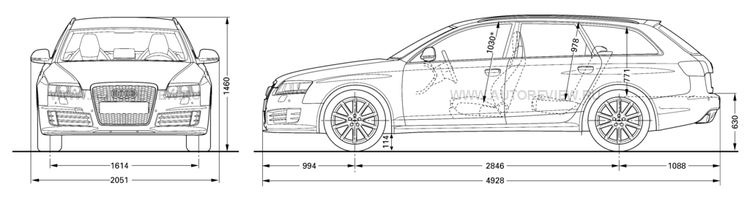
As a result, the two-ton wagon of nearly five meters in length feels very light. It accelerates easily, brakes easily, and turns in easily. Although the steering wheel makes only 2.3 turns from lock to lock, I didn't notice excessive sharpness or nervousness. The car confidently holds a straight line at both 80 and 180 km/h, doesn't react to crosswinds, and doesn't twitch on bumps. All as it should be: it's an Audi.
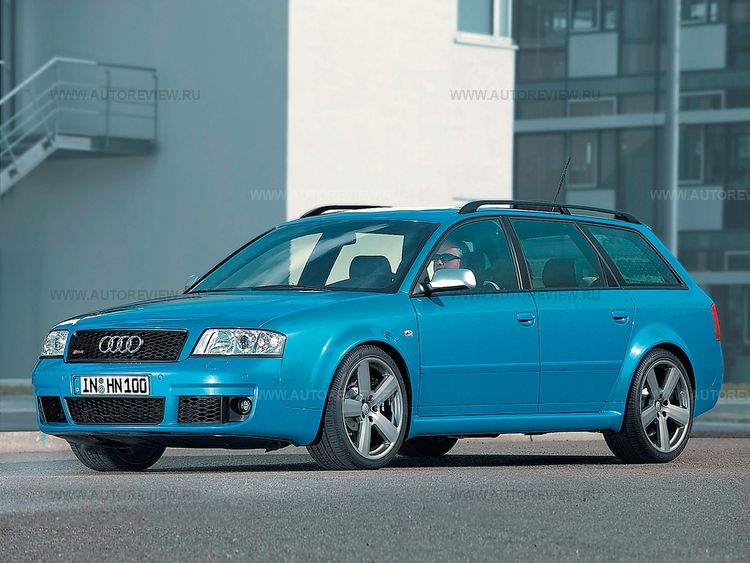
The "hot" RS6 in the A6 family appeared in 2002 (pictured). Then both sedans and wagons were produced with a 4.2 V8 Biturbo producing 450 hp, and later a special RS6 Plus series came out with 480 hp.
Now, the track.
— You get four laps, the first one behind the pace car, which will show the line.
Symbolic — four rings on the badge — but few. However, after my laps, I understood: enough. If on regular roads the RS6 seemed light, then on the race track, the wagon turned out to be unwieldy — in the most literal sense. No matter how much the engineers touted their victories over weight, aluminum fenders and hood, the five-liter engine weighing just 278 kg, — on tight corners, the car struggles. On a smooth arc, everything is fine, but on a second-gear hairpin, the wagon pushes and understeers — neither throttle nor lift helps. And yet, I took the fourth lap exactly as I dreamed. First, I flicked the wheel in counter-phase (that same counter-steer), provoked a slight drift — and took the corner in a controlled four-wheel slide. That's when I felt the torque shift to the rear axle.
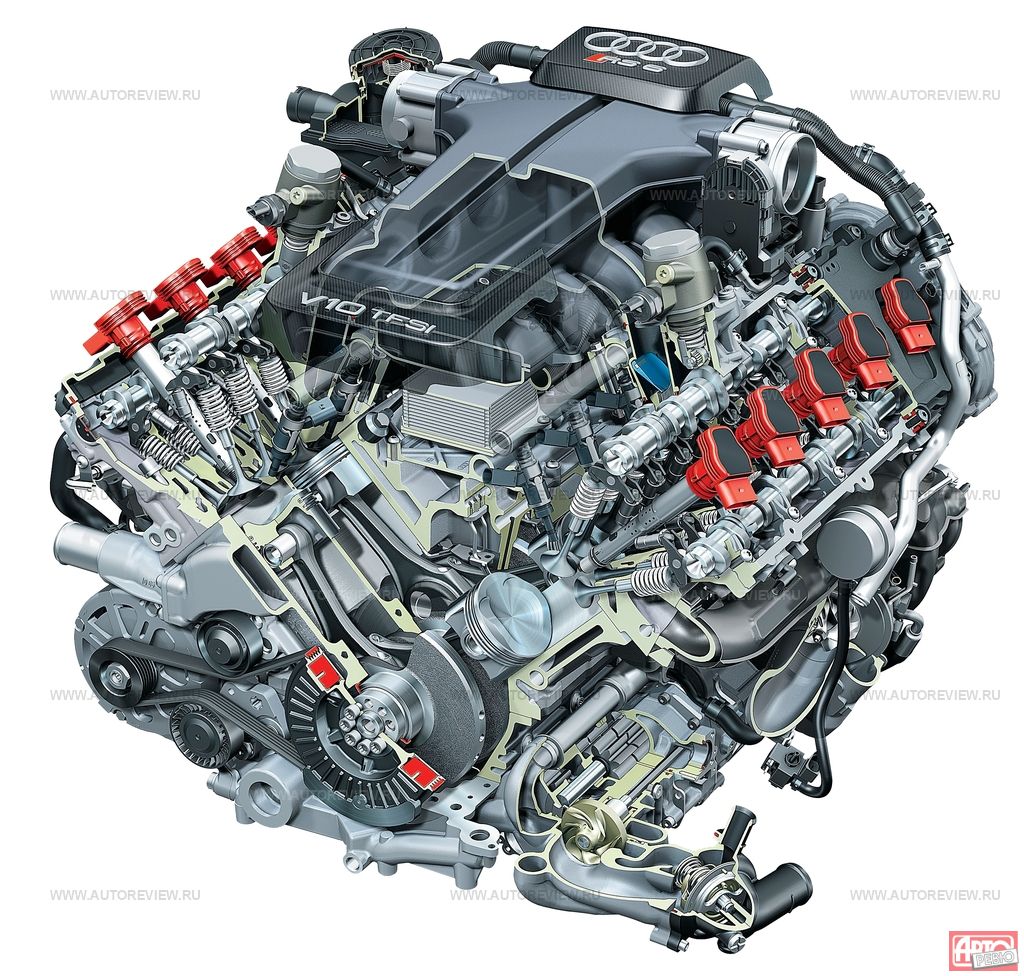 | 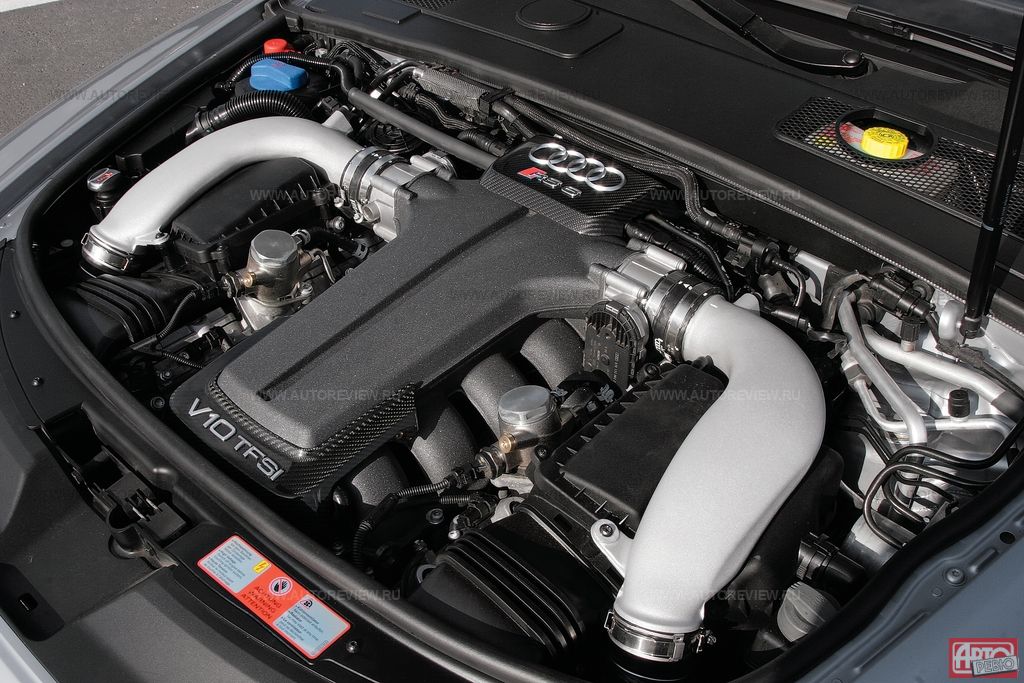 | 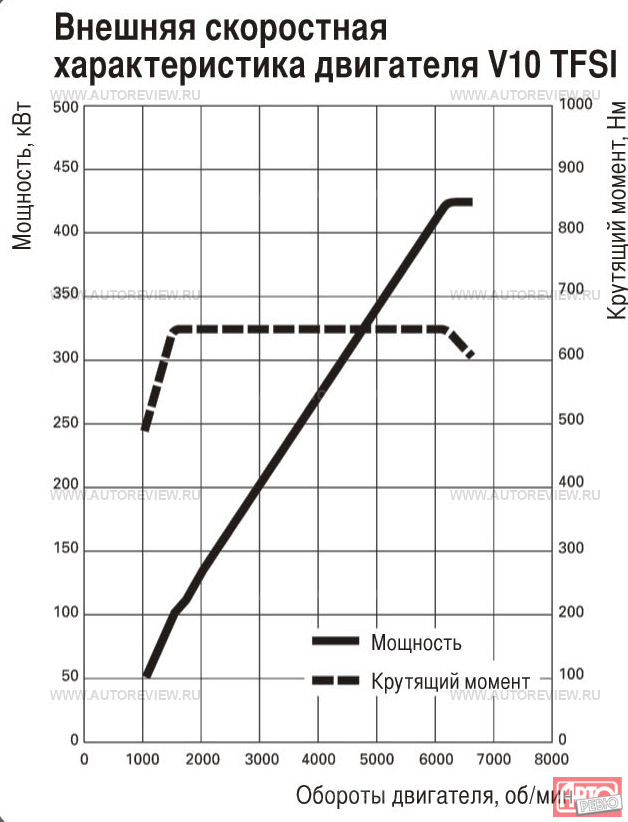 |
| The V10 TFSI engine with direct injection (pressure — 120 bar) has two turbos (boost — 0.7 bar). The cylinder block and pistons are aluminum, with "dry" sump lubrication, allowing the engine to handle lateral forces up to 1.2 g. All four camshafts have variable valve timing over a 42-degree range, which, at high maximum power, allows reducing the rated consumption to 14 l/100 km. However, in track mode, the onboard computer showed 40 liters per 100 km. Good thing it's AI-95, which is the primary fuel for the RS6. Moreover, the manufacturer even allows 91-octane! According to engine specialists, this is done for markets in "third" countries where good gasoline is hard to find | ||
And still, it's no coincidence that RS6 project leader Jens Koch reminded us: the car isn't for the "ring," and advised not to turn off ESP. If the weight distribution is fine (according to Jens, an ideal 50:50), then the moment of inertia around the vertical axis is, of course, a bit large: the heavy engine is pushed far forward, and at the rear — a "wagon" tail, weighted down by the battery for better mass distribution. So it's all logical.
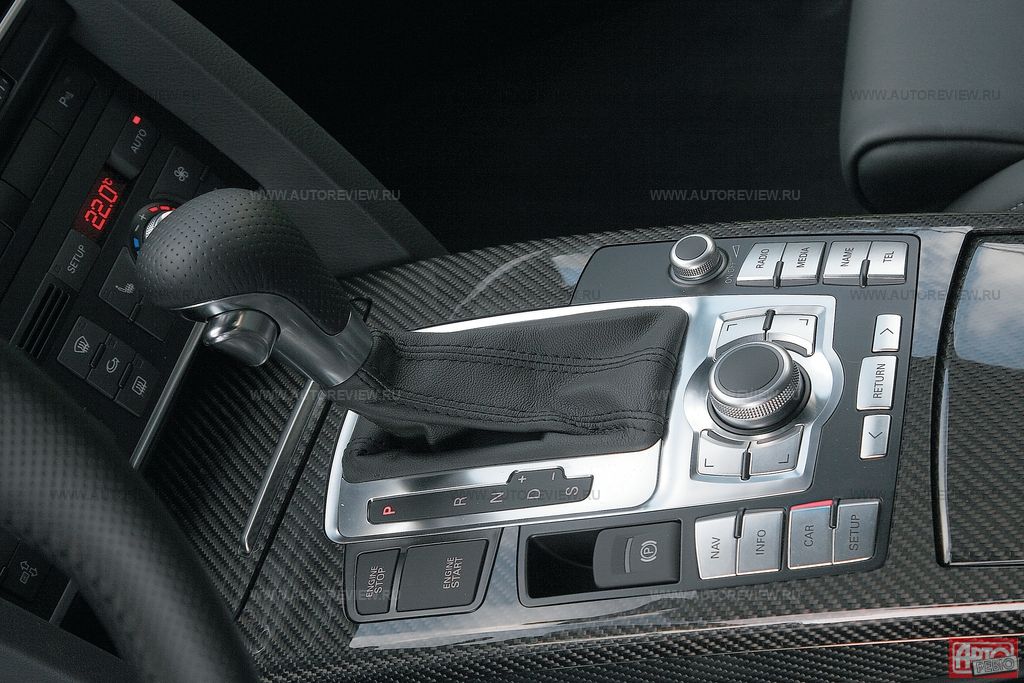 | 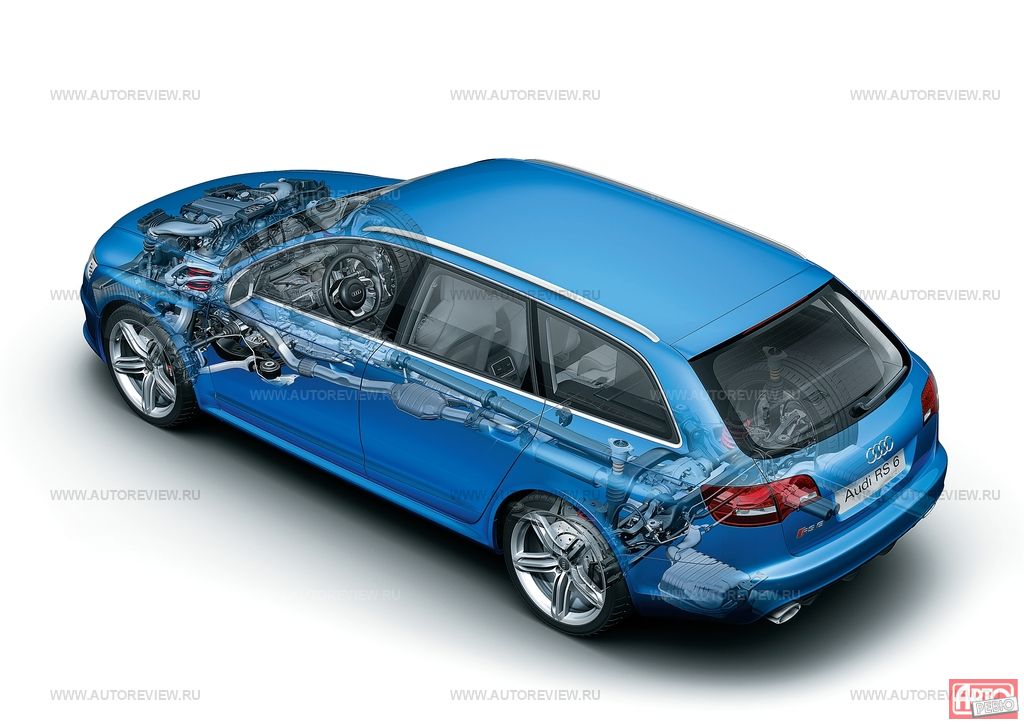 | ||||||||||||||||||||||||||||||||||||||||||||||||||||||||||||||||||||||||||||||||||||||||||||
| Around the gearbox selector, there's a scatter of buttons: here's the "starter," the parking brake, and MMI multimedia controls. The buttons are large and convenient to use | Even in the base, the RS6 is equipped with the Dynamic Ride Control system. The dampers are connected in pairs diagonally by a hydraulic line, and during rolls (lateral or longitudinal), valves close the line, increasing the resistance of the loaded damper | ||||||||||||||||||||||||||||||||||||||||||||||||||||||||||||||||||||||||||||||||||||||||||||
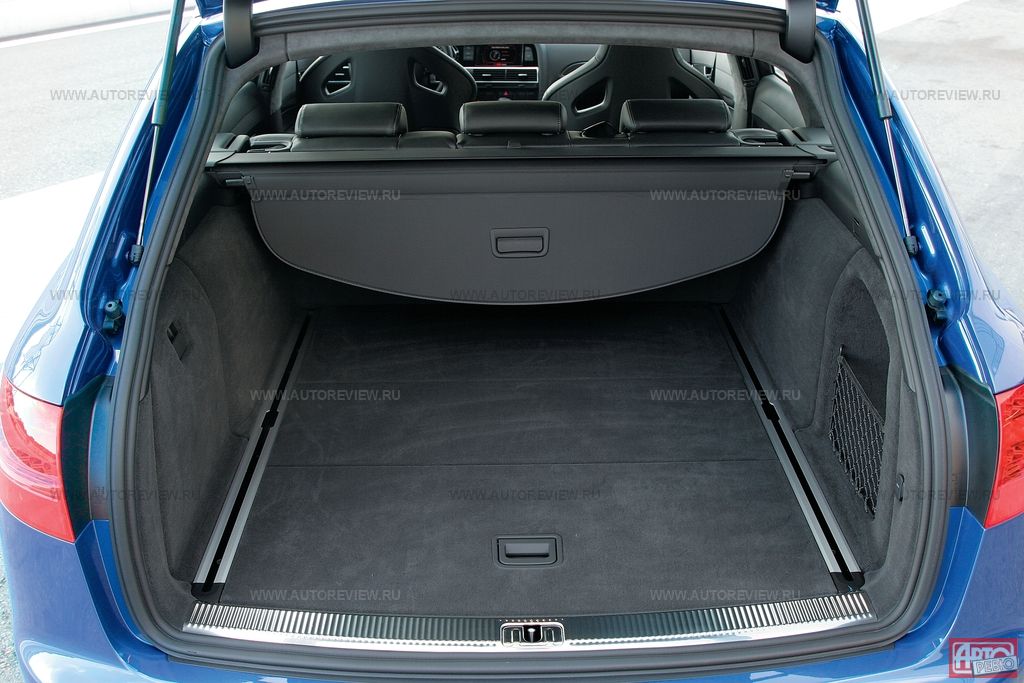 | 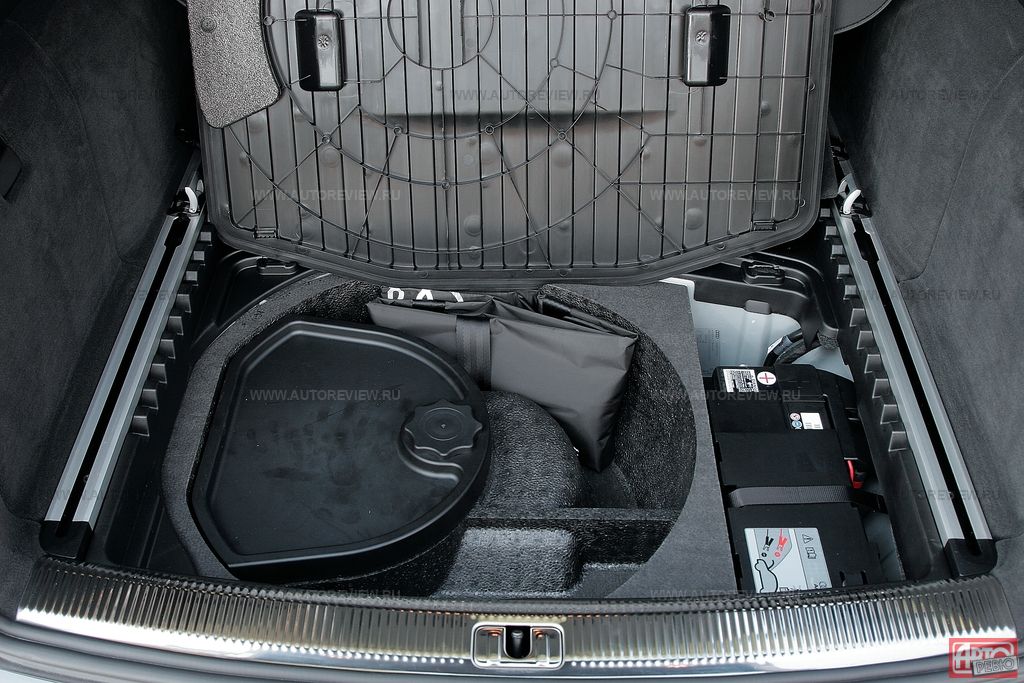 | ||||||||||||||||||||||||||||||||||||||||||||||||||||||||||||||||||||||||||||||||||||||||||||
| The trunk up to the window line is 565 liters, and with the rear seatbacks folded — 1660 liters (up to the roof) The brakes deserve special mention — I remember they used to be a weak point of "hot" Audis. On the first and fourth laps, deceleration was almost identical. True, all track cars had ceramics, and that's an expensive option — in Germany, they ask 6000 euros for it. Adjustable suspension, sport seats, 20-inch wheels, and a louder exhaust — all these are also options.
If in Germany the base RS6 costs 106,900 euros, how much will they ask for it in Russia? This will become known in April when dealers start taking orders.
Of course, in Russia there will be brand enthusiasts willing to pay 120–130 thousand euros for such a station wagon. But how many are there? Judging by last year's results, very few: 45 buyers for the 435-hp S6, and only 25 for the RS4 with 420 hp. It seems this format is perceived as artificial. After all, with the same money, one could consider the mid-engine R8 coupe. And for everyday family life, there's no need to get an extreme car — a regular station wagon or crossover will suffice. The "all-in-one" idea doesn't work: wealthy people, except perhaps the nouveau riche, usually prefer "one thing at a time." It's no wonder the Russian quota of 50 R8 coupes was sold out almost immediately. And the RS6 is a "full Avant." Although on regular roads it drives excellently and, indeed, seems to reach 100 km/h in 4.6 seconds.
| |||||||||||||||||||||||||||||||||||||||||||||||||||||||||||||||||||||||||||||||||||||||||||||