
 Comments (26)
 The appearance of any new model is usually awaited with interest, but when it comes to such a loud name as Audi Q7, the anticipation turns into real impatience. It was with this feeling that I prepared for a drive in the Russian test of the Q7 with the petrol V8 4.2 FSI. In the press release, this car is directly called "legendary" — they say, before us is a crossover with phenomenal capabilities. Agree, it's hard to resist the temptation to touch a "legend," especially when advertising from all sides insists that it "has come to take its due."
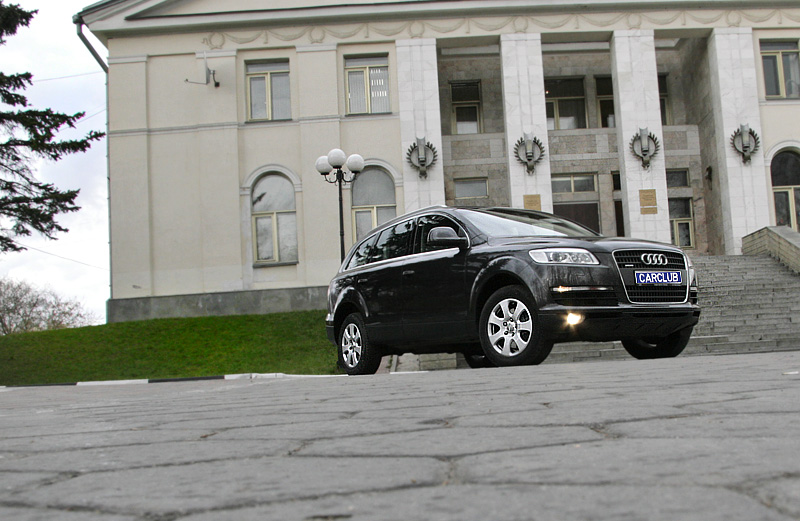
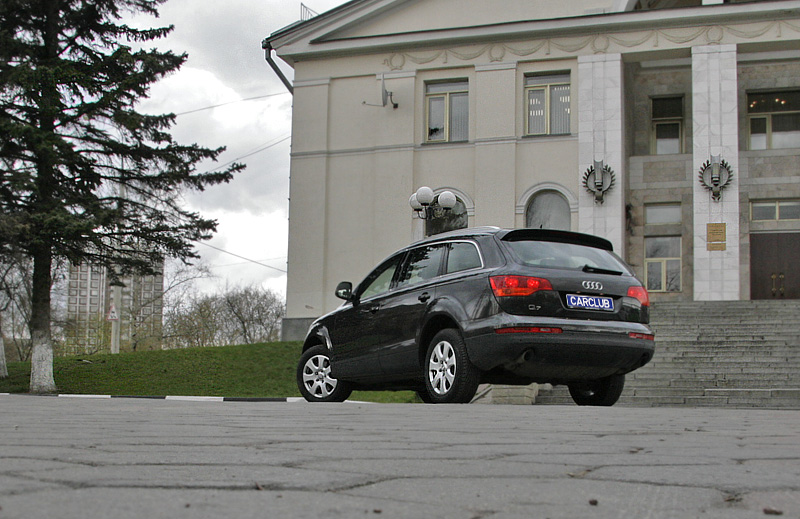
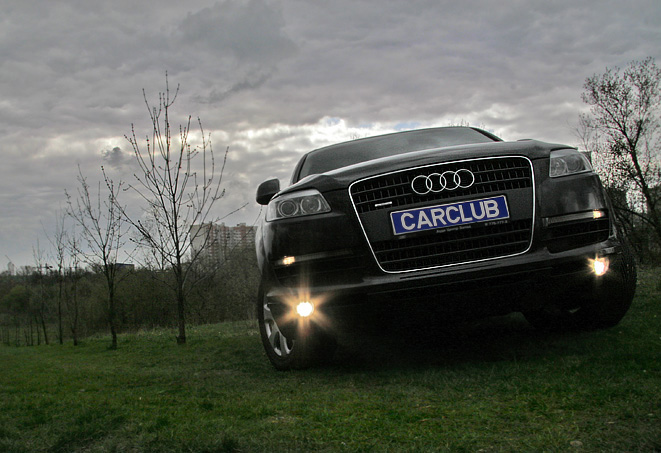
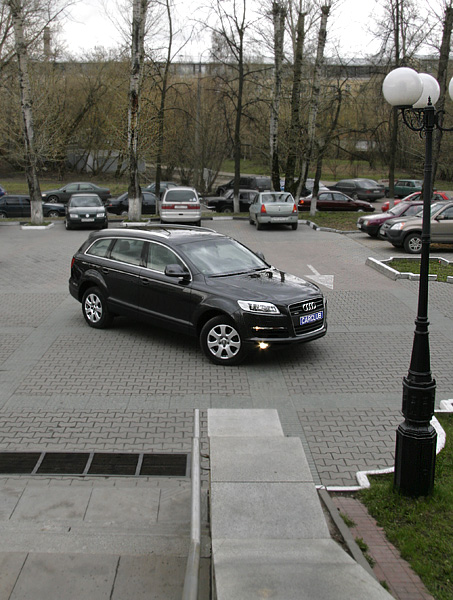
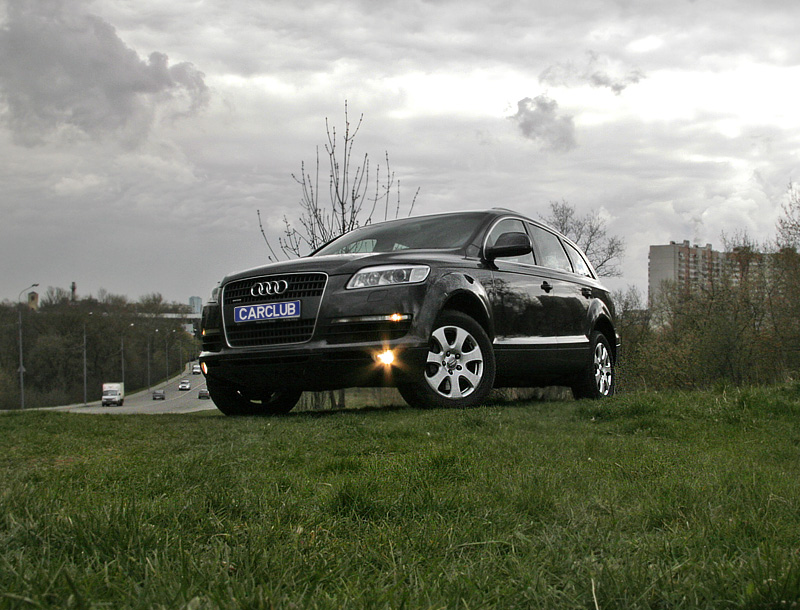
At first glance, the Q7 doesn't look like a tank, but when you look at it, no other associations come to mind. It looks more massive than a Hummer (both versions), a pompous Range Rover, or the related Porsche Cayenne, which one famous journalist aptly called a troll. Perhaps it's all about the color... a black Q7 is a real monster, while a silver one is perceived as an ordinary car. It doesn't scare children and is more liked by office workers. The cold gaze of squinted xenon headlights and muscular body lines immediately make it clear: there is both power and intellect here, so it's better to hand over your hard-earned money right away, without unnecessary hesitation. Which, in fact, many do, lining up 7 months in advance. And I want to believe that these people already have Alfa Romeo, Land Rover, and, say, Lotus in their garages...
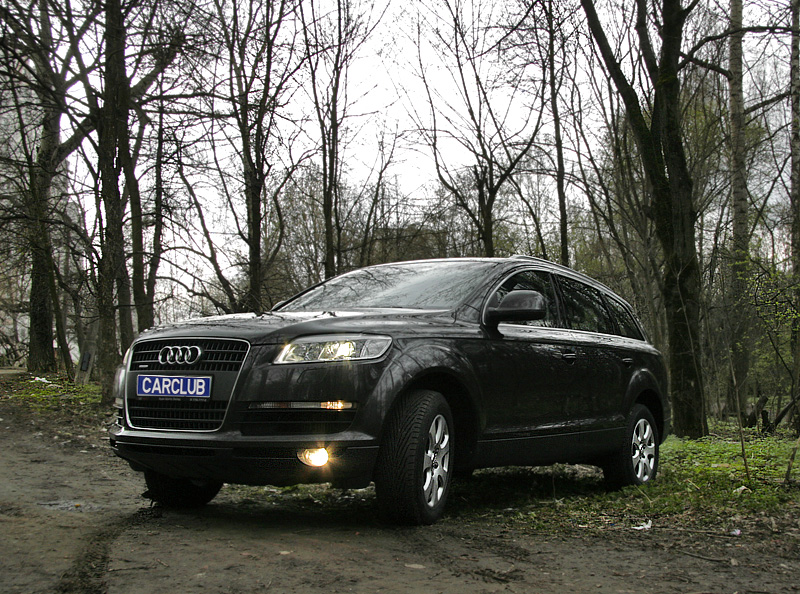
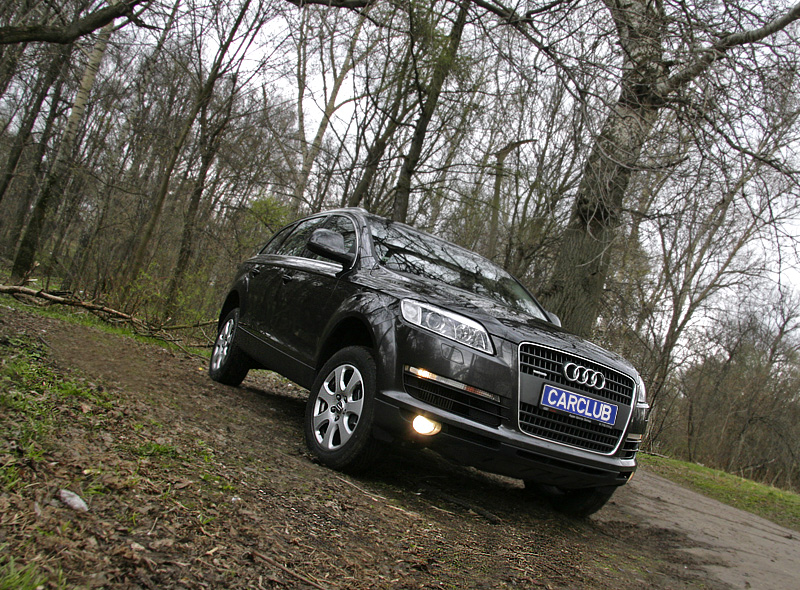
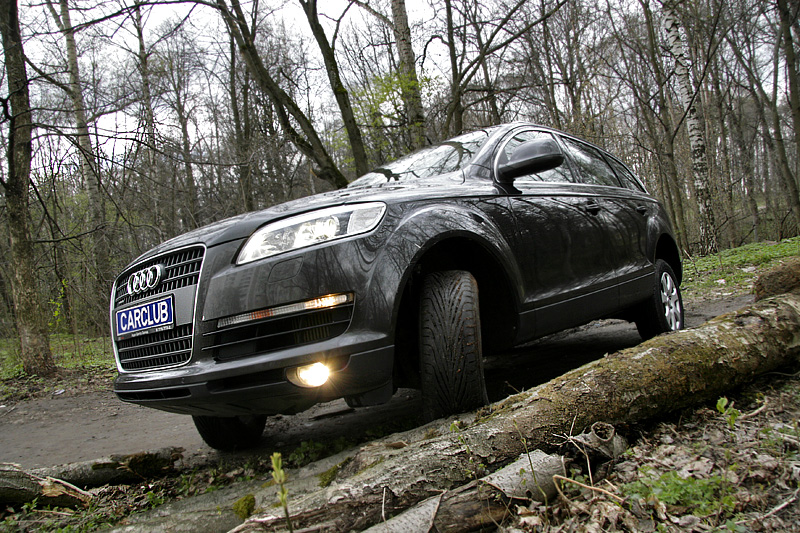
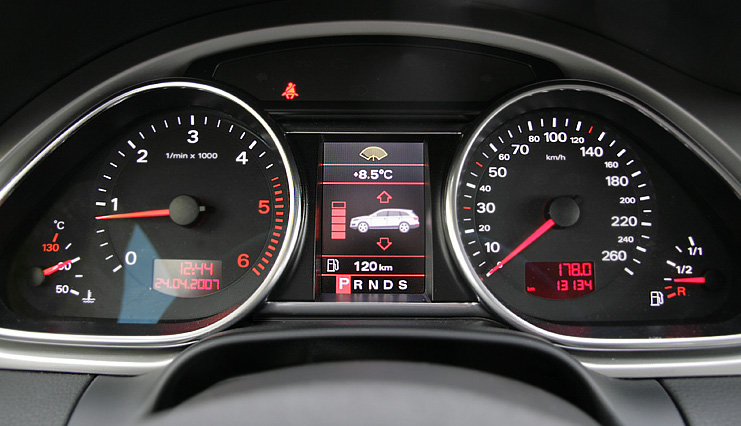
Fortunately, having driven the Q7 without incidents and returned the car intact, I returned to the city with heavy thoughts. I exceeded the speed limit several times, crawled over conditional off-road near Novaya Riga under the cries of the Latin American Zack de la Rocha from the Bose speakers, deftly "kicked up dust" along paths near the Ruza Reservoir (my conscience doesn't torment me — the Q7 meets Euro-4 standards) and became convinced that this Audi, by and large, is capable of everything within the limits dictated by an urban lifestyle. And then I began to recall what exactly surprised me about this car. I recalled — and couldn't. Everything would be simpler if this tank were made by the lazy Italians from Fiat or, no offense, the guys from AvtoVAZ, or even the impeccable Koreans from Hyundai. But no, the Q7 is typically German, and therefore a one hundred percent predictable product in terms of praise.
In essence, telling in detail how good another Audi worth over a hundred thousand dollars is, is as strange as describing the taste of a $100 steak at Goodman's restaurant. For that kind of money, you're simply obliged to be served a good steak, and there's nothing surprising about that. In the same way, the Audi Q7 doesn't surprise with anything. It's just a very good automo... no, product — another well-done steak.
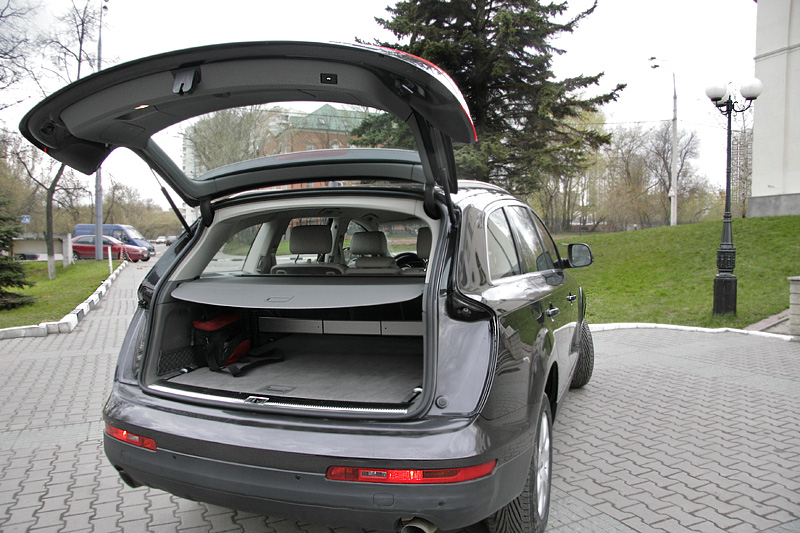
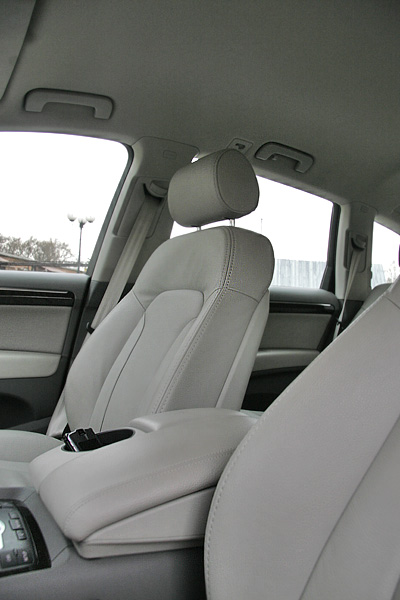
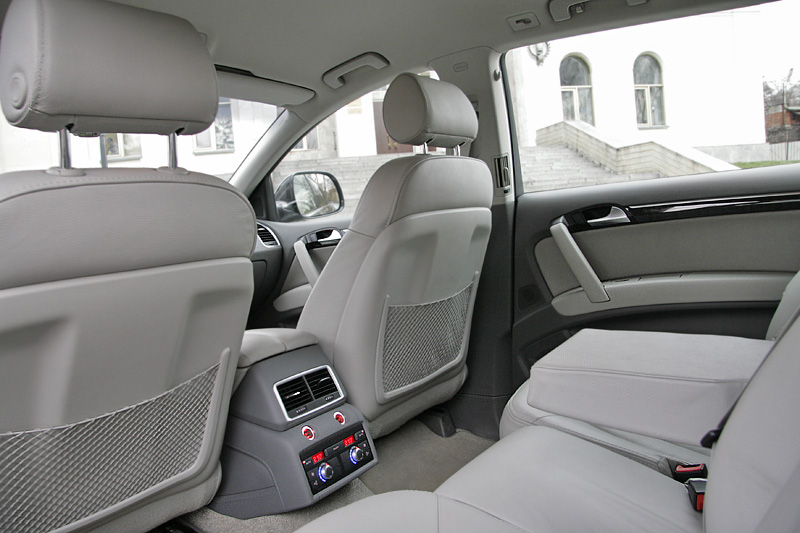
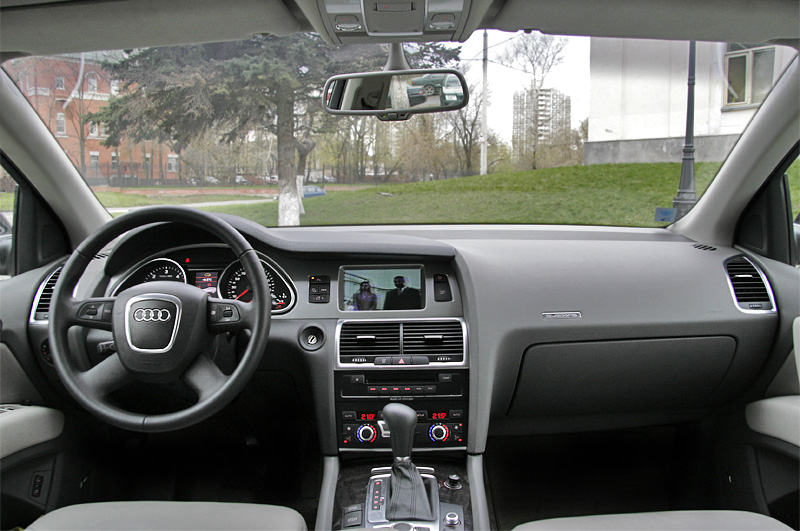
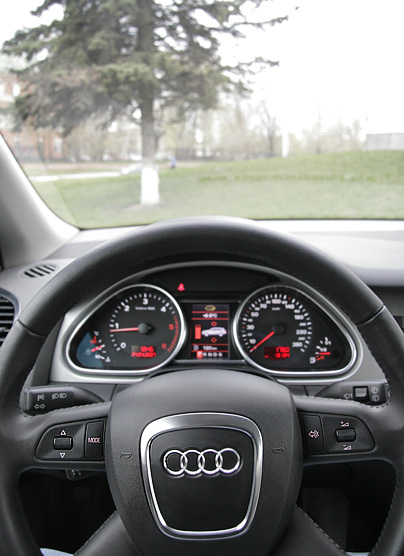
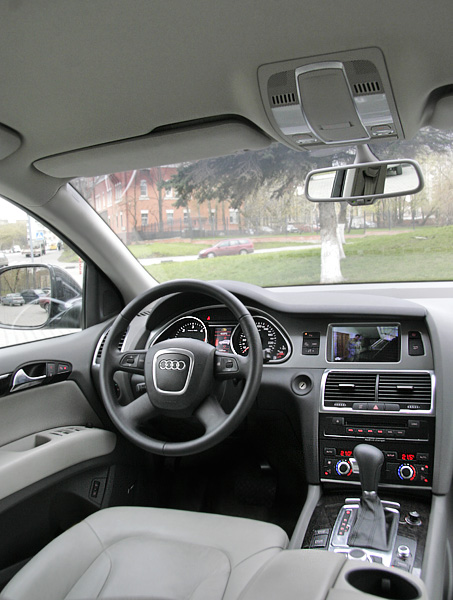
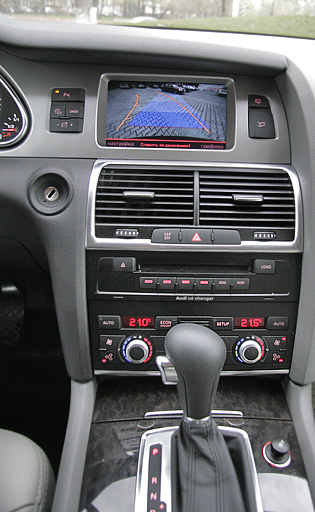
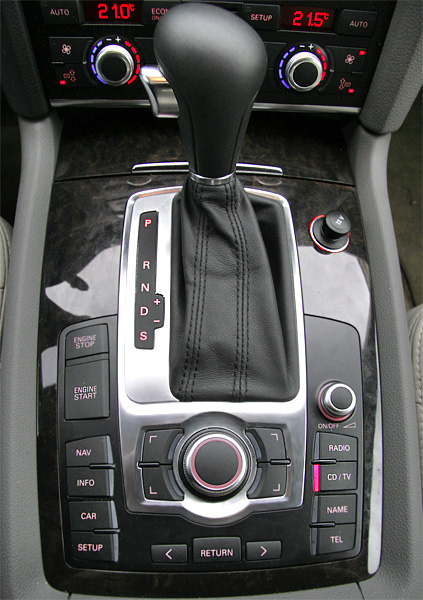
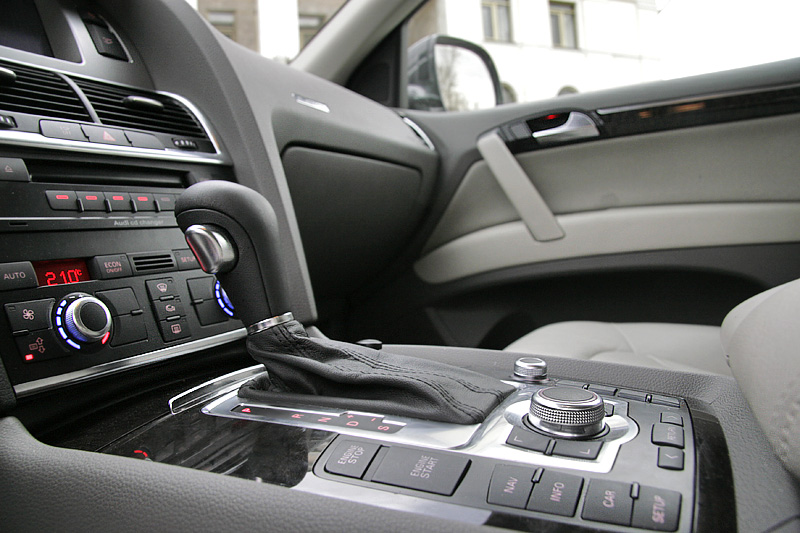
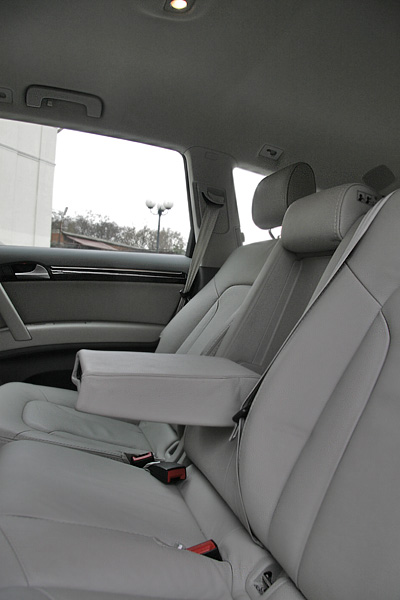
Well, what's surprising about the good old Torsen differential, which splits torque between the axles in a 40/60 ratio? What's unique about the 4.2-liter aluminum V8 with 350 hp, which pulls as if there were not 350 but all 700 horses under the hood? Nothing: all FSI engines are renowned for excellent traction and phenomenal elasticity. Acceleration to 100 km/h in 8 seconds is very good. And from 100 to 200 in another 20 seconds — just excellent! And what's unusual about the 6-speed automatic, which shifts so smoothly that you can only tell a gear change by glancing at the indicator on the instrument panel? What's surprising about the air suspension doing everything as it should — tightening at speed, making the ride sportier, and raising the car to 240 mm off-road? What's strange or unusual about the MMI interface being fully Russified and still more convenient than BMW's iDrive? How can a luxurious leather interior with many adjustments and massage, the Side Assist system — a light in the mirrors warning that it's not worth changing lanes — surprise you? Or the new, non-switchable ESP, which itself decides which wheel to brake and where to transfer torque? On steep descents, an "electronic collar" works, holding the car at a minimum speed... But for some reason, all these options don't create character. What's exceptional about the fact that with the rear seats folded, three mountain bikes and a couple of bulky suitcases fit in the cabin — the trunk volume in this form exceeds two cubic meters? The third-row seats don't surprise either — except perhaps that they are designed for fearless children ready to sit as far as possible from their parents, in the very back, in the trunk — further only a dog. I so wanted to be surprised and exclaim: wow! cool! But the Q7 gave me no reason.
Honestly, the car surprises with only one thing — the absence of a bright character, and this distinguishes it from many other Audis. And also with the fact that it no longer attracts attention. This is a very high-quality product designed for a specific audience — Americans. Big, powerful, capable of comfortably transporting both a single driver and his family of seven. As it happened, America imperceptibly acquired a superiority complex, and this was reflected even in the next technological masterpiece of the Germans, who created the Q7 for the American market. The Q7 is a car for the perfect person, homo sapiens without flaws. A means of transportation for an athlete, musician, polyglot, special agent of the FSB, FBI, and MOSSAD, and for those who have no emotions towards cars at all — neither love nor hate. A unique car that is hard to love, just as it's hard to love a supermodel — and just as hard to tell one supermodel from another. You can own it only for status reasons, although already now, six months after the start of sales, no one will turn around after the Q7, and the "status" will go unnoticed. After all, no one remembers how many well-done steaks they ate this year.
Text: Leonid Pavlov. Photo: Dmitry Malygin.