
 Comments
 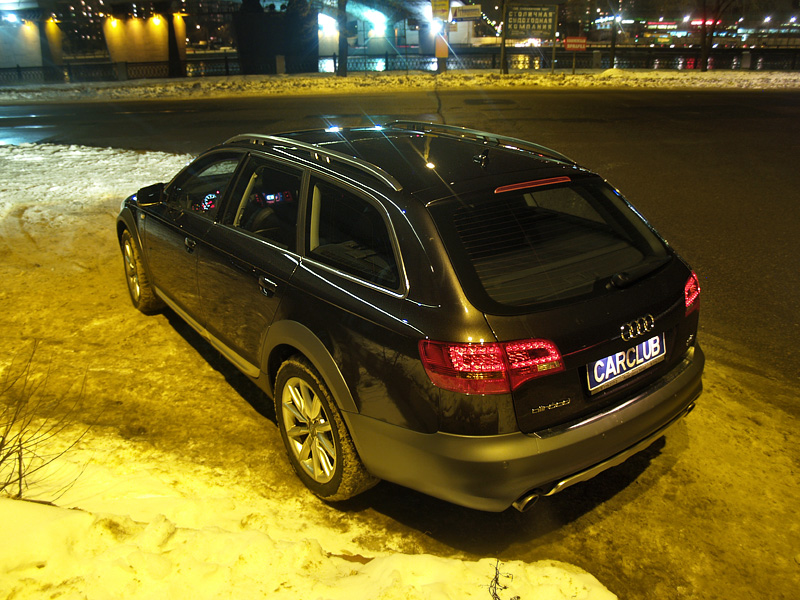 The first-generation Audi Allroad emerged as a compromise solution. While competitors from Mercedes and BMW were actively promoting their large SUVs, Ingolstadt took a different path and bet on the versatile Allroad. In essence, it was an A6 Avant wagon that underwent serious factory refinement. It was fitted with larger-diameter wheels and equipped with air suspension with adjustable ground clearance. In its lowest position, the Allroad was no taller than a regular wagon and could calmly reach about 250 km/h on the autobahn — its off-road nature was only hinted at by wide fender flares. But once you left the asphalt, the clearance could rise higher than that of most crossovers, allowing the car to feel confident on ruts and slopes while remaining truly versatile. Additionally, for an extra charge, the manual gearbox could be combined with a reduction gear.
Sales of the all-road vehicle were decent, but the competitors' full-size SUVs sold more actively, which prompted Audi to create the massive Q7, aimed primarily at the American market (recall that the Mercedes ML and BMW X5 are produced in the USA). It would seem that the Allroad's story ended there, but Audi thought otherwise: a new generation of the all-road vehicle appeared, lighter and more agile than the large SUV.
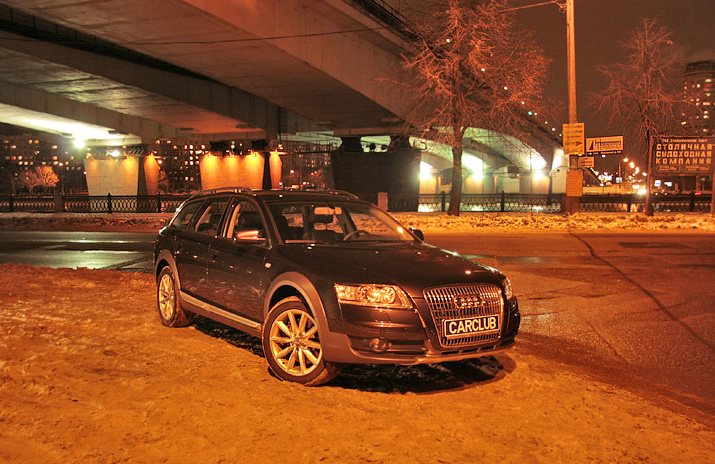
To avoid poaching customers from the Q7, the new Allroad dropped flashy off-road details — unpainted bumpers and massive arches. The maximum body lift height via air suspension was also reduced. As a result, the current Allroad looks more like a gentleman in a linen suit and loafers than the seasoned traveler its predecessor was. The first generation was instantly recognizable from any angle, while the current Allroad is harder to spot — only its grille and aluminum trim give it away.
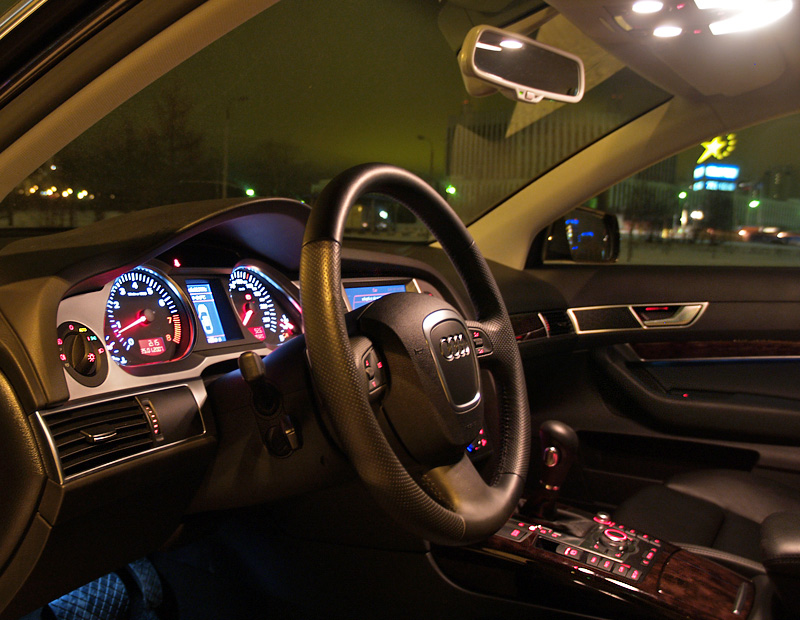
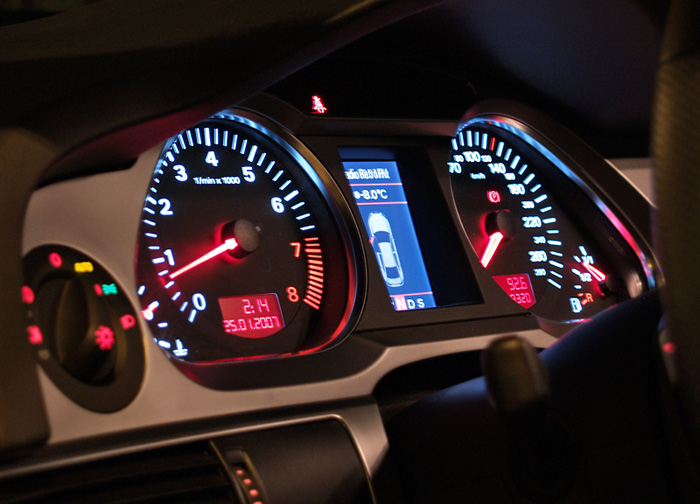
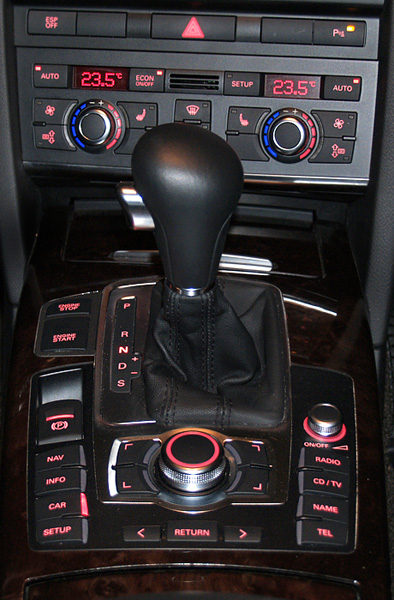
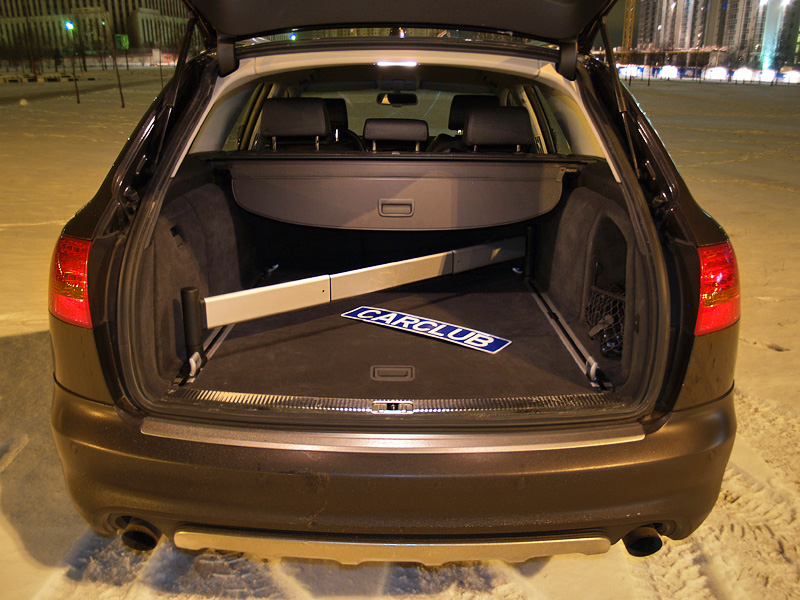
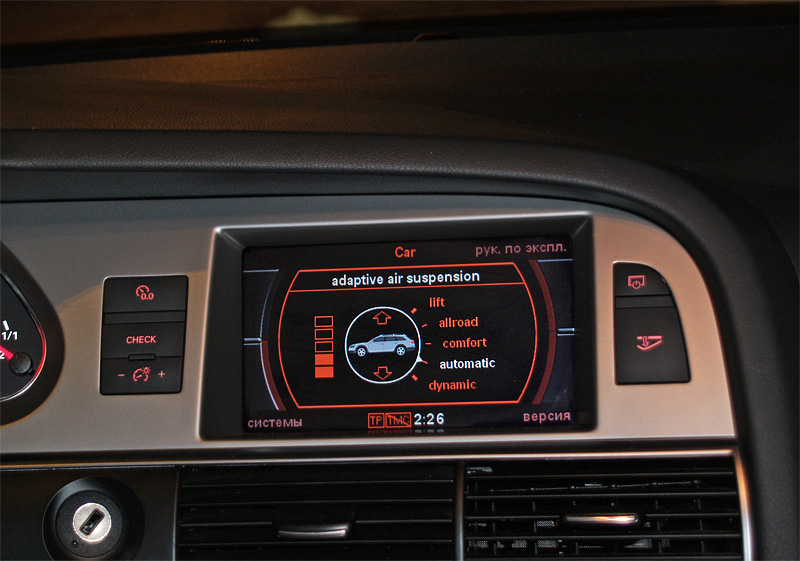
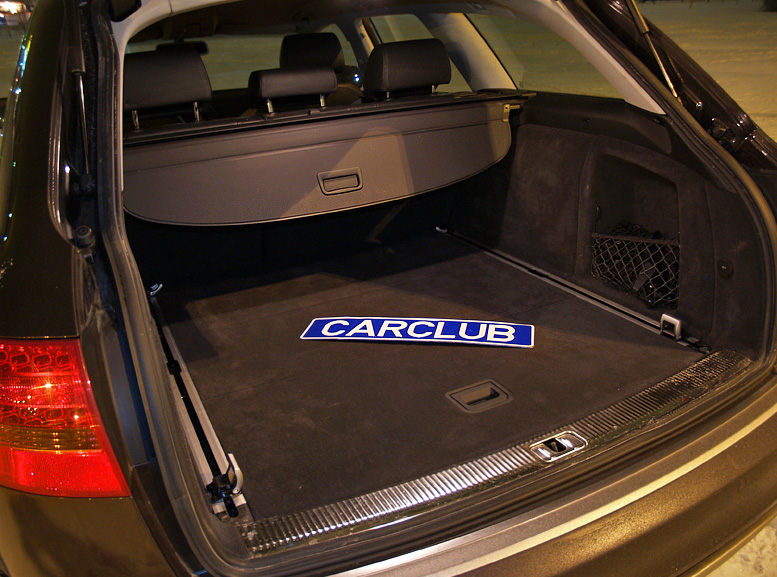
Inside, differences from the regular A6 are almost nonexistent. The only addition is an air suspension control item in the MMI menu, which is optional for the A6. Otherwise, the cabin is equally luxurious and spacious. The front seats adjust over a wide range, but even with the seats pushed all the way back, there is still enough legroom in the rear, and if the driver is 170-180 cm tall, the passenger behind can comfortably cross their legs. Meanwhile, the trunk retains 565 liters of free space, and with the seats folded, all 1660 liters. By the way, for an extra charge, the tailgate can be equipped with a power drive, which is convenient to operate both from the cabin and via the key fob. Additionally, the trunk has rails for mounting partitions that divide the compartment into zones and prevent cargo from shifting during sharp maneuvers.
It's surprising why the designers so persistently hide the glovebox opening mechanism. There's no handle on it, and it opens via a button with a cryptic icon near the central display — it's nearly impossible to figure out without a hint. The box itself is also frankly small, and a significant portion of its volume is taken up by the CD changer. It's unclear why there's no room for a disc player on the center console given the abundance of buttons, while other manufacturers manage to fit entire changers there. Moreover, the Audi stereo doesn't read MP3 discs, and connecting an external audio source is also not possible. The lack of storage compartments for small items in the cabin is also disappointing. However, engineers explain this as a safety concern: unsecured items can become dangerous in an accident, so they advise carrying all road essentials in the trunk — which is spacious, and there's an additional niche under the floor.
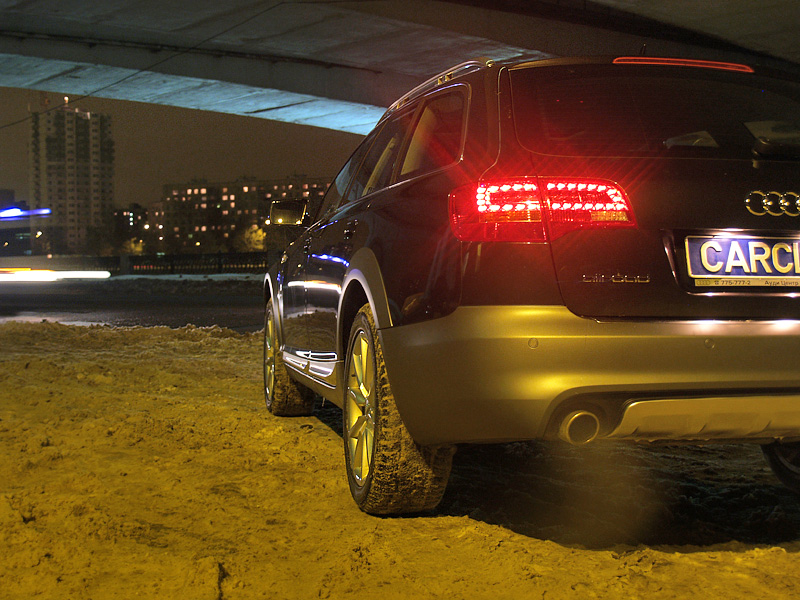
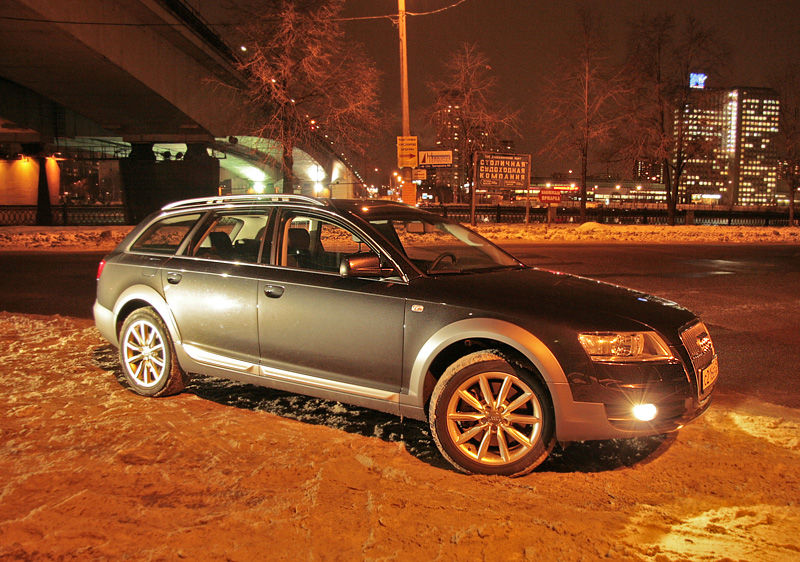
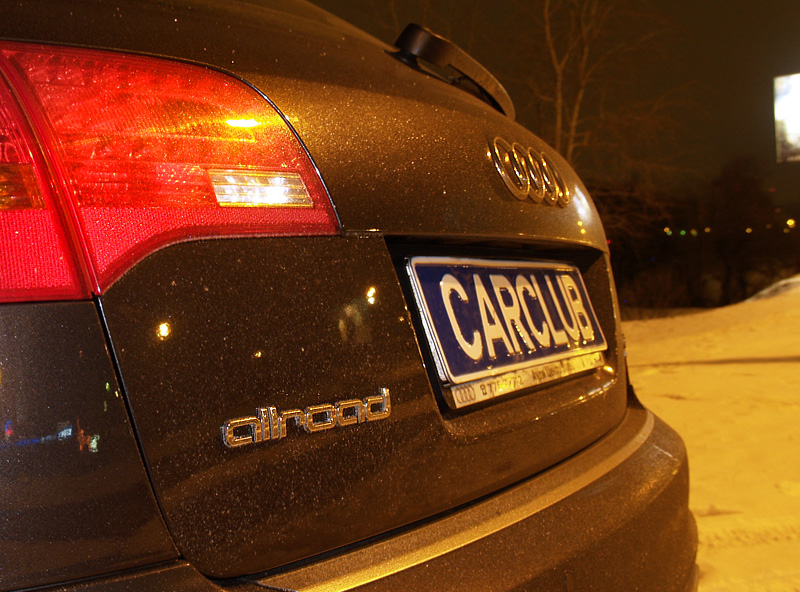
On the highway, the Audi Allroad with the 3.2 FSI engine producing 255 hp and an automatic gearbox proved impressively fast and comfortable. No classic SUV for the same money and with similar output can accelerate so easily and imperturbably well beyond 200 km/h while remaining so obedient. Speed is completely imperceptible: it's masked by the soft air suspension and cabin silence. At high speeds, the suspension lowers the body to a car-like 125 mm, and the aerodynamics are so refined that at 220 km/h you can talk without raising your voice much. And there's also a version with the 4.2 FSI engine — 350 hp, which accelerates to 250 km/h (the tested car's maximum is 240 km/h).
In corners, the Allroad is no less spirited than the regular A6. The all-road vehicle is ready to break into a spectacular drift at any provocation, but the stability control system works flawlessly. Even when ESP is switched off via the button, the electronics remain vigilant and don't allow a gross mistake. Essentially, stability control cannot be fully disabled — you can only switch it from normal mode to off-road mode, which allows wheel spin but prevents the car from sliding. On snow or ice at low speeds, the electronics loosen their grip and allow some sliding, letting you enjoy the signature reactions of Quattro all-wheel drive, where the Torsen differential distributes torque between axles. But it intervenes instantly as soon as the situation becomes truly dangerous. And at speeds above 60 km/h, any sliding is immediately suppressed. On straights, the Audi delights with excellent directional stability. The steering wheel is very comfortable: it initially seems too light, but within five minutes you bond with the car. As speed increases, the wheel gains weight, allowing you to confidently maintain a fast pace, stringing corner after corner. After that, it's no surprise that at parking speeds the wheel turns with one finger.
In terms of off-road capability, the Allroad is almost on par with regular crossovers: it falls slightly short in ground clearance, but it looks more stylish and elegant. Just consider the chrome grille with vertical cells and the rear LED taillights.
However, the price seemed inflated to me. For 80 thousand dollars — that's what the Audi Allroad costs in base trim — you could get a well-equipped Volkswagen Touareg 3.2 (from 57,250 dollars) or even a prestigious Porsche Cayenne with a 280-hp 3.6-liter engine (from 57,850 euros). But if you compare it with the donor Audi A6, it all adds up: the all-road vehicle is 8,000 dollars more expensive than the already familiar sedan with the same 3.2 FSI engine and automatic transmission, but it gains a whole set of new qualities and standard air suspension. And when it comes to prestige and respect on the road, the Allroad gives both the sedan and the wagon a big head start — and when buying a car for 80 thousand dollars, you'll agree, that's important.
Text: Leonid Pavlov.