
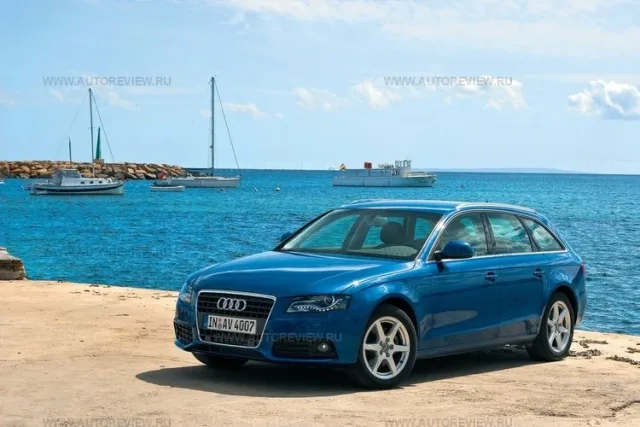
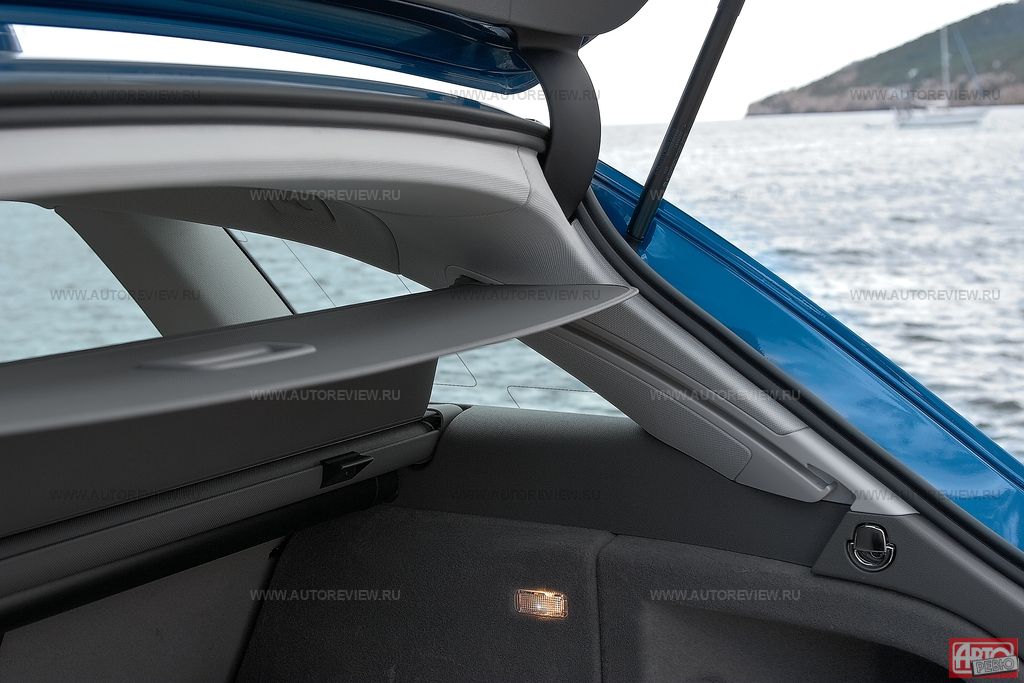
I press a button on the key fob — and the tailgate lid smoothly rises up. Then I pull the roller blind — and it, following the inclined guides, also moves up. Here it is, the highlight of the new Audi A4 Avant estate: the luggage compartment roller blind can move in two planes! Actually, that could be the end of the story about the trip to Ibiza, but I decided to continue the acquaintance...
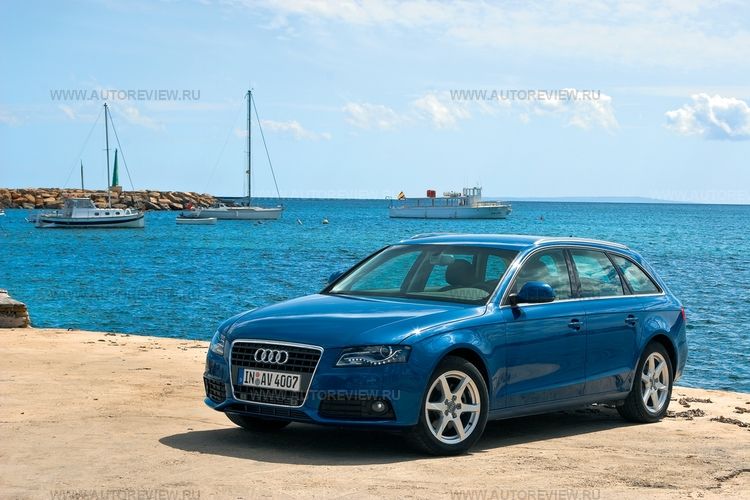
Does the glass of the fifth door open? No. Do the rear seat backs fold down? Yes, but they don't form a flat floor. Are there hidden niches in the trunk? No, only an open pocket. And what about that hatch in the floor? As I expected, there's a spare wheel or a repair kit with sealant and compressor hidden there. But what I didn't expect was that the cover can be flipped over — and you get a plastic tray. It's onto this tray, to avoid soiling the light upholstery, that you should throw wet ski boots, muddy boots, and other non-sterile cargo. You can also order a set of "volume dividers" — such an organizer, though not a novelty, is extremely practical.
 |
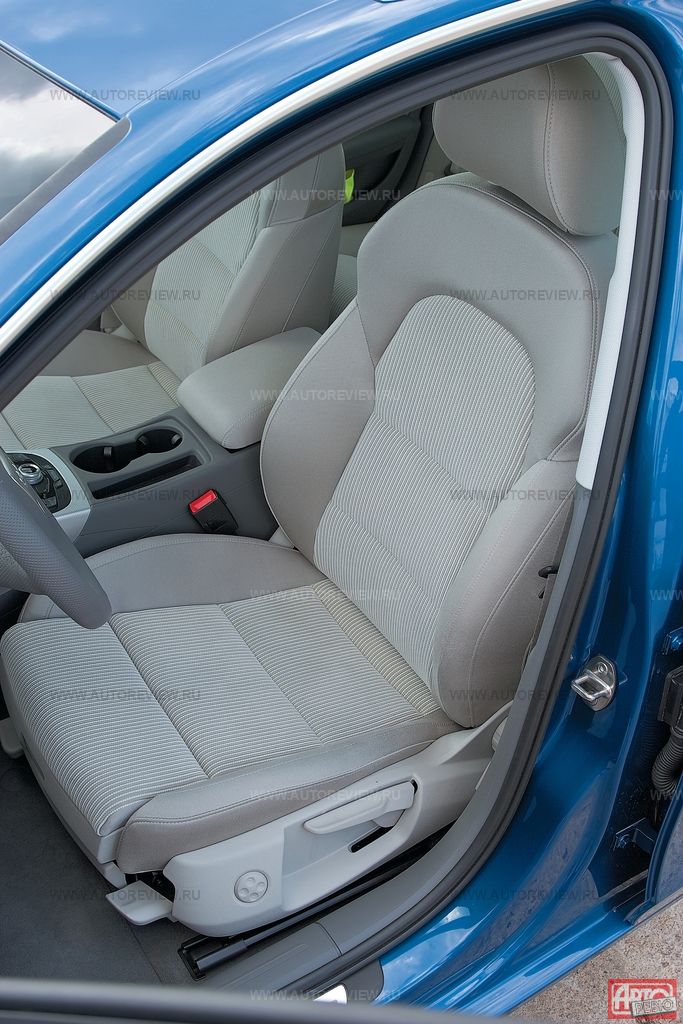 |
| The inclined guides allow the blind to cover even oversized luggage | The photo shows sport seats. You can also order comfort seats — with electric adjustments, memory settings, and ventilation |
 |
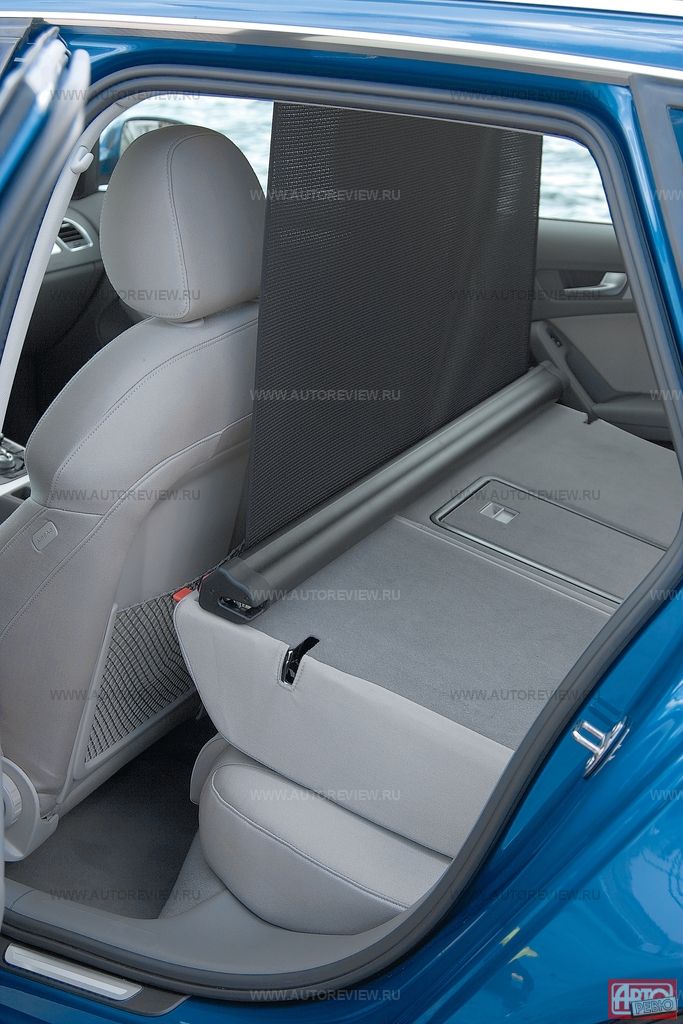 |
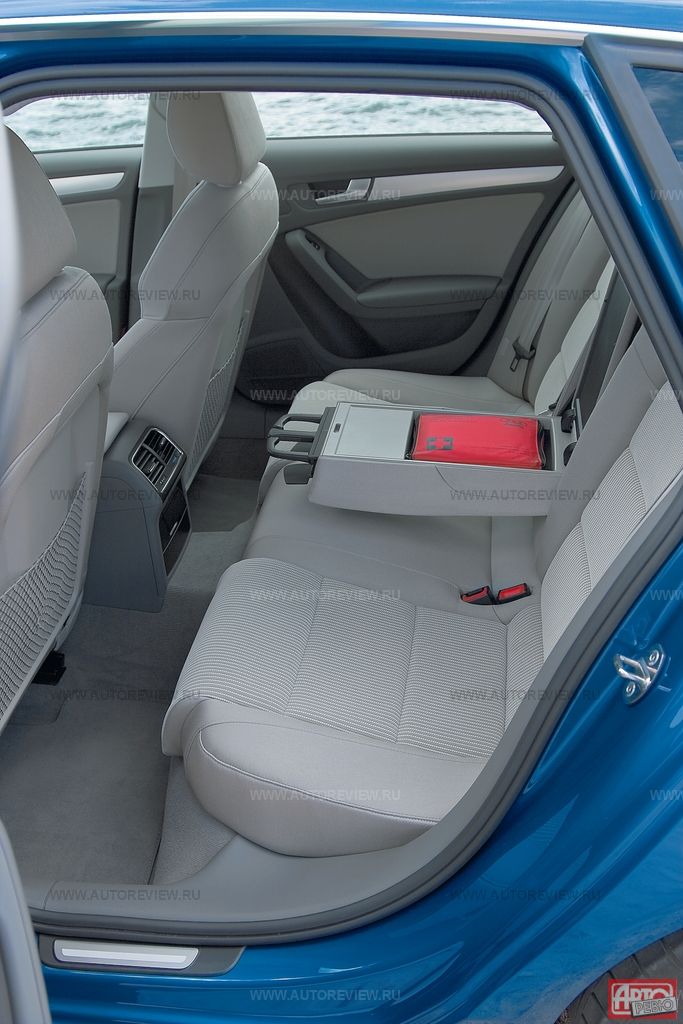
| It's comfortable for two people in the back: the high central tunnel bothers a third passenger | Mounts for the luggage net are provided both on the body and on the rear seat back |
As for capacity, it doesn't impress: 490 liters up to the level of the blind — only 10 liters more than the sedan. But if you fold the rear seat backs and load up to the roof, you get 1430 liters. An average figure: for example, the BMW 3 Series Touring offers 460/1385 liters, and the fresh Mercedes-Benz C-Class estate — 485/1500 liters.
But is it so critical when it comes to cars of such brands, even if they are estates? Design, quality of finishing, interesting details... That's what attracts! However, looking at the Audi Avant in profile, I caught myself thinking that I prefer the leaner BMW Touring, while this one seems too stretched. And it's not an optical illusion! The Audi is 18 cm longer, and the wheelbase is 5 cm longer. But just look at it from the front or rear — and the Audi looks more attractive again: the headlights alone are worth it! And there are more bright details in the interior — there are "colored" optitronic instruments, and a large central console screen with excellent graphics, and although there are many buttons, none raises questions about its purpose or principle of operation! However, we have already written about all this using the sedans as examples (see AR No. 21, 2007; No. 8, 2008). And since the differences in road behavior are barely noticeable, I will focus only on those versions of the "fours" that are still little known to us. And as a "stove" I'll take the base Audi A4 1.8 TFSI (160 hp): manual gearbox, front-wheel drive... Let it be thoroughbred, but still a workhorse. For every day.
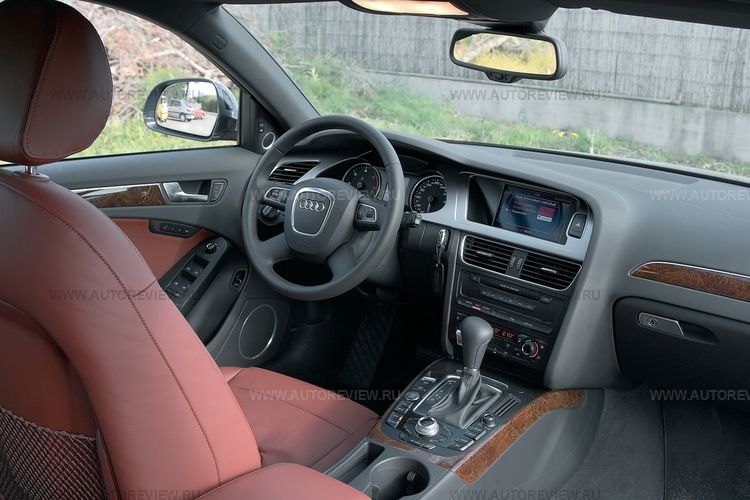
The interior of the new "four" has become both more beautiful and more solid. And you can't fault the ergonomics either
Acceleration pleases, the gear selection mechanism works clearly, and the clutch drive, which we previously criticized for its long travel, is now noticeably better. The pedal travel has decreased, and it's easier to start off. Special joy for those who never learned to start on a hill using the regular brakes or the "handbrake": now the parking brake is electromechanical. That is, press the button once — and forget about the "handbrake": it will then "engage" itself at stops and "release" when starting. What a blessing for blondes! And I, a brunette, didn't complain either: all of Ibiza, where this presentation took place, is full of descents and ascents, and the roads themselves are winding...
But on them, the Audi A4 Avant doesn't behave in the best way. First, it's a bit cramped: from nose to tail — 4.7 meters. Second, the picture was spoiled by understeer: as soon as you accelerate, as soon as you aim for an open turn... and — the estate slides with its fancy nose outward. Until you reduce speed (whether by yourself or by ESP's will), neither lifting off the gas nor turning the steering wheel helps. But this is the front-wheel-drive Audi A4.
 |
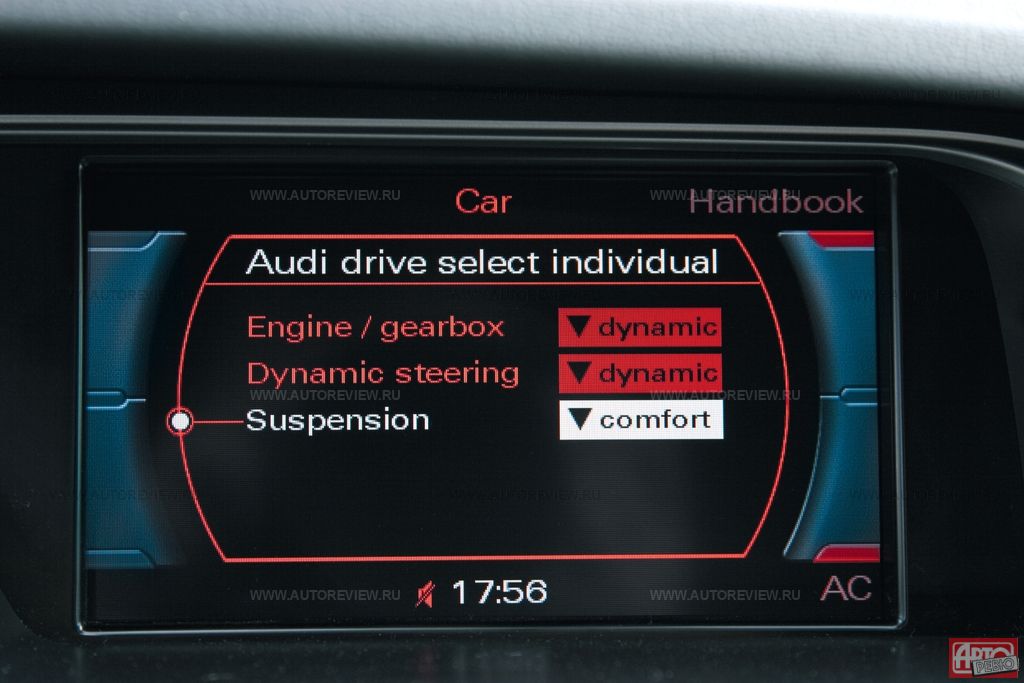 |
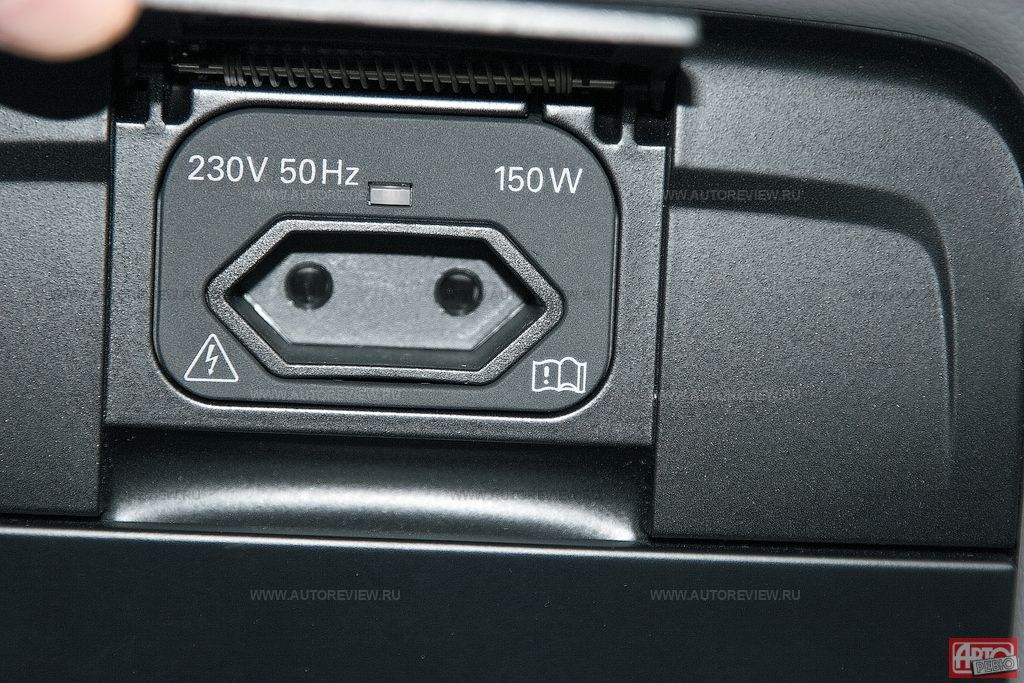 |
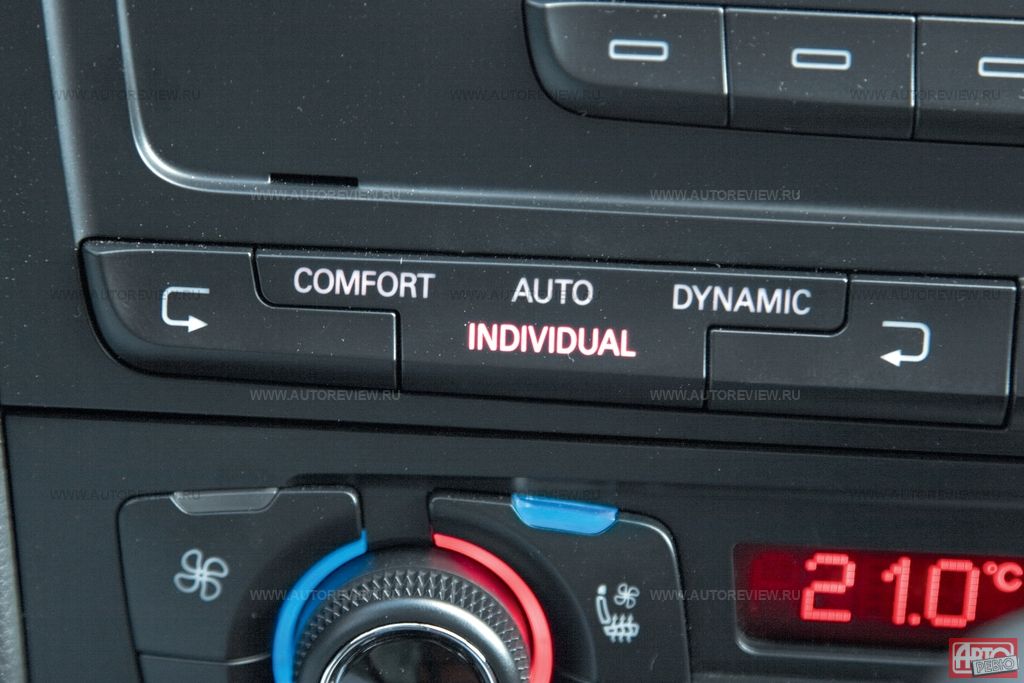
| The Audi Drive Select system allows you to change the settings of the suspension, "automatic", and steering with one button press | And if you have the MMI multimedia system, you can also set individual chassis settings | The 230-volt socket will allow you to connect a laptop to the network |
And the all-wheel-drive one? God, how much more pleasant it is to take corners in the Audi 3.2 FSI quattro! And it's not about the engine, which is 105 hp more powerful. The key word is quattro. The all-wheel-drive estate both enters the arc more easily, and you can open the throttle earlier on exit... I understand, I feel how the outer rear wheel pushes the car, forcing it to follow the desired trajectory! Well done for abandoning the symmetrical torque distribution and sending almost two-thirds of the power to the rear wheels! Only quattro!
Yes, all-wheel drive is more expensive, yes, only the Audi A4 Avant with engines of 170 hp and above can be equipped with it. And I liked the 240-horsepower Audi A4 3.0 TDI quattro the most — with a turbodiesel and a six-speed Tiptronic "automatic". It's even better than the version with the petrol engine 3.2 FSI (265 hp) and the same gearbox: already at 1500 rpm — 500 Nm! If the petrol engine, in response to the gas, constantly demands shifting down one or two gears, the diesel immediately, on the current gear, briskly accelerates the car! And that the working range is not as wide as that of the petrol engine, this is fully compensated by the good work of the "automatic": the Tiptronic gearbox has had its "brains" reconfigured, the pressure in the lines increased — and now the gearshift time has halved.
Why not a preselective "robot"? It's known that both the new Audi Q5 crossover and the sporty Audi S4 are prepared with a robotic S tronic gearbox with two clutches...
The answer from the lead engineer of the A4 Avant project, Martin Weisbrot, surprised me:
— Because the future belongs to hydromechanical "automatics". The gearshift time is reduced, the torque converter lock-up is used in steady-state driving modes, and consequently, fuel consumption is reduced. And most importantly, the "automatic" is better adapted for transmitting high torque. The S tronic gearbox for the S4 and Q5 is designed for 550 Nm, and in the Audi engine range there are also more "powerful" engines.
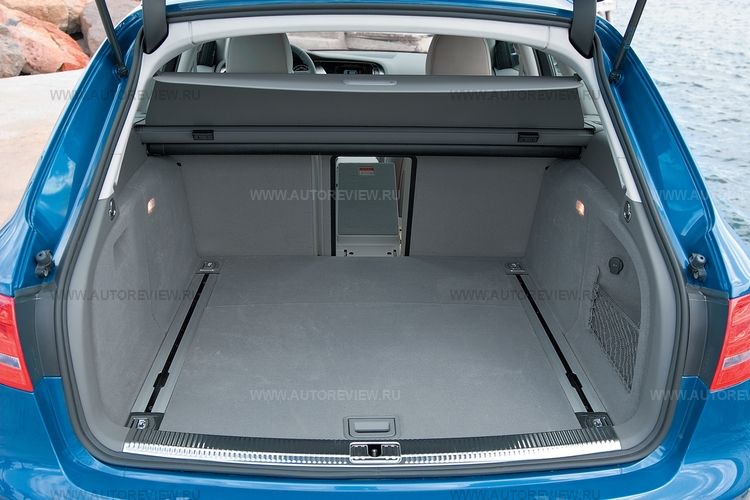
The trunk volume up to the window level is 490 liters: 10 liters more than the sedan
And also, following Yuri Vetrov (see AR No. 21, 2007), I'll praise the Drive Select option. You press a button on the central console — and the suspension, steering, and transmission switch to Comfort mode: the shock absorbers become softer, the steering wheel lighter, and the gearbox works more on higher gears. Press again — and the system itself adapts to the driving conditions. This is Auto mode. And press again — and Dynamic mode turns on: stiff shock absorbers, a steering wheel filled with effort, a combat algorithm for the "automatic". Just what you need for mountain roads! You can also select individual settings using the MMI menu. A separate option is an "active" steering wheel that changes the "actual" gear ratio depending on speed. You drive at a "whisper" (for example, parking the car) — and the steering wheel makes only two turns from lock to lock, and with increasing speed the gear ratio decreases: a "lazy" steering wheel allows you to drive the car more calmly on the highway. In essence, an analogue of the Active Steering system that appeared in 2004 on BMW...
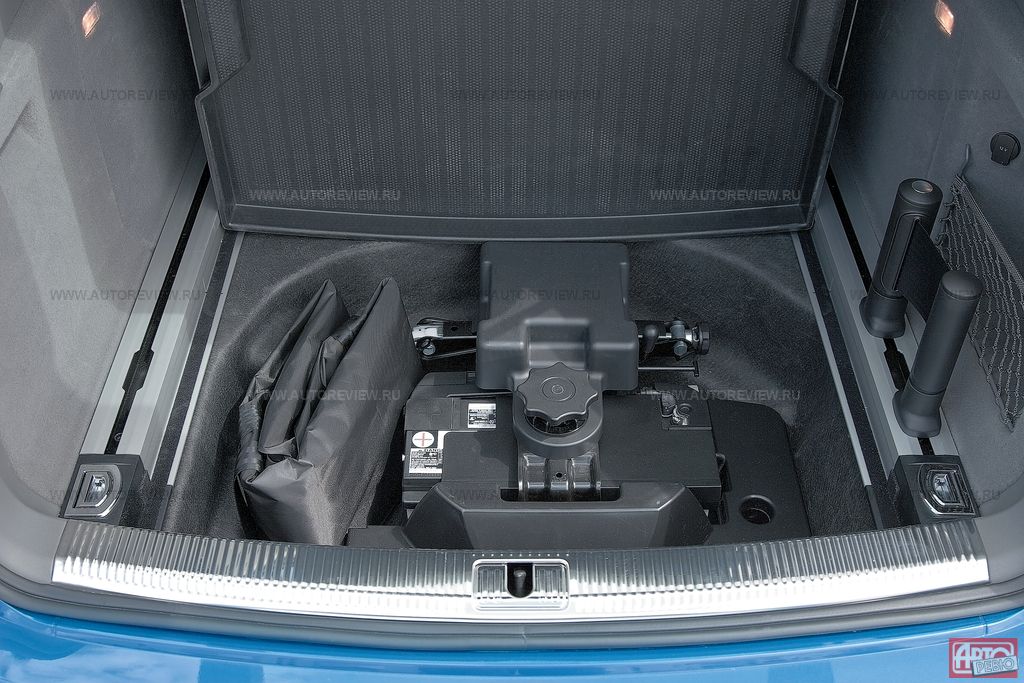 |
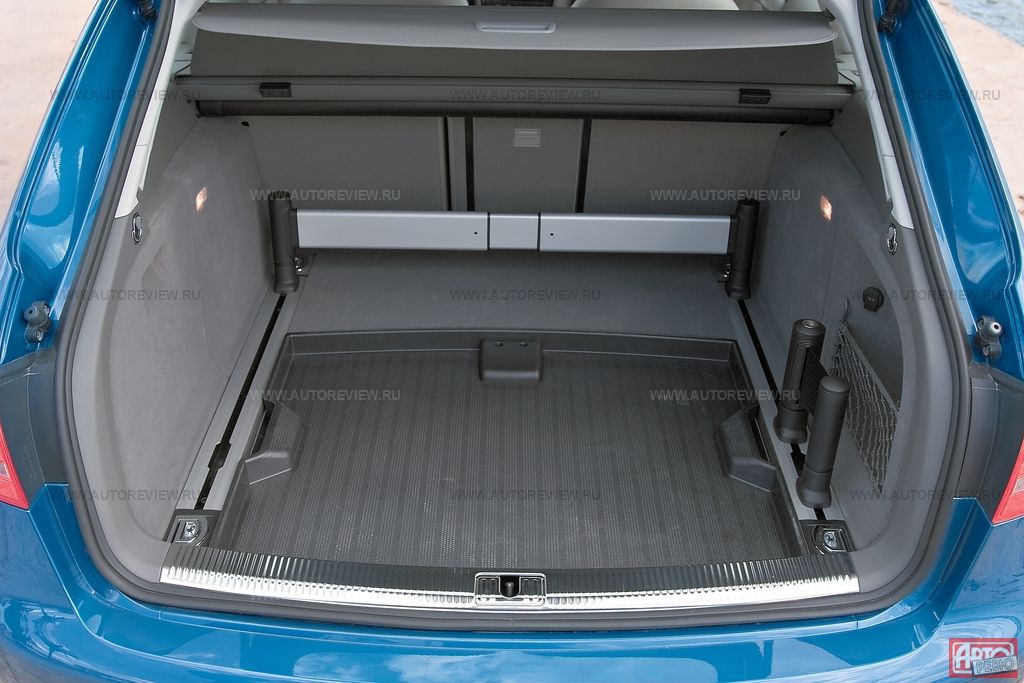 |
| The battery has been moved to the underfloor of the trunk for better weight distribution | The reversible floor will help keep it clean |