
Audi A4 allroad 2009 station wagon features 7
quattro all-wheel drive system
The quattro® all-wheel drive technology has been in use for more than three decades. Its task is to redistribute traction between the four wheels in real time depending on the road situation. Thanks to this, the car maintains reliable grip on any surface, remains stable even in strong side winds, and provides a high level of active safety. This system is installed on all Audi models, except for the compact A1.
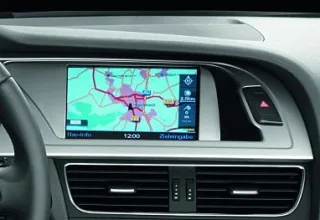
MMI Multimedia Interface
The MMI multimedia interface is an in-car system for controlling its functions. It includes a control unit (MMI terminal) on the center console and a display (MMI display) on the front panel, which can be monochrome or color. The main element of the control unit is a rotary-push knob surrounded by four buttons. On the sides of the terminal there are eight more function buttons for quick access to the main menus. This system is installed on most Audi models.
Audi side assist
Audi side assist monitors the situation in adjacent lanes behind the vehicle. The system uses radar sensors that operate at speeds above 30 km/h and monitor the area to the side and rear of the car. If another vehicle is in the "blind spot" or is rapidly approaching from behind, an LED indicator lights up in the corresponding exterior mirror. When the driver activates the turn signal and there is a hazard in the adjacent lane, the LEDs begin to flash, warning of a possible collision. The system does not take control of the vehicle, and the driver can turn it off at any time using the button on the driver's door.
Audi lane assist
Audi drive select
The optional Audi drive select system allows you to choose one of three vehicle operating modes: Comfort, Auto, and Dynamic. Switching between them is done by pressing a button.
Depending on the selected mode, the accelerator pedal response settings, automatic transmission algorithms, and suspension damping characteristics change. The parameters of the quattro all-wheel drive system with a sport differential and the steering effort (servotronic) are also adjusted.
In Comfort mode, comfortable behavior is ensured for long trips. Auto mode offers balanced settings for everyday driving, while Dynamic allows you to unleash the vehicle's dynamic qualities. The system is available for most Audi models.
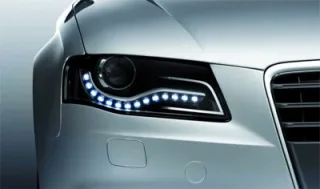
High-beam assistant
The High-beam assistant system automatically decides when to turn on the high beams. It switches between high and low beam without driver involvement. This allows the driver not to be distracted by light control and to fully focus on the road. The headlights always provide the required level of illumination. This option works only together with Xenon plus headlights.
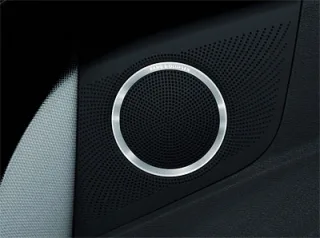
Bang & Olufsen Sound System
The Bang &Olufsen audio system is integrated into the design of the sporty interior. It includes 14 speakers with aluminum grilles distributed throughout the space. Their layout varies depending on the car model to achieve the best sound quality.
For example, in the Audi A4, the configuration is as follows:
- one center and two midrange speakers on the dashboard;
- one tweeter in each triangular trim piece near the exterior mirrors;
- one woofer in each front door;
- two tweeters and two mid-woofers in each side panel;
- two surround speakers and a subwoofer on the rear shelf.
The speakers are powered by a 10-channel amplifier with 505 watts. The sound can be individually adjusted for each passenger thanks to a variable range of settings. A built-in microphone measures background noise in the cabin, and the sound output is automatically adjusted to the level of interference.