
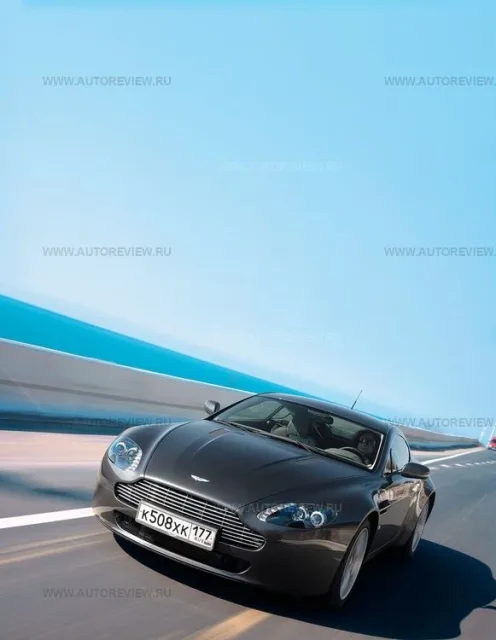
Aston Martin in Sochi. Who could have imagined that twenty years ago? Science fiction, Aksyonov-style, "Island of Crimea". And now the steel-grey V8 Vantage coupe surprises, if at all, for a completely different reason. "Why didn't you notice the pothole?" — the traffic cop who stopped me for speeding shakes his head reproachfully. And how could you notice it with such a low seating position?
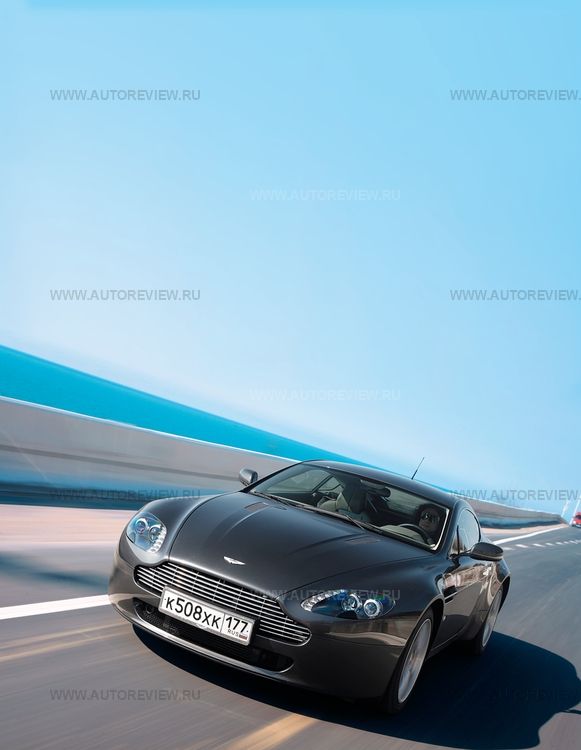
Fortunately, the alloy wheel with elegant spokes remained intact: the huge hole in the asphalt was hiding right next to the curb, just opposite where the cop's Ford was parked. But the impact was still hard. Sochi's roads are not yet ready for cars like the Aston Martin V8 Vantage.
Not yet ready. Because in six years, by the 2014 Olympics, the city of Sochi will surely become completely different. It must. New roads will appear, tunnels will be widened, ski slopes will be developed, stadiums, bobsleigh tracks, hotels, restaurants will be built... And then Sochi will resemble Nice or Cannes. And there will be far more supercars on the local streets.
For now, the Aston Martin looks a bit odd against the backdrop of the half-abandoned promenade with columns and fountains from Soviet times. "Trade union health resorts" with plaster workers and collective farm women, the "fashionable" Radisson hotel with cramped and unventilated rooms, grey panel apartment blocks — and a scattering of dachas, villas, cottages, and small houses of various sizes on the slopes of the surrounding mountains. The post-perestroika "Shanghai" of a former resort, through which timid shoots of oil-and-gas nouveau riche are just beginning to break through.
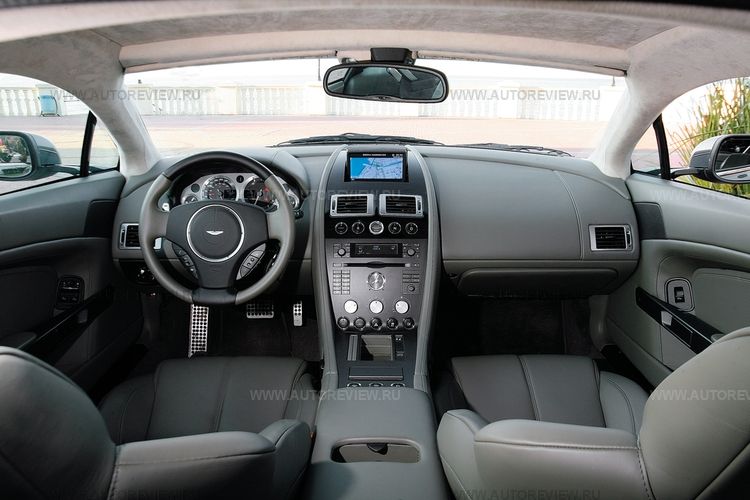
Today's Astons inherited the simple interior architecture from the Vanquish model, created under the direction of designer Ian Callum, but the V8 Vantage is a step forward in material quality and "exclusive feel"
However, Ferrari or Lamborghini would have been completely out of place here. But the Aston Martin is different. Simple shapes, a harmonious silhouette, as if drawn in golden ratio proportions... Neither Ian Callum, the current Jaguar stylist who laid the foundations for the design of the "new Astons" of the 21st century, nor Henrik Fisker, who brought the current V8 and DB9 models to production form, compromised the aristocratic principles of the English brand one bit. Except perhaps the cluster of LED "parking lights" in the corners of the headlights might seem out of place. But it is precisely by these that you can most easily distinguish the V8 Vantage from the larger twelve-cylinder DB9 coupe. By the way, they were deliberately made very similar to each other. "Let Ford worry about the differences between the Mustang and Taurus models," Fisker explained his position. "But Aston Martin is always Aston Martin!"
 | 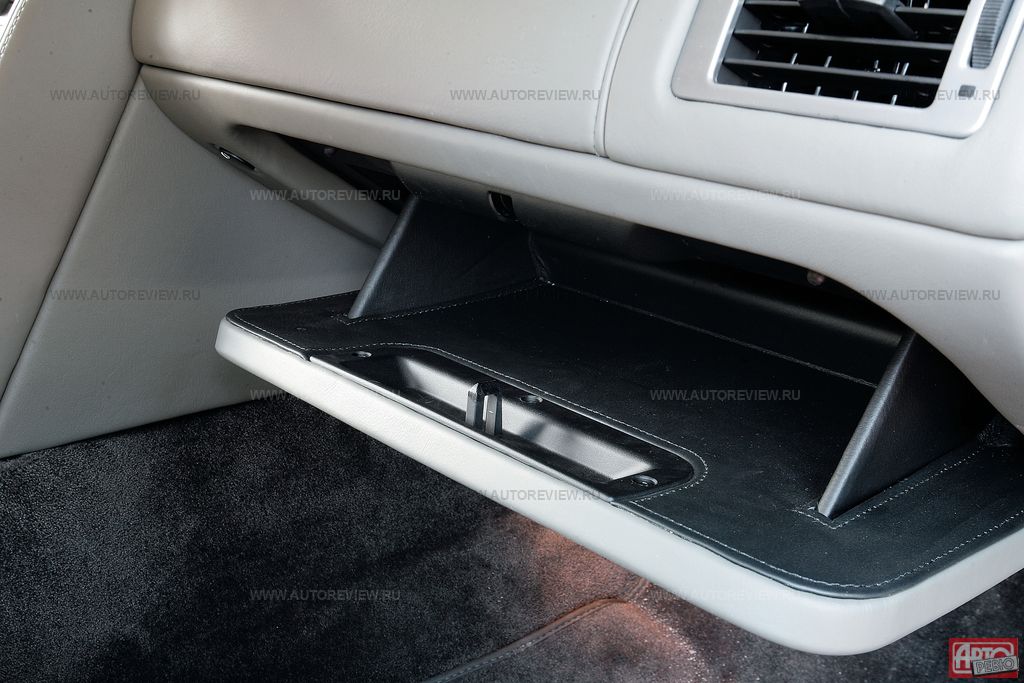 | |
| The narrow sun visors do have mirrors built in: decorative? | Polished wood panels — alas, a source of glare and rattling | There's room here for gloves and documents |
Absolutely true: always and everywhere. Even in Sochi. And the Vantage is so beautiful that you simply don't want to defile its aluminium body with the banal dirt of the mountain roads that lead away from Sochi. And I've already been circling the central streets for an hour looking for a place to take photos. To the low hum of the engine, to the clicking and whining of the servos of the robotic gearbox, to the jerking on start, and to the characteristic smell of burnt clutch...
Strange feeling. You get into a car worth about one and a half hundred thousand euros, which is perfection on the outside, and suddenly — flaw after flaw. No, the interior is, of course, also good, albeit a bit cramped. Thick leather seats, aluminium on the centre tunnel, the bluish glow of the metal instrument dials. But before the Aston slogan "Power, Beauty, Soul" lights up on the display, you need to insert the ignition key into the slot — with a Volvo-style body and a trivial round Ford-style blade, like on a Focus or an old Mondeo. Unification? Yes. And the power window switch block on the door panel is like a Volvo's... And there's nothing unusual about that — on the contrary, for Astons of the Ford era (which began in 1987 when Ford bought 75% of the shares and ended only last year with the sale of the English company to two Arab consortia led by David Richards), there are very few unified parts! Previously, even the lighting was from Mazda, but now there are only a handful of "mass-market" borrowings.
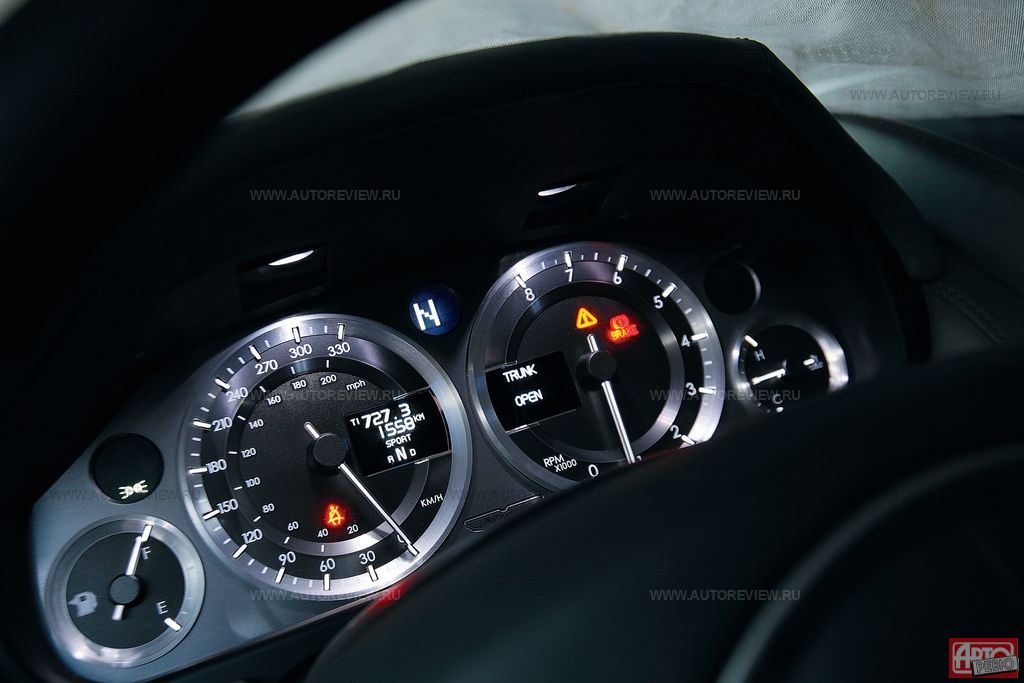 | 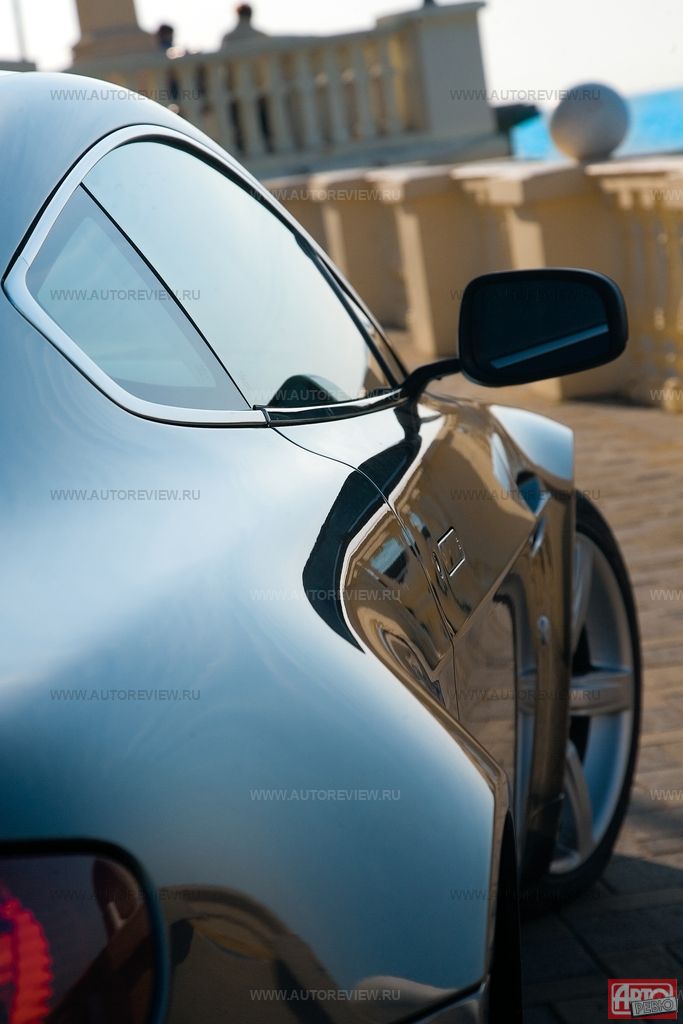 |
| The aluminium dials are magnificent, but unreadable — especially given that the speedometer and tachometer needles move towards each other | To open the door, you first need to press the handle recessed into the aluminium trim panel |
Now, on the contrary, there is a lot of unusual in the Aston. The fact that you need to start the engine after turning on the ignition by pressing a large Start button in the centre of the dashboard is just the beginning. Likewise, the fact that the mode buttons for the robotic gearbox are located here, at the top of the console. But the first rev of the engine causes cognitive dissonance: something is clearly wrong on the instrument panel. But what? Ah, the speedometer needle moves across the scale as usual, but the tachometer needle moves in the opposite direction, towards it!
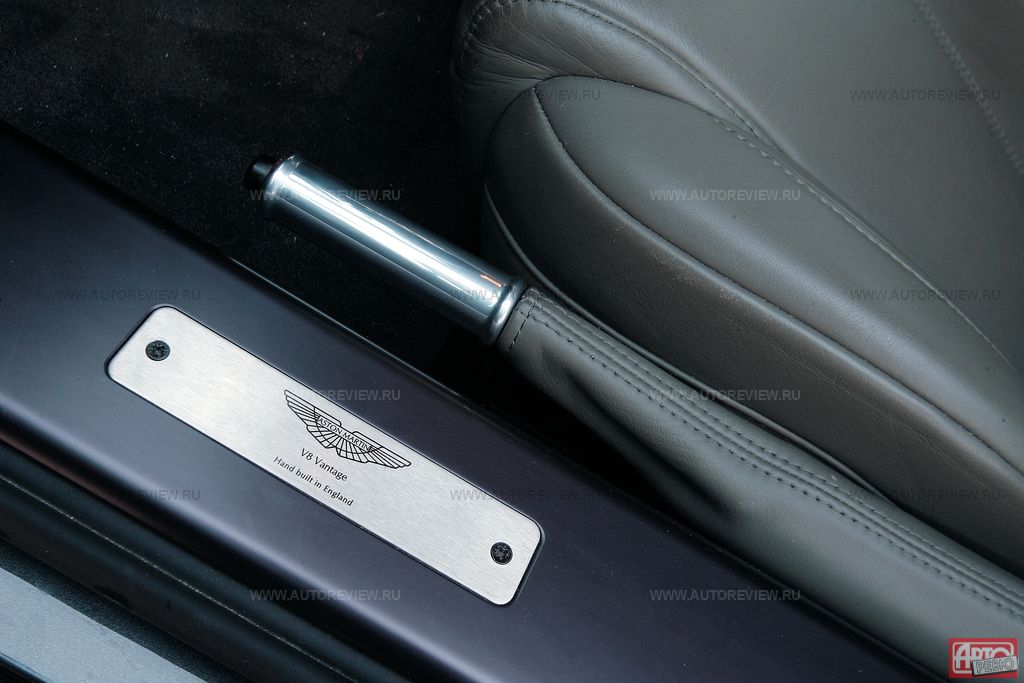
Release the "handbrake"? Not only is the handle located on the left near the threshold, but it's also non-latching — so it doesn't interfere with getting in when engaged: a signature Aston feature. You pull the lever — and it falls back down. To release the brake pads now, you need to lift the lever again, press the release button, pull the "handbrake" up, release the button — and only then return the handle to its place.
Now all that's left is to press the D button — and to the mysterious sounds of Magneti Marelli actuators shifting gears in the rear-mounted Graziano gearbox, the Aston will move off.
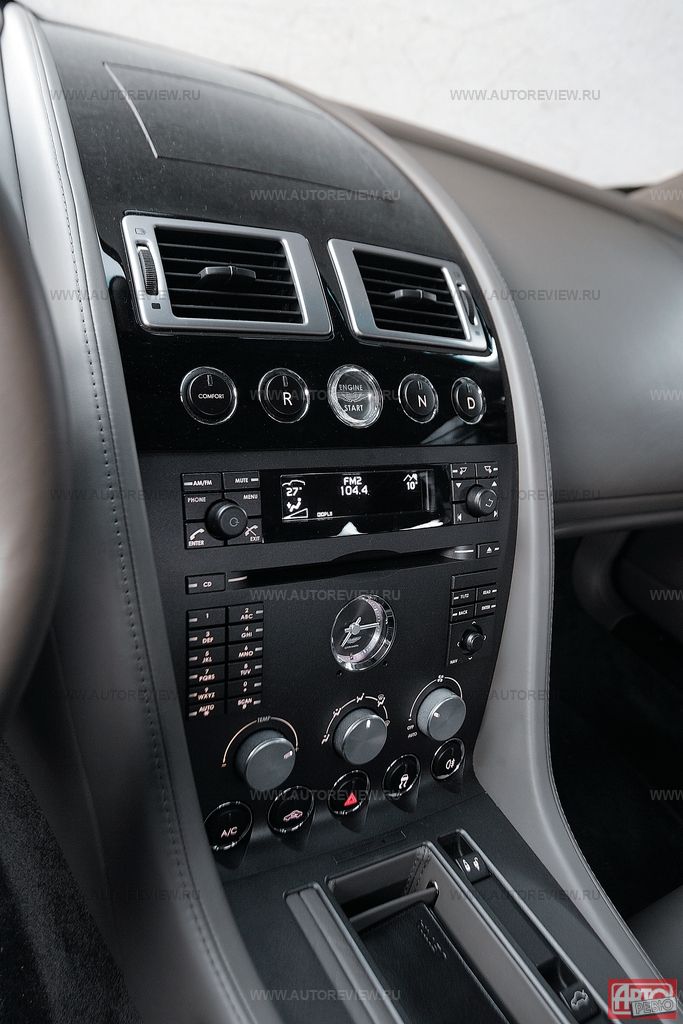 | |
| The electroluminescent displays are beautiful, but the buttons are a bit plain, and the audio system sounds unimpressive | The Volvo-style button block is one of the few signs of unification. But the door handles are "winged" metal! |
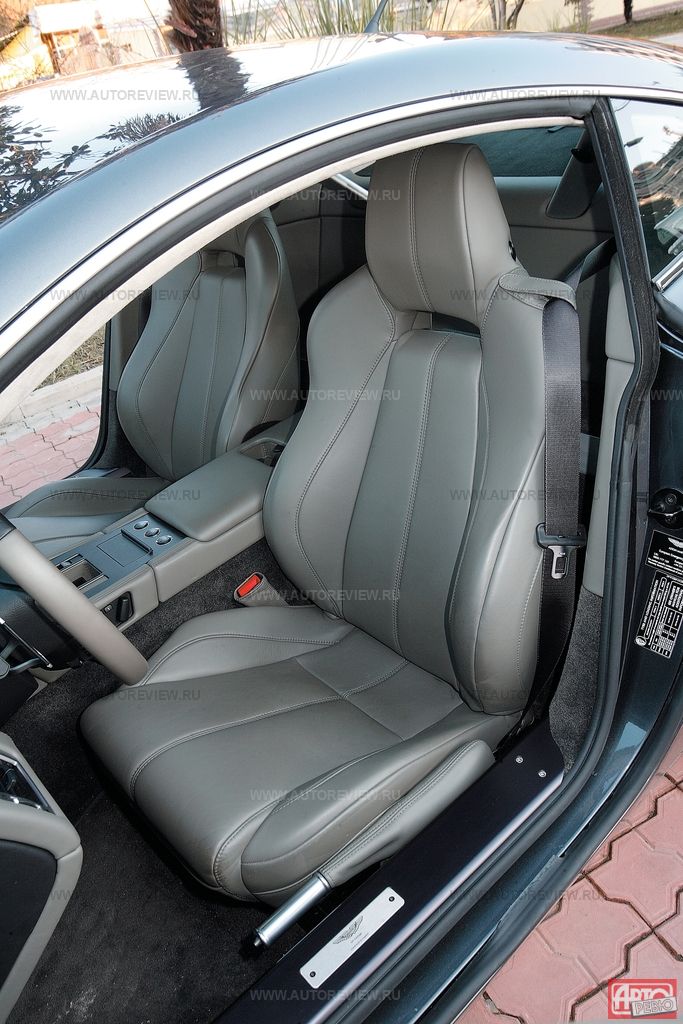 | 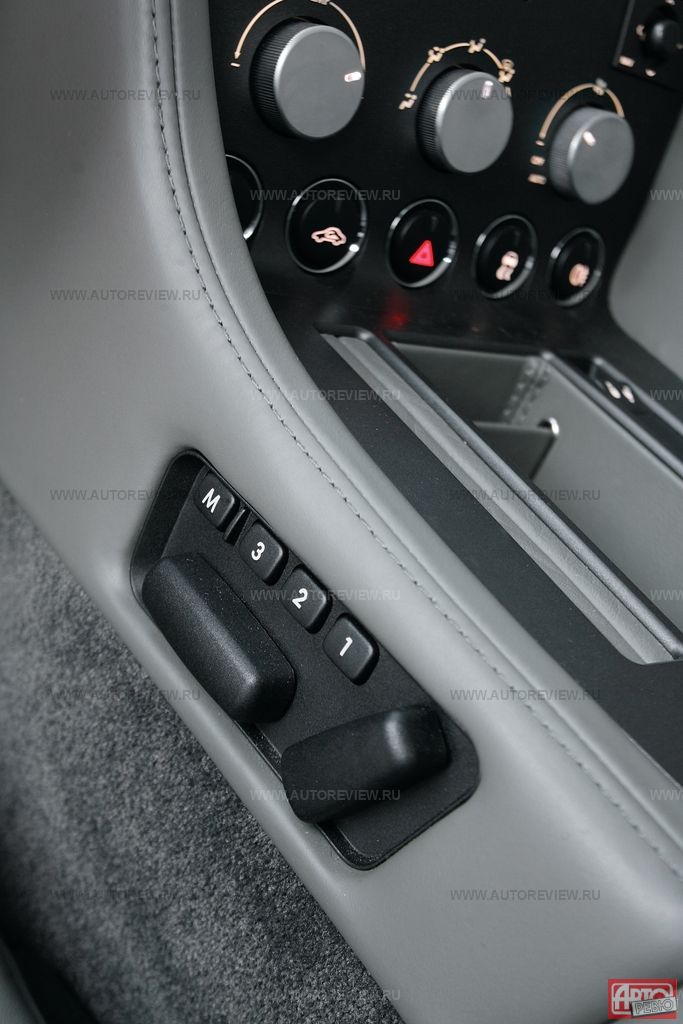 |
| The bucket seats are beautiful and have electric adjustments: in terms of firmness and profile, they are a compromise between sportiness and comfort | |
Exactly the same robotic transmission is found in Ferraris, Lamborghinis, and the Audi R8. But on the Aston, it's probably the noisiest and most temperamental. Getting moving is a process! Something under the floor hums, clicks, and groans, the engine takes up the load from the engaging clutch with a rough roar... After a few smooth starts uphill, the cabin starts to smell of burnt clutch. In traffic jams, the characteristic "transmission" sounds and smells involuntarily make you think about the cost of replacing the clutch... By the way, do you think there are no traffic jams in the small city of Sochi? It took almost an hour to cover half a kilometre along Kurortny Prospekt in the morning!
Good Lord, what will happen here in a year when tens of thousands of construction workers arrive? And how could the city of Sochi, with its complete lack of infrastructure noted in the IOC commission report back in 2006, have beaten Salzburg and Pyeongchang?
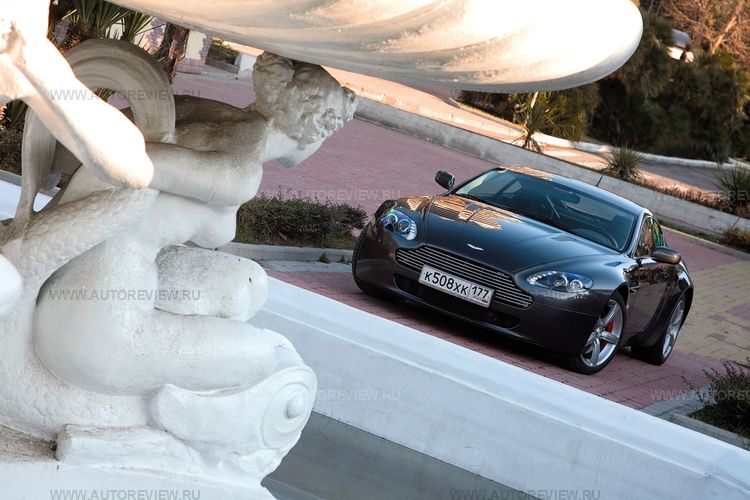
Once the V8 Vantage is up to speed, the gearbox shifts decently — fairly quickly (in 0.2 seconds) and with minimal lurching. But only if you don't press the Comfort button, which seems to dull the transmission's control electronics, stretching shift times. Give us the regular base "manual" instead!
The "robot" is also bad because it resists a sharp start. You press the throttle, but the Aston moves off gently and without wheelspin. After all, the throttle actuator here is also damped, as if in some Daewoo Leganza sedan.
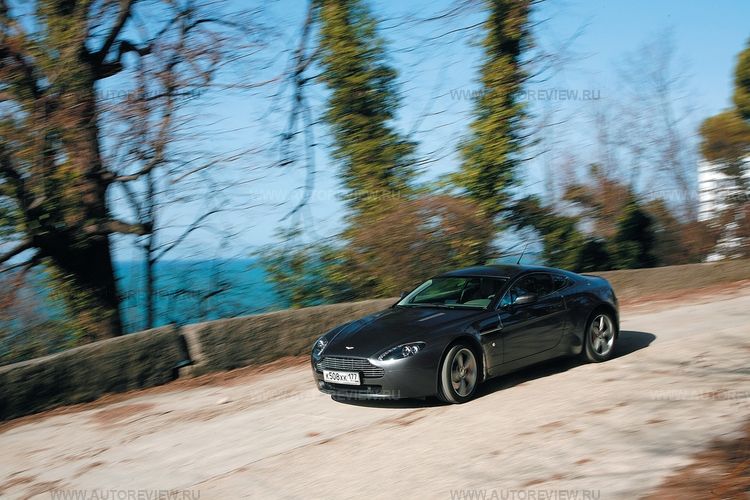
At low revs, the engine doesn't please — the muted throttle pedal plays its part. However, after four thousand revs and up to the redline at 7300, the engine pulls powerfully and relentlessly, and the superbly tuned chassis practically tempts you to switch off the stability control, which Volvo folks would call DSTC. The main thing here is not to miss another bump in the asphalt.
Why did I remember Daewoo? Perhaps because the German Ulrich Betz, who has been running Aston Martin Lagonda since 2000, worked in South Korea from 1993 to 1998 and had a hand in creating the Matiz, Lanos, Nubira, and Leganza?
No, blaming Betz is the last thing to do. Betz is a smart guy! It was this talented engineer and racer, who before Daewoo had also worked at Porsche and in the BMW Technik division, who breathed new life into Aston Martin at the turn of the millennium. After all, the Astons of the 80s and 90s were criticized by everyone: the Virage, DB7, and the previous V8 Vantage were powerful and harsh, but unreliable and full of flaws. By the way, in all our history, we have driven Aston Martin cars only once — about 12 years ago, at the now-closed factory in Newport Pagnell (see AR No. 17, 1996).
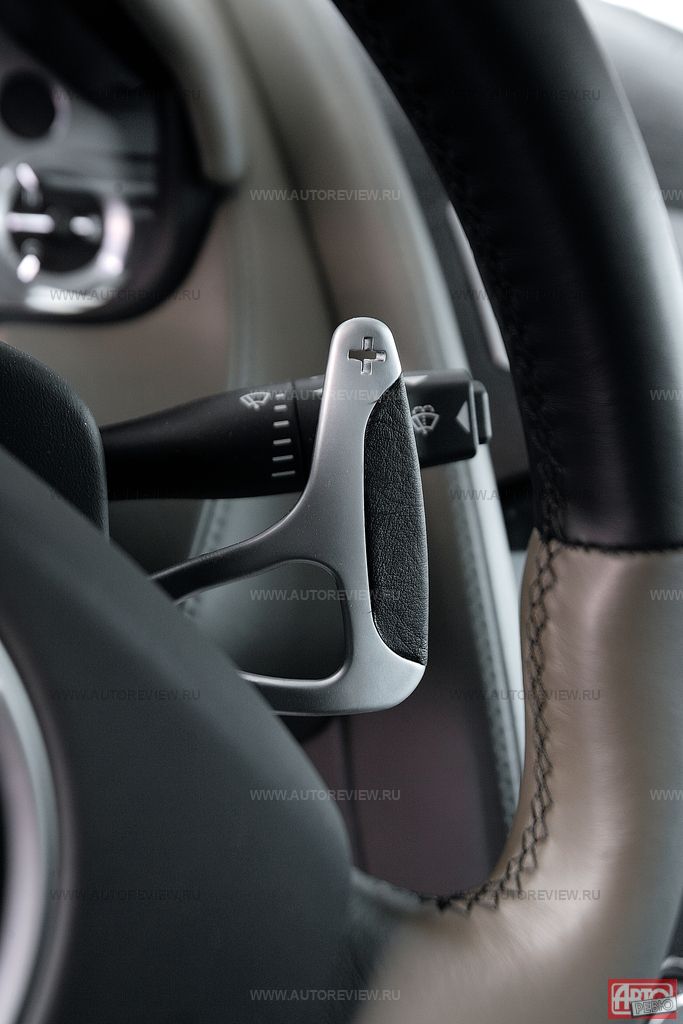 | |
| Gears can be shifted manually, but only via aluminum paddles behind the steering wheel. The cruise control and phone buttons on the wheel are placed inconveniently — at the bottom | |
So, ten years ago, the situation at Aston Martin Lagonda resembled that in Sochi. Constant losses, an outdated model range, negligible sales. But the Ford people believed in Aston Martin — just as IOC members believe in Russia, whose president promised to build all facilities by 2014. However, faith alone is not enough: the Ford people hired a "crisis manager." And as soon as Betz arrived in 1998, Aston Martin set about developing a completely new, revolutionary model, the V12 Vanquish. Or rather, Lotus started the work: not relying on their own strength, the Ford people turned to the creators of the ultralight Elise roadster with its glued aluminum space frame. As a result, the V12 Vanquish turned out to be truly fundamentally different — with a complex body made of aluminum profiles, joined with adhesive and rivets, and additionally reinforced with carbon fiber elements. The engine remained at the front, but it was moved back, within the wheelbase, and the gearbox was moved to the rear axle in a racing transaxle layout. Double-wishbone suspensions, perfect weight distribution, low moment of inertia... A real sports car! True, the Aston Martin V12 Vanquish still turned out heavy — almost two tons.
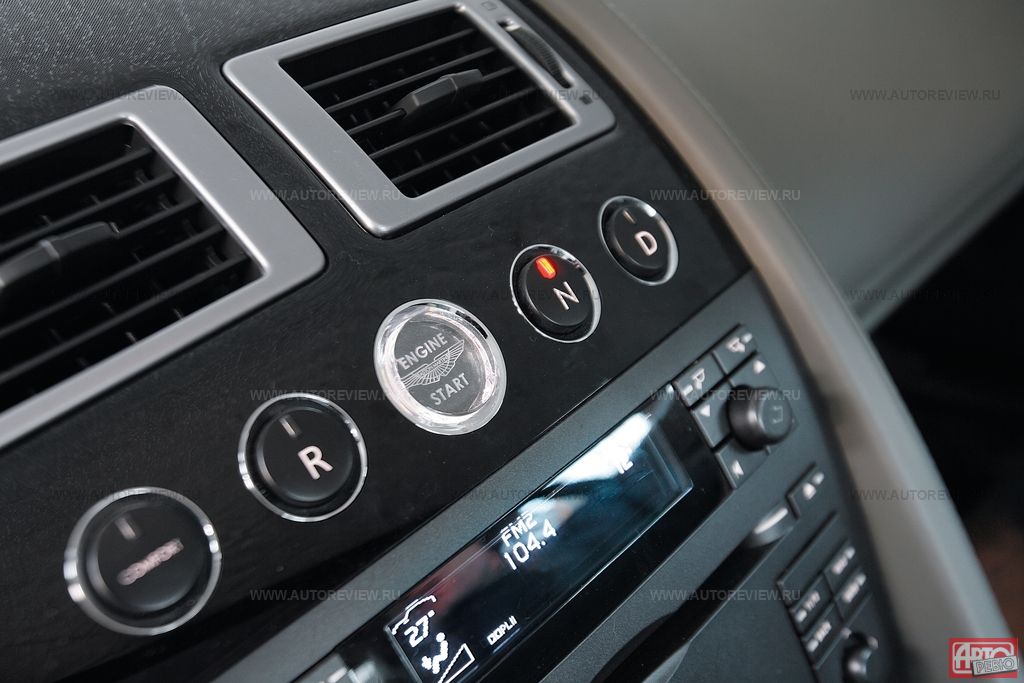 | 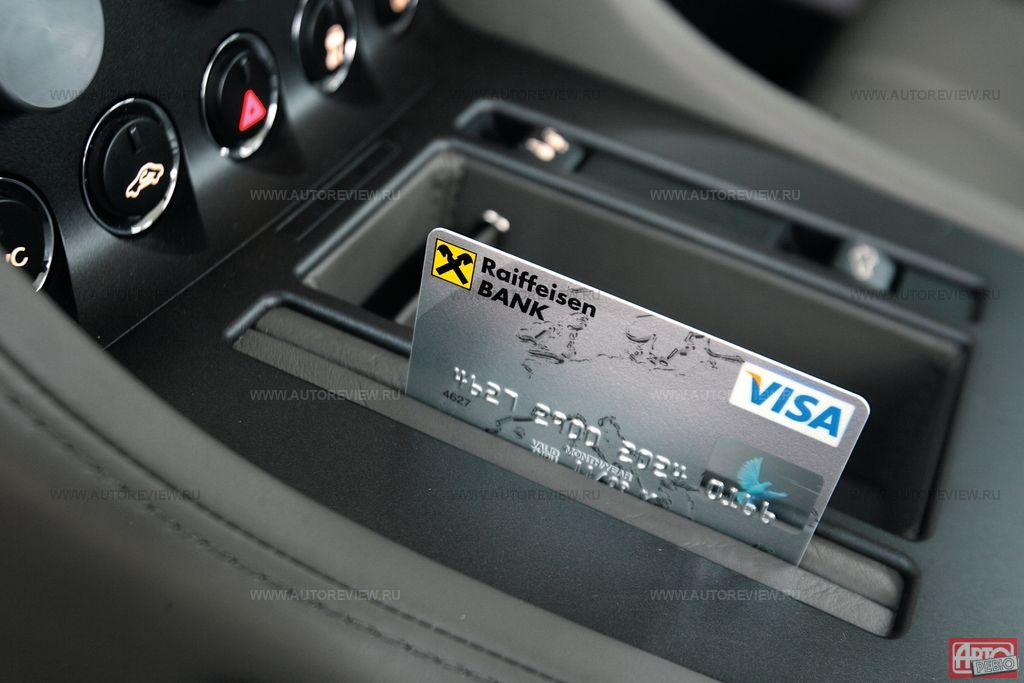 |
| Engine start and gearbox mode selection are only via buttons on the console. Moreover, the "main" D button is moved to the right — the British are more accustomed to it on right-hand-drive cars, but what about us? On the tunnel, there is a soft leather holder for cards, a glass (!) ashtray under an aluminum lid, a button for the optional heated windshield — and the traditional for Astons "handbrake" near the threshold | |
 | |
Now the Vanquish is no longer produced, but in addition to it, the DB9 has been assembled in British Gaydon since 2003, and the V8 Vantage since 2005. The new models inherited a lot: the basic body structure with glued aluminum space frame elements, the layout, weight distribution, "double wishbones," and the rounded design by Ian Callum. The difference between these two Astons is that the DB9 is larger and heavier (with a 2+2 formula, a 450-hp V12, and an optional ZF "automatic"), while the V8 Vantage is more compact, strictly two-seater, and equipped with a lighter "eight": 4.3 liters, 385 hp. That is, the Vantage is an Aston Martin "for the drive," a rival to the Porsche 911 and Ferrari F430. Therefore, it is not supposed to have an "automatic" — only a "robot."
If only it worked properly...
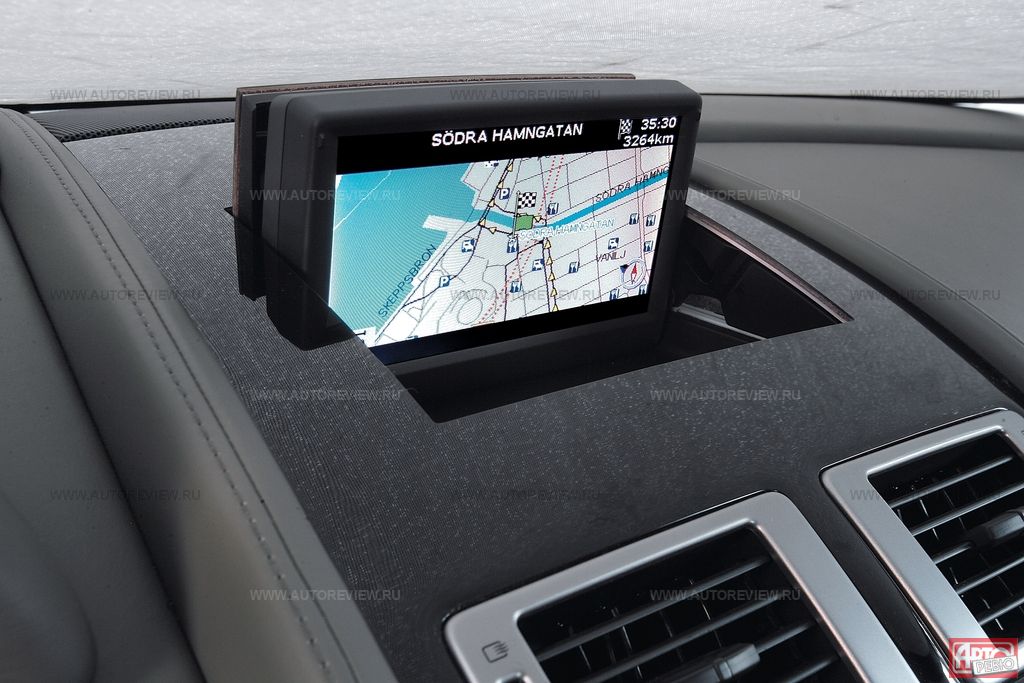
If we return to the analogy with the 2014 Olympics, Aston Martin now is like Sochi in 2013. Everything seems to be built and even functioning, but the unfinished touches make themselves known. Something creaks, something jerks... And it's not just about the gearbox. Take, for example, ride comfort: the Aston transmits all the irregularities of Sochi roads with the precision of an oscilloscope, albeit in a softened form. The car shakes finely and noticeably rocks, and something constantly creaks in the cabin. Where do the sounds come from? It's the polished ebony trim vibrating, glued to the retractable "navigation" screen.
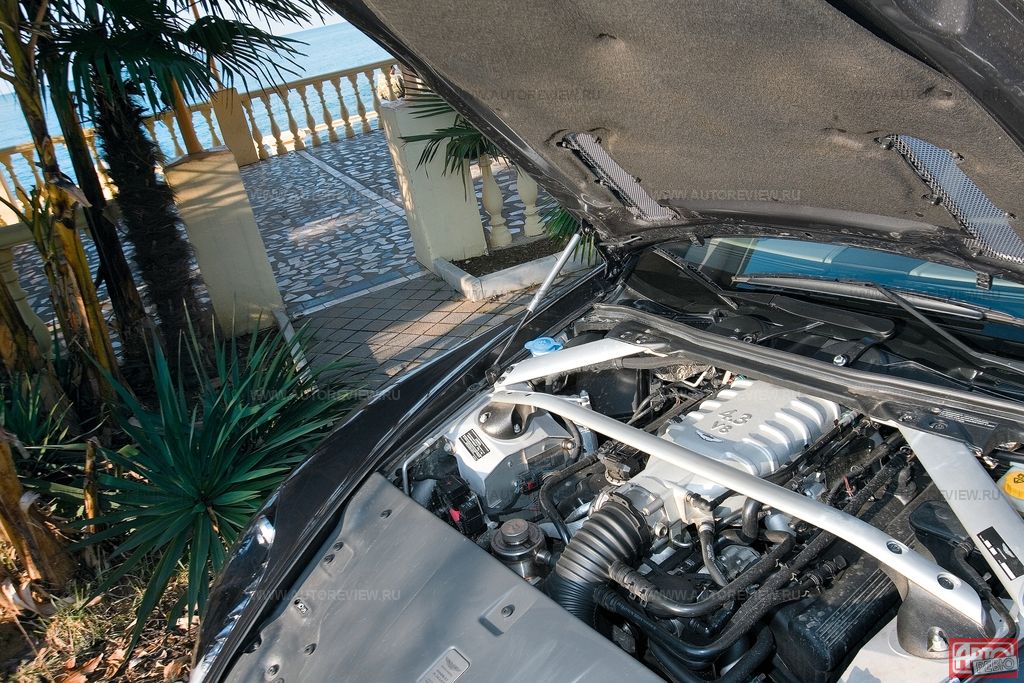 | 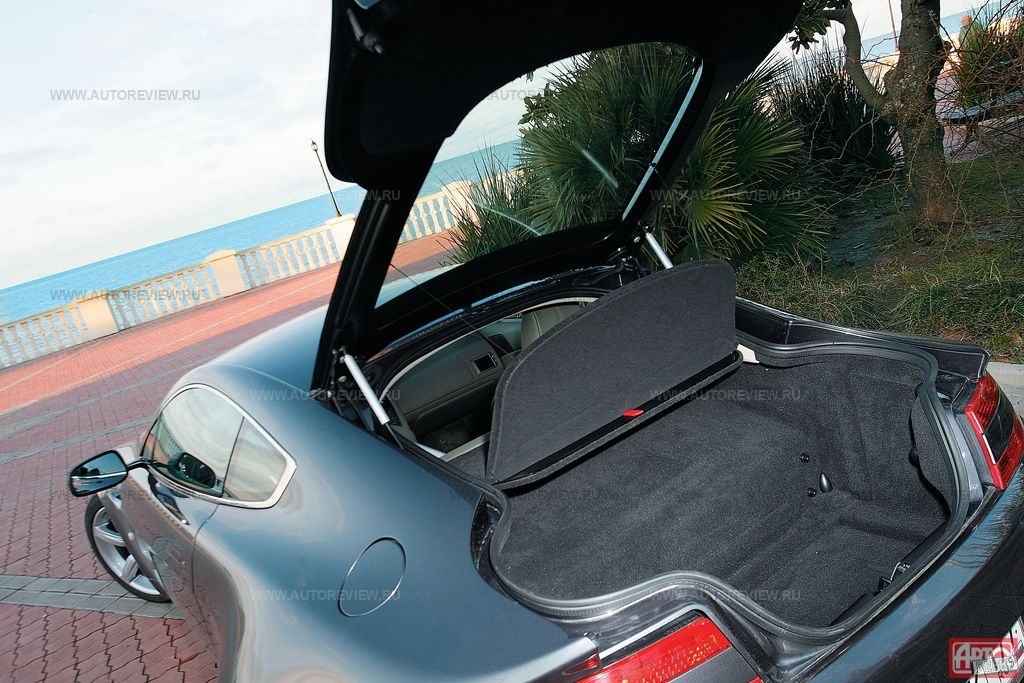 | 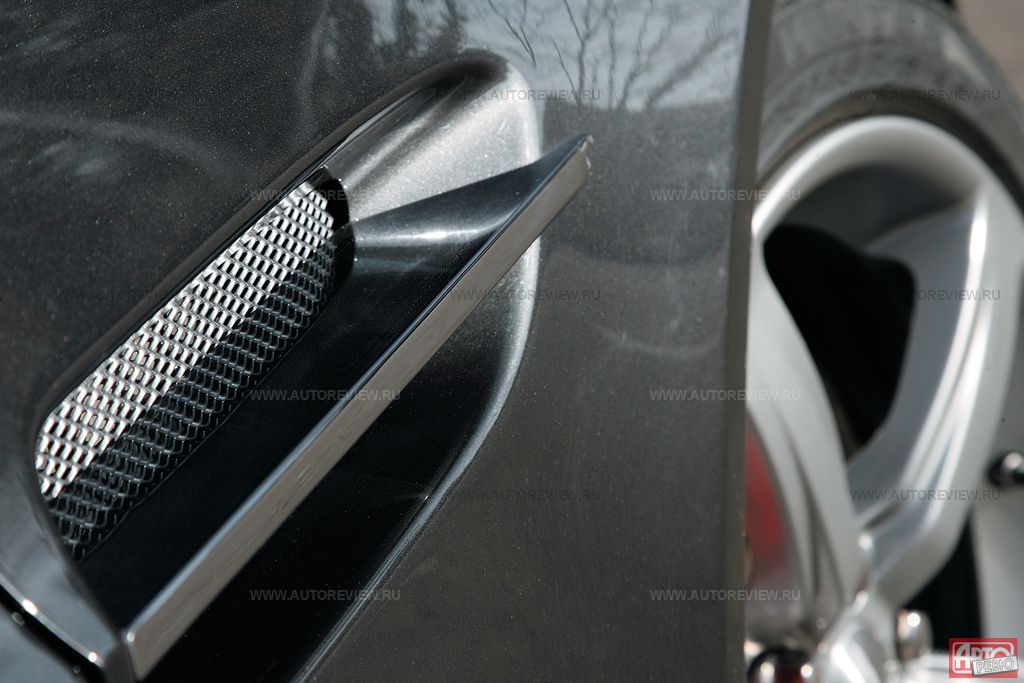 |
| The engine is moved as far back and down as possible, and body rigidity is enhanced by struts: everything for the drive, everything for victory! | Strictly speaking, the Aston Martin V8 Vantage is a two-seater three-door hatchback: the third door leads to the trunk, inside which protrudes a "hump" of the rear-mounted gearbox housing |
But the wood is real!
Still, the feeling of a "hand-built car" warms the soul — even despite the fact that at a stop, the thermometer readings rapidly climb from the current +8°C to +44°C (apparently, the sensor is placed too close to the engine). And is it a big deal that the air conditioning will have to be turned on even in winter — to compensate for the inevitable heating of the air from the powerful motor?
In the end, all these are trifles. Henrik Fisker thinks so too. "People are tired of spacious and comfortable but ugly cars," he said in one interview. "Why is the cramped and expensive Mini so popular? Why do women wear high heels? Because more and more people are ready to sacrifice comfort for beauty!"
The question is, what is the main thing for this car — beauty or still the drive?
The answer can only be obtained by pressing the gas pedal to the floor. The needles of the instruments rushed towards each other, the metallic grumble of the engine grew into a high, not very melodic roar — the bypass valves in the exhaust system opened automatically — and... Hello, traffic inspector with a radar showing "83"! How good that I didn't manage to get to third gear.
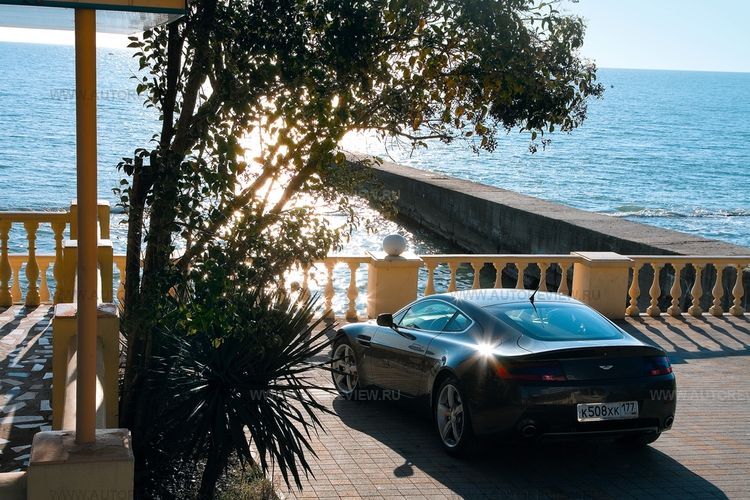
The traffic cop limited himself to a warning: thank him. But where can one actually test an Aston Martin that according to the specs accelerates to 280 km/h? On the road from Sochi to Krasnaya Polyana? For the Aston's chassis to truly come alive in these flowing corners, you need to go at about 200 km/h. And the traffic cops are likely on duty there too. Maybe dash to the rally stage in Solokh-Aul? No, I won't make it — traffic jams, and the car will be covered in dirt up to the roof.
And attempts to spur the Aston on narrow roads like the one leading to Mount Akhun are doomed. Only "opened up" in second gear, only the engine sang its song, and the chassis already "breathed," taking lateral loads, and... Again, ahead, cracked asphalt arches like a hump. Brake "to the floor," a harsh jolt, a threatening grinding sound from under the bottom... Thank God, only the plastic shields in front of the wheels are scuffed. And what if you miss a more serious impact — and puncture the "dry" sump of the engine, lowered as much as possible to reduce the center of mass?
But the speed potential of the Aston is there, and considerable. In rare good corners with smooth pavement, you feel how easily the Vantage responds to the deviation of the "heavy" steering wheel, how willingly it enters the arc, how predictably it begins to slide on winter Pirelli Snowsport tires. The chassis balance is maintained at "excellent" — no worse than the design! And this is just the beginning. After all, it's no coincidence that the tuning of Astons — and the racing program! — is now handled by Prodrive, a company owned by the same David Richards. And it's no coincidence that Aston Martin has just announced the establishment of its own center at the Nürburgring — in the image and likeness of those that Porsche and BMW have long had there.
Yes, the Aston Martin V8 Vantage is created to be a true supercar — irresistibly fast and composedly precise. After all, in terms of power-to-weight ratio, that is, the ratio of power to curb weight (242 hp/t), the "junior" Aston falls exactly into the same class as direct competitors like the Porsche 911 Carrera S (241 hp/t) and Audi R8 (269 hp/t). But the Vantage is noticeably more expensive. Why? What are those who prefer the Aston Martin to the same "nine-eleven" paying tens of thousands of euros extra for? For the design, for the gentlemanly style aged like single malt whiskey — or still for the speed qualities?
This can only be understood in one way — by comparing the cars with each other. On summer tires, on normal asphalt of a test site and a race track in Myachkovo, without time and speed limits...
And we will do that. For now, let's consider the Aston Martin V8 Vantage a promise of drive. Just like Sochi is a promise of the Olympics.
| Specifications | |
| Parameters | Vehicle |
| Aston Martin V8 Vantage | |
| Body type | coupe |
| Number of seats | 2 |
| Dimensions, mm | |
| length | 4380 |
| width | 1865 |
| height | 1255 |
| wheelbase | 2600 |
| track front/rear | 1570/1560 |
| Trunk volume, l | 300 |
| Curb weight, kg | 1570 |
| Gross weight, kg | 1830 |
| Engine | petrol, with distributed injection |
| Location | front, longitudinal |
| Number and arrangement of cylinders | 8, V-shaped |
| Displacement, cm³ | 4280 |
| Cylinder bore/piston stroke, mm | 89.0/86.0 |
| Compression ratio | 11.3:1 |
| Number of valves | 32 |
| Max power, hp/kW/rpm | 380/283/7000 |
| Max torque, Nm/rpm | 410/5000 |
| Gearbox | manual, 6-speed (manual, robotic, 6-speed) |
| Drive | rear |
| Front suspension | independent, spring, on double wishbones |
| Rear suspension | independent, spring, on double wishbones |
| Front brakes/disc diameter, mm | disc, ventilated/355 |
| Rear brakes/disc diameter, mm | disc, ventilated/330 |
| Front tires | 235/45 R18, 235/40 R19 or 245/40 R19 |
| Rear tires | 275/40 R18, 275/35 R19 or 285/35 R19 |
| Maximum speed, km/h | 280 |
| Acceleration time 0-100 km/h, s | 5.0 |
| Fuel consumption, l/100 km | |
| urban cycle | 25.3 |
| extra-urban cycle | 12.5 |
| combined cycle | 17.5 |
| CO² emissions, g/km | |
| combined cycle | 358 |
| Fuel tank capacity, l | 80 |
| Fuel | petrol AI-95-98 |
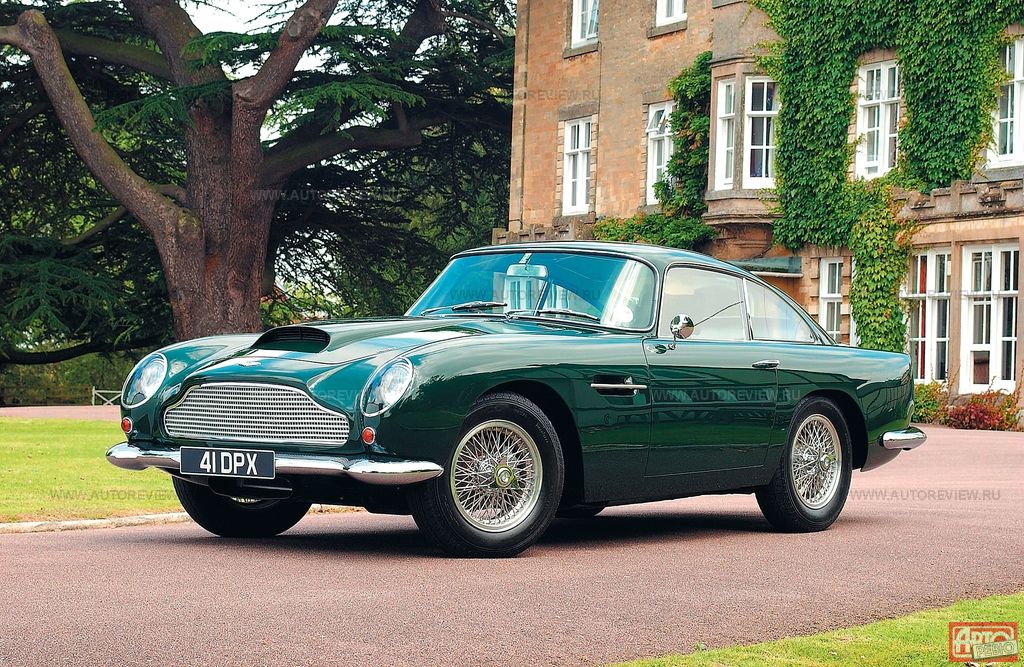 | 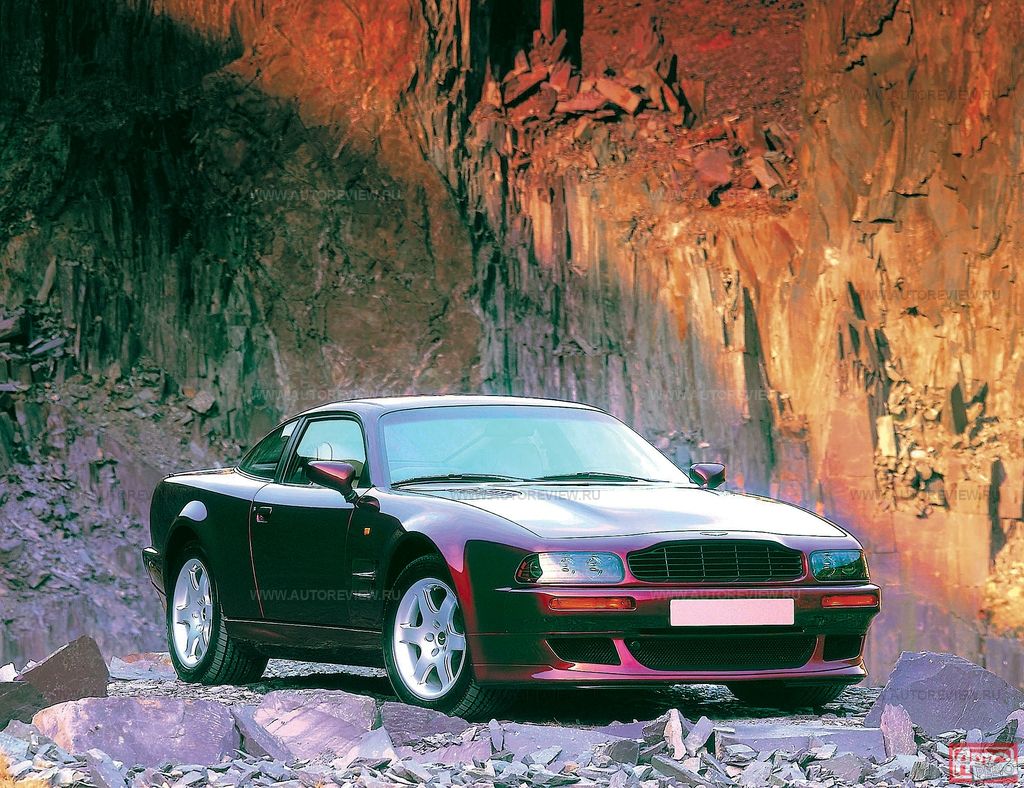 | 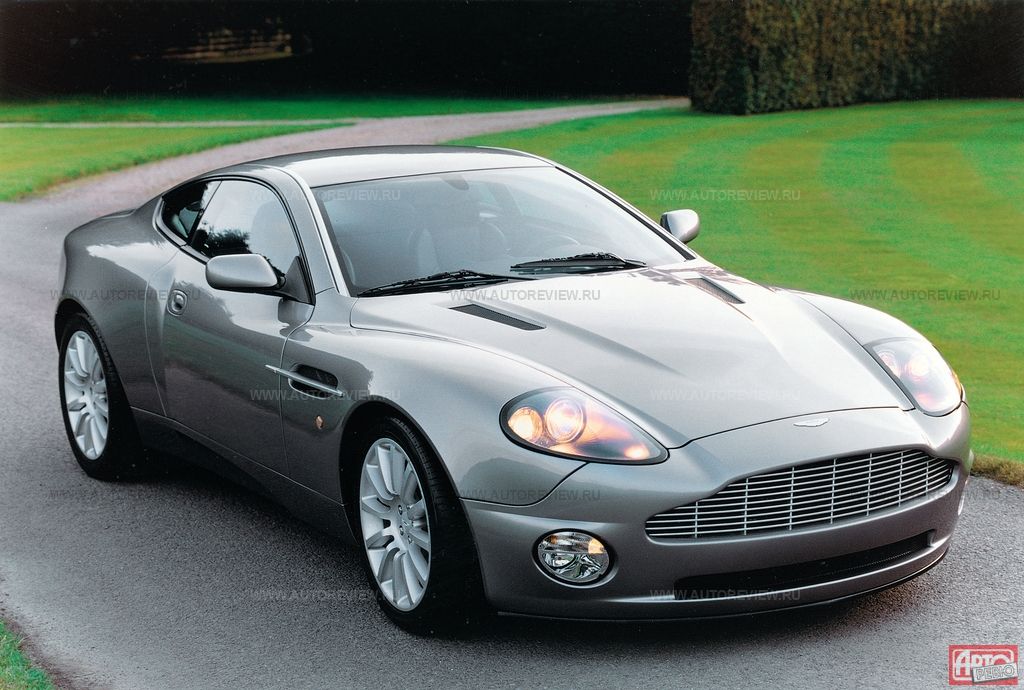 |
| In the second half of the last century, Aston Martin produced mainly four-seat models, and two-door versions were a rarity. Among the exceptions are the DB2 (1950-1953, 411 units produced), which became the first truly production Aston after the war, and the DB4GT depicted here (1960-1963, only 75 cars) - a shortened and lightened version with an inline six-cylinder engine of 3670 cm³, two distributors and a pair of spark plugs per cylinder, producing 302 hp and accelerating to 100 km/h in just over six seconds | The name Vantage ("Advantage") first appeared in the Aston Martin lineup in 1977. At that time it was the flagship - a more powerful modification of the four-seat V8 coupe with a boosted 5.3-liter engine producing 438 hp, capable of reaching 270 km/h. Thus, both the first V8 Vantage (1977-1989) and the second one you see in the photo (1993-2000, with a supercharged V8 5.3 producing 550 hp) are essentially precursors to the larger modern DB9 model | The Aston Martin V12 Vanquish (2001-2007) opened a new era for the brand: transaxle layout, aluminum and composite body, design by Ian Callum. Both the DB9 and V8 Vantage trace their lineage from it |
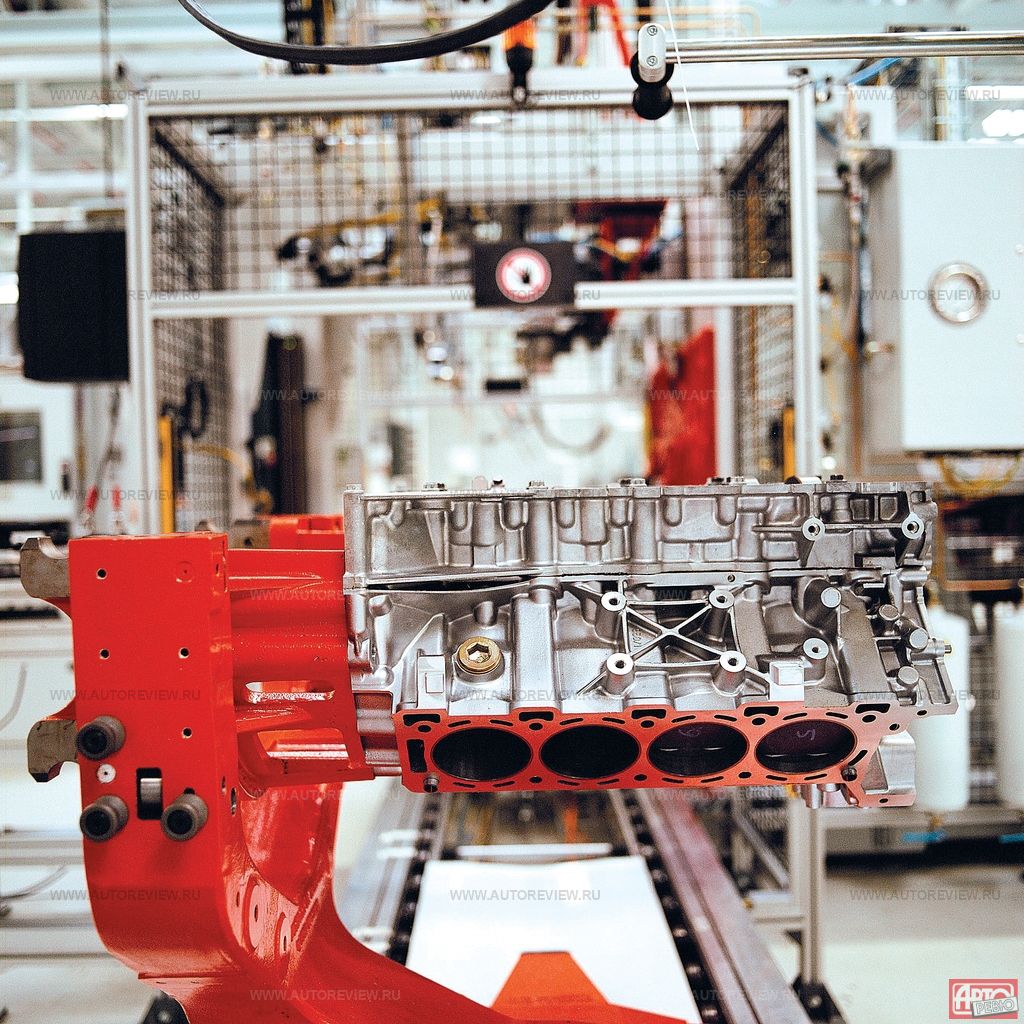 | 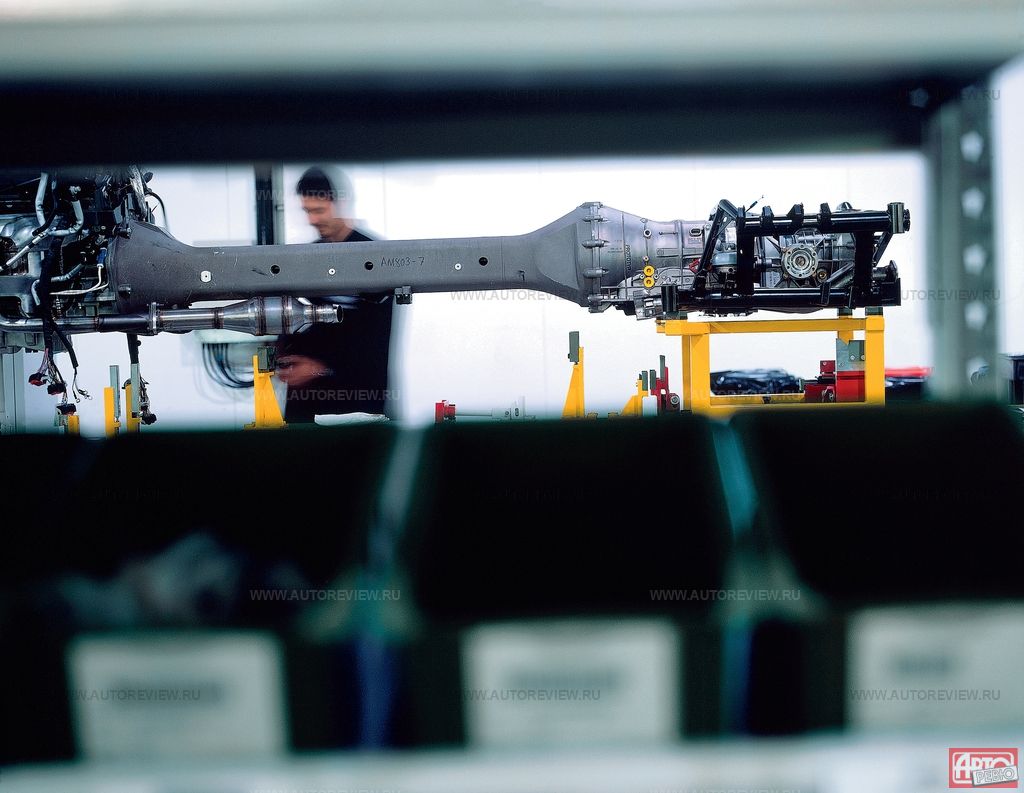 | |
| The V8 is based on a Jaguar unit, but it received a dry sump lubrication system and exhaust manifolds according to the "4-2-1" scheme. Currently, all Aston Martin engines are assembled in Germany, at a specially equipped plant in Cologne | The engine of current Astons is connected to the gearbox, shifted to the rear axle, by a massive aluminum tube, inside which a shaft made of carbon fiber and aluminum is laid. The differential is self-locking | The body and chassis of the Vanquish were created by Lotus specialists: a glued spatial frame of aluminum panels is reinforced with carbon fiber elements. Modern V8 Vantage and DB9 have retained this scheme, but the central tunnel is now aluminum, and the outer panels (which, as before, are made of "winged" metal) are no longer hand-beaten - they are stamped on presses at the new plant in Gaydon |
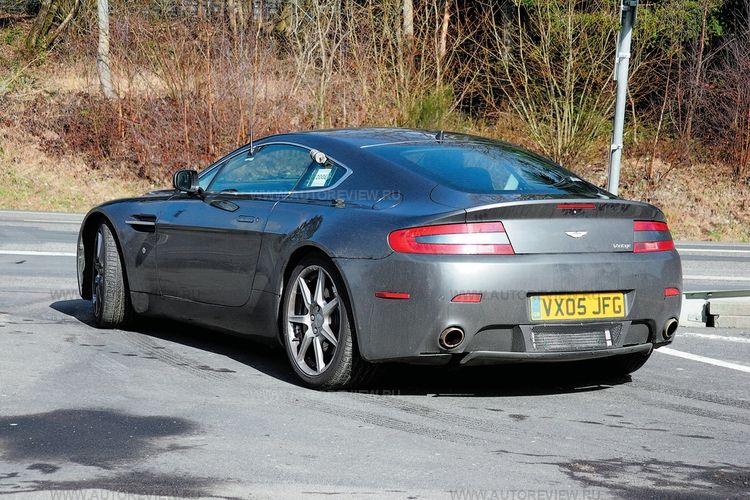
In this "spy" photo - the upcoming "hot" version of the Aston Martin V12 Vantage RS: a two-seat body from the V8 Vantage, but with the powertrain from the larger DBS coupe - a boosted six-liter V12 that should produce about 600 horsepower. Note the gearbox oil radiator integrated into the diffuser under the rear bumper