
Recently we already got acquainted with the Alfa 159, and the sedan left only extremely pleasant driving impressions. A reasonable question arises: can the more prestigious and powerful all-wheel-drive Alfa Romeo Brera coupe, which uses the same platform, deliver similar delight?
I admit, the Alfa 159 sedan truly captivated me, especially if we set aside build quality issues. In my opinion, it is one of the best sports sedans on the modern market. It offers more comfort and delivers more driving pleasure than the BMW 3 Series, looks livelier and more attractive than the Lexus IS250. For a driver who loves active driving, this is almost ideal: a responsive 2.2-liter engine, a crisp as a shot manual gearbox, excellent suspension that takes a hit, and precise steering. The exterior and interior need not even be mentioned — Italians have always known how to create beautiful and sporty cars.
Now imagine: the same chassis, but in a stiffer and more stylish coupe body, under the hood a 260-horsepower 3.2-liter engine, and in addition all-wheel drive with an asymmetric Torsen differential that sends most of the torque to the rear axle. "What could be better?" — I mused on my way to the Alfa Romeo dealership...
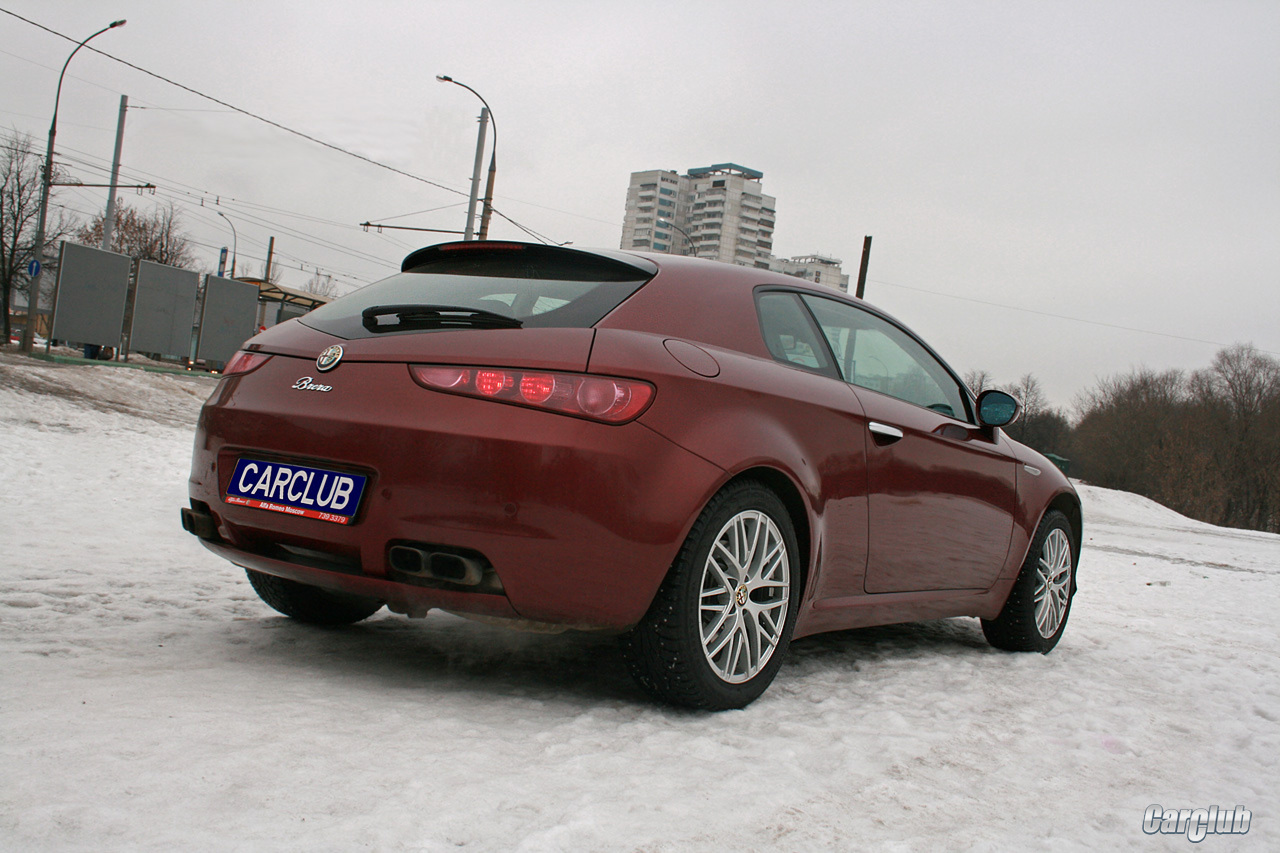
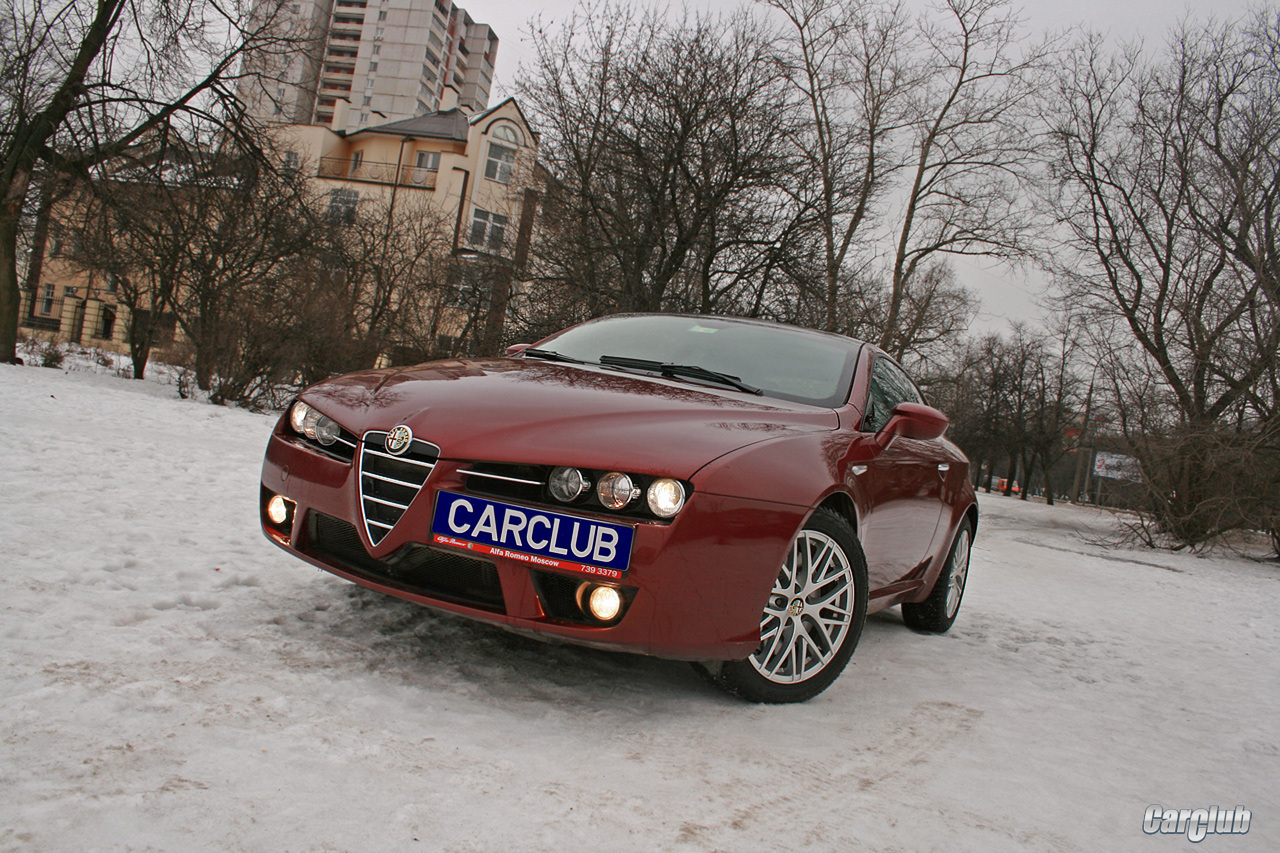
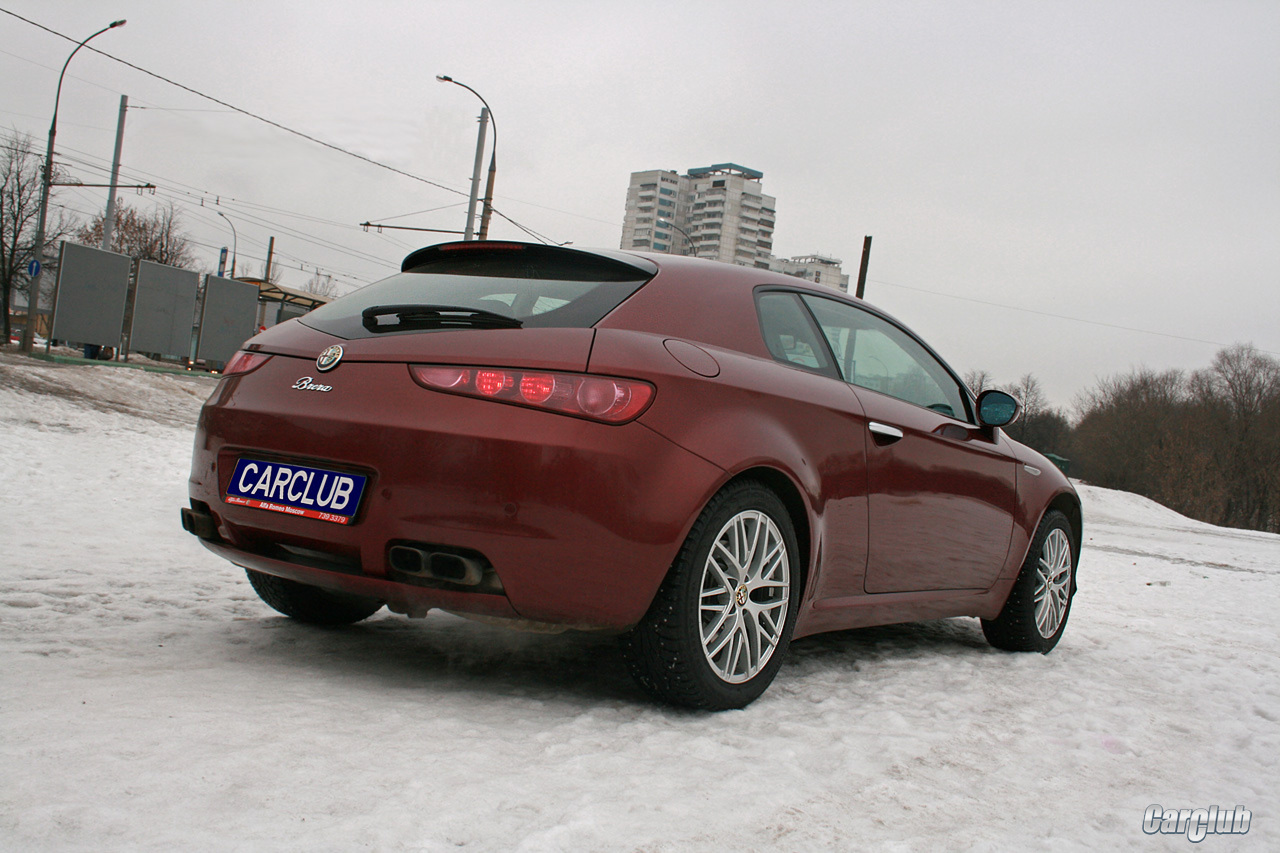
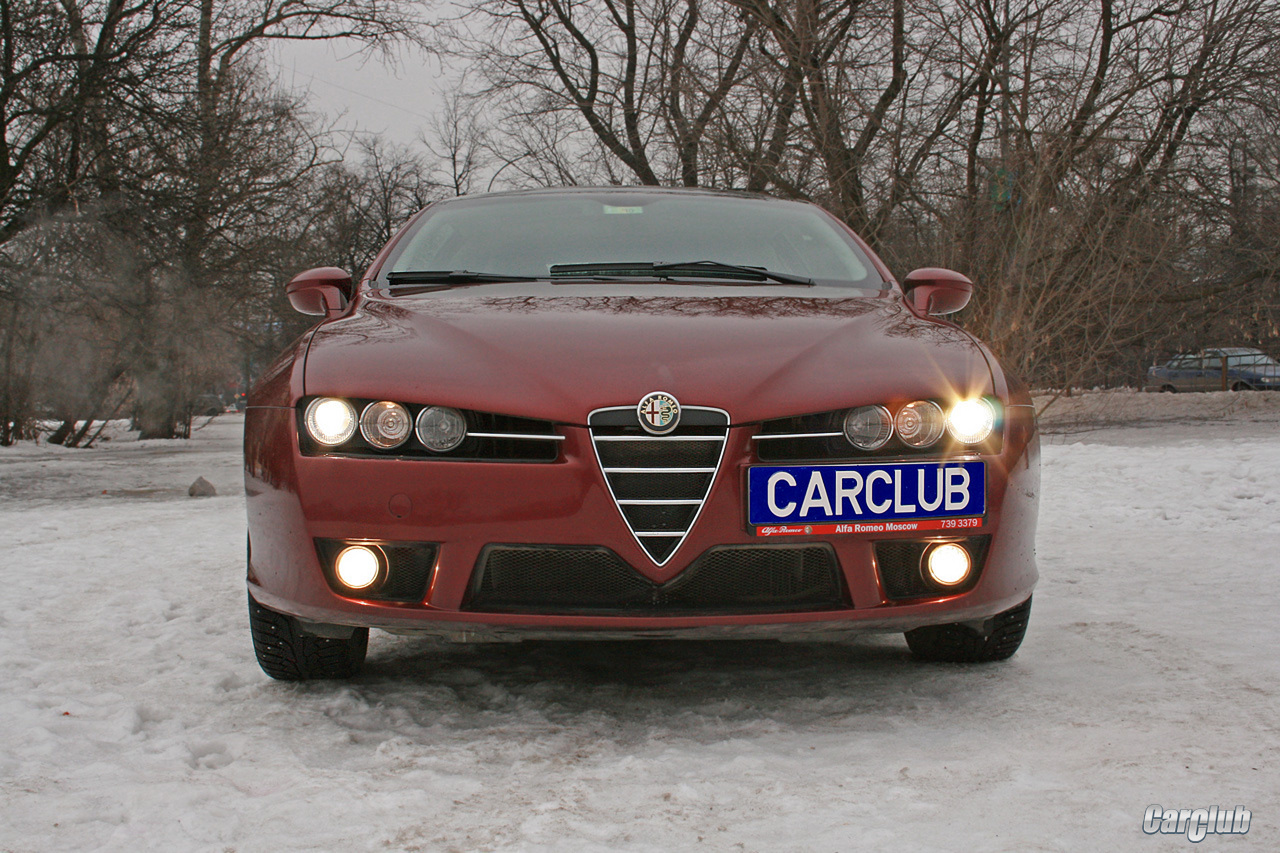
For the test I got a Brera in dark burgundy. Seems fine, but it lacks the effect of a bright red or airy silver one. The rear looks heavy, as if the Italian beauty, having lived a couple of years in the USA and indulging in hamburgers there, lost her lightness. However, this applies only to the view from behind. From the front or in profile, the car is still magnificent.
Wanting to save the limited funds of the Fiat concern, which includes Alfa Romeo, maestro Giugiaro from ItalDesign made the front of the Brera almost identical to the 159 sedan, differing only in the shape of the "beak" on the bumper. The hood, optics, and front fenders are one and the same. The low roofline and long doors are pleasing to the eye. But it is better to stop there, because then begins that very heavy rear... Let us better open the door and look at the interior.
Inside, we are greeted by a complete copy of the sedan's interior. If in the case of the Peugeot 407, where the coupe got the sedan's interior, this is rather a minus, then with Alfa such kinship only benefits. Stylish instrument pods, a center console turned toward the driver and supplemented by three gauges — all information is concentrated around the driver's seat. The passenger can only guess the speed and listen to the engine sound, trying to determine the revs. One gets the feeling that it is the Alfa 159 sedan that borrowed the sporty styling from the coupe, not the other way around. The sporty spirit of the Brera is felt in everything, from the steering wheel to the rear row. The steering wheel rim feels pleasant in the hands, but the rear seats are tiny — a true 2+2 layout. In the back, only a medium-sized bag will fit comfortably. Putting people there is torture, at most one person of average height, and only if the front passenger moves the seat forward and the rear passenger lies sideways, otherwise there is not enough headroom.

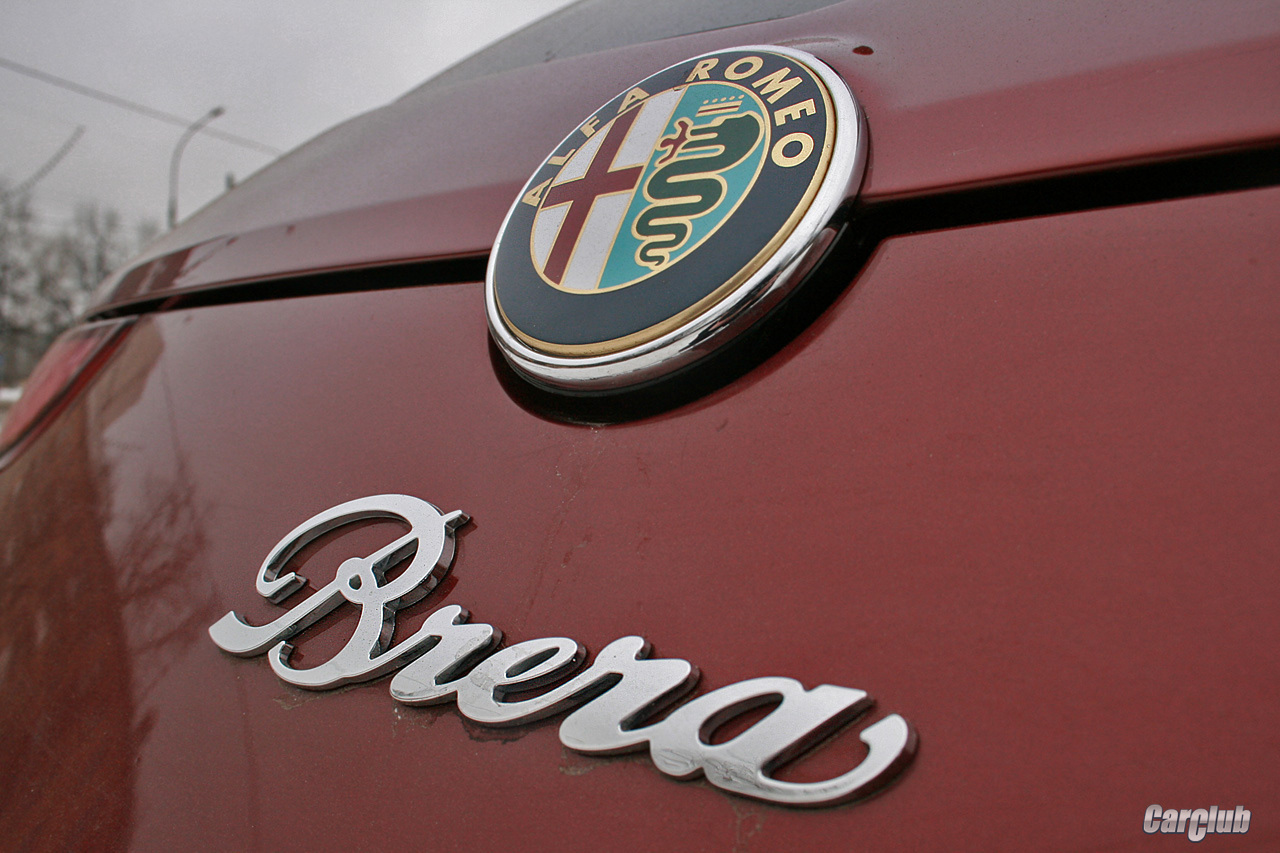
When creating this rounded rear, Giugiaro, apparently, thought about beauty: about how effectively the round emblem would look on it, about the slightly cut taillights... But the great master seems to have forgotten about the trunk. Formally, it exists, but it is unrealistic to use it: it opens with an inconvenient button on the center tunnel, the opening itself is small, and the loading height is huge. Even supermarket bags are inconvenient to load, let alone a suitcase. If you fold the rear seats, the volume grows from 300 to 610 liters, but the loading problem remains. The Brera is a car for those who travel light and do not recognize shopping.
Okay, enough theory. Alfa is not a Fiat Doblo van; its element is movement, not cargo transportation. I turn the key! The engine came to life and... fell silent. This is not Italian at all. Where is the vibration through the body that promises future drive? Ah, well, you need to justify the price of 1,893,600 rubles (about 75,000 dollars) and conquer the European market, so they worked hard on sound insulation, and the engine is heard in the cabin only moderately, at least up to 4000 rpm. Here is the drive — it hides in the selector of the 6-speed automatic. Smoothly and quietly I leave the parking lot and soon find myself on the Novorizhskoye Highway. Pedal to the floor... and instead of the expected explosion under the hood and wheelspin — a steady, confident acceleration. The speedometer needle quickly flies to 200 km/h and, without losing pace, goes further. The cabin gradually fills with the hum of the road and wind, but surprisingly, you can talk to a passenger without raising your voice. All this is somehow not Italian. The steering wheel is sensitive, but that sharpness inherent to Alfas is no longer there. Only the closely spaced gears of the automatic betray the Italian origin — at speed, the tachometer needle does not drop below five thousand.
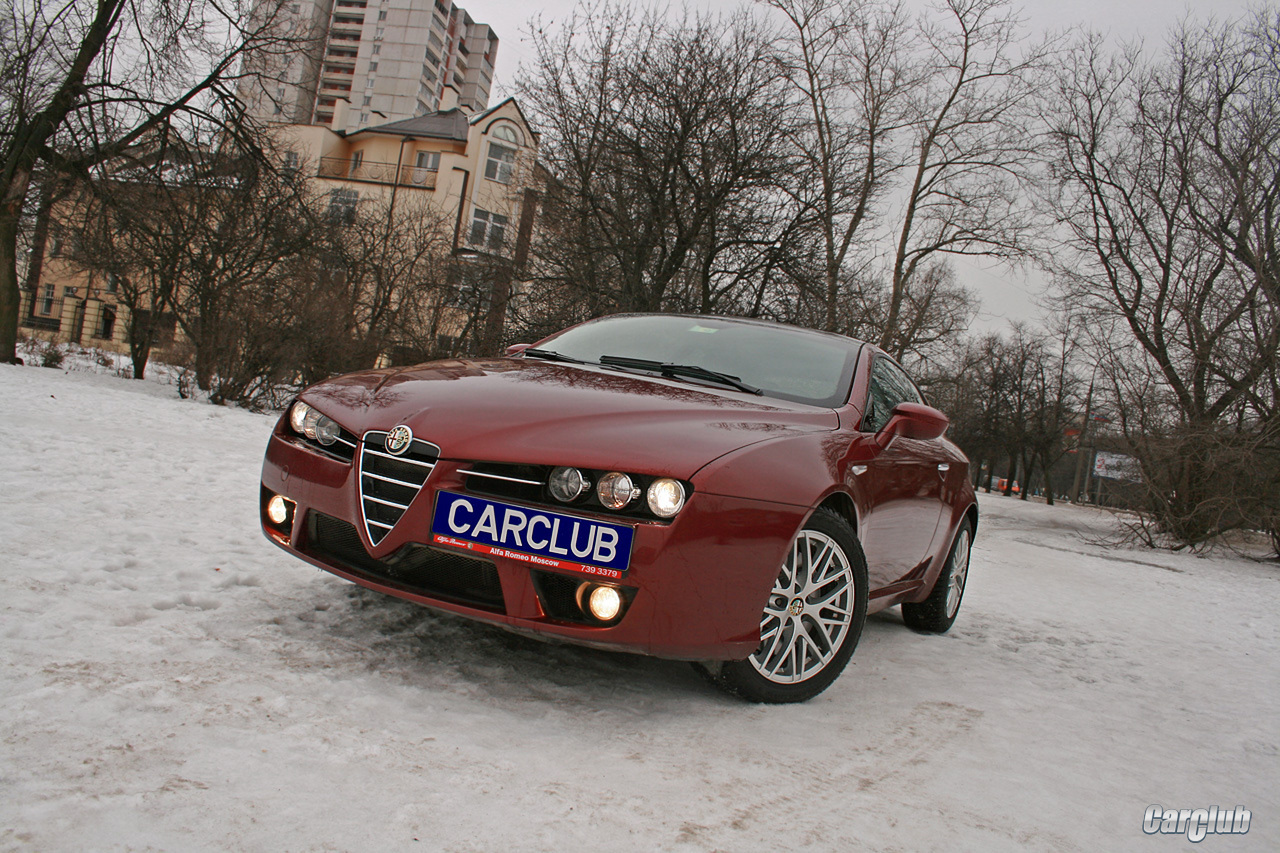
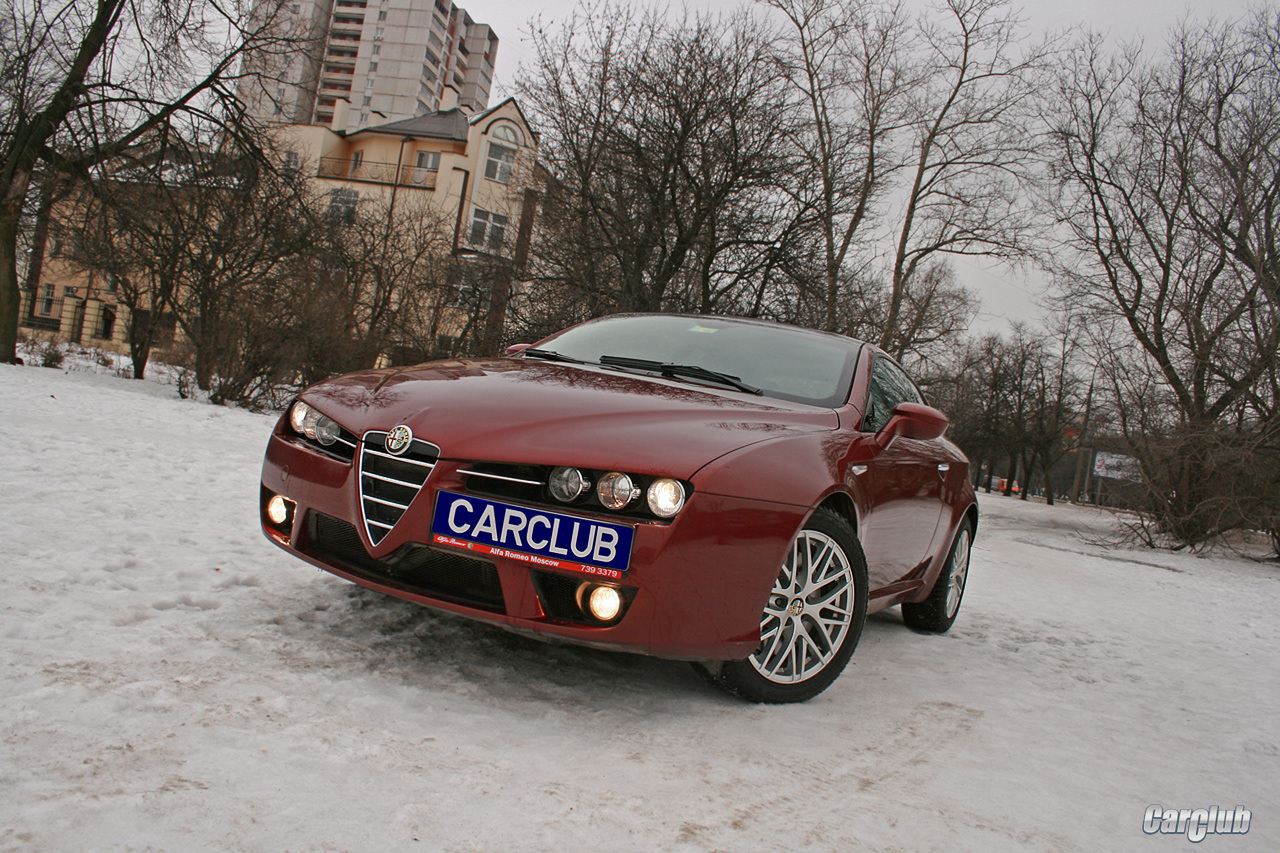
As befits a true Gran Turismo, the Brera is ready to fly for hours at speeds over 200 km/h, while the driver calmly chats with a charming companion about nothing. It is a pity that our roads do not contribute to such drive, although the Alfa itself is perfectly ready for it: the cabin is quiet and calm, and the suspension handles the bumps of domestic asphalt well.
On a winding road, driving the Alfa turned out to be more interesting than on a straight line, but still not as I expected. The Brera takes corners as if on rails, and even where competitors have already given up, the Alfa holds on, balancing on the edge of understeer. But as soon as you exceed a reasonable limit, mutual understanding is lost — the coupe behaves unpredictably. Want to throw it into a drift and take the corner "fan-style"? No, the Brera stubbornly slides its nose outward of the turn, and vice versa. With the Torsen differential, like Audi's, it is also not easy — to get used to it, you need 2-3 days of serious testing. But I never managed to find a common language with the Alfa. And maybe it is not needed? Who even drives with slides? Only show-offs. You and I know that corners are taken fastest along correct trajectories, without drifts. And in this mode, the Alfa is fully under control of both the driver and the electronics.
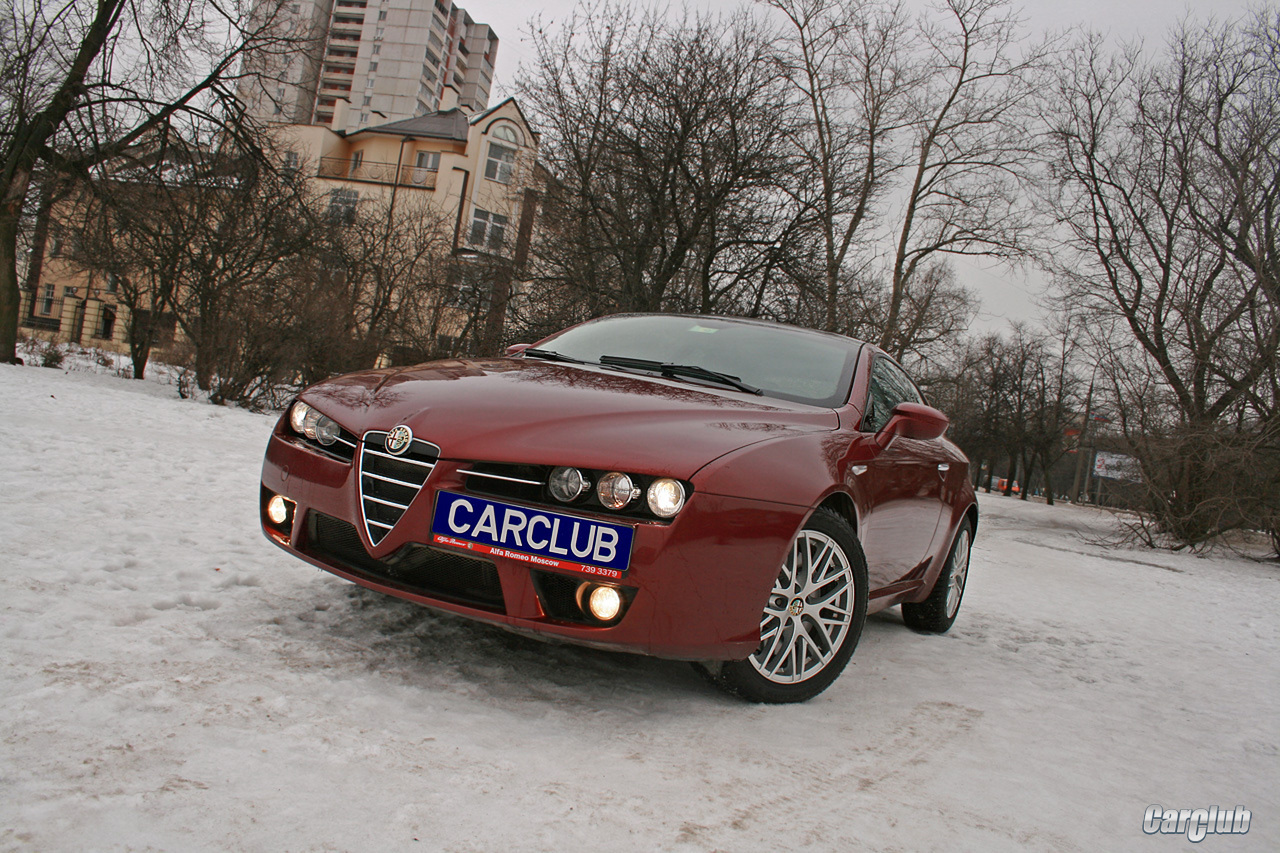
In the evening, having had our fill of driving, we decided to show up at the local drag races — the Brera has decent power, and all-wheel drive should have helped. But it was not to be: the sluggish automatic ruined all plans. The Brera was not created for this. Having lost the races, we decided to lift our spirits with a night drive through the city center — here the Alfa is in its element. Admiring glances are guaranteed, and if it were also an open Spider, there would be no end to admirers.
If you look at the scarce coupe market in Russia, the Brera occupies a place somewhere between the elegant but not too dynamic Peugeot 407 Coupe and the swift BMW 3 Series Coupe. As for me, I would choose the Alfa 159 with the 2.2-liter engine and manual — it is noticeably cheaper, more practical, and a pleasure to drive. And if you really need a coupe with an automatic, then my choice is the "three" from BMW!
Text: Leonid Pavlov.