
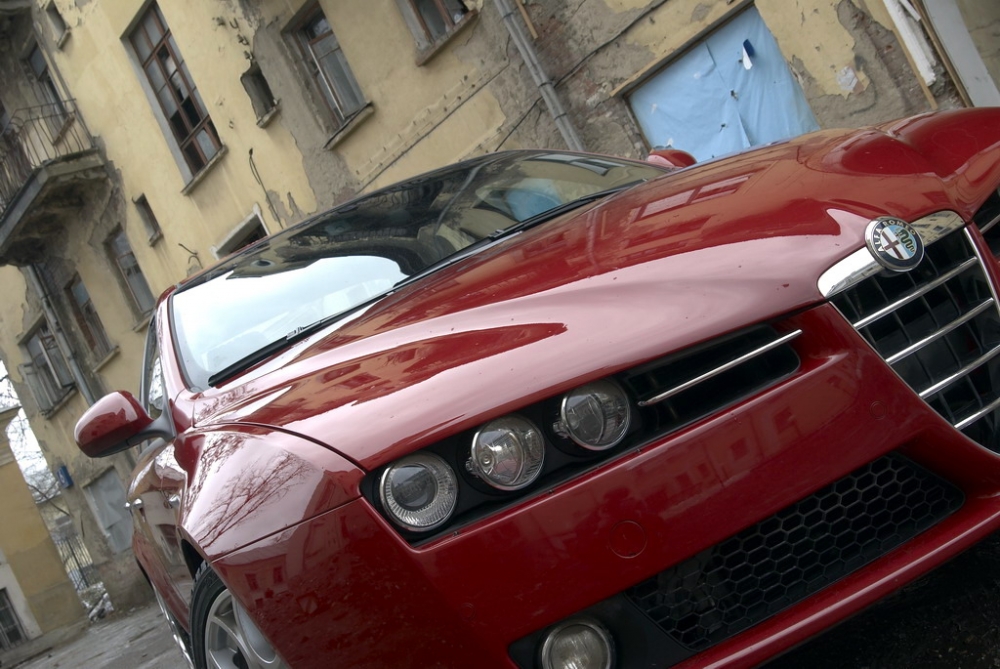
 It so happened that the Alfa Romeo 159 in the Ti version came to me "for dessert." Alfa never gets boring to me, even if I "dine" on it daily – my appetite for the Italian brand is insatiable. A constant aperitif in the form of two "orthodox" Alfa Romeo models, the 155 and 164, which are in my family, helps maintain it. But you always want to taste something new, unusual. Last year I "satisfied my hunger" with the 159 with the 2.2 JTS engine. Beautiful. And much better in quality than the 156. And it handles very well. But still, it's an appetizer, a salad, nothing more. The 2.2-liter engine is good, but its power is clearly not enough for a full "feast" behind the wheel. Not exactly a dietary option, of course, but... It so happened that the Alfa Romeo 159 in the Ti version came to me "for dessert." Alfa never gets boring to me, even if I "dine" on it daily – my appetite for the Italian brand is insatiable. A constant aperitif in the form of two "orthodox" Alfa Romeo models, the 155 and 164, which are in my family, helps maintain it. But you always want to taste something new, unusual. Last year I "satisfied my hunger" with the 159 with the 2.2 JTS engine. Beautiful. And much better in quality than the 156. And it handles very well. But still, it's an appetizer, a salad, nothing more. The 2.2-liter engine is good, but its power is clearly not enough for a full "feast" behind the wheel. Not exactly a dietary option, of course, but... |
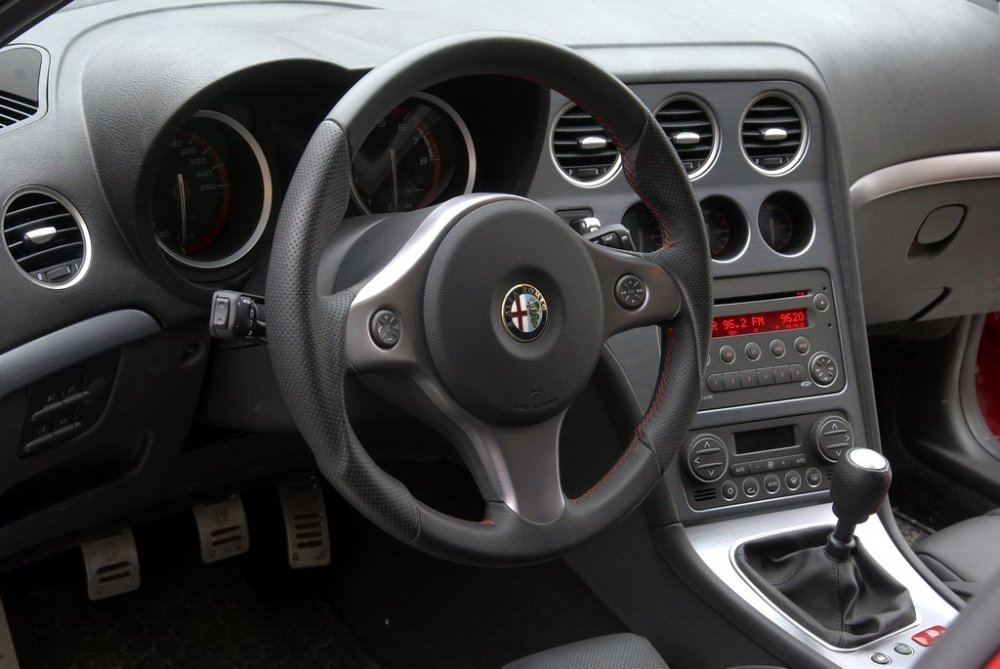
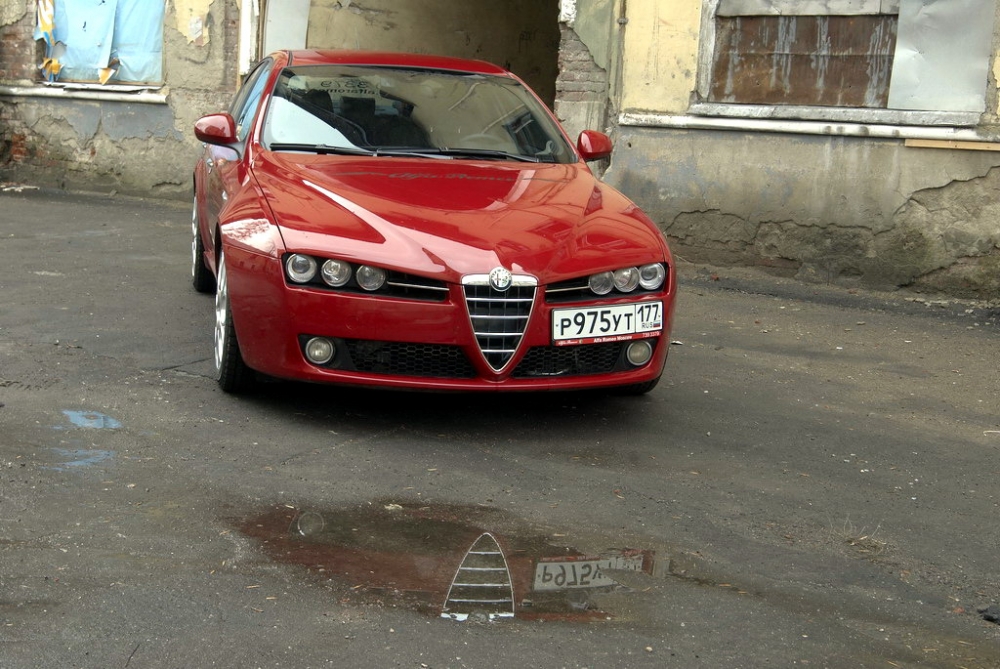 For the main course, I recently tried the Brera. A wonderful dish! With a persistent taste of the "peppery" 3.2-liter V6, seasoned with stunning exterior looks and the aftertaste of the Q4 all-wheel drive. A true thoroughbred coupe from Alfa Romeo! The only thing that caused some disharmony was the automatic transmission. No, I don't mean to say that the Q-Tronic is a bad "gearbox." It's quite up to par. But a truly sporty car should still have a "stick shift" – and that needs no explanation. And now, finally, the long-awaited dessert. The 159 Ti, without losing any of its advantages in the form of a powerful engine and all-wheel drive transmission, has acquired many additional "goodies." In particular, the test car was equipped with a 6-speed manual transmission (although Q-Tronic is also possible here). But the most important and interesting thing is the "Ti sport package." For the main course, I recently tried the Brera. A wonderful dish! With a persistent taste of the "peppery" 3.2-liter V6, seasoned with stunning exterior looks and the aftertaste of the Q4 all-wheel drive. A true thoroughbred coupe from Alfa Romeo! The only thing that caused some disharmony was the automatic transmission. No, I don't mean to say that the Q-Tronic is a bad "gearbox." It's quite up to par. But a truly sporty car should still have a "stick shift" – and that needs no explanation. And now, finally, the long-awaited dessert. The 159 Ti, without losing any of its advantages in the form of a powerful engine and all-wheel drive transmission, has acquired many additional "goodies." In particular, the test car was equipped with a 6-speed manual transmission (although Q-Tronic is also possible here). But the most important and interesting thing is the "Ti sport package." |
 The history of the Ti abbreviation (Turismo Internazionale) began more than half a century ago, back in 1950, when the great Giuseppe "Nino" Farina, driving the racing Alfa Romeo 158 Alfetta, became the first champion in Formula 1 history. It was then that the decision was made to produce a 100-horsepower Ti version based on the first post-war production model, the 1900, which featured an excellent aerodynamic body. And a year later, after the end of the second season of the F-1 World Championship (in which the legendary Juan Manuel Fangio, driving the 159 "Alfetta," won a fierce battle against Ferrari drivers), the 1900 Ti, symbolizing the triumph of the dynamically developing brand in motorsport and aimed at "sport-oriented" drivers, went on sale. Since then, the Ti package has been offered for almost all of the company's models. The history of the Ti abbreviation (Turismo Internazionale) began more than half a century ago, back in 1950, when the great Giuseppe "Nino" Farina, driving the racing Alfa Romeo 158 Alfetta, became the first champion in Formula 1 history. It was then that the decision was made to produce a 100-horsepower Ti version based on the first post-war production model, the 1900, which featured an excellent aerodynamic body. And a year later, after the end of the second season of the F-1 World Championship (in which the legendary Juan Manuel Fangio, driving the 159 "Alfetta," won a fierce battle against Ferrari drivers), the 1900 Ti, symbolizing the triumph of the dynamically developing brand in motorsport and aimed at "sport-oriented" drivers, went on sale. Since then, the Ti package has been offered for almost all of the company's models. |
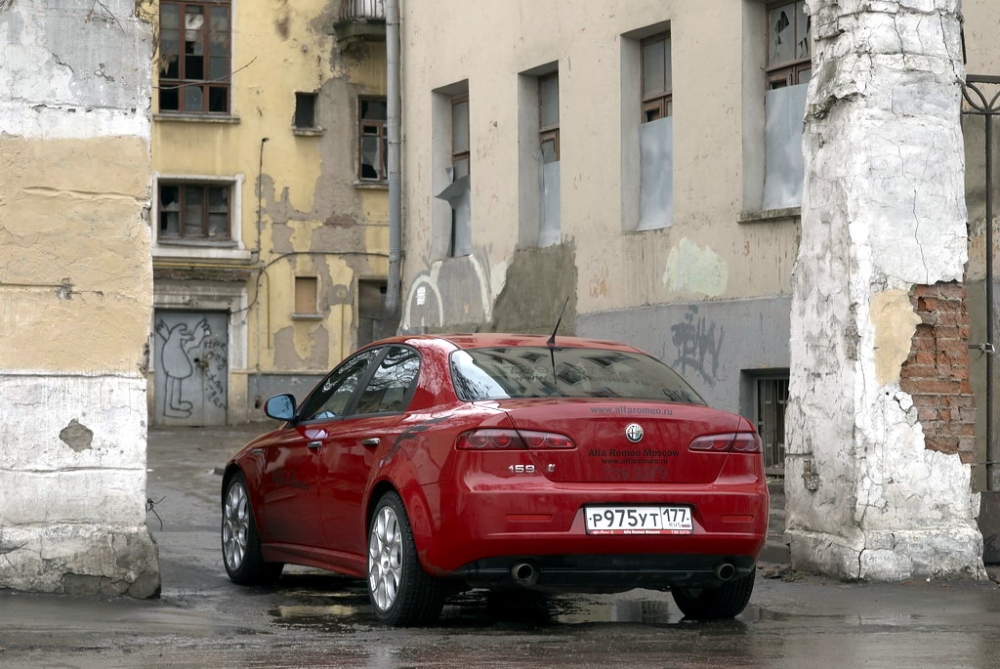
 At different times and for different cars, it implied various changes in design. They were never significant or expensive, but they always maintained the same focus – to make the car even more sporty, "sharpen" its handling, and give its appearance even more originality. It is significant, by the way, that with the release of the Ti versions of the 159 model, their total number became equal to 100! So this is a kind of anniversary! The new Alfa Romeo 159 Ti fully follows established traditions. It's worth noting right away that this modification can only be painted in one of three colors: red (Alfa Rosso), gray (Stromboli Grey), and black (Carbonio black). At different times and for different cars, it implied various changes in design. They were never significant or expensive, but they always maintained the same focus – to make the car even more sporty, "sharpen" its handling, and give its appearance even more originality. It is significant, by the way, that with the release of the Ti versions of the 159 model, their total number became equal to 100! So this is a kind of anniversary! The new Alfa Romeo 159 Ti fully follows established traditions. It's worth noting right away that this modification can only be painted in one of three colors: red (Alfa Rosso), gray (Stromboli Grey), and black (Carbonio black). |
 I'm sure the vast majority of potential buyers will choose, of course, Rosso – no matter how you look at it, an Alfa, especially a sporty one, should be red. Now, finally, about what, besides the coveted badges on the trunk lid and front fenders, the owner of the 159 Ti gets for 3500 euros. I'm sure the vast majority of potential buyers will choose, of course, Rosso – no matter how you look at it, an Alfa, especially a sporty one, should be red. Now, finally, about what, besides the coveted badges on the trunk lid and front fenders, the owner of the 159 Ti gets for 3500 euros. |
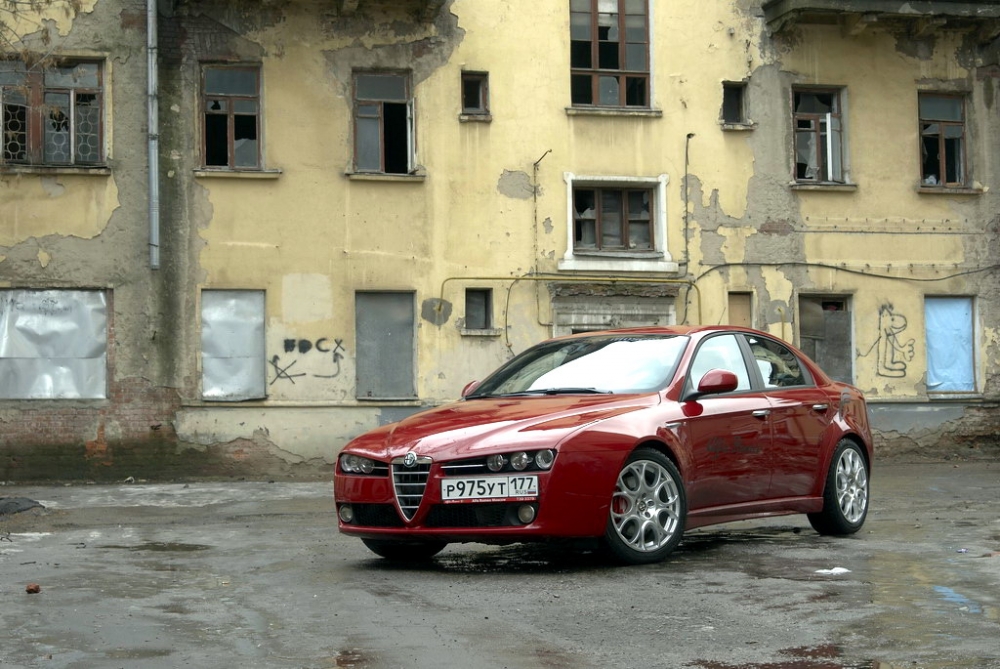
 Although this list doesn't seem impressive, for that money it's still a tempting offer! The already stunning appearance of the Italian beauty becomes even brighter thanks to new side sills painted in body color (or chrome) mirrors and 19-inch ten-spoke alloy wheels of original design. These wheels are not only beautiful but also light! I tried lifting this wheel and a standard 18-inch one in the showroom. Summary: the Ti wheel is noticeably lighter! (Unfortunately, in our photos you see that very "heavy" 18-inch footwear – the winter option). Although this list doesn't seem impressive, for that money it's still a tempting offer! The already stunning appearance of the Italian beauty becomes even brighter thanks to new side sills painted in body color (or chrome) mirrors and 19-inch ten-spoke alloy wheels of original design. These wheels are not only beautiful but also light! I tried lifting this wheel and a standard 18-inch one in the showroom. Summary: the Ti wheel is noticeably lighter! (Unfortunately, in our photos you see that very "heavy" 18-inch footwear – the winter option). |
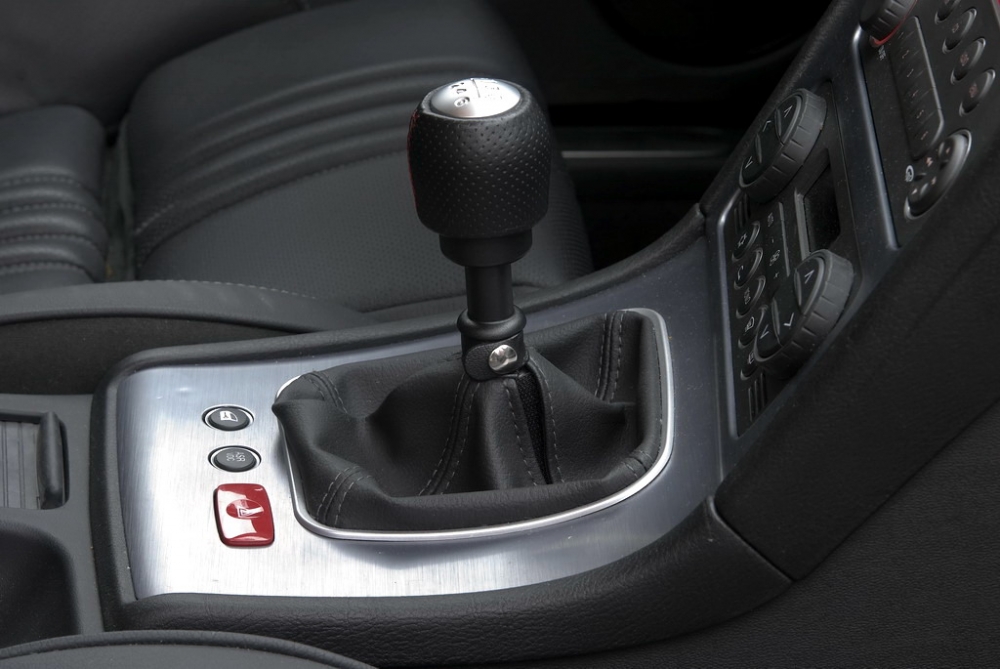
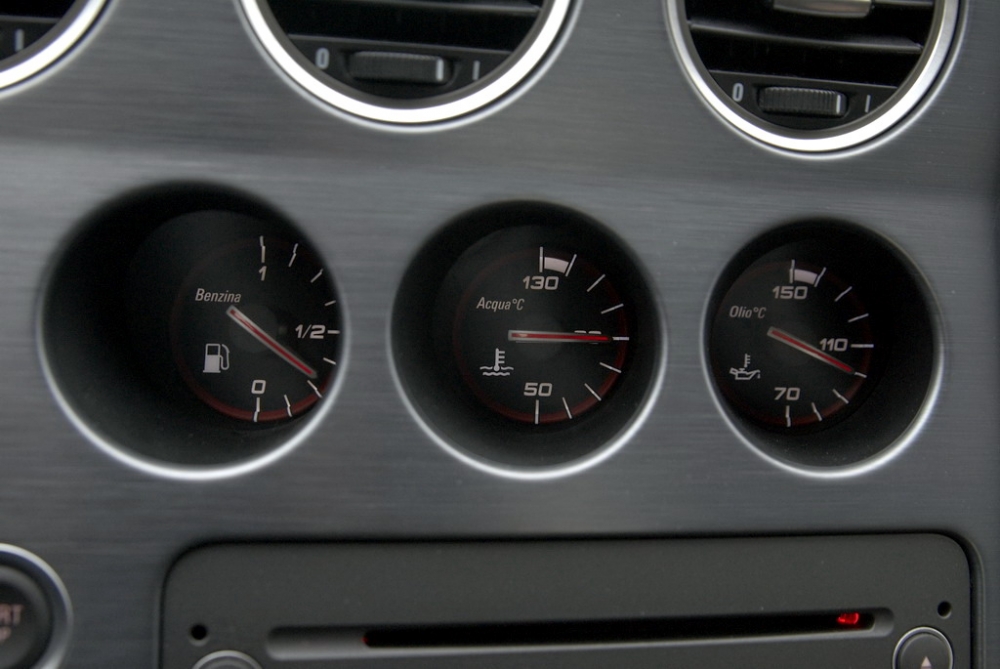
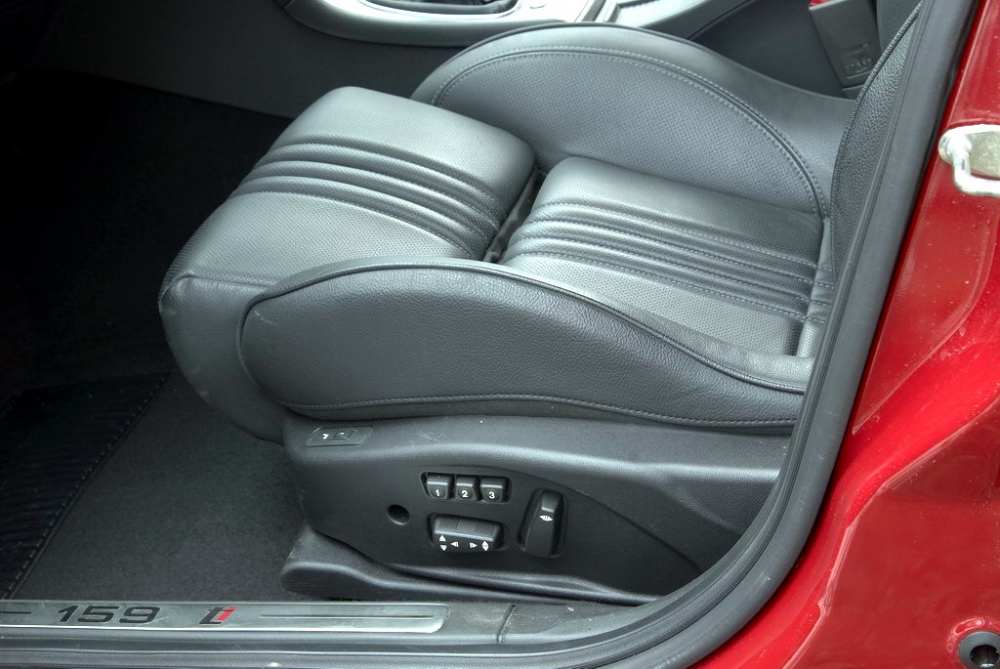
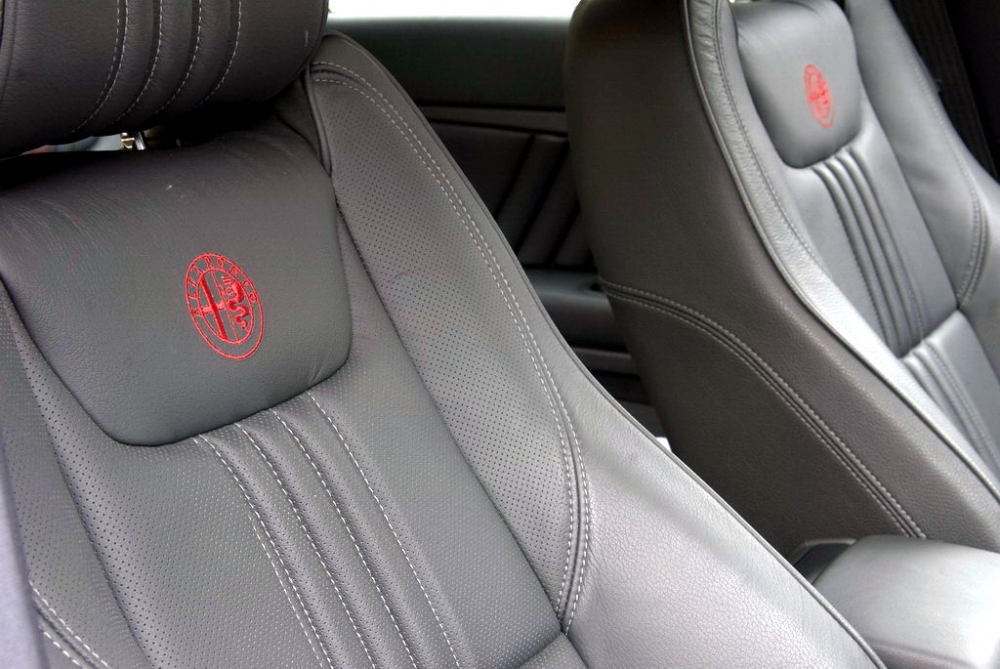
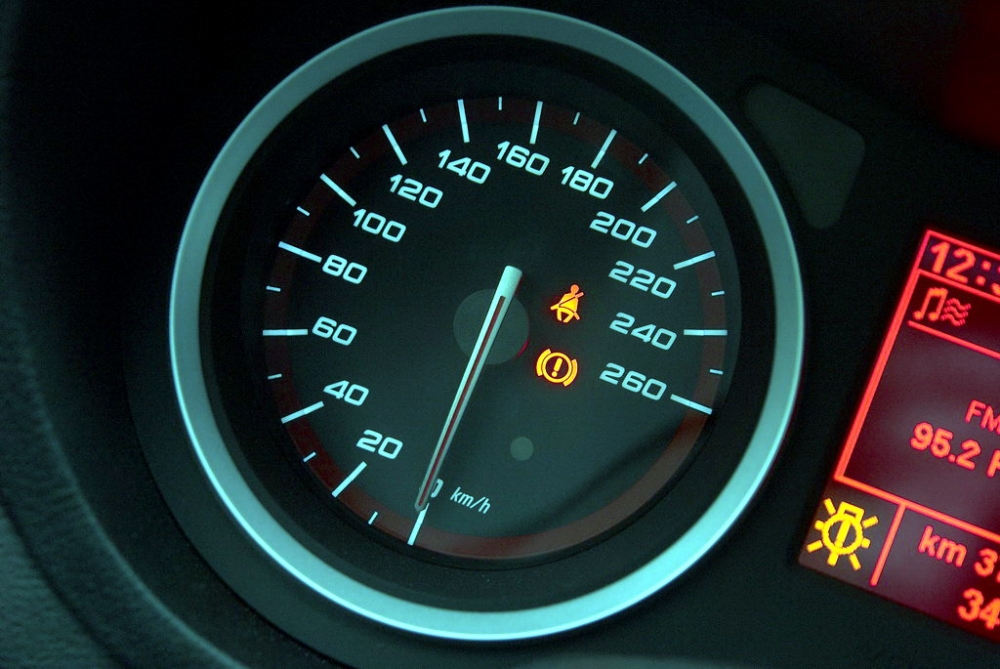 Well, reducing unsprung masses benefits any car. Through the wheels, another option is visible – more powerful Brembo brake mechanisms. Without a doubt, they work more effectively than the standard ones, but I couldn't properly test this – the car was shod with terrible Yokohama IG20 tires, with which even innocent braking is accompanied by the chattering of the ABS system. Well, what can you do – it's winter outside. There are also changes in the interior. The main one is the original rigid leather seats with a pronounced profile and the branded Alfa Romeo logo embroidered on the backrest. Excellent seats, they hold the body well. The Ti interior features red thread stitching, and the aluminum trim of the front panel is done in a darker tone. Well, reducing unsprung masses benefits any car. Through the wheels, another option is visible – more powerful Brembo brake mechanisms. Without a doubt, they work more effectively than the standard ones, but I couldn't properly test this – the car was shod with terrible Yokohama IG20 tires, with which even innocent braking is accompanied by the chattering of the ABS system. Well, what can you do – it's winter outside. There are also changes in the interior. The main one is the original rigid leather seats with a pronounced profile and the branded Alfa Romeo logo embroidered on the backrest. Excellent seats, they hold the body well. The Ti interior features red thread stitching, and the aluminum trim of the front panel is done in a darker tone. |
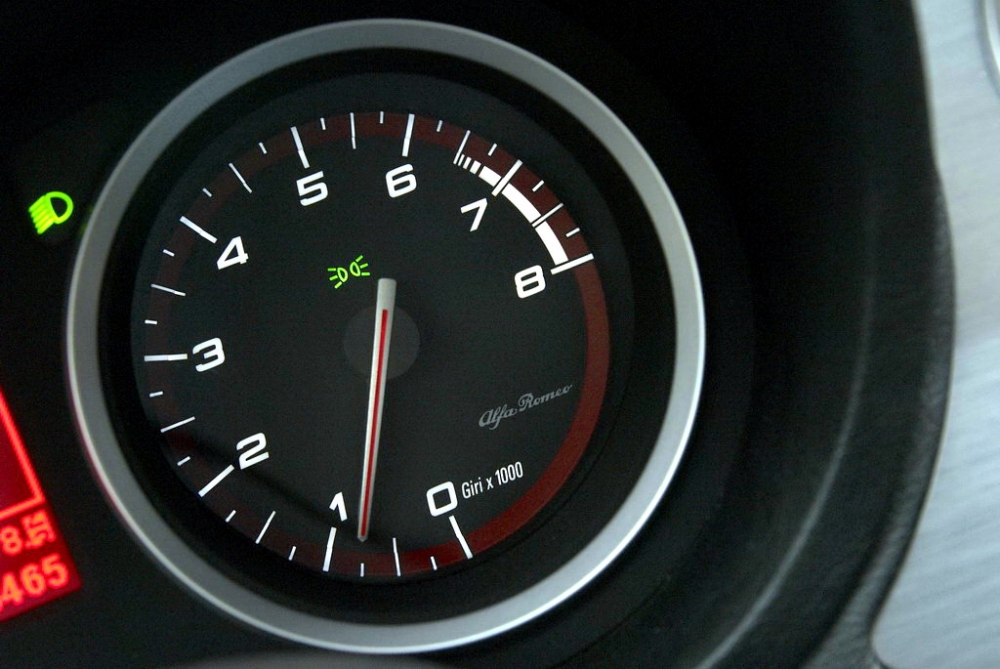 Another surprise is hidden under the floor – a retuned exhaust. The system growls menacingly. But it seemed strange that this bass is "available" only at low revs, in the range from 2000 to 3500. In other words, in conditions of measured city driving, in traffic jams, this hum begins to oppress and press on the ears. But what surprises even more is something else: when you downshift with a rev match, you expect the engine and exhaust to roar in confirmation, but... in response – silence (thanks to sound insulation, it's much better than on previous Alfa Romeos), and only the soaring tachometer needle tells you that everything is fine. Perhaps the exhaust sound was tuned in accordance with the changed character of the engine. Another surprise is hidden under the floor – a retuned exhaust. The system growls menacingly. But it seemed strange that this bass is "available" only at low revs, in the range from 2000 to 3500. In other words, in conditions of measured city driving, in traffic jams, this hum begins to oppress and press on the ears. But what surprises even more is something else: when you downshift with a rev match, you expect the engine and exhaust to roar in confirmation, but... in response – silence (thanks to sound insulation, it's much better than on previous Alfa Romeos), and only the soaring tachometer needle tells you that everything is fine. Perhaps the exhaust sound was tuned in accordance with the changed character of the engine. |
 The new 3.2 JTS traces its lineage to the Australian Holden engine (read General Motors), it's not as "rev-happy" as the legendary Twin Spark or "my" old 12-valve V6, which require constantly keeping revs above 4000. Its characteristics are smoother, if not boring, which, however, doesn't stop its 260 "horses" from accelerating the car to 100 km/h in 7 seconds. Not that fast, I agree. The reason is the rather large mass of the car at 1740 kg. The 159 is a bit heavy. But in the Ti version, there is another, the most important, highlight... The new 3.2 JTS traces its lineage to the Australian Holden engine (read General Motors), it's not as "rev-happy" as the legendary Twin Spark or "my" old 12-valve V6, which require constantly keeping revs above 4000. Its characteristics are smoother, if not boring, which, however, doesn't stop its 260 "horses" from accelerating the car to 100 km/h in 7 seconds. Not that fast, I agree. The reason is the rather large mass of the car at 1740 kg. The 159 is a bit heavy. But in the Ti version, there is another, the most important, highlight... |
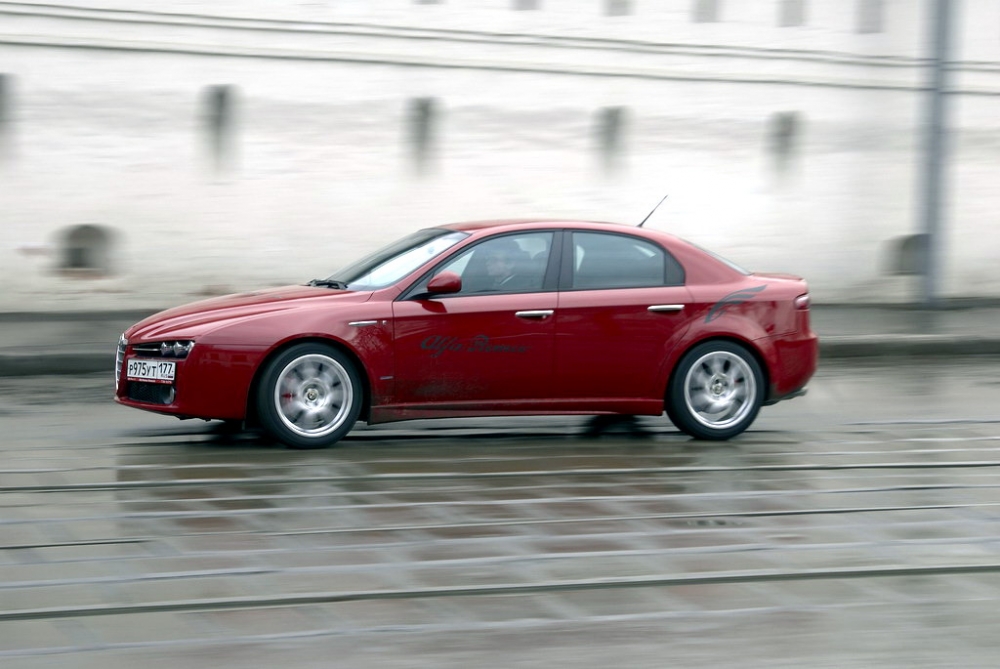
 Here I've reached the most pleasant-tasting part of the "sweet." The sport suspension lowered by 20 mm is, in fact, the main component of the Ti package (by the way, it can be ordered separately). If you set aside the inconveniences associated with the reduced ground clearance – after all, a person buying a sports car knows what they're getting into in advance – then the advantages of such a suspension are obvious. For me, as a person experienced in Alfa Romeo, this doesn't cause surprise. Models of past years (155 and 156) were literally transformed after installing such an "upgrade." Their handling became an order of magnitude better. It's gratifying that the new 159 is no exception. The elastic, extremely composed, but not overly stiff suspension, combined with a very sharp (2 turns) and transparent steering wheel, allows you to control the car with filigree precision. The car holds the road perfectly, and body rolls are practically absent. I have no doubt that in summer, on good tires (again these tires!), you'll be able to take corners at enormous speed, greater than on a regular 159. But now it's winter. So let's extract our advantages from this too! Especially since I've long wanted to "figure out" the Q4 all-wheel drive transmission. Here I've reached the most pleasant-tasting part of the "sweet." The sport suspension lowered by 20 mm is, in fact, the main component of the Ti package (by the way, it can be ordered separately). If you set aside the inconveniences associated with the reduced ground clearance – after all, a person buying a sports car knows what they're getting into in advance – then the advantages of such a suspension are obvious. For me, as a person experienced in Alfa Romeo, this doesn't cause surprise. Models of past years (155 and 156) were literally transformed after installing such an "upgrade." Their handling became an order of magnitude better. It's gratifying that the new 159 is no exception. The elastic, extremely composed, but not overly stiff suspension, combined with a very sharp (2 turns) and transparent steering wheel, allows you to control the car with filigree precision. The car holds the road perfectly, and body rolls are practically absent. I have no doubt that in summer, on good tires (again these tires!), you'll be able to take corners at enormous speed, greater than on a regular 159. But now it's winter. So let's extract our advantages from this too! Especially since I've long wanted to "figure out" the Q4 all-wheel drive transmission. |
 I've always been surprised at how Alfa Romeos behave on snow and ice – cars from a country where there isn't even a proper winter. But, as they say, "skill can't be washed away." And the 159 handles excellently "on slippery surfaces." True, I had to search for mutual understanding specifically with the all-wheel drive. And here Alfa demonstrates its hot temper. At the turn entry, when the car seems to be inexorably pulled outward by all four wheels, you shouldn't be afraid to open the throttle. There will be a redistribution of torque to the rear axle, a rotation, and the rear wheels will start pushing the car back into the corner. And then you can either accelerate in a straight line or, working with the throttle and steering, effectively drive the car in a power slide. Bravo! Bravissimo!! Perfetto!!! Not entirely natural, but if you master this technique properly... then watch out, all-wheel drive Audi and BMW! I've always been surprised at how Alfa Romeos behave on snow and ice – cars from a country where there isn't even a proper winter. But, as they say, "skill can't be washed away." And the 159 handles excellently "on slippery surfaces." True, I had to search for mutual understanding specifically with the all-wheel drive. And here Alfa demonstrates its hot temper. At the turn entry, when the car seems to be inexorably pulled outward by all four wheels, you shouldn't be afraid to open the throttle. There will be a redistribution of torque to the rear axle, a rotation, and the rear wheels will start pushing the car back into the corner. And then you can either accelerate in a straight line or, working with the throttle and steering, effectively drive the car in a power slide. Bravo! Bravissimo!! Perfetto!!! Not entirely natural, but if you master this technique properly... then watch out, all-wheel drive Audi and BMW! |
 The dessert turned out tasty, rich. Too bad it was so small. I wanted to savor it longer, but... alas, I'm already scraping the spoon along the bottom of the dessert bowl – it's time to part with this hot ragazza. With a heavy heart, I hand over the keys. Maybe I should ask for coffee now? The best kind, and with cognac? Let's wait for the 159 GTA... The dessert turned out tasty, rich. Too bad it was so small. I wanted to savor it longer, but... alas, I'm already scraping the spoon along the bottom of the dessert bowl – it's time to part with this hot ragazza. With a heavy heart, I hand over the keys. Maybe I should ask for coffee now? The best kind, and with cognac? Let's wait for the 159 GTA... Timeline |
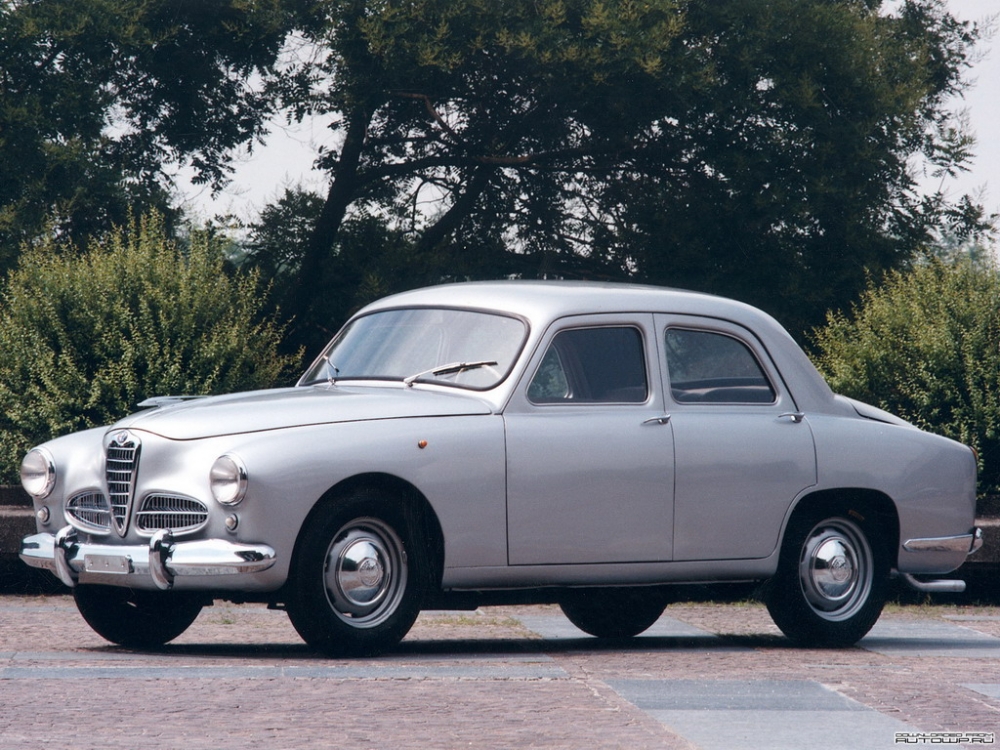 Alfa Romeo 1900 Ti Alfa Romeo 1900 TiThe progenitor of the "Ti" clan was the 1900 model, developed under the leadership of talented engineer Orazio Satta. The first Ti version was released in 1951, and in 1953 it was replaced by the 1900 Ti Super. Their differences mainly came down to engine tuning. The 1900 Ti had a different cylinder head: the diameter of intake and exhaust valves was increased, two carburetors were installed instead of one, and the intake and exhaust manifolds were modified. This increased the compression ratio (from 7.5 to 7.75) and boosted power (from 90 hp at 5200 rpm to 100 hp at 5500 rpm). The Ti Super variant had a larger engine (1975 cc instead of 1884), achieved by increasing the piston diameter from 82.55 to 84.5 mm with an unchanged stroke of 88 mm. This brought power to 115 hp. The 1900 Ti Coupe stood apart with its beautiful two-door body from Pininfarina. The 1900 Ti boasts a huge number of victories in various competitions. |
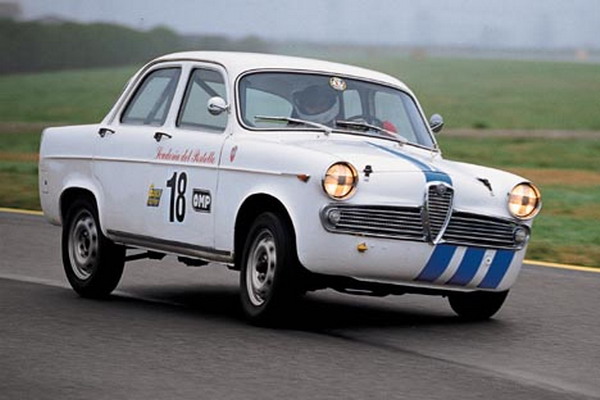 Alfa Romeo Giulietta Ti Alfa Romeo Giulietta TiThe Giulietta Ti appeared in 1957. Ti became the most popular modification of the "Giulietta". Over all years of production, more than 50,000 units were produced. The main difference, as with the 1900, was a more powerful power unit – a different cylinder head was installed on the 1290 cc engine. It developed 65 hp, while on the standard car it was 53 hp. Although later even more powerful modifications appeared – Sprint (80 hp), Sprint Veloce (90 hp), Sprint Speciale (100 hp) and Sprint Zagato (100 hp). The Giulietta became a worthy successor to Alfa Romeo's sporting traditions. |
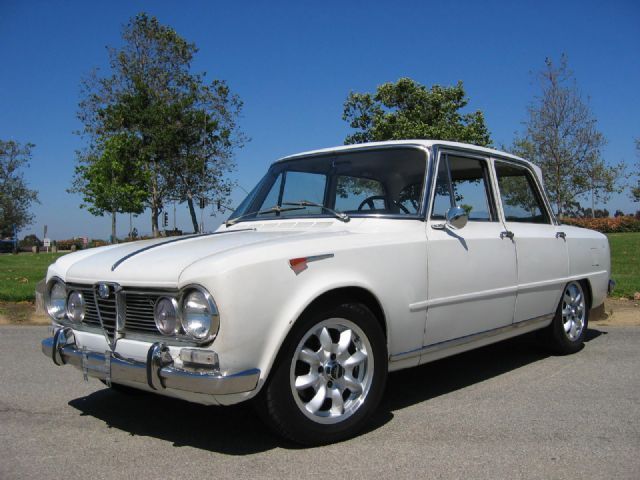 Alfa Romeo Giulia Ti Alfa Romeo Giulia TiSpecial attention, in addition to the Ti version produced since 1962 (92 hp), should be paid to the Giulia Ti Super modification (103 hp), which appeared in 1963. Only 501 units were made. Collectors still hunt for this sedan today. It differed from the base model with a more powerful engine, the option to choose different fuel tank sizes, and additional interior and exterior details that gave the model a more sporty, dynamic look (sport seats, a different instrument panel, a three-spoke steering wheel, alloy wheels, darkened high-beam lights). In 1966, the Giulia 1300 Ti model with a 1290 cc engine producing 84 hp saw the light of day. The lightweight racing modifications of the 1300 GTA, GTA Junior (whose engines developed almost 160 hp at 8000 rpm) and the two-liter GTAm, prepared by Alfa's sporting division Autodelta, dominated the FIA European Touring Car Championship: in the very first race of 1966 in Monza, the "Alfa boys" finished in the first seven (!) places; that and the following season brought two consecutive championship titles (in the 1600 cc class) to the legendary Andrea de Adamich; in 1969 Alfa marked another such victory, and in 1970-71 it won in two classes at once. |
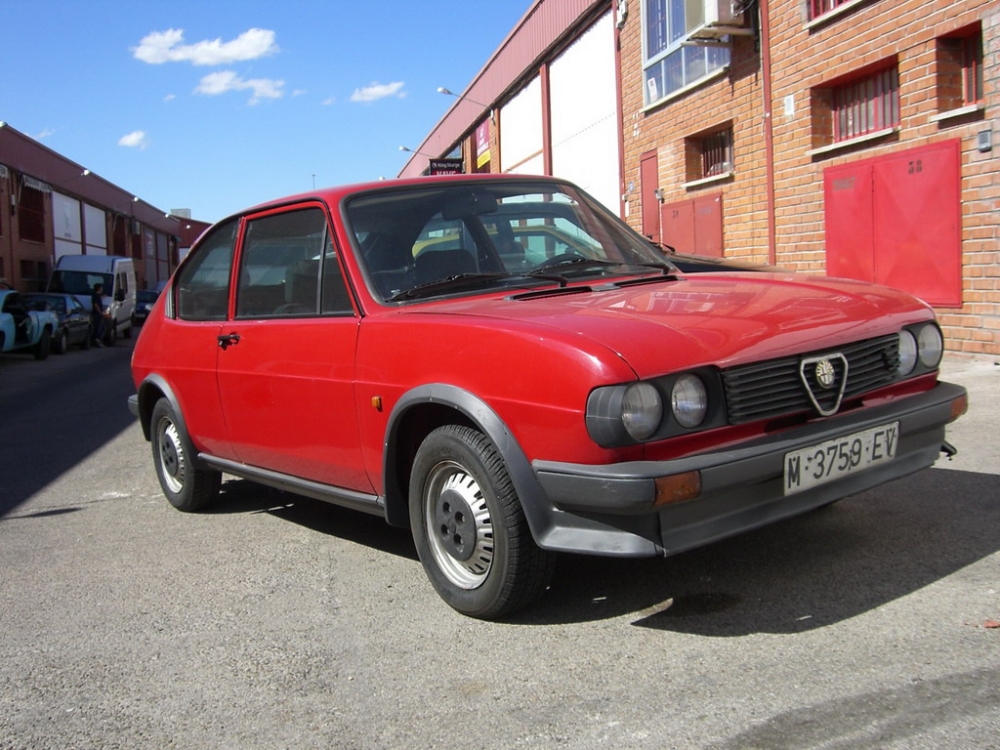 Alfa Romeo Alfasud Alfa Romeo AlfasudAlfasud – the brand's first front-wheel-drive model – received a huge number of Ti versions. Starting in 1971, three generations of Alfasud were equipped with four opposed "fours" of various displacements – from 1.2 to 1.5 liters. The Ti version was produced with a two-door body. The changes were as follows: four round headlights, turn indicators in the front bumper, larger wheels, a spoiler on the rear door, bumper trim, a dark radiator grille, and a modified interior with sport seats. The power of the 1.2-liter engine was 68 hp versus the base 63 hp thanks to different camshafts. From 1977, the displacement increased to 1286 cc, and with it power – to 75 hp. After a facelift in the same year, the Ti version received a small number of cosmetic changes, and the engine began to develop 1 hp more. Subsequently, the Ti "boxer" engines with 1350 and 1490 cc already had two carburetors and developed 86 and 95 hp, respectively. In 1982, the 1.5 Ti version was replaced by the more powerful Sprint Quadrifoglio Verde modification (105 hp). Since then, the QV version became the top sport version of Alfa Romeo models, and the Ti abbreviation became what it is to this day – a designation of minor modifications that do not affect the engine design. Alfa Romeo Arna Ti In 1984, Alfa Romeo together with Nissan developed the Arna model (initial letters of Alfa Romeo Nissan Automobili SpA), which also received a Ti version. It was equipped with an engine from the Alfasud with a displacement of 1351 cc (86 hp), while the regular Arna had a 1186 cc (63 hp) engine. As a result, the maximum speed increased from 150 to 170 km/h. |
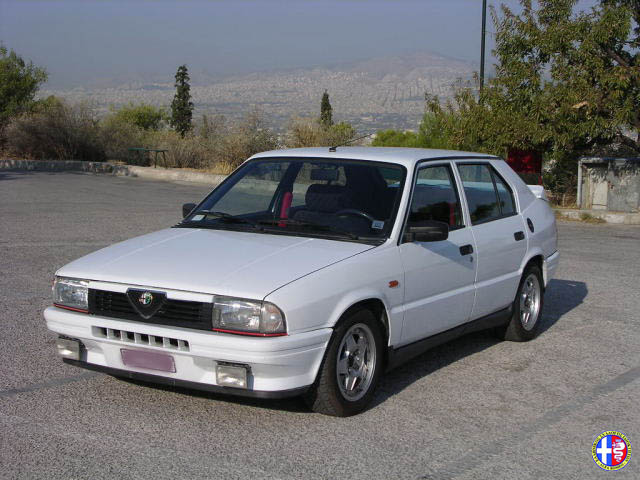 Alfa Romeo 33 Ti Alfa Romeo 33 Ti33 Ti – a variant with a 1.5-liter boxer engine, which appeared thanks to the facelift of the first generation of the 33rd model, carried out in 1986. As a result, the 33 QV with a 105-horsepower injection engine, produced from 1983 to 1986, was renamed Ti. It differs from other "thirty-thirds" of those years by its signature rear wing, aerodynamic skirt along the sills, and a standard right mirror. The QV version also carried all these external attributes, but it also had more serious changes – a 1.7-liter engine (115 hp) and a sport suspension. |
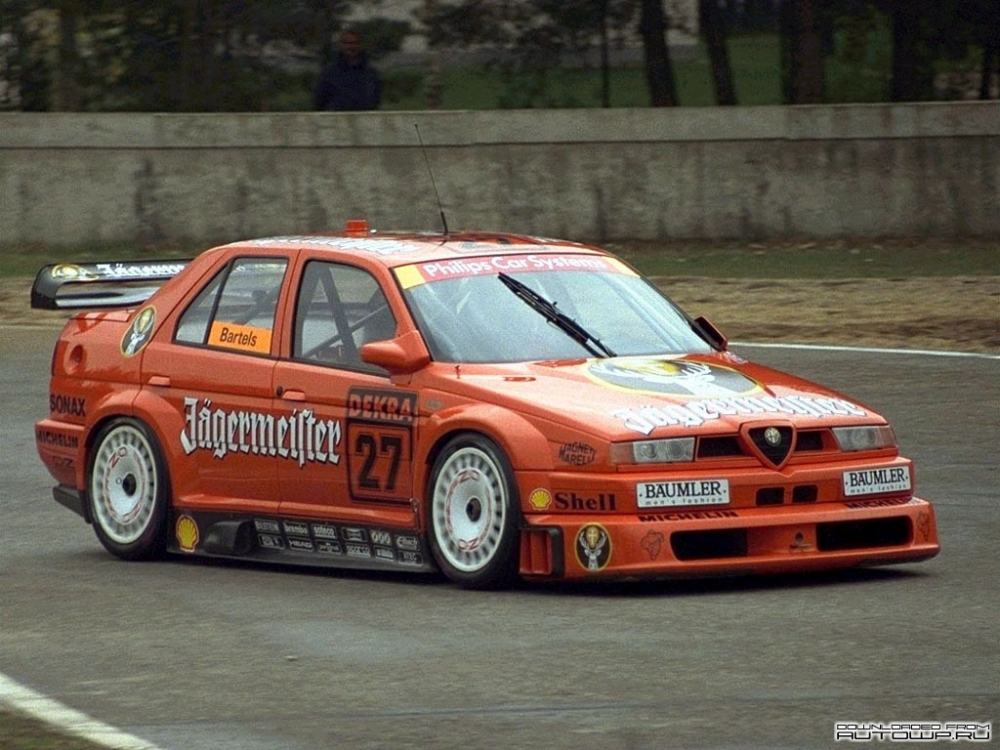 Alfa Romeo 155 V6 Ti DTM Alfa Romeo 155 V6 Ti DTMAmong all Alfa Romeo models with the Ti index, this one stands apart. As you might guess from the name, it participated in the DTM championship. And not without success: already in the debut season, Nicola Larini became DTM champion at the wheel of the 155 V6 Ti, and from 1993 to 1996 he won a total of 16 victories. This car had little in common with the production Alfa Romeo 155. The body was a monocoque with an integrated safety cage. The transmission was a 6-speed semi-automatic, with a carbon-fiber clutch. Weight – 1060 kg. Power – 490 hp at 11,900 rpm. Maximum speed – over 300 km/h. Alfa Romeo 155 V6 Ti-Z Another modification of the 155 – Ti-Z. The letter 'Z' at the end indicates a body of original design, developed by Zagato specialists. A stunningly beautiful car! And extremely rare. Only about 40 units were produced, each one to individual order. According to available data, they are all now in Japan. Several versions of the car were produced with the Zagato body. In 1993 – 155 Ti-Z (based on the all-wheel-drive 155 Q4, power – 215 hp). In 1995 – 155 TS Ti-Z (2.0 Twin Spark, 170 hp), 155 Ti-Z – (Q4, 215 hp), 155 GTA-Z – (Q4, 215-450 hp). In 1996 – 155 TS Ti-Z (standard Twin Spark, body only), 155 TS Ti-Z (2.0 Twin Spark, sports kit 190 hp), 155 TS Ti-Z AT (automatic transmission), 155 GTA-Z – (Q4, 215 hp) plus another example with a V6 engine. Well, we can only envy the Japanese. |
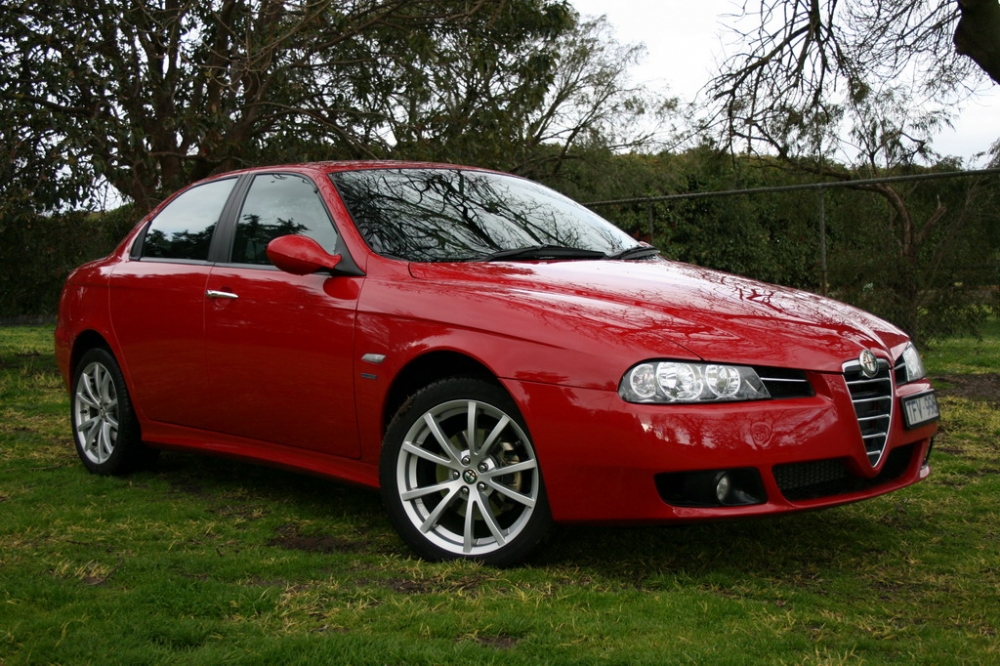 Alfa Romeo 147, 156, 166 Ti Alfa Romeo 147, 156, 166 TiThe Ti trim became available for these models (147 and 166 are still in production) after the facelift carried out in 2003. The options of this package were close to those offered for the 159: special interior trim, 17-inch alloy wheels of original design, and a lowered sport suspension. |
For dessert!
Turismo Internazionale… Sounds beautiful! And how it looks! And it also drives great. The Italians from Alfa Romeo have always known how, with seemingly minor changes, to give their cars a more sporty and vibrant character.
Test drive photos
Comments
No comments yet. Say the first word.