
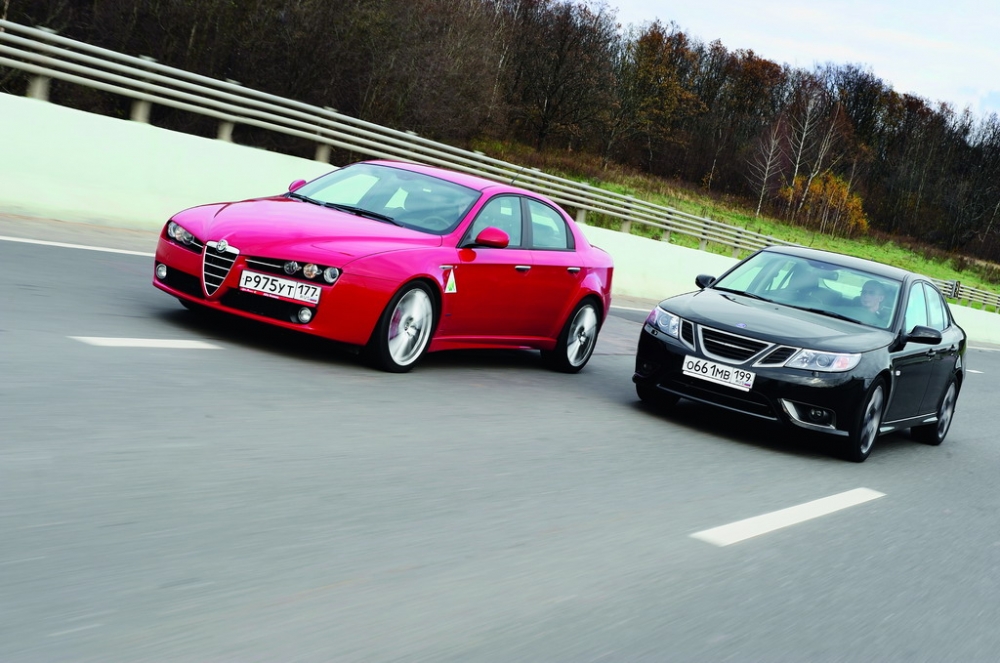
 Sales of both brands are far from breaking records, let alone setting them. And while Saab's 9-3 after the facelift seems to be doing somewhat better, Alfa, in its second year of sales in Russia, continues to lose potential customers. Nevertheless, the ranks of ardent fans of these brands are not thinning. Fans, they are generally loyal. Saabers and Alfists diligently repair the "fragile heaps," but at the same time carry somewhere in the depths of their vast souls the doctrine that they are, in a sense, the chosen ones. It is clear that from the window of the notorious "silver Toyota" such chosenness looks like madness, but nevertheless: many people breathe unevenly for both Saab and Alfa. There are plenty of hidden, latent fans as well. How can one not compare the two top versions of the D-segment from extraordinary manufacturers, given such an opportunity? Sales of both brands are far from breaking records, let alone setting them. And while Saab's 9-3 after the facelift seems to be doing somewhat better, Alfa, in its second year of sales in Russia, continues to lose potential customers. Nevertheless, the ranks of ardent fans of these brands are not thinning. Fans, they are generally loyal. Saabers and Alfists diligently repair the "fragile heaps," but at the same time carry somewhere in the depths of their vast souls the doctrine that they are, in a sense, the chosen ones. It is clear that from the window of the notorious "silver Toyota" such chosenness looks like madness, but nevertheless: many people breathe unevenly for both Saab and Alfa. There are plenty of hidden, latent fans as well. How can one not compare the two top versions of the D-segment from extraordinary manufacturers, given such an opportunity? |
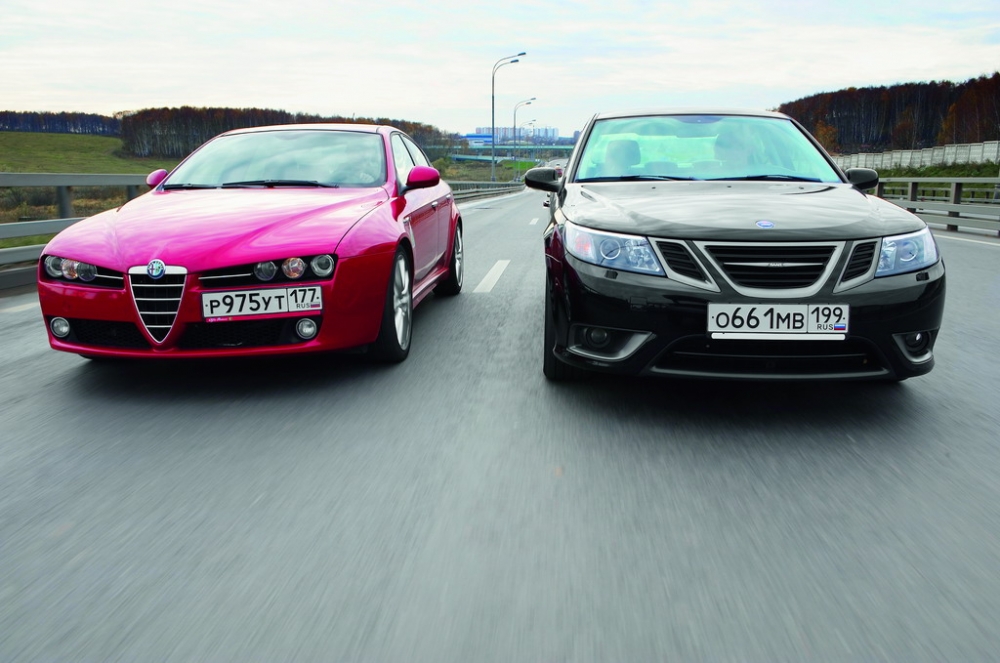 Of course, picky readers will say that it would be more appropriate to take for the test not the collectible Turbo X (only 2000 units will be produced), which seems to stand apart in the 9-3 lineup, but, say, the new Aero XWD – a model as mass-market and accessible as the Ti and also similar in specifications. We agree, such a point of view has a right to exist, but had we strictly adhered to it, the test simply would not have taken place – after all, at that time there was no all-wheel-drive "airplane" at the GM representative office. It would have been absurd to refuse the Turbo X, and what a blessing that the 159th turned up at that moment! The test is to be, and its outcome is quite intriguing. Of course, picky readers will say that it would be more appropriate to take for the test not the collectible Turbo X (only 2000 units will be produced), which seems to stand apart in the 9-3 lineup, but, say, the new Aero XWD – a model as mass-market and accessible as the Ti and also similar in specifications. We agree, such a point of view has a right to exist, but had we strictly adhered to it, the test simply would not have taken place – after all, at that time there was no all-wheel-drive "airplane" at the GM representative office. It would have been absurd to refuse the Turbo X, and what a blessing that the 159th turned up at that moment! The test is to be, and its outcome is quite intriguing. |
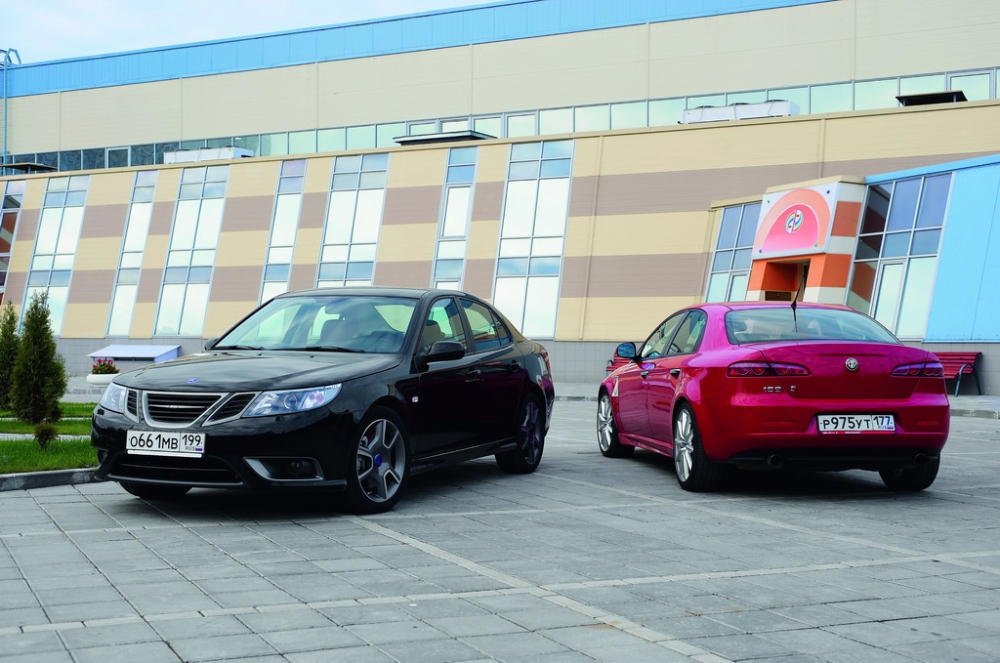
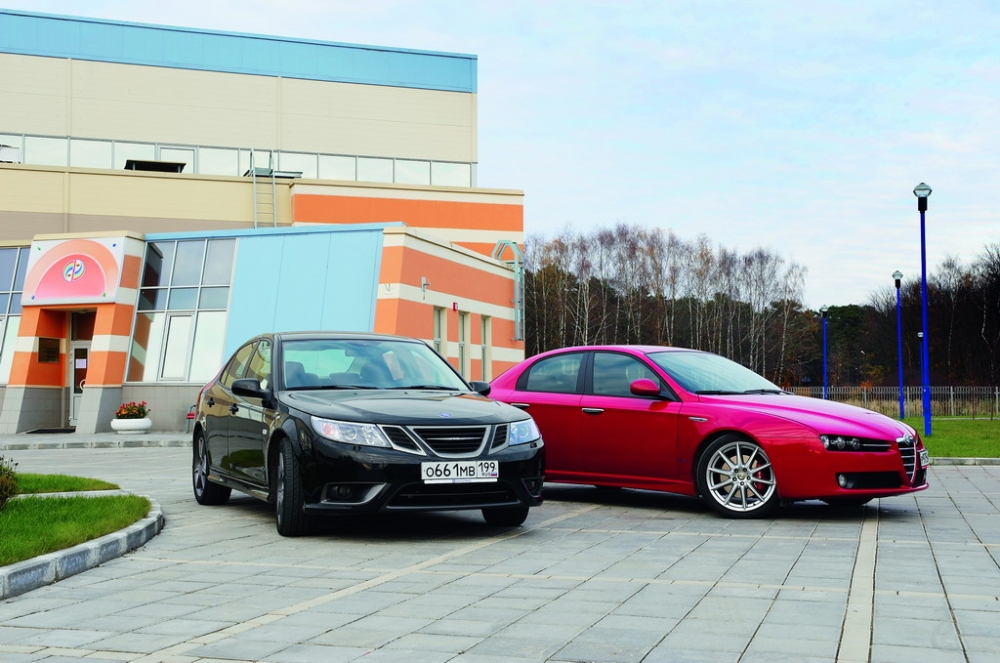
 So, on the stage we have all-wheel-drive mid-size sedans prepared according to a sports program. This implies: manual transmissions, special interior trim, special steering and suspension settings, all-wheel drive. The difference in power is +20 hp in favor of the Swede. And it is also lighter, but more on that later. The Turbo X has descended into reality from official photographs – all these cars will be like this: only black color, darkened wheels of original design, additional touches in the exterior and... a large height. The ground clearance is high. This becomes more noticeable if an Alfa appears nearby. It seems glued to the ground with its curved low sills. So, on the stage we have all-wheel-drive mid-size sedans prepared according to a sports program. This implies: manual transmissions, special interior trim, special steering and suspension settings, all-wheel drive. The difference in power is +20 hp in favor of the Swede. And it is also lighter, but more on that later. The Turbo X has descended into reality from official photographs – all these cars will be like this: only black color, darkened wheels of original design, additional touches in the exterior and... a large height. The ground clearance is high. This becomes more noticeable if an Alfa appears nearby. It seems glued to the ground with its curved low sills. |
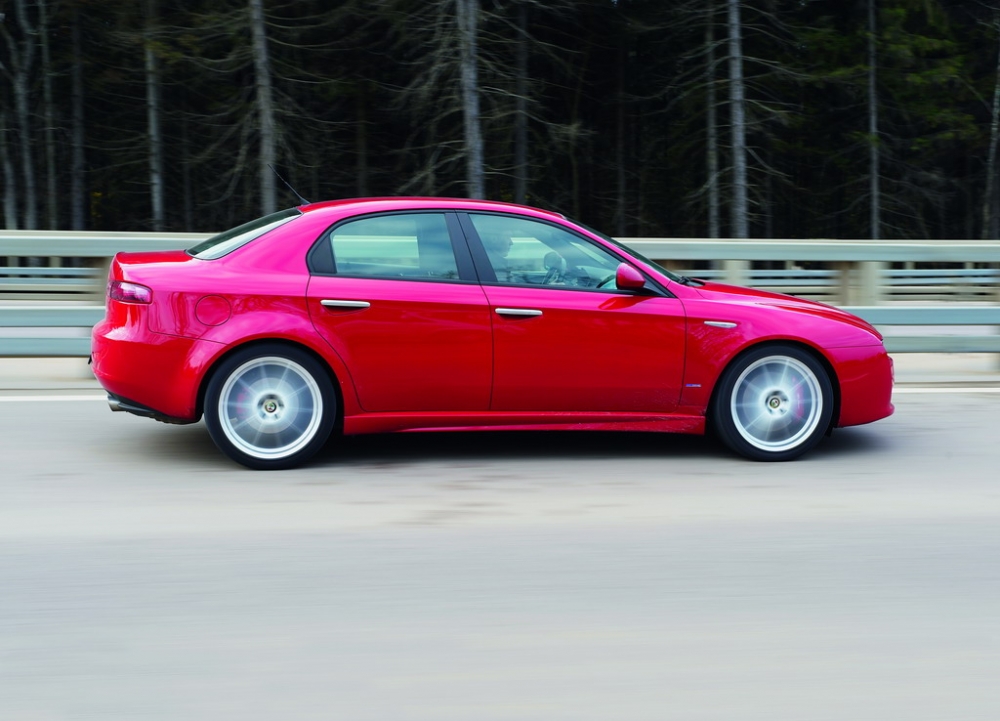
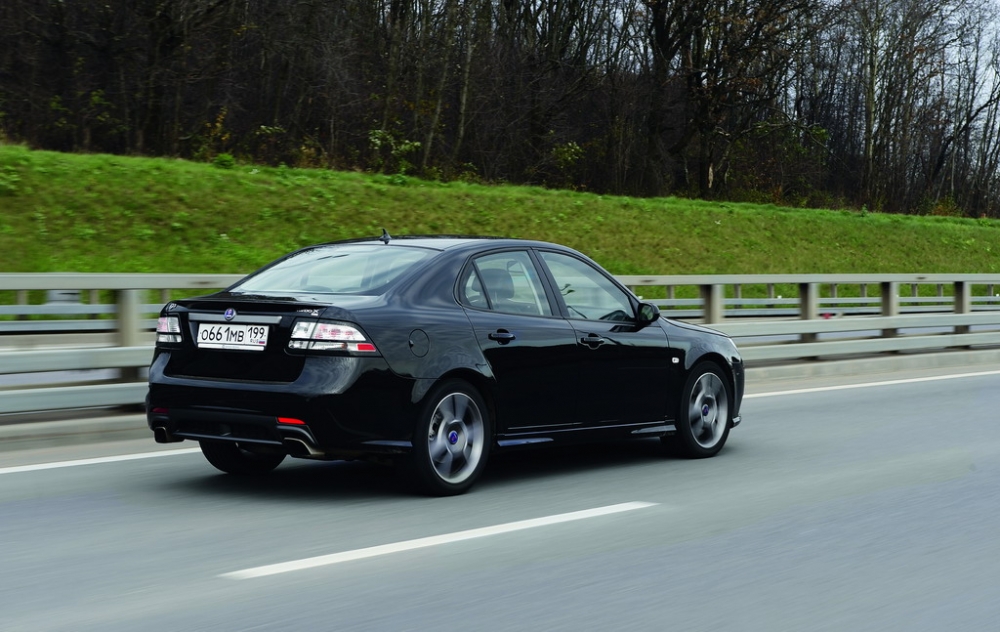
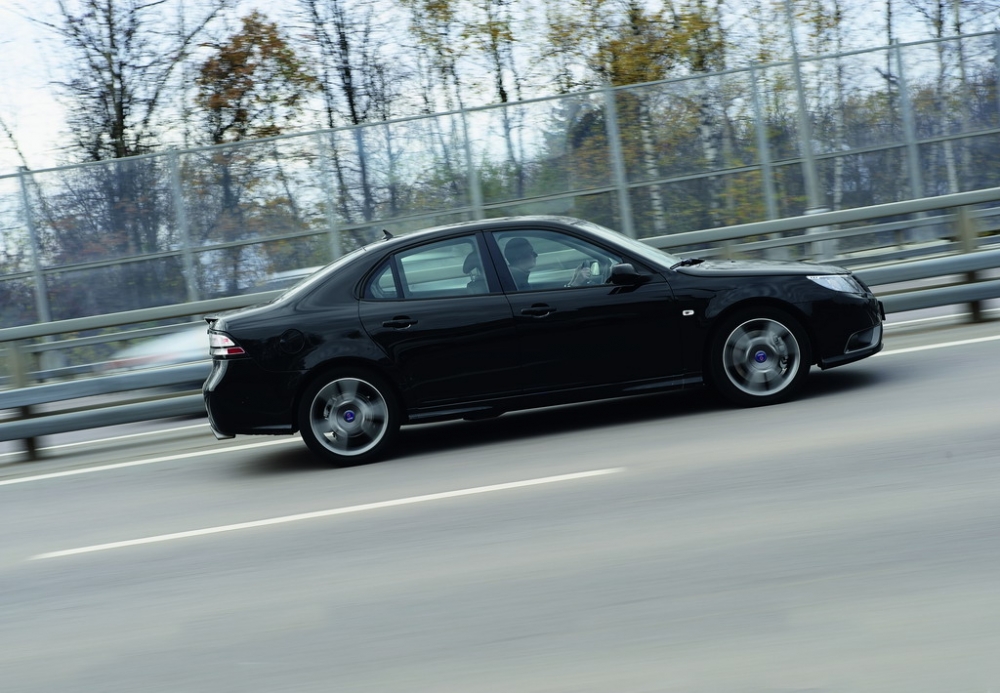 Well, if we leave the ground clearance alone, let's admit the obvious – the Turbo X is a handsome fellow! How dashingly the front end is designed – a real fighter. And from the rear it also makes a powerful impression – large exhaust pipes in the shape of irregular parallelepipeds, a spoiler shelf on the trunk lid, in the shadow of which a cherished inscription is found... We have been familiar with the 159 Ti for almost a year. Since then, the car has covered several thousand harsh test kilometers (but feels quite well), tried on stickers with the traditional Alfist clover leaf (Quadrifoglio Verde) on the front fenders, and swapped the non-original 18-inch "winter" wheels for original ones from the Ti package. They look better, are an inch larger, and are also lighter than the stock ones. Well, if we leave the ground clearance alone, let's admit the obvious – the Turbo X is a handsome fellow! How dashingly the front end is designed – a real fighter. And from the rear it also makes a powerful impression – large exhaust pipes in the shape of irregular parallelepipeds, a spoiler shelf on the trunk lid, in the shadow of which a cherished inscription is found... We have been familiar with the 159 Ti for almost a year. Since then, the car has covered several thousand harsh test kilometers (but feels quite well), tried on stickers with the traditional Alfist clover leaf (Quadrifoglio Verde) on the front fenders, and swapped the non-original 18-inch "winter" wheels for original ones from the Ti package. They look better, are an inch larger, and are also lighter than the stock ones. |
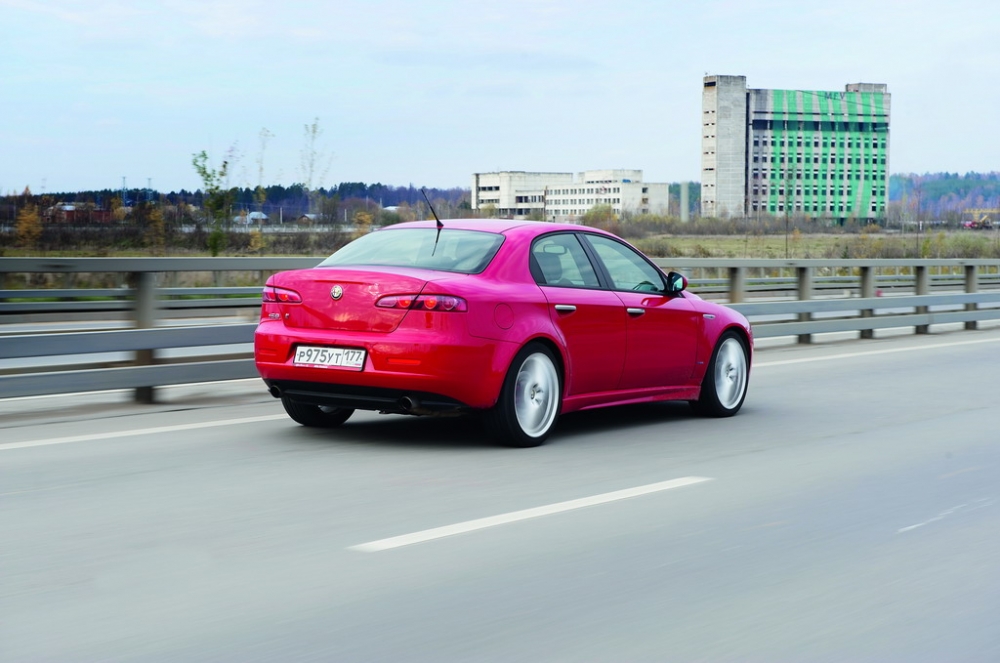 The Rosso color is, of course, the best thing you can offer for a hot Alfa Romeo. Despite all the strengths of the Saab's appearance, we unhesitatingly give the exterior first place to the representative of the Italian school of design. It has more expression, and the stunning looks are achieved not through an abundance of decorative details, but thanks to the exclusively harmonious body shape, which seems to radiate energy. The Rosso color is, of course, the best thing you can offer for a hot Alfa Romeo. Despite all the strengths of the Saab's appearance, we unhesitatingly give the exterior first place to the representative of the Italian school of design. It has more expression, and the stunning looks are achieved not through an abundance of decorative details, but thanks to the exclusively harmonious body shape, which seems to radiate energy. |
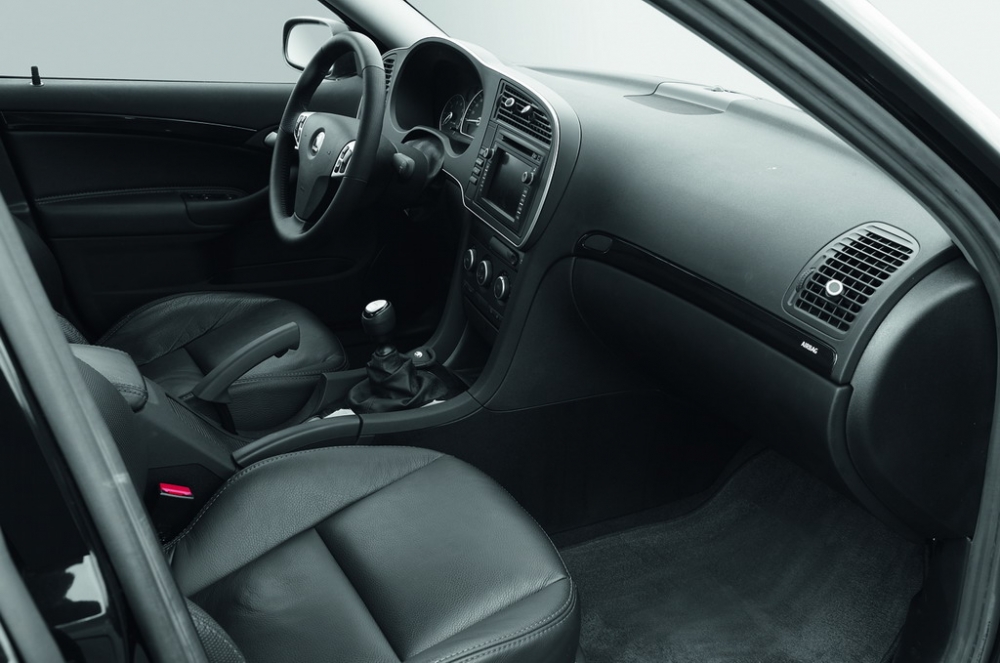
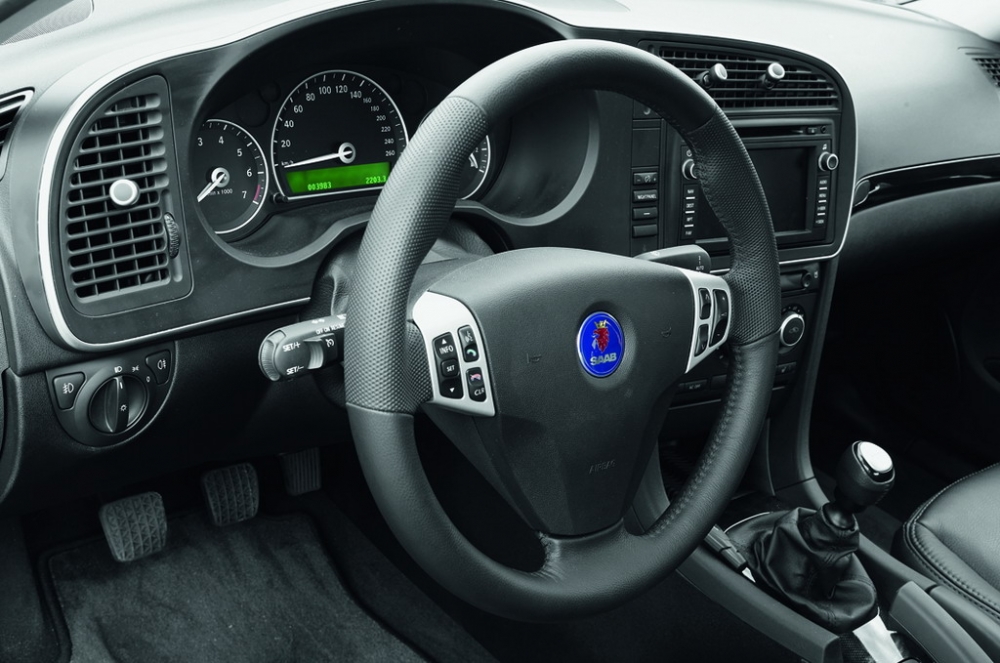
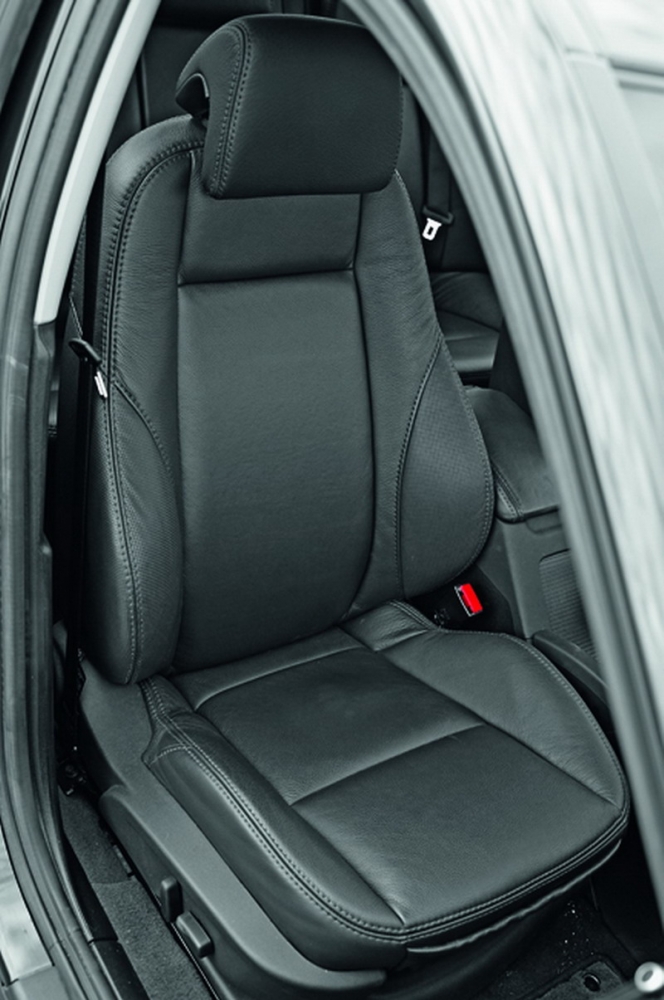
 To be honest, we expected more from the interior of the collectible 9-3, but it failed to surprise us. Everything here is almost like in a regular Aero, with variety added only by decorative carbon inserts and a nameplate on a carbon strip on the right side of the dashboard. Despite the car's sporty orientation and manual transmission, the tachometer still plays a secondary role – it is much smaller than the speedometer and located to the side. The steering wheel is also like in the Aero (and Cadillac BLS, by the way). The already familiar seats have, of course, lateral support, but could hold the body a bit better. In general, after visiting the Saab's interior, a slight feeling of dissatisfaction remains. How good that there is an Alfa nearby. To be honest, we expected more from the interior of the collectible 9-3, but it failed to surprise us. Everything here is almost like in a regular Aero, with variety added only by decorative carbon inserts and a nameplate on a carbon strip on the right side of the dashboard. Despite the car's sporty orientation and manual transmission, the tachometer still plays a secondary role – it is much smaller than the speedometer and located to the side. The steering wheel is also like in the Aero (and Cadillac BLS, by the way). The already familiar seats have, of course, lateral support, but could hold the body a bit better. In general, after visiting the Saab's interior, a slight feeling of dissatisfaction remains. How good that there is an Alfa nearby. |
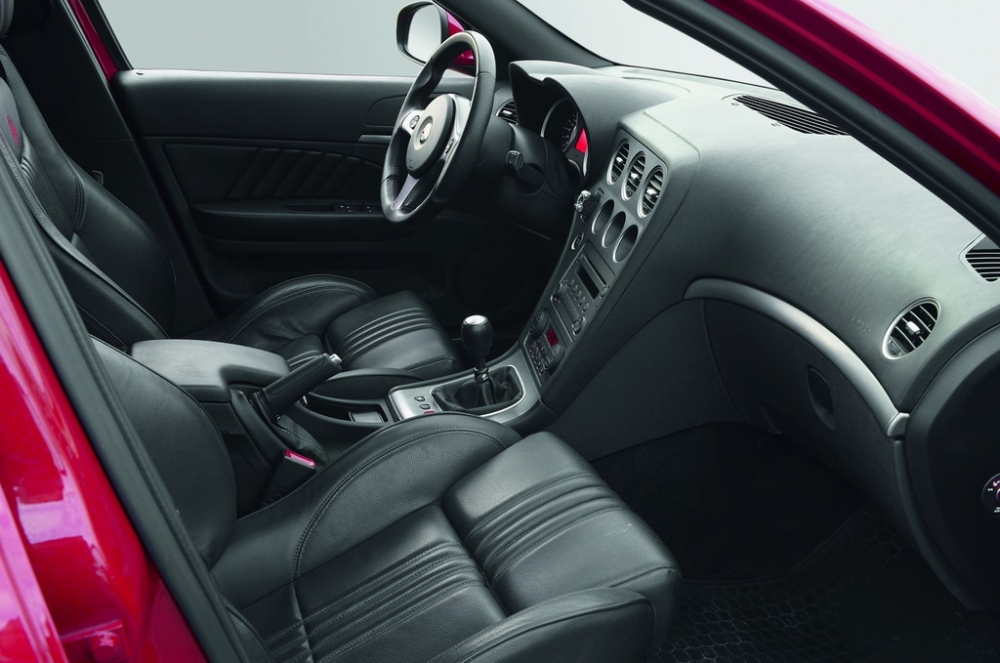
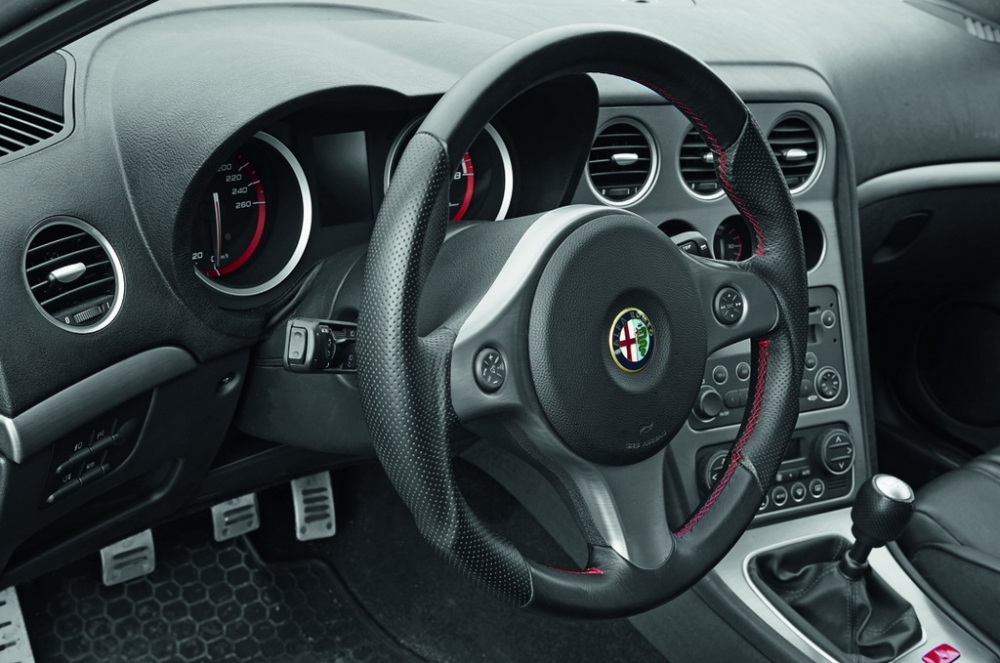
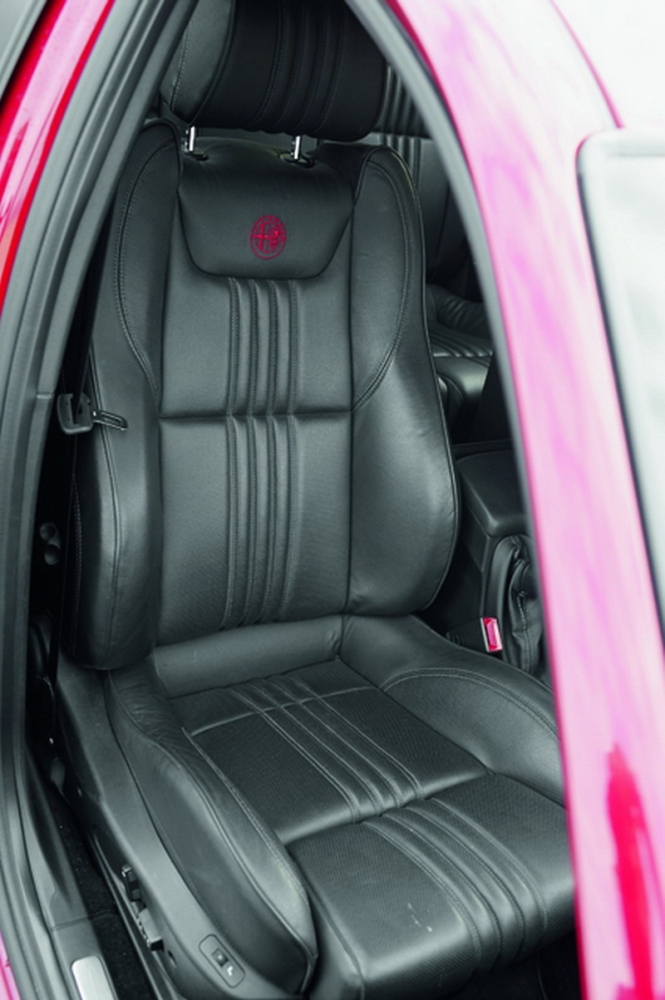
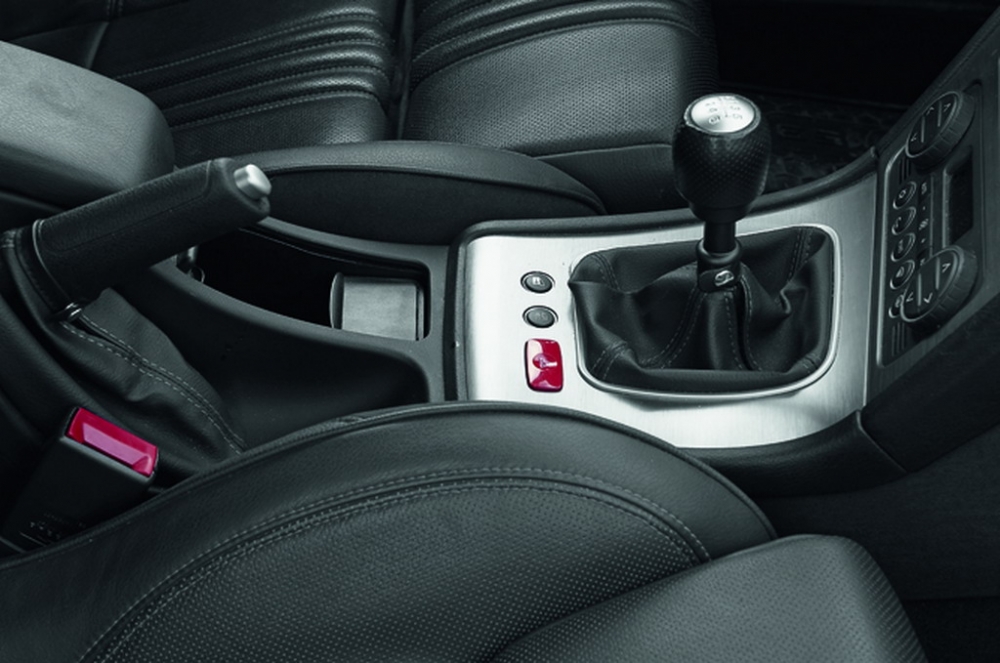
 Now here is style, here is pedigree! The dashboard turned toward the driver, dark aluminum trim, "equal" instruments recessed in deep wells, pedals with aluminum pads. And the steering wheel! M-m-m, bliss – the rim is ideal in size, covered with very pleasant and grippy leather, and the cross-section and bulges at the grip points are simply perfect. You want to grab and hold onto this wheel without stopping. Tighter and tighter. The gearshift knob is covered with the same leather. Compared to the opponent, it is more comfortable to grip and has shorter throws. In terms of shift clarity, the 159th also has the advantage. And the Italian clutch drive is heavier and more informative. The seat in the 159th squeezes the sides harder, but it slightly lacks support in the cushion area – for the thighs. Now here is style, here is pedigree! The dashboard turned toward the driver, dark aluminum trim, "equal" instruments recessed in deep wells, pedals with aluminum pads. And the steering wheel! M-m-m, bliss – the rim is ideal in size, covered with very pleasant and grippy leather, and the cross-section and bulges at the grip points are simply perfect. You want to grab and hold onto this wheel without stopping. Tighter and tighter. The gearshift knob is covered with the same leather. Compared to the opponent, it is more comfortable to grip and has shorter throws. In terms of shift clarity, the 159th also has the advantage. And the Italian clutch drive is heavier and more informative. The seat in the 159th squeezes the sides harder, but it slightly lacks support in the cushion area – for the thighs. |
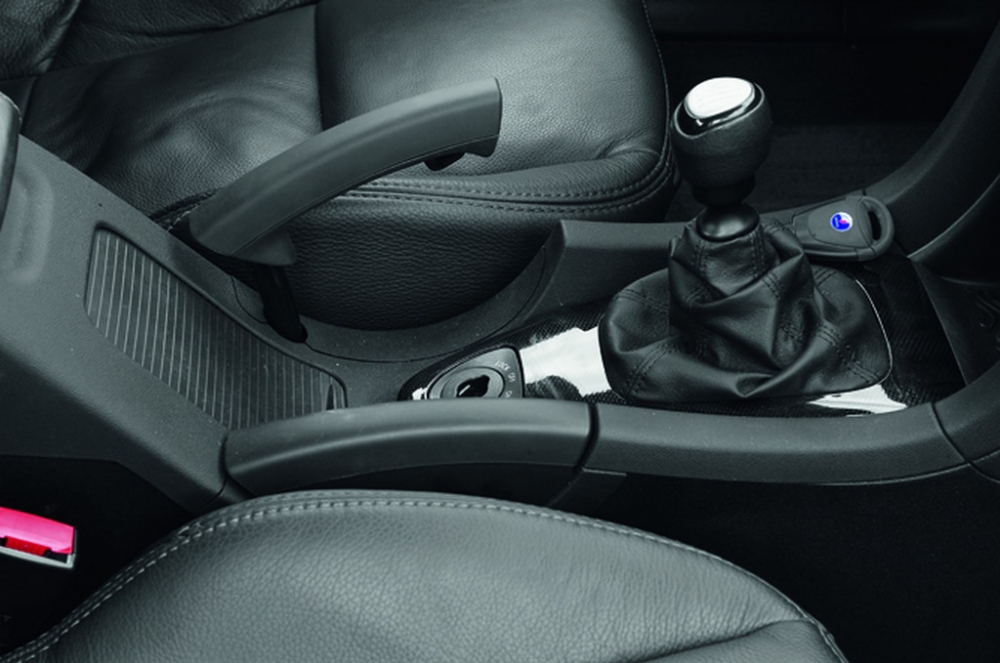
 And what if we move to the back? The Alfa is larger in dimensions, but there is almost less space in it. Well, Italians have always been known for their reduced attention to the layout of the interior space of their cars. However, this is by no means an excuse. The sedans start differently: the Alfa – with a button, the Saab – traditionally with an atavistic key located next to the handbrake. The Alfa immediately begins to bass invitingly with its exhaust at idle, heating the blood of the person behind the wheel. Metallic notes are heard in the voice of its engine. And what about the Saab? It is silent (treacherously?). And the justification for such anti-sporty behavior is one – it is, after all, supposedly an "airplane." And in an airplane, it should be quiet. Although, should it be so quiet in the cockpit of a fighter jet, which the Turbo X claims to be? So it turned out that the Italian's interior was closer to our spirit. But we are sure that the restrained style of the Swede will also appeal to many. And what if we move to the back? The Alfa is larger in dimensions, but there is almost less space in it. Well, Italians have always been known for their reduced attention to the layout of the interior space of their cars. However, this is by no means an excuse. The sedans start differently: the Alfa – with a button, the Saab – traditionally with an atavistic key located next to the handbrake. The Alfa immediately begins to bass invitingly with its exhaust at idle, heating the blood of the person behind the wheel. Metallic notes are heard in the voice of its engine. And what about the Saab? It is silent (treacherously?). And the justification for such anti-sporty behavior is one – it is, after all, supposedly an "airplane." And in an airplane, it should be quiet. Although, should it be so quiet in the cockpit of a fighter jet, which the Turbo X claims to be? So it turned out that the Italian's interior was closer to our spirit. But we are sure that the restrained style of the Swede will also appeal to many. |
 A few months ago, I had the opportunity to participate in a similar comparative test. Then the 159 Ti and the newly appeared facelifted 9-3 Aero clashed head-on. In dynamic runs, the front-wheel-drive Saab won. It lost slightly to the Alfa when starting from a standstill (after all, the manual gearbox and all-wheel drive of the opponent did their job), but on second and third gears it simply flew away from the rival. And it was not only about the engine, but also the mass – the Aero weighed almost two hundred kilograms less. That made it even more interesting to compare the Italian with the top all-wheel-drive Turbo X on a "stick." It is 25 hp more powerful than the Aero, has a "manual" in its arsenal, but at the same time has gained almost a hundred kilograms – the curb weight is 1605 kg (the Alfa has 1740). That is, the weight advantage is +135 kg in favor of the Turbo X. And if you believe the passport, it takes 5.7 seconds to reach 100 km/h, while the competitor takes 6.8. Everything speaks in favor of the Swede? A few months ago, I had the opportunity to participate in a similar comparative test. Then the 159 Ti and the newly appeared facelifted 9-3 Aero clashed head-on. In dynamic runs, the front-wheel-drive Saab won. It lost slightly to the Alfa when starting from a standstill (after all, the manual gearbox and all-wheel drive of the opponent did their job), but on second and third gears it simply flew away from the rival. And it was not only about the engine, but also the mass – the Aero weighed almost two hundred kilograms less. That made it even more interesting to compare the Italian with the top all-wheel-drive Turbo X on a "stick." It is 25 hp more powerful than the Aero, has a "manual" in its arsenal, but at the same time has gained almost a hundred kilograms – the curb weight is 1605 kg (the Alfa has 1740). That is, the weight advantage is +135 kg in favor of the Turbo X. And if you believe the passport, it takes 5.7 seconds to reach 100 km/h, while the competitor takes 6.8. Everything speaks in favor of the Swede? |
 We left the right to draw conclusions to the cars. And we were surprised to learn that when starting from a standstill to 100 km/h, they go nose to nose! And only when accelerating on third gear from 80 to 120 km/h did the Turbo X indicate its leadership, pulling ahead by about a car length. Not much. Perhaps the problem is in the "tired" clutch of the Swedish car (which we were warned about at the representative office). Well, we would like to believe that. If we talk about the nature of acceleration, the cars fully justify each – their own ideology. The Alfa, despite having longer gear ratios (for example, on second gear it reaches almost 120 km/h), accelerates more eagerly. Even the non-original Australian engine was taught by the company's tuners to have Italian habits – the characteristics build up across the entire rev range (although the mid-range is uncharacteristically rich in torque for Alfa Romeo engines, and at the top there is a slight lack of ferocity). Flicking through the gears with the short-throw, pleasant-to-use lever and enjoying the baritone of the exhaust system, you immediately merge with the car and savor every meter of acceleration. We left the right to draw conclusions to the cars. And we were surprised to learn that when starting from a standstill to 100 km/h, they go nose to nose! And only when accelerating on third gear from 80 to 120 km/h did the Turbo X indicate its leadership, pulling ahead by about a car length. Not much. Perhaps the problem is in the "tired" clutch of the Swedish car (which we were warned about at the representative office). Well, we would like to believe that. If we talk about the nature of acceleration, the cars fully justify each – their own ideology. The Alfa, despite having longer gear ratios (for example, on second gear it reaches almost 120 km/h), accelerates more eagerly. Even the non-original Australian engine was taught by the company's tuners to have Italian habits – the characteristics build up across the entire rev range (although the mid-range is uncharacteristically rich in torque for Alfa Romeo engines, and at the top there is a slight lack of ferocity). Flicking through the gears with the short-throw, pleasant-to-use lever and enjoying the baritone of the exhaust system, you immediately merge with the car and savor every meter of acceleration. |
 In the Saab, everything is different. The engine and exhaust, as already mentioned, try not to make much noise, and the characteristics of the former discourage revving it to the redline – the red zone of the tachometer starts already at 5500 rpm. Just like a diesel! The Alfa's red stripe starts at 6800 rpm. But how much torque the Turbo X has in the mid-range! You press the gas and it smoothly but very confidently flies forward. As if it lifts off the track surface, spreading its wings. Yes, the notorious feeling of flight is born, but, frankly speaking, from the engine of a car from a limited special series, you expect a somewhat different character. The highlight of the Turbo X is the intelligent all-wheel drive in the manner of those used by Mitsubishi and Honda. The Swedes collaborated with their compatriots from Haldex in developing this system. They provided them with two ultra-modern couplings for the Turbo X, which are locked with the rear axle. The first sends torque there, and the second distributes it across the axles according to the electronics' instructions. Unfortunately, the snow had not yet begun its irreversible fall when we went out to the site for testing the vehicles' driving qualities. Therefore, all conclusions are valid only for dry asphalt surfaces. In the Saab, everything is different. The engine and exhaust, as already mentioned, try not to make much noise, and the characteristics of the former discourage revving it to the redline – the red zone of the tachometer starts already at 5500 rpm. Just like a diesel! The Alfa's red stripe starts at 6800 rpm. But how much torque the Turbo X has in the mid-range! You press the gas and it smoothly but very confidently flies forward. As if it lifts off the track surface, spreading its wings. Yes, the notorious feeling of flight is born, but, frankly speaking, from the engine of a car from a limited special series, you expect a somewhat different character. The highlight of the Turbo X is the intelligent all-wheel drive in the manner of those used by Mitsubishi and Honda. The Swedes collaborated with their compatriots from Haldex in developing this system. They provided them with two ultra-modern couplings for the Turbo X, which are locked with the rear axle. The first sends torque there, and the second distributes it across the axles according to the electronics' instructions. Unfortunately, the snow had not yet begun its irreversible fall when we went out to the site for testing the vehicles' driving qualities. Therefore, all conclusions are valid only for dry asphalt surfaces. |
 The Saab's all-wheel drive is tuned, as company representatives claim, for safe and stable movement. It turns out that in spirit, the XWD is closer to Honda's SH-AWD than to Mitsubishi's Super AYC. On the Duputv, the all-wheel-drive system also advocates for a stable trajectory and plays with torque between the rear wheels not so that the car starts to merrily and predictably sweep its tail, but to return it to the "non-slippery" trajectory. At least, that's how the Turbo X behaves. If you provoke it and send it into a drift, the system will transfer more torque (the difference can reach up to 40 percent) to the inner unloaded wheel, which will beneficially kill the sliding. The Saab's all-wheel drive is tuned, as company representatives claim, for safe and stable movement. It turns out that in spirit, the XWD is closer to Honda's SH-AWD than to Mitsubishi's Super AYC. On the Duputv, the all-wheel-drive system also advocates for a stable trajectory and plays with torque between the rear wheels not so that the car starts to merrily and predictably sweep its tail, but to return it to the "non-slippery" trajectory. At least, that's how the Turbo X behaves. If you provoke it and send it into a drift, the system will transfer more torque (the difference can reach up to 40 percent) to the inner unloaded wheel, which will beneficially kill the sliding. |
 But if the road is slippery, the car, in theory, should allow you to enjoy long, beautiful slides. We can only hope that a winter meeting with the Turbo X will still take place. For now, we can state that at the entry to a corner, the sedan frankly understeers, and it can only be "broken" by an obvious provocation. But if you drive according to the rules not of rally but of circuit racing, you notice very high stability. The Saab holds the trajectory to the last! The all-wheel drive of the Alfa Romeo is tuned for drive, because the rear axle gets 57% of the torque by default. But at the entry, the car also willingly slides its nose forward. True, thanks to the sharper steering and reactions, it is easier to set it up. Especially if there is ice or snow under the wheels. On asphalt, you can get pleasure of a different kind – for example, taking corners on an ideal trajectory, opening the throttle at the exit and feeling how, squatting on the rear like a rear-wheel-drive car, the Alfa shoots forward. Oh, if only the gearbox were shorter here, otherwise it happens that on second gear in a slide the engine already hits the limiter, and if you take the corner on third, there is not enough torque. However, let me clarify – all this is for a dry road, if you decide to slide properly. But our opinion is unequivocal – for driving with a fan, it is better to wait for winter. In general, the 159 Ti gives the impression of a more driver-oriented, composed, and sharp car – here they are, the genes of legendary Alfas! Its steering wheel makes about 2 turns from lock to lock and is incredibly sharp! While the Saab has 2.7 turns. But if the road is slippery, the car, in theory, should allow you to enjoy long, beautiful slides. We can only hope that a winter meeting with the Turbo X will still take place. For now, we can state that at the entry to a corner, the sedan frankly understeers, and it can only be "broken" by an obvious provocation. But if you drive according to the rules not of rally but of circuit racing, you notice very high stability. The Saab holds the trajectory to the last! The all-wheel drive of the Alfa Romeo is tuned for drive, because the rear axle gets 57% of the torque by default. But at the entry, the car also willingly slides its nose forward. True, thanks to the sharper steering and reactions, it is easier to set it up. Especially if there is ice or snow under the wheels. On asphalt, you can get pleasure of a different kind – for example, taking corners on an ideal trajectory, opening the throttle at the exit and feeling how, squatting on the rear like a rear-wheel-drive car, the Alfa shoots forward. Oh, if only the gearbox were shorter here, otherwise it happens that on second gear in a slide the engine already hits the limiter, and if you take the corner on third, there is not enough torque. However, let me clarify – all this is for a dry road, if you decide to slide properly. But our opinion is unequivocal – for driving with a fan, it is better to wait for winter. In general, the 159 Ti gives the impression of a more driver-oriented, composed, and sharp car – here they are, the genes of legendary Alfas! Its steering wheel makes about 2 turns from lock to lock and is incredibly sharp! While the Saab has 2.7 turns. |
 In the Alfa, the steering wheel is heavy and informative. After it, it seems that someone stole all the feedback from the Saab. But it is, of course, in place. True, not in such quantity. At least, thanks to the XWD system, the Swede's steering has finally been unloaded from parasitic torques during intense acceleration (when starting from a standstill, maximum torque goes to the rear, and the Turbo X does a wheelspin like a rear-wheel-drive car – it's wonderful to feel this behind the wheel of a 9-3!). But the steering wheel still dances in your hands – if the road is uneven. Almost the same happens with the opponent, but thanks to greater composure, the Alfa behaves more understandably and predictably. And the Saab with its large beautiful wheels is more afraid of broken roads and potholes with sharp edges than the 159th – impacts are clearly transmitted to the suspension as vibration of unsprung masses. And they also reach the steering wheel. The 159 on its lightweight wheels copes with this task noticeably better. The Turbo X's body rolls and blurred reactions when working the steering wheel at small angles surprised us – the suspension takes up travel, and only then does the car start to turn. Perhaps we would not have noticed these flaws if the Turbo X had been on a solo test, but that's what comparison is for. A strange situation turns out – the collectible top version of the 9-3 turned out to be more comfortable and more detached from the driver than the less prestigious Aero! Was that the goal the creators of the car pursued? Be that as it may, in this duel we recognize the Alfa 159 Ti as the unequivocal winner. With less power and more weight, this car, paradoxically, is much more driver-oriented than the opponent. The Saab is also good, but we frankly expected more from it. However, we leave the car a chance to redeem itself. It can do this in winter. In the Alfa, the steering wheel is heavy and informative. After it, it seems that someone stole all the feedback from the Saab. But it is, of course, in place. True, not in such quantity. At least, thanks to the XWD system, the Swede's steering has finally been unloaded from parasitic torques during intense acceleration (when starting from a standstill, maximum torque goes to the rear, and the Turbo X does a wheelspin like a rear-wheel-drive car – it's wonderful to feel this behind the wheel of a 9-3!). But the steering wheel still dances in your hands – if the road is uneven. Almost the same happens with the opponent, but thanks to greater composure, the Alfa behaves more understandably and predictably. And the Saab with its large beautiful wheels is more afraid of broken roads and potholes with sharp edges than the 159th – impacts are clearly transmitted to the suspension as vibration of unsprung masses. And they also reach the steering wheel. The 159 on its lightweight wheels copes with this task noticeably better. The Turbo X's body rolls and blurred reactions when working the steering wheel at small angles surprised us – the suspension takes up travel, and only then does the car start to turn. Perhaps we would not have noticed these flaws if the Turbo X had been on a solo test, but that's what comparison is for. A strange situation turns out – the collectible top version of the 9-3 turned out to be more comfortable and more detached from the driver than the less prestigious Aero! Was that the goal the creators of the car pursued? Be that as it may, in this duel we recognize the Alfa 159 Ti as the unequivocal winner. With less power and more weight, this car, paradoxically, is much more driver-oriented than the opponent. The Saab is also good, but we frankly expected more from it. However, we leave the car a chance to redeem itself. It can do this in winter. |
 |
 FOR YOUR INFORMATION FOR YOUR INFORMATION |
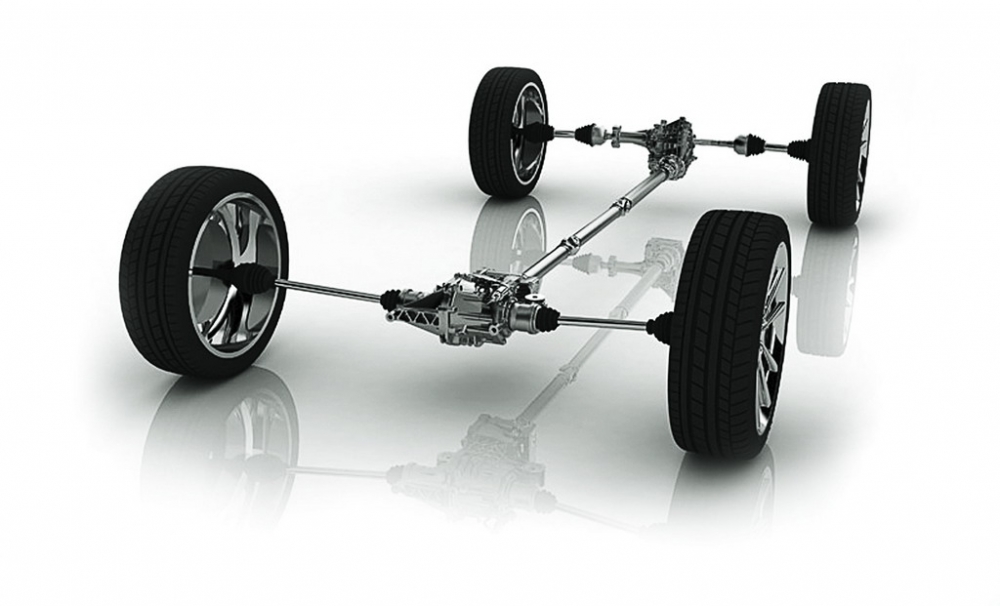 Saab Turbo X all-wheel drive Saab Turbo X all-wheel driveThe XWD all-wheel drive on the Turbo X is presented in its best form. There is a castrated version of it, which is offered for the Aero – without the self-locking differential on the rear axle. Torque is transmitted to the rear via the first Haldex coupling of the latest generation, locked with the rear axle. By default, 10 percent of the torque goes to the rear. The coupling operates extremely quickly – the degree of locking changes in just 20 milliseconds! The second coupling received the proprietary designation eLSD. It is combined with the first one and the rear gearbox, and the control system – electronically controlled hydraulics – is also located there. The torque difference between the rear wheels can reach 40 percent. |
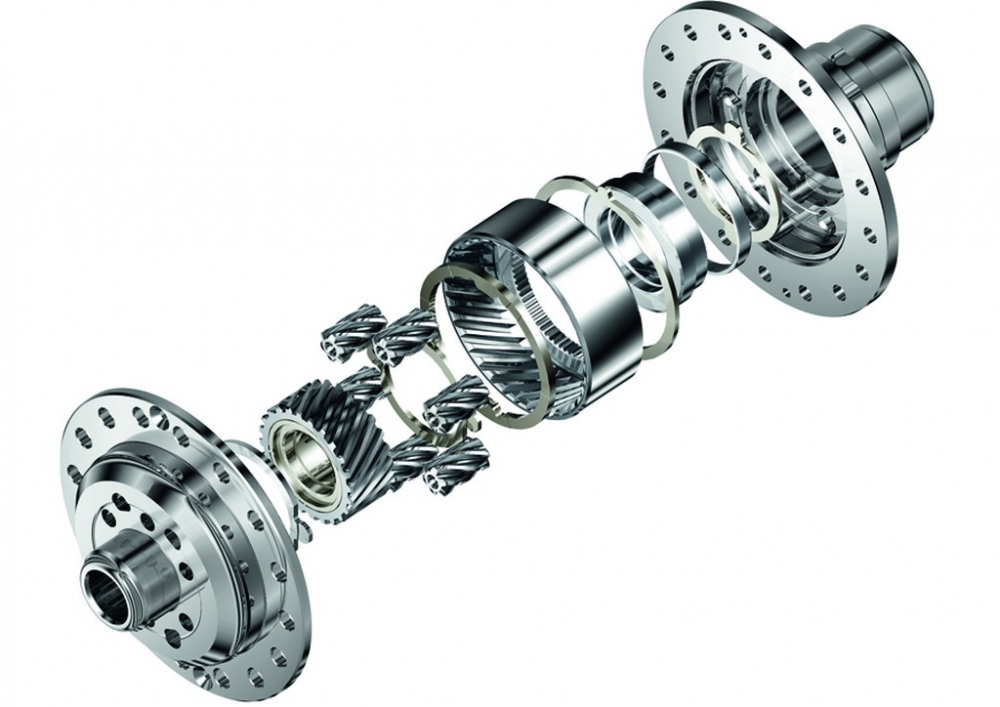 Alfa Romeo 159 Ti all-wheel drive Alfa Romeo 159 Ti all-wheel driveThe all-wheel drive of the Alfa Romeo 159 Ti bears the proprietary name Q4 and is less sophisticated than that of its competitor. The torque between the axles is distributed by the old Torsen, which splits the torque between the axles in a 43:57 ratio in favor of the rear axle. Moreover, in extreme cornering this value can reach 22:78, which determines the rear-wheel-drive behavior of the car. |
Clover is not to Griffin's taste
I think no one has a question why, actually, the hot southern beauty Alfa suddenly, thanks to our magazine, found a competitor in the form of a cold Swedish guy named Saab? The point here, of course, is not direct competition between these models in our market. The ideological undertone plays an important role.
Test drive photos
Comments
No comments yet. Say the first word.