Advertising
KIA Rio: prices and specifications
14 generations Country of origin: South Korea

Kia Rio: model range overview
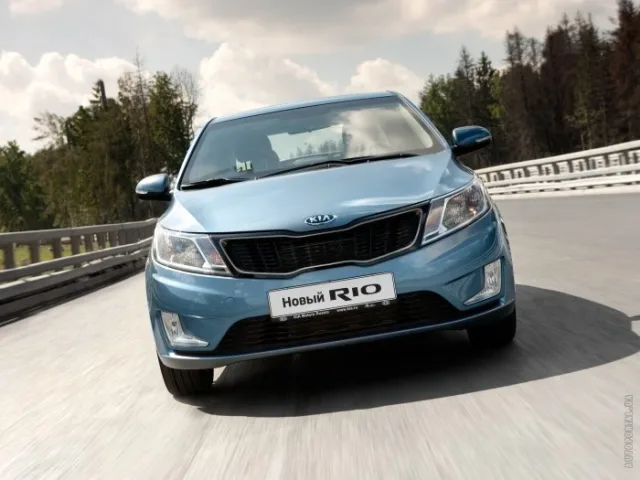
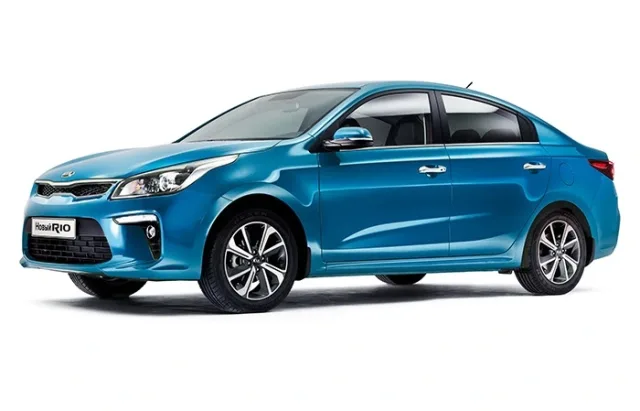
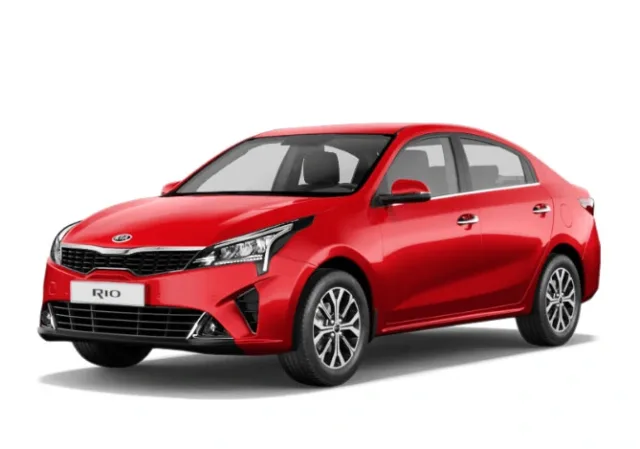
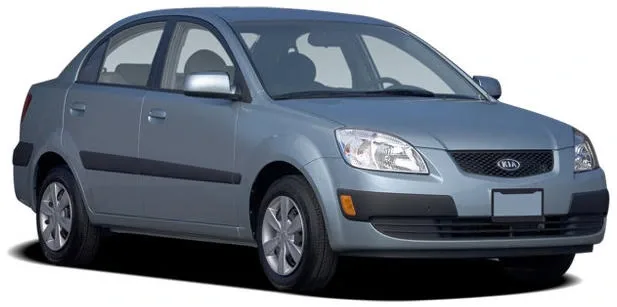
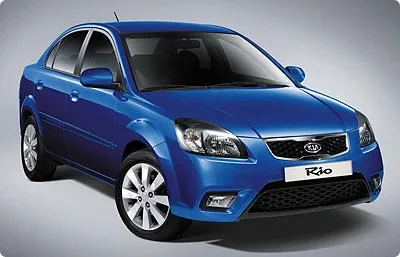
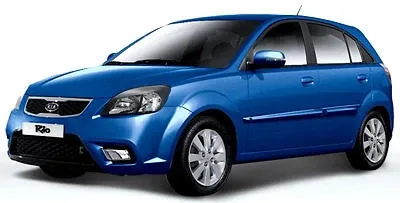
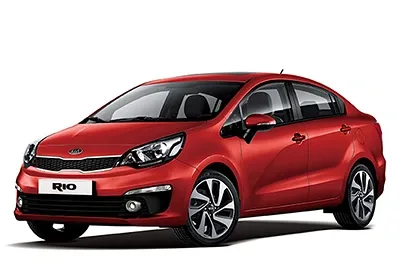
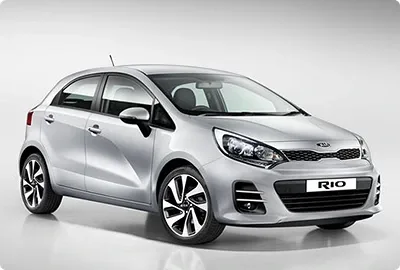
Kia Rio was originally positioned as the most affordable car for the US market. The model was named after the Brazilian city of Rio de Janeiro. The first generation debuted in 2000 in two body styles: sedan and five-door hatchback. The second generation, released in 2005, shared a platform with the Hyundai Accent and was offered in the same body styles. The third generation was introduced in 2011 at the Geneva Motor Show. Its exterior and interior were completely redesigned by designer Peter Schreyer, who previously worked on Audi models. The car's appearance varies depending on the market: the Russian version has a wide radiator grille, while the American version has a narrow one; the shape of the headlights and front bumpers also differs. The model is built on the UB platform, shared with the Hyundai Accent. It is produced in three body styles: three- and five-door hatchback, as well as sedan. In Ukraine, the five-door hatchback and sedan of Russian production are supplied. The car is equipped with gasoline engines of 1.2, 1.4 and 1.6 liters (for Ukraine — 1.4 and 1.6). Diesel engines of 1.1 and 1.4 liters are also available, but are not supplied to Ukraine. Transmissions — five- or six-speed manual, as well as four- or six-speed automatic. Drive — front.
History
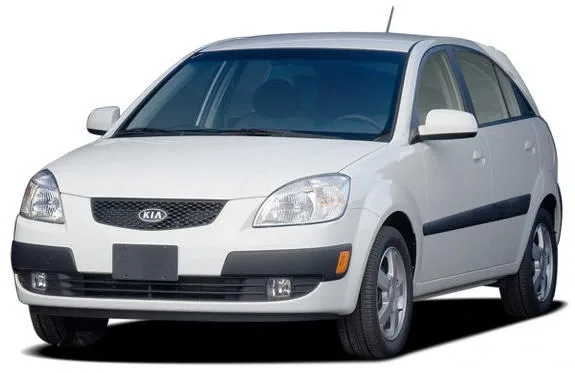
The premiere of the Kia Rio took place at the Geneva Motor Show in 2000. It replaced the Avella model. The car was offered in two body styles: five-door hatchback and four-door sedan. Technically, it was an analogue of the Hyundai Accent and shared a common base with it.

In the basic configuration, the car was equipped with power steering, air conditioning, central locking, airbag, power mirrors and front power windows.
For an additional cost, the following were offered: ABS, additional airbags, sunroof and multimedia system with CD changer.
Two gasoline engines were offered: 1.3 L and 1.5 L. They were paired with a five-speed manual or four-speed automatic transmission.
The braking system was typical for the budget segment: disc brakes at the front and drum brakes at the rear.
In 2003, the model was modernized: the design was updated, changes were made to the body structure, and sound insulation of the engine compartment, trunk, floor and roof was improved.

During the production of the first generation (2000–2005), engine characteristics changed. The 1.3 L engine had a power of 75 hp, and after 2002 — 82 hp. The 1.5 L engine produced 97 hp before 2002 and 98 hp after. From 2003, a 1.6 L engine with 106 hp appeared in the lineup.
In 2005, the second generation Kia Rio debuted.
The new car was built on a completely new platform, shared with the Hyundai Accent. Increased wheelbase and dimensions brought the model closer to class C. The trunk volume increased by 76 liters (to 337 L versus 261 for the predecessor). The interior became more spacious, especially in the rear row.
The front suspension remained independent, the rear — semi-independent beam. McPherson struts are installed at the front, torsion beams at the rear.
The second generation model was offered in Base and LX trims. The base version included six airbags, four-way seat adjustment and heated glass. For an additional cost, the following were offered: height-adjustable steering wheel, air conditioning, multimedia system with CD changer, rear folding seats and full-size spare tire.
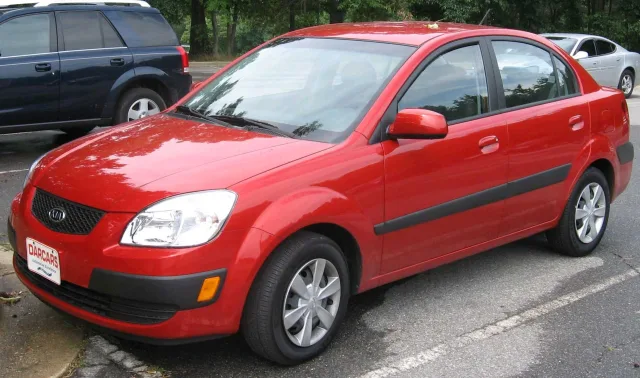
The optional Power Package for the LX trim included power windows and mirrors, keyless entry, heated mirrors, additional interior lighting and a glasses pocket. The Sport Package offered special interior trim, 15-inch alloy wheels with 195/55 R15 tires, disc brakes on all wheels, fog lights, spoiler, metallic paint, aluminum pedal covers, leather-wrapped steering wheel and gear knob.
Gasoline engines increased displacement by 100 cc and received a variable valve timing system.
Diesel engines 1.5 CRDi with 79 and 110 hp appeared.
The gearboxes remained the same: five-speed manual or four-speed automatic.
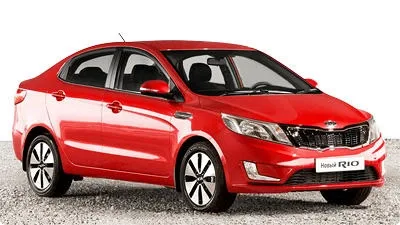
In February 2011, the first official photos of the third generation appeared, and in March at the Geneva Motor Show, the new Kia Rio hatchback was presented. The model shared a platform with the Hyundai i20 and Hyundai Accent.
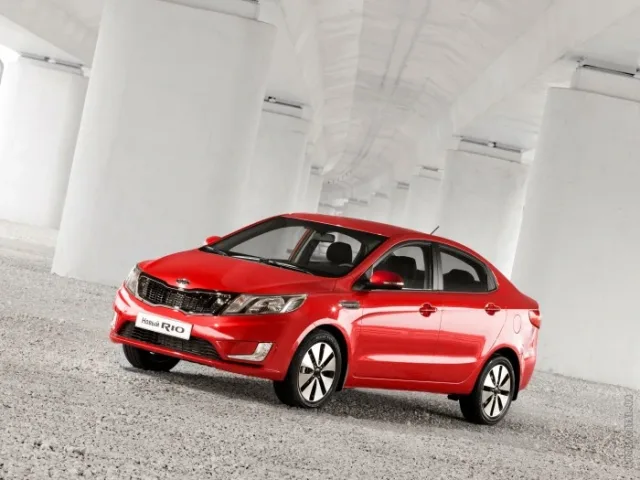
In April, the sedan version was shown in New York. In May 2011, it was announced that a separate specification for Ukraine and Russia would be created. Its production began on September 15, 2011 at the Hyundai plant near St. Petersburg. This variant was based on the Chinese market version Kia K2.
Exterior
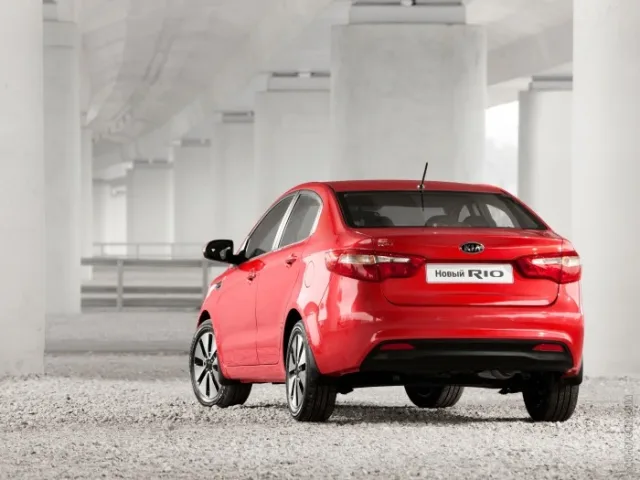
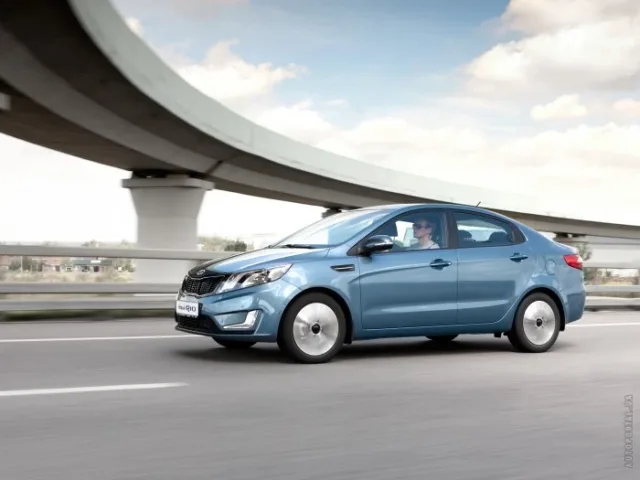
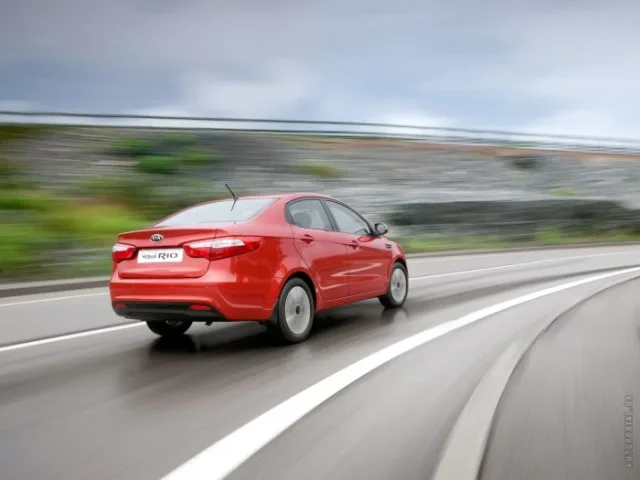
The manufacturer positions the third generation Rio as a car for young people. The appearance combines aggressive and sporty features with modern design trends.
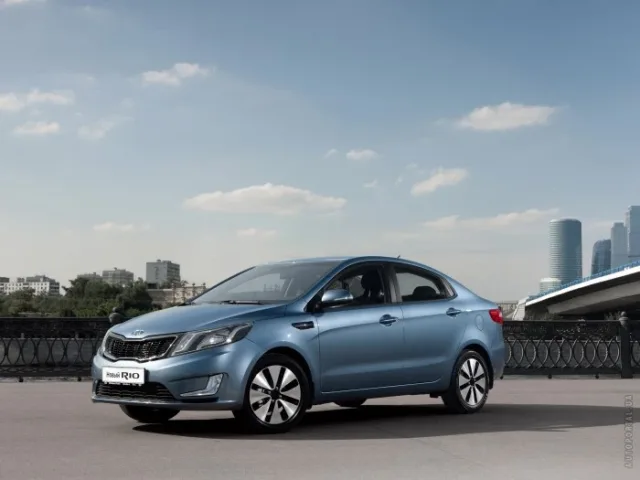
Despite the shared platform with the Accent, the Rio's design features simpler and sharper lines. This may attract buyers who do not like the modern Hyundai style.
Interior
The driver's seat in the Kia Rio is comfortable for people of any height and build thanks to a wide range of seat adjustments.
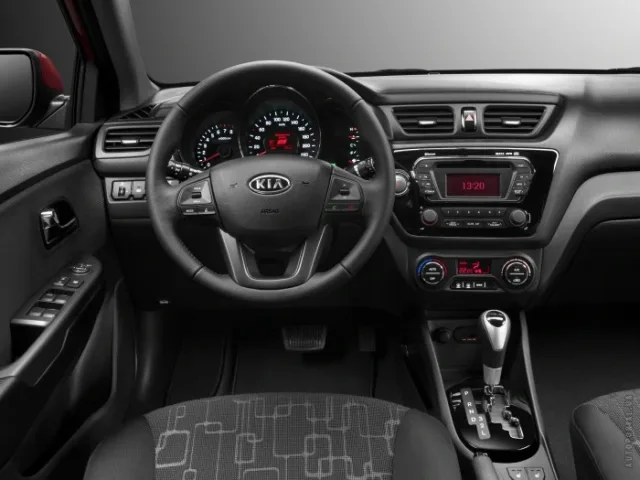
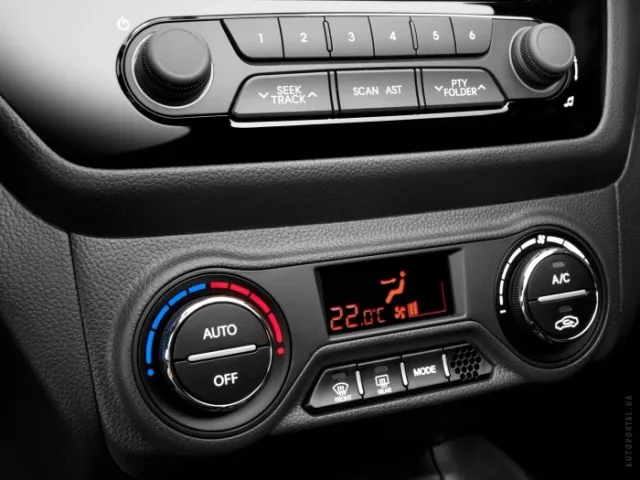
The ergonomics of the driver's workplace deserve high praise. All instruments and buttons are in familiar places and are clearly visible. The controls are intuitive and do not require studying the manual. The automatic climate control works predictably and rarely needs additional adjustments.
The trim materials are made of hard but high-quality plastic. The fabric upholstery has dirt-repellent properties.
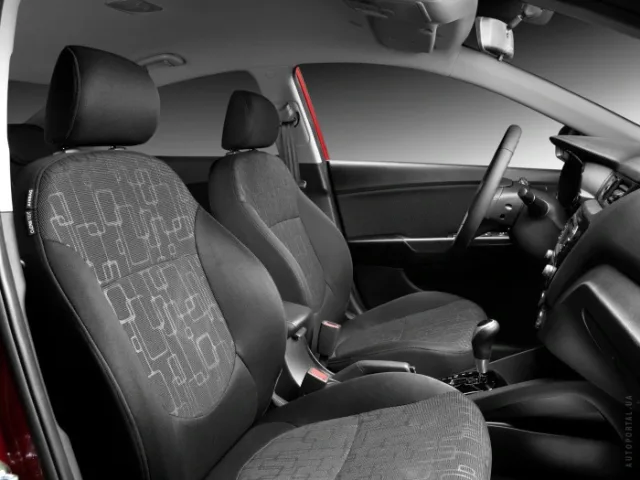
The Rio's interior may seem the brightest among its classmates. In the top trim, the buyer gets side curtain airbags, climate control, Supervision panel, leather steering wheel with audio controls and automatic transmission.
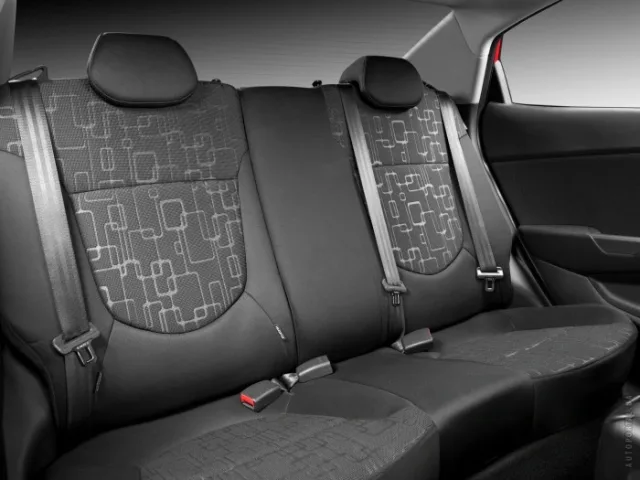
In the rear row, two people will be comfortable, three will be a bit cramped. Tall passengers may feel a lack of headroom.
Engine and transmission
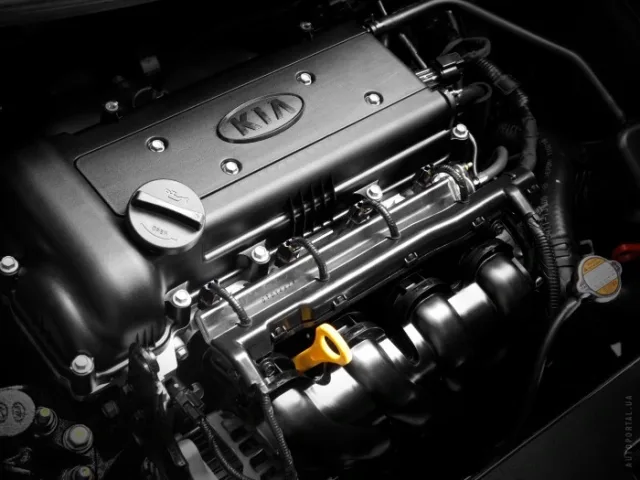
On the Ukrainian market, the latest generation Kia Rio is offered with two gasoline engines: 1.4 L (107 hp) and 1.6 L (123 hp). Both engines are paired with a five-speed manual or four-speed automatic transmission.
The 1.4 L engine with automatic transmission provides acceleration to 100 km/h in 13.4 s, and fuel consumption rarely exceeds 8.5 L per 100 km. With a manual transmission, the car is more dynamic, and consumption drops to 7.6 L. With the 1.6 L engine, the Rio accelerates to 100 km/h in 10.3 s with manual transmission and 11.2 s with automatic. Fuel consumption is 8.6–8.7 L with automatic and 7.8–7.9 L with manual.
The automatic transmission is tuned correctly: gears shift quickly and smoothly. During hard acceleration, a slight delay is noticeable, but it is not critical. However, it should be taken into account when overtaking on the highway. With a manual transmission, everything depends on the driver's skill.
The sound insulation of the engine compartment is at a good level.
Safety
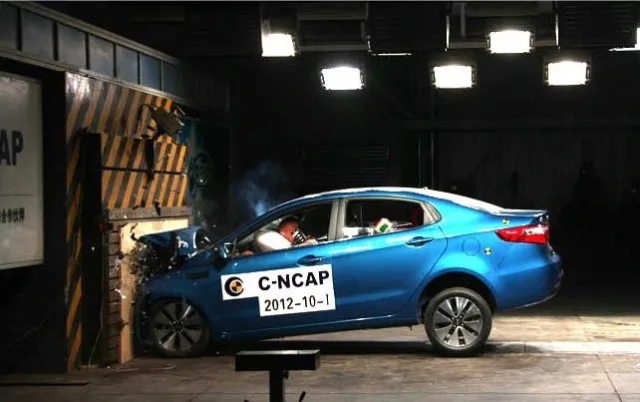
The safety level of the Kia Rio in a collision is high. An energy-absorbing body made of high-strength steel is used. In higher trims, six airbags, ESP stabilization system with ABS, as well as a seatbelt reminder function and a rear fog light indicator are provided.
According to Euro NCAP test results, the latest generation Rio received 15 points out of 16 in a frontal impact and 7.5 out of 8 in a side impact.
Features
The car's handling is at a decent level, the character is classic front-wheel drive. No particular nuances in operation have been identified.
The Rio is suitable for those who want to drive a foreign car that is not inferior in status to more expensive European or Japanese models.
Popularity in Ukraine
The car is among the best-selling in Ukraine.
The third generation Rio has established itself in the top ten in total sales of new cars and in the top five most popular budget sedans.
Our verdict
Among the advantages of the model are a developed dealer network, the availability of specialized service stations and spare parts, as well as moderate maintenance costs. The warranty on the Kia Rio is 7 years, which is one of the best offers on the market.