Advertising
Chevrolet Cruze: prices and specifications
6 generations Country of origin: United States

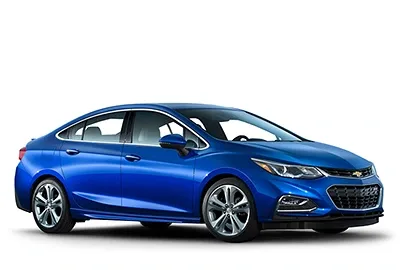
Chevrolet Cruze is a global project of General Motors, created to replace the Lacetti and Cobalt models (for the American market). The car is built on the front-wheel drive GM Delta II platform. The main design work was carried out by the Korean division GM Daewoo, while the engineering part was handled by Opel. Development took 27 months and cost $4 billion. In 2008, the model debuted in South Korea under the name Daewoo Lacetti Premiere, replacing the eponymous car that had been produced since 2003.
GM's European division replaced the Lacetti with the new Cruze during 2009. In the US, the model replaced the Chevrolet Cobalt in August 2010 and within a year confidently took first place in the compact car segment.
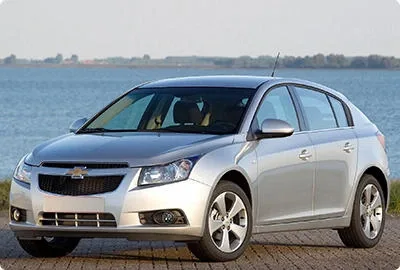
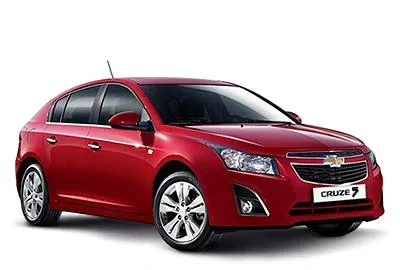
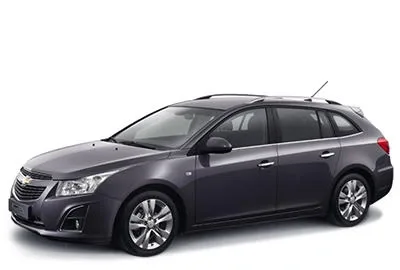
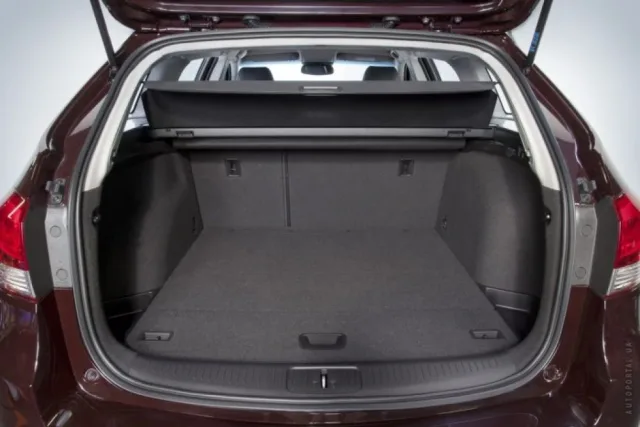
The five-door Cruze hatchback was presented in October 2010 at the Paris Motor Show. In March 2012, the third body variant debuted — the station wagon. Its main feature is a spacious trunk with a volume of 500 liters, which increases to 1500 liters when the rear seats are folded down.
According to GM, the Cruze body is 65% high-strength steel. In Euro NCAP crash tests, the car earned five stars: 96% for adult occupant safety, 84% for child safety, and 34% for pedestrian safety. The top version is equipped with electronic stability control and ten airbags, including rear side and front knee airbags.
The engine lineup includes 1.6-liter (Family 1, also used in Opel) and 1.8-liter gasoline engines, as well as a 2.0-liter VCDi turbodiesel (licensed from VM Motori). Since 2010, a 1.4-liter gasoline turbo engine has been installed on the Cruze in the US. Transmissions — 5-speed manual or optional 6-speed automatic with manual mode (same as on the Opel Insignia).
Front suspension — MacPherson struts, rear — semi-independent torsion beam. This design avoided the cost of a more complex multi-link rear suspension.
History
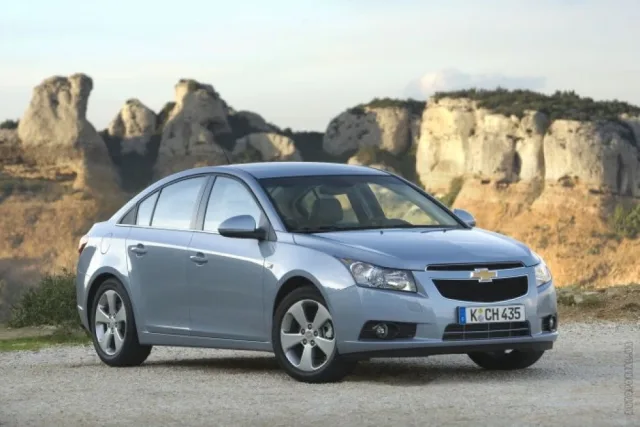
In October 2008, a new C-class car from Chevrolet was presented at the Paris Motor Show. In Korea, it was sold as the Daewoo Lacetti Premiere, in Australia as the Holden Cruze, and in Europe as the Chevrolet Cruze.
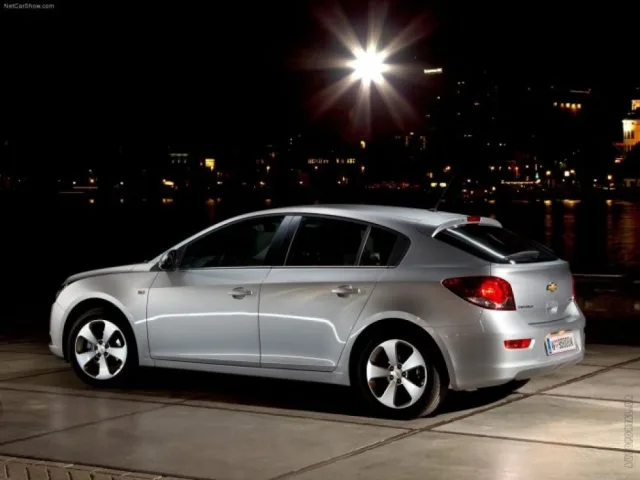
In 2011, Chevrolet showed the Cruze in a hatchback version.
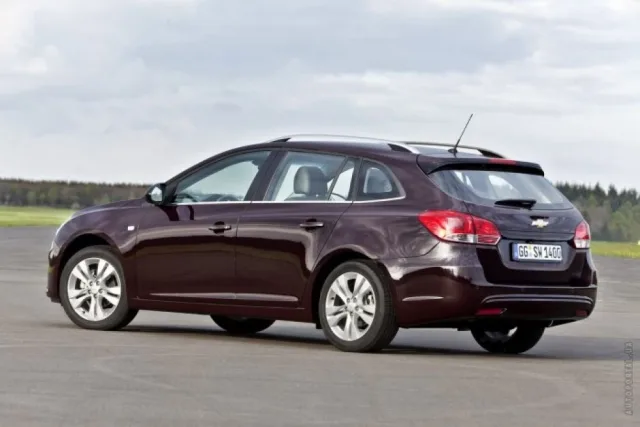
In March 2012, the third body variant debuted — the station wagon. The car is built on the global Delta 2 platform, which also became the basis for the new Opel Astra and the Chevrolet Volt hybrid.
Exterior
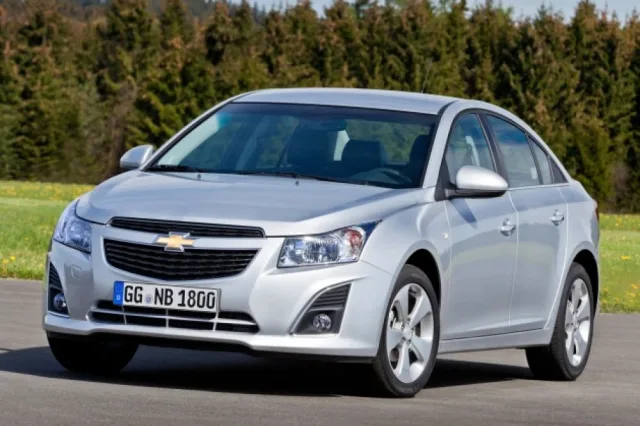
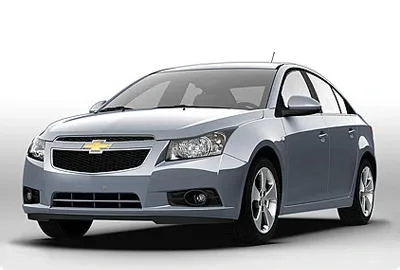
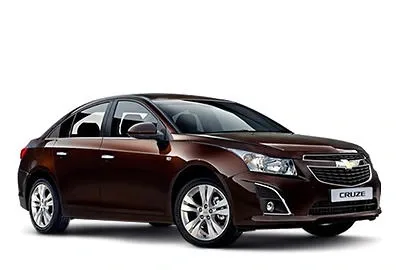
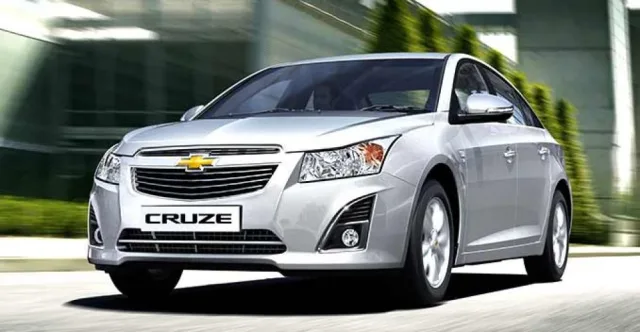
The design of the Cruze was created by European GM specialists, and the design work was carried out by an international team of 11 design studios. The artists were inspired by the design of old American Chevrolet models. The car's appearance is expressive: narrow headlights, a wide radiator grille, massive bumpers, and large rear lights.
Interior
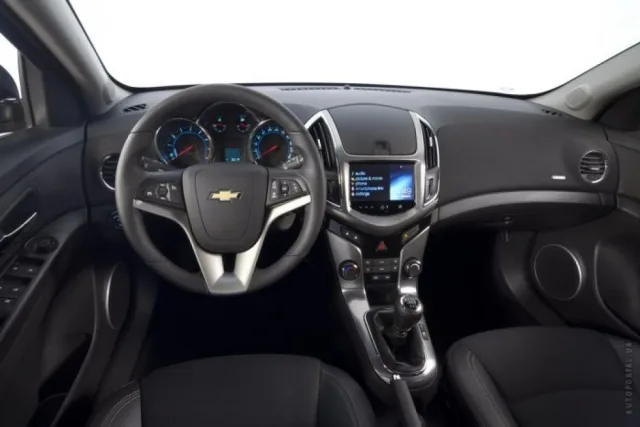
The cockpit-style interior design is borrowed from the Corvette. The interior was developed with special attention to detail, working on both ergonomics and visual-tactile sensations. Fabric inserts on the dashboard and door cards give the interior a more expensive look, although the plastic itself is somewhat hard. The backlit center console is bright and impressive, yet informative at any time of day.
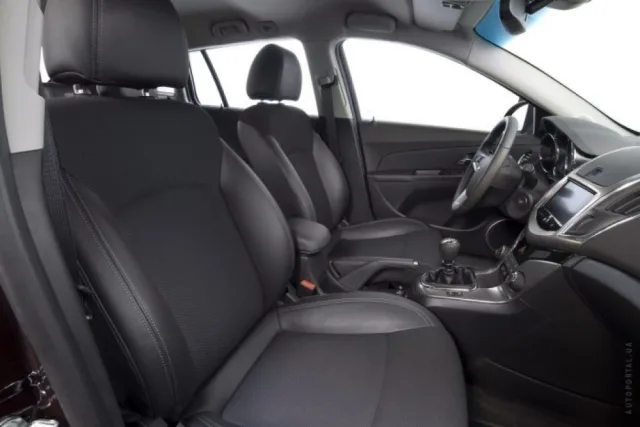
Ergonomics are well thought out: the wide door panel serves as an armrest, which is convenient for long trips. The seats have a wide range of adjustments, including height, and good lateral support. All versions except the base have 3-stage seat heating.
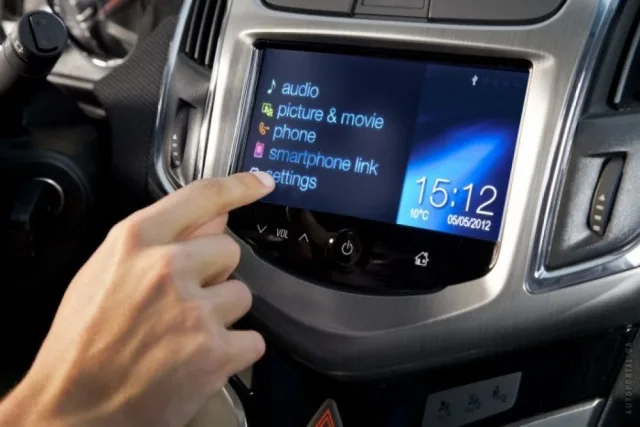
The mid-range and top trims feature a large color display in the center of the dashboard. It shows climate control, audio system, and onboard computer data. The function controls are well thought out and logical, taking only a few minutes to learn.
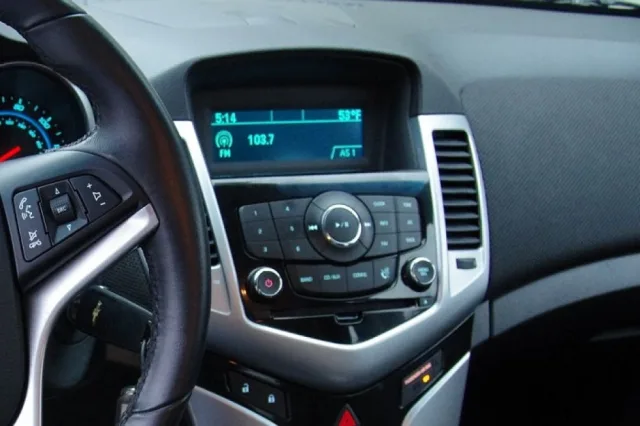
In the base version, the display is small and monochrome.
The standard stereo sounds decent. In basic trims, it's a CD player with a radio; in more expensive ones, with a changer. All versions have a USB port. Steering wheel audio controls are available in all trims above the base.
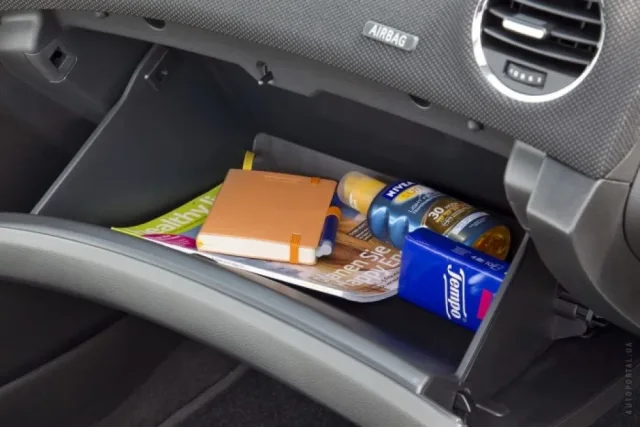
The cabin has many storage niches: a glove box, compartments in the armrest and to the left of the steering wheel, a compartment near the gear selector (fits even a large phone), a tray on top of the dashboard for documents, and door pockets.
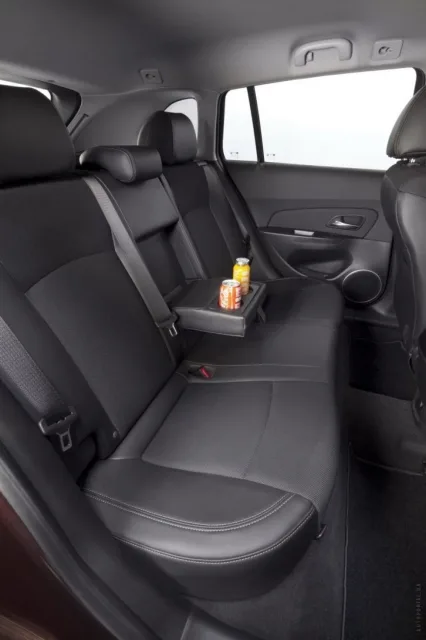
The rear row has enough space for three people: ample legroom and headroom. The seatback has an armrest with cupholders.
The trunk volume of the sedan is 450 liters, the hatchback — 413 liters, the station wagon — 500 liters. Under the floor is a full-size spare wheel.
Engine and Transmission
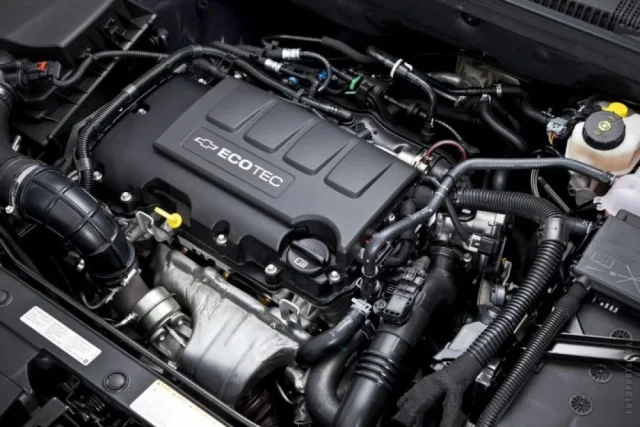
The Chevrolet Cruze is equipped with three engines. The base is a 1.6-liter gasoline engine with 116 hp. The most powerful gasoline is a 1.8-liter with 141 hp. Both are available with a 5-speed manual and a 6-speed automatic. The difference in fuel consumption between the transmissions is especially noticeable on the 1.8-liter engine: in the city cycle with manual — 9.3 l/100 km, with automatic — 2 liters more.
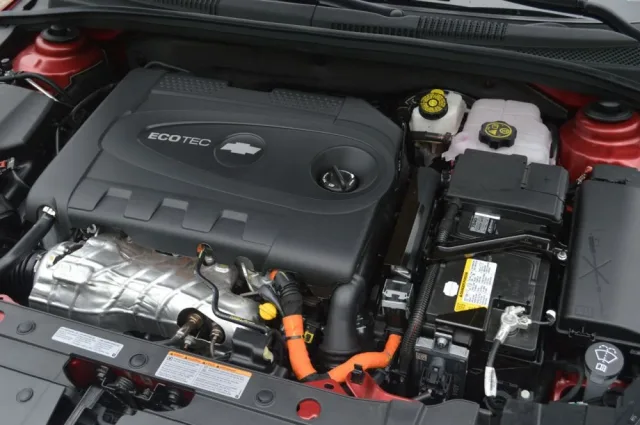
The 2.0-liter diesel produces 150 hp and 320 Nm of torque at 2000 rpm. It provides the best acceleration to 100 km/h among all engines: with manual — in 8.7 seconds. For comparison, the 1.8-liter gasoline takes 10 seconds, and the 1.6-liter almost 12. The diesel is also more economical: in combined cycle with manual, it consumes 6 l/100 km.
On straight roads, the car is comfortable and obedient. The suspension smooths out small bumps well, reducing fatigue on long trips. However, during sharp maneuvers, the steering lacks feedback, although the car holds its trajectory confidently. This is aided by the large mass (almost two tons) and long wheelbase (2865 mm). In case of skidding or sliding, ESP intervenes.
Noise insulation is good: it effectively suppresses engine and tire noise. Proper aerodynamics also contribute to this.
Safety
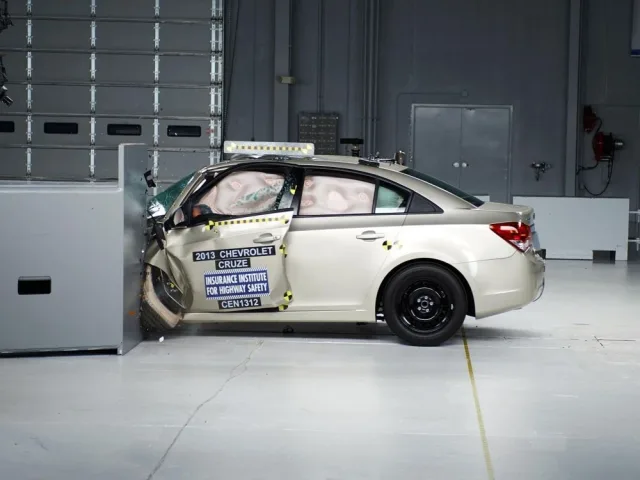
The Chevrolet Cruze scored 79 points out of 100 in Euro NCAP tests, making it one of the safest cars in its class. It scored 96% for adult occupant protection, taking second place among classmates tested in 2009. The model received maximum scores for frontal and side impacts, as well as 7.3 out of 8 points for the side pole test. Results for child and pedestrian safety were also high. Before Euro NCAP tests, the Cruze had already received five-star ratings in local crash tests in Australia and China. These results are explained by the fact that 64% of the body is made of ultra-high-strength steel, doors are reinforced with steel elements, and bumpers with aluminum.
Standard equipment includes front and side airbags, and the braking system includes ABS, electronic brake-force distribution, and Brake Assist. If seat belts are not fastened, the car emits an audible and visual warning.
Features
The Cruze has options that add comfort: automatic wipers, light sensor, and after parking, the car automatically illuminates the interior and the road home (the "Follow me home" function is standard on all trims).
Popularity in Ukraine
For the European market, marketers identified key Cruze buyers aged 40 to 50. In Ukraine, the model is popular with a wider audience, including young people. Buyers are attracted not only by the price-quality ratio but also by the rich equipment. Even the base version includes air conditioning, four airbags, front power windows, power mirrors with heating, remote central locking, CD stereo with AUX and USB inputs, and an immobilizer.
Our Verdict
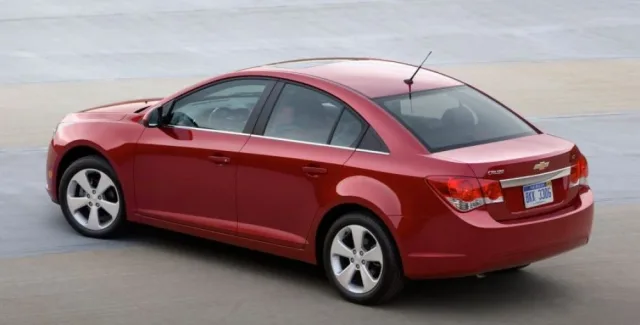
In terms of handling, comfort, and efficiency, the Cruze is not a class leader, but it is one of the most affordable in its segment. For a modest price, the buyer gets a large, practical, reliable, and stylish car.