
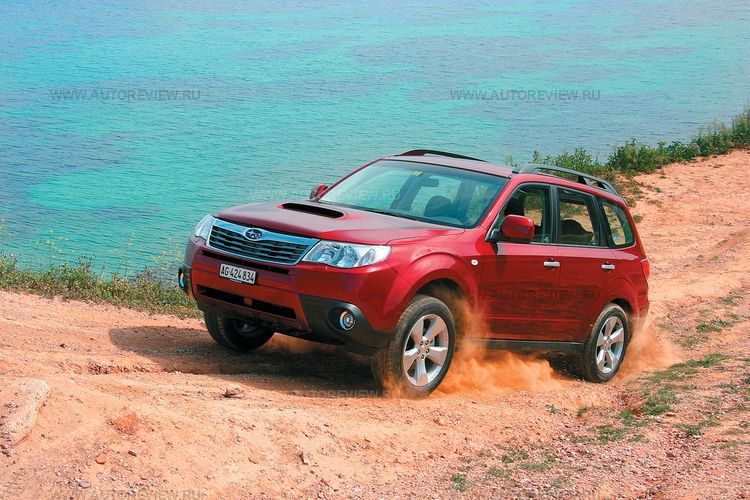
Back in the fall, when the first "spy" shots of the new Subaru Forester hit the internet, I looked at them and realized: my own wagon of this brand is the last of the "real" utilitarian foresters. And already in Greece, where I flew for the European premiere, I was finally convinced: the Forester has transformed from a simple workhorse into a well-groomed forest manager.
Foresters with manual transmissions are equipped with a hydraulic system that prevents the car from rolling back on an incline and assists when starting off
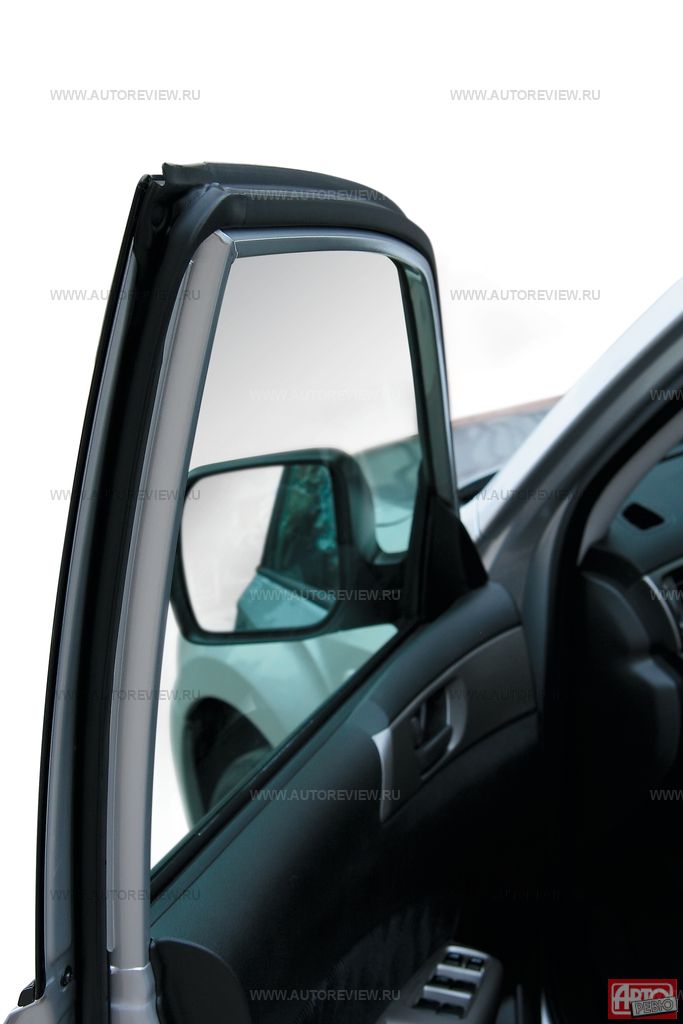
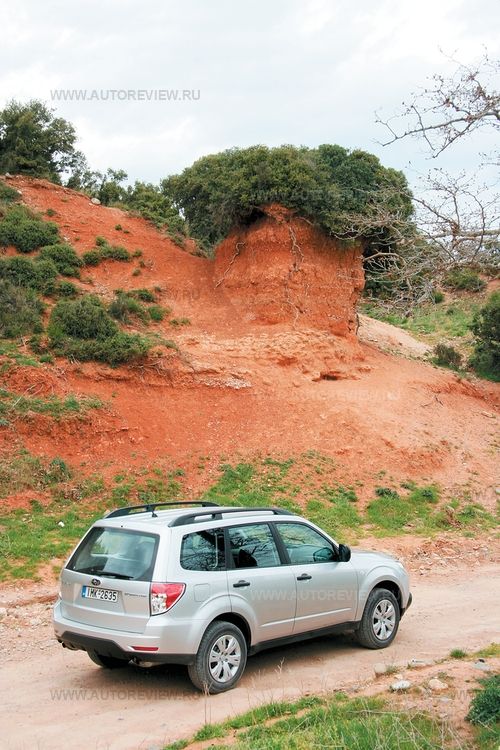
The previous Forester was picky about body color: in one shade it looked advantageous, in another it was frankly lost. The newcomer, however, looks decent in any "outfit." The rear overhang has been shortened, and ground clearance has grown to unprecedented values: for naturally aspirated versions, clearance is now 215 mm instead of the previous 205 mm, and for turbocharged versions, it's as much as 225 mm. The famous frameless doors, which my "forester" was so proud of, have become a thing of the past—passive safety specialists could not guarantee that they would hold the opening in a frontal collision. The new doors, now with frames, have become stiffer, but also more convenient: the opening angle has increased to 75 degrees, and they lock in intermediate positions. On a cramped parking lot, this is a lifesaver, and installing a child seat now requires no extra effort.
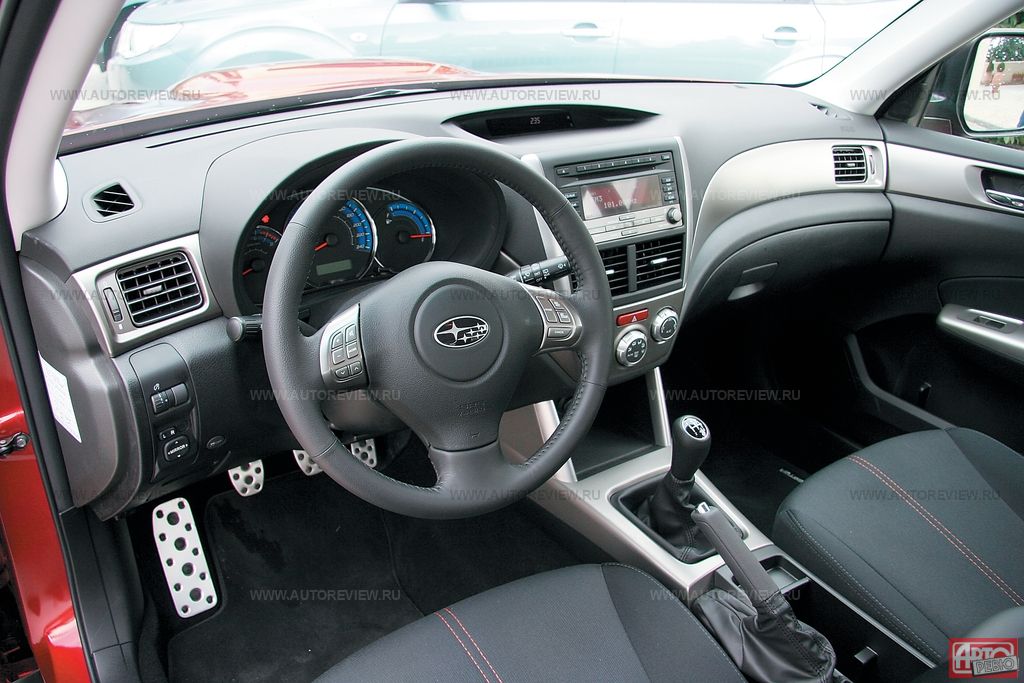
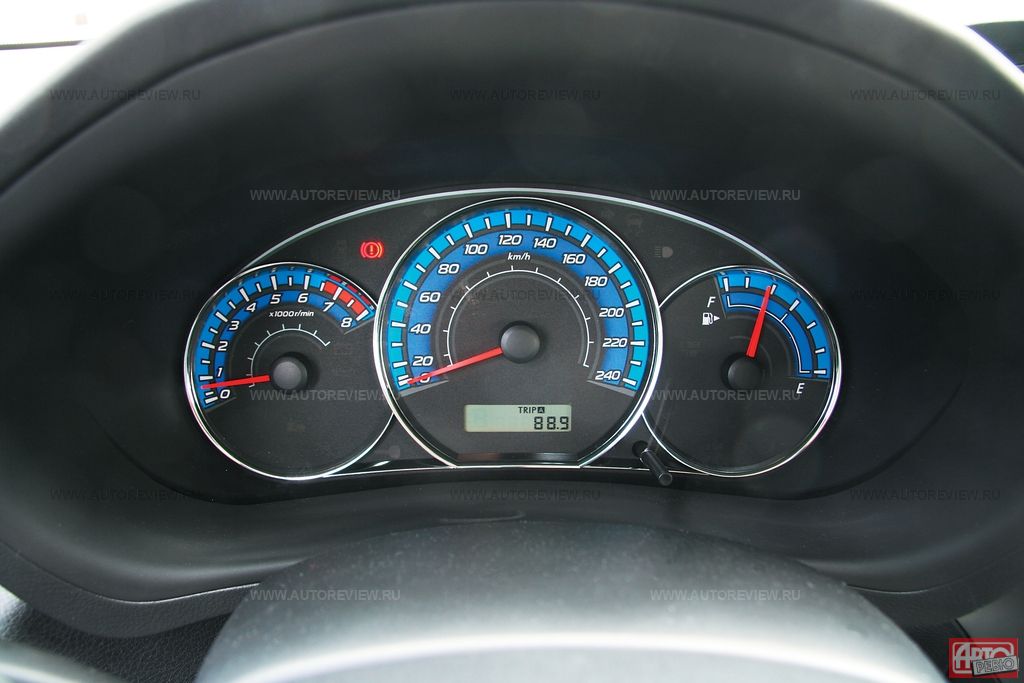
I enter the cabin and take a deep breath. It's as if someone turned on additional light from above—and everything around came alive with colors. Spaciousness, neat finishing, an abundance of light plastic. The only thing that bothers me is the instrument panel: the garish blue scales make me squint.
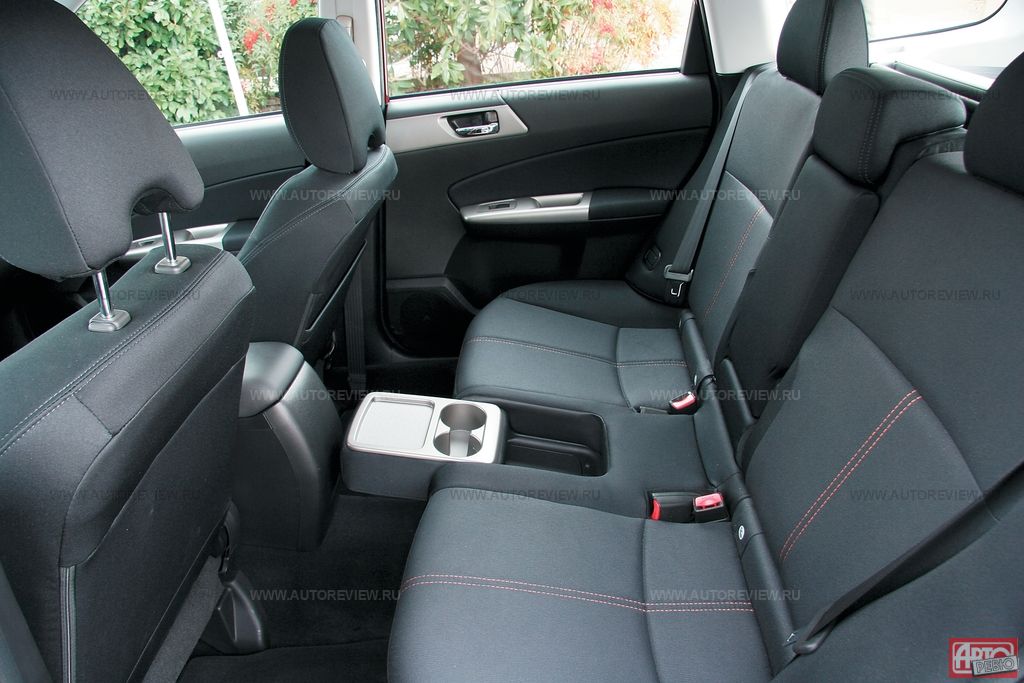
Rear passengers have been given an additional 110 mm in length—now it's a sin to complain about cramped space. The seat itself folds in parts, and the backrest adjusts for angle—just what you need for long trips.
 |
 |
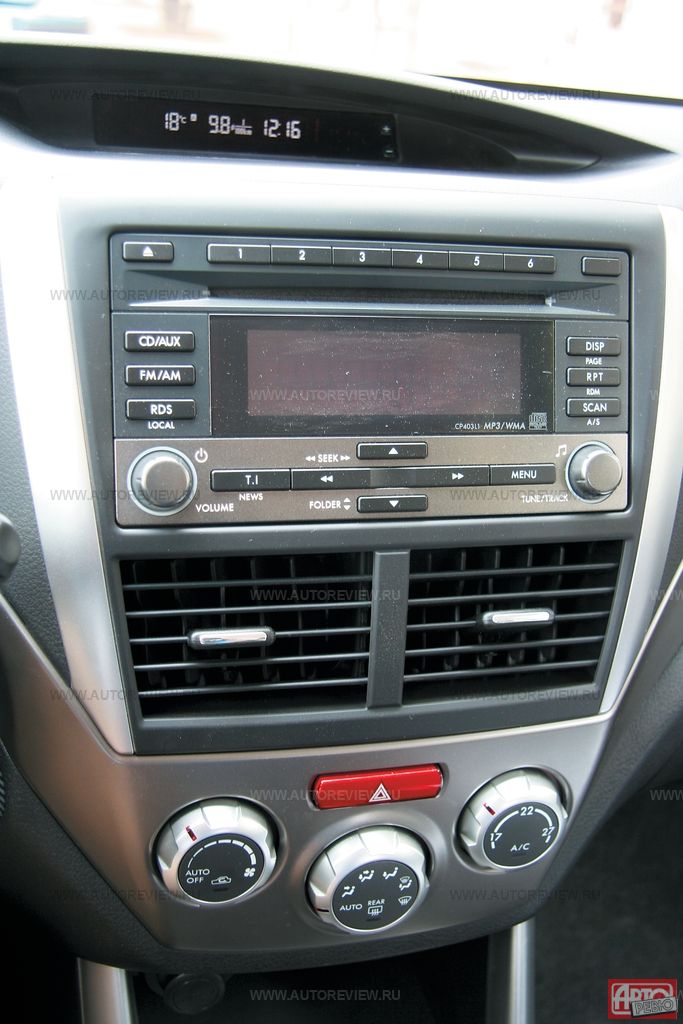 |
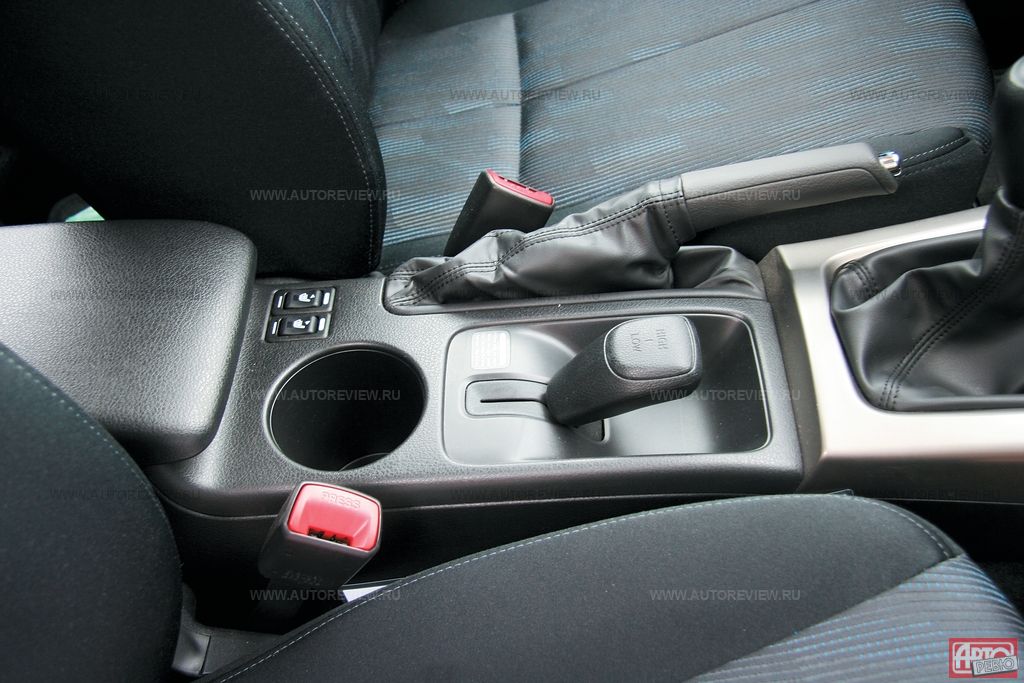
| Chrome pedals? Nothing surprising! After all, this is a turbo Forester in the richest trim | Two-liter Foresters equipped with a manual transmission still feature a two-range transfer case. You can engage the "low" range at any speed—just press the clutch | The climate control unit has remained in its place. But the "music" has swapped places with the heating system deflectors. It's indeed more convenient this way |
 |
 |
 |
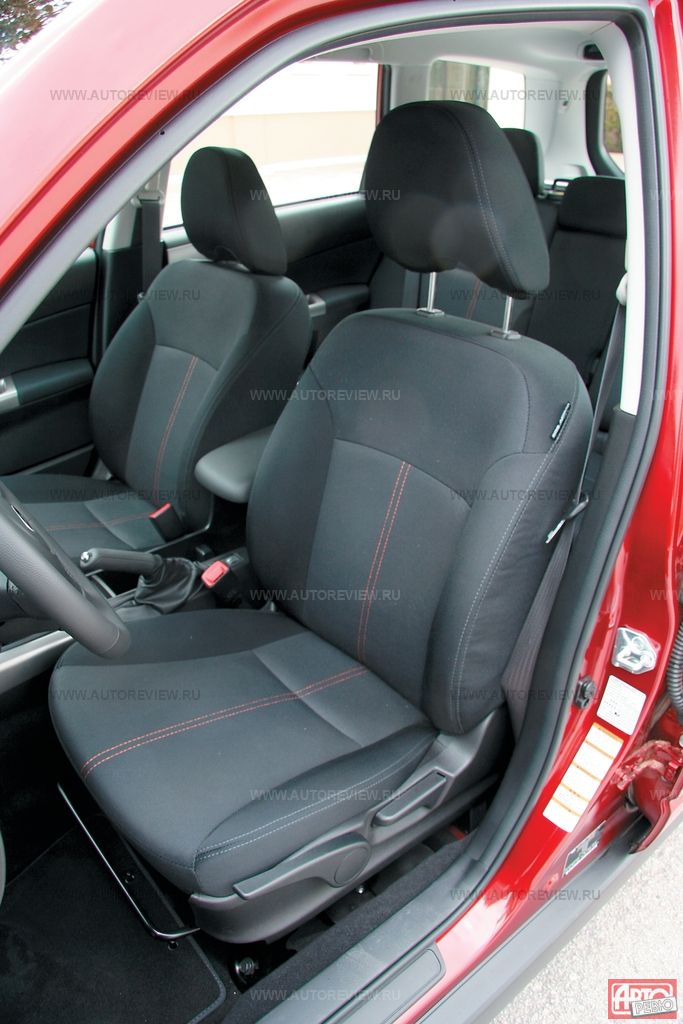
| The front seat cushion has become longer. This provides better under-knee support and reduces fatigue | The pull-out table is a feature of the third-generation Forester. Previous cars didn't have this |
Doors with frames are a sign of the times and an attribute of passive safety. This design, of course, better "holds" the door opening in a frontal impact, but still, it's a pity that the characteristic frameless glass of Subaru has disappeared |
The front seats have received longer cushions, and the legs of the driver and passenger now get proper under-knee support. The steering column can be adjusted not only for tilt but also for reach, although personally, I don't see much point in this—the Forester never had problems with the "hands-on" seating position before. It would have been better to expand the height adjustment range: the steering wheel rim still blocks the upper part of the instrument panel for me.
On the right steering column stalk, a ring has appeared for adjusting the frequency of the wipers, and in the center of the front panel—an indicator of average fuel consumption. The audio system has acquired a connector for external drives and handles all popular formats. The options list includes Bluetooth, but only for cars with factory navigation, which Russian buyers are unlikely to see.
Passive safety is also up to par. Even in the base version, there are side airbags, curtain airbags, active headrests, and additional accelerometers in the rear pillars that back up the main deceleration sensors. Active safety is handled by disc brakes on all wheels and the VDC stability control system—now this is standard for all Foresters, regardless of engine and trim.
The new two-liter naturally aspirated engine has lost eight "horses" (now there are 150), but it starts off noticeably more briskly than my "old man," and at mid-range revs, it no longer induces melancholy. Torque has increased thanks to modernized cylinder heads and a new-shaped intake manifold.
 |
 |
|
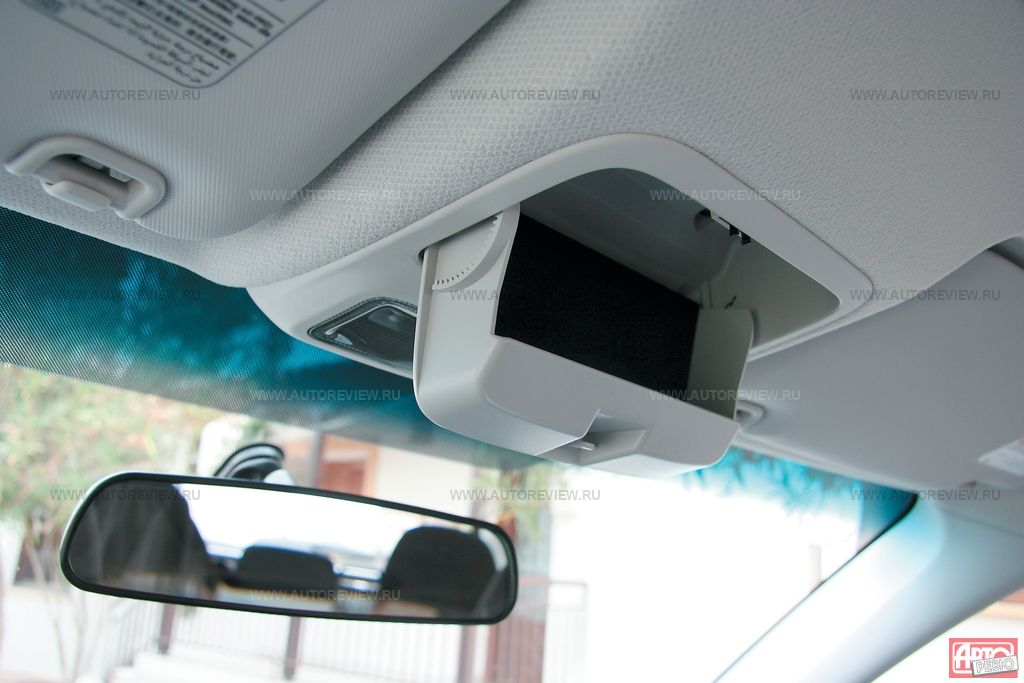
| The instrument cluster is an ergonomic absurdity. And there's nothing more to say about it | Trip computer? Just an average fuel consumption indicator. But thanks for that too! | The old Forester had two sunglasses holders in the ceiling. The new one has only one |
Although disc brakes are now also installed on the two-liter Forester, I didn't feel a radical difference. It's good that the drive has retained its previous "tactile" responsiveness, allowing precise modulation of deceleration. But the steering wheel has become sharper—thanks to the increased angular stiffness of the suspension (new stabilizer bar and modified lower arm) and the electric power steering, which has replaced the hydraulic one on two-liter versions.
The rear suspension has also been refined. But none of these upgrades have affected energy intensity: on a dirt road, you can fly on the new Forester as fast as your courage allows. True, you won't be able to enjoy wide sideways slides now: the "switchable" stability control system is actually only conditionally switchable. Even with the "VDC Off" icon lit, the electronics doze off only until the car starts to break into deep drifts.
 |
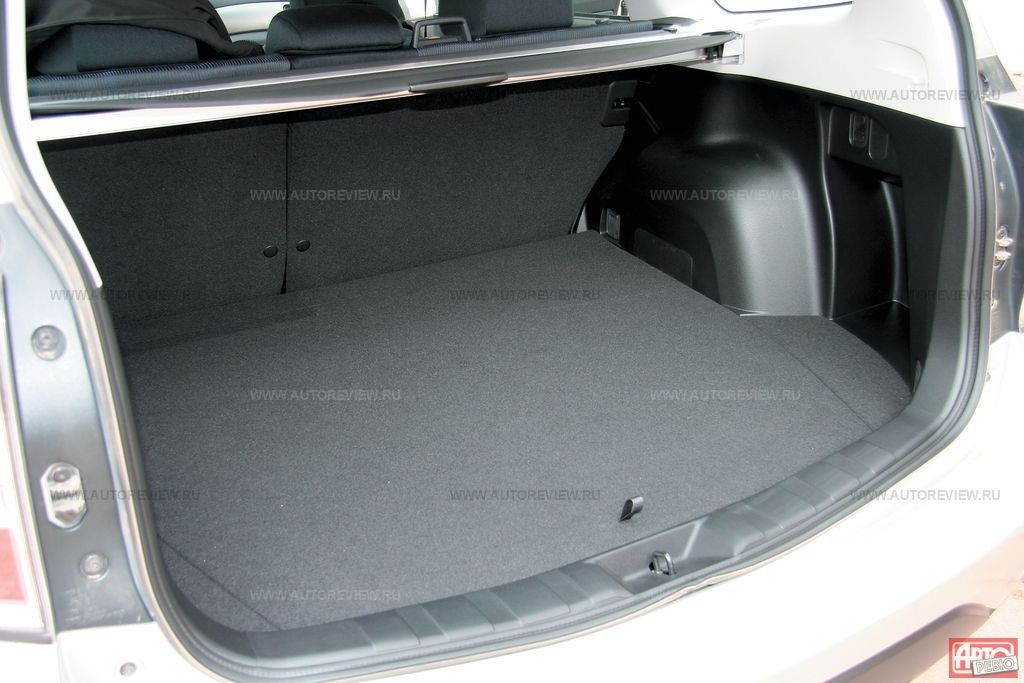 |
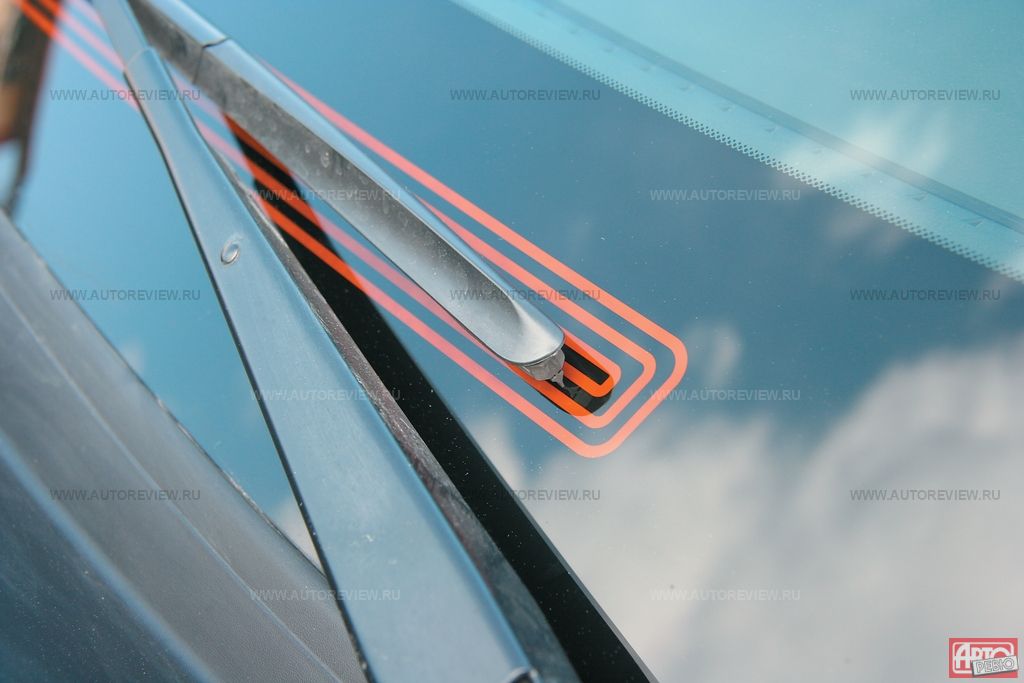
| Electric heating for the wiper area is a convenient thing, but dangerous: on cars of previous generations, it sometimes led to cracks in the windshield. Let's see how the "heater" will behave on the new car | If you pull the strap, the false floor of the luggage compartment will rise. Under it lies a full-size spare wheel |
On asphalt, the Forester has become noticeably less prone to body roll—this is a definite plus, especially for the version with the 230-horsepower turbo engine. But in sharp turns, the powerful car unexpectedly begins to lift the inner (unloaded) wheel early.
The transmission has hardly changed. Foresters with a manual transmission still get permanent all-wheel drive with a differential connection between the axles (two-liter versions also have a reduction gear), while versions with an "automatic" get a multi-disc clutch on the rear axle. The hydromechanical gearboxes themselves are still the same four-speed, terribly sluggish Sportshift. On turbo versions, they behave tolerably, but paired with the two-liter naturally aspirated engine, they make a depressing impression.
The creators of the new Forester do not hide their plans for the Russian market—they expect to sell at least a thousand cars monthly here. The pricing policy is as follows: the base two-liter version with a manual transmission will cost at least 923,600 rubles, and the turbocharged version with 230 hp—1,167,500 rubles. There's also an intrigue: in mid-May 2008, simultaneously with the start of sales in Russia, another modification will be shown—with a 2.5-liter naturally aspirated gasoline engine. According to forecasts, this version could become the most popular.
But whether we will see the recently announced boxer diesel under the hood of the "Forester"—the Japanese gave no answer, evasively remaining silent.
| Specifications | ||
| Parameters | Vehicle | |
| Subaru Forester | ||
| Modification | 2.0 X | 2.5 XT |
| Body type | wagon | wagon |
| Number of seats | 5 | 5 |
| Curb weight, kg | 1475 | 1520 |
| Engine | petrol | petrol |
| Location | front, longitudinal | front, longitudinal |
| Number and arrangement of cylinders | 4, opposed | 4, opposed |
| Displacement, cm³ | 1994 | 2457 |
| Cylinder bore/piston stroke, mm | 92.0/75.0 | 99.5/79.0 |
| Compression ratio | 10.2:1 | 8.4:1 |
| Number of valves | 16 | 16 |
| Max power, hp/kW/rpm | 150/110/6000 | 230/169/5200 |
| Max torque, Nm/rpm | 196/3200 | 320/2800 |
| Gearbox | manual, five-speed, dual-range | manual, five-speed |
| Drive | permanent all-wheel, with reduction gear | permanent all-wheel |
| Front suspension | independent, coil spring, McPherson | |
| Rear suspension | independent, coil spring, double wishbone | |
| Front brakes | disc, ventilated | |
| Rear brakes | disc | |
| Tires | 215/65 R16 | 225/55 R17 |
| Maximum speed, km/h | 184 | 214 |
| Acceleration time 0-100 km/h, s | 11.0 | 7.1 |
| Fuel consumption, l/100 km | ||
| urban cycle | 10.9 | 14.4 |
| extra-urban cycle | 7.0 | 8.2 |
| combined cycle | 8.4 | 10.5 |
| CO₂ emissions, g/km | ||
| combined cycle | 198 | 248 |
| Fuel tank capacity, l | 60 | 60 |
| Fuel | AI-95 | AI-95 |
Predecessors
Igor VLADIMIRSKY
The first-generation Subaru Forester was first shown in 1997 at the Detroit auto show, and this model became an important milestone in the history of the Japanese brand. The idea was to combine the comfort, dynamics, efficiency, and handling of a passenger car with the off-road capability, rigid body, and high seating position of an SUV. The concept was called "Best of the Both" — the best of two worlds, a typical approach for a crossover. It was based on the platform of the passenger Impreza: from it came the opposed four-cylinder engines and all-wheel drive with a center differential that is locked by a viscous coupling, plus a reduction gear.
Initially, the Forester was equipped only with a naturally aspirated two-liter engine producing 122 hp, but within a year the S-Turbo version with 170 hp appeared. For the American market, a version with a 2.5 engine (165 hp) was made, and for the Japanese market — a turbocharged modification whose power reached 250 hp.
In 2002, the second generation of the Forester was released. Engineers reworked the body's structural framework, installed a new automatic transmission and brakes with four-channel ABS, and also slightly increased power. In 2004, there were two more updates: for environmental reasons, the European turbo-Forester received a 2.5-liter engine (210 hp), and for Japan, an extreme STi version was released — with a 265-hp engine, six-speed manual, and sport suspension.
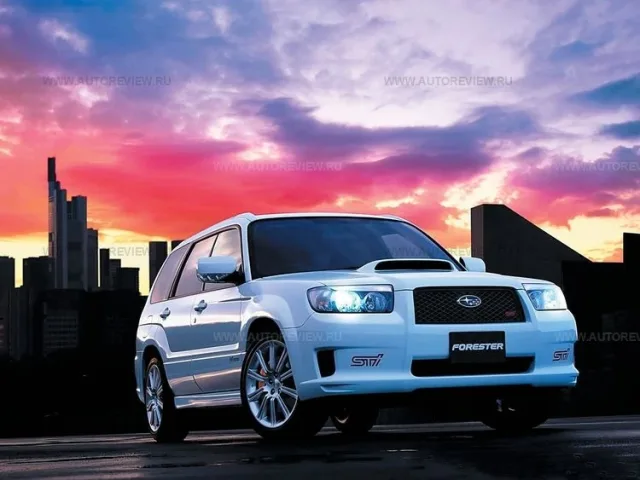
In 2005, the "second" Forester was seriously updated. The photo shows the STi version created by Subaru's sports division, Subaru Tecnica International
In 2005, the model underwent a major facelift. The appearance changed, and under the hood appeared new engines — with two camshafts in the cylinder heads and a variable valve timing system on the intake AVCS. Interestingly, such engines had been used in Japan since 1998. The power of the base two-liter version grew to 158 hp, the turbo engine 2.5 began to produce 230 hp. For the North American market, a single-cam opposed engine with a displacement of 2.5 liters and 173 hp remained. In this form, the Forester met the change of generations.