
Volvo XC 90 diesel. Saving on diesel fuel
It is commonly believed that the biggest conservatives on the planet are the British. Perhaps in some matters that is true, but not in the automotive industry. There, no trace of British conservatism remains. It is enough to recall how often over the past 5–6 years Land Rovers, Jaguars, Morgans, and Lotuses have been radically updated.
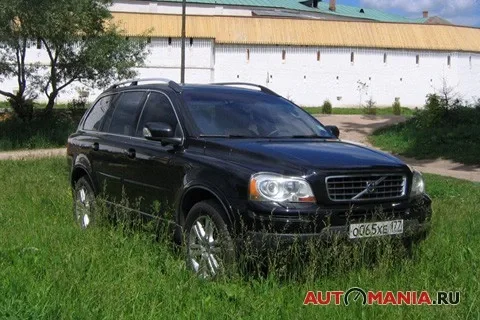
Against this backdrop, the Swedish all-wheel-drive 7-seat premium SUV Volvo XC 90 looks almost more of a retrograde than British models. Since 2002, it has hardly changed, apart from a light "makeup": slightly revised interior, updated front and rear lighting. True, the list of options has become wider, and the engine range more diverse. So, in 2004, the XC acquired a 315-hp V8 from Yamaha, and in 2007 — a diesel.
Even after becoming part of Ford, the Swedes were slow to bring diesel versions to Russia. And only after Ford began selling Focus and Mondeo with diesels here did Volvo also take this step. Why the delay? Primarily because of the poor quality of diesel fuel. It could tarnish the reputation of one of the most reliable cars. But times change — fuel has become noticeably better, the problem has practically disappeared, and now diesel Volvos can be officially purchased from dealers.
In favor of diesel
The hero of our test was the XC 90 with the D 5 diesel engine of 2.4 liters and 185 hp in the fullest trim (the Executive version is only available with the top V8). Such a well-equipped car costs 1,626,000 rubles in the base (our test car was noticeably more expensive), which is only 200 (!) rubles less than the 3.2-liter version with a 5-seat cabin, and 53,300 rubles more than the 7-seat variant with the same 238-hp engine.
What is more profitable? Here it is simple to calculate. Diesel fuel in Russia, although almost equal in price to A-95, always has noticeably lower consumption. The official figures for the diesel are 11.9 l in the city and 7.4 l on the highway, while the petrol 3.2 is unlikely to show consumption of 95-octane below 16–17 liters. Over five days of testing in urban mode, we got 10.3–10.7 l per 100 km.
Diesel for a powerful full-fledged SUV, which in 2003 was recognized as the "best SUV of the year in the USA," is also relevant because the main sales markets are Germany and Great Britain. Russia is only looking at the D 5 variant, while in the States, of course, they mostly take the V8, and even in Sport or Executive trim.
Still without Russian language
But let's return to our hero. The 2007 facelift added a little to the XC 90: bumpers are now painted in body color, more chrome on the front and roof rails, and turn signal repeaters appeared in the side mirrors. The shape of the rear lights changed slightly. And the base became noticeably richer. Now you don't need to think about whether to take bi-xenon, parking sensors, CD-changer, rain sensor, and other pleasant little things — almost everything is already in the base. There is, however, a lighter base version for 1,444,000 rubles — without climate control, with a manual transmission, without leather, power seats, and fog lights. But if you want to save on all this, maybe it's worth just looking at a car of a different brand and a cheaper class? Many manufacturers, such as BMW, do not particularly advertise that you will have to pay extra for any little thing. At the same time, despite all the updates, the XC 90 remains almost the only Volvo model without a Russian menu. It seems our market is not yet a priority for them, because Russifying the interface is not that difficult. All other models have long spoken Russian.
I'm not driving the XC 90 for the first time. There were winter rides on all-season tires in the Mordovian wilderness, where "roads" even in the 21st century are a relative concept. There were also summer trips with the V8 under the hood, but I tested the diesel from Volvo for the first time. I won't claim that many do not perceive this SUV as a real jeep. Largely because of the design. The XC 90 does not look as heavy and massive as we are used to seeing SUVs. Despite a curb weight of 2150 kg, it feels lighter than, say, a Pajero or Grand Cherokee. But every time I get into a Volvo, I believe in its reliability and safety, knowing that the car will not let you down.
Interior for a real family
Let's start with the interior. There is no keyless entry here. Everything is old-fashioned — a regular key with a built-in alarm fob. Soft leather creates a feeling of coziness. The front panel is slightly tilted, making access to the buttons as convenient as possible. There are quite a few of them, but you quickly get used to the abundance. And the pictograms on them are very clear. As for the trim, we got a car in the "inscription" version with a combination of light and black Scottish leather with original perforation. Rear passengers are clearly not cramped — there is more than enough legroom and headroom. And most importantly, there is something to do on a long journey. You can, for example, watch a favorite movie on DVD using individual wireless headphones and a remote control (an option, it must be said, not cheap — see the price below). The third row of seats in the trunk folds completely flush with the floor. I wouldn't call it full-fledged — after all, these are places for children or as a last resort.
Stable and reliable
The five-cylinder diesel initially did not appeal to me. When cold, it rattles and transmits vibrations to the steering wheel. But when warmed up and moving, it's a completely different matter. On the move, there is even less noise in the cabin than in the petrol version. And the acceleration in 11.5 s is a very decent result. What I liked most while driving was the DSTC stability system, which engages during sharp steering maneuvers on wet (or slippery) roads. At low speed, it allows a little mischief, but still imperceptibly corrects the driver's actions. Although the XC 90 is called an SUV, it still remains a crossover. There is no engine protection, and the front and rear "protection" is nothing more than decorative plastic.
In almost any conditions, the Volvo remains front-wheel drive, and only in extreme cases of wheelspin does the Haldex coupling transfer torque to the rear axle. But even so, there is still a feeling that someone invisible is holding you back. The accelerator pedal very confidently copes with the 185-hp diesel — whether in city traffic or overtaking at speed on an empty road. The reserve under the pedal remains significant. The 6-speed automatic is also beyond praise. It responds instantly to upshifts and completely imperceptibly to downshifts. Just don't sharply move the gear lever from "P" all the way down to "D". With an incorrect movement, you will end up in manual mode. Watch the selector under the tachometer on the right.
Frosts are not scary
The engine is not revolutionary, but interesting. It is an aluminum 5-cylinder engine with common rail system and a variable-geometry turbo. But whereas before it developed only 163 hp, now it has 185. The engine is equipped with a maintenance-free particulate filter and showed a free start at minus 37 degrees Celsius in tests. For this, a heating system for the filters and fuel supply is used, which prevents diesel fuel from turning into a viscous gel. And the fuel pipes themselves were made wide to eliminate the possibility of paraffin crystallization.
What is BLIS?
The main advantage of all Volvo models is considered to be the BLIS system, which monitors areas of the road not covered by mirrors (i.e., "blind spots"). If it detects a car behind on the left or right, it warns the driver with a red lamp signal. In the city, such a system triggers so often that you stop paying attention to it, and it is better to turn it off, but on the highway it really helps a lot. The system has only one drawback — as soon as dirt sticks to the monitors in the mirrors, the lamps begin to blink randomly, giving false alarms. However, even without BLIS, the XC 90 has excellent visibility — everything moving behind is perfectly visible in the huge side mirrors. The BLIS system costs an additional 38,800 rubles, but you can easily do without it.
The suspension of the car is quite comfortable, but if you drive over potholes fast enough, the bumps are handled somewhat roughly, though without exceeding an acceptable limit. All diesel versions are fitted with 18-inch wheels (instead of 16-inch) with 235/60 R 18 tires. Due to this, minor road roughness practically does not bother either the driver or passengers.
A full tank of diesel lasted almost 900 km. At the same time, the XC 90 consumed, as mentioned above, no more than 10.5 liters. So it makes sense to think about whether it is worth buying a Volvo with 3.2-liter or V8 engines. Petrol is unlikely to become cheaper or cost less than diesel. According to official data for the first half of 2008, Russians bought 1410 XC 90s. Diesels accounted for no more than 20%. Perhaps the lag of diesels is a temporary phenomenon.
Dmitry Shavyrin
Technical specifications
Here is the full list of what our test car was equipped with. The base car is already well equipped, but the choice of additional options is simply huge. Much of this list, at first glance, may seem excessive, but you won't be able to save much by refusing these options — the base price is steep.
| Rear mud flaps | 2 600 |
| Silver roof rails | 20 700 |
| Wheel arches in body color | 10 300 |
| Interior floor mats | 2 600 |
| Interior trim in brushed aluminum | 10 300 |
| Front cupholder and ashtray | 1 300 |
| Cigarette lighter | 1 300 |
| Inscription steering wheel | 7 800 |
| Rear parking sensors | 12 900 |
| Protective cargo net | 7 800 |
| Power door lock | 2 600 |
| Laminated side windows | 25 800 |
| Cargo cover | 5 200 |
| Power driver's seat | 18 100 |
| Variable-assist power steering | 10 300 |
| Bi-xenon headlights | 38 800 |
| Interior air purification system | 5200 |
| Parking heater with timer | 25 800 |
| Heat-reflecting windshield | 28 400 |
| Heat-reflecting front door windows | 28 400 |
| Tinted rear windows | 10 300 |
| Air conditioning for 3rd row seats with diffusers in rear pillars |
28 400 |
| 5-speed automatic transmission | 51 700 |
| Dynaudio audio system with 12 speakers, 4x70 W amplifier and Dolby system |
46 500 |
| Steering wheel audio controls | 2 600 |
| Headphone jack for rear passengers | 7 800 |
| DVD in headrests for rear passengers | 77 300 |
| Rain sensor | 3 900 |
| BLIS – blind spot information system for vehicles in blind spots |
38 800 |
| Auto-dimming rearview mirror | 5 200 |
| Headlight washer | 3 600 |
| Power-folding mirrors | 5 200 |
| Water-repellent front door windows | 7 800 |
| Compass in interior mirror | 2 600 |
| Footwell lighting in side mirrors | 2 600 |
| Driver's seat position memory | 3 900 |
| Total cost of additional equipment | 585 100 rubles. |
| Price of the tested car | 2 150 800 rubles. |
We express our gratitude to Volvo Car Russia for providing the car for the test.
Source – AUTOMANIA.RU