
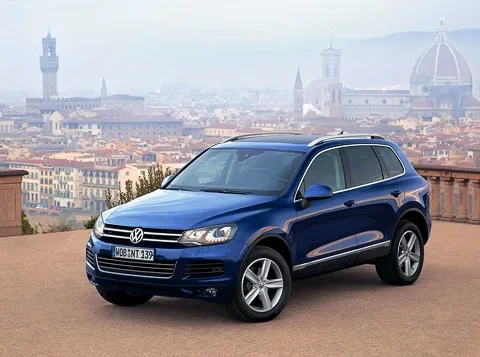
The Touareg has become 41 mm longer — to 4795 mm, 12 mm wider (1940 mm), but 17 mm lower (1709 mm). Among classmates, only the new Cayenne is lower. The wheelbase has grown by 38 mm — to 2893 mm. The track has also become slightly wider: 3 mm in front (1676 mm) and 11.5 mm in the rear (1676 mm).
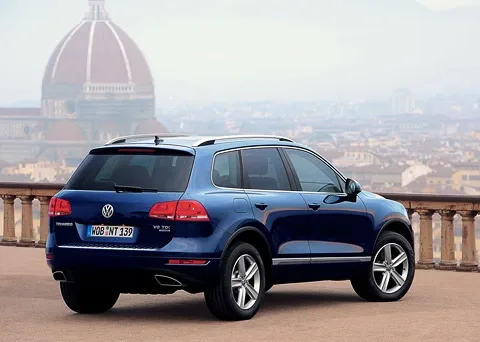
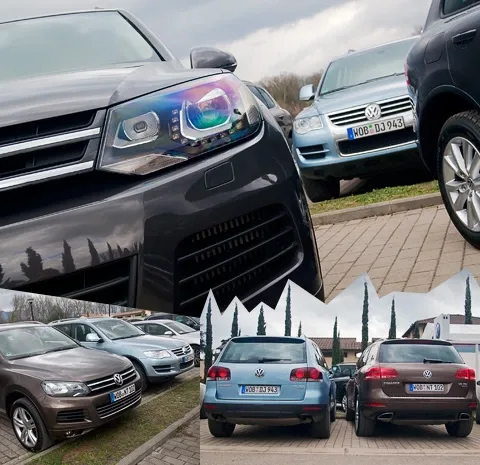
If you put the new car next to its predecessor, it immediately becomes clear that they are made from the same dough. Moreover, the 2007 Touareg does not look outdated at all. By the way, it is visible to the naked eye that the second generation has increased loading height.
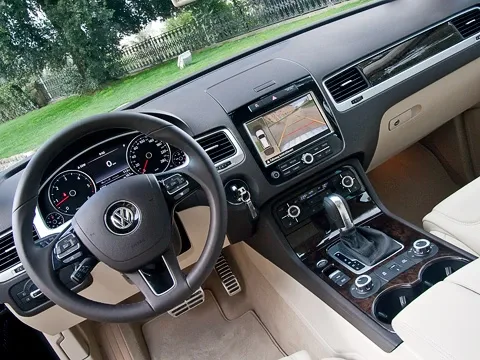
- The interior space, as before, is divided by a massive console, and the front panel is not distinguished by refined shapes. The plastic is soft, with leather-like embossing.
- Nominally, the cabin has become wider by five and a half centimeters.
- The photo shows a car with the most advanced multimedia system. Here is an eight-inch touchscreen display, a powerful SH4 processor that allows navigation to show 3D models of buildings, and a 60 GB hard drive, 18 of which are allocated for personal files. Sound in such a Touareg is provided by twelve speakers with a total power of 620 W, with tweeters on neodymium magnets (the acoustics were made by the reputable company Dynaudio). A simpler audio system — with a 6.5-inch screen, but with a CD changer for six discs. The simplest radio — with a narrow five-inch display.
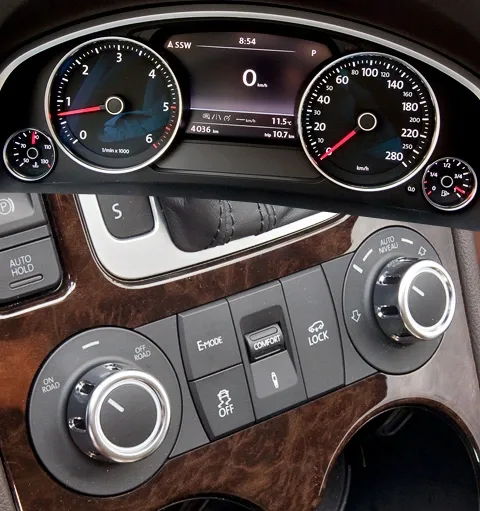
- Instead of six dials, there are now four. In the center of the exemplary ergonomic instrument panel is a seven-inch liquid crystal display.
- On the central tunnel, as before, there is a control unit for the chassis and transmission. In the middle is a wheel responsible for the stiffness of the optional air suspension with adaptive dampers. On the right is the ground clearance regulator and a lock button that fixes the body in the upper positions, preventing it from lowering, for example, in case of wheel spin. On the left is the controller of the simplified all-wheel-drive transmission, which activates the only off-road algorithm of the 'automatic' and the safety electronics.
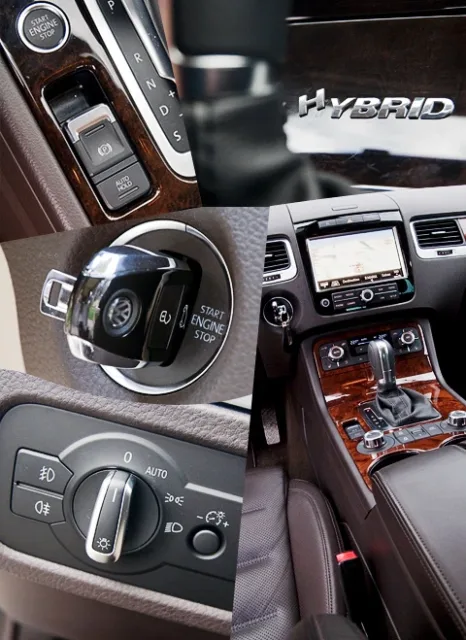
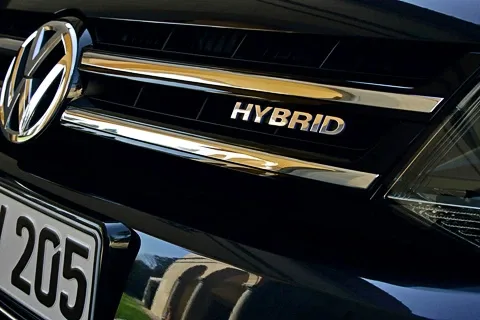
- In details, the Touareg is simple, although everything is fitted properly. Only the letters in the word Hybrid peel off.
- The parking brake is electromechanical with a hill-start assist function and emergency braking.
- The ignition key is new, large. And it can be turned in the lock in both directions. With a keyless entry system, the key fob can be kept in a pocket, and the engine can be started with a button on the central tunnel.
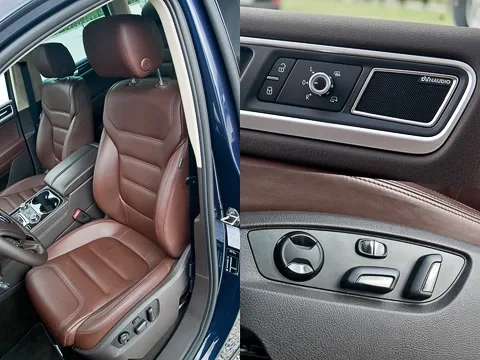
- Sports seats — with adjustable lateral support, which is changed by a small two-arm key on the end of the seat. On the most advanced versions — heating and ventilation.
- The mirror control joystick, protruding horizontally from the door panel, is as inconvenient to use as in the small Polo.
With such calibrations of the transmission control electronics, the torquey diesel V8, which Audi Q7 gave to the Touareg, gets along best. Its 360 horsepower and 800 newton-meters, by and large, are indifferent to which gear is engaged. The eight-cylinder Touareg storms the serpentine uphill as if there is perfectly smooth asphalt in front of it. True, the claimed 5.8 seconds to a hundred in the passport look more impressive than they are perceived in reality. In the acceleration of the diesel flagship version, which replaced the Touareg V10 TDI on the assembly line, there is no aggression. Only power. Speed picks up smoothly, and three-digit numbers flash on the speedometer, while the driver's pulse remains calm, without any surges.
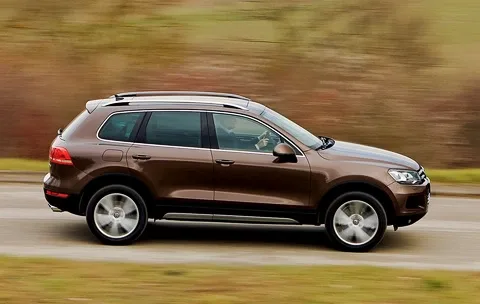
The extended range of gear ratios in the transmission made high-speed driving more economical, comfortable, and quiet. And the reduced body height allowed the drag coefficient to be lowered from 0.38 to 0.35.
Although the interaction with the gearbox here is mostly well-tuned, the turbo engine's responses to accelerator pedal presses have become smoother. In corners, the car with the massive V8 leans more noticeably, enters turns less eagerly, as if it takes longer to decide on the tire slip angle. However, the difference in character between the versions is not as great as, say, between the diesel and petrol Discovery. The Touareg remains itself in all three guises that appeared before me on the Tuscan hills.
Who is the third? It's the modification with the 240-horsepower V6 3.0 turbodiesel — a true golden mean! The engine is light enough not to be a millstone around the neck, yet quite convincing for communicating on equal terms with the automatic. Five hundred newton-meters (more precisely, 550) is the optimal figure for the Touareg not to lose its sense of reality. Acceleration to 100 km/h here is the same 7.8 seconds as in the petrol version, but the gearbox delays are not as noticeable. And as for the V6 TDI not sounding — well, in my opinion, the V8 didn't have a voice either.

The rear seats slide within 160 mm: this is a request from Volkswagen customers, not Porsche fans.

- For an additional fee, the rear seats will be equipped with electromechanical locks that operate from the trunk or from the cabin. The backrests fold in a 40:60 ratio.
- The trunk has become 19 cm wider, and with the seats folded, its volume has increased by 25 liters (580–660 liters depending on the position of the roller blind). The maximum cargo volume has increased by as much as 72 liters — totaling 1642 liters. The electric drive for the fifth door is an option for all versions except those with the V8. The maximum opening angle of the lid is adjustable via the on-board computer menu.
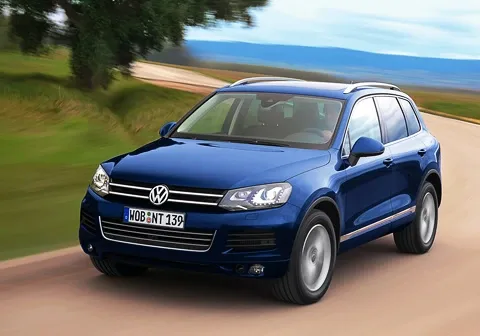
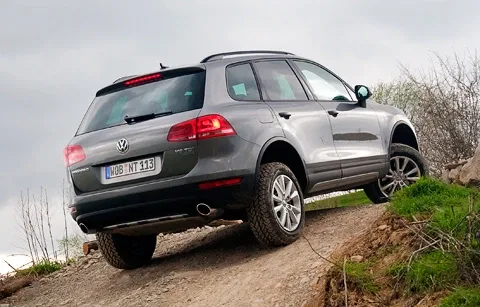
The V6 3.0 TDI version appeals to me also because in this guise the Touareg is still capable of being a full-fledged off-roader. Only the diesel Touareg with the special Terrain Tech package qualifies as an SUV. That's why we chose a photo of such a car for the lead image. Everything comes together here: the old school of churning through mud, and new lightweight technologies. It's funny, really, even to talk about a "special package": a transmission with a low-range gear and a cylindrical differential with electronically controlled locking — that was part of the standard equipment of the previous generation. But since 90 percent of buyers don't need off-road gadgets, the remaining ten percent have to put up with the need to pay extra.
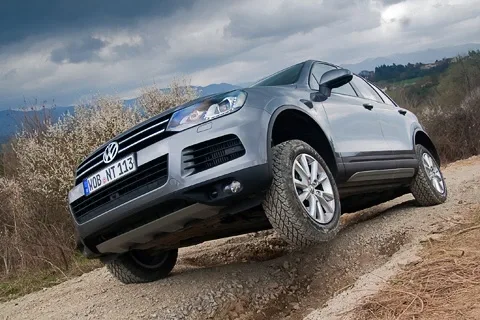
- Here it is — the Touareg we knew. For greater credibility, Touaregs with the Terrain Tech off-road package are shod with "toothy boots" Pirelli Scorpion. Although with such light off-roading, one could have managed in highway "sneakers" Good Year Eagle F1.
- The highlight of the Terrain Tech package is the 4XMotion transmission with electronically controlled locking of the center differential and a low-range gear. This transfer case has moved here from the previous Touareg unchanged (only the gear ratio was slightly shortened — from 2.66 to 2.69). Once, all this was standard equipment. But for the rear differential lock, you had to pay extra even before. In such a combat modification, the suspension travel reaches 173 mm, whereas in the 4Motion version with Torsen, it's only 157 mm.
The light off-road that the organizers prepared does not deserve a detailed description. Storming obstacles designed for glossy journalists could be done without engaging the low-range gear or locks. But 300 mm of ground clearance, which the optional air suspension can provide, is an enduring value. The "brother" Cayenne even in its best days had less, and it will never have more. In terms of the transmission, it has been finally demoted to a crossover.
The ground clearance of the standard Touareg is 220 mm, and for the Terrain Tech version — 230 mm at the front and 235 mm at the rear. In a car also equipped with air suspension, the body rises to a full 300 mm. Additionally, the fuel tank capacity here is increased from 85 to 100 liters.
The air suspension deserves praise not only for its off-road capability but also for excellent vibration protection. The damping elements, as before, work in tandem with adaptive electronically controlled shock absorbers. Their union is wonderful: in Sport mode, the car without unnecessary nervousness but in detail follows the road relief, and in "Comfort" it completely ignores it. It's even amusing to watch how, from the thermal joints of Italian overpasses, simultaneously with turning the knob on the center tunnel, only sound slaps remain. And the slight rocking is not tiring.
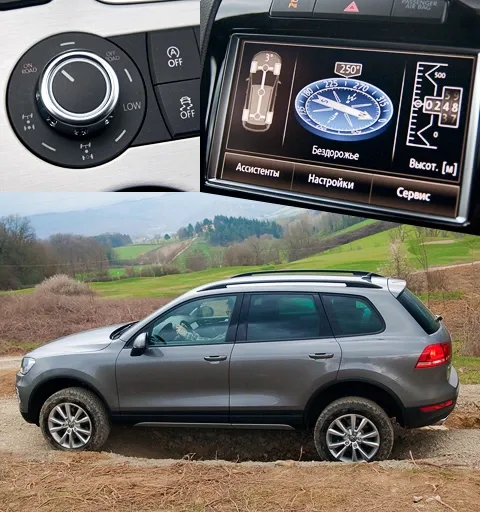
- Instead of a couple of basic modes, the Touareg with the Terrain Tech package has five positions of the transmission controller. In the road mode (On-road), all differentials are open. In the off-road mode (Off-road), the electronics control the locks at its discretion. The Low mode also engages the low-range gear. The next mode adds a hard lock of the center, and the last one locks the rear diff.
- The thematic section of the multimedia system shows the steering angle of the front wheels, activation of locks, direction of travel by compass, and altitude above sea level.
- Off-road, relatively small overhangs also help. The front overhang length is 916 mm, the rear — 986 mm. The start/stop system, which is a mandatory attribute of versions with V6 engines, is deactivated here (the key to the right above the washer), you can also completely turn off ESP, and the air suspension can be fixed in the upper position at speeds up to 70 km/h.
But there was also a fourth Touareg — the Hybrid. Completely different, alien. One cannot help but drive the hybrid Touareg, developed with an eye on the States. One wants to understand why the frugal Volkswagen incurs losses to create a car that is technically very different from the base but will never overcome the five percent sales barrier? Is it all for the sake of image?
What progressive automaker doesn't play this silly game today? Only in the case of Volkswagen, the desire to follow fashion looks especially amusing. After all, the Germans consistently promote diesel models on the American market and know better than anyone that any modern turbodiesel is more efficient than a hybrid with a gasoline-electric powertrain. It's their slogan about BlueMotion diesel technology: "Blue is new green." But this is the case when for publicity it's more important to appear "green" than to be. The hybrid with the V6 will lose in efficiency to a regular diesel "six," say Volkswagen people, but for the gasoline "eight" it will be a good alternative.
Oh, not necessarily! The solid, well-balanced character of the Touareg under the weight of an additional 200 kilograms of electrical equipment falls apart like a wax figure in the sun. Yes, with the hybrid drive, the Touareg gained back all that was lost thanks to a strict engineering diet. In theory, the Touareg used to live with this weight. Alas, it seems that for the optimized chassis, returning four years back is too much.
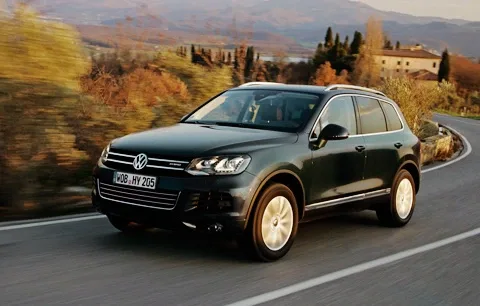
No matter how hard the engineers tried, they could not mask the additional mass. Or they didn't want to mask it. The difference is especially noticeable compared to the regular Touareg in the comfort suspension mode: the car leans more into corners, the body sighs on asphalt waves. The amplitude of oscillations subjectively seems greater than in the V8 TDI version, although the latter is only 18 kg lighter. Such a difference cannot be detected! American tuning?
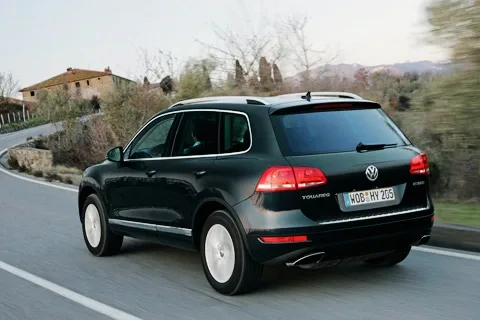
The steering mechanism with a longer gear ratio exacerbates the overall feeling of heaviness of the hybrid.
The concept of "acceleration control" here takes on a completely different meaning, turning into management of energy flows. I don't want to be a manager in my own car, but I try to follow the rules of this experiment unfamiliar to me. I squeeze the maximum possible efficiency out of the car. For example, the Touareg Hybrid can travel a couple of kilometers solely on electricity, but the speed should not exceed 50 km/h. I try my best, but to reach those fifty kilometers per hour on electric power, it takes an eternity!
The 48 hp electric motor is only enough to get this 2240-kilogram behemoth moving. There is no question of any acceleration — you can only crawl in a traffic jam. And even then, only in a completely static one: as soon as any sharp movement is required from the car, the electronics immediately engage the internal combustion engine. And that's a completely different matter! With an ICE (and such a one as in the Audi S4), anyone can accelerate.
Adaptive Sachs shock absorbers offer three modes: Normal, Comfort, and Dynamic. Additionally, for an extra charge, a suspension with stiffer settings is available. In this case, the ground clearance is reduced by 25 mm, more massive anti-roll bars are installed, and the recalibrated electronics compress the shock absorbers more firmly to combat body roll. At the same time, the comfort mode of the air suspension is comparable to the level of the version without the sport chassis. The regular "spring" Touareg can also be lowered and stiffened.
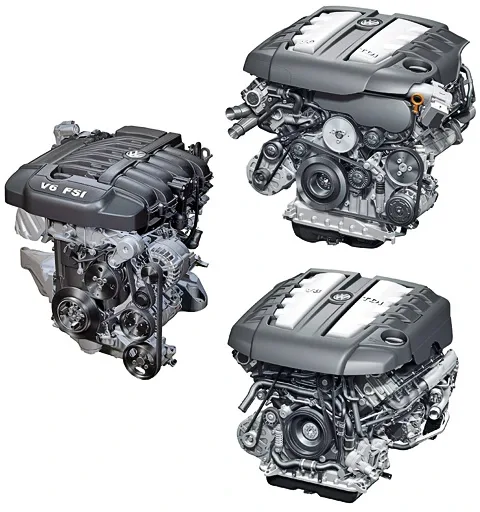
- All powertrains meet Euro-5 standards. The naturally aspirated petrol VR6 3.6 FSI (left) produces 280 hp at 6200 rpm and 360 N•m. This engine differs from the one used, for example, in the Passat R36, by a modified control unit that manages the altered thermal management, energy recuperation, and interaction with the start/stop system. The cylinder block is machined more thoroughly. Lightweight forged pistons with new rings and two main ceramic catalytic converters are used instead of one. The intake system was also refined to improve the efficiency of the working process. In Russia, a version of this "six" detuned to 249 hp will also be available.
- The three-liter turbodiesel V6 TDI (top right) with a fuel rail pressure of 1800 bar develops 240 hp and 550 N•m. A car with such an engine now consumes 1.9 l/100 km less fuel and will now appear on the US market. Acceleration to 100 km/h takes 7.8 seconds, top speed is 218 km/h. A less powerful 204 hp modification will also be available for us.
- The large V8 4.2 TDI turbodiesel (bottom right) from the Audi Q7 delivers 340 hp and 800 N•m. This is close to the limit of 850 N•m that the new gearbox can handle. This engine replaced the prestigious V10 TDI. The Touareg with the new "eight" accelerates to 100 km/h in 5.8 seconds! Top speed is 242 km/h. Fuel consumption is 2.8 l/100 km less than the V10 TDI version.
- In addition, they plan to bring the Touareg with the proven petrol "eight" 4.2 FSI producing 360 hp to Russia, which will not be sold in Europe.
- The oil dipstick has been universally replaced by an electronic monitoring system.
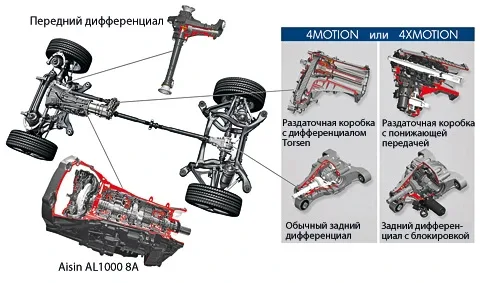
- The new eight-speed automatic transmission Aisin AL1000 8A in the base version is six kilograms lighter than the previous six-speed. Maximum speed is achieved in sixth gear: seventh and eighth are overdrive gears. An additional heat exchanger reduces the warm-up time of the gearbox during cold starts, reducing friction losses, and also provides more efficient cooling of the "automatic" under load.
- Two all-wheel-drive transmissions are available for the Touareg. The simplified 4Motion — with an asymmetric (40:60) central self-locking Torsen differential and one Off-road preset for electronic assistants. The maximum climb angle in this case is 31 degrees.
- For the V6 TDI version, the Terrain Tech Packet off-road package is available with forced locking of the center via a multi-plate clutch with electronic control and a reduction gear (2.69:1). As an option, a rear lock is also available — in the diagram at the bottom right. The cylindrical center differential by default also splits torque in a 40:60 ratio in favor of the rear wheels. This transmission is designated 4XMotion. It provides five off-road modes, and the maximum climb angle is 45 degrees (100%).
- In both cases, torque is transmitted to the front wheels via a multi-row chain, and their inter-wheel differential remains free. Locking is simulated by the braking system.
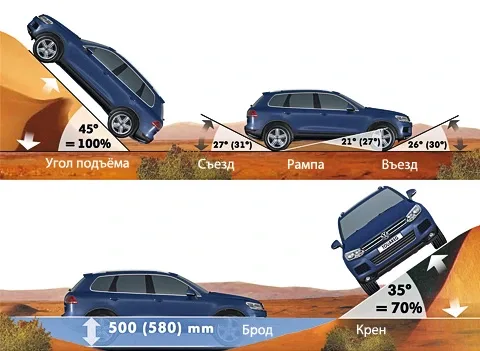
For the spring version, the approach angle is 22 degrees, the departure angle is 23 degrees; with air suspension, they are 24 and 25 degrees, respectively. For the raised off-road version, both figures are 26 degrees, and with air suspension, all 33 degrees are achieved. The wading depth for the vehicle is half a meter on springs and 580 mm on air springs.
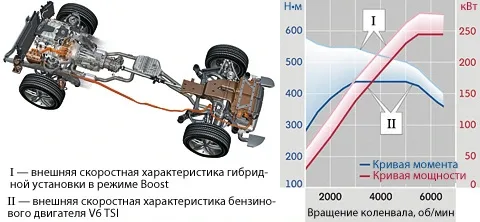
The Touareg Hybrid is equipped with a "direct" Audi V6 TSI engine with a supercharger (333 hp) and an electric motor producing 34.3 kW (46 hp). A nickel-metal hydride battery (288 V, 1.7 kWh, 38 kW) provides a total system power of 380 hp, and torque is equivalent to 580 N•m. Acceleration to 100 km/h is claimed at 6.5 seconds, and fuel consumption in the combined cycle is about 8.2 l/100 km. The hybrid Touareg can travel about two kilometers on electric power alone at speeds up to 50 km/h. Moreover, such an SUV can tow a trailer weighing up to 3.5 tons.
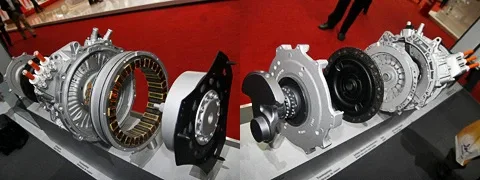
- The hybrid module, 400 mm in diameter and 145 mm long, weighs 55 kg. The electric motor is integrated between the gearbox and the engine. When driving on electricity, a special clutch (clearly visible in the photo of the disassembled unit) disconnects the turned-off engine from the transmission. Moreover, the connection is disengaged at speeds up to 160 km/h every time the driver releases the accelerator pedal, thereby increasing coasting.
- The generator charges the battery during braking, and when driving at a constant speed or during acceleration, the voltage on it decreases or it turns off to reduce power losses. Moreover, the regenerative braking system is standard on any Touareg version.
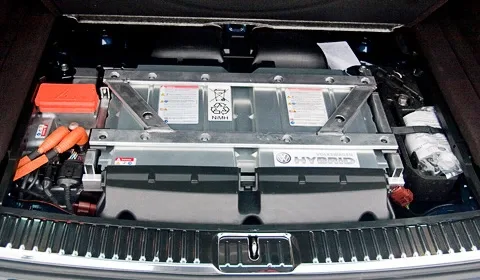
- The battery, which together with the cooling system weighs 79 kg, displaced the repair kit (no spare wheel is provided for the Touareg) from the underfloor of the trunk. The operating temperature of the traction battery is in the positive range. In cold weather, it is warmed up by electrical impulses, which takes about half an hour at minus 20 degrees. That is, during short trips in winter, the Touareg remains purely petrol.
- Another feature of the hybrid is the electro-hydraulic power steering, whose pump is connected independently of the ICE. Interestingly, using the same on regular modifications turned out to be impractical: generating electricity with a regular generator requires more energy than a direct drive from the crankshaft. The hybrid also has a special vacuum pump that creates the necessary vacuum for the efficient operation of the brake booster. The climate control system also has a special high-voltage compressor. And a special electric oil pump maintains operating pressure in the hydraulic system of the "automatic" when the ICE is off, as in the V6 TDI version with the start/stop system.
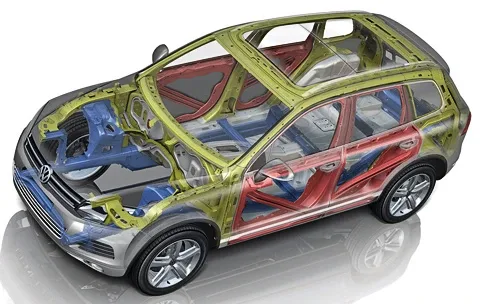
- The body has gained five percent in torsional rigidity (up to 24,800 N•m/deg) and weighs only 398 kg. The curb weight, depending on the version, has decreased by 203–222 kg. The Touareg with the petrol "six" weighs just over two tons. This is partly due to the use of lighter, progressive sound-insulating materials.
- The use of special reinforcements made it possible to keep the body rigidity with a panoramic roof almost at the level of an all-metal one. Interestingly, the lower temperature threshold at which Volkswagen tested this very roof is minus 20 degrees. And the most severe frost in the mandatory test program for the entire car is 28 degrees below zero.
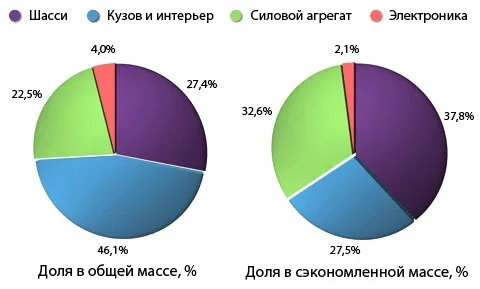
Reducing the overall weight plays a huge role for the Touareg. The diagram shows the shares of different parts of the car in the curb weight and the shares of the same parts in weight savings.
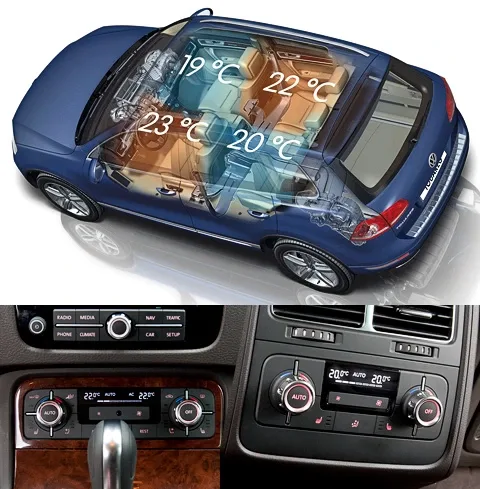
The climate control system in the most expensive version is four-zone, with separate compressors for the front and rear of the cabin.
The picture is completed by a description of how this complex mechanism works. (This paragraph is not part of the original text and was added for coherence, as in the original there is no text after the last image. It is omitted in the rewritten version.)
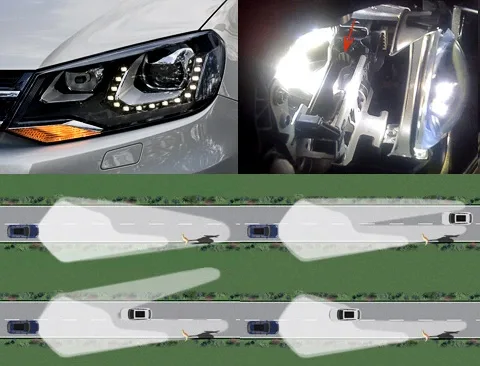
The high beam control system operates based on the image received by the same black-and-white camera under the windshield that is responsible for tracking road markings. The Touareg with active headlights from Hella allows you to drive with the high beam constantly on. First, in the automatic mode "for the lazy," it activates only at speeds above 65 km/h. Second, the camera detects light interference and switches the headlights to low beam within city limits. A small horizontal shutter with an intricate profile (indicated by the arrow in the photo) is responsible for changing the configuration of the light beam. Rotating around its longitudinal axis, it covers part of the beam, and together with the vertical deflection of the reflector, this allows shading zones of the most unusual shapes. The system's response time is 350 ms. After night drives in the Touareg, I can say that this is about as fast as if you were to turn off the high beam yourself. However, the automatic system switches to low beam at the very last moment, not in advance, when a person already understands that an oncoming car is about to appear. But the Germans have excellently developed the algorithm for recognizing road signs with reflective elements — the system confidently passes them.
Safety
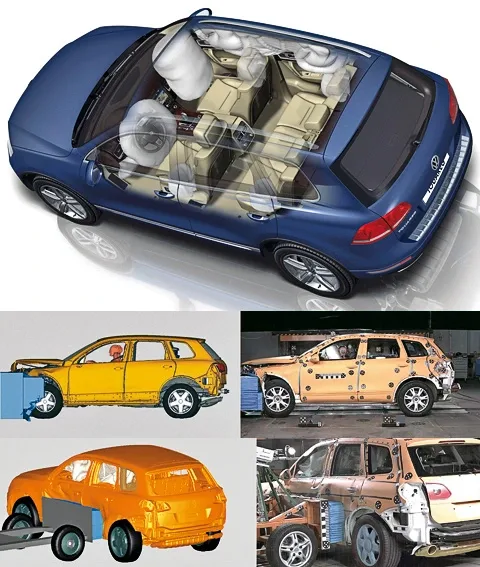
- The Touareg can be equipped with nine airbags, including a knee airbag for the driver.
- During vehicle development, as usual, the results of computer crash test simulations are confirmed by real tests.
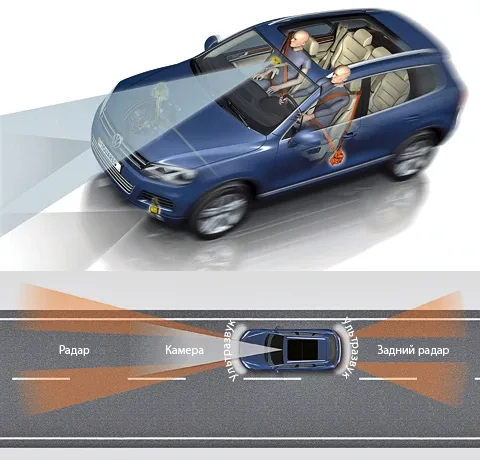
- Among the preventive safety features are lane keeping assist, blind spot monitoring (using 24 GHz radars), and adaptive cruise control, which supports Stop and Go mode and can brake to a complete stop in case of danger. If the electronics detect an abnormal situation, motorized seatbelt pretensioners tighten the belts, and the windows and sunroof close. The algorithm of the system, which Volkswagen calls Front Assist, is the same as that of the Audi pre sense complex. Data for the cruise control comes from two radars with a range of 200 m and a 40-degree field of view, as well as from the camera. The analysis of the road situation is handled by 27 control modules that process 1690 different parameters. The required data exchange rate is provided by ten megabits of the FlexRay bus, but Volkswagen's "hardware" still operates on a CAN bus at 500 Kbit/s.
- As with the A8, the lane tracking system warns of unintentional lane departure by vibrating an electric motor built into the steering wheel.
Design
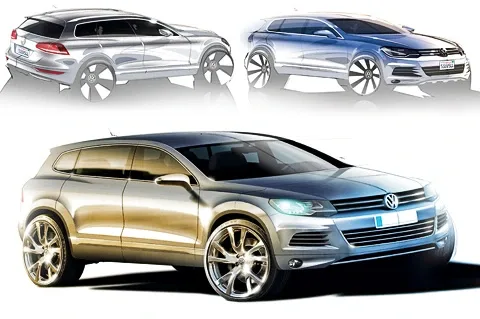
What the Touareg should have been originally, we will most likely never know. All the sketches that appeared in the premiere materials already reflect de Silva's view of Volkswagen. The published sketches are dated 2009, although Volkswagen representatives themselves say that the final design was approved in the spring of 2008.
History (Robert Yesenov)
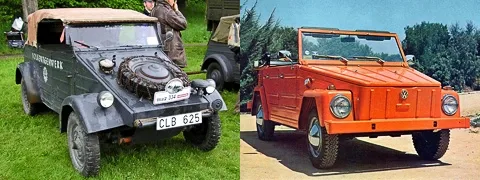
The history of Volkswagen's civilian SUVs is not rich, but we will still not dwell on all off-road vehicles. As a starting point, we will choose 1969, when the Germans prepared a four-door all-wheel-drive convertible with a soft top, the Volkswagen Type 181 (right). The car was a modernized version of the Wehrmacht staff car Type 82 Kubelwagen (left), created by Ferdinand Porsche. But if the Kubelwagen was a purely military product, the "one hundred eighty-first" went on free sale. It was based on the platform of the then "Beetle" (Type 1), but the floor panels were taken from the Karmann Ghia model. The length and width were 3780 and 1640 mm, and the wheelbase was 2400 mm. At the rear were opposed engines 1.5 and 1.6 along with a four-speed manual. The drive to the front wheels was rigidly connectable. Until 1983 (production of civilian versions ended three years earlier), 90,833 vehicles were produced.
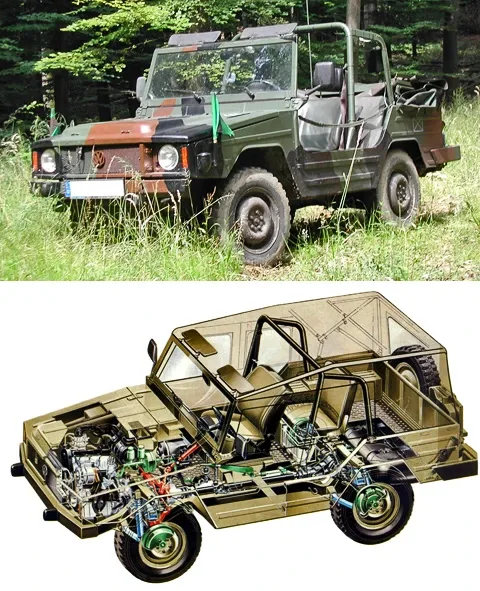
The replacement was introduced already in 1978. It was the Volkswagen Type 183, better known worldwide as the Iltis. Despite the external similarity to its predecessor, the new model differed structurally: the Iltis became front-engined. Under the hood were four-cylinder engines — a 1.7 gasoline and a 1.6 diesel. The independent suspension was only retuned. The all-wheel drive, which became the prototype of the Quattro transmission, also underwent no changes. Production of the SUV at the Audi plant in Ingolstadt began in the summer of 1978, and the first batch of 200 units entered service with the German army in November of that year. In total, until 1988, the military received 8,800 vehicles. Only 747 Iltises were sold on the civilian market. The reason for the failure is considered to be the high price.
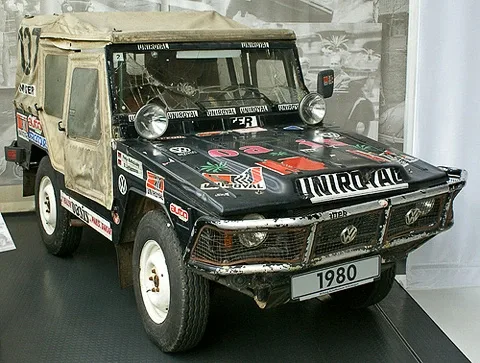
By the way, speaking of the old Iltis, one cannot fail to mention the victory of Freddy Kottulinsky and Gerd Löffelmann in the Paris-Dakar rally marathon in 1980.
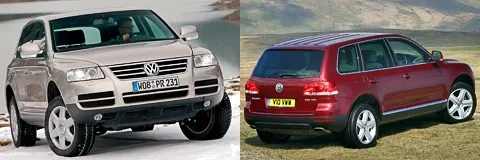
For a long time, off-road models were created based on passenger and commercial all-wheel-drive vehicles. And in 2002, the Volkswagen Touareg marked the beginning of a new era: the company from Wolfsburg again had a purpose-built SUV. Independent suspensions, permanent all-wheel drive with a low-range gear, 300-mm ground clearance, and locking of two differentials... In addition, the car had excellent on-road manners — thanks to the engineers of Porsche. The historical circle closed. The Touareg turned out to be large: 4754 mm in length, with a wheelbase of 2855 mm.
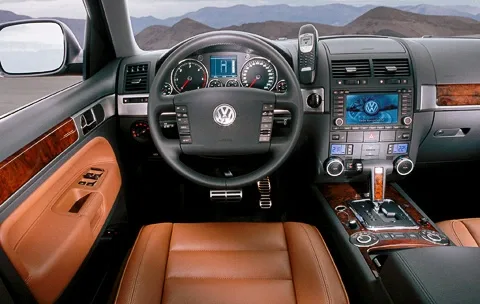
Over eight years of production, six engines were under the hood of the Touareg: gasoline VR6 3.2 (220–241 hp), VR6 3.6 FSI (280 hp), V8 4.2 (310–350 hp), and W12 6.0 (450 hp), as well as turbodiesels R5 2.5 TDI (174 hp), V6 3.0 TDI (225–240 hp), and V10 5.0 TDI (313–350 hp). Transmissions were six-speed manual and automatic. The equipment matched modern technology, including air suspension, leather interior, wood and aluminum trim, and a multimedia system with navigation and a DVD player. The amazing versatility made the Volkswagen Touareg very popular worldwide: more than 500,000 vehicles were sold.
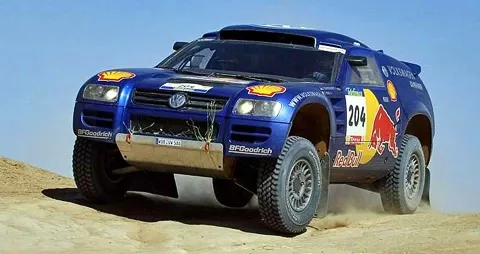
The name Touareg is also well known in the world of motorsport: the Race Touareg prototypes regularly participate in rally raids. The first-generation car appeared in 2004. The body, 4371 mm long, made of carbon fiber, hid a steel space frame from view. At the front was an inline five-cylinder turbodiesel with a displacement of 2.5 liters. Power was 234 hp, torque was 450 N•m. The curb weight of the car was 1750 kg. Torque was transmitted to the wheels via a permanent all-wheel drive through a sequential gearbox with six gears. Also in service with the racing Touareg were double-wishbone suspensions and locks for three differentials. By the way, each wheel had two springs and two shock absorbers.
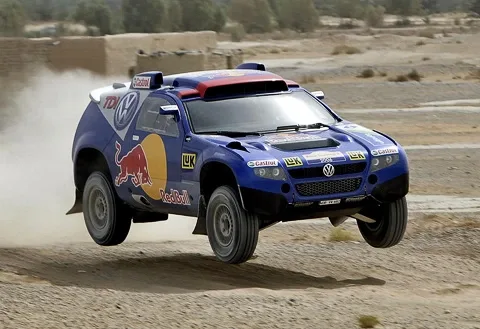
But the name Race Touareg was inscribed in the annals of history by the second-generation car. In 2009, the Volkswagen factory team won the Dakar rally marathon for the second time in its history, and in 2010 a hat-trick happened: the entire podium was occupied by drivers competing in Race Touareg 2 SUVs. But owners of civilian cars have nothing to brag about: the racing prototype is original, and it shares only the name with the production SUV. The second Race Touareg is similar to the first: the body structure, suspension, and transmission differ only in nuances. The new car became 200 mm shorter but gained 40 mm in wheelbase length (2820 mm). The previous 2.5 TDI engine was noticeably updated — two turbochargers were attached to it. The result is 300 "horses" and 600 N•m. This hulk (weight — 1785 kg) jumps to 100 km/h in 6.1 s, and its maximum speed is 190 km/h.
Behind the scenes
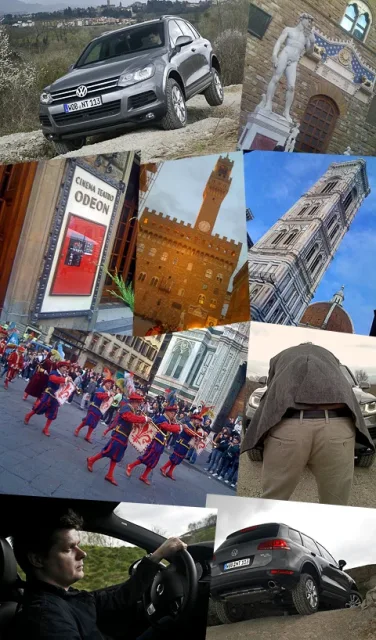
Florence possesses the strongest creative energy, and the Tuscan roads are a source of phenomenal pleasure. Of course, provided that the car is able to support a conversation about driving values. The slimmer Touareg, fortunately, is still close to this topic. Excellent chassis!
Glamorous Evshtokin (bottom left) with his camera phone constantly tried to catch me in some unflattering angles. And he succeeded.